On This Page
Description
A fearful sixteen-year-old princess discovers her heroic destiny after being married off to the king of a neighboring country in turmoil and pursued by enemies seething with dark magic.Tags
Recommendations


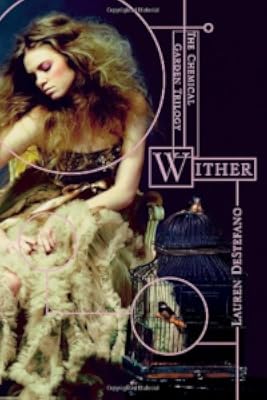
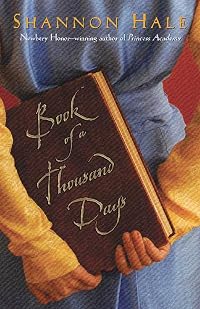
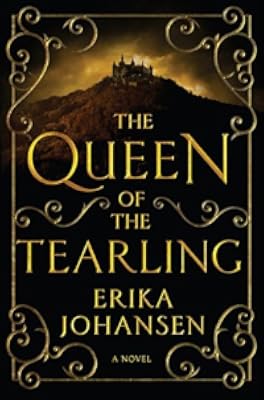
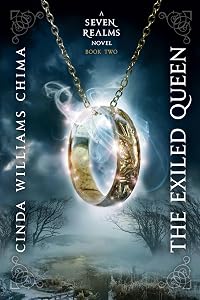



Member Recommendations
Member Reviews
Going into the book (which I read an e-ARC version from NetGalley) I had completely forgotten what it was about. It was on my list of 'Must Read Immediately Upon Getting' books and I had made a notation about 'fantasy' next to it, but otherwise I had forgotten. Something pushed at me to pick it though and thus did I spend an entire Friday night (after my show) reading this glorious, wonderful and otherwise fantastic novel.
It would honestly be hard for me to categorize this as a 'young adult'. If this had been written in the 90's then it may very well have been shelved with the mainstream fantasy books despite the narrator, Elisa's, age of 16. Carson questions the nature of love (familial, first love and enduring love), religion (faith, show more doubt, belief) and duty (to one's self, to one's country) without holding anything back. Elisa learns some very hard lessons in a relatively short amount of time and realizes some hard truths.
Elisa, in short, is my hero. Not because she saves the day. Not because she's clever and quick-witted and brave. Not just because of those things at least. Elisa is my hero, and would have been my role model for life as a teen, because she doesn't judge herself. She doubts why she was Chosen. She looks back at the way she was in her home kingdom with horror, but she doesn't ever say 'I'm a useless person'. Whenever she uses the words 'useless' and 'fat' she is repeating what others have said behind her back (or in at least one case, to her face).
She is self-conscious, she envies other women for their slim forms or graceful bearing, but she doesn't deride herself for not being that way. She is strong, just as many of the characters say she is, but she shows that strength in subtle ways. Standing up and remaining firm with the young Prince, keeping her calm when faced with a duplicitous lady of the court, keeping her wits when confronted with a terrifying enemy. Elisa's development is spurned onwards at first by her need to be useful to her husband, but it doesn't take her long to realize that she should change to be better for herself.
I admit I didn't like her husband, I didn't trust him or his motivations. I didn't think he was a bad man, but the way he was using Elisa just made me frown. I felt bad for Elisa though, wanted more for her, but at the same time I wanted to scream that not everything has to be about him.
Carson gives us quite a cast of characters to be entertained by. I was quite fond of some of them, though I suppose I didn't quite trust any of them? Even her old Nurse, who obviously wants to protect Elisa from everything and everyone, made me wary. Elisa was the pawn in a very powerful game, several powerful games in fact, and until she realizes her own power it was disheartening how easily she was manipulated or misled. How eager she was to believe certain fallacies because she was so desperately lonely and unfulfilled.
There are several times when Carson tempers the cleverness that Elisa shows with hard truths. Consequences for her decisions and actions, especially as we grew closer to the end, proved themselves to Elisa and I applauded her for being able to...move past them and regroup quickly. Even before she came into herself Elisa didn't just wallow, not when there was something else she could be doing. She had her moments, but then she was is still young, thrust into a terrible War that no one cared to explain to her.
While the ending lends itself well to being self-contained, there are two more books and the acknowledgement that more adventures await Elisa in the closing. An important plot focal point remains unanswered and to be truthful I want to see what the new Elisa can do with her strength and new found purpose. show less
It would honestly be hard for me to categorize this as a 'young adult'. If this had been written in the 90's then it may very well have been shelved with the mainstream fantasy books despite the narrator, Elisa's, age of 16. Carson questions the nature of love (familial, first love and enduring love), religion (faith, show more doubt, belief) and duty (to one's self, to one's country) without holding anything back. Elisa learns some very hard lessons in a relatively short amount of time and realizes some hard truths.
Elisa, in short, is my hero. Not because she saves the day. Not because she's clever and quick-witted and brave. Not just because of those things at least. Elisa is my hero, and would have been my role model for life as a teen, because she doesn't judge herself. She doubts why she was Chosen. She looks back at the way she was in her home kingdom with horror, but she doesn't ever say 'I'm a useless person'. Whenever she uses the words 'useless' and 'fat' she is repeating what others have said behind her back (or in at least one case, to her face).
She is self-conscious, she envies other women for their slim forms or graceful bearing, but she doesn't deride herself for not being that way. She is strong, just as many of the characters say she is, but she shows that strength in subtle ways. Standing up and remaining firm with the young Prince, keeping her calm when faced with a duplicitous lady of the court, keeping her wits when confronted with a terrifying enemy. Elisa's development is spurned onwards at first by her need to be useful to her husband, but it doesn't take her long to realize that she should change to be better for herself.
I admit I didn't like her husband, I didn't trust him or his motivations. I didn't think he was a bad man, but the way he was using Elisa just made me frown. I felt bad for Elisa though, wanted more for her, but at the same time I wanted to scream that not everything has to be about him.
Carson gives us quite a cast of characters to be entertained by. I was quite fond of some of them, though I suppose I didn't quite trust any of them? Even her old Nurse, who obviously wants to protect Elisa from everything and everyone, made me wary. Elisa was the pawn in a very powerful game, several powerful games in fact, and until she realizes her own power it was disheartening how easily she was manipulated or misled. How eager she was to believe certain fallacies because she was so desperately lonely and unfulfilled.
There are several times when Carson tempers the cleverness that Elisa shows with hard truths. Consequences for her decisions and actions, especially as we grew closer to the end, proved themselves to Elisa and I applauded her for being able to...move past them and regroup quickly. Even before she came into herself Elisa didn't just wallow, not when there was something else she could be doing. She had her moments, but then she was is still young, thrust into a terrible War that no one cared to explain to her.
While the ending lends itself well to being self-contained, there are two more books and the acknowledgement that more adventures await Elisa in the closing. An important plot focal point remains unanswered and to be truthful I want to see what the new Elisa can do with her strength and new found purpose. show less
Honestly, I wasn't quite sure what to expect when I started this book. I thought it sounded interesting, being a fantasy story without going overboard, which unfortunately, so many do go overboard now.
Upon starting it, I was extremely surprised by how religious the book was. While the religion in the book is not one that is practiced, there were many statements that made me think of Christianity. I found that aspect very interesting. I also found that self-worth was a huge aspect of the novel and how with female empowerment, the protagonist's view of her self-worth changed drastically. Throughout the novel, there was also the underlying theme of misjudgment. With very few exceptions, every character misjudged someone and those judgments show more were quite impactful throughout the novel.
However, I think my favorite aspect of The Girl of Fire and Thorns was the idea of creating a family of your own choosing, carving a niche for yourself where you never thought there could be one. show less
Upon starting it, I was extremely surprised by how religious the book was. While the religion in the book is not one that is practiced, there were many statements that made me think of Christianity. I found that aspect very interesting. I also found that self-worth was a huge aspect of the novel and how with female empowerment, the protagonist's view of her self-worth changed drastically. Throughout the novel, there was also the underlying theme of misjudgment. With very few exceptions, every character misjudged someone and those judgments show more were quite impactful throughout the novel.
However, I think my favorite aspect of The Girl of Fire and Thorns was the idea of creating a family of your own choosing, carving a niche for yourself where you never thought there could be one. show less
I loved the beginning of this book. I loved the Mediterranean-flavored setting, and the fact that Elisa was not a typical fantasy protagonist, and the attention given to war-time politics and strategy, and the fact that the arranged marriage had a chance to develop into a loving and respectful relationship. Unfortunately, most of this started falling apart at about the mid-way point of the book. Elisa sheds a few pounds and suddenly becomes a typical knife-wielding YA action heroine who doesn't think twice about betraying her husband and king. Rather than being developed as possibly the most intriguing character in the book, Alejandro is left woefully underdeveloped and then given a cop-out of a death scene--a hasty, clumsy attempt at show more redemption. Other characters, too, head in predictable and disappointing directions after the excellent beginning. And, while I thought the religious aspect was mostly well-done and intriguing, it all seems negated by the end of the novel, when Elisa makes the frustratingly trite realization that it's not about faith in God but in herself. A unique, thoughtful exploration of religious devotion ultimately gives way to cheap and cliched find-your-own-inner-strength sentiment. Disappointing. I think Megan Whalen Turner's Queen's Thief series does a much better job handling religion.
I'll read the second book, because by all accounts it's better and because I do care to see what happens to Hector certain characters. Here's hoping The Crown of Embers can redeem the story out of cliche and convention. show less
I'll read the second book, because by all accounts it's better and because I do care to see what happens to Hector certain characters. Here's hoping The Crown of Embers can redeem the story out of cliche and convention. show less
I loved Elisa! She was so easy to relate to and not at all unreasonably whiny (like many female protagonists seem to be). Maybe one of the reasons that's true is she's not a skinny pretty girl who somehow has confidence issues but she's spoiled and fat (and knows it). This is the first time I've ever read a fantasy adventure book with a plump heroine - how refreshing!
All of the secondary characters are also well-drawn. The desert scenery was vividly depicted and was as integral to the story as its characters. There is much love and loss in this book and the pages fly by with the action-packed plot.
It is interesting to note how the author deals with skin-deep beauty. While it's not overt, pay attention to how those that flaunt their show more attractiveness fare compared to those who are scarred or hide their beauty. I can't say more without possibly being spoilery so I'll leave it at that!
If you like fantasy books, adventure stories, and/or a bit of mysticism than you will thoroughly enjoy this book! Highly recommended. show less
All of the secondary characters are also well-drawn. The desert scenery was vividly depicted and was as integral to the story as its characters. There is much love and loss in this book and the pages fly by with the action-packed plot.
It is interesting to note how the author deals with skin-deep beauty. While it's not overt, pay attention to how those that flaunt their show more attractiveness fare compared to those who are scarred or hide their beauty. I can't say more without possibly being spoilery so I'll leave it at that!
If you like fantasy books, adventure stories, and/or a bit of mysticism than you will thoroughly enjoy this book! Highly recommended. show less
When Tamora Pierce--one of the Queens of YA Fantasy--says a book is “engrossing,” it’s a good idea to pay attention. That just so happens to be the perfect way to describe this series opener from Rae Carson.
Once each century, God chooses someone to carry out his work and marks them with a godstone. In this case, he’s chosen 16-year-old princess Elisa. We meet Elisa on her wedding day--overweight, scared, and unaware of her own destiny--as she is about to marry a handsome king of a large country and be taken away from all that is familiar. Elisa’s sister vows this match is for her own protection and warns her against trusting anyone. Indeed, it seems everyone wants to protect Elisa (from what they never say), but she has a lot show more to learn before she can protect herself.
These lessons come to her in an unexpected way and through unexpected people. Shortly after arriving in her new home, Elisa finds herself thrust into her destiny by a rag tag group of kidnappers who need a leader who has some faith and a whole lot of brains. In choosing to help them, Elisa learns about herself, her abilities, love, and friendship.
This richly-layered fantasy is not only a compulsively readable story recommended for anyone who also loves Pierce’s Tortall books, but also an insightful study on how man interprets the will of God and the necessity of believing in oneself above all. Elisa’s transformations--emotional, spiritual, and physical--leave the reader feeling satisfied (hooray for non-cliffhanger endings!), but also looking forward to what the godstone has in store for her next.
http://tatalonline.blogspot.com/2011/09/friday-lit-spotlight-epic-fantasy-for.ht... show less
Once each century, God chooses someone to carry out his work and marks them with a godstone. In this case, he’s chosen 16-year-old princess Elisa. We meet Elisa on her wedding day--overweight, scared, and unaware of her own destiny--as she is about to marry a handsome king of a large country and be taken away from all that is familiar. Elisa’s sister vows this match is for her own protection and warns her against trusting anyone. Indeed, it seems everyone wants to protect Elisa (from what they never say), but she has a lot show more to learn before she can protect herself.
These lessons come to her in an unexpected way and through unexpected people. Shortly after arriving in her new home, Elisa finds herself thrust into her destiny by a rag tag group of kidnappers who need a leader who has some faith and a whole lot of brains. In choosing to help them, Elisa learns about herself, her abilities, love, and friendship.
This richly-layered fantasy is not only a compulsively readable story recommended for anyone who also loves Pierce’s Tortall books, but also an insightful study on how man interprets the will of God and the necessity of believing in oneself above all. Elisa’s transformations--emotional, spiritual, and physical--leave the reader feeling satisfied (hooray for non-cliffhanger endings!), but also looking forward to what the godstone has in store for her next.
http://tatalonline.blogspot.com/2011/09/friday-lit-spotlight-epic-fantasy-for.ht... show less
I really enjoyed The Girl of Fire and Thorns, so much that I’ve been having a hard time coming up with the words to describe it. The story takes you on an epic journey, with high-stakes adventure, romance, suspense and magical elements. It’s a strong beginning to a new high fantasy series and earns a spot with my favorite fantasy books by Maria V. Snyder and Kristin Cashore. The fearless storytelling and world building kept my interest and I felt like I was right in the center of the action with the protagonist Elisa.
Right away the story takes you on a journey, as Elisa leaves home to embark on a new life. The world building is set up skillfully well to show the sights, sounds, political landscape and culinary delights of Joya. The show more story has a leisurely pace at the beginning to give you the lay of the land before abruptly taking you out of your comfort zone and into a new direction. The visual descriptions of the setting are interesting and made the desert locales come alive. Also, there are religious undertones in the story that naturally work together with the Godstone and the idea of the prophecy to fulfill. I found the religious aspect to be non-intrusive and added dimension to Elisa’s story.
Though the story has very successful fantasy elements, the characterization is also well done. There are several supporting characters that add interest to the story. As the book progresses, Elisa gets stronger inside and out and people begin to respond more favorably to her. However, there are a handful of characters that can see Elisa’s value from the very beginning and help to build her self-esteem. It’s interesting to view Elisa’s interactions with those around her and to see her confidence grow.
The fantasy, adventure, and smart, strong and unconventional heroine made for an interesting and exciting read that kept my interest throughout. There are surprises and the feeling that anything can happen to these characters that kept me on my toes. I also liked the message behind the story. This is the first book of a trilogy, but the book has a satisfying conclusion on it’s own while leaving Elisa’s path open to new opportunities. I can’t wait to read the next book in the series, Crown of Embers, due out in October 2012. show less
Right away the story takes you on a journey, as Elisa leaves home to embark on a new life. The world building is set up skillfully well to show the sights, sounds, political landscape and culinary delights of Joya. The show more story has a leisurely pace at the beginning to give you the lay of the land before abruptly taking you out of your comfort zone and into a new direction. The visual descriptions of the setting are interesting and made the desert locales come alive. Also, there are religious undertones in the story that naturally work together with the Godstone and the idea of the prophecy to fulfill. I found the religious aspect to be non-intrusive and added dimension to Elisa’s story.
Though the story has very successful fantasy elements, the characterization is also well done. There are several supporting characters that add interest to the story. As the book progresses, Elisa gets stronger inside and out and people begin to respond more favorably to her. However, there are a handful of characters that can see Elisa’s value from the very beginning and help to build her self-esteem. It’s interesting to view Elisa’s interactions with those around her and to see her confidence grow.
The fantasy, adventure, and smart, strong and unconventional heroine made for an interesting and exciting read that kept my interest throughout. There are surprises and the feeling that anything can happen to these characters that kept me on my toes. I also liked the message behind the story. This is the first book of a trilogy, but the book has a satisfying conclusion on it’s own while leaving Elisa’s path open to new opportunities. I can’t wait to read the next book in the series, Crown of Embers, due out in October 2012. show less
The Girl of Fire and Thorns by Rae Carson is the first book in her Fire and Thorns trilogy, and it has totally hooked me into wanting to continue with this fantasy story. The author has created an intriguing fantasy story with an excellent main character. Even though she has the mysterious Godstone implanted in her navel, 16 year old Princess Elisa has been a disappointment to her family. Plain, overweight and rather unmotivated, she is married to a handsome neighboring king to bind the two countries into an alliance. Both countries are under the threat of an invasion by the superior forces of the Invierne.
It is only after she goes through many adventures that she matures and learns how to fulfill her destiny. Although the trope of a show more fat girl becoming a curvy beauty is a familiar one, I was pleased that in this case Elisa needed to develop her intelligence and inner strength in order to claim victory. And while this first book had a good ending, there is still a lot more to explore in the trilogy.
The author gives her story depth with her layered characters and intricate world-building but it is the quick pace and interesting story that keeps the pages turning. show less
It is only after she goes through many adventures that she matures and learns how to fulfill her destiny. Although the trope of a show more fat girl becoming a curvy beauty is a familiar one, I was pleased that in this case Elisa needed to develop her intelligence and inner strength in order to claim victory. And while this first book had a good ending, there is still a lot more to explore in the trilogy.
The author gives her story depth with her layered characters and intricate world-building but it is the quick pace and interesting story that keeps the pages turning. show less
Members
- Recently Added By
Lists

Best Young Adult
399 works; 101 members

Best books read in 2011
200 works; 50 members

Books Read in 2012
816 works; 34 members

Fantasy by Women Who Broke Away from Europe
144 works; 12 members

KayStJ's to-read list
1,616 works; 11 members

Books Read in 2016
4,666 works; 197 members

A(n) [X] of [Y] and [Z]
35 works; 2 members

Books Read in 2013
65 works; 1 member
Author Information

29+ Works 8,151 Members
Some Editions
Awards and Honors
Awards
Distinctions
Notable Lists
Series

Work Relationships
Is contained in
Common Knowledge
- Canonical title
- The Girl of Fire and Thorns
- Original title
- The Girl of Fire and Thorns
- Alternate titles
- Fire and Thorns
- Original publication date
- 2011-09-20
- People/Characters
- Lucero-Elisa de Riqueza, Princess of Orovalle; Alejandro de Vega, King of Joya d'Arena; Ximena; Prince Rosario; Cosmé; Lord Hector, a king's guard (show all 10); Father Nicandro; Humberto; Father Alentín; Conde Treviño
- Important places
- Orovalle; Joya d'Arena
- Dedication
- For Hannah Elise
- First words
- Prayer candles flicker in my bedroom.
- Last words
- (Click to show. Warning: May contain spoilers.)For the first time in a long time, I am not afraid.
- Blurbers
- Tamora Pierce
- Original language
- English
- Canonical DDC/MDS
- 813.6
- Canonical LCC
- PZ7.C2423
Classifications
Statistics
- Members
- 2,792
- Popularity
- 6,566
- Reviews
- 187
- Rating
- (3.79)
- Languages
- 5 — English, French, German, Italian, Spanish
- Media
- Paper, Audiobook, Ebook
- ISBNs
- 32
- UPCs
- 1
- ASINs
- 10