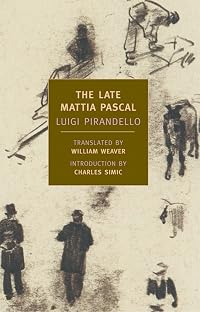
The Late Mattia Pascal
by Luigi Pirandello
On This Page
Description
Mattia Pascal endures a life of drudgery in a provincial town. Then, providentially, he discovers that he has been declared dead. Realizing he has a chance to start over, to do it right this time, he moves to a new city, adopts a new name, and a new course of life--only to find that this new existence is as insufferable as the old one. But when he returns to the world he left behind, it's too late: his job is gone, his wife has remarried. Mattia Pascal's fate is to live on as the ghost of show more the man he was. An explorer of identity and its mysteries, a connoisseur of black humor, Nobel Prize winner Luigi Pirandello is among the most teasing and profound of modern masters. The Late Mattia Pascal, here rendered into English by the outstanding translator William Weaver, offers an irresistible introduction to this great writer's work show lessTags
Recommendations




















Member Recommendations
cometahalley Sul tema dello sdoppiamento e dell'alterità un'antologia dei migliori racconti.

Member Reviews
Pirandello. E' uno scrittore che si ama o si odia, io l'ho sempre amato. Questo è uno dei romanzi che amo di meno, rispetto a opere come "Uno, nessuno e centomila" o alle opere teatrali come "Sei personaggi in cerca d'autore". Le tematiche sono comunque ricorrenti: lo studio attorno alla identità personale, all'Io, l'amore per il surreale; in particolare in questo testo la tematica della ribellione e della fuga dagli altri e anche da se stessi. Fuga che si rivela breve, assurda, e inutile. Non si fugge da se stessi e dai propri fallimenti se non attraversandoli, non ci è possibile cancellare la nostra identità fatta di dati anagrafici ma anche di scelte sbagliate. Il risultato è la totale incapacità di sottrarsi al destino e il show more ritorno alla vita precedente, dopo aver perso anche quelle poche certezze che prima c'erano. Un pessimismo espresso però con una ironia eccezionale. show less
"Matia Pascal" to jedno z najbardziej znanych dzieł włoskiego pisarza Luigiego Pirandello, które opowiada o mężczyźnie, który wykorzystuje okazję, by zacząć nowe życie po uznaniu go za zmarłego. Z ironią i głęboką refleksją nad tożsamością oraz społecznymi ograniczeniami, książka wciąga czytelnika w podróż przez paradoksy istnienia. Narracja balansuje między groteską a filozoficzną medytacją, co czyni ją dziełem niezwykle złożonym i uniwersalnym. Pomimo humoru i lekkości stylu, "Matia Pascal" porusza fundamentalne pytania o sens życia i wolność jednostki, zadając pytanie: czy naprawdę możemy uciec od przeszłości?
Do you ever feel trapped by your own existence? Do you ever long for the freedom of death but are too afraid of dying? In this bizarre early 20th century Italian novel, a man is granted his freedom and a new lease on life after reading about his own death in the newspaper. For a novel that is over 100 years old, this still feels fresh, fast-paced, and fun. Really enjoyed following Mattia’s adventures as he finds out the pros and cons of being fake-dead.
R.I.P.
Mattia Pascal.
Mattia Pascal was a man born to endure adversities in every walk of life. He was a dutiful son who saw his family affluence ruined by a benefactor after his father’s death and his mother’s existence fading into rueful shadows. He was a concerned husband and a doting father even in the thorniest situations that brought demoralizing repercussions in his marital life. The only thing Mattia was ever sure about in his burdensome life was his name-Mattia Pascal. It was his solitary possession that he found solace in. May God bless his soul and hope that he ultimately finds peace for he truly needs it.
Remember you until the end of time – Adriano Meis.
------------------------------------------------------
R.I.P. show more
Adriano Meis
Adriano Meis cradled in boundless freedom. He was an architect of his own life. Adriano lived a cheerful life with no obligatory relations. Free as a bird; he traveled places, embraced a new world with open arms where imagination had no boundaries. He was a self-made man justly born to be free. Yet, he died in solitude being caged in his own individuality; a man whose existence was in itself a nothingness.
Thanking you for an ephemeral bliss -- Anonymous.
----------------------------------------------------------
Late Mattia Pascal is indisputably Pirandello’s masterpiece. Written in a biographical form it deals with the facet of personal identity and the calamitous dilemma of its mutability. The plot runs through familiarizing the reader with the fateful life of a young Italian man- Mattia Pascal, to whom happiness is a rare commodity. Troubled by a miserable marriage, penurious livelihood and utter condemnation of his survival; Mattia leaves his native land in search of a unsullied liberated self. Compelled by his rebellious mind-set, he finds an opportunity in a miscalculation when a newspaper reports his fallacious death. Finally, an escape to a freer life and thus an alter-ego unchained to societal obligation is created. Adriano Meis was a specter of broken ties who would be distressed by the humanness of Mattia Pascal.
Unmasking a phantom.
The famous Pirandellian epistemology of post-modernism/existentialism questioning the foundation of distinguishable identity and its significance to human existence illuminates through the minute details of Mattia’s life. Was Mattia legit in his actions of concealing the truth and using the passage to live an entirely different life? Would it have been better if he had braved his unfortunate situations rather than living like a ghost? Is a specified identity essential to individual to acquire a civil status that may sometimes become burdensome? Is identity purely mechanical or is there a human trait to its implication? The manuscript undeniably rattles your grey cells and makes you ponder on the limits of unconsciously self-constructing a new identity without acquiring a legit civil status. Freedom is what everyone craves to escape the harsh conditions of misfortune. But with limitless freedom comes the human aspect of excruciating seclusion and constraints of legitimacy. Death was seen as a liberating prospect by Mattia from his entire monetary and emotional burden. His newly altered appearance and name bestowed him contentment, until his past caught up overwhelming him with nostalgic reminiscences, thus gradually transmuting his new persona into a dense prison in itself. Pirandello justifies the legitimacy of society and reality that forms convinced “shadows” of which individuals can never liberate themselves, except when death overtakes mind, body and soul. In the end, whether it was Mattia or his alter-ego (Adriano), they were merely trying to unmask a self-created phantom as neither both could entirely break away from from each other. show less
This is an energetic and entertaining book despite its potentially depressing subject material. There’s an almost metafictional irony that seems modern for the time it was published (1904). Pirandello includes all sorts of random enjoyable oddities that aren’t necessary for the plot but also has thoughtful digressions on identity and the meaning of life. Mattia Pascal, the narrator, has abandoned his unhappy life after he is mistakenly identified as a dead body but finds his freedom is cold and empty. He tries to form new relationships but life as a non-person makes that difficult.
Mattia Pascal comes from a wealthy family but through laziness he loses his inheritance to a supposed family friend. He steals the girl his best friend show more loves, Romilda, and marries her after she gets pregnant. Mattia is unhappy in his reduced circumstances and despises his mother-in-law. He later takes a boring job at the deserted library which pays the bills. After his daughter dies, he finds life intolerable and runs off. Winning a fortune at a casino, Mattia returns home only to find an article stating that a body was found and believed to be his. He takes on a new identify and travels around Europe but that eventually becomes boring. In Rome, he rents a room from the odd Anselmo Paleari, who talks to the dead and holds séances, and his sweet daughter Adriana. At first distant, Mattia gradually warms up to the family but his secret stands in the way of anything closer.
The book drags a bit in the middle section when Mattia, now Adriano Meis, travels from country to country but is otherwise an engaging read. The first section is told with a characteristic verve which makes the story of losing everything and marrying unhappily sparkle. The side characters are vividly drawn. There are a number of comic bits, especially Mattia’s job working in a library bequeathed to the town by a rich man. No one visits the library and the other caretaker is a nearly blind, deaf and senile man who reads boring lists aloud as part of some misguided sense of duty. The last section also has weird characters and comic moments but there are some wonderful passages describing the essential loneliness of a man who has abandoned his identity. He’s always a liar and must constantly be thinking about his backstory. He can’t go to the police or attract any attention – he’s almost like a criminal. He hasn’t even really left his life as marrying someone else would be to knowingly commit a crime while his former wife has no such worries. The freedom is as stifling as the lives Mattia leaves but he realizes that life for him has no meaning without other people. There’s a suitably bittersweet but comic ending. show less
Mattia Pascal comes from a wealthy family but through laziness he loses his inheritance to a supposed family friend. He steals the girl his best friend show more loves, Romilda, and marries her after she gets pregnant. Mattia is unhappy in his reduced circumstances and despises his mother-in-law. He later takes a boring job at the deserted library which pays the bills. After his daughter dies, he finds life intolerable and runs off. Winning a fortune at a casino, Mattia returns home only to find an article stating that a body was found and believed to be his. He takes on a new identify and travels around Europe but that eventually becomes boring. In Rome, he rents a room from the odd Anselmo Paleari, who talks to the dead and holds séances, and his sweet daughter Adriana. At first distant, Mattia gradually warms up to the family but his secret stands in the way of anything closer.
The book drags a bit in the middle section when Mattia, now Adriano Meis, travels from country to country but is otherwise an engaging read. The first section is told with a characteristic verve which makes the story of losing everything and marrying unhappily sparkle. The side characters are vividly drawn. There are a number of comic bits, especially Mattia’s job working in a library bequeathed to the town by a rich man. No one visits the library and the other caretaker is a nearly blind, deaf and senile man who reads boring lists aloud as part of some misguided sense of duty. The last section also has weird characters and comic moments but there are some wonderful passages describing the essential loneliness of a man who has abandoned his identity. He’s always a liar and must constantly be thinking about his backstory. He can’t go to the police or attract any attention – he’s almost like a criminal. He hasn’t even really left his life as marrying someone else would be to knowingly commit a crime while his former wife has no such worries. The freedom is as stifling as the lives Mattia leaves but he realizes that life for him has no meaning without other people. There’s a suitably bittersweet but comic ending. show less
Have you ever thought about going to a place where nobody knows you and starting a new life as an entirely new person?
Luigi Pirandello makes Mattia Pascal live out this fantasy. Great misery has befallen Mattia Pascal and there is no silver lining in sight. Unable to think of anything else to do, he runs away leaving everyone and everything behind. A few days later on his way back home, he discovers that while he was away a dead body was mistaken for his and he has been declared dead in his town. Out of the confusion this caused emerged one thought: FREEDOM!! All the ties of his past life were now broken and Mattia could now re-invent himself and live a new, better life.
And then follows the tragi-comic tale of the late Mattia Pascal. show more Life experiences have a great say in shaping a person. In trying to erase his past, Mattia Pascal had to lose a great part of himself. His roots were cut-off and he was empty, a mere shadow of a person. He found himself struggling with the questions of self-identity and his purpose in life. The people he had left behind, the ones who thought he was dead were indeed free of him, in a true sense. He, on the other hand, could not escape the past life he had lived. Poor Mattia's miserable adventure at living a new life reminds me of something Fyodor Dostoevsky said in Crime and Punishment:
"If you ran away, you’d come back to yourself."
Mattia never found real freedom, it was only an illusion. The question of whether free will really exists has been a long standing debate. And Pirandello's take on this is in the negative. What Mattia was living was tyranny masked as freedom. How could he ever hope for a true friendship or relationship when he was not free to reveal the real himself to anyone. His freedom tied him in the chains of solitude, complete solitude. The only life left for Mattia Pascal was that of the ghost of himself.
Pirandello's writing is very accessible and easy to read. It is flavored with wit, irony and subtle humor. For casual readers, he gives a compelling and well-crafted story. For more serious readers, it is interspersed with intriguing thoughts, reflections on life and some beautiful passages. The novel is a little treat for those who love existential themes and paradoxes.
My copy of the book has a brief beautiful post-script by the author where he talks about art, reality vs. illusion and how very realistic human significance can sometimes be found in imaginary fables. This was in response to critics who had denounced his work for being unrealistic and far from normal life.
The postscript is followed by another one which reports a *real life* case similar to the life of Mattia Pascal in this novel, which happened several years after the novel was first published. Fiction is real, after all! show less
Before you read another book (or finish the one you're reading), before you see another movie, before you contemplate any work of art, get yourself to the nearest bookstore or library or wherever you prefer to look at books, and find Pirandello's Il fu Mattia Pascal (The Late Mattia Pascal), wherein you will find "Avvertenza sugli scrupoli della fantasia" ("A Warning on the Scruples of the Imagination"). Just read those 4 or 5 pages, which are not actually part of the novel, and you will begin to see (perhaps) that Art is True.
Here's a taste:
"...quei tali signori che, giudicando un romanzo..., condannano questo o quel personaggio, questa o quella rappresentazione di fatti o di sentimenti, non già in nome dell'arte come sarebbe giusto, show more ma in nome d'una _umanità_ che sembra essi conoscano a perfezione, come se realmente in astratto esistesse, fuori cioè di quell'infinita varietà d'uomini capaci di commettere tutte quelle sullodate assurdità _che non hanno bisogno di parer verosimili, perché sono vere_."
"...those gentlemen that, in judging a novel..., condemn this or that character, this or that representation of facts or feelings, not in the name of art as would be right, but in the name of a _humanity_ that they seem to know perfectly, as if it actually existed, but is in fact separate from that infinite variety of men and women who are capable of committing all those above-mentioned absurdities _that don't need to seem verisimilar, because they are real_." (my translation)
Oh yeah, what about the novel itself? A philosophical romp into what it means to to be Alive. So good I wanted to read it again right away, but of course there's more literature to be consumed........ show less
Here's a taste:
"...quei tali signori che, giudicando un romanzo..., condannano questo o quel personaggio, questa o quella rappresentazione di fatti o di sentimenti, non già in nome dell'arte come sarebbe giusto, show more ma in nome d'una _umanità_ che sembra essi conoscano a perfezione, come se realmente in astratto esistesse, fuori cioè di quell'infinita varietà d'uomini capaci di commettere tutte quelle sullodate assurdità _che non hanno bisogno di parer verosimili, perché sono vere_."
"...those gentlemen that, in judging a novel..., condemn this or that character, this or that representation of facts or feelings, not in the name of art as would be right, but in the name of a _humanity_ that they seem to know perfectly, as if it actually existed, but is in fact separate from that infinite variety of men and women who are capable of committing all those above-mentioned absurdities _that don't need to seem verisimilar, because they are real_." (my translation)
Oh yeah, what about the novel itself? A philosophical romp into what it means to to be Alive. So good I wanted to read it again right away, but of course there's more literature to be consumed........ show less
Members
- Recently Added By
Lists

Philip Ward's Lifetime Reading Plan
592 works; 22 members

Books Set in Italy
167 works; 19 members

Italian Literature
558 works; 43 members

1900s (Decade, not century)
73 works; 17 members

Favourite Books
1,820 works; 309 members

Canon de la narrativa universal del siglo XX
254 works; 6 members

Nobel Price Winners
222 works; 20 members

Modernism
140 works; 9 members

Best Italian Novels
25 works; 3 members

For Further Reading: A List of 160 Novels from 15 Literatures
160 works; 4 members

Canon de la narrativa universal del s. XX (cicutadry)
499 works; 3 members
Lista dei 100 migliori libri italiani degli ultimi 200 anni
100 works; 1 member

Books Read in 2024
4,727 works; 128 members
Author Information

738+ Works 13,737 Members
Born in Sicily, Pirandello attended the universities of Palermo, Rome, and Bonn. He obtained his doctorate in philology with a thesis on the dialect of his native town, Agrigento before settling in Rome to teach and write. In 1894, he married a Sicilian girl, Antonietta Portulano, who bore him three children before she went mad and afterwards show more provided the inspiration for many of his stories and plays. In all, Pirandello wrote 6 novels, some 250 short stories, and about 50 plays. It was a novel, Il fu Mattia Pascal (1904), that first brought him fame. Only in 1920, when he was past 50, did he turn seriously to playwriting. His first stage success had been a comedy, Liola (1917), written in the Agrigento dialect. It took its theme, if not its mood, from the Mandragola of Machiavelli (see Vols. 3 and 4). In 1921, Pirandello presented his most famous play Six Characters in Search of an Author. Here he seeks to confuse his spectators, who are forced into a paradox of reality and illusion when six "characters" search out the actors of a theatrical troupe to play out their inexorable story. The play exemplifies the Pirandellian conflict between art, which is unchanging and constant, and life, which is a continuous succession of mutations. Pirandello deliberately destroyed the traditional boundaries between audience and spectacle, reflecting the relativity and subjectivity of human existence. The play's unconventional format, which resulted in a riot, established Pirandello as Europe's leading avant-garde dramatist. The main body of Pirandello's plays falls into three overlapping categories, the first exploring the nature of the theater, the second the complexities of personality in the etymological or dramatic sense of the term, and the third rising to dramatic representation of the categorical imperatives of social, religious, and artistic community. Besides the world-famous Six Characters in Search of an Author (1918), his best plays in the three categories include Each in His Own Way (1924), It Is So (If You Think So) (1917), Henry IV (1922), The New Colony (1925), Lazarus, As You Desire Me (1930), and The Mountain Giants (1937), written after he had been awarded the Nobel Prize in 1934 and left incomplete. Pirandello is the forerunner of much modern theater and literature; among the figures who owe their roots to the innovations of Pirandello are Bertolt Brecht, Jean Genet, Jean-Paul Sartre, and Samuel Beckett (see Vol. 1). (Bowker Author Biography) show less
Some Editions
Awards and Honors
Awards
Series
Belongs to Publisher Series
Clube de Literatura Clássica (CLC) (39 [July 2023])
Oscar Narrativa (181)
Nobelpreisträger Coron-Verlag (weiß) (1934 (Italien))
Anchor Books (A479)
A tot vent (242)
Work Relationships
Is contained in
Romanzi et teatro ( Il fu mattia pascal - Uno, nessuno e centomila- Sei personaggi in cerca d'autore - Enrico IV) by Luigi Pirandello
Nobelpreis für Literatur 1934, Luigi Pirandello: Mattia Pascal, Einer, keiner, hunderttausend by Luigi Pirandello
Common Knowledge
- Canonical title
- The Late Mattia Pascal
- Original title
- Il fu Mattia Pascal
- Original publication date
- 1904 (original Italian) (original Italian); 1904-04-16; 1904
- People/Characters
- Mattia Pascal - Adriano Meis
- Important places
- Liguria, Italy; Roma, Lazio, Italia
- Related movies*
- Le due vite di Mattia Pascal (1985 | tt0089057) Mario Monicelli (1985 | IMDb); Il fu Mattia Pascal (1924) Marcel L'Herbier (1924); Il fu Mattia Pascal (1937/I | tt1639392) Pierre Chenal (1937/I | IMDb)
- First words
- Una delle poche cose, anzi forse la sola ch'io sapessi di certo era questa: che mi chiamavo Mattia Pascal. E me ne approfittavo.
One of the few things - perhaps the only one - that I know for certain is that my name is Mattia Pascal. - Quotations*
- Guardai, e subito mi sorse un pensiero, per la cui attuazione provai dapprima un certo ritegno. Lo dico, perché mi serva di scusa presso coloro che amano il bel gesto, gente poco riflessiva, alla quale piace di non ricordars... (show all)i che l'umanità è pure oppressa da certi bisogni, a cui purtroppo deve obbedire anche chi sia compreso da un profondo cordoglio. Cesare, Napoleone e, per quanto possa parere indegno, anche la donna più bella… Basta. Da una parte c'era scritto ‘Uomini’ e dall'altra ‘Donne’; e lì intombai il mio anellino di fede.
Assistendo alla vita degli altri e osservandola minuziosamente, ne vedevo gl'infiniti legami e, al tempo stesso, vedevo le tante mie fila spezzate. Potevo io rannodarle, ora, queste fila con la realtà? Chi sa dove mi avrebbe... (show all)ro trascinato; sarebbero forse diventate subito redini di cavalli scappati, che avrebbero condotto a precipizio la povera biga della mia necessaria invenzione.
… ma ben più spesso il piacere che un oggetto ci procura non si trova nell'oggetto per se medesimo. La fantasia lo abbellisce cingendolo e quasi irraggiandolo d'immagini care. Né noi lo percepiamo più qual esso è, ma co... (show all)sì, quasi animato dalle immagini che suscita in noi o che le nostre abitudini vi associano. Nell'oggetto, insomma, noi amiamo quel che vi mettiamo di noi, l'accordo, l'armonia che stabiliamo tra esso e noi, l'anima che esso acquista per noi soltanto e che è formata dai nostri ricordi.
« … Quando una città ha avuto una vita come quella di Roma, con caratteri così spiccati e particolari, non può diventare una città moderna, cioè una città come un'altra. … Mia figlia Adriana mi ha detto dell'acquas... (show all)antiera, che stava in camera sua, si ricorda? Adriana gliela tolse dalla camera, quell'acquasantiera; ma, l'altro giorno, le cadde di mano e si ruppe: ne rimase soltanto la conchetta, e questa, ora, è in camera mia, su la mia scrivania, adibita all'uso che lei per primo, distrattamente, ne aveva fatto. Ebbene, signor Meis, il destino di Roma è l'identico. I papi ne avevano fatto – a modo loro, s'intende – un'acquasantiera; noi italiani ne abbiamo fatto, a modo nostro, un portacenere. D'ogni paese siamo venuti qua a scuotervi la cenere del nostro sigaro, che è poi il simbolo della frivolezza di questa miserrima vita nostra e dell'amaro e velenoso piacere che essa ci dà.»
« … Ma la causa vera di tutti i nostri mali, di questa tristezza nostra, sai qual è? La democrazia, mio caro, la democrazia, cioè il governo della maggioranza. Perché, quando il potere è in mano d'uno solo, quest'uno s... (show all)a d'esser uno e di dover contentare molti; ma quando i molti governano, pensano soltanto a contentar se stessi, e si ha allora la tirannia più balorda e più odiosa: la tirannia mascherata da libertà. …»
A poco a poco, superati gli scogli delle prime domande imbarazzanti, scansandone alcuni coi remi della menzogna, che mi servivan da leva e da puntello, aggrappandomi, quasi con tutte e due le mani, a quelli che mi stringevano... (show all) più da presso, per girarli pian piano, prudentemente, la barchetta della mia finzione poté alla fine filare al largo e issar la vela della fantasia.
Mi è avvenuto più volte, svegliandomi nel cuor della notte (la notte, in questo caso, non dimostra veramente d'aver cuore), …
M'è sembrata una fortuna l'esser creduto morto? Ebbene, e sono morto davvero. Morto? Peggio che morto; me l'ha ricordato il signor Anselmo: i morti non debbono più morire, e io sì: io sono ancora vivo per la morte e morto ... (show all)per la vita.
Adriano Meis, che c'era stato, voleva quasi far da guida e da cicerone a Mattia Pascal; ma questi oppresso da tante cose che andava rivolgendo in mente, si scrollava con fosche maniere, scoteva un braccio come per levarsi di ... (show all)torno quell'ombra esosa, capelluta, in abito lungo, con cappellaccio a larghe tese e con gli occhiali. «Va’ via! va’! Tornatene al fiume, affogato!» Ma ricordavo che anche Adriano Meis, passeggiando due anni addietro per le vie di Pisa, s'era sentito importunato, infastidito allo stesso modo dall'ombra, egualmente esosa, di Mattia Pascal, e avrebbe voluto con lo stesso gesto cavarsela dai piedi, ricacciandola nella gora del molino, là, alla ‘Stìa’. Il meglio era non dar confidenza a nessuno dei due. O bianco campanile, tu potevi pendere da una parte; io, tra quei due, né di qua né di là. - Last words
- (Click to show. Warning: May contain spoilers.)Qualche curioso mi segue da lontano; poi, al ritorno, s'accompagna con me, sorride, e - considerando la mia condizione - mi domanda: - Ma voi, insomma, si può sapere chi siete? Mi stringo nelle spalle, socchiudo gli occhi e gli rispondo: - Eh, caro mio....Io sono il fu Mattia Pascal.
(Click to show. Warning: May contain spoilers.)I shrug, shut my eyes for a moment, and answer: "Ah, my dear friend...I am the late Mattia Pascal." - Original language
- Italian
*Some information comes from Common Knowledge in other languages. Click "Edit" for more information.
Classifications
- Genres
- Fiction and Literature, General Fiction
- DDC/MDS
- 853.912 — Literature & rhetoric Italian, Romanian & related literatures Italian fiction 1900- 20th Century 1900-1945
- LCC
- PQ4835 .I7 .F813 — Language and Literature French, Italian, Spanish and Portuguese literatures Italian literature Individual authors, 1900-1960
- BISAC
Statistics
- Members
- 2,324
- Popularity
- 8,564
- Reviews
- 36
- Rating
- (3.94)
- Languages
- 24 — Catalan, Danish, Dutch, English, Estonian, Finnish, French, German, Greek, Hebrew, Hungarian, Italian, Japanese, Korean, Norwegian (Bokmål), Polish, Russian, Serbian, Croatian, Slovenian, Spanish, Swedish, Portuguese (Portugal), Portuguese (Brazil)
- Media
- Paper, Audiobook, Ebook
- ISBNs
- 178
- UPCs
- 1
- ASINs
- 62