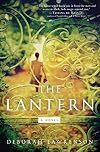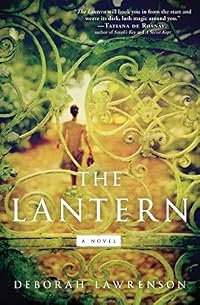
The Lantern
by Deborah Lawrenson
On This Page
Description
Drawn to an older man, Eve embarks on a whirlwind romance that soon offers a new life and a new home--Les Genevriers, an old house in a charming hamlet amid the fragrant lavender fields of Provence. Their relationship becomes strained, however, as Dom grows quiet and distant and Eve feels a haunting presence. The more reluctant Dom is to tell her about his past, the more Eve is drawn to it--and to the mysterious disappearance of his beautiful ex-wife.Tags
Recommendations






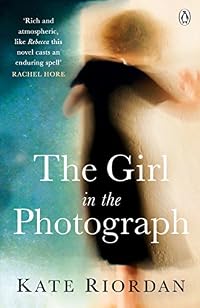
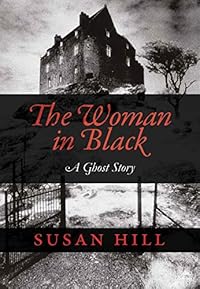

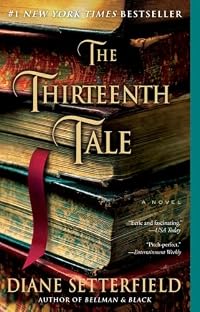
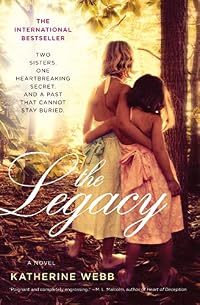


Member Recommendations

Member Reviews
Rich with description, this is not a book to be rushed; it is to be slowly savored. Reading The Lantern is like being immersed in a Alfred Hitchcock movie, a psychological mystery dark with secrets and evil undercurrents. There are 2 interwoven stories being told: Dom and Eve who buy a decaying farmhouse in Provence and begin restoring it and the other is the history of the family who once lived there; as seen through the eyes of one of the daughters, Benedictine. Dom and Eve are newly in love and are content to isolate themselves on the land, enjoying each other and the quiet which gives them time to indulge their talents; his as a musician and hers as a writer. As the year progresses and their relationship deepens, Eve begins to show more wonder why Dom won’t share his past with her. A chance meeting with a woman in town brings another level of mystery about Dom’s past and the questionable history of the farm.
The depth of the atmosphere Deborah Lawrenson created is almost a character in its self—the house as a living being. I read it at the end of the summer—during a muggy thunder and lightening storm that kept knocking out the electricity; my own experience pulling me deeply into their story and adding another layer of tension. Read an Advanced Reader Edition through Amazon Vine. Excellent 5 stars. show less
The depth of the atmosphere Deborah Lawrenson created is almost a character in its self—the house as a living being. I read it at the end of the summer—during a muggy thunder and lightening storm that kept knocking out the electricity; my own experience pulling me deeply into their story and adding another layer of tension. Read an Advanced Reader Edition through Amazon Vine. Excellent 5 stars. show less
Every now and again you read a book and think, wow . . . excellent writing, realistic and incredible characters, wonderful settings and a great plot. Don't get me wrong, there are great books written and read every day. But there are also plenty of good books and not so good books as well. The Lantern by Deborah Lawrenson is one of the great books.
The writing is not only beautiful but beautifully evocative. Ms. Lawrenson paints pictures with words that capture the imagination and allow the reader to step inside of the story and walk alongside the characters. And we step inside the present with the story of Eve and Dom, and then we step into the past with Benedicte. Eve is a French to English translator. She falls in love with Dom and show more they relocate from the UK to France, pastoral northern France. Dom is, apparently, independently wealthy and they purchase and rehabilitate a farmhouse. Benedicte was born and raised in this farmhouse and the reader is invited to see the past through her story and memories. Eve isn't exactly naive but she does have a certain sense of naïveté about her, especially when it comes to Dom. She has the sense that something from his past is haunting his present and that it most likely is related to his ex-wife, Rachel. It doesn't help that the local realtor evidently met Rachel and suspects that something untoward happened to her. Her fears overshadow Eve's love and longing to build a life with Dom.
Benedicte is a typical farm girl. Although she longs for more, she knows that she must stay to help her family, especially since her older sister is blind and no longer living at home and their brother cannot be relied upon to help out. Over the years Benedicte has worked the land and kept up the farm/estate as best as she can but she has also suffered major disappointments (hopes for a career that never came to fruition and a lover that . . . disappointed her). In her old age, she reminisces and fears that she is losing her mind as ghostly visages torment her. She questions what really happened to her sister and why has she deserted her?
The Lantern is filled with psychological horror that gradually builds throughout the story. The reader and characters begin to question what is and isn't real, and suspect what has and hasn't happened to people from the past. As I've previously stated, the writing is truly beautiful and captures the reader from beginning to end. If you can appreciate beautiful prose, great scenery, and credible characters accompanied by subtle psychological horror, then The Lantern is just the book for you. show less
The writing is not only beautiful but beautifully evocative. Ms. Lawrenson paints pictures with words that capture the imagination and allow the reader to step inside of the story and walk alongside the characters. And we step inside the present with the story of Eve and Dom, and then we step into the past with Benedicte. Eve is a French to English translator. She falls in love with Dom and show more they relocate from the UK to France, pastoral northern France. Dom is, apparently, independently wealthy and they purchase and rehabilitate a farmhouse. Benedicte was born and raised in this farmhouse and the reader is invited to see the past through her story and memories. Eve isn't exactly naive but she does have a certain sense of naïveté about her, especially when it comes to Dom. She has the sense that something from his past is haunting his present and that it most likely is related to his ex-wife, Rachel. It doesn't help that the local realtor evidently met Rachel and suspects that something untoward happened to her. Her fears overshadow Eve's love and longing to build a life with Dom.
Benedicte is a typical farm girl. Although she longs for more, she knows that she must stay to help her family, especially since her older sister is blind and no longer living at home and their brother cannot be relied upon to help out. Over the years Benedicte has worked the land and kept up the farm/estate as best as she can but she has also suffered major disappointments (hopes for a career that never came to fruition and a lover that . . . disappointed her). In her old age, she reminisces and fears that she is losing her mind as ghostly visages torment her. She questions what really happened to her sister and why has she deserted her?
The Lantern is filled with psychological horror that gradually builds throughout the story. The reader and characters begin to question what is and isn't real, and suspect what has and hasn't happened to people from the past. As I've previously stated, the writing is truly beautiful and captures the reader from beginning to end. If you can appreciate beautiful prose, great scenery, and credible characters accompanied by subtle psychological horror, then The Lantern is just the book for you. show less
Rating: 3.875* of five
The Publisher Says: A modern gothic novel of love, secrets, and murder—set against thelush backdrop of Provence
Meeting Dom was the most incredible thing that had ever happened to me. When Eve falls for the secretive, charming Dom in Switzerland, their whirlwind relationship leads them to Les Genévriers, an abandoned house set among the fragrant lavender fields of the South of France. Each enchanting day delivers happy discoveries: hidden chambers, secret vaults, a beautiful wrought-iron lantern. Deeply in love and surrounded by music, books, and the heady summer scents of the French countryside, Eve has never felt more alive.
But with autumn’s arrival the days begin to cool, and so, too, does Dom. Though Eve show more knows he bears the emotional scars of a failed marriage—one he refuses to talk about—his silence arouses suspicion and uncertainty. The more reticent Dom is to explain, the more Eve becomes obsessed with finding answers—and with unraveling the mystery of his absent, beautiful ex-wife, Rachel.
Like its owner, Les Genévriers is also changing. Bright, warm rooms have turned cold and uninviting; shadows now fall unexpectedly; and Eve senses a presence moving through the garden. Is it a ghost from the past or a manifestation of her current troubles with Dom? Can she trust Dom, or could her life be in danger?
Eve does not know that Les Genévriers has been haunted before. Bénédicte Lincel, the house’s former owner, thrived as a young girl within the rich elements of the landscape: the violets hidden in the woodland, the warm wind through the almond trees. She knew the bitter taste of heartbreak and tragedy—long-buried family secrets and evil deeds that, once unearthed, will hold shocking and unexpected consequences for Eve.
My Review: Nameless Narratrix tells us the tale of woe of loving a man who did Something Awful. She tells us this while living in his Provencal hameau, which is haunted by some dead French people as well as a few living ones. The hameau is crumbling, with plaster and masonry all falling at random times and in random places. The house gives the new couple a gift or two, including an old iron lantern that figures into the sad life story of the last French proprietrix of the hameau. (Have you gone and looked up hameau yet, so I can stop typing the itals?)
There's an absent, though not known to be dead, wife; there's a tale of Love Gone Wrong; there's a lot of carryins-on about people disappearin' right left and through the middle for at least 40 years; there's misunderstanding piled onto miscommunication via idiotic refusals to ask or answer simple, direct, interrogative English-language sentences.
It's Rebecca meets The Horseman on the Roof set in modern times. I found it unspooky in the extreme. I also found it lushly beautifully crafted, line by line. It's gloriously good at evoking Provence, its people, and its tourist-based economy that replaced actual work producing actual, tangible objects. And it should be read with a glass of young and hearty red wine, a plate of orange-butter-herbes-de-Provence Christmas cookies, and a lover of one's preferred configuration at the ready to sate the appetites the book will awake.
This work is licensed under a Creative Commons Attribution-NonCommercial-ShareAlike 3.0 Unported License. show less
The Publisher Says: A modern gothic novel of love, secrets, and murder—set against thelush backdrop of Provence
Meeting Dom was the most incredible thing that had ever happened to me. When Eve falls for the secretive, charming Dom in Switzerland, their whirlwind relationship leads them to Les Genévriers, an abandoned house set among the fragrant lavender fields of the South of France. Each enchanting day delivers happy discoveries: hidden chambers, secret vaults, a beautiful wrought-iron lantern. Deeply in love and surrounded by music, books, and the heady summer scents of the French countryside, Eve has never felt more alive.
But with autumn’s arrival the days begin to cool, and so, too, does Dom. Though Eve show more knows he bears the emotional scars of a failed marriage—one he refuses to talk about—his silence arouses suspicion and uncertainty. The more reticent Dom is to explain, the more Eve becomes obsessed with finding answers—and with unraveling the mystery of his absent, beautiful ex-wife, Rachel.
Like its owner, Les Genévriers is also changing. Bright, warm rooms have turned cold and uninviting; shadows now fall unexpectedly; and Eve senses a presence moving through the garden. Is it a ghost from the past or a manifestation of her current troubles with Dom? Can she trust Dom, or could her life be in danger?
Eve does not know that Les Genévriers has been haunted before. Bénédicte Lincel, the house’s former owner, thrived as a young girl within the rich elements of the landscape: the violets hidden in the woodland, the warm wind through the almond trees. She knew the bitter taste of heartbreak and tragedy—long-buried family secrets and evil deeds that, once unearthed, will hold shocking and unexpected consequences for Eve.
My Review: Nameless Narratrix tells us the tale of woe of loving a man who did Something Awful. She tells us this while living in his Provencal hameau, which is haunted by some dead French people as well as a few living ones. The hameau is crumbling, with plaster and masonry all falling at random times and in random places. The house gives the new couple a gift or two, including an old iron lantern that figures into the sad life story of the last French proprietrix of the hameau. (Have you gone and looked up hameau yet, so I can stop typing the itals?)
There's an absent, though not known to be dead, wife; there's a tale of Love Gone Wrong; there's a lot of carryins-on about people disappearin' right left and through the middle for at least 40 years; there's misunderstanding piled onto miscommunication via idiotic refusals to ask or answer simple, direct, interrogative English-language sentences.
It's Rebecca meets The Horseman on the Roof set in modern times. I found it unspooky in the extreme. I also found it lushly beautifully crafted, line by line. It's gloriously good at evoking Provence, its people, and its tourist-based economy that replaced actual work producing actual, tangible objects. And it should be read with a glass of young and hearty red wine, a plate of orange-butter-herbes-de-Provence Christmas cookies, and a lover of one's preferred configuration at the ready to sate the appetites the book will awake.
This work is licensed under a Creative Commons Attribution-NonCommercial-ShareAlike 3.0 Unported License. show less
The words are like flowers, as is perhaps appropriate in a story where
fragrance and its composition is nearly a character in and of itself. But
there are moments of casual cruelty hidden within the flowery language. There
is darkness, mystery and and the whispering of the ghosts of lifetimes lived and left.
He called her Eve. They met in the depths of a labyrinth and that too, was appropriate,
given that that their life together was wound between secrets she dared not explore. She
was happy enough, more than happy, in fact. At least in the beginning. Before the darkness
that secrets exude began to swirl around them. She was happy before the doubts began to creep in,
before the bones were uncovered in the garden.
This story is a journey that show more begins in the distant past, and ends with a promise for the future. IT
is a journey that I recommend that you take, if you like mystery touched with romance and dusted with
petals of flowers long since gone. show less
fragrance and its composition is nearly a character in and of itself. But
there are moments of casual cruelty hidden within the flowery language. There
is darkness, mystery and and the whispering of the ghosts of lifetimes lived and left.
He called her Eve. They met in the depths of a labyrinth and that too, was appropriate,
given that that their life together was wound between secrets she dared not explore. She
was happy enough, more than happy, in fact. At least in the beginning. Before the darkness
that secrets exude began to swirl around them. She was happy before the doubts began to creep in,
before the bones were uncovered in the garden.
This story is a journey that show more begins in the distant past, and ends with a promise for the future. IT
is a journey that I recommend that you take, if you like mystery touched with romance and dusted with
petals of flowers long since gone. show less
Review originally written for my blog www.moosenoose.com
I have a particular love of historical fictions set in rural France. It’s something to do with the beautiful countryside and small villages where life is built on age-old secrets, gossip and rumours. If you have never experienced the French countryside then you should add it to your bucket list. Yes Paris is amazing with the Eiffel Tower, Louvre and boutiques, but it’s also noisy and dirty. It doesn’t hold a candle to the French countryside. Anyway, back to the book!
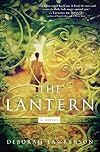
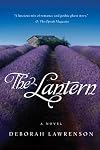
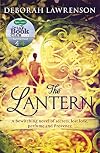
The cover is very beautiful and certainly stands out from others in the book store. The back immediately hints that the story is split between two times lines, the present with Eve and the mysterious Dom, show more including his ‘missing’ wife Rachel and the distant past involving a previous occupant of the house, Benedict. The ideal of a good old-fashioned haunting and the fact that the story is set in rural France made this a must have for me.
I found myself drawn to Benedict the most. She was a very deep character who lived a hard life and carried guilt for things she was not always able to control. But even through all her hardships she remained strong and carried love and hope in her heart when she could easily have turned bitter and nasty. She described her homeland and childhood in such wonderful ways that you could almost feel the winter wind, hear the crunch of autumn leaves, taste the first spring berries and smell the summer lavender. Dom on the other hand was a very mysterious character. He was secretive, brooding and had quite a temper. Early on you knew that all was not as it seemed with him, but there was never enough evidence to decide whether he was the traditional bad guy or whether he was just hiding some past heartache. As for Eve, well she was very naïve and at times, easily led. She dropped her career, family and friends to run off to France with a man she barely knew. At first things seemed to be perfect, Dom buys a beautiful crumbling old house in Provence where there are hidden rooms and secret passageways. They enjoy the summer exploring the house and surrounding region and getting to know the locals. Then autumn comes and Dom grows ever more distant, then bodies are found on the property and Eve realises that she doesn’t know as much about Dom or the house as she should. This is when she starts digging into the past to discover the truth about Dom’s wife Rebecca and to try to discover what is causing the apparent haunting that only she seems to notice.
I did really enjoy this story, I had this constant need to determine not only what happened to Rebecca, but mostly to discover what had happened to Benedict during her lifetime. I have to admit that I found Eve rather weak at times. Whenever she asked Dom about Rebecca he would clam up or disappear in a strop. That would have been enough to make me leave, after all if you love someone, you should able be to share your past with them, good or bad. But then that would have made for a very short story and not everyone is as demanding and upfront as me! It’s the differences between people that make us unique, and therefore make the stories we read more interesting. Anyway, who wants to read about characters that resemble themselves all the time? It’s a bit narcissistic! Therefore I got over my annoyance with Eve, accepted she was a bit of a wimp and loved the way the story developed. I won’t give the ending away, but let’s just say I loved the last chapter/epilogue and was glad that a part of the past had stayed with the house. Do me a favour, go out and buy this book, set aside a day for reading with no interruptions and enjoy!
Favourite line: “I would say there are days when all history stands still and all the spirits gather.” show less
I have a particular love of historical fictions set in rural France. It’s something to do with the beautiful countryside and small villages where life is built on age-old secrets, gossip and rumours. If you have never experienced the French countryside then you should add it to your bucket list. Yes Paris is amazing with the Eiffel Tower, Louvre and boutiques, but it’s also noisy and dirty. It doesn’t hold a candle to the French countryside. Anyway, back to the book!
The cover is very beautiful and certainly stands out from others in the book store. The back immediately hints that the story is split between two times lines, the present with Eve and the mysterious Dom, show more including his ‘missing’ wife Rachel and the distant past involving a previous occupant of the house, Benedict. The ideal of a good old-fashioned haunting and the fact that the story is set in rural France made this a must have for me.
I found myself drawn to Benedict the most. She was a very deep character who lived a hard life and carried guilt for things she was not always able to control. But even through all her hardships she remained strong and carried love and hope in her heart when she could easily have turned bitter and nasty. She described her homeland and childhood in such wonderful ways that you could almost feel the winter wind, hear the crunch of autumn leaves, taste the first spring berries and smell the summer lavender. Dom on the other hand was a very mysterious character. He was secretive, brooding and had quite a temper. Early on you knew that all was not as it seemed with him, but there was never enough evidence to decide whether he was the traditional bad guy or whether he was just hiding some past heartache. As for Eve, well she was very naïve and at times, easily led. She dropped her career, family and friends to run off to France with a man she barely knew. At first things seemed to be perfect, Dom buys a beautiful crumbling old house in Provence where there are hidden rooms and secret passageways. They enjoy the summer exploring the house and surrounding region and getting to know the locals. Then autumn comes and Dom grows ever more distant, then bodies are found on the property and Eve realises that she doesn’t know as much about Dom or the house as she should. This is when she starts digging into the past to discover the truth about Dom’s wife Rebecca and to try to discover what is causing the apparent haunting that only she seems to notice.
I did really enjoy this story, I had this constant need to determine not only what happened to Rebecca, but mostly to discover what had happened to Benedict during her lifetime. I have to admit that I found Eve rather weak at times. Whenever she asked Dom about Rebecca he would clam up or disappear in a strop. That would have been enough to make me leave, after all if you love someone, you should able be to share your past with them, good or bad. But then that would have made for a very short story and not everyone is as demanding and upfront as me! It’s the differences between people that make us unique, and therefore make the stories we read more interesting. Anyway, who wants to read about characters that resemble themselves all the time? It’s a bit narcissistic! Therefore I got over my annoyance with Eve, accepted she was a bit of a wimp and loved the way the story developed. I won’t give the ending away, but let’s just say I loved the last chapter/epilogue and was glad that a part of the past had stayed with the house. Do me a favour, go out and buy this book, set aside a day for reading with no interruptions and enjoy!
Favourite line: “I would say there are days when all history stands still and all the spirits gather.” show less
Initially, I had some difficulty getting into this contemporary Gothic novel with its alternating story line; but soon the pieces fell into place as I settled in for an enjoyable mystery. When vacationing Eve meets the secretive and mysterious Dominic in Switzerland and their whirlwind romance leads them to purchase Les Genevriers, a secluded farmhouse near the lavender fields in the South of France countryside. Dom reluctance to marry Eve appears to be connected to the reasons behind his divorce to Rachel, his previous wife, a relationship that Dom refuses to talk about to Eve. The longer that Eve lives at the farmhouse, the more the bright sunny region is subsumed by the ever oppressing, dark and foreboding farmhouse life with Dom. show more Additionally, she discovers that the farmhouse was previously owned by the Lincels, a family with its own secrets and evil deeds. The setting becomes a character in its own right through the author's skilled descriptive prose. show less
The Lantern by Deborah Lawrenson is garnering a lot of attention these days because of the many comparisons to the outstanding Rebecca by Daphne du Maurier. Yet, these comparisons only do The Lantern a disservice because while it is similar, it is distinct and well-written enough to more than stand on its own as a modern Gothic novel. Wisely, Ms. Lawrenson does not shy away from the comparisons. Instead, she acknowledges them by specifically mentioning du Maurier’s masterpiece, having Eve read it while surrounded by her own mysterious goings-on. It is a brilliant stroke of writing, to recognize the inevitable comparisons while not-so-subtly pointing out why the comparisons are not as accurate as one may initially perceive.
The Lantern show more is strong enough to stand on its own accolades, of which there are many. Told between the former mistress of Les Genevriers and its current mistress, Ms. Lawrenson deftly weaves the probable and improbable elements together. At its heart, however, is the larger than life Les Genevriers and the greater backdrop of Provence. The descriptions of the area alone are worth the read, as Ms. Lawrenson forces the reader to stop and smell the lavender as well as the roses. Provence comes alive under her descriptive narrative.
The strong writing makes up for the weaker elements of the story. Of the two narrators, Eve is definitely the weaker one, as she blusters her way into understanding the truth, falling prey to misdirection and her own inability to stick to her resolve. Her vacillating nature becomes fairly whiny towards the end of the novel, in direct contrast to Benedicte’s narration and strength of character. Unfortunately, Eve is given the louder voice of the two, and the reader must overcome any lack of sympathy towards her to get some resolution.
The Lantern is one novel that I feel would be better as an audio book than written, and reviews of the audiobook support my hypothesis. With the narrator switches every chapter, and only the most subtle of clues is given to help the reader with the switch, a reader can quickly lose track of who is speaking at any given time. The reader needs the verbal cues that accompany the audio performance, making it easier for the reader to follow along and discern which character is narrating. This would also help set the tone a bit more, as the reader can listen to the story instead of having to decipher who is speaking.
Still, The Lantern, in print, is the perfect read for this time of year. The weather is such a key element in setting the mood throughout the novel, and as the weather turns blustery throughout the United States, the reader will be drawn into the spookier elements of the story. Ms. Lawrenson excels at forcing the reader to guess the truth behind the hauntings; just when the reader thinks all is resolved, she throws another misdirection or clue into the story. The epilogue itself will leave the reader with goosebumps and a sense of appreciation for everything Ms. Lawrenson accomplished throughout the novel.
The Lantern is going to continue to be a highlight of the season because it is one of those novels that seemingly has it all - a gorgeous backdrop, shady characters with mysterious and unknown pasts, tragedy, and hauntings. While it isn’t quite as strong as the novel to which it is being compared the most, it is able to stand on its own thanks to the strength of Ms. Lawrenson’s writing and the beauty and charm of Provence that comes alive under her pen. This is the perfect read to help you get into an autumn frame of mind.
Acknowledgements: Thank you to Danielle Plafsky at Harper Books for my review copy! show less
The Lantern show more is strong enough to stand on its own accolades, of which there are many. Told between the former mistress of Les Genevriers and its current mistress, Ms. Lawrenson deftly weaves the probable and improbable elements together. At its heart, however, is the larger than life Les Genevriers and the greater backdrop of Provence. The descriptions of the area alone are worth the read, as Ms. Lawrenson forces the reader to stop and smell the lavender as well as the roses. Provence comes alive under her descriptive narrative.
The strong writing makes up for the weaker elements of the story. Of the two narrators, Eve is definitely the weaker one, as she blusters her way into understanding the truth, falling prey to misdirection and her own inability to stick to her resolve. Her vacillating nature becomes fairly whiny towards the end of the novel, in direct contrast to Benedicte’s narration and strength of character. Unfortunately, Eve is given the louder voice of the two, and the reader must overcome any lack of sympathy towards her to get some resolution.
The Lantern is one novel that I feel would be better as an audio book than written, and reviews of the audiobook support my hypothesis. With the narrator switches every chapter, and only the most subtle of clues is given to help the reader with the switch, a reader can quickly lose track of who is speaking at any given time. The reader needs the verbal cues that accompany the audio performance, making it easier for the reader to follow along and discern which character is narrating. This would also help set the tone a bit more, as the reader can listen to the story instead of having to decipher who is speaking.
Still, The Lantern, in print, is the perfect read for this time of year. The weather is such a key element in setting the mood throughout the novel, and as the weather turns blustery throughout the United States, the reader will be drawn into the spookier elements of the story. Ms. Lawrenson excels at forcing the reader to guess the truth behind the hauntings; just when the reader thinks all is resolved, she throws another misdirection or clue into the story. The epilogue itself will leave the reader with goosebumps and a sense of appreciation for everything Ms. Lawrenson accomplished throughout the novel.
The Lantern is going to continue to be a highlight of the season because it is one of those novels that seemingly has it all - a gorgeous backdrop, shady characters with mysterious and unknown pasts, tragedy, and hauntings. While it isn’t quite as strong as the novel to which it is being compared the most, it is able to stand on its own thanks to the strength of Ms. Lawrenson’s writing and the beauty and charm of Provence that comes alive under her pen. This is the perfect read to help you get into an autumn frame of mind.
Acknowledgements: Thank you to Danielle Plafsky at Harper Books for my review copy! show less
Members
- Recently Added By
Lists

Ghosts
278 works; 18 members

Books I may read for February 2012 TIOLI
23 works; 5 members
Author Information

10+ Works 975 Members
Some Editions
Awards and Honors
Series
Belongs to Publisher Series
Bestseller [Piemme] (438)
Common Knowledge
Classifications
Statistics
- Members
- 599
- Popularity
- 48,646
- Reviews
- 64
- Rating
- (3.47)
- Languages
- Dutch, English, Italian, Portuguese
- Media
- Paper, Audiobook, Ebook
- ISBNs
- 29
- ASINs
- 7