

On This Page
Description
The Valley of Fear is the last Sherlock Holmes novel by Sir Arthur Conan Doyle, first published in book form in 1915. Loosely based on the activities of the secret Irish organization that was the Molly Maguires and of undercover Pinkerton agent James McParland, the novel is split into two parts. Firstly Holmes investigates a murder and finds that the body belongs to a different man. In the second part, the story of the man who was originally thought to have been the murder victim is given..
Tags
Recommendations


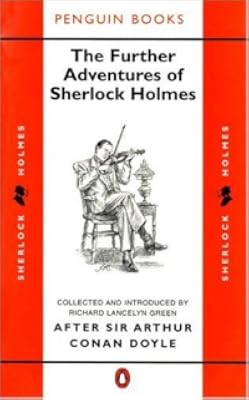
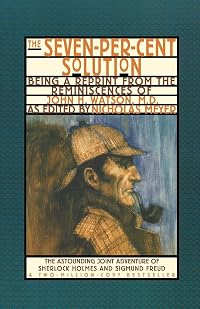
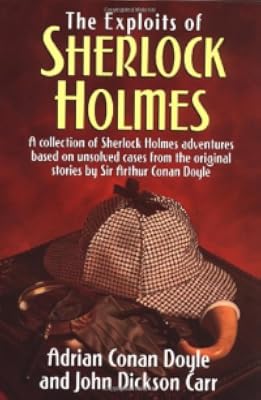

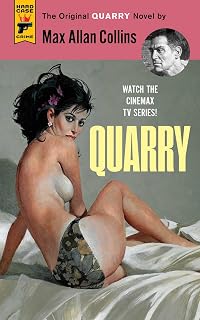




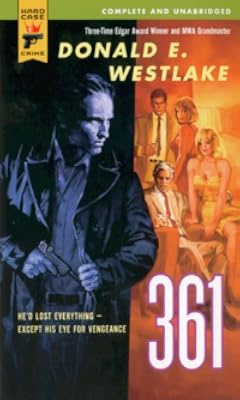

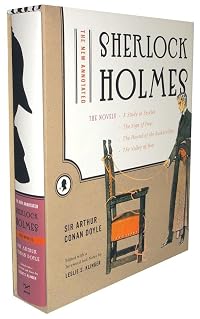








Member Recommendations
JonathanGorman The Valley of Fear reminded me a lot of Red Harvest and I can't but help to wonder if Hammett had read Valley of Fear. (At the least they probably draw from some of the same inspirations.
20
Member Reviews
You can never go wrong with an original Sherlock Holmes adventure, and The Valley of Fear is a well-wrought story from first to last. But one legitimate problem with it is that Holmes and Watson are only in the first half of the book, and even then they are not in their best form. The solution to the mystery itself can be guessed at relatively easily (the general nature, if not its particulars) and, if you think about the ending of the book, it would have been better for all concerned if they had not interfered in the first place. Readers might have reservations about the second half of the book but, when you get over the disappointment of not having Holmes and Watson around, it is perfectly enjoyable. Overall, The Valley of Fear is show more quick and easy, and it's always a pleasure to be in a room with Sherlock Holmes, at the sufferance of an exasperated policeman, as he examines a bloodstained footprint on a window ledge. show less
I love this book. It’s very dark and sad, far more melancholy than the gothic horror of “Baskerville.” Like A Study in Scarlet, the second part jumps back in time and tells the origin story of the killer and the victim. However, Doyle’s craft has improved through the years, and here, this framing technique is more polished. The characters are well-developed, the villains are super creepy, and there are a few surprises along the way. I also liked the bleak tone. This is a great book for me when I’m in the mood for something sad, something with noble and brave heroes who miss out on their HEA. That said, this book wasn’t perfect. I can’t explain what I didn’t like without giving a very slight spoiler: Doyle still has a show more nasty habit of killing off major characters “offscreen,” as it were. The major deaths in this story felt almost like afterthoughts. All in all, it’s memorable and poignant. The perfect book to read with a cup of hot tea on a rainy evening. show less
I took a break from Sherlock Holmes because I was getting bored of the formulaic storytelling. Even though the plot of Valley of Fear follows a scheme we are all familiar with, my hiatus was long enough that I did not mind. I could stomach the repetition of gimmicks used in previous stories. (Sherlock being condescending and Watson's all-forgiving attitude bothered me the most.) Additionally, the second half of the story was so different from the first that I forgot I was reading a Sherlock Holmes mystery. The refreshing shift in the narrative in the second half of the story kept me engaged, as it provided a deeper understanding of the characters and their motivations in part one. Part One finds Sherlock investigating a murder at a show more remote location, complete with a moat and drawbridge. Meanwhile, Part Two delves into the backstory of McMurdo, weaving and unraveling and weaving again a tangled web of secrecy and deceit that extends beyond what initially seemed obvious. His involvement in the clandestine society steeped in blackmail and murder not only adds depth to the storyline but also sheds light on the darker side of the era (the start of the Chicago mafia family?). show less
I went into "The Valley of Fear" hesitantly, as I'd heard that it was the dud of the canon. Well, I can't say I agree...
The first half of the book is a satisfying little mystery. It's certainly clear that Conan Doyle was bored with Holmes by now, as he continued to fill the gaps in the timeline rather than further the adventures, and indeed he spends as much time with other characters as he does with the formerly addicted detective. However, the author's ability to write the Holmes/Watson relationship has never been smoother, and the opening scenes between them are delightful. The characters and setting of the mystery are all interesting enough. However, pretty much every trope, clue and element of the solution has been used in a show more previous work, suggesting to me that Conan Doyle probably should have stopped after "The Hound of the Baskervilles".
The second half, meanwhile, is a very enjoyable story. Unfortunately, it doesn't feature Holmes or Watson or - for that matter - the other elements which are referred to in the opening chapter, and which I assumed would play a role. Also - as in a few of the short stories - Conan Doyle's attempts to write authentic American and gangster dialogue comes off as both lazy and forced. Again, nothing here is new: the secret society, the romantic melodrama, the sometimes-awkward exposition. Indeed, the novel's entire structure is reminiscent of the first two novels, only I'd argue "Valley of Fear" bests both of them. It's easily more believable than the ludicrous The Sign of Four, and much better written than the at-times ponderous A Study in Scarlet.
In closing, no: there's nothing new here. And if you're reading the canon in order, you'll probably be annoyed by the promise of a follow-up to earlier stories which is never taken up. For newcomers to Holmes, I'd suggest reading the short stories and then The Hound of the Baskervilles. After that, if you're still craving Holmes, this might be an enjoyable - if unsatisfying - dessert. show less
The first half of the book is a satisfying little mystery. It's certainly clear that Conan Doyle was bored with Holmes by now, as he continued to fill the gaps in the timeline rather than further the adventures, and indeed he spends as much time with other characters as he does with the formerly addicted detective. However, the author's ability to write the Holmes/Watson relationship has never been smoother, and the opening scenes between them are delightful. The characters and setting of the mystery are all interesting enough. However, pretty much every trope, clue and element of the solution has been used in a show more previous work, suggesting to me that Conan Doyle probably should have stopped after "The Hound of the Baskervilles".
The second half, meanwhile, is a very enjoyable story. Unfortunately, it doesn't feature Holmes or Watson or - for that matter - the other elements which are referred to in the opening chapter, and which I assumed would play a role. Also - as in a few of the short stories - Conan Doyle's attempts to write authentic American and gangster dialogue comes off as both lazy and forced. Again, nothing here is new: the secret society, the romantic melodrama, the sometimes-awkward exposition. Indeed, the novel's entire structure is reminiscent of the first two novels, only I'd argue "Valley of Fear" bests both of them. It's easily more believable than the ludicrous The Sign of Four, and much better written than the at-times ponderous A Study in Scarlet.
In closing, no: there's nothing new here. And if you're reading the canon in order, you'll probably be annoyed by the promise of a follow-up to earlier stories which is never taken up. For newcomers to Holmes, I'd suggest reading the short stories and then The Hound of the Baskervilles. After that, if you're still craving Holmes, this might be an enjoyable - if unsatisfying - dessert. show less
Sherlock Holmes receives a coded warning from within his nemesis Moriarty’s network about a crime that is to take place shortly. Holmes has hardly finished decoding the message when news reaches him that a murder has taken place. Holmes and Watson head for Sussex to investigate the murder. Holmes spots details that others overlook and solves the murder. Its resolution leads to a very different second half of the novel, where a secret society terrorizes a Pennsylvania mining valley.
I enjoyed the second half of the book as much or more than the first half, which is more characteristically Holmesian. It’s essentially two loosely connected novellas. I think Doyle must have enjoyed breaking out of the mold he had created with his show more Sherlock Holmes adventures. The first half of the book gave readers what they craved of the familiar detective, and the second half gave Doyle an opportunity he craved of writing of a world beyond Victorian England. show less
I enjoyed the second half of the book as much or more than the first half, which is more characteristically Holmesian. It’s essentially two loosely connected novellas. I think Doyle must have enjoyed breaking out of the mold he had created with his show more Sherlock Holmes adventures. The first half of the book gave readers what they craved of the familiar detective, and the second half gave Doyle an opportunity he craved of writing of a world beyond Victorian England. show less
In The Valley of Fear,, Doyle employs a narrative structure he used in several earlier Sherlock Holmes adventures. As in earlier uses of the device, a man comes to England having made his fortune in an exotic locale (in this case, the gold fields of California). While abroad, he has run afoul of some local organization, here, a putatively benevolent brotherhood. After his return, he marries a gracious, beautiful woman who knows nothing of his previous life, a past that threatens their present idyllic existence. Thus, unraveling the current case that demands Holmes’s involvement leads to an account of the story behind the story. In Valley, this results in two extended tales of roughly equal length.
The second tale is a potboiler set in show more a coal and iron-mining region, whereas the first is one of the cases in which Holmes fails to prevent a death he foresees. I was impatient with the second tale, but then it was resolved in a way that surprised me. Well-done. Meanwhile, the first tale and the coda at the end involve Professor Moriarty in a contrived way. Perhaps readers had remarked that it was odd that Holmes’s archnemesis hadn’t appeared in any stories until “The Adventure of the Final Problem,” which ends in his death. In that story, Watson seems to be hearing of Moriarty for the first time. Blithely contradicting this, Doyle sets Valley, and therefore, Watson’s awareness of Moriarty, earlier.
As I continue to reread the Holmes canon in order of publication, I found this the weakest so far. Holmes is more garrulous than in earlier tales, surrounded by police investigators who bow to his acknowledged expertise. In this and other ways, the writing seems padded (was Doyle being paid by the word for serial publication?). Nevertheless, I found the solution in the first tale after a couple of misdirects ingenious. show less
The second tale is a potboiler set in show more a coal and iron-mining region, whereas the first is one of the cases in which Holmes fails to prevent a death he foresees. I was impatient with the second tale, but then it was resolved in a way that surprised me. Well-done. Meanwhile, the first tale and the coda at the end involve Professor Moriarty in a contrived way. Perhaps readers had remarked that it was odd that Holmes’s archnemesis hadn’t appeared in any stories until “The Adventure of the Final Problem,” which ends in his death. In that story, Watson seems to be hearing of Moriarty for the first time. Blithely contradicting this, Doyle sets Valley, and therefore, Watson’s awareness of Moriarty, earlier.
As I continue to reread the Holmes canon in order of publication, I found this the weakest so far. Holmes is more garrulous than in earlier tales, surrounded by police investigators who bow to his acknowledged expertise. In this and other ways, the writing seems padded (was Doyle being paid by the word for serial publication?). Nevertheless, I found the solution in the first tale after a couple of misdirects ingenious. show less
Probably my favorite of the Holmes novellas, combining a surprisingly well-constructed murder (at least by the standards of the time) with a well-written drama to give the backstory to it all. While the overall structure of the book is a bit odd in just how minor of an element Holmes seems to be relative to the other stories, I think it worked quite well overall and definitely showcases Conan Doyle's strengths as an author even in the absence of his famous detective.
Members
- Recently Added By
Lists

Crime and Mysteries to Read
746 works; 31 members

First published in 1915
87 works; 11 members

1910s
90 works; 16 members

Haycraft Queen Cornerstones
181 works; 3 members

Detective Stories
343 works; 5 members

20th Century Literature
1,161 works; 55 members

Books Read in 2015
3,299 works; 126 members

Tagged 19th Century
104 works; 7 members

Books Read in 2020
4,379 works; 124 members

Novels/Poems/Short Stories/Anything Storytelling Related
112 works; 2 members

Mind Expanding Books by hackerkid
581 works; 8 members

Books Read in 2022
5,166 works; 114 members

Out of Copyright
244 works; 14 members

Books Read in 2023
5,547 works; 145 members

Books You Read For University
184 works; 3 members

Recommended Reading : 600 Classics Reviewed, Editors of Salem Press, 2015
634 works; 6 members
Talk Discussions
Past Discussions
the valley of fear in Baker Street and Beyond (September 2009)
Author Information

3,998+ Works 169,674 Members
The most famous fictional detective in the world is Arthur Conan Doyle's Sherlock Holmes. However, Doyle was, at best, ambivalent about his immensely successful literary creation and, at worst, resentful that his more "serious" fiction was relatively ignored. Born in Edinburgh, Doyle studied medicine from 1876 to 1881 and received his M.D. in show more 1885. He worked as a military physician in South Africa during the Boer War and was knighted in 1902 for his exceptional service. Doyle was drawn to writing at an early age. Although he attempted to enter private practice in Southsea, Portsmouth, in 1882, he soon turned to writing in his spare time; it eventually became his profession. As a Liberal Unionist, Doyle ran, unsuccessfully, for Parliament in 1903. During his later years, Doyle became an avowed spiritualist. Doyle sold his first story, "The Mystery of the Sasassa Valley," to Chambers' Journal in 1879. When Doyle published the novel, A Study in Scarlet in 1887, Sherlock Holmes was introduced to an avid public. Doyle is reputed to have used one of his medical professors, Dr. Joseph Bell, as a model for Holmes's character. Eventually, Doyle wrote three additional Holmes novels and five collections of Holmes short stories. A brilliant, though somewhat eccentric, detective, Holmes employs scientific methods of observation and deduction to solve the mysteries that he investigates. Although an "amateur" private detective, he is frequently called upon by Scotland Yard for assistance. Holmes's assistant, the faithful Dr. Watson, provides a striking contrast to Holmes's brilliant intellect and, in Doyle's day at least, serves as a character with whom the reader can readily identify. Having tired of Holmes's popularity, Doyle even tried to kill the great detective in "The Final Problem" but was forced by an outraged public to resurrect him in 1903. Although Holmes remained Doyle's most popular literary creation, Doyle wrote prolifically in other genres, including historical adventure, science fiction, and supernatural fiction. Despite Doyle's sometimes careless writing, he was a superb storyteller. His great skill as a popular author lay in his technique of involving readers in his highly entertaining adventures. (Bowker Author Biography) show less

Arthur Conan Doyle has a Legacy Library. Legacy libraries are the personal libraries of famous readers, entered by LibraryThing members from the Legacy Libraries group.
Some Editions
Awards and Honors
Notable Lists
Series

Belongs to Publisher Series
ΒΗΜΑ Noir (005)
Kaiser Krimi (009)
Scherz Krimi (989)
Hard Case Crime (63)
Penguin English Library, 2012 series (2014-09)
insel taschenbuch (3316)
Work Relationships
Is contained in
The Sherlock Holmes Novels: A Study in Scarlet / The Sign of the Four / The Hound of the Baskervilles / The Valley of Fear by Arthur Conan Doyle
Sherlock Holmes: The Complete Novels and Stories, Vol. 1 and 2 (Bantam) by Arthur Conan Doyle (indirect)
EL REGRESO DE SHERLOCK HOLMES - SU ÚLTIMO SALUDO - EL ARCHIVO DE SHERLOCK HOLMES by Arthur Conan Doyle (indirect)
British Mystery Megapack Volume 5 - The Sherlock Holmes Collection: 4 Novels and 43 Short Stories + Extras by Arthur Conan Doyle
Sherlock Holmes - volume 2 : La Vallée de la peur ; Le Chien des Baskerville ; Les Archives de Sherlock Holmes ; Son dernier coup d'archet ; Les Exploits de Sherlock Holmes by Arthur Conan Doyle
A Study in Scarlet / The Sign of Four / The Valley of Fear / The Hound of the Baskervilles / The Adventures of Sherlock Holmes by Arthur Conan Doyle
The Final Adventures of Sherlock Holmes (His Last Bow + The Valley of Fear + The Case-Book of Sherlock Holmes) by Sir Arthur Conan Doyle
Has the adaptation
Is expanded in
Has as a student's study guide
Common Knowledge
- Canonical title
- The Valley of Fear
- Original title
- The Valley of Fear
- Alternate titles*
- Tal der Angst
- Original publication date
- 1914-09 to 1915-05: Serialised in The Strand Magazine (UK) (UK); 1915-02: Book
- People/Characters
- Sherlock Holmes; John H. Watson; Fred Porlock; Inspector Alec MacDonald; Thomas Kay; Sebastian Moran (show all 32); White Mason; John Douglas; Cecil James Barker; Shorter; Ivy Douglas; Ted Baldwin; John McMurdo; Jacob Shafter; Ettie Shafter; Jack McGinty; Mike Scanlan; Teddy Marvin; Jonas Pinto; Tiger Cormac; James Stanger; Arthur Willaby; Evans Pott; Chester Wilcox; Birdy Edwards; Josiah H. Dunn; Professor James Moriarty; Billy; Ames (the butler); Mrs Allen (the housekeeper); Dr Wood; Sergeant Wilson (Sussex Constabulary)
- Important places
- 221B Baker Street, London, England, UK; Sussex, England, UK; Pennsylvania, USA; Birlstone Manor, Birlstone, Sussex, England, UK; Vermissa Valley
- Related movies
- Sherlock Holmes and the Valley of Fear (1983 | IMDb); The Valley of Fear (1916 | IMDb); The Triumph of Sherlock Holmes (1935 | IMDb)
- First words
- "I am inclined to think –" said I.
- Last words
- (Click to show. Warning: May contain spoilers.)We all sat in silence for some minutes while those fateful eyes still strained to pierce the veil.
- Original language
- English
- Disambiguation notice
- The Valley of Fear is the fourth and final Sherlock Holmes novel by Sir Arthur Conan Doyle. The story was first published in the Strand Magazine between September 1914 and May 1915, and the first book edition was publ... (show all)ished in New York on 27 February 1915.
*Some information comes from Common Knowledge in other languages. Click "Edit" for more information.
Classifications
Statistics
- Members
- 3,517
- Popularity
- 4,684
- Reviews
- 93
- Rating
- (3.74)
- Languages
- 25 — Arabic, Catalan, Chinese, Czech, Danish, Dutch, English, Finnish, French, German, Galician, Greek, Italian, Japanese, Malay, Norwegian (Bokmål), Polish, Russian, Serbian, Slovak, Spanish, Swedish, Turkish, Portuguese (Portugal), Portuguese (Brazil)
- Media
- Paper, Audiobook, Ebook
- ISBNs
- 497
- UPCs
- 3
- ASINs
- 118