On This Page
Description
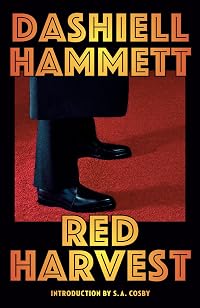
When the last honest citizen of Poisonville was murdered, the Continental Op stayed on to punish the guilty-even if that meant taking on an entire town. Red Harvest is more than a superb crime novel: it is a classic exploration of corruption and violence in the American grain.Tags
Recommendations

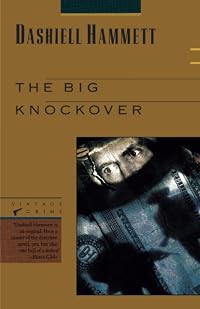
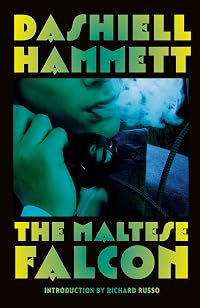
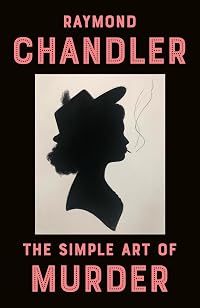
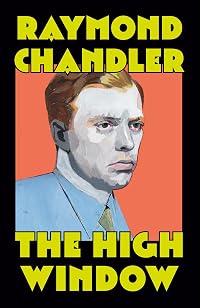

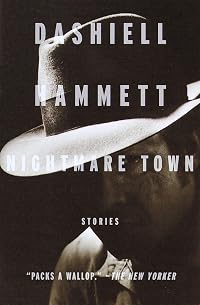
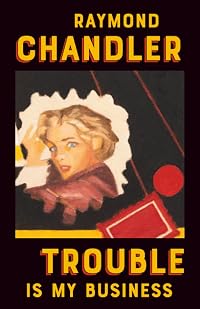
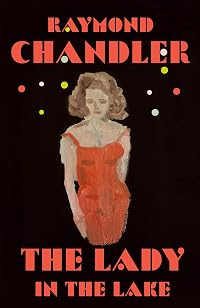
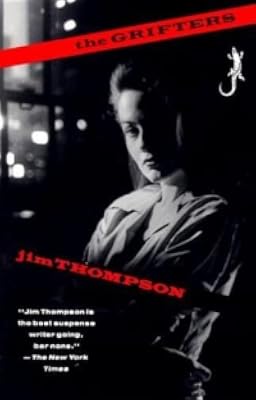





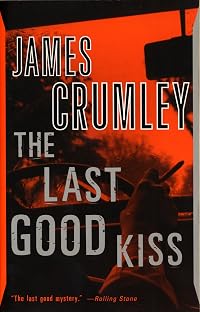
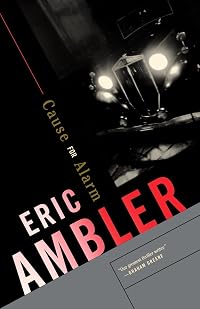
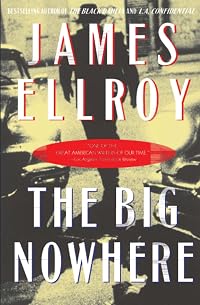
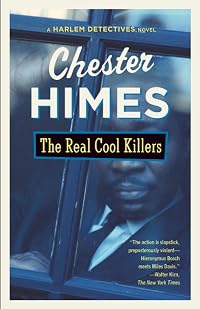

Member Recommendations

Member Reviews
I've always been the dissenting opinion on this one. Yeah, it was influential, but since Hammett himself was copying John Carroll Daly's new hardboiled style, maybe we should give him a bit of the credit. Cynical and definitely hardboiled, Hammett’s Red Harvest is missing the one ingredient which might have made it work for me — Raymond Chandler. Compare this to Raymond Chandler’s first novel, The Big Sleep. Both novels have elements cannibalized from their respective pulp stories, both have bodies dropping left and right, and both are terribly convoluted. Yet Red Harvest comes off as simply a dark and unpleasant tale of corruption and violence, while The Big Sleep is wildly entertaining, almost dream-like. There is nowhere to lay show more the blame except at Hammett’s doorstep.
Chandler could turn a simple phrase into visual magic. Hammett often took a circuitous route, as though in love with his own literary voice. In Red Harvest we get all kinds of lengthy descriptive detours which bogs down any narrative pace whatsoever. And by narrative pace, I mean the next body dropping. It almost feels when you go back and read this one after many years, that this might have been a better tale had Hammett not chosen to insert his Continental Op from the pulps, even though it's a string of Op stories strung together. Instead, Hammett could have turned this into a noir melodrama, an unsuspecting stranger encountering the town and getting twisted up in its corruption. Hardboiled doesn't have to be this bloody, and what's worse, we don't really care about the people dropping left and right, can't even keep track of all the players.
Hammett subtly uses Personville/Poisonville as a metaphor for all of America, painting it as corrupt and violent at its core, and crime-laden due to the “evils” of capitalism. There are plenty of rather quiet and vague marxist underpinnings to the serpentine goings on in the corrupt town, which Hammett based on his own experiences in Montana during a miner’s strike. This would be neither here nor there, if this were a good story, like The Glass Key, or delightful fun like his The Thin Man, but it’s just an unpleasant mess.
Perhaps because Hammett himself hadn’t yet distanced himself from the pulps, this comes off as an ambiguous hodgepodge of some wonderfully written moments, and some that go on much too long. Even the metaphor angle is ambivalent, as Hammett doesn’t proffer any alternatives. If the left-leaning Hammett had an argument to make, he chose not to make it, leaving us with only the violence and ugliness, and a tepid underpinning.
Red Harvest is certainly bloody enough for a hardboiled detective novel — the Op takes a body count while talking with Dinah Brand before an ice pick finds her, and it’s staggering — and there are flashes of good writing — really good writing — but the convoluted plot isn’t offset by an entertaining enough narrative to rank this one as high as Hammett’s better stuff.
I truly believe if this had been handed in outline form to Raymond Chandler, after a few stiff drinks, he’d have made this so readable and entertaining we wouldn’t care about its underpinnings or its flaws. In Hammett’s hands, at least at this point in his career, this is a herky-jerky ride. There is some good stuff here, even great stuff, but it isn’t put together well enough to make it a great read for this reader, or in my opinion, the average reader unfamiliar with the genre. For me, Red Harvest is a reminder why I’ve always preferred Chandler to Hammett. show less
Chandler could turn a simple phrase into visual magic. Hammett often took a circuitous route, as though in love with his own literary voice. In Red Harvest we get all kinds of lengthy descriptive detours which bogs down any narrative pace whatsoever. And by narrative pace, I mean the next body dropping. It almost feels when you go back and read this one after many years, that this might have been a better tale had Hammett not chosen to insert his Continental Op from the pulps, even though it's a string of Op stories strung together. Instead, Hammett could have turned this into a noir melodrama, an unsuspecting stranger encountering the town and getting twisted up in its corruption. Hardboiled doesn't have to be this bloody, and what's worse, we don't really care about the people dropping left and right, can't even keep track of all the players.
Hammett subtly uses Personville/Poisonville as a metaphor for all of America, painting it as corrupt and violent at its core, and crime-laden due to the “evils” of capitalism. There are plenty of rather quiet and vague marxist underpinnings to the serpentine goings on in the corrupt town, which Hammett based on his own experiences in Montana during a miner’s strike. This would be neither here nor there, if this were a good story, like The Glass Key, or delightful fun like his The Thin Man, but it’s just an unpleasant mess.
Perhaps because Hammett himself hadn’t yet distanced himself from the pulps, this comes off as an ambiguous hodgepodge of some wonderfully written moments, and some that go on much too long. Even the metaphor angle is ambivalent, as Hammett doesn’t proffer any alternatives. If the left-leaning Hammett had an argument to make, he chose not to make it, leaving us with only the violence and ugliness, and a tepid underpinning.
Red Harvest is certainly bloody enough for a hardboiled detective novel — the Op takes a body count while talking with Dinah Brand before an ice pick finds her, and it’s staggering — and there are flashes of good writing — really good writing — but the convoluted plot isn’t offset by an entertaining enough narrative to rank this one as high as Hammett’s better stuff.
I truly believe if this had been handed in outline form to Raymond Chandler, after a few stiff drinks, he’d have made this so readable and entertaining we wouldn’t care about its underpinnings or its flaws. In Hammett’s hands, at least at this point in his career, this is a herky-jerky ride. There is some good stuff here, even great stuff, but it isn’t put together well enough to make it a great read for this reader, or in my opinion, the average reader unfamiliar with the genre. For me, Red Harvest is a reminder why I’ve always preferred Chandler to Hammett. show less
I first heard Personville called Poisonville by a red-haired mucker named Dewey Hickey in the Big Ship in Butte. He also called his shirt a shoit.
How’s that for an opening? No way you stop reading until the end. (Check out the laudanum dreams in chapter 21. Hammett would have made a great surrealist.)
Red Harvest (1929!) is the proto-hardboiled gumshoe mystery/crime novel. An out-of-towner mucks up the local criminal combine and all hell breaks loose. Hammett was good at conjuring characters with a few short lines about disarranged facial features and narrating action scenes punctuated by sharpcrack dialogue.
I put the muzzle of my gun in his left eye and said: “You’re making a fine pair of clowns of us. Be still while I get up or show more I’ll make an opening in your head for brains to leak in.”
It may not be high literary art, but it's enough to know that Hammett practically invented the pulp-gritty depiction of corruption and violence as bedrock Americana. show less
How’s that for an opening? No way you stop reading until the end. (Check out the laudanum dreams in chapter 21. Hammett would have made a great surrealist.)
Red Harvest (1929!) is the proto-hardboiled gumshoe mystery/crime novel. An out-of-towner mucks up the local criminal combine and all hell breaks loose. Hammett was good at conjuring characters with a few short lines about disarranged facial features and narrating action scenes punctuated by sharpcrack dialogue.
I put the muzzle of my gun in his left eye and said: “You’re making a fine pair of clowns of us. Be still while I get up or show more I’ll make an opening in your head for brains to leak in.”
It may not be high literary art, but it's enough to know that Hammett practically invented the pulp-gritty depiction of corruption and violence as bedrock Americana. show less
I actually read this in an omnibus edition, but what the hell.
The most amazing thing about this book upon reading it for the first time is the way it echoes down through some of my favourite films. Hammett was well served with adaptations, with The Thin Man and The Maltese Falcon being amongst the best of their era, Falcon in particular being one of the definitive private eye films. Red Harvest, less well known, inspired Kurosawa's brilliant samurai film Yojimbo, Sergio Leone's For A Fistful of Dollars and, er, Walter Hill's Last Man Standing, which i have a soft spot for. None of them directly adapted the book, but the influence is clear, and even more marked in the Coen brother's Miller's Crossing, which captured the language, the show more personality, the down-at-heels stylishness, the alcoholic haze and brought it to glorious life. Read this book with Gabriel Byrne's voice in your head. It's lovely.
So the nameless, overweight and frequently drunk Continental Op turns up in Personville, colloquially known as Poisonville, at the behest of the local newspaper editor. The newspaper editor turns up dead and it turns out Personville is choking on corruption and gangsterism and bootlegging and everything bad under the sun. Included in the line up of scoundrels is his client's father. Having solved the murder by page 50, the Op has also bullied the father into paying him to essentially clean up Personville, which he then proceeds to do.
There follows a scheming, twisting, tale of many, many murders as the Op pits faction against faction, finding any available spanners and tossing them into the works until the whole damn town explodes around, nearly taking him with it. the Op is the original hard-boiled, smart-talking, fast-punching quick-shooting gumshoe who's so good at outsmarting everyone around him, he even manages to outsmart himself. This is a fantastic novel, told with spare, witty language. It's a touchstone in popular culture, a classic of its kind and an all-round awesome read. show less
The most amazing thing about this book upon reading it for the first time is the way it echoes down through some of my favourite films. Hammett was well served with adaptations, with The Thin Man and The Maltese Falcon being amongst the best of their era, Falcon in particular being one of the definitive private eye films. Red Harvest, less well known, inspired Kurosawa's brilliant samurai film Yojimbo, Sergio Leone's For A Fistful of Dollars and, er, Walter Hill's Last Man Standing, which i have a soft spot for. None of them directly adapted the book, but the influence is clear, and even more marked in the Coen brother's Miller's Crossing, which captured the language, the show more personality, the down-at-heels stylishness, the alcoholic haze and brought it to glorious life. Read this book with Gabriel Byrne's voice in your head. It's lovely.
So the nameless, overweight and frequently drunk Continental Op turns up in Personville, colloquially known as Poisonville, at the behest of the local newspaper editor. The newspaper editor turns up dead and it turns out Personville is choking on corruption and gangsterism and bootlegging and everything bad under the sun. Included in the line up of scoundrels is his client's father. Having solved the murder by page 50, the Op has also bullied the father into paying him to essentially clean up Personville, which he then proceeds to do.
There follows a scheming, twisting, tale of many, many murders as the Op pits faction against faction, finding any available spanners and tossing them into the works until the whole damn town explodes around, nearly taking him with it. the Op is the original hard-boiled, smart-talking, fast-punching quick-shooting gumshoe who's so good at outsmarting everyone around him, he even manages to outsmart himself. This is a fantastic novel, told with spare, witty language. It's a touchstone in popular culture, a classic of its kind and an all-round awesome read. show less
The main character is unnamed in this story; he's known as the Continental Op because he works for the Continental Agency based in San Francisco. He's in the lovely Montana town of Personville, often called "Poisonville," which he quickly finds out is appropriate. Dashiell Hammett basically gave us the blueprint for hard-boiled detective fiction, so you know what to expect here. Violence, lots of it. Double-crosses and people not who they seem to be. Corrupt politicians and police. A dame, nearly as hard-drinking as our hero. Romantic entanglements, though they're not terribly romantic. Wisecracks.
One thing I was a little surprised about is that the Continental Op doesn't come across as what has become the typical hero - he mentions show more that a woman he meets is a little taller than his own 5'7", and also that he has some extra weight on him. He gets tired having to take a long walk across town. On the other hand, he has truly superhuman abilities to ingest and process alcohol. But whatever he lacks in looks and fitness, he more than makes up for in guts and sardonic wit. He can shoot and face death with the best of them, and also describe things in his own special way: "She made a face at me and put her glass where she thought the table was. She was eight inches wrong."
I would call it a "rollicking" read, because it moves at a good clip, but that word implies more lighthearted fun than this book is. This one is dark and the laughs are of the cynical kind. It's great, though, because with the benefit of years of noir films and hardboiled books behind us, a reader will hear the Continental Op's voice loud and clear in his or her head and have no trouble visualizing every character and setting.
Recommended for: fans of anything that's had Hammett as an inspiration, from Encyclopedia Brown to Sin City.
Quote: He stood at the foot of the bed and looked at me with solemn eyes. I sat on the side of the bed and looked at him with whatever kind of eyes I had at the time. show less
One thing I was a little surprised about is that the Continental Op doesn't come across as what has become the typical hero - he mentions show more that a woman he meets is a little taller than his own 5'7", and also that he has some extra weight on him. He gets tired having to take a long walk across town. On the other hand, he has truly superhuman abilities to ingest and process alcohol. But whatever he lacks in looks and fitness, he more than makes up for in guts and sardonic wit. He can shoot and face death with the best of them, and also describe things in his own special way: "She made a face at me and put her glass where she thought the table was. She was eight inches wrong."
I would call it a "rollicking" read, because it moves at a good clip, but that word implies more lighthearted fun than this book is. This one is dark and the laughs are of the cynical kind. It's great, though, because with the benefit of years of noir films and hardboiled books behind us, a reader will hear the Continental Op's voice loud and clear in his or her head and have no trouble visualizing every character and setting.
Recommended for: fans of anything that's had Hammett as an inspiration, from Encyclopedia Brown to Sin City.
Quote: He stood at the foot of the bed and looked at me with solemn eyes. I sat on the side of the bed and looked at him with whatever kind of eyes I had at the time. show less
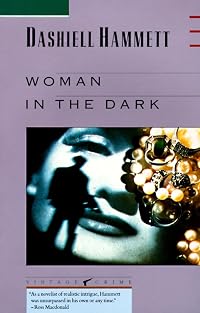
This is one of those books I love beyond a number of other “better” works of art, so don’t expect a balanced and overly critical review. Not that the book isn't fantastic. [SPOILERS AHEAD, SPOILERS AHEAD:]My very first exposure to Hammett was the novella, Woman in the Dark, published separately as a slender volume which I read in college. I knew very little about Hammett save he was supposed to be the man who inspired Chandler and I loved Chandler as much back then as I do today. The edition I read was this long skinny page of sans serif font that made my head ache in just the short time it took to read one chapter. Since I was always suffering from some kind of hangover in those years, I attributed the crummy feeling the book show more gave me not to a layout and design idiot, but to Hammett himself and didn’t pick up another book of his for ten solid years.This was the book I picked up. If there were ever a novel to cure anyone of those delusional “good old days” nostalgias for times before when they lived, back when everything was good and pure unlike the filth we see today, this is the novel. Red Harvest oozes corruption, crime, murder, and action from every page and it’s a nasty, thrilling piece of business.From page one, Hammett had me by the throat and he didn’t let go. Here’s how the book opens: I first heard Personville called Poisonville by a red-haired mucker named Hickey Dewey in the Big Ship in Butte. He also called his shirt a shoit. I didn’t think anything of what he had done to the city’s name. Later I heard men who could manage their r’s give it the same pronunciation. I still didn’t see anything in it but the meaningless sort of humor that used to make richardsnary the thieves’ word for dictionary. A few years later I went to Personville and learned better. [snip:] The city wasn’t pretty. Most of its builders had gone in for gaudiness. Maybe they had been successful at first. Since then the smelters whose brick stacks stuck up tall against a gloomy mountain to the south had yellow-smoked everything into uniform dinginess. The result was an ugly city of forty thousand people, set in an ugly notch between two ugly mountains that had all been dirtied up by mining. Spread over this was a grimy sky that looked as if it had come out of the smelters’ stacks. The first policeman I saw needed a shave. The second had a couple of buttons off his shabby uniform. The third stood in the center of the city’s main intersection — Broadway and Union Street — directed traffic, with a cigar in one corner of his mouth. After that I stopped checking them up. Hired by a young newspaper man, Donald Willsson, son of Elihu Willsson, whose mining company owns Personville lock, stock, and barrel, Hammett’s unnamed detective, the Continental Operative arrives in town to meet with his client. His client is dead before the fourth page is over. His father hires the Continental Op to investigate the murder, and the Op makes his own arrangements. It seems that several years ago Elihu called in the mob to help break the coal miner’s union and ever since then the mob has owned a sizable chunk of Willsson’s ugly little city. The Op promises Willsson he will clean the town out.What follows is a quickening descent into hell. The Op cozies up to a money addled floozy in town, Dinah Brand, and through her he temporarily gets on the good side of a gambler and muscle man in town, Max “Whisper” Thaler, before setting him against Dinah and dragging in the town bootlegger, Pete the Finn, loan shop and bail bondsmen Lew Yard, bank robber Reno Starkey, and police chief Noonan. And each guy’s own personal army of thugs and hired guns.What’s remarkable throughout the book is how Hammett, and through him, the Continental Op manages to keep all the plates spinning, keep all the heavies against each other, keep unhelpful power blocs from forming, and keep each person from tumbling to the fact that he’s the man who’s balling up the works. This is not to say that no one takes a shot at the detective or that he leaves unscarred.Poisonville works its vicious magic on our “hero” as well turning him blood simple. Along the way, the Continental Op finds he rather enjoys pitting one crime boss against the other and watching them blow merry hell out of each other. He walks a very fine line between cleaning out the town and becoming just another vicious member in the city’s power plays. Along the way he solves not just the murder of his client (a piece of cake he cracks early in the book), but also who murdered Dinah Brand (possibly he himself), who murdered lawyer Charles Proctor Dawn, and who killed Noonan’s younger brother Tim years ago.There are so many bodies piled up in Poisonville that sometimes keeping track of the story is tricky. Hammett has put a lot of story in the way of the plot here. The only real drawback to this is keeping track of the various criminals, no easy task since they’re really only briefly introduced before we move along or they die. The pacing throughout is tight, breakneck tight, the Op barely even sleeping and the story hustling along with him. Working against a deadline of his boss finding out just what kind of mayhem he’s up to, the gangsters finally putting two and two together, and a bullet finally catching up to him, the Op has no choice but to think on his feet and sleep that way too.Blisteringly well written, Hammett's second novel packs the kind of wallop modern crime writers only wish they had in them. show less
Dashiell Hammett's first novel Red Harvest is far from his best, but it sings with the same voice as his later works. No one writing today could get the sentence "She looked as if she were telling the truth, though with women, especially blue-eyed women, that doesn't always mean anything." published. No character in a modern novel describes drinking as such a detached act void of significance: "I went into the kitchen, found a bottle of gin, tilted it to my mouth, and kept it there until I had to breathe." And you don't have to listen long or carefully to Mr. Charles Proctor Dawn speak in pretentious riddles before you hear Sydney Greenstreet's personification of Kasper Gutman.
Whereas his later novels limit themselves to serial show more individual murders, Red Harvest, true to its name, produces a cornucopia of dead bodies killed in myriad brutal ways - stabbed with knives and ice picks, machine-gunned, dynamited. These grisly scenes play out over the course of several weeks yet fail to attract the faintest attention outside the city in which they occur until near the novel's end, when a few out-of-town reporters make inconsequential, almost rumored, appearances.
Hammett's unnamed detective is as intuitively wise as Sam Spade (switching hotels and registering under assumed names often), as caustically observant as Nick Charles: "His clothes were dark and unclean looking without actually being dirty." He doesn't solve mysteries so much as relate events, and is the maestro orchestrating confrontations between rival factions. In a town where even the police and government are corrupt, he manages to stay alive and out of jail despite his primacy in the mayhem. His biggest worry seems to be getting in trouble with his employer, the San Francisco branch of the Continental Detective Agency.
Red Harvest is an easy, enjoyable read if you lower your expectations and accept that this is Hammett's first foray into a new type of fiction, one he gets significantly better at through repeated practice. show less
Whereas his later novels limit themselves to serial show more individual murders, Red Harvest, true to its name, produces a cornucopia of dead bodies killed in myriad brutal ways - stabbed with knives and ice picks, machine-gunned, dynamited. These grisly scenes play out over the course of several weeks yet fail to attract the faintest attention outside the city in which they occur until near the novel's end, when a few out-of-town reporters make inconsequential, almost rumored, appearances.
Hammett's unnamed detective is as intuitively wise as Sam Spade (switching hotels and registering under assumed names often), as caustically observant as Nick Charles: "His clothes were dark and unclean looking without actually being dirty." He doesn't solve mysteries so much as relate events, and is the maestro orchestrating confrontations between rival factions. In a town where even the police and government are corrupt, he manages to stay alive and out of jail despite his primacy in the mayhem. His biggest worry seems to be getting in trouble with his employer, the San Francisco branch of the Continental Detective Agency.
Red Harvest is an easy, enjoyable read if you lower your expectations and accept that this is Hammett's first foray into a new type of fiction, one he gets significantly better at through repeated practice. show less
I enjoyed the guns, cigars, and the rivers of gin flowing on every page. I like Hammett’s wordplay a lot. He turns phrases with an awkward fun-ness. One of the key characteristics of The Continental Op is his nonchalant manner. In the middle of gunfights his character is written as if everything is no big deal and he takes nothing seriously. He comes across as a man who is bored by anyone without a severe economy of words. He even gets bored with himself when he has to explain things and usually just truncates his own speech. He is all of our definitions of hardboiled.
Members
- Recently Added By
Lists

1001 Books You Must Read Before You Die
1,448 works; 1,133 members

The Guardian's 1000 Novels Everyone Must Read
1,005 works; 547 members

Noirvember: The Best Noir
113 works; 56 members

Best Noir Fiction
160 works; 14 members
The Top 100 Crime Novels of All Time
100 works; 15 members

Golden Age of Detection
35 works; 10 members
501 Must-Read Books
529 works; 71 members

Top 100 Mystery Novels of All Time
98 works; 9 members

H.R.F. Keating's 100 Best Crime & Mystery Books
100 works; 8 members

Books mentioned in Julian Symons’ Bloody Murder
438 works; 6 members

Top 100 to Read before you Die
109 works; 7 members

Books Read in 2022
5,166 works; 112 members

Tozai Mystery Best 100 | The Top 100 Mystery Novels
111 works; 3 members
Art Bourgeau's Favorites [Mystery Lovers Companion, 1986]
124 works; 2 members

Books Read in 2021
5,361 works; 113 members

Books Read in 2025
4,091 works; 97 members

1920s
141 works; 6 members

Books Read in 2020
4,379 works; 123 members
Favourite Books
1,819 works; 310 members

Books
85 works; 1 member
20th Century Literature
1,161 works; 54 members

100 Best Thrillers of All Time
100 works; 6 members
Time Magazine's "All-Time 100"
113 works; 15 members

A Rainbow of Books: Colors in the Title
570 works; 24 members

Books Read in 2016
4,666 works; 199 members
Larry McCaffery's 20th Century Greatest Hits: 100 English-Language Books
103 works; 12 members

Read
293 works; 4 members

Literary Works Read in College
316 works; 15 members
Time's All-Time 100 Novels
100 works; 27 members

Books Read in 2018
4,360 works; 110 members
Author Information

363+ Works 32,304 Members
Samuel Dashiell Hammett was born on May 27, 1894 in St Mary's County, Maryland. Raised in Baltimore and Philadelphia, he attended Baltimore Polytechnic until he was 13 years old, but was forced to drop out and work a series of jobs to help support his family. At the age of 21 Hammett was hired by the Pinkerton National Detective Agency as an show more operative. After a stint in the United States Army during World War II, he married a nurse named Josephine Annas Dolan, whom he met when he fell ill with tuberculosis. In 1922, Hammett began writing for Black Mask magazine. Using his background in detective work, he created the tough guy detective characters Sam Spade and the Continental Op, as well as debonair sleuths Nick and Nora Charles. By 1927, Hammett had written the Poisonville series, which later became the novel Red Harvest. He wrote more than 85 short stories and five novels during his lifetime. The novels include The Dain Curse, The Glass Key, The Thin Man, and The Maltese Falcon, which was later adapted into a classic movie starring Humphrey Bogart. He also wrote an autobiography entitled Beams Falling: The Art of Dashiell Hammett. After his marriage faltered in the late 1920s, Hammett met Lillian Hellman, then a married 24-year-old aspiring playwright. In 1930, Hellman left her husband for Hammett. Eventually they both divorced their spouses and, although the two never married, they remained together until Hammett's death on January 10, 1961. (Bowker Author Biography) show less
Some Editions
Awards and Honors
Awards
Notable Lists
Series

Belongs to Publisher Series
Work Relationships
Is contained in
The Dain Curse / The Thin Man / The Glass Key / Red Harvest / The Maltese Falcon by Dashiell Hammett
Dashiell Hammett: The Library of America Edition: (Two-volume boxed set) by Dashiell Hammett (indirect)
Club del misterio. Volumen I: Prólogo de J. J. BORGES. "El cuento policial, IX" . Dashiell HAMMETT: "Cosecha roja". Arthur CONAN DOYLE: "Las aventuras de Shrlock Holmes". Hellery QUEEN: "Cara a cara". Raymond CHANDLER: "El sueño eterno". Patricia IHGSMITH: Erle STANLEY GARDNER: "El cuchillo". "El caso del juguete mortífero". James HADLEY CHASE: "Impulso creador". "El secuestro de Miss Blandish". Nicholas BLAKE: "La bestia debe morir". Volumen 2: Prólogo de R. CHANDLER: " El simpl by AA VV (indirect)
The Glass Key / The Thin Man / Red Harvest / The Adventures of Sam Spade / The Maltese Falcon / The Dain Curse by Dashiell Hammett
The Thin Man / The Adventures of Sam Spade / The Glass Key / The Maltese Falcon / Red Harvest by Dashiell Hammett
The Dain Curse / The Thin Man / The Glass Key / Red Harvest / The Maltese Falcon / Selected Stories by Dashiell Hammett
Inspired
Common Knowledge
- Canonical title
- Red Harvest
- Original title
- Red Harvest
- Alternate titles*
- Piombo e sangue
- Original publication date
- 1929
- People/Characters
- Continental Op; Donald Willsson; Elihu Willsson; Dinah Brand
- Important places
- Personville, Montana, USA (fictitious mining town)
- Related movies
- Roadhouse Nights (1930 | IMDb); Yojimbo (1961 | IMDb); A Fistful of Dollars (1964 | IMDb); Django (1966 | IMDb); The Warrior and the Sorceress (1984 | IMDb); Last Man Standing (1996 | IMDb)
- Dedication
- To Joseph Thompson Shaw
- First words
- I first heard Personville called Poisonville by a red-haired mucker named Hickey Dewey in the Big Ship in Butte.
- Last words
- (Click to show. Warning: May contain spoilers.)He gave me merry hell.
- Original language
- English
*Some information comes from Common Knowledge in other languages. Click "Edit" for more information.
Classifications
Statistics
- Members
- 3,398
- Popularity
- 4,939
- Reviews
- 100
- Rating
- (3.85)
- Languages
- 17 — Catalan, Danish, Dutch, English, Finnish, French, German, Hungarian, Italian, Norwegian (Bokmål), Norwegian, Russian, Slovenian, Spanish, Swedish, Turkish, Portuguese (Portugal)
- Media
- Paper, Audiobook, Ebook
- ISBNs
- 78
- ASINs
- 48