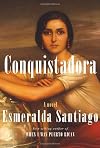
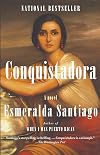
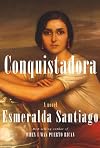
Conquistadora
by Esmeralda Santiago
On This Page
Description
As a young girl growing up in Spain, Ana Larragoity Cubillas is powerfully drawn to Puerto Rico by the diaries of an ancestor who traveled there with Ponce de Leon. And in handsome twin brothers Ramon and Inocente—both in love with Ana—she finds a way to get there. Marrying Ramon at the age of eighteen, she travels across the ocean to Hacienda los Gemelos, a remote sugar plantation the brothers have inherited. But soon the Civil War erupts in the United States, and Ana finds her show more livelihood, and perhaps even her life, threatened by the very people on whose backs her wealth has been built: the hacienda's slaves, whose richly drawn stories unfold alongside her own in this epic novel of love, discovery and adventure.From the Trade Paperback edition.. show less
Tags
Recommendations









Member Reviews
Conquistadora is an arduous three-part journey that follows several generations through the hardships of running a sugar plantation in Puerto Rico. The story belongs to the main female character, Ana Cubillas, but does not neglect providing different aspects of life during this niche in history. Ana's ambition paints her as cold and sometimes cruel, but the determination she shows is remarkable, if not admirable. Conquistadora echoes the classic Gone With the Wind, and the main character reflects the strength and stubbornness of Scarlett O'Hara. Hacienda los Gemelos sings an eerily familiar tune and is just as majestic as Tara. Its beauty and glory is, and also regretfully, built on the back of slavery. Freedom is a concept that evades show more all the characters in novel. Despite their gender, class, history, name, origin, marriage and wealth, each are enslaved and bound by duty, history and country. Some chains are literal, while others are phantoms that bind each person to the Earth or each other. In this Spanish land, during this era, and from the heart of the story, it seems the only way to achieve absolute freedom is through death. It is foretold that Ana Cubillas will live to be an old woman, which brings her relief -- but given the definition of 'freedom' is this really good news? Conquistadora is thematically heavy, epically depicted and steeped in the traditional structure of old world story-telling generally attached to historical fiction. Purest of the historical genre will likely enjoy the lyrical voice of Esmeralda Santiago. show less
Set against the rich historical tapestry of Civil War era Puerto Rico, this generational epic follows the misguided quest of Ana who wants to live the lives of her Conquistador ancestors. As a young girl growing up in Spain she read the diaries of her distant relations who came to the new world seeking their fortune. From that moment she will long for nothing so much as to go to Puerto Rico herself and experience the life they lead.
These dreams become a reality when she marries the son of a man who owns a Puerto Rican plantation. The family embarks on a voyage with the goal of rehabilitating the beleaguered plantation. This mission will test Ana's moral compass as she becomes a slave owner and comes to understand all the horror and evil show more implicit in this practice. Despite what she sees, she does not relent but ruthlessly pursues her dreams even at the expense of her child.
This is a complex story with a simultaneously unsympathetic but admirable protagonist. Ana is repelled by the evil that is slavery, but determined to use it in her ambitious plans to fashion the life that she wants for herself. The setting is rich and the characters are drawn with exquisite detail. show less
These dreams become a reality when she marries the son of a man who owns a Puerto Rican plantation. The family embarks on a voyage with the goal of rehabilitating the beleaguered plantation. This mission will test Ana's moral compass as she becomes a slave owner and comes to understand all the horror and evil show more implicit in this practice. Despite what she sees, she does not relent but ruthlessly pursues her dreams even at the expense of her child.
This is a complex story with a simultaneously unsympathetic but admirable protagonist. Ana is repelled by the evil that is slavery, but determined to use it in her ambitious plans to fashion the life that she wants for herself. The setting is rich and the characters are drawn with exquisite detail. show less
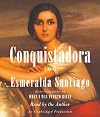
Audiobook read by the author
4****
Ana Cubillas is the only child of wealthy, aristocratic Spaniards. Raised to be a proper young lady, she chafes against the restrictions of her position in society. In her grandfather’s library she finds diaries of an ancestor who traveled to Puerto Rico with Ponce de Leon, and she is convinced her destiny lies on that remote island. When she meets the handsome twin brothers Ramon and Inocente Argoso, she finds a way to get there. Ana marries Ramon, and in 1844 they travel to the remote sugar plantation the brothers have inherited on the island.
This is a sweeping historic epic romance and adventure, focused on one strong woman who refused to give up her dreams. She endures unrelenting heat, disease, show more isolation and relatively primitive facilities. She finds that while expectations are that she be “the lady” of the hacienda, her husband and his brother are not suited to the hard work required to make Los Gemelos the success she envisioned, so she sets to work – pushing, cajoling, pleading and working to make her dream come true. She perseveres despite business setbacks, hurricanes and personal losses. She is not always a likeable person; she can be tactless, single-minded, demanding and stubborn. She can also be loving, kind and generous.
The novel focuses on the years from 1843 to 1865, though we get a little of Ana’s childhood to help define her character. The island’s history is a very important part of Ana’s story. The economic and political challenges of the time period – slavery, class structure, allegiance to a distant king, etc – are explored and examined with a critical eye.
I liked that Santiago took time to flesh out some of the minor characters, particularly several of the slaves or free blacks on the plantation or in nearby villages. I loved Sina Damita, Nena la Lavandera, Conciencia and Flora. My heart broke to hear the story of Jose (the carpenter), a man who endured with dignity and grace.
Santiago writes vividly about the island itself. I spent a couple of months in San Juan back in the mid-1960s. One weekend we drove across the mountains to Ponce – about 65 miles as the crow flies, but about 3 hours on the road (no interstate highway at that time) through the rainforest of the interior. Santiago’s descriptions are so colorful, that even if I had never been there, I could have easily pictured the setting.
At the story’s end, Ana is only 39 years old. And while I was completely satisfied with the book, I was sorry to see it end. I hope Santiago is planning a sequel.
There are few authors who can really do justice to the work when reading the audio version of their own books. Santiago was marvelous. Her passion for the story – for Ana and the other characters – comes through in her performance. show less
4****
Ana Cubillas is the only child of wealthy, aristocratic Spaniards. Raised to be a proper young lady, she chafes against the restrictions of her position in society. In her grandfather’s library she finds diaries of an ancestor who traveled to Puerto Rico with Ponce de Leon, and she is convinced her destiny lies on that remote island. When she meets the handsome twin brothers Ramon and Inocente Argoso, she finds a way to get there. Ana marries Ramon, and in 1844 they travel to the remote sugar plantation the brothers have inherited on the island.
This is a sweeping historic epic romance and adventure, focused on one strong woman who refused to give up her dreams. She endures unrelenting heat, disease, show more isolation and relatively primitive facilities. She finds that while expectations are that she be “the lady” of the hacienda, her husband and his brother are not suited to the hard work required to make Los Gemelos the success she envisioned, so she sets to work – pushing, cajoling, pleading and working to make her dream come true. She perseveres despite business setbacks, hurricanes and personal losses. She is not always a likeable person; she can be tactless, single-minded, demanding and stubborn. She can also be loving, kind and generous.
The novel focuses on the years from 1843 to 1865, though we get a little of Ana’s childhood to help define her character. The island’s history is a very important part of Ana’s story. The economic and political challenges of the time period – slavery, class structure, allegiance to a distant king, etc – are explored and examined with a critical eye.
I liked that Santiago took time to flesh out some of the minor characters, particularly several of the slaves or free blacks on the plantation or in nearby villages. I loved Sina Damita, Nena la Lavandera, Conciencia and Flora. My heart broke to hear the story of Jose (the carpenter), a man who endured with dignity and grace.
Santiago writes vividly about the island itself. I spent a couple of months in San Juan back in the mid-1960s. One weekend we drove across the mountains to Ponce – about 65 miles as the crow flies, but about 3 hours on the road (no interstate highway at that time) through the rainforest of the interior. Santiago’s descriptions are so colorful, that even if I had never been there, I could have easily pictured the setting.
At the story’s end, Ana is only 39 years old. And while I was completely satisfied with the book, I was sorry to see it end. I hope Santiago is planning a sequel.
There are few authors who can really do justice to the work when reading the audio version of their own books. Santiago was marvelous. Her passion for the story – for Ana and the other characters – comes through in her performance. show less
The lives of 19th c. women in Spain were narrow and proscribed, especially for the upper classes. Women were expected to be pious, demure, to stay at home immersed in domestic affairs. Ana chaffed at the thought. Her ancestors were conquistadors who adventured across tumultuous seas to strange new lands. Ana wanted to act in the world, not retreat from it.
Teenaged best friends and lovers Ana and Elena hatched a plan. They would capture the hearts of the handsome Argoso twins, each marrying one of the brothers. This way, when the men tired of them and they were left alone, they would have each other for comfort and intimacy.
The twins were intertwined, inseparable, fulfilling each other’s every need. They were preparing for a boring show more life in Spain. When Ana learned that the family held a plantation in Puerto Rico, she saw her chance to fulfill her conquistador legacy. She wove dreams of wealth and success with the sugar plantation, entrapping the brothers into her fantasy. Five years, and they could return, set for life. Ana married one brother; when Elena came of age, she would marry the other.
The brothers, their parents, and Ana and Elena crossed the sea to the New World. Ana and her husband and his brother went inland to the plantation, leaving Elena with their parents in the city.
Ana was prepared for the depravations and hard work ahead. She steeled herself to being a slave owner. The men were unprepared for this harsh new life. Over the years, as Ana thrived, the twins succumbed to their worst natures, blaming Ana for bewitching them. Ana survives while the men folk succumb. Ana is willing to sacrifice anything and everything for the land that claims her heart and soul.
The novel brings to life the reality of life on the sugar plantations. The lives of the slaves, the cruel work, the heat and humidity are all described. A hurricane flattens the island, followed by cholera. Numerous slaves figure prominently in the story, their ranks filled with children sired by the Spanish men who owned them. These details give depth to this melodramatic family saga.
But now Ana didn’t want to examine her scruples. No, it was too late; a conscience at this stage in her life was too great a burden.
from Conquistadora by Esmeralda Santiago
Ana is an interesting character. She is not beautiful. She is small of stature. She knows what she wants and fights for it, first rebelling against her parents’ expectations and then insisting on playing an active role on the plantation. She ignores the bad actions of her husband and his brother, and the majordomo, because it suits her needs. She knows that their wealth depends on slavery, yet she is tender toward the slaves, ministering to the sick and protecting the weak. We may not like Ana, but must admit that she is extraordinary.
Readers who enjoy historical fiction, a strong female protagonist, and lots of drama will enjoy this one.
I received a book from Vintage Books. My review is fair and unbiased. show less
Teenaged best friends and lovers Ana and Elena hatched a plan. They would capture the hearts of the handsome Argoso twins, each marrying one of the brothers. This way, when the men tired of them and they were left alone, they would have each other for comfort and intimacy.
The twins were intertwined, inseparable, fulfilling each other’s every need. They were preparing for a boring show more life in Spain. When Ana learned that the family held a plantation in Puerto Rico, she saw her chance to fulfill her conquistador legacy. She wove dreams of wealth and success with the sugar plantation, entrapping the brothers into her fantasy. Five years, and they could return, set for life. Ana married one brother; when Elena came of age, she would marry the other.
The brothers, their parents, and Ana and Elena crossed the sea to the New World. Ana and her husband and his brother went inland to the plantation, leaving Elena with their parents in the city.
Ana was prepared for the depravations and hard work ahead. She steeled herself to being a slave owner. The men were unprepared for this harsh new life. Over the years, as Ana thrived, the twins succumbed to their worst natures, blaming Ana for bewitching them. Ana survives while the men folk succumb. Ana is willing to sacrifice anything and everything for the land that claims her heart and soul.
The novel brings to life the reality of life on the sugar plantations. The lives of the slaves, the cruel work, the heat and humidity are all described. A hurricane flattens the island, followed by cholera. Numerous slaves figure prominently in the story, their ranks filled with children sired by the Spanish men who owned them. These details give depth to this melodramatic family saga.
But now Ana didn’t want to examine her scruples. No, it was too late; a conscience at this stage in her life was too great a burden.
from Conquistadora by Esmeralda Santiago
Ana is an interesting character. She is not beautiful. She is small of stature. She knows what she wants and fights for it, first rebelling against her parents’ expectations and then insisting on playing an active role on the plantation. She ignores the bad actions of her husband and his brother, and the majordomo, because it suits her needs. She knows that their wealth depends on slavery, yet she is tender toward the slaves, ministering to the sick and protecting the weak. We may not like Ana, but must admit that she is extraordinary.
Readers who enjoy historical fiction, a strong female protagonist, and lots of drama will enjoy this one.
I received a book from Vintage Books. My review is fair and unbiased. show less
Set in the mid-nineteenth century, Conquistadora is the story of Ana Cubillas. Ana's parents are disappointed that she's not a boy and even more disappointed that she's not a demure, obedient young lady. Instead, she dreams of conquering new territory, like the ancestor who accompanied Ponce de Leon. She marries a young man with family connections to Puerto Rico and convinces Ramon and his twin, Innocente, that a sugar plantation on the island is the ticket to their dreams of wealth and status. Instead, it becomes an obsession for Ana and eventually the death of the twins.
Sugar was dependent on slave labor. Ana can empathize with the feelings of her slaves, but it doesn't stop her from ruthlessly driving them. She's lonely, but shuns show more the company of others in her social class. Ana's contradictions make her a fascinating character. show less
Sugar was dependent on slave labor. Ana can empathize with the feelings of her slaves, but it doesn't stop her from ruthlessly driving them. She's lonely, but shuns show more the company of others in her social class. Ana's contradictions make her a fascinating character. show less
I didn't know much about the history of Puerto Rico before reading this book. I learned so much about Latin American literature and history through this fictional novel. Ana is a determined woman who wants to inhabit her grandfather’s world, and her grit is unmatched by the men in the story. The author includes elements of Catholocism, the religion of the Spanish, and the beliefs of the slaves while conveying fascinating similarities. It was particularly interesting to read about the Caribbean's role as a hub of the slave trade. Ana, the heroine of the story, and the slaves are new to the island, and their parallel survival learning provides a captivating story.
Conquistadora is a must for lovers of sweeping epics. The story revolves around a young girl who leaves her native Spain with her husband and his twin to conquer the wilds of a sugar cane plantation in remote Puerto Rico during the 1800's.
Members
- Recently Added By
Lists

Authors from Puerto Rico
1 work; 1 member

Historical Fiction Lovers
88 works; 4 members
Author Information

14+ Works 2,997 Members
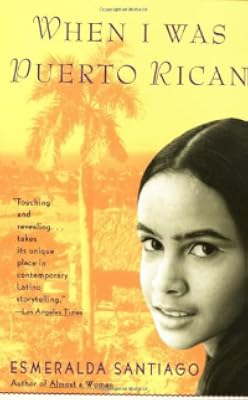
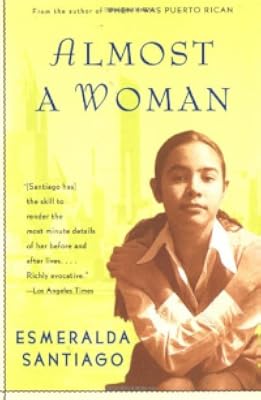
Esmeralda Santiago is the author of two other memoirs, When I Was Puerto Rican and Almost a Woman, which was made into a Peabody Award-winning film for Masterpiece Theatre
Awards and Honors
Distinctions
Common Knowledge
- Canonical title
- Conquistadora
- Original publication date
- 2011
- People/Characters
- Ana Cubillas; Ramón; Inocente
- Important places
- Puerto Rico; Hacienda los Gemelos; Spain
- Dedication
- For Lucas and Ila
- First words
- They came from the sea, their battered sails and black hull menacing the indigo horizon.
- Last words
- (Click to show. Warning: May contain spoilers.)And she walked beneath the morning sun toward another planting season.
Classifications
Statistics
- Members
- 381
- Popularity
- 82,250
- Reviews
- 21
- Rating
- (3.59)
- Languages
- Danish, English, Spanish
- Media
- Paper, Audiobook, Ebook
- ISBNs
- 15
- ASINs
- 2