On This Page
Description
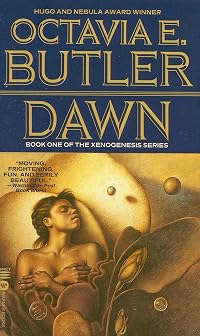
One woman is called upon to rebuild the future of humankind after a nuclear war, in this revelatory post-apocalyptic tale from the award-winning author of Parable of the Sower. When Lilith lyapo wakes from a centuries-long sleep, she finds herself aboard the vast spaceship of the Oankali. She discovers that the Oankali--a seemingly benevolent alien race--intervened in the fate of the humanity hundreds of years ago, saving everyone who survived a nuclear war from a dying, ruined Earth and show more then putting them into a deep sleep. After learning all they could about Earth and its beings, the Oankali healed the planet, cured cancer, increased human strength, and they now want Lilith to lead her people back to Earth--but salvation comes at a price. Hopeful and thought-provoking, this post-apocalyptic narrative deftly explores gender and race through the eyes of characters struggling to adapt during a pivotal time of crisis and change. show lessTags
Recommendations






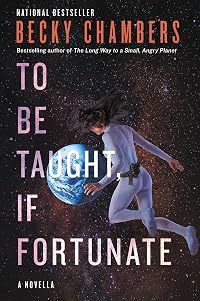
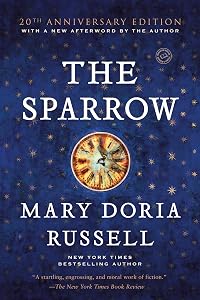
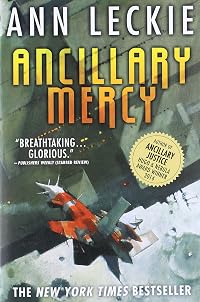
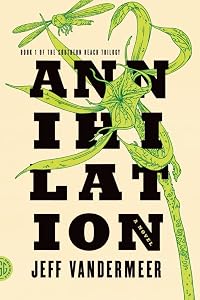
Member Recommendations

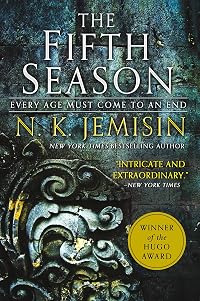
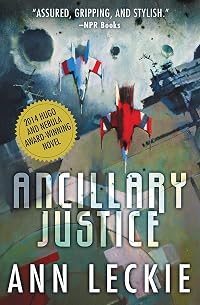
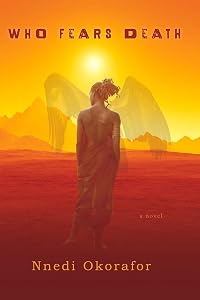
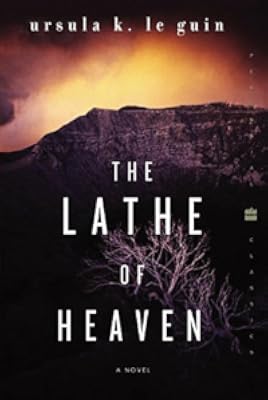
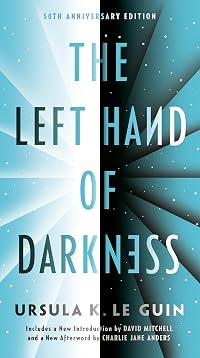
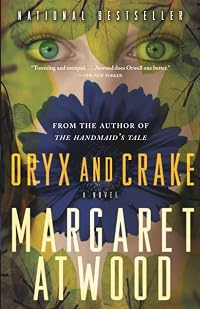
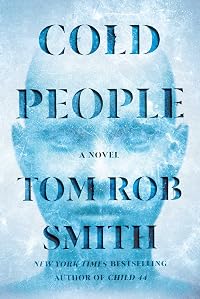
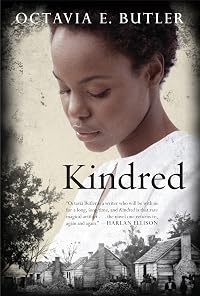
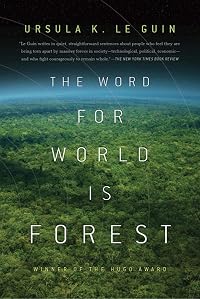
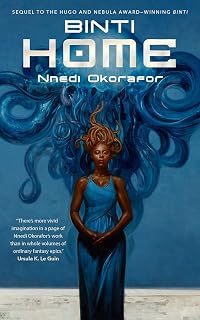
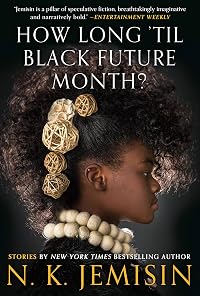
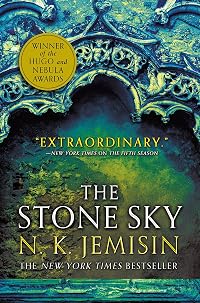
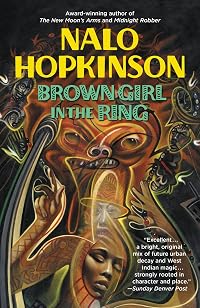
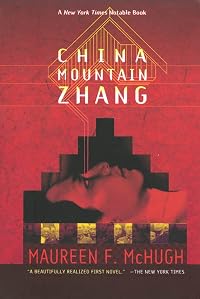
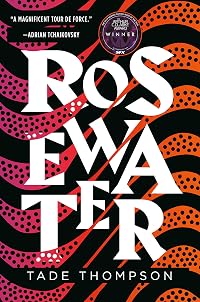
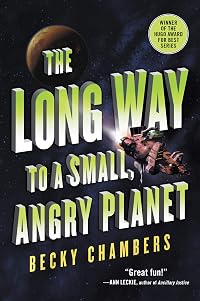
aulsmith Humans deal with aliens with incomprehensible objectives. The Kress is less dark than the Butler


fairyfeller Both are scifi novels exploring ideas of colonisation with an alien species.

Member Reviews
As one of the earliest African-American female science fiction writers, Octavia Butler is a must for anyone who reads sci-fi. Fourteen of her works were nominated for the Locus Award during her career, including each book in the Xenogenesis series, but she only had one win, the novelette “Bloodchild.” Dawn is the first book in the Xenogenesis series, published in 1987, and is a science fiction classic. It achieves what the best in science fiction has to offer: by looking at humanity’s interaction with an alien species, it examines what it means to be human and to be emotionally intimate. It’s a powerful story, uncomfortable in character and theme, and yet I can’t recommend it enough.
Lilith is an African-American woman show more Awakening from a prolonged, artificial sleep. As she reviews her situation, the reader learns humanity was engaged in a full-scale nuclear war that left almost no survivors. Since then, she has been trapped in a white box of a room with virtually no outside stimuli except mysterious voices occasionally asking questions. When Lilith finally meets her captors, she discovers they are humanoid-appearing aliens called Oankali with a talent for gene manipulation, and, even more intimidating, sport a large assortment of tentacles instead of hair. They carefully explain they’ve managed to save the few remaining humans–for the price of some genetic material. Lilith is given little choice to grow comfortable with the Oankali unless she wants to spend the rest of her very long life on their ship. If she can work with them, there’s a chance she can return to Earth.
Divided into four sections, “Womb,” “Family,” “Nursery,” “The Training Floor,” the narrative largely divides the story into chunks of time and stages in Lilith’s interaction with the Oankali. Transitions between the sections seem slightly awkward, sometimes with setting changes, sometimes with significant time breaks. The third person limited point of view brings the reader closer to Lilith’s experience without unnecessary breaks in point of view. Readers who are used to the popular first person perspective, or multi-person perspective may find it hard to emotionally relate to Lilith as she copes with her confinement and the proposed genetic destruction of the human race.
The first time I read it, I was much younger, and lacked compassion for Lilith. She is a frustrating main character who is often focused on opposition without logical basis. This time, I felt I understood her better, although I remained disappointed in her naivete. Butler did an excellent job characterizing the Oankali; I got the sense of an alien motivation, patience and decision-making process while still feeling they were somewhat identifiable. It really is remarkable how few writers are really able to convey a sense of Other; so many times aliens feel like humans dressed up in strange skins. Sadly, Butler also represents the range of humanity including uncomfortable extremes, and it was tough to witness the very real human dynamics.
There is little doubt in my mind that the story of Lilith exploring issues of freedom and sexuality with aliens has a parallel to the experience of the African slave among white slaveholders, or even dominant modern white culture. What does it meant to be genetically pure? To grant humanity to the oppressor? The Oankali are ‘saving’ humanity despite (some) human objection and doing it on their terms. While the Oankali claim their culture is egalitarian and preferable to humanity’s propensity for hierarchy and war, it is clear to Lilith that the third-sex ooloi enjoy a special rank among the Oankali, and that the Oankali are patronizing her and other humans. It is easy to be ‘benevolent’ when they hold the power over human life and death. Essentially, Lilith is given a choice to assimilate or die shipbound, but when she elects to die, the Oankali claim that they know what she really wants, even as she states otherwise. And yet there is nothing simplistic here; it is not merely a case of returning humanity to Earth and letting them recreate their self-destruction. There humans and Oankali trying to do the best as they understand it with a challenging situation.
It is a powerful, uncomfortable story on many levels. The series was released as “Lilith’s Brood,” and in a Youtube promotional video, Samuel Delany said “you read it, you walk around the next few days thinking about it, which is, I think, what good writing makes you do” (“Octavia Butler Profile Piece“). I wholeheartedly agree, which is why I’ll take a breather before advancing to the next in the series, Adulthood Rites.
cross posted with links at: https://clsiewert.wordpress.com/2014/06/05/dawn-by-octavia-butler/ show less
Lilith is an African-American woman show more Awakening from a prolonged, artificial sleep. As she reviews her situation, the reader learns humanity was engaged in a full-scale nuclear war that left almost no survivors. Since then, she has been trapped in a white box of a room with virtually no outside stimuli except mysterious voices occasionally asking questions. When Lilith finally meets her captors, she discovers they are humanoid-appearing aliens called Oankali with a talent for gene manipulation, and, even more intimidating, sport a large assortment of tentacles instead of hair. They carefully explain they’ve managed to save the few remaining humans–for the price of some genetic material. Lilith is given little choice to grow comfortable with the Oankali unless she wants to spend the rest of her very long life on their ship. If she can work with them, there’s a chance she can return to Earth.
Divided into four sections, “Womb,” “Family,” “Nursery,” “The Training Floor,” the narrative largely divides the story into chunks of time and stages in Lilith’s interaction with the Oankali. Transitions between the sections seem slightly awkward, sometimes with setting changes, sometimes with significant time breaks. The third person limited point of view brings the reader closer to Lilith’s experience without unnecessary breaks in point of view. Readers who are used to the popular first person perspective, or multi-person perspective may find it hard to emotionally relate to Lilith as she copes with her confinement and the proposed genetic destruction of the human race.
The first time I read it, I was much younger, and lacked compassion for Lilith. She is a frustrating main character who is often focused on opposition without logical basis. This time, I felt I understood her better, although I remained disappointed in her naivete. Butler did an excellent job characterizing the Oankali; I got the sense of an alien motivation, patience and decision-making process while still feeling they were somewhat identifiable. It really is remarkable how few writers are really able to convey a sense of Other; so many times aliens feel like humans dressed up in strange skins. Sadly, Butler also represents the range of humanity including uncomfortable extremes, and it was tough to witness the very real human dynamics.
There is little doubt in my mind that the story of Lilith exploring issues of freedom and sexuality with aliens has a parallel to the experience of the African slave among white slaveholders, or even dominant modern white culture. What does it meant to be genetically pure? To grant humanity to the oppressor? The Oankali are ‘saving’ humanity despite (some) human objection and doing it on their terms. While the Oankali claim their culture is egalitarian and preferable to humanity’s propensity for hierarchy and war, it is clear to Lilith that the third-sex ooloi enjoy a special rank among the Oankali, and that the Oankali are patronizing her and other humans. It is easy to be ‘benevolent’ when they hold the power over human life and death. Essentially, Lilith is given a choice to assimilate or die shipbound, but when she elects to die, the Oankali claim that they know what she really wants, even as she states otherwise. And yet there is nothing simplistic here; it is not merely a case of returning humanity to Earth and letting them recreate their self-destruction. There humans and Oankali trying to do the best as they understand it with a challenging situation.
It is a powerful, uncomfortable story on many levels. The series was released as “Lilith’s Brood,” and in a Youtube promotional video, Samuel Delany said “you read it, you walk around the next few days thinking about it, which is, I think, what good writing makes you do” (“Octavia Butler Profile Piece“). I wholeheartedly agree, which is why I’ll take a breather before advancing to the next in the series, Adulthood Rites.
cross posted with links at: https://clsiewert.wordpress.com/2014/06/05/dawn-by-octavia-butler/ show less
I came across this book when it was featured in a podcast about the treatment of aliens in scifi. The book is well written - tight prose and brisk action, but it is also compulsively thought provoking, the best form of scifi.
I have previously read Kindred by the same author when I was binge-reading time travel books several years ago. Kindred was good; Dawn is better. It is pure sci-fi - with aliens and spaceships and a devastated earth. But the scifi aspects are there as background - there's no attempt to explain the science, it just supports the narrative. And the story is engaging - the reader is drawn into the story and I, for one, felt compelled to put myself in the role of the characters - how would I have reacted? Would I have show more done things the same or differently?? To me this reaction epitomizes good scifi. And of course,this cerebral aspect is why the book was featured in the podcast.
Great book and I'm looking forward to the next two volumes of the trilogy. show less
I have previously read Kindred by the same author when I was binge-reading time travel books several years ago. Kindred was good; Dawn is better. It is pure sci-fi - with aliens and spaceships and a devastated earth. But the scifi aspects are there as background - there's no attempt to explain the science, it just supports the narrative. And the story is engaging - the reader is drawn into the story and I, for one, felt compelled to put myself in the role of the characters - how would I have reacted? Would I have show more done things the same or differently?? To me this reaction epitomizes good scifi. And of course,this cerebral aspect is why the book was featured in the podcast.
Great book and I'm looking forward to the next two volumes of the trilogy. show less
This book was not without its problems, but it was deep and thoughtful and creative and amazingly fresh for 1987 and it made me mourn the loss of this amazing author yet again. Butler could do what no one else could--look unflinchingly and critically at the human condition and proclaim us doomed while also leaving a flicker of hope. Lilith Iyapo in this series and the fledgling colony that survives a quite different apocalypse in Parable of the Sower/Parable of the Talents give me a perverse sense of hope in dark times. Maybe we're mostly doomed. But maybe someone will survive, and they'll do better next time.
When Lilith lyapo wakes from a centuries-long sleep, she finds herself aboard the vast spaceship of the Oankali. She discovers that the Oankali—a seemingly benevolent alien race—intervened in the fate of the humanity hundreds of years ago, saving everyone who survived a nuclear war from a dying, ruined Earth and then putting them into a deep sleep. After learning all they could about Earth and its beings, the Oankali healed the planet, cured cancer, increased human strength, and they now want Lilith to lead her people back to Earth—but salvation comes at a price. Soon Lilith must choose how much of humanity she is willing to sacrifice for the future of her race.
Hopeful and thought-provoking, this post-apocalyptic narrative deftly show more explores gender and race through the eyes of characters struggling to adapt during a pivotal time of crisis and change. show less
Hopeful and thought-provoking, this post-apocalyptic narrative deftly show more explores gender and race through the eyes of characters struggling to adapt during a pivotal time of crisis and change. show less
(Ok, cheating a little, as I read this as part of an edition that includes the whole Xenogenesis trilogy, but I wanted to record each book as I read it.)
Love the way Octavia Butler, in straightforward prose, can really make the reader feel like you are encountering truly alien beings (and experiencing truly uncommon--almost unexplainable--experiences). And, of course, this allows for some important reflections on what we consider alien, other, frightening in our everyday experience and how we come to understand normalcy in relationship to love, sex, family, etc. Yep, I'll be reading the rest of the trilogy.
Love the way Octavia Butler, in straightforward prose, can really make the reader feel like you are encountering truly alien beings (and experiencing truly uncommon--almost unexplainable--experiences). And, of course, this allows for some important reflections on what we consider alien, other, frightening in our everyday experience and how we come to understand normalcy in relationship to love, sex, family, etc. Yep, I'll be reading the rest of the trilogy.
I've been meaning to read more books by Octavia Butler, but this is one heck of a second introduction (or is it?? are all her books this intense?).
I honestly don't know what to think about this or how to form an organized opinion. This is the most interesting book I've read all year, and probably all of last year too. It's also a read that, once started, is almost impossible to put down. Even when I wasn't reading, I was thinking about it.
Humanity has finally destroyed the Earth in their last war. But when Lilith Iyapo wakes up from a long sleep, she realizes not all of humanity has become extinct. Her "saviors"? a race of extraterrestrials, and they haven't saved her for free. But their price might be more than Lilith and the other show more humans want to give ... and it's not as if they have much of a choice.
The summary sounds way more neat and clean than the book actually is. It's ... so full of characters and sides you don't know whether to trust or stand beside. Even after this book is done with, I still don't know who's "right" and who's "wrong". There's no concrete "sides" or good or bad, so if that's not your thing, don't pick it up. I usually don't like that kind of thing either (re: The Walking Dead), but considering this isn't a bunch of toxic white masculinity written by a bunch of white men, it was much more interesting. (even though I had the ugly whitewashed cover ...)
Anyway, since I really can't make up my mind about what I thought of it, I really can't say much more. :S I WILL read on, though! I still can't stop thinking about this book. show less
I honestly don't know what to think about this or how to form an organized opinion. This is the most interesting book I've read all year, and probably all of last year too. It's also a read that, once started, is almost impossible to put down. Even when I wasn't reading, I was thinking about it.
Humanity has finally destroyed the Earth in their last war. But when Lilith Iyapo wakes up from a long sleep, she realizes not all of humanity has become extinct. Her "saviors"? a race of extraterrestrials, and they haven't saved her for free. But their price might be more than Lilith and the other show more humans want to give ... and it's not as if they have much of a choice.
The summary sounds way more neat and clean than the book actually is. It's ... so full of characters and sides you don't know whether to trust or stand beside. Even after this book is done with, I still don't know who's "right" and who's "wrong". There's no concrete "sides" or good or bad, so if that's not your thing, don't pick it up. I usually don't like that kind of thing either (re: The Walking Dead), but considering this isn't a bunch of toxic white masculinity written by a bunch of white men, it was much more interesting. (even though I had the ugly whitewashed cover ...)
Anyway, since I really can't make up my mind about what I thought of it, I really can't say much more. :S I WILL read on, though! I still can't stop thinking about this book. show less
I read this in a day and haven't stopped thinking about in the couple of weeks since. It's an incredibly uncomfortable read. At the end I was angry with Butler for writing such a grotesque scenario, but on reflection that reaction amounts to shooting the messenger. It's an absolutely brutal exploration of what complete loss of autonomy does to people
Members
- Recently Added By
Lists

Favorite Science Fiction by Women Authors
737 works; 196 members

Best First Contact Stories
33 works; 16 members

Dystopian and Apocalyptic Literature
350 works; 74 members

Expand Your Reading Demographics!
47 works; 15 members

Recommend the 20 best books you've read in the last five years
2,168 works; 602 members
Recommended Speculative Fiction by Women and People of Color
298 works; 45 members

Truly alien aliens (SF)
42 works; 3 members

Novels Published in 1987
81 works; 19 members

Exploration of alternative economical systems
40 works; 3 members
Unbound Worlds 100 Best SF Books
100 works; 8 members

Reader's Digest 50 Best Horror Books to Read
50 works; 3 members

Top Five Books of 2020
982 works; 348 members

Speculative Fiction to Read
706 works; 32 members

Female Author
1,235 works; 67 members

Character-driven SF
59 works; 1 member

Best Books of the 20th Century
193 works; 5 members
Overdue Podcast
806 works; 9 members

The "A" List
67 works; 8 members

Vlogbrothers Book Recommendations
307 works; 4 members
The Atlantic's The Great American Novel
136 works; 12 members

Books Read in 2023
5,547 works; 145 members

Five star books
1,757 works; 108 members

Favorite Books from the 1980s
27 works; 3 members
Female Protagonist
1,056 works; 57 members

Books Read in 2022
5,166 works; 112 members

To Read - Horror
137 works; 14 members

Books Read in College
80 works; 5 members
Shannon's Read-Alikes List
71 works; 8 members

1980s
356 works; 23 members

Library Books/Loans
37 works; 1 member

Books Read in 2020
4,379 works; 123 members

Fiction with Women's Names in the Title
378 works; 15 members

Books Read in 2026
1,919 works; 66 members
Author Information

58+ Works 56,127 Members
Science-fiction writer and novelist Octavia Estelle Butler was born in Pasadena, California, on June 22, 1947. She earned as Associate of Arts degree from Pasadena City College in 1968 and later attended California State University and the University of California. Her first novel, Patternmaster, was the first in a series about a society run by a show more group of telepaths who are mentally linked to one another. She explored the topics of race, poverty, politics, religion, and human nature in her works. She won a Hugo Award in 1984 for her short story Speech Sounds and a Hugo Award and Nebula Award in 1985 for her novella Bloodchild. She received a MacArthur Grant from the John D. and Catherine T. MacArthur Foundation. The award pays $295,000 over a five-year period to creative people who push the boundaries of their fields. She died in Lake Forest Park, Washington on February 24, 2006 at the age of 58. (Bowker Author Biography) show less
Some Editions
Awards and Honors
Series

Belongs to Publisher Series
Work Relationships
Common Knowledge
- Canonical title
- Dawn
- Original title
- Dawn
- Original publication date
- 1987-05
- People/Characters
- Lilith Iyapo; Nikanj; Tate Marah; Gabriel Rinaldi; Curt Loehr; Jdahya (show all 9); Joseph Shing; Tediin; Kahguyaht
- Important places
- Chkahichdakh (spaceship)
- First words
- Alive!
- Last words
- (Click to show. Warning: May contain spoilers.)"She let Nikanj lead her into the dark forest and to one of the concealed dry exits."
- Publisher's editor*
- Mai Més
- Blurbers
- Bear, Greg
- Original language
- English
- Canonical DDC/MDS
- 813.54
- Canonical LCC
- PS3552.U827
*Some information comes from Common Knowledge in other languages. Click "Edit" for more information.
Classifications
Statistics
- Members
- 4,256
- Popularity
- 3,562
- Reviews
- 154
- Rating
- (4.04)
- Languages
- 10 — Catalan, English, Finnish, French, German, Hungarian, Italian, Polish, Spanish, Portuguese (Portugal)
- Media
- Paper, Audiobook, Ebook
- ISBNs
- 30
- ASINs
- 23