
On This Page
Description
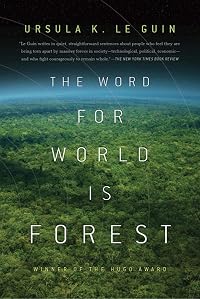
When the inhabitants of a peaceful world are conquered by the bloodthirsty yumens, their existence is irrevocably altered. Forced into servitude, the Athsheans find themselves at the mercy of their brutal masters. Desperation causes the Athsheans, led by Selver, to retaliate against their captors, abandoning their strictures against violence. But in defending their lives, they have endangered the very foundations of their society. For every blow against the invaders is a blow to the humanity show more of the Athsheans. And once the killing starts, there is no turning back. show lessTags
Recommendations


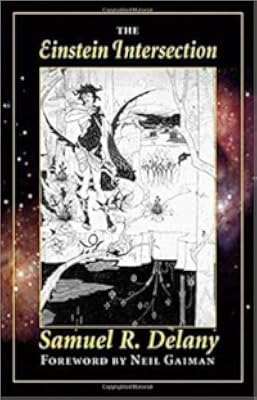
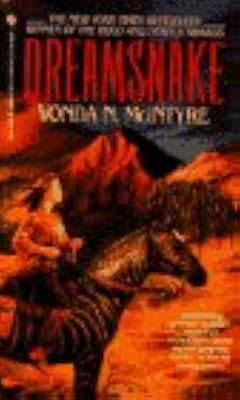



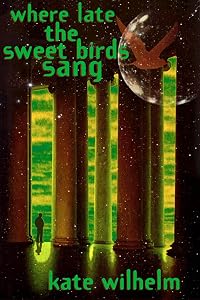



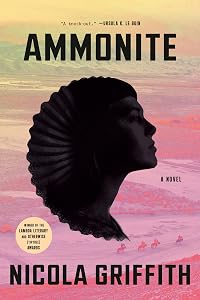






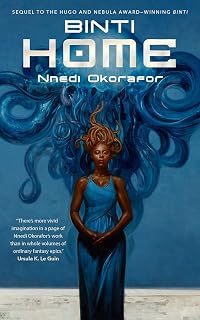
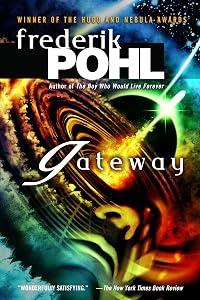


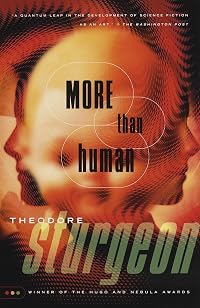
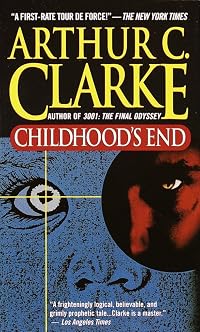
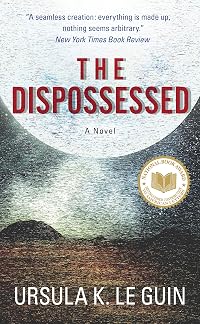
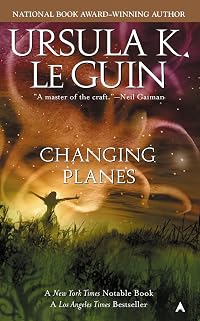
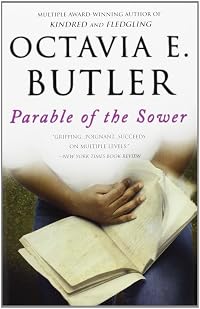
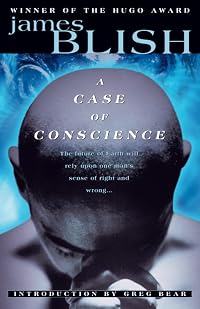







Member Recommendations
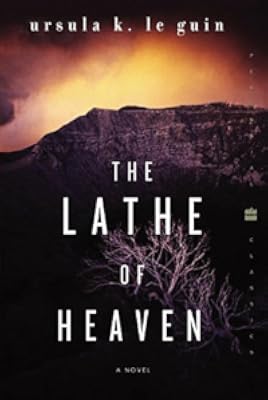
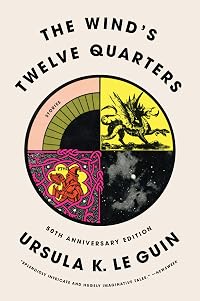
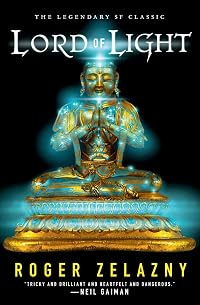
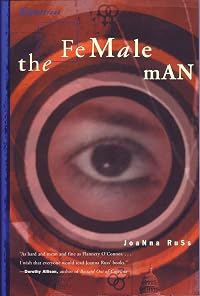
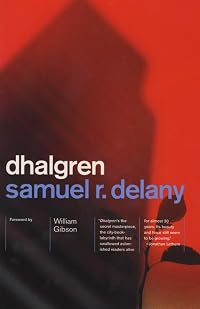
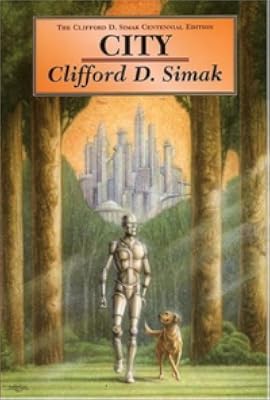
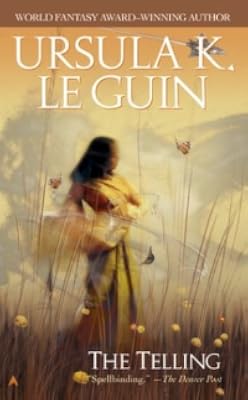
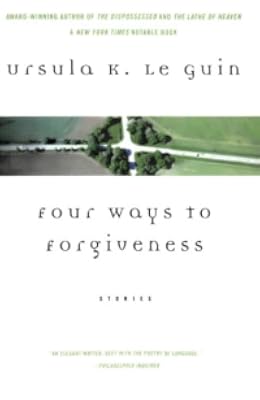
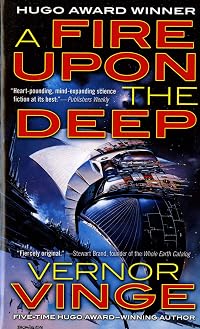
andomck Ecological science fiction.

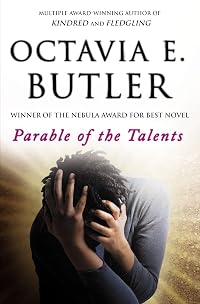
fairyfeller Both are scifi novels exploring ideas of colonisation with an alien species.
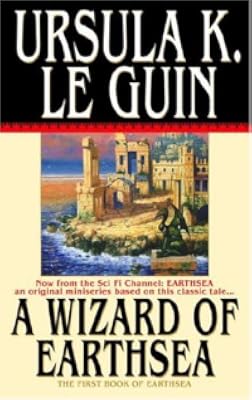
themulhern Both novels are about the invention of war, among other things. In both, the protagonist is considered a god by his people.
Member Reviews
a brilliant little parable that makes you see the oppressive effects of being colonized and makes you think about the obvious parallels to american slavery and racism. but it's more than this. she puts you in the head of davidson, the human who could hardly be more paranoid, racist, sexist, and full of hate. but you're in his head and you can see that even though he is all of those things, he also thinks he is doing the right thing and protecting the mission. (it puts you in the mind of fox newsers and how they are so wrong-headed but think they're doing the right thing. and they could say the same of me, of course.) it's also more in the way that this isn't just the humans vs the aliens/creechies/natives. she talks about how learning show more violence - the violence that the humans brought to the world and to the athsheans - irrevocably changes everything forever. you can't forget knowledge once it's learned, and that knowledge necessarily makes everything different moving forward.
i love her choices, and the way she used trees as the needed resource. there is so much to admire in this slim, very readable book. show less
i love her choices, and the way she used trees as the needed resource. there is so much to admire in this slim, very readable book. show less
4/5
A nice entry point into Le Guin's work, and the Hanish Cycle in general. The Word for World is Forest is a short and punchy polemic allegory for the Vietnam War. The book follows the attempted colonization and exploitation of the planet Athshe, a world dominated by water that is dotted by islands of thick jungle, which are home to slightly adapted, short, and hairy humans. A more familiar form of human settles on Athshe in order to log it for the now precious timber, and comes into conflict with the formerly peaceful natives who spend much of their time in a dream-reality.
This is a dark, combative, and sometimes graphic work that deals with colonization, rape of both humans and the environment, drug use, racism, and militarism. It show more wears a lot of these opinions on it's sleeves, but none more so than Le Guin's anti-war sentiments. There's also a lot of time spent on the power of ideas, and how once ideas are introduced into a culture, there's no removing them from the consciousness of individuals. This leads to an ending that is both positive because of the Athshians triumph, and a foreboding towards an undescribed and potentially violent future.
I couldn't help but draw a lot of parallels back to Kill Everything that Moves by Nick Turse. Captain Don Davidson fits into the mold of American GI's in Vietnam described there so well, as well as the powers that surround him. He is black hole of ethics that sees the natives as rats rather than people, is convinced that everyone is against him, and yet is also compelled to continue his practices by a government that simultaneously preaches passivity but expects results nonetheless. There's a delusional mania that he grows into that makes for a hideously fascinating character. Raj Lyubov, the archeologist that aids Selver, is not quite as well drawn, but is interesting in his moral grayness, providing help to the Athshians while not becoming a stereotypical white or western savior to a people that are clearly capable of helping themselves.
The Word for World is Forest has several passages of prose that are deeply moving and beautifully written. Davidson's nighttime capture is memorable and dark, and the numerous passages of morality discussion between the Athshians and the other humans are powerful. Overall the writing is of high quality, though not excessively noteworthy.
I often find myself criticizing books, especially contemporary works of SF, for being overly long and bloated. This is one of the rare instances where the opposite is true. Here I wanted so much more, though I can appreciate that Le Guin was able to fit so much into a svelte 170 pages. The Word for World is Forest just isn't long enough to feasibly develop into the richer work that she was clearly capable of at the time. Having said that, it's still an excellent novella that makes me consider Le Guin highly. show less
A nice entry point into Le Guin's work, and the Hanish Cycle in general. The Word for World is Forest is a short and punchy polemic allegory for the Vietnam War. The book follows the attempted colonization and exploitation of the planet Athshe, a world dominated by water that is dotted by islands of thick jungle, which are home to slightly adapted, short, and hairy humans. A more familiar form of human settles on Athshe in order to log it for the now precious timber, and comes into conflict with the formerly peaceful natives who spend much of their time in a dream-reality.
This is a dark, combative, and sometimes graphic work that deals with colonization, rape of both humans and the environment, drug use, racism, and militarism. It show more wears a lot of these opinions on it's sleeves, but none more so than Le Guin's anti-war sentiments. There's also a lot of time spent on the power of ideas, and how once ideas are introduced into a culture, there's no removing them from the consciousness of individuals. This leads to an ending that is both positive because of the Athshians triumph, and a foreboding towards an undescribed and potentially violent future.
I couldn't help but draw a lot of parallels back to Kill Everything that Moves by Nick Turse. Captain Don Davidson fits into the mold of American GI's in Vietnam described there so well, as well as the powers that surround him. He is black hole of ethics that sees the natives as rats rather than people, is convinced that everyone is against him, and yet is also compelled to continue his practices by a government that simultaneously preaches passivity but expects results nonetheless. There's a delusional mania that he grows into that makes for a hideously fascinating character. Raj Lyubov, the archeologist that aids Selver, is not quite as well drawn, but is interesting in his moral grayness, providing help to the Athshians while not becoming a stereotypical white or western savior to a people that are clearly capable of helping themselves.
The Word for World is Forest has several passages of prose that are deeply moving and beautifully written. Davidson's nighttime capture is memorable and dark, and the numerous passages of morality discussion between the Athshians and the other humans are powerful. Overall the writing is of high quality, though not excessively noteworthy.
I often find myself criticizing books, especially contemporary works of SF, for being overly long and bloated. This is one of the rare instances where the opposite is true. Here I wanted so much more, though I can appreciate that Le Guin was able to fit so much into a svelte 170 pages. The Word for World is Forest just isn't long enough to feasibly develop into the richer work that she was clearly capable of at the time. Having said that, it's still an excellent novella that makes me consider Le Guin highly. show less
Ursula LeGuin's classic short SF novel from 1972, featuring human colonists who come to conduct a logging operation on an alien planet and the enslaved forest-dweling people who rise up against them.
I first read this decades ago, and I hadn't remembered a great deal about it, other than the basic premise and the fact that I found it quite impactful. Re-reading it now, I have to say that it stands up extremely well.
What's most interesting about it, I think, is that in one sense it can fairly be described as "heavy-handed." LeGuin has something to say about the horrors of colonialism, and by god, she is going to hit you squarely in the face with that message. And yet, that message is underpinned with a lot of very powerfully subtle show more writing. Particularly impressive is her handling of the biggest bad guy, Captain Davidson. The man is pretty much the pure distilled essence of callousness, unreflective cruelty, conspiracy-mindedness, racism, and sexism, and toxic masculinity. In the hands of a less skilled writer, he'd feel like a caricature. But he doesn't. Indeed, there is something about him and his unwavering belief that he is the good guy that feels deeply familiar and almost sickeningly easy to understand.
I may have forgotten a lot of the details from my first reading, but I feel like this second one is going to stick with me for quite a while. show less
I first read this decades ago, and I hadn't remembered a great deal about it, other than the basic premise and the fact that I found it quite impactful. Re-reading it now, I have to say that it stands up extremely well.
What's most interesting about it, I think, is that in one sense it can fairly be described as "heavy-handed." LeGuin has something to say about the horrors of colonialism, and by god, she is going to hit you squarely in the face with that message. And yet, that message is underpinned with a lot of very powerfully subtle show more writing. Particularly impressive is her handling of the biggest bad guy, Captain Davidson. The man is pretty much the pure distilled essence of callousness, unreflective cruelty, conspiracy-mindedness, racism, and sexism, and toxic masculinity. In the hands of a less skilled writer, he'd feel like a caricature. But he doesn't. Indeed, there is something about him and his unwavering belief that he is the good guy that feels deeply familiar and almost sickeningly easy to understand.
I may have forgotten a lot of the details from my first reading, but I feel like this second one is going to stick with me for quite a while. show less
A solid enough read with an anti-colonial and anti-war message that hits home with a sledgehammer and rejects subtlety, which is entirely understandable given what was going on at the time of writing, and perhaps is especially poignant reading it today. There’s nothing here that hasn’t been repeated over and over since in every media form though, and I can’t say le Guin’s writing is consistently good; it’s a little clunky in places and relies heavily on stereotypes rather than complexity. You can feel her anger and frustration at the Vietnam War and the deterioration of our own society flooding every chapter.
The messaging is clear, the story wasn’t terribly gripping, but it presents some interesting ideas if you want to dig show more into it. It’s fine. Not her best, but not her worst either. show less
The messaging is clear, the story wasn’t terribly gripping, but it presents some interesting ideas if you want to dig show more into it. It’s fine. Not her best, but not her worst either. show less
https://fromtheheartofeurope.eu/the-word-for-world-is-forest-by-ursula-k-le-guin...
A timely and sobering story from more than half a century ago. It has been widely interpreted, both at the time and since, as a reaction to and fictionalisation of the Vietnam War; but in fact the circumstances are much closer to the wars waged against indigenous people in Africa, Asia and the Americas, with the explicit agendas of the destruction and replacement of the original population – a pattern from seventeenth-century Ireland to today’s Gaza. There’s not much grey here – even the humans who try for better relations with the Creechie natives of the planet are fatally compromised by their participation in the project of conquest and show more domination.
Le Guin was familiar with the conquest and oppression of Native Americans, and the attempted counter-resistance by the earth soldiers is reminiscent of Rhodesia’s UDI in 1965. The part that perhaps does speak to Vietnam is the impact of new information technology, just as media coverage in the 1960s had an effect on the dynamic of support for the war in America. Reporting on atrocity was not new – it goes back at least to Bartolomé de las Casas – but there is a good point about the impact on a conflict when long-suppressed truth starts to leak out.
Anyway, a brief, tough, important read. show less
A timely and sobering story from more than half a century ago. It has been widely interpreted, both at the time and since, as a reaction to and fictionalisation of the Vietnam War; but in fact the circumstances are much closer to the wars waged against indigenous people in Africa, Asia and the Americas, with the explicit agendas of the destruction and replacement of the original population – a pattern from seventeenth-century Ireland to today’s Gaza. There’s not much grey here – even the humans who try for better relations with the Creechie natives of the planet are fatally compromised by their participation in the project of conquest and show more domination.
Le Guin was familiar with the conquest and oppression of Native Americans, and the attempted counter-resistance by the earth soldiers is reminiscent of Rhodesia’s UDI in 1965. The part that perhaps does speak to Vietnam is the impact of new information technology, just as media coverage in the 1960s had an effect on the dynamic of support for the war in America. Reporting on atrocity was not new – it goes back at least to Bartolomé de las Casas – but there is a good point about the impact on a conflict when long-suppressed truth starts to leak out.
Anyway, a brief, tough, important read. show less
This story had me hooked from the first! The Athsheans were such a brilliantly conceived and wonderfully written people, and the Terrans the perfect example of humanities flaws.
What I especially liked was how much detail and consideration had gone into the world and culture of the Athsheans in such a short novel. The degree of world building was truly astounding.
This was the first book by Ursula K. Le Guin I've ever read, but she is straight up one of my favourite authors already.
What I especially liked was how much detail and consideration had gone into the world and culture of the Athsheans in such a short novel. The degree of world building was truly astounding.
This was the first book by Ursula K. Le Guin I've ever read, but she is straight up one of my favourite authors already.
Le Guin’s book from 1972 is set on an alien world, where human colonists have landed and are intent on logging the land which is rich in trees because they’ve deforested their own world. They have enslaved the native population of beings who they derisively call “creechies,” not understanding the sophistication of their culture at all. The transition from the first chapter to the second, where we go from the perspective of a particularly cruel colonists to that of the natives, is fantastic. The parallels in the story to treatment of Native Americans in the 19th century, America’s use of napalm in the war in Vietnam, and the practice of raping the environment for private (and short-term) gain to the detriment of the future show more sometimes teeter on the edge of being too direct, but Le Guin imbues the story with nuance and her writing, as always, is of high caliber. I would have loved to have seen this one more fleshed out, but it’s satisfying nonetheless.
Just this quote, on affection (and sexual repression):
“Caress as signal and reassurance was as essential to them as it is to mother and child or to lover and lover; but its significance was social, not only maternal and sexual. It was part of their language, it was therefore patterned, codified, yet infinitely modifiable. ‘They’re always pawing each other,’ some of the colonists sneered, unable to see in these touch-exchanges anything but their own eroticism which, forced to concentrate itself exclusively on sex and then repressed and frustrated, invades and poisons every sensual pleasure, every humane response…” show less
Just this quote, on affection (and sexual repression):
“Caress as signal and reassurance was as essential to them as it is to mother and child or to lover and lover; but its significance was social, not only maternal and sexual. It was part of their language, it was therefore patterned, codified, yet infinitely modifiable. ‘They’re always pawing each other,’ some of the colonists sneered, unable to see in these touch-exchanges anything but their own eroticism which, forced to concentrate itself exclusively on sex and then repressed and frustrated, invades and poisons every sensual pleasure, every humane response…” show less
Members
- Recently Added By
Lists

Best Science Fiction Novels
816 works; 426 members

Favorite Science Fiction by Women Authors
737 works; 202 members
Survey of Classic Science Fiction
171 works; 48 members

S.F. Masterworks (Complete)
229 works; 15 members

Bibliography for Among Others
159 works; 15 members

Stories About Other Worlds
145 works; 13 members

20th Century Literature
1,161 works; 55 members

SF Masterworks
193 works; 8 members

Recommend the 20 best books you've read in the last five years
2,168 works; 606 members

Space Colonization
100 works; 26 members
Recommended Speculative Fiction by Women and People of Color
298 works; 45 members

Nonhuman Protagonists
235 works; 34 members

New wave science fiction
23 works; 2 members

Top Five Books of 2018
802 works; 265 members

Speculative Fiction to Read
706 works; 32 members

Wishlist
50 works; 1 member
Best Books With Aliens
67 works; 10 members
Books We Love to Reread
688 works; 296 members

Books Read in 2022
5,166 works; 112 members

Books Read in 2024
4,623 works; 126 members

Books Read in 2023
5,547 works; 144 members

Forest Books
15 works; 2 members

2025 Popsugar Reads
15 works; 1 member

Top Five Books of 2025
954 works; 303 members
Books With the Most Memorable Titles
478 works; 158 members
Science Fiction and Fantasy
63 works; 4 members

Books With Interesting Titles
173 works; 14 members

infjsarah's wishlist
408 works; 2 members

Books Read in 2011
684 works; 20 members

CIENCIA FICCIÓN Y FANTASÍA ESCRITA POR MUJERES
19 works; 1 member

Books Read in 2015
3,299 works; 127 members

Into the Woods
7 works; 1 member

Books With Complete Sentence Titles
374 works; 15 members
Books Read in 2018
4,360 works; 110 members

Blue Pyramid 1,276 Best Books of All Time
1,248 works; 32 members

Books Read in 2014
2,343 works; 89 members
Books Set on Extraterrestrial Planets
27 works; 5 members
1970s
657 works; 23 members

Favourite Books
1,817 works; 316 members

Swinging Seventies
255 works; 18 members
Favorite Science Fiction
456 works; 218 members
Author Information

492+ Works 167,054 Members
Ursula K. Le Guin was born Ursula Kroeber in Berkeley, California on October 21, 1929. She received a bachelor's degree from Radcliffe College in 1951 and a master's degree in romance literature of the Middle Ages and Renaissance from Columbia University in 1952. She won a Fulbright fellowship in 1953 to study in Paris, where she met and married show more Charles Le Guin. Her first science-fiction novel, Rocannon's World, was published in 1966. Her other books included the Earthsea series, The Left Hand of Darkness, The Dispossessed: An Ambiguous Utopia, The Lathe of Heaven, Four Ways to Forgiveness, and The Telling. A Wizard of Earthsea received an American Library Association Notable Book citation, a Horn Book Honor List citation, and the Lewis Carroll Shelf Award in 1979. She received the Medal for Distinguished Contribution to American Letters in 2014. She also received the Nebula Award and the Hugo Award. She also wrote books of poetry, short stories collections, collections of essays, children's books, a guide for writers, and volumes of translation including the Tao Te Ching of Lao Tzu and selected poems by Gabriela Mistral. She died on January 22, 2018 at the age of 88. (Bowker Author Biography) show less
Some Editions
Awards and Honors
Awards
Series


Belongs to Publisher Series
Ariadne Social Fantasies (2027)
Work Relationships
Is contained in
Five Complete Novels: Rocannon's World / Planet of Exile / City of Illusions / The Left Hand of Darkness / The Word for World by Ursula K. Le Guin
Le Dit d'Aka : Suivi de Le nom du monde est forêt et de Malaise dans la science-fiction américaine by Ursula K. Le Guin
The Lathe of Heaven / New Atlantis / Planet of Exile / The Word for World is Forest by Ursula Leguin
Hainish Novels and Stories, Volume Two: The Word for World Is Forest / Stories / Five Ways to Forgiveness / The Telling by Ursula K. Le Guin
Common Knowledge
- Canonical title
- The Word for World Is Forest
- Original title
- The Word for World Is Forest
- Original publication date
- 1972 (as part of Again ∙ Dangerous Visions anthology) (as part of Again ∙ Dangerous Visions anthology)
- People/Characters
- Don Davidson (Captain); Selver Thele; Raj Lyubov
- Important places
- New Tahiti (planet)
- Dedication
- For Jean who went ahead
- First words
- Two pieces of yesterday were in Captain Davidson's mind when he woke, and he lay looking at them in the darkness for a while.
- Quotations
- Kneeling there in the mud among the dead he thought, This is the dream now, the evil dream. I thought to drive it, but it drives me.
“Sometimes a god comes," Selver said. "He brings a new way to do a thing, or a new thing to be done. A new kind of singing, or a new kind of death. He brings this across the bridge between the dream-time and the world-time.... (show all) When he has done this, it is done. You cannot take things that exist in the world and try to drive them back into the dream, to hold them inside the dream with walls and pretenses. That is insanity. What is, is. There is no use pretending, now, that we do not know how to kill one another.” - Last words
- (Click to show. Warning: May contain spoilers.)But I do not think they will.
- Blurbers
- Paley, Grace
- Original language
- English
Classifications
Statistics
- Members
- 3,726
- Popularity
- 4,292
- Reviews
- 116
- Rating
- (3.86)
- Languages
- 17 — Basque, Catalan, Danish, Dutch, English, Finnish, French, German, Greek, Italian, Japanese, Norwegian (Bokmål), Polish, Portuguese, Spanish, Swedish, Turkish
- Media
- Paper, Audiobook, Ebook
- ISBNs
- 57
- UPCs
- 2
- ASINs
- 17