On This Page
Description
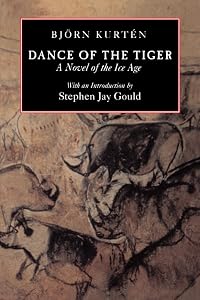
Bjorn Kurten's compelling novel gives the reader a detailed picture of life 35,000 years ago in Western Europe. One of the world's leading scholars of Ice Age fauna, Kurten fuses extraordinary knowledge and imagination in this vivid evocation of our deepest past. This novel illuminates the lives of the humans who left us magnificent paintings in the caves of France and Spain.Tags
Recommendations

























Member Recommendations

themulhern Both novels are about the invention of war, among other things. In both, the protagonist is considered a god by his people.
themulhern Neandertals are displaced by Cro-Magnons.
themulhern One is a popular retelling of one interpretation of what the science tells us, in 2006, about human migrations and human interactions with now extinct humans, the other is a fictional exploration of the same idea, from the 70s.

Member Reviews
5/8/10 Update: Some recent evidence found in Europe and genome studies bears on the speculative outcome of this story. See http://www.nytimes.com/2010/05/07/science/07neanderthal.html?src=me&ref=gene...
The image of the hunched-over, beetle-browed, dark-skinned, stupid-looking, primitive Neanderthal is familiar to us all. Stephen Jay Gould, in his introduction to Bjorn Kurten's Dance of the Tiger, suggests this effigy is essentially false. The bent posture stemmed from one of the original skeletal remains which was later discovered to belong to a very arthritic individual accounting for the awkward carriage. The Neanderthal's brain was actually larger in size than present day man's, so "stupid" stems from our hubristic tendency to show more equate primitive with something less valuable than ourselves. And, of course, the portrayal as dark-skinned results from our innate racism assuming that primitive or ancient equals dark.
There is no question now among paleontologists that Neanderthals were indeed sapiens and that they may have had much in common with our direct ancestor, Cro-Magnon Man, who replaced the Neanderthals about 35,000 years ago. Ralph Solecki in [b:Shanidar The First Flower People|1685384|Shanidar, the first flower people|Ralph Solecki|http://www.goodreads.com/images/nocover-60x80.jpg|1682013] has shown how human Neanderthals were. They had quite "modern" burial customs (if one could call our current burial customs civilized - frankly they smack of the occult to me) which shows evidence of religious feeling, and advanced concept. They had quite human feelings and intelligence and, with the exception of the skull, even looked very much like modern man. What, then, accounts for the sudden disappearance of Neanderthal and their subsequent replacement exclusively by Cro-Magnon. That's what this novel is about.
Not only is this a fine story, but according to Gould, for whom I have tremendous respect, it's also good science. Bjorn Kurten is one of the world's foremost paleontologists. Kurten has weaved into his story a model of what might very well have occurred during the first contacts between Neanderthal and Cro-Magnon. Along the way, says Gould, we absorb a great deal of accurate science, "insinuating every fact and theory that I know... about human evolution during the Ice Age, glacial geology, ecology, and Ice Age mammals."
Kurten's story revolves around Tiger, a Cro-Magnon, whose father is killed while on a mammoth hunt. He is injured and found at death's door by the "trolls" as the blacks (Cro-Magnon) refer to them. The trolls are the Neanderthal, white and tall, with prominent brows and a primitive language compared to the blacks from the south. Obviously Kurten is playing with our stereotypes here. We know that our homo sapiens ancestors evolved in Africa and hence were most likely black; and as the Neanderthal had lived in Northern Europe for a long time there is no reason why they might not have adapted to the colder climate with white skin. Anyway, I refuse to give away more of the story. Suffice it to say that Kurten's solution to the disappearance of the Neanderthal is neat, having genetic and anthropological implications, and the book will challenge you in many ways. show less
The image of the hunched-over, beetle-browed, dark-skinned, stupid-looking, primitive Neanderthal is familiar to us all. Stephen Jay Gould, in his introduction to Bjorn Kurten's Dance of the Tiger, suggests this effigy is essentially false. The bent posture stemmed from one of the original skeletal remains which was later discovered to belong to a very arthritic individual accounting for the awkward carriage. The Neanderthal's brain was actually larger in size than present day man's, so "stupid" stems from our hubristic tendency to show more equate primitive with something less valuable than ourselves. And, of course, the portrayal as dark-skinned results from our innate racism assuming that primitive or ancient equals dark.
There is no question now among paleontologists that Neanderthals were indeed sapiens and that they may have had much in common with our direct ancestor, Cro-Magnon Man, who replaced the Neanderthals about 35,000 years ago. Ralph Solecki in [b:Shanidar The First Flower People|1685384|Shanidar, the first flower people|Ralph Solecki|http://www.goodreads.com/images/nocover-60x80.jpg|1682013] has shown how human Neanderthals were. They had quite "modern" burial customs (if one could call our current burial customs civilized - frankly they smack of the occult to me) which shows evidence of religious feeling, and advanced concept. They had quite human feelings and intelligence and, with the exception of the skull, even looked very much like modern man. What, then, accounts for the sudden disappearance of Neanderthal and their subsequent replacement exclusively by Cro-Magnon. That's what this novel is about.
Not only is this a fine story, but according to Gould, for whom I have tremendous respect, it's also good science. Bjorn Kurten is one of the world's foremost paleontologists. Kurten has weaved into his story a model of what might very well have occurred during the first contacts between Neanderthal and Cro-Magnon. Along the way, says Gould, we absorb a great deal of accurate science, "insinuating every fact and theory that I know... about human evolution during the Ice Age, glacial geology, ecology, and Ice Age mammals."
Kurten's story revolves around Tiger, a Cro-Magnon, whose father is killed while on a mammoth hunt. He is injured and found at death's door by the "trolls" as the blacks (Cro-Magnon) refer to them. The trolls are the Neanderthal, white and tall, with prominent brows and a primitive language compared to the blacks from the south. Obviously Kurten is playing with our stereotypes here. We know that our homo sapiens ancestors evolved in Africa and hence were most likely black; and as the Neanderthal had lived in Northern Europe for a long time there is no reason why they might not have adapted to the colder climate with white skin. Anyway, I refuse to give away more of the story. Suffice it to say that Kurten's solution to the disappearance of the Neanderthal is neat, having genetic and anthropological implications, and the book will challenge you in many ways. show less
Excellent Despite Falling Short
"Dance of the Tiger" is a wonderful book in many respects. Unfortunately, it is also a hurried book that does not complete explanations.
The first two thirds of the book are wonderful. The imagery is excellent, calling forth wonderful descriptions of a natural world that is just beginning to come in contact with humans. The way in which Kurtén describes the two different human societies is realistic and plausible. Both cultures are in tune with their natural surroundings, although the "sapient," Cro-Magnon culture is depicted as much more violent, more exploitative and more possessive. The Neandertal culture is more domestic, more forgiving, and more gentle. Both cultures are shamanistic and ritualized. show more The actions of the characters throughout the book are all logical and consistent. Kurtén makes it clear in his introduction that these depictions are based on his observations and his own deductions, though they certainly don't arrive at the point of a scientific theory.
Where "Dance of the Tiger" fails is in the last third of the book. The pace of the plot picks up considerably, so many details and explanations get left behind. The climactic, near apocalyptic, action sequence did not make much sense to me. It was a combination of mysticism and poorly described action. It left me confused and a little frustrated.
In the edition I read, Stephen Jay Gould provided a nice introduction. Kurtén himself also wrote an introduction and a conclusion that focus on the science and speculation of the book.
The faults of the last third aside, this book fills a much-needed void: pre-historic literature that shows realistic societies and characters in a world that is ultimately scientific and natural. Despite the shortcomings, "Dance of the Tiger" is a novel that deserves respect and attention. show less
"Dance of the Tiger" is a wonderful book in many respects. Unfortunately, it is also a hurried book that does not complete explanations.
The first two thirds of the book are wonderful. The imagery is excellent, calling forth wonderful descriptions of a natural world that is just beginning to come in contact with humans. The way in which Kurtén describes the two different human societies is realistic and plausible. Both cultures are in tune with their natural surroundings, although the "sapient," Cro-Magnon culture is depicted as much more violent, more exploitative and more possessive. The Neandertal culture is more domestic, more forgiving, and more gentle. Both cultures are shamanistic and ritualized. show more The actions of the characters throughout the book are all logical and consistent. Kurtén makes it clear in his introduction that these depictions are based on his observations and his own deductions, though they certainly don't arrive at the point of a scientific theory.
Where "Dance of the Tiger" fails is in the last third of the book. The pace of the plot picks up considerably, so many details and explanations get left behind. The climactic, near apocalyptic, action sequence did not make much sense to me. It was a combination of mysticism and poorly described action. It left me confused and a little frustrated.
In the edition I read, Stephen Jay Gould provided a nice introduction. Kurtén himself also wrote an introduction and a conclusion that focus on the science and speculation of the book.
The faults of the last third aside, this book fills a much-needed void: pre-historic literature that shows realistic societies and characters in a world that is ultimately scientific and natural. Despite the shortcomings, "Dance of the Tiger" is a novel that deserves respect and attention. show less
What picture does the word “neandertal” conjure up? Something hunched? Hulking? Brutish? Lumbering? It’s extraordinary that after more than a century this image persists so stubbornly, because it’s quite wrong and in an Introduction to the 1980 edition of this novel biologist Steven J Gould explained how such a grotesque cartoon ever came about in the first place.
Dance of the Tiger was primarily a vehicle for Björn Kurtén’s theory about their disappearance; but it was also an attempt to bring both them and our own ancestors properly to life as people. Back in the 1950s Kurtén was one of the world’s leading authorities on this whole subject, but some of his ideas were so radical even he only put them forward in this show more form (which he himself described as “palaeo-fiction”). It’s set in what is today south-eastern Sweden, 35,000 years ago during one of the warmer intervals between successive glaciations, and there are two kinds of human on the planet: the Cro-Magnons from Africa via Asia, who year on year are encroaching ever further into the lands of the indigenous Neandertal population of Europe. There’s misunderstanding, conflict, friendship and interbreeding. We get a good idea of the kind of world this was happening in too, with its glacial eskers and moraines, its woolly rhinos, mammoths and sabre-toothed cats.
It’s not the story itself here which will stick in my mind (I found the middle part a bit tedious to be honest), or Kurtén’s theory either; that can now be discounted, particularly since completion in 2010 of the Neandertal Genome Project. For me, and I would guess a lot of other readers too, what’s most striking is his sympathetic (in fact unforgettable) depiction of neandertals as living breathing people: their customs and manners, their minds. And, unlike his theory about their disappearance, much of it is looking increasingly accurate.
Oh yes, and one final thing: so why did they disappear? The answer is, they didn’t entirely. With the single exception of anyone from Africa south of the Sahara desert, everyone else on the planet today has a small percentage of Neandertal genes in their chromosomes—so they’re still here, part of what most of us are, part of our own ancestry. And if Kurtén’s portrayal of them as people is even half accurate, it’s quite possible too that at least some of our better qualities come from them. show less
Dance of the Tiger was primarily a vehicle for Björn Kurtén’s theory about their disappearance; but it was also an attempt to bring both them and our own ancestors properly to life as people. Back in the 1950s Kurtén was one of the world’s leading authorities on this whole subject, but some of his ideas were so radical even he only put them forward in this show more form (which he himself described as “palaeo-fiction”). It’s set in what is today south-eastern Sweden, 35,000 years ago during one of the warmer intervals between successive glaciations, and there are two kinds of human on the planet: the Cro-Magnons from Africa via Asia, who year on year are encroaching ever further into the lands of the indigenous Neandertal population of Europe. There’s misunderstanding, conflict, friendship and interbreeding. We get a good idea of the kind of world this was happening in too, with its glacial eskers and moraines, its woolly rhinos, mammoths and sabre-toothed cats.
It’s not the story itself here which will stick in my mind (I found the middle part a bit tedious to be honest), or Kurtén’s theory either; that can now be discounted, particularly since completion in 2010 of the Neandertal Genome Project. For me, and I would guess a lot of other readers too, what’s most striking is his sympathetic (in fact unforgettable) depiction of neandertals as living breathing people: their customs and manners, their minds. And, unlike his theory about their disappearance, much of it is looking increasingly accurate.
Oh yes, and one final thing: so why did they disappear? The answer is, they didn’t entirely. With the single exception of anyone from Africa south of the Sahara desert, everyone else on the planet today has a small percentage of Neandertal genes in their chromosomes—so they’re still here, part of what most of us are, part of our own ancestry. And if Kurtén’s portrayal of them as people is even half accurate, it’s quite possible too that at least some of our better qualities come from them. show less
Kurten, an eminent paleontologist, wrote this novel to present a model for the disappearance of Neandertal man. 35,000 years ago during the period when the Ice Sheet in Northern Europe retreated and Homo sapiens began to migrate into Europe, the two species co-existed on the European continent. The question is what sort of relationship did the two peoples have with each other?
Kurten's Neandertals are gender egalitarian, highly courteous, wonderful story-tellers, skilled with herbs and plants and awed by the god-like Homo sapiens who have a highly flexible language, technically advanced weapons and the near-magical ability to recreate the animal world in their brilliant drawings. The two communities have little contact with each other, show more and the Homo sapiens dismiss the Neandertals as sub-human "trolls."
When Tiger, the son of a Homo sapiens chieftain is left for dead after a battle, he is rescued by a Neandertal tribe and eventually discovers that the female leader's son is his half-brother.
Kurten skillfully and beautifully depicts the natural world of Scandinavia during this period and weaves a fascinating story of the contact of two very different cultures that nevertheless share a common humanity.
As the book was published in 1980, recent DNA discoveries about the inheritance of Neandertal genes in modern man, obviously do not play into Kurten's model. But coupled with good storytelling, Kurten's vast knowledge of the geography, the climate and the artifacts of the Paleolithic world make the novel a highly rewarding read. show less
Kurten's Neandertals are gender egalitarian, highly courteous, wonderful story-tellers, skilled with herbs and plants and awed by the god-like Homo sapiens who have a highly flexible language, technically advanced weapons and the near-magical ability to recreate the animal world in their brilliant drawings. The two communities have little contact with each other, show more and the Homo sapiens dismiss the Neandertals as sub-human "trolls."
When Tiger, the son of a Homo sapiens chieftain is left for dead after a battle, he is rescued by a Neandertal tribe and eventually discovers that the female leader's son is his half-brother.
Kurten skillfully and beautifully depicts the natural world of Scandinavia during this period and weaves a fascinating story of the contact of two very different cultures that nevertheless share a common humanity.
As the book was published in 1980, recent DNA discoveries about the inheritance of Neandertal genes in modern man, obviously do not play into Kurten's model. But coupled with good storytelling, Kurten's vast knowledge of the geography, the climate and the artifacts of the Paleolithic world make the novel a highly rewarding read. show less
A paleontologist writes a novel of Neandertals and Cro-Magnons during an ice age long ago. Very '70s, but not at all bad. There are somewhat unsuccesful inventions of two technologies, war and domestication of animals, but the time will come when those inventions are completed. The author speculates on the precise way in which the Neandertal peoples were displaced by the Cro-Magnon somewhat plausibly. He was ahead of his time. For many years, it was felt that modern humans were not related to Neandertal, but more recent research seems to indicate that most humans are carrying around a bit of Neandertal DNA.
medium writing but surprisingly prescient considering what we now know about interbreeding between h. sapiens and h. neandertalensis
I purchased this book as part of the reading materials for an anthropology course. While the textbook has been boxed and stored, Kurtén's novel has remained on my shelf.
In Dance of The Tiger, Kurtén fleshes out a possible model for the relatively rapid extinction of Neandertals and their replacement by Homo Sapiens. The introductory chapters provide enough background information to make the novel educational, as well as enjoyable.
Kurtén adds a slight aspect of mystery by not fully explaining the model before the narrative begins, and challenging the reader to tease out the three contributing factors by the end of the book. These are later revealed in the concluding note from the author.
In Dance of The Tiger, Kurtén fleshes out a possible model for the relatively rapid extinction of Neandertals and their replacement by Homo Sapiens. The introductory chapters provide enough background information to make the novel educational, as well as enjoyable.
Kurtén adds a slight aspect of mystery by not fully explaining the model before the narrative begins, and challenging the reader to tease out the three contributing factors by the end of the book. These are later revealed in the concluding note from the author.
Members
- Recently Added By
Lists

Prehistoric Peoples and Animals
10 works; 3 members

Best Prehistoric Novels
64 works; 10 members

Scholar Novels
26 works; 4 members

Llibres que he llegit el 2024
77 works; 1 member
Author Information

23+ Works 633 Members
Some Editions
Awards and Honors
Notable Lists
Series

Belongs to Publisher Series
Common Knowledge
- Canonical title
- Dance of the Tiger
- Original title
- Den Svarta Tigern
- Alternate titles*
- Dance of the Tiger
- Original publication date
- 1978 (swe.) (swe.); 1980 (eng.) (eng.)
- Dedication
- To the crew of Stängesholmen, with love
- First words*
- Los mamuts irrumpieron sin hacer ruido en el enclave que habían previsto los humanos.
- Blurbers
- Sokolov, Raymond A.; Leakey, Richard
- Original language
- Swedish
*Some information comes from Common Knowledge in other languages. Click "Edit" for more information.
Classifications
- Genres
- Fiction and Literature, General Fiction, Historical Fiction
- DDC/MDS
- 839.7374 — Literature & rhetoric German & related literatures Other Germanic literatures Swedish literature Swedish fiction 1900-1999 1945-1999
- LCC
- PT9876.21 .U7 .S913 — Language and Literature German, Dutch and Scandinavian literatures Swedish literature Individual authors or works 1961-2000
- BISAC
Statistics
- Members
- 275
- Popularity
- 117,235
- Reviews
- 13
- Rating
- (3.45)
- Languages
- 7 — Dutch, English, Finnish, German, Italian, Spanish, Swedish
- Media
- Paper
- ISBNs
- 22