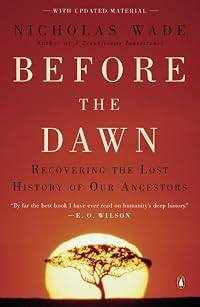
Before the Dawn: Recovering the Lost History of Our Ancestors
by Nicholas Wade
On This Page
Description
Based on a groundbreaking synthesis of recent scientific findings, critically acclaimed New York Times science reporter Nicholas Wade tells a bold and provocative new story of the history of our ancient ancestors and the evolution of human nature.Just in the last three years a flood of new scientific findings-driven by revelations discovered in the human genome-has provided compelling new answers to many long-standing mysteries about our most ancient ancestors-the people who first evolved in show more Africa and then went on to colonize the whole world. Nicholas Wade weaves this host of news-making findings together for the first time into an intriguing new history of the human story before the dawn of civilization. Sure to stimulate lively controversy, he makes the case for novel arguments about many hotly debated issues such as the evolution of language and race and the genetic roots of human nature, and reveals that human evolution has continued even to today.In wonderfully lively and lucid prose, Wade reveals the answers that researchers have ingeniously developed to so many puzzles: When did language emerge? When and why did we start to wear clothing? How did our ancestors break out of Africa and defeat the more physically powerful Neanderthals who stood in their way? Why did the different races evolve, and why did we come to speak so many different languages? When did we learn to live with animals and where and when did we domesticate man's first animal companions, dogs? How did human nature change during the thirty-five thousand years between the emergence of fully modern humans and the first settlements? This will be the most talked about science book of the season. show lessTags
Recommendations












Member Recommendations
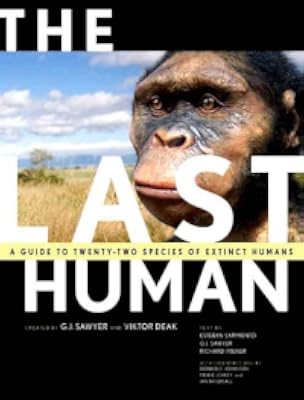
br77rino Excellent discussion of the climate change in Africa, from continuous forest home to spotty forest/savannah home, nudging our East African ape ancestors to come down from the trees and evolve into walkers.
30

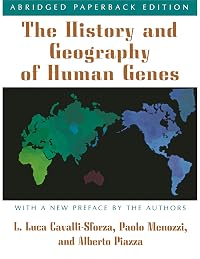
stevetempo Read together they make an excellent contrast.
Also recommended by IslandDave
10
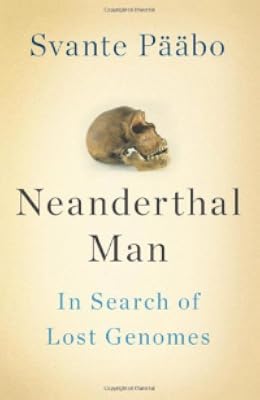
themulhern Similar themes, different treatment. Reich's is more recent.

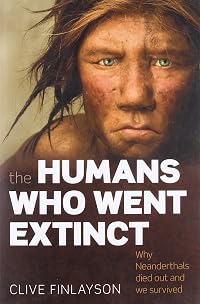
themulhern One is a popular retelling of one interpretation of what the science tells us, in 2006, about human migrations and human interactions with now extinct humans, the other is a fictional exploration of the same idea, from the 70s.
Member Reviews
Nicholas Wade discusses how the growing science of genetics expands and deepens our understanding of human evolution, our relationship to our closest relatives, and how we became the species we are--and what we might become in the future.
There's a lot of ground to cover, and this is a survey, not a textbook. It's very well-referenced, but in some cases he's relying on cutting edge research that, inevitably, will not all hold up. He also ventures into some touchy areas that not all readers will be comfortable or happy with. Nevertheless, it's an excellent, informative, and thought-provoking book that is well worth reading.
One of the topics covered here is the often-surprising path of human migration and expansion out of Africa. Just one show more major human lineage, L3, left Africa, and it's from that lineage that all the sub-lineages that populate the rest of the globe are descended. Human migration went eastward and along the coastlines, to India, southeast Asia, and Australia before going northward and westward. He repeatedly emphasizes that dates derived from genetic mutation rates are approximate and need to be evaluated in conjunction with archaeological evidence. That said, he gives us a fascinating picture of how archaeological, linguistic, and genetic evidence interact to give us a much fuller, richer, more complete picture of human evolution.
Among the conventional assumptions overturned by the growing body of evidence is the notion of early human hunter-gatherer bands as peaceful people, living in harmony with other humans they encountered, with war as an invention of sedentary societies after the invention of agriculture. In fact the evidence points the other way: hunter-gatherer bands, even today, are very violent societies, frequently raiding their neighbors and as much as 30% of the population dying by violence. Our nearest relatives, the common chimpanzees, are even more violent, not only raiding other troops and killing any member of another troop found alone, but also handling most internal disputes including leadership disputes by violence. Permanent settlements, with higher population density and less ability to move away from neighboring individuals or groups you didn't get along with, required an increase in human sociability, and willingness and ability to cooperate even with unrelated individuals, in order to work. And the archaeological evidence shows that agriculture came after that point, a result rather than a cause.
Humans have been domesticating each other, along with domesticating other species, and the typical experience of violence in settled, developed societies is much, much less and decreasing compared to "more natural" hunter-gatherer societies. The human ability to cooperate with unrelated strangers, routinely and on a large scale, is simply unknown in other species. Some readers will be disturbed by that argument. Others will be disturbed by the case that Wade makes that one of our evolved mechanisms for making this cooperation possible is religion.
I'm not going to go on, touching on every issue Wade discusses. This is an excellent, highly readable book, laying out all we've learned about our past in recent years, due to the advance of genetics. Because he does rely on research that, in 2006, was very new and cutting-edge, some of what he says will prove to be wrong--but there's still a lot to learn here, and well worth your time.
Highly recommended.
I borrowed this book from a friend. show less
There's a lot of ground to cover, and this is a survey, not a textbook. It's very well-referenced, but in some cases he's relying on cutting edge research that, inevitably, will not all hold up. He also ventures into some touchy areas that not all readers will be comfortable or happy with. Nevertheless, it's an excellent, informative, and thought-provoking book that is well worth reading.
One of the topics covered here is the often-surprising path of human migration and expansion out of Africa. Just one show more major human lineage, L3, left Africa, and it's from that lineage that all the sub-lineages that populate the rest of the globe are descended. Human migration went eastward and along the coastlines, to India, southeast Asia, and Australia before going northward and westward. He repeatedly emphasizes that dates derived from genetic mutation rates are approximate and need to be evaluated in conjunction with archaeological evidence. That said, he gives us a fascinating picture of how archaeological, linguistic, and genetic evidence interact to give us a much fuller, richer, more complete picture of human evolution.
Among the conventional assumptions overturned by the growing body of evidence is the notion of early human hunter-gatherer bands as peaceful people, living in harmony with other humans they encountered, with war as an invention of sedentary societies after the invention of agriculture. In fact the evidence points the other way: hunter-gatherer bands, even today, are very violent societies, frequently raiding their neighbors and as much as 30% of the population dying by violence. Our nearest relatives, the common chimpanzees, are even more violent, not only raiding other troops and killing any member of another troop found alone, but also handling most internal disputes including leadership disputes by violence. Permanent settlements, with higher population density and less ability to move away from neighboring individuals or groups you didn't get along with, required an increase in human sociability, and willingness and ability to cooperate even with unrelated individuals, in order to work. And the archaeological evidence shows that agriculture came after that point, a result rather than a cause.
Humans have been domesticating each other, along with domesticating other species, and the typical experience of violence in settled, developed societies is much, much less and decreasing compared to "more natural" hunter-gatherer societies. The human ability to cooperate with unrelated strangers, routinely and on a large scale, is simply unknown in other species. Some readers will be disturbed by that argument. Others will be disturbed by the case that Wade makes that one of our evolved mechanisms for making this cooperation possible is religion.
I'm not going to go on, touching on every issue Wade discusses. This is an excellent, highly readable book, laying out all we've learned about our past in recent years, due to the advance of genetics. Because he does rely on research that, in 2006, was very new and cutting-edge, some of what he says will prove to be wrong--but there's still a lot to learn here, and well worth your time.
Highly recommended.
I borrowed this book from a friend. show less
Seldom have I encountered better writing on such a complex and baggage-laden subject - human evolution. Wade succeeds in putting before the reader a synthesis of what is known about several aspects of our development from when and where modern humans originated, when and where migrations occured in relation to changes in environment (drought, cold etc.) when and where language probably occurred, domestication of animals, the beginnings of agriculture. His main point is that study of DNA - of both matrilineal mitochondria to the male Y chromosome has made it possible to track the timing and location of many of these changes to a remarkable degree. Of course, scientific inquiry moves so swiftly now that even I, essentially a science show more ignoramous, know of a couple of recent discoveries that have been made and confirmed in the seven years since this book first came out - the first a definite albeit very small genetic link between Neandertals and the basic European stock of modern humans and for a second, some earlier dates for the presence of the domesticated dog in Europe and I expect there are several more in the field of paleo-linguistics, or whatever, you want to call it! I am intrigued by the idea too, that we have been gradually 'domesticating' ourselves and are likely continue to do so. The linguistic furor over language origins and the idea of an original proto language were, for me, the most fascinating chapters. In short, I can't recommend it more highly! ***** show less
(posted on my blog: davenichols.net)
Science journalist Nicholas Wade has delivered an exploration of human genetics in the spirit of Jared Diamond's Guns, Germs, and Steel. Wade works backwards in time, using genetic clues to discover knowledge about prehistoric human societies. Before the Dawn offers a breadth of knowledge about current genetic research into human populations and migrations, and draws some fascinating conclusions about the rise and dispersal of early human societies.
Wade's narrative largely follows research into genetic variations found in the Y chromosome and in mitochondrial DNA. These variations, the distribution of which allows researchers to track common ancestry and branching, are used to narrow the likely show more periods of human movement out of Africa to points beyond. A bit of time is spent on the earliest culturally modern humans in Africa before moving on latter periods of migration and settlement. Potential interactions with hominid relatives is discussed, as is the impact of various cold spells and ice ages.
Wade explores social behavior as well, showing how researchers have applied darwinian natural selection and genetic drift to account for both universal and isolated behaviors. Later, language is considered, with significant caveats as to its effectiveness in signalling fundamental shifts in human population. The discussion on race is well crafted. Wade does not bow to social pressure in describing genetic variations found among the races, including a fascinating discussion of the intellectual prowess of Ashkenazi Jews. Just to be clear, Wade is not advocating superiority of any race, he wants only to point out that there are significant data indicating genetic differences of isolated human populations can produce measurably different abilities.
I found Before the Dawn to be fascinating, and would highly recommend it to anyone who enjoyed the Pulitzer Prize-winning Guns, Germs, and Steel. Wade may not be a scientist, but he has conducted a thorough investigation into the ongoing research of population genetics and offers the reader a tremendous treat of science and history. Five stars. show less
Science journalist Nicholas Wade has delivered an exploration of human genetics in the spirit of Jared Diamond's Guns, Germs, and Steel. Wade works backwards in time, using genetic clues to discover knowledge about prehistoric human societies. Before the Dawn offers a breadth of knowledge about current genetic research into human populations and migrations, and draws some fascinating conclusions about the rise and dispersal of early human societies.
Wade's narrative largely follows research into genetic variations found in the Y chromosome and in mitochondrial DNA. These variations, the distribution of which allows researchers to track common ancestry and branching, are used to narrow the likely show more periods of human movement out of Africa to points beyond. A bit of time is spent on the earliest culturally modern humans in Africa before moving on latter periods of migration and settlement. Potential interactions with hominid relatives is discussed, as is the impact of various cold spells and ice ages.
Wade explores social behavior as well, showing how researchers have applied darwinian natural selection and genetic drift to account for both universal and isolated behaviors. Later, language is considered, with significant caveats as to its effectiveness in signalling fundamental shifts in human population. The discussion on race is well crafted. Wade does not bow to social pressure in describing genetic variations found among the races, including a fascinating discussion of the intellectual prowess of Ashkenazi Jews. Just to be clear, Wade is not advocating superiority of any race, he wants only to point out that there are significant data indicating genetic differences of isolated human populations can produce measurably different abilities.
I found Before the Dawn to be fascinating, and would highly recommend it to anyone who enjoyed the Pulitzer Prize-winning Guns, Germs, and Steel. Wade may not be a scientist, but he has conducted a thorough investigation into the ongoing research of population genetics and offers the reader a tremendous treat of science and history. Five stars. show less
In my experience, it has been hard to find good, popular books about the evolution of human beings. The most interesting books I’ve found on the subject are Jared Diamond’s “The Third Chimpanzee” and “Guns, Germs and Steel.” Nicholas Wade’s new book “Before the Dawn” is an excellent addition to that short list, bringing us up to speed on what scientists are currently saying about human origins and prehistory. Reporting on a wide range of research, including paleo-anthropology, genetics, and historical linguistics, Wade provides us with a comprehensive story of how our ancestors became anatomically, and then behaviorally, human.
What seems to be different about Wade’s account of prehistory is his pervasive use of show more genetic research as the final arbiter when there is a conflict among scientific disciplines. The conclusions drawn by paleo-anthropologists and historical linguists are either confirmed by a genetic line of reasoning, or called into question. As a result, Wade flirts with controversy by suggesting that the emergence of art in the caves of France and Spain, some 32,000 years ago, was probably the result of genetic influences, implying that distinct human characteristics, such as art and cognitive capacities, have evolved in distinct population regions. This is the kind of reasoning that “Guns, Germs and Steel” was trying to remedy. However, Wade offers the qualification that, although distinctly human qualities may have developed in one population at an earlier date, these characteristics, which truly are universal, have evolved convergently. This is a common idea in evolution, one good example being the wing. Insects, birds, pterosaurs, and bats have all received the anatomy of the wing through 4 distinct lineages. In other words, evolution has hit upon the idea of wings four different, independent times. Humans, according to Wade’s line of reasoning, may have evolved the capacity for art and culture through selective pressures at the local level, when anatomically modern humans had already left Africa and occupied the Eurasian and Australian continents.
Another point of divergence between Wade and Diamond is the issue of human settlement. Diamond’s book tells the very interesting story of the first domestication of grain in the Near East, which consequently lead to a settled way of life. Evidence now suggests that humans began sedentary village life as long as 18,000 years ago, much earlier than the first era of agriculture and stock rearing in the ninth and eighth millennia BC. Not surprisingly, Wade offers a genetic explanation for the origin of settlement. Apparently, it is commonly held that behaviorally modern people have existed for about 45,000 years, meaning that they displayed the basics of human behavior, art, religion, and presumably language, and have not evolved significantly since. Wade, on the other hand, espouses the opinions of biologists who think humans have continued to evolve in the past 45,000 years, and human settlement may therefore have been the result of some particular evolutionary adaptation.
Wade goes on to offer a genetic explanation for racial development, a tack that has been highly criticized since mid-20th century, for good reason. Scientists do not currently study race as a biological phenomenon, but Wade cites recent medical studies that point to a biological basis for understanding the races.
This book is sure to draw criticism simply because of its controversial content, but is a fascinating read for anyone interested in human evolution. show less
What seems to be different about Wade’s account of prehistory is his pervasive use of show more genetic research as the final arbiter when there is a conflict among scientific disciplines. The conclusions drawn by paleo-anthropologists and historical linguists are either confirmed by a genetic line of reasoning, or called into question. As a result, Wade flirts with controversy by suggesting that the emergence of art in the caves of France and Spain, some 32,000 years ago, was probably the result of genetic influences, implying that distinct human characteristics, such as art and cognitive capacities, have evolved in distinct population regions. This is the kind of reasoning that “Guns, Germs and Steel” was trying to remedy. However, Wade offers the qualification that, although distinctly human qualities may have developed in one population at an earlier date, these characteristics, which truly are universal, have evolved convergently. This is a common idea in evolution, one good example being the wing. Insects, birds, pterosaurs, and bats have all received the anatomy of the wing through 4 distinct lineages. In other words, evolution has hit upon the idea of wings four different, independent times. Humans, according to Wade’s line of reasoning, may have evolved the capacity for art and culture through selective pressures at the local level, when anatomically modern humans had already left Africa and occupied the Eurasian and Australian continents.
Another point of divergence between Wade and Diamond is the issue of human settlement. Diamond’s book tells the very interesting story of the first domestication of grain in the Near East, which consequently lead to a settled way of life. Evidence now suggests that humans began sedentary village life as long as 18,000 years ago, much earlier than the first era of agriculture and stock rearing in the ninth and eighth millennia BC. Not surprisingly, Wade offers a genetic explanation for the origin of settlement. Apparently, it is commonly held that behaviorally modern people have existed for about 45,000 years, meaning that they displayed the basics of human behavior, art, religion, and presumably language, and have not evolved significantly since. Wade, on the other hand, espouses the opinions of biologists who think humans have continued to evolve in the past 45,000 years, and human settlement may therefore have been the result of some particular evolutionary adaptation.
Wade goes on to offer a genetic explanation for racial development, a tack that has been highly criticized since mid-20th century, for good reason. Scientists do not currently study race as a biological phenomenon, but Wade cites recent medical studies that point to a biological basis for understanding the races.
This book is sure to draw criticism simply because of its controversial content, but is a fascinating read for anyone interested in human evolution. show less
High 4.
One nice thing about journalists who write science books? The books are generally well-written. (I'm looking at you, [a:Chris Stringer|103433|Chris Stringer|https://s.gr-assets.com/assets/nophoto/user/m_50x66-09ae6e5eb554f8a5ab0515c05488ea34.png], who's [b:The Origin of Our Species|11731574|The Origin of Our Species|Chris Stringer|https://d.gr-assets.com/books/1333753409s/11731574.jpg|17086110] I read before this.)
Another nice thing is that, not being scientists, they have less of a horse in the race, so they tend to write more purely to inform and are willing to discuss some of the less accepted theories. Mr. Wade does a great job on both fronts.
The first half and change of this book discusses human evolution and what happened show more when geneticists entered the fray. The application of genetics to the field has been revolutionary to say the least. The revolution is not limited to the biological side of things either. The techniques of genetics are being applied to the origins and evolution of language as well.
In many cases the results butt up against long-held positions in the field. The results are predictable: some embrace the new, others dig their heels in and cling to the old. Wade does a good job of discussing this in both the biological realm and the linguistic. This, in particular the development of language and modernity occupy the next quarter or so of the book.
In the last quarter he moves past the dawn to address the issues of our continuing evolution and applications of techniques developed to historical situations: genetic studies of disease in isolated or insular populations - e.g. Icelanders and Jews - and the progeny of Genghis Kahn and Thomas Jefferson. This is definitely fascinating stuff, but I think would be better off in a separate book where it could be covered more fully. show less
One nice thing about journalists who write science books? The books are generally well-written. (I'm looking at you, [a:Chris Stringer|103433|Chris Stringer|https://s.gr-assets.com/assets/nophoto/user/m_50x66-09ae6e5eb554f8a5ab0515c05488ea34.png], who's [b:The Origin of Our Species|11731574|The Origin of Our Species|Chris Stringer|https://d.gr-assets.com/books/1333753409s/11731574.jpg|17086110] I read before this.)
Another nice thing is that, not being scientists, they have less of a horse in the race, so they tend to write more purely to inform and are willing to discuss some of the less accepted theories. Mr. Wade does a great job on both fronts.
The first half and change of this book discusses human evolution and what happened show more when geneticists entered the fray. The application of genetics to the field has been revolutionary to say the least. The revolution is not limited to the biological side of things either. The techniques of genetics are being applied to the origins and evolution of language as well.
In many cases the results butt up against long-held positions in the field. The results are predictable: some embrace the new, others dig their heels in and cling to the old. Wade does a good job of discussing this in both the biological realm and the linguistic. This, in particular the development of language and modernity occupy the next quarter or so of the book.
In the last quarter he moves past the dawn to address the issues of our continuing evolution and applications of techniques developed to historical situations: genetic studies of disease in isolated or insular populations - e.g. Icelanders and Jews - and the progeny of Genghis Kahn and Thomas Jefferson. This is definitely fascinating stuff, but I think would be better off in a separate book where it could be covered more fully. show less
I felt as the book went on it got more and more speculative until I felt that I couldn't trust what I was reading. One thing that stood out was the conclusion that a large percentage of the population of central Asia is descended from Genghis Kahn because they have their Y chromosomes are the same in 15 position. While it may be that Genghis and his heirs spread their genes far and wide you cannot know that the Y chromosome assumed that form with Genghis, in fact it's likely that it assumed that form sometime before Genghis and it may have been shared by a large percentage of Mongolians at the time.
He also mistakes the idea that evolution acts by favoring those genes of those individuals who have the most surviving offspring with the show more idea that people therefore must have an explicit drive for having as many offspring as possible. In fact we aren't the slaves of evolution and we can choose to not have children and many do. show less
He also mistakes the idea that evolution acts by favoring those genes of those individuals who have the most surviving offspring with the show more idea that people therefore must have an explicit drive for having as many offspring as possible. In fact we aren't the slaves of evolution and we can choose to not have children and many do. show less
A random walk to global dominance
The history of homo sapiens has long been the home turf of palaeontologists and linguists. Recently behavioural biology and particularly genetics have added new tools and knowledge to understand man's earlier past. Before the Dawn summarises our knowledge as per 2005 in an easy to understand way. It also conveys some inconvenient truths.
Homo sapiens is the product of a long line of evolutionary change, a process that is still ongoing. New genes arise all the time and become more common if they confer some biological advantage. However, the male Y chromosome and female mitochondrial DNA are passed down almost unchanged, except for a random change every few generations. These random changes can be used to show more estimate how many generations ago a certain differentiation started.
The relative stability of the Y chromosome and mitochondrial DNA gives us a lot of information. E.g. all men not of African descent have the M168 Y chromosome. Equally, all non-African women have the L3 branch of mitochondrial DNA, and both together proof man's origin in Africa. Modern humanity can be traced back to a group of about 5,000 about 50,000 years ago in the Horn of Africa, making our race about 2,000 generations old.
Homo sapiens is not the first hominoid that has left Africa. Neanderthals (to Europe and the Middle East) and homo erectus (to Africa, Asia, and Australia) went before the homo sapiens. All have died out, the last one being the small sized homo floresiensis on the remote island of Flores.
Language, and particularly grammar, is a unique capability of the human race that probably grew out of navigation skills. Basically, language is a set of sounds that can be infinitely combined. Language is too complex for an infant to learn from scratch, and must therefore be genetically coded. The FOXP2-gene that is about 200,000 years old plays an important role here. People can develop new languages with a proper syntax quite rapidly, as the various pidgin languages and groups of deaf people proof.
The hunter-gatherer people in Namibia called the Koi or !Kung have a culture that is probably nearest to that of our mutual ancestors. The Koi live in small groups without hierarchy. Hunting is done in groups and the bounty is shared equally among all.
The Koi also have 3 times the murder rate of the US, and infanticide is common for defects at bird. One of the most interesting subjects in Before the Dawn is about the origins of human violence. Originally, the human frame and skull were heavier, which makes perfect sense if life is violent. Not only the Koi lead violent lives. Among Papuans, another group with little genetic diversity and traceable to the original migration out of Africa, warfare claims about 30% of males' lives. The same applies to the Yanomamo, who live a basically comfortable life in the Brazilian rain forest (they need to work just 3 hours a day), and, genetically further afield, to the patrilocal chimpanzees. During raids both chimpanzees and Yanomamo calculate the odds for a raid in the same manner: they want to be in a 3 to 1 majority before they attack. The benefit of such attacks is not economic and certainly not greater security, but biological. The reproductive advantage of participating in raids derives from the prestige of killing an enemy. Yanomamo who have killed have on average 2.5 times as many wives, and more chances to pass on their genes to offspring. The same can be said about the organisation of groups. The males in a group are related and band together. Consequently, many of your genes are passed on to a new generation, even if you do not have offspring yourself. This applies to both chimpanzees and Yanomamo, making the author conclude that
a willingness to kill members of one's own species is apparently correlated with high intelligence.
There is also genetic evidence for widespread cannibalism quite late in our evolutionary history.
Hominoids had hairy bodies with light skins. Later on in our evolution body hair was mostly lost. This exposed the body’s folid acid to UV-radiation. Folic acid influences fertility and is broken down by UV-radiation, and thus homo sapiens' skin turned dark. Some 12,000 years ago Caucasian and Mongoloid people with lighter skins appeared on the scene. It is one of the proofs of man's continuing evolutionary development. Geography, sexual selection, warfare, climate, disease all cause separate gene pools. Any form of isolation (which can be geographical, religious, etc.) automatically does so. The tolerance to lactose among the inhabitants of Northwestern Europe and Africa is an example of genetic change based upon cultural change that happened independently in segregated regions. Man can be labeled in 5 clusters, fitting the geographical continents. Skin colour is not an important factor in gene pools, but genetic make-up is. People can interbreed and function in different cultures irrespective of “race”. Still there are variations in the susceptibility to disease and in the response to drugs. Before the Dawn mostly stays away from the touchy subject of racial difference and intelligence, but does mention the great success of West African athletes in sprinting and East African athletes in middle distance events. Later on it also tries to explain the relatively high IQ-score of Ashkenazi Jews.
A truly revolutionary chance was the beginning of sedentary life. Sedentary life required privately owned property and hierarchy, and thus limited individual freedom. The current state of knowledge indicated that sedentary life began before the advent of agriculture. An explanation would be that larger groups can better protect themselves against marauders. Agriculture was first developed by the Natufians in an area that nowadays comprises Israel, Jordan, and Syria. Why it took so long to move to this type of sedentary life is a mystery. It cannot be because of the difficulty of agriculture. Cereals can be domesticated in about two decades. An explanation could be a set of genetic changes that brought new behaviours so people could live in larger groups, accept hierarchy, and coexist without constant fighting. A proof for such a theory could be the thinning of the human skull. Sedentary life and agriculture brought a revolution. An advantage enjoyed by settled societies is the ability to generate and store surpluses. These form the basis for trade. They can be exchanged for things like weapons, alliances, or prestige.
Humans are the only species that can trust individuals beyond family. This is an important quality. It allow us to trade with strangers and to live in today’s mega cities. Our genetic make up generates the sociality that cements a larger society, like a sense of fairness and reciprocity, language, religion.
Religion is a remedy against freeloading, according to the author. "Religion is a safeguard against deception". On the one hand it is morally wrong to doubt your religion, and on the other hand, religions are based on truths that cannot be tested. Language gives the power to deceive, reason for religion to arise at the same time as language. Rituals are used to confirm commitments of group members. Religion is superbly serviceable to the purpose of warfare and economic exploitation, because it can persuade individuals to subordinate their self-interest to the interest of the group.
If you ask me it confirms an earlier statement of the author that
"higher social primates like apes and people probably encounter no problems more challenging than those dealing with other members of their community." show less
The history of homo sapiens has long been the home turf of palaeontologists and linguists. Recently behavioural biology and particularly genetics have added new tools and knowledge to understand man's earlier past. Before the Dawn summarises our knowledge as per 2005 in an easy to understand way. It also conveys some inconvenient truths.
Homo sapiens is the product of a long line of evolutionary change, a process that is still ongoing. New genes arise all the time and become more common if they confer some biological advantage. However, the male Y chromosome and female mitochondrial DNA are passed down almost unchanged, except for a random change every few generations. These random changes can be used to show more estimate how many generations ago a certain differentiation started.
The relative stability of the Y chromosome and mitochondrial DNA gives us a lot of information. E.g. all men not of African descent have the M168 Y chromosome. Equally, all non-African women have the L3 branch of mitochondrial DNA, and both together proof man's origin in Africa. Modern humanity can be traced back to a group of about 5,000 about 50,000 years ago in the Horn of Africa, making our race about 2,000 generations old.
Homo sapiens is not the first hominoid that has left Africa. Neanderthals (to Europe and the Middle East) and homo erectus (to Africa, Asia, and Australia) went before the homo sapiens. All have died out, the last one being the small sized homo floresiensis on the remote island of Flores.
Language, and particularly grammar, is a unique capability of the human race that probably grew out of navigation skills. Basically, language is a set of sounds that can be infinitely combined. Language is too complex for an infant to learn from scratch, and must therefore be genetically coded. The FOXP2-gene that is about 200,000 years old plays an important role here. People can develop new languages with a proper syntax quite rapidly, as the various pidgin languages and groups of deaf people proof.
The hunter-gatherer people in Namibia called the Koi or !Kung have a culture that is probably nearest to that of our mutual ancestors. The Koi live in small groups without hierarchy. Hunting is done in groups and the bounty is shared equally among all.
The Koi also have 3 times the murder rate of the US, and infanticide is common for defects at bird. One of the most interesting subjects in Before the Dawn is about the origins of human violence. Originally, the human frame and skull were heavier, which makes perfect sense if life is violent. Not only the Koi lead violent lives. Among Papuans, another group with little genetic diversity and traceable to the original migration out of Africa, warfare claims about 30% of males' lives. The same applies to the Yanomamo, who live a basically comfortable life in the Brazilian rain forest (they need to work just 3 hours a day), and, genetically further afield, to the patrilocal chimpanzees. During raids both chimpanzees and Yanomamo calculate the odds for a raid in the same manner: they want to be in a 3 to 1 majority before they attack. The benefit of such attacks is not economic and certainly not greater security, but biological. The reproductive advantage of participating in raids derives from the prestige of killing an enemy. Yanomamo who have killed have on average 2.5 times as many wives, and more chances to pass on their genes to offspring. The same can be said about the organisation of groups. The males in a group are related and band together. Consequently, many of your genes are passed on to a new generation, even if you do not have offspring yourself. This applies to both chimpanzees and Yanomamo, making the author conclude that
a willingness to kill members of one's own species is apparently correlated with high intelligence.
There is also genetic evidence for widespread cannibalism quite late in our evolutionary history.
Hominoids had hairy bodies with light skins. Later on in our evolution body hair was mostly lost. This exposed the body’s folid acid to UV-radiation. Folic acid influences fertility and is broken down by UV-radiation, and thus homo sapiens' skin turned dark. Some 12,000 years ago Caucasian and Mongoloid people with lighter skins appeared on the scene. It is one of the proofs of man's continuing evolutionary development. Geography, sexual selection, warfare, climate, disease all cause separate gene pools. Any form of isolation (which can be geographical, religious, etc.) automatically does so. The tolerance to lactose among the inhabitants of Northwestern Europe and Africa is an example of genetic change based upon cultural change that happened independently in segregated regions. Man can be labeled in 5 clusters, fitting the geographical continents. Skin colour is not an important factor in gene pools, but genetic make-up is. People can interbreed and function in different cultures irrespective of “race”. Still there are variations in the susceptibility to disease and in the response to drugs. Before the Dawn mostly stays away from the touchy subject of racial difference and intelligence, but does mention the great success of West African athletes in sprinting and East African athletes in middle distance events. Later on it also tries to explain the relatively high IQ-score of Ashkenazi Jews.
A truly revolutionary chance was the beginning of sedentary life. Sedentary life required privately owned property and hierarchy, and thus limited individual freedom. The current state of knowledge indicated that sedentary life began before the advent of agriculture. An explanation would be that larger groups can better protect themselves against marauders. Agriculture was first developed by the Natufians in an area that nowadays comprises Israel, Jordan, and Syria. Why it took so long to move to this type of sedentary life is a mystery. It cannot be because of the difficulty of agriculture. Cereals can be domesticated in about two decades. An explanation could be a set of genetic changes that brought new behaviours so people could live in larger groups, accept hierarchy, and coexist without constant fighting. A proof for such a theory could be the thinning of the human skull. Sedentary life and agriculture brought a revolution. An advantage enjoyed by settled societies is the ability to generate and store surpluses. These form the basis for trade. They can be exchanged for things like weapons, alliances, or prestige.
Humans are the only species that can trust individuals beyond family. This is an important quality. It allow us to trade with strangers and to live in today’s mega cities. Our genetic make up generates the sociality that cements a larger society, like a sense of fairness and reciprocity, language, religion.
Religion is a remedy against freeloading, according to the author. "Religion is a safeguard against deception". On the one hand it is morally wrong to doubt your religion, and on the other hand, religions are based on truths that cannot be tested. Language gives the power to deceive, reason for religion to arise at the same time as language. Rituals are used to confirm commitments of group members. Religion is superbly serviceable to the purpose of warfare and economic exploitation, because it can persuade individuals to subordinate their self-interest to the interest of the group.
If you ask me it confirms an earlier statement of the author that
"higher social primates like apes and people probably encounter no problems more challenging than those dealing with other members of their community." show less
Members
- Recently Added By
Lists

Vote: Science, Religion, and History Group Reads
30 works; 17 members

Top Five Books of 2013
1,562 works; 715 members

Books Read in 2017
4,249 works; 129 members

The r/AskScience Reading List
159 works; 3 members
Talk Discussions
Past Discussions
Before the Dawn - SRH group read in 75 Books Challenge for 2014 (May 2017)
Author Information

39+ Works 2,300 Members
Born in Aylesbury, England, Nicholas Wade studies at Eton College and King's College, Cambridge. He has worked at nature and Science and is currently a science reporter for The New York Times. The author of four previous books, he lives in Montclair, New Jersey. (Bowker Author Biography)
Some Editions
Awards and Honors
Awards
Notable Lists
Common Knowledge
- Original publication date
- 2006
- People/Characters
- Charles Darwin [Charles Robert: 1809-1882]; Joseph Greenberg; Neil Risch
- Important places
- Namibia
- Important events
- Pleistocene Epoch
- First words
- 1
Genetics & Genesis
It has often and confidently been asserted, that man's origin can never be known: but ignorance more frequently begets confidence than does knowledge: it is those who know little, ... (show all)and not those who know much, who so positively assert that this or that problem will never be solved by science.
Charles Darwin, The Descent of Man
Travel back into the human past, and the historical evidence is plentiful enough for the first couple of hundred years, then rapidly diminishes. At the 5,000-year mark written records disappear altogether, yielding to the wordless witness of archaeological sites. Going farther back, even these become increasingly rare over the next 10,000 years, fading almost to nothing by 15,000 years ago, the date of the first human settlements. Before that time, people lived a nomadic existence based on hunting and gathering. They built nothing and left behind almost nothing of permanence, save a few stone tools and the remarkable painted caves of Europe. - Quotations
- In every population of the world, women's skin colour is 3 to 4% lighter than Men's, perhaps through sexual selection by men, and perhaps because of mothers' greater needs for vitamin D.
- Last words
- (Click to show. Warning: May contain spoilers.)There is no one human evolutionary future but many possible paths, some to be shaped by chance, some by choice. We have come so far. There is so much farther to go.
- Blurbers
- Wilson, E. O.; Tiger, Lionel; Cohen, Richard; Watson, James D.
Classifications
- Genres
- Anthropology, Science & Nature, Nonfiction, General Nonfiction, History
- DDC/MDS
- 599.938 — Natural sciences & mathematics Animals Mammals Homo sapiens Genetics, sex and age characteristics, evolution Evolution
- LCC
- GN281 .W33 — Geography, Anthropology and Recreation Anthropology Anthropology Physical anthropology. Somatology Human evolution
- BISAC
Statistics
- Members
- 1,154
- Popularity
- 21,689
- Reviews
- 41
- Rating
- (4.05)
- Languages
- English, French, Italian, Spanish
- Media
- Paper, Audiobook, Ebook
- ISBNs
- 15
- ASINs
- 6