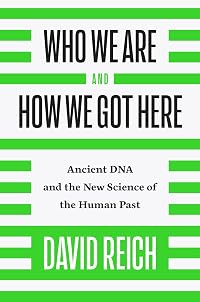
Who We Are and How We Got Here: Ancient DNA and the New Science of the Human Past
by David Reich
On This Page
Description
"A groundbreaking book about how technological advances in genomics and the extraction of ancient DNA have profoundly changed our understanding of human prehistory while resolving many long-standing controversies. Massive technological innovations now allow scientists to extract and analyze ancient DNA as never before, and it has become clear--in part from David Reich's own contributions to the field--that genomics is as important a means of understanding the human past as archeology, show more linguistics, and the written word. Now, in The New Science of the Human Past, Reich describes with unprecedented clarity just how the human genome provides not only all the information that a fertilized human egg needs to develop but also contains within it the history of our species. He delineates how the Genomic Revolution and ancient DNA are transforming our understanding of our own lineage as modern humans; how genomics deconstructs the idea that there are no biologically meaningful differences among human populations (though without adherence to pernicious racist hierarchies); and how DNA studies reveal the deep history of human inequality--among different populations, between the sexes, and among individuals within a population"-- show lessTags
Recommendations

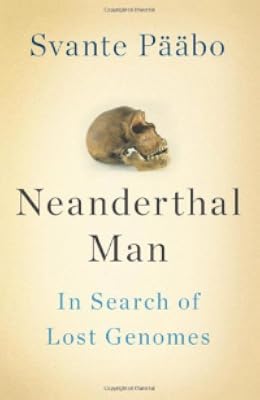
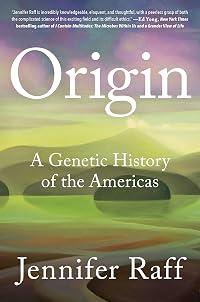
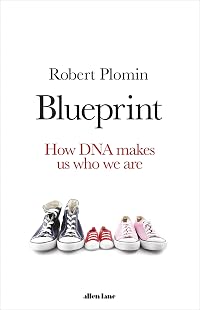
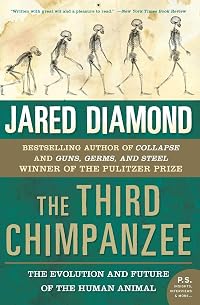



Member Recommendations
themulhern Similar themes, different treatment. Reich's is more recent.
Cynfelyn Who We Are and How We Got Here (2018) is a genetic interpretation successor to the cultural interpretation of Guns, Germs and Steel (1997).
Member Reviews
Overall, I like this, although it does get bogged down in dry details fairly often. I learned a lot reading this. I knew about the discovery of the Denisovans from pop science sources, but there were so many more ancient human populations that I'd never even heard about.
Aside from the dry writing style at points (hence the 4 stars), I had one beef with this book: the way the author completely misunderstood historical linguistics. (Disclaimer: I have a Ph.D. in linguistics.) It's not a large percentage of the book, but it does repeatedly come up in the narrative.
This is the part that bothered me the most, in a section where he's saying that other linguists were up in arms against Greenberg for his methodology:
Wrong! First things first: in historical linguistics, this type of comparison is called the comparative method, and it's standard practice (well, except the "scoring" part). Greenberg was not some pioneer going against the orthodox linguists for choosing to compare languages. It's the norm. What Greenberg's opponents criticized about his work is that he didn't apply the method rigorously. He abandoned careful preparation of potential cognate lists for shared correspondences and instead went with off-the-cuff judgment calls of whether two words had parts that were "similar enough". His results were not reproducible for this (and other) reasons.
Secondly, he unfairly implies that Greenberg's main counterpoint ("splitter" Lyle Campbell) must naïvely think that the Americas were populated in hundreds of waves of migration because Campbell splits the languages into so many families and subfamilies. There's no reason why languages couldn't have split into that many families after migration, whether it was one migration or several.
Finally, I think Reich places too much importance on language for determining population spread - perhaps even more than some linguists. Yes, language can help us trace migration in some cases, such as the way historical linguistics (along with botany and other fields) helped trace the movements of Austronesians eastward from Taiwan and to a lesser extent westward towards Madagascar. Not always, though. One of the big reasons for this is that people can adopt a language independent of their place of origin. There are also cultural reasons, such as societies where people must marry into exogamous groups who speak different languages. I realize that Reich isn't a linguist, but from reading this book, it doesn't seem like he consulted any linguists about his claims.
Anyway, overall I liked this book, even if I wished it flowed a little better sometimes. It's worth a read to learn more about the extent of variation and mixing of ancient human populations. show less
Aside from the dry writing style at points (hence the 4 stars), I had one beef with this book: the way the author completely misunderstood historical linguistics. (Disclaimer: I have a Ph.D. in linguistics.) It's not a large percentage of the book, but it does repeatedly come up in the narrative.
This is the part that bothered me the most, in a section where he's saying that other linguists were up in arms against Greenberg for his methodology:
The method that Greenbergshow more
used to propose Amerind was to study several hundred words across different Native American languages and to score them according to the extent to which they were shared. By finding high rates of sharing, he claimed evidence for common origin.
Wrong! First things first: in historical linguistics, this type of comparison is called the comparative method, and it's standard practice (well, except the "scoring" part). Greenberg was not some pioneer going against the orthodox linguists for choosing to compare languages. It's the norm. What Greenberg's opponents criticized about his work is that he didn't apply the method rigorously. He abandoned careful preparation of potential cognate lists for shared correspondences and instead went with off-the-cuff judgment calls of whether two words had parts that were "similar enough". His results were not reproducible for this (and other) reasons.
Secondly, he unfairly implies that Greenberg's main counterpoint ("splitter" Lyle Campbell) must naïvely think that the Americas were populated in hundreds of waves of migration because Campbell splits the languages into so many families and subfamilies. There's no reason why languages couldn't have split into that many families after migration, whether it was one migration or several.
Finally, I think Reich places too much importance on language for determining population spread - perhaps even more than some linguists. Yes, language can help us trace migration in some cases, such as the way historical linguistics (along with botany and other fields) helped trace the movements of Austronesians eastward from Taiwan and to a lesser extent westward towards Madagascar. Not always, though. One of the big reasons for this is that people can adopt a language independent of their place of origin. There are also cultural reasons, such as societies where people must marry into exogamous groups who speak different languages. I realize that Reich isn't a linguist, but from reading this book, it doesn't seem like he consulted any linguists about his claims.
Anyway, overall I liked this book, even if I wished it flowed a little better sometimes. It's worth a read to learn more about the extent of variation and mixing of ancient human populations. show less
This book contains two stories. One is that of the breathtaking advances using the study of ancient DNA to tease out humanity’s history. Although, as Reich stresses, we are still in the early stages of learning what it can tell us, we can already see that humanity’s development is more complex than anyone imagined. A basic framework has been established that reveals repeated waves of migration; the book describes thirty major mixture events. As Reich tells it, “the mixture of highly differentiated populations is a recurrent process in our history.” Some of the lines that contributed a portion of the mosaic of our DNA no longer exist. Some of these are named (Neanderthal, Denisovan), others are for now only posited based on DNA show more traces; Reich calls them “ghost” populations. Since the first modern humans spread from Africa 50,000 years ago, there has never been a “pure” population.
Part of this story is the prospect of how much more there is to unravel as increasing remains are discovered in parts of the world comparatively understudied, such as Africa, and added in.
That essential technique—sampling remains—leads, however, to the second story. The raw material underlying the science comes from gathering old bones and grinding up at least part of them. Entire indigenous tribes have opposed this. Clearly, there are ethical questions involved.
Another ethical issue involves the troubled heritage of eugenics, an early application of (rudimentary) genetic science to root out disease and mental disability through good breeding, including forced sterilization. The memory is repugnant. Yet, study of the genome gives us tools to combat the prevalence of hereditary defects in inbred populations. One such is that of Ashkenazi Jews, among whom certain hereditary diseases, such as Tay-Sachs, flourish. In recent decades, young people at orthodox schools in the United States and Israel are screened to see if they carry the recessive mutations that cause this and a handful of other rare diseases. Matchmakers don’t introduce them to others bearing the same gene. In a remarkably short time, the incidence of these diseases has been reduced. There is potential for using this in other populations, such as the rigidly stratified casts of India. What is that other than eugenics?
More hauntingly, it’s not so long since Nazi propaganda of an Aryan master race unleashed horrible suffering. And an alarming number of the disaffected continue to take this up. Ancient DNA studies now posit a wave of “Aryans” who swept from the central Asian steppe westward to Europe roughly five thousand years ago, largely replacing indigenous populations. Simultaneously, they spread southeast to northern India as well, where they established themselves as the upper caste. The spread of this culture, called Yamnaya, was based on harnessing the newly invented wheel. It seems likely that they are responsible for the spread of Indo-European languages; perhaps they even account for the similarities in the polytheistic pantheons of Norse, Hindu, and Greek mythology. How do we assimilate this knowledge without having it misappropriated by white supremacists? Reich emphasizes that such use of this insight would be mistaken since the Yamnaya culture was formed by mixture. “Ideologies that seek a return to a mythical purity are flying in the face of hard science” (p. 121).
Resistance to the results of investigating ancient DNA also comes from the opposite corner. Reich points to a consensus among anthropologists that race is a social concept and has no biological reality. This, he says, has “morphed . . . into an orthodoxy that the biological differences among populations are so modest that they should in practice be ignored” (p. 250). Those holding this view fear that the study of differences tied to ancestry would revert to earlier pseudo-science-based discrimination. Reich shows understanding for these concerns, yet remains convinced that study of the history of the human genome is valuable, not only for the insights it can yield into the prevention and treatment of disease, but as a means of filling in more of ancient human history than archaeology or linguistics could do without the help of genetics. More than this, rather than reintroduce the notion that biological difference means superiority, Reich is confident that the genome revolution can provide “a way to hold in our minds the extraordinary human diversity that exists in our day and has existed in our past” (p. 272). In sum, his hope is that the fruit of research can give all people a better life.
One of the driving forces in studying our ancestry is to get a better idea of our identity, of our place in the world. As the title expresses it, who we are and how we got here. Of course, you and I are much more than our DNA, and the way we respond to these advances in scientific understanding will also tell much about who we are.
Reich makes no secret in his preface that he would rather have used the time needed to write this book to write scientific papers instead (his profession’s currency, he calls them). I’m glad he wrote this vital book instead, bringing us interested laypeople up to date on both stories he recounts. show less
Part of this story is the prospect of how much more there is to unravel as increasing remains are discovered in parts of the world comparatively understudied, such as Africa, and added in.
That essential technique—sampling remains—leads, however, to the second story. The raw material underlying the science comes from gathering old bones and grinding up at least part of them. Entire indigenous tribes have opposed this. Clearly, there are ethical questions involved.
Another ethical issue involves the troubled heritage of eugenics, an early application of (rudimentary) genetic science to root out disease and mental disability through good breeding, including forced sterilization. The memory is repugnant. Yet, study of the genome gives us tools to combat the prevalence of hereditary defects in inbred populations. One such is that of Ashkenazi Jews, among whom certain hereditary diseases, such as Tay-Sachs, flourish. In recent decades, young people at orthodox schools in the United States and Israel are screened to see if they carry the recessive mutations that cause this and a handful of other rare diseases. Matchmakers don’t introduce them to others bearing the same gene. In a remarkably short time, the incidence of these diseases has been reduced. There is potential for using this in other populations, such as the rigidly stratified casts of India. What is that other than eugenics?
More hauntingly, it’s not so long since Nazi propaganda of an Aryan master race unleashed horrible suffering. And an alarming number of the disaffected continue to take this up. Ancient DNA studies now posit a wave of “Aryans” who swept from the central Asian steppe westward to Europe roughly five thousand years ago, largely replacing indigenous populations. Simultaneously, they spread southeast to northern India as well, where they established themselves as the upper caste. The spread of this culture, called Yamnaya, was based on harnessing the newly invented wheel. It seems likely that they are responsible for the spread of Indo-European languages; perhaps they even account for the similarities in the polytheistic pantheons of Norse, Hindu, and Greek mythology. How do we assimilate this knowledge without having it misappropriated by white supremacists? Reich emphasizes that such use of this insight would be mistaken since the Yamnaya culture was formed by mixture. “Ideologies that seek a return to a mythical purity are flying in the face of hard science” (p. 121).
Resistance to the results of investigating ancient DNA also comes from the opposite corner. Reich points to a consensus among anthropologists that race is a social concept and has no biological reality. This, he says, has “morphed . . . into an orthodoxy that the biological differences among populations are so modest that they should in practice be ignored” (p. 250). Those holding this view fear that the study of differences tied to ancestry would revert to earlier pseudo-science-based discrimination. Reich shows understanding for these concerns, yet remains convinced that study of the history of the human genome is valuable, not only for the insights it can yield into the prevention and treatment of disease, but as a means of filling in more of ancient human history than archaeology or linguistics could do without the help of genetics. More than this, rather than reintroduce the notion that biological difference means superiority, Reich is confident that the genome revolution can provide “a way to hold in our minds the extraordinary human diversity that exists in our day and has existed in our past” (p. 272). In sum, his hope is that the fruit of research can give all people a better life.
One of the driving forces in studying our ancestry is to get a better idea of our identity, of our place in the world. As the title expresses it, who we are and how we got here. Of course, you and I are much more than our DNA, and the way we respond to these advances in scientific understanding will also tell much about who we are.
Reich makes no secret in his preface that he would rather have used the time needed to write this book to write scientific papers instead (his profession’s currency, he calls them). I’m glad he wrote this vital book instead, bringing us interested laypeople up to date on both stories he recounts. show less
This is the least satisfying of the books I've read/listened to about genetics and the history of human evolution.
In many ways it's excellent. Reich is voracious in absorbing and telling us about other people's research as well as his own. His ego isn't tied up in his own theories; he's enthusiastic in reporting on research results that overturn his own theories and prior work. In many ways, it's both informative and enjoyable.
And yet. Reich seems utterly unaware that he has any biases. He says he's arguing against racism, being very clear that our traditional ideas about race just have no basis in science. Then he goes on to say that the best way to study human genetics is by large population groups, and that some large modern show more population groups have been separated long enough for significant differences of cognition and temperament to exist.
He argues that a good way to test this is by intelligence testing and the rate of completing advanced education. There's no science to support this. On the contrary, there's substantial evidence that socioeconomic background, parental educational attainment, and the cultural biases of admission requirements and intelligence tests, have a large impact on testing outcomes and educational attainment.
Reich also offers in defense of his argument for possible significant cognition and temperament differences between large, modern population groups the "fact" that no one finds it's controversial to say that there are important biological differences between men and women that produce profound differences in temperament and behavior..... This is of course not correct, and science doesn't support the claim. But he makes this claim, and says the same should be true of discussing differences between large population groups, and that resistance to this comes from "political correctness."
Moreover, he actively resents the resistance of aboriginal peoples, especially in the Americas, to genomic research on their genetics, dismissing out of hand the idea that any substantial harm has ever come from it. Well, in the real world where the aboriginal populations get to have their say, this resistance to genomic research comes from having been lied to about what their genetic material would be used for. In at least one case, they found out how their genetic material had really been used by someone reading a published paper and recognizing the Native American group, and telling them about it. I read about that case in one of the other books in my recent pursuit of what genetics has taught us about our history. It's further worth noting that, while resistance to genomic research is strong among Native Americans, when approached respectfully by researchers who are open, make limited requests, and are very clear about what they'll do, they can sometimes get agreement. And when those scientists respect the commitments they've made, they increase the chances of getting agreement the next time. But it takes a long time to rebuild broken trust, and Reich asks if he should really respect the current laws and agreements on doing genetic research on Native American genetic material.
That's not healthy for science or social and political relations.
Overall, an interesting book, but with some serious concerns..
I bought this audiobook. show less
In many ways it's excellent. Reich is voracious in absorbing and telling us about other people's research as well as his own. His ego isn't tied up in his own theories; he's enthusiastic in reporting on research results that overturn his own theories and prior work. In many ways, it's both informative and enjoyable.
And yet. Reich seems utterly unaware that he has any biases. He says he's arguing against racism, being very clear that our traditional ideas about race just have no basis in science. Then he goes on to say that the best way to study human genetics is by large population groups, and that some large modern show more population groups have been separated long enough for significant differences of cognition and temperament to exist.
He argues that a good way to test this is by intelligence testing and the rate of completing advanced education. There's no science to support this. On the contrary, there's substantial evidence that socioeconomic background, parental educational attainment, and the cultural biases of admission requirements and intelligence tests, have a large impact on testing outcomes and educational attainment.
Reich also offers in defense of his argument for possible significant cognition and temperament differences between large, modern population groups the "fact" that no one finds it's controversial to say that there are important biological differences between men and women that produce profound differences in temperament and behavior..... This is of course not correct, and science doesn't support the claim. But he makes this claim, and says the same should be true of discussing differences between large population groups, and that resistance to this comes from "political correctness."
Moreover, he actively resents the resistance of aboriginal peoples, especially in the Americas, to genomic research on their genetics, dismissing out of hand the idea that any substantial harm has ever come from it. Well, in the real world where the aboriginal populations get to have their say, this resistance to genomic research comes from having been lied to about what their genetic material would be used for. In at least one case, they found out how their genetic material had really been used by someone reading a published paper and recognizing the Native American group, and telling them about it. I read about that case in one of the other books in my recent pursuit of what genetics has taught us about our history. It's further worth noting that, while resistance to genomic research is strong among Native Americans, when approached respectfully by researchers who are open, make limited requests, and are very clear about what they'll do, they can sometimes get agreement. And when those scientists respect the commitments they've made, they increase the chances of getting agreement the next time. But it takes a long time to rebuild broken trust, and Reich asks if he should really respect the current laws and agreements on doing genetic research on Native American genetic material.
That's not healthy for science or social and political relations.
Overall, an interesting book, but with some serious concerns..
I bought this audiobook. show less
This is a very important book - from many points of view. Being able to sequence DNA from ancient human remains means being able to know - really know, not just hypothesize - the degree of relatedness of different species of early humans. This new science is able to tell us, for example, that the early modern humans did interbreed with that other branch of homo sapiens, the Neanderthals; thus modern humans owe as much as 4% of their DNA to Neanderthals. We also inherited DNA from another branch of the family, the Denisovans who, until this time, were know only from one thumb bone and a few teeth discovered in a cave in Russia. The Denisovans were closer to the Neanderthals than they were to us, but we are all distantly related. show more According to the author's analyses of ancient DNA, there was a fourth branch of homo sapiens - a "ghost" population from whom actual physical remains have not yet been discovered - whom he calls "superarchaic" humans.
The true test of a theory or model is whether it can make predictions that can be verified empirically, and the author describes a fascinating example of this. Knowing that the Americas were populated by people migrating from east Asia across the Bering Straits during the last Ice Age, it had been assumed that Native Americans would share more of their DNA with east Asians than with Europeans. In fact, the first analyses showed just the opposite. On the basis of this unexpected result, the author and his colleagues proposed that there had been another "ghost" population living in northern Europe; some of them migrated eastward and eventually into the Americas, while other migrated southward and contributed towards European ancestry. The author called this group who contributed both to European and Native American ancestry "Ancient North Eurasians"; four years later, physical remains from this ghost population were found; DNA extracted from the bones of a boy who had lived in Siberia about 24,000 years ago showed that Native Americans got as much as a third of their genetic inheritance from Ancient North Europeans.
Analysis of the DNA of different groups of modern humans - and comparison with that of ancient DNA - also shows that the modern "races" - Caucasian, African, South Asian, East Asian, etc - are a very modern "invention". They do not correspond at all - as some would believe - with different groups of ancient homo who, following their migration out of Africa, each followed its own path of evolutionary development. All modern groups of humans are a genetic mixture of different human populations who interbred in the relatively recent past, say up to 10,000 years ago. Continual migration and interbreeding between resident populations and new arrivals is what has created the pallet of human types we know today. The differences we see today concentrated in specific population groups - such as skin color or eyes with epicanthic folds - are relatively modern evolutionary changes.
It is an anti-racist mantra that the average genetic difference between modern population groups is less than differences within these groups. While this is welcome news for anyone who instinctively rejects the idea of there being hereditary genetic differences between different population groups, it does not actually mean that. Contrary to the orthodoxy of many evolutionary theorists, evolution has been ongoing among humans much more recently than the preferred "cut-off" of 50,000 years ago. For groups of people who settled in tropical latitudes, genetic mutations that produced a dark pigmentation of the skin, protecting it from the strong sun, clearly conferred a greater fitness, and hence was likely to spread and become dominant in those populations. For groups of people who domesticated cattle and other animals for meat, a mutation that stopped the gene that permits the metabolism of milk from "switching off" after infancy, thus allowing people to benefit from an important additional source of nutrition from their animals, was also clearly beneficial. There are some whole population groups who still have the original version of this gene that makes them lactose intolerant after a certain age. Rather than leaving information about recent human evolution to leak out via the blogosphere, where it is often used to promote racist theories, the author argues strongly for the scientific community to abandon an untenable orthodoxy and "come clean" about it. This will enable an informed and authoritative narrative about genetic differences between different groups. Differences that originated in response to specific environmental pressures on ancestral populations are just that - differences, without any racist implications of superiority.
On the whole, this is an accessible book for the layman, although some of the technical descriptions about gene sequencing were above my pay-grade. The conclusions were very clear to me, if not always the steps along the way. I also found that I needed to re-read a number of sections two or three times in order imprint their import. It was very worth the effort. show less
The true test of a theory or model is whether it can make predictions that can be verified empirically, and the author describes a fascinating example of this. Knowing that the Americas were populated by people migrating from east Asia across the Bering Straits during the last Ice Age, it had been assumed that Native Americans would share more of their DNA with east Asians than with Europeans. In fact, the first analyses showed just the opposite. On the basis of this unexpected result, the author and his colleagues proposed that there had been another "ghost" population living in northern Europe; some of them migrated eastward and eventually into the Americas, while other migrated southward and contributed towards European ancestry. The author called this group who contributed both to European and Native American ancestry "Ancient North Eurasians"; four years later, physical remains from this ghost population were found; DNA extracted from the bones of a boy who had lived in Siberia about 24,000 years ago showed that Native Americans got as much as a third of their genetic inheritance from Ancient North Europeans.
Analysis of the DNA of different groups of modern humans - and comparison with that of ancient DNA - also shows that the modern "races" - Caucasian, African, South Asian, East Asian, etc - are a very modern "invention". They do not correspond at all - as some would believe - with different groups of ancient homo who, following their migration out of Africa, each followed its own path of evolutionary development. All modern groups of humans are a genetic mixture of different human populations who interbred in the relatively recent past, say up to 10,000 years ago. Continual migration and interbreeding between resident populations and new arrivals is what has created the pallet of human types we know today. The differences we see today concentrated in specific population groups - such as skin color or eyes with epicanthic folds - are relatively modern evolutionary changes.
It is an anti-racist mantra that the average genetic difference between modern population groups is less than differences within these groups. While this is welcome news for anyone who instinctively rejects the idea of there being hereditary genetic differences between different population groups, it does not actually mean that. Contrary to the orthodoxy of many evolutionary theorists, evolution has been ongoing among humans much more recently than the preferred "cut-off" of 50,000 years ago. For groups of people who settled in tropical latitudes, genetic mutations that produced a dark pigmentation of the skin, protecting it from the strong sun, clearly conferred a greater fitness, and hence was likely to spread and become dominant in those populations. For groups of people who domesticated cattle and other animals for meat, a mutation that stopped the gene that permits the metabolism of milk from "switching off" after infancy, thus allowing people to benefit from an important additional source of nutrition from their animals, was also clearly beneficial. There are some whole population groups who still have the original version of this gene that makes them lactose intolerant after a certain age. Rather than leaving information about recent human evolution to leak out via the blogosphere, where it is often used to promote racist theories, the author argues strongly for the scientific community to abandon an untenable orthodoxy and "come clean" about it. This will enable an informed and authoritative narrative about genetic differences between different groups. Differences that originated in response to specific environmental pressures on ancestral populations are just that - differences, without any racist implications of superiority.
On the whole, this is an accessible book for the layman, although some of the technical descriptions about gene sequencing were above my pay-grade. The conclusions were very clear to me, if not always the steps along the way. I also found that I needed to re-read a number of sections two or three times in order imprint their import. It was very worth the effort. show less
I really enjoyed this book because it changed my understanding of what is currently known about human prehistory, and also changed my understanding of how genetics and statistics help disentangle questions that seem very hard to approach otherwise.
As a human being of mixed race, living in a society with people from everywhere in the world, I really enjoyed exposure to what we know about the shared history of humanity, 95% (or more) of which happened before we started leaving any written records.
The book goes into a lot of detail about what is currently known about migrations and mixing among distantly related groups of peoples, which as far as they can tell, has happened repeatedly.
After reading this book I often find myself show more wondering what it would have been like to live in Eurasia 20ky ago, with a quite different distribution of races of people that don't really have an analog today, and whose looks may have been quite different from those we are used to seeing. Some of these groups exist today only as components in the new mixtures that we now consider races. Understanding these events is made possible by the fact that now we can analyze not only modern DNA but also ancient DNA (eg. 20ky old), and not only mitochondrial or Y chromosome DNA, which is more mainstream.
As a graduates student in an unrelated field, I also found the meta-knowledge the author is giving us, describing how his field is changing, the kinds of questions that would be hard to answer prior to these new techniques, and the problems researchers have had to solve to get there, and what people are currently working on and are excited about. The field seems to be moving fast enough that some of the questions raised in several chapters have had advances since the book was written (only a couple of years ago). I also enjoyed the descriptions of some of the principles used to analyze this type of data. show less
As a human being of mixed race, living in a society with people from everywhere in the world, I really enjoyed exposure to what we know about the shared history of humanity, 95% (or more) of which happened before we started leaving any written records.
The book goes into a lot of detail about what is currently known about migrations and mixing among distantly related groups of peoples, which as far as they can tell, has happened repeatedly.
After reading this book I often find myself show more wondering what it would have been like to live in Eurasia 20ky ago, with a quite different distribution of races of people that don't really have an analog today, and whose looks may have been quite different from those we are used to seeing. Some of these groups exist today only as components in the new mixtures that we now consider races. Understanding these events is made possible by the fact that now we can analyze not only modern DNA but also ancient DNA (eg. 20ky old), and not only mitochondrial or Y chromosome DNA, which is more mainstream.
As a graduates student in an unrelated field, I also found the meta-knowledge the author is giving us, describing how his field is changing, the kinds of questions that would be hard to answer prior to these new techniques, and the problems researchers have had to solve to get there, and what people are currently working on and are excited about. The field seems to be moving fast enough that some of the questions raised in several chapters have had advances since the book was written (only a couple of years ago). I also enjoyed the descriptions of some of the principles used to analyze this type of data. show less
This is absolutely the book to read if you're interested in genetic history, either your own or humanity's. Reich zooms out tens and hundreds of thousands of years ago, far past most Big History books, discussing how the latest research on recent discoveries of ancient DNA has begun to make sense of the vast movements of peoples in the dim unremembered mists of time from before we have written records. The rapid pace of technological advancement in genetics research, to the point where we can reconstruct detailed models of peoples we know only from scattered bone fragments, is challenging a lot of what we thought we knew about the past (did humans really evolve solely in Africa? how many waves of migration from Asia to the Americas? how show more recently did modern racial categories form?), and as astonishing as it is to imagine that we can track the migration and reproductive patterns of long-vanished ethnicities and even extinct subspecies like Neanderthals and Denisovans, genetics has advanced to the point where we can even identify "ghost populations" in our modern genomes - long-dead ancestors who have left no trace of language, settlement, or literature, but whose migrations and mixings live on in our DNA. The rapid pace of discovery in this field means many specific conclusions might be in flux, but as Reich shows, the wealth of knowledge unlocked by DNA sequencing means fields like history and anthropology already have plenty to chew on. I haven't found this kind of rigorous, sustained investigation of the deep roots of our ancestry anywhere else. show less
It is obvious that genetic research has brought about a complete revolution in the medical world in recent decades. But it is sometimes overlooked that genetics has also turned the historical world upside down. This mainly concerns the research of ancient fossils, of humans, animals and plants. Shortly before 2010 it became possible to extract to a limited extent DNA from those fossils and to read out their genome sequences and compare them with others. By examining both the number and the specific place of mutations within that ancient DNA, it is possible to identify lines of kinship or divergence, and thus get a better picture of the populations of millennia ago and their movement across our planet. A well-known example is the show more presence of a striking portion of Neanderthal DNA in the present inhabitants of Europe and Asia, or the discovery of another extinct human species, the Denisova, of which hereditary traces can be found, especially in Southeast Asia and Oceania.
David Reich portrays this clearly and in great detail, and with authority. He is one of the pioneers in this field. With his own laboratory in Cambridge, Ma., he is at the forefront of this fast-growing field of the Ancient DNA revolution. His expertise is indisputable, but it also gives this book a certain amount of technicality, making it at times a bit difficult for the layman to follow his train of thought. And as an interested party, Reich naturally stresses the great merits of genetic research, and rightly so, but it seems to me that it is also important to warn against overestimation. This is because there are considerable limitations to this genetic research.
In the first place, it is extremely difficult to find usable DNA within fossils: it breaks down with time, and all the more in warm and humid areas. The consequence of this is that it is currently very difficult to extract DNA from fossils older than 100,000 years, or from areas that are tropical. Obviously this gives a bias. Reich himself has to admit that 90% of all fossils examined up to the end of 2017 come from western Eurasia; if that's not an imbalance, then I don't know. Perhaps this will be corrected over time (China is in the process of catching up), but still.
Moreover, the total number of fossils investigated is still relatively limited, and the techniques used are still in full development. Genetics and certainly Ancient Genetics is a relatively young science, and so you can see that in this book Reich has to radically contradict findings that were published in scientific journals even as recent as 2010. This should encourage vigilance and (healthy) skepticism. After all, it turns out that the interpretation of genetic research is always a statistical thing, in other words genetics is a probabilistic science, and so caution is all the more necessary.
Very little of this is noticeable in this book. Reich seems to me to be the typical example of a scientist who mainly sees the possibilities/opportunities and who remains fundamentally optimistic about revolutionary new insights and techniques. This pride is to some extent justified, for the new discoveries certainly are impressive, but it is best for anyone reading this book to remember that Reich's presentation is a very preliminary state of affairs, of a science that is constantly evolving.
Finally, there is the fundamental debate to what extent genetic material can be used to derive a complete and reliable picture of human history. Of course it cannot. Genetic material teaches us revolutionary new things about when and where human populations emerged, how they related to each other, and it also offers, in part, insight into social relationships, nutrition and diseases. But the entire world of human culture in the broadest sense of the word, of course, is not stored in the genes. Or are we going to indulge in the hackneyed nature-nurture debate again?
So yes, ancient DNA research certainly yields new insights, but you must always be cautious and compare them with findings from other sciences such as classical archeology, linguistics and sociology. In my discussion in my History Account on Goodreads, I highlight some of those new insights. See https://www.goodreads.com/review/show/2508806669. show less
David Reich portrays this clearly and in great detail, and with authority. He is one of the pioneers in this field. With his own laboratory in Cambridge, Ma., he is at the forefront of this fast-growing field of the Ancient DNA revolution. His expertise is indisputable, but it also gives this book a certain amount of technicality, making it at times a bit difficult for the layman to follow his train of thought. And as an interested party, Reich naturally stresses the great merits of genetic research, and rightly so, but it seems to me that it is also important to warn against overestimation. This is because there are considerable limitations to this genetic research.
In the first place, it is extremely difficult to find usable DNA within fossils: it breaks down with time, and all the more in warm and humid areas. The consequence of this is that it is currently very difficult to extract DNA from fossils older than 100,000 years, or from areas that are tropical. Obviously this gives a bias. Reich himself has to admit that 90% of all fossils examined up to the end of 2017 come from western Eurasia; if that's not an imbalance, then I don't know. Perhaps this will be corrected over time (China is in the process of catching up), but still.
Moreover, the total number of fossils investigated is still relatively limited, and the techniques used are still in full development. Genetics and certainly Ancient Genetics is a relatively young science, and so you can see that in this book Reich has to radically contradict findings that were published in scientific journals even as recent as 2010. This should encourage vigilance and (healthy) skepticism. After all, it turns out that the interpretation of genetic research is always a statistical thing, in other words genetics is a probabilistic science, and so caution is all the more necessary.
Very little of this is noticeable in this book. Reich seems to me to be the typical example of a scientist who mainly sees the possibilities/opportunities and who remains fundamentally optimistic about revolutionary new insights and techniques. This pride is to some extent justified, for the new discoveries certainly are impressive, but it is best for anyone reading this book to remember that Reich's presentation is a very preliminary state of affairs, of a science that is constantly evolving.
Finally, there is the fundamental debate to what extent genetic material can be used to derive a complete and reliable picture of human history. Of course it cannot. Genetic material teaches us revolutionary new things about when and where human populations emerged, how they related to each other, and it also offers, in part, insight into social relationships, nutrition and diseases. But the entire world of human culture in the broadest sense of the word, of course, is not stored in the genes. Or are we going to indulge in the hackneyed nature-nurture debate again?
So yes, ancient DNA research certainly yields new insights, but you must always be cautious and compare them with findings from other sciences such as classical archeology, linguistics and sociology. In my discussion in my History Account on Goodreads, I highlight some of those new insights. See https://www.goodreads.com/review/show/2508806669. show less
Members
- Recently Added By
Published Reviews
ThingScore 100
The overriding lesson ancient DNA teaches is that the population in any one place has changed dramatically many times since the great human post-ice age expansion, and that recognition of the essentially mongrel nature of humanity should override any notion of some mystical, longstanding connection between people and place. We are all, to use Theresa May’s derisive label, “citizens of show more nowhere”. The Beaker people replaced 90% of the population of Britain around 4,500 years ago. Related to this is the knowledge that all life, from its beginnings, has been an essentially improvisatory, impure process. As Reich puts it: “Ideologies that seek a return to a mythical purity are flying in the face of hard science.”
His findings have important medical implications, too. For instance, his research in India has shown the profound consequences of caste-system inbreeding. There is an abundance of recessive diseases – both partners in some couples carry mutant genes from way back in the lineage. In fact, such populations make gene hunting easier because genes causing recessive conditions come with characteristic markers.
Reich’s overall picture will, in time, acquire much greater detail – just as Darwin’s great study was a beginning not an end – but we should be grateful to him and his large team of co-workers (including his wife, science writer Eugenie Reich, who had a big role in the book’s creation) for putting the essential story before us now. It is thrilling in its clarity and its scope. show less
His findings have important medical implications, too. For instance, his research in India has shown the profound consequences of caste-system inbreeding. There is an abundance of recessive diseases – both partners in some couples carry mutant genes from way back in the lineage. In fact, such populations make gene hunting easier because genes causing recessive conditions come with characteristic markers.
Reich’s overall picture will, in time, acquire much greater detail – just as Darwin’s great study was a beginning not an end – but we should be grateful to him and his large team of co-workers (including his wife, science writer Eugenie Reich, who had a big role in the book’s creation) for putting the essential story before us now. It is thrilling in its clarity and its scope. show less
added by Cynfelyn
Lists

Our Genetic History (Michelle TBR)
5 works; 1 member

Top Five Books of 2019
387 works; 111 members

Big History
72 works; 1 member

Books Read in 2019
4,052 works; 110 members
Author Information

2 Works 984 Members
Some Editions
Awards and Honors
Awards
Distinctions
Notable Lists
Series
Belongs to Publisher Series
Silliman Memorial Lectures (2018-19)
Work Relationships
Has as a reference guide/companion
Common Knowledge
- Canonical title*
- Who we are and how we got here
- Original title
- Who we are and how we got here : ancient DNA and the new science of the human past
- Original publication date
- 2018-03-27
- Important places*
- Yr Affrig; Eurasia; Ewrop; Asia; India; Gogledd America (show all 8); De America; Oceania
- Important events*
- esblygiad dynol; mudo dynol
- Epigraph*
- [Dim]
- Dedication*
- For Seth and Leah
- First words
- Introduction
This book is inspired by a visionary, Luca Cavalli-Sforza, the founder of genetic studies of our past. - Last words*
- (Click to show. Warning: May contain spoilers.)I see it as our role to midwife ancient DNA into a field that is not only the domain of geneticists, but also of archaeologists and the public - to realize its extraordinary potential to reveal who we are.
- Blurbers*
- Renfrew, Colin; Gates, Henry Louis, Jr.; Lieberman, Daniel E.; Bellwood, Peter; Przeworski, Molly; Weinberg, Robert (show all 10); Cunliffe, Barry; Higham, Tom; Wojcicki, Anne; Mukherjee, Siddhartha
- Original language*
- Saesneg
*Some information comes from Common Knowledge in other languages. Click "Edit" for more information.
Classifications
Statistics
- Members
- 996
- Popularity
- 26,282
- Reviews
- 23
- Rating
- (4.00)
- Languages
- 9 — Chinese, English, Finnish, French, Italian, Korean, Polish, Spanish, Welsh
- Media
- Paper, Audiobook, Ebook
- ISBNs
- 24
- ASINs
- 5