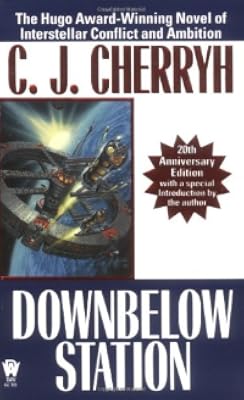
Downbelow Station
by C. J. Cherryh
The Company Wars: Publishing order (1), The Company Wars (03), Alliance-Union Universe (03 (Company Wars 03)), Alliance-Union Universe: Publication (7)
On This Page
Description
The Beyond started with the Stations orbiting the stars nearest Earth. The Great Circle the interstellar freighters traveled was long, but not unmanageable, and the early Stations were emotionally and politically dependent on Mother Earth. The Earth Company which ran this immense operation reaped incalculable profits and influenced the affairs of nations. Then came Pell, the first station centered around a newly discovered living planet. The discovery of Pell's World forever altered the show more power balance of the Beyond. Earth was no longer the anchor which kept this vast empire from coming adrift, the one living mote in a sterile universe. But Pell was just the first living planet. Then came Cyteen, and later others, and a new and frighteningly different society grew in the farther reaches of space. The importance of Earth faded and the Company reaped ever smaller profits as the economic focus of space turned outward. But the powerful Earth Fleet was sitll a presence in the Beyond, and Pell Station was to become the last stronghold in a titanic struggle between the vast, dynamic forces of the rebel Union and those who defended Earth's last, desperate grasp for the stars. show lessTags
Recommendations

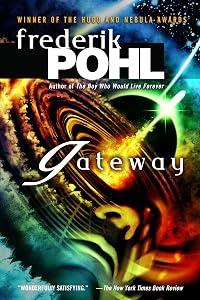
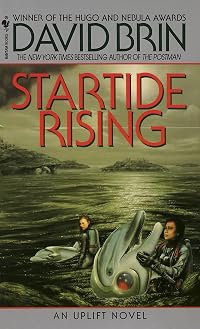
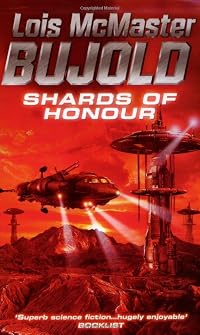
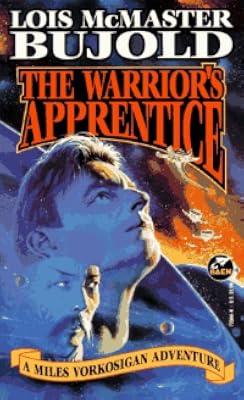


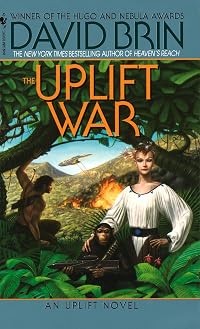
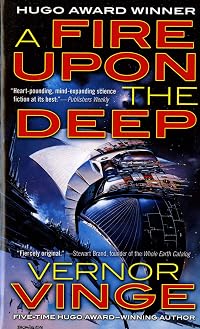
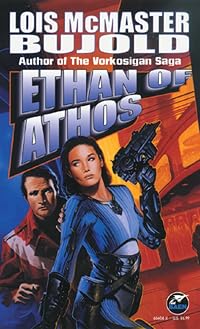
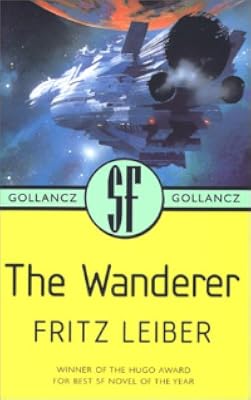


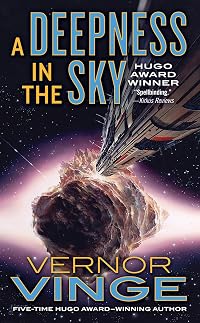
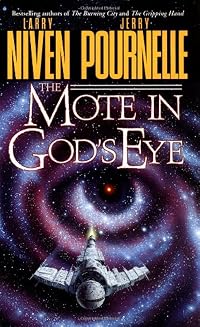
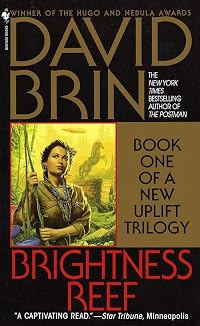

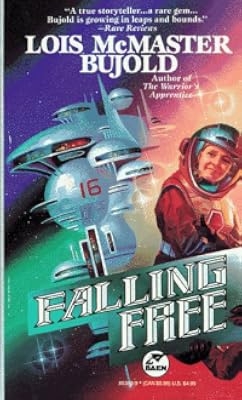
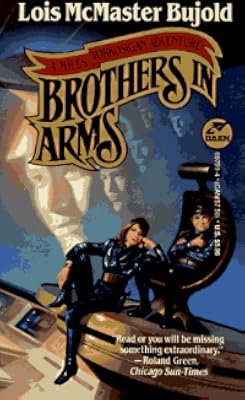

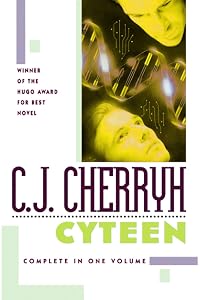


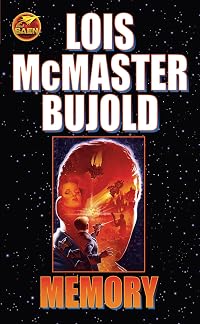
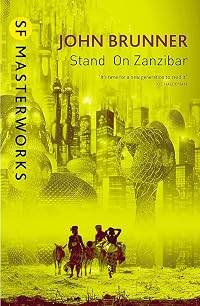
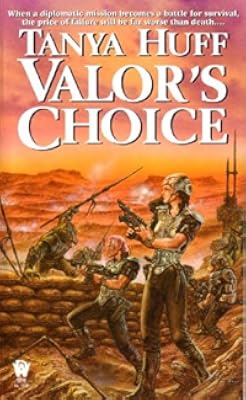
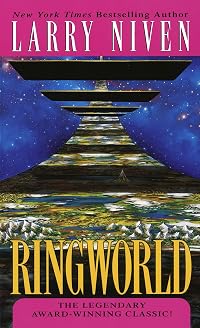
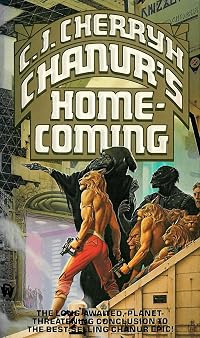





Member Recommendations



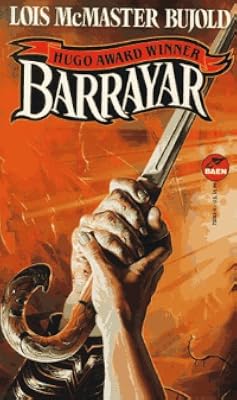
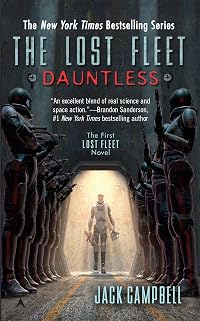
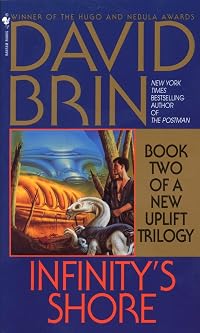
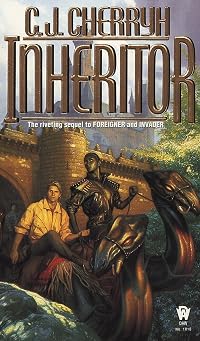
DWWilkin The world above protects a world with a native intelligence
Member Reviews
A book club pick :)
Give me more, please
I have not read anything by C.J. Cherryh before, but I have heard good things about this series. Thank you, book club :)
The scope is epic. Humanity has spread among the stars. There are independent space stations, interstellar trade and independent merchants, Pell station orbiting a planet with intelligent life, Earth Company with power and its Fleet, and a rebel Union.
”It became war without anyone calling it war…”
The novel starts with a refugee crisis. It is chillingly well-written throughout the book, with riots, crime, and gangs of the refugee camp that the Pell station helplessly sets up.
This is a story of people caught in a war none of them had asked for. They cope, they act, they make show more choices (sometimes horrible ones). It’s great that the we don’t have “good guys” against “bad”. In the beginning the reader might think it’s obvious which side they are “supposed to” root for. Nope. You end up rooting for people. The space opera plot has a breakneck pace, yet the individuals’ stories unfold patiently. How was this done? So good!
I especially loved Damon and Elene (go, badass Elene, go), Emilio and Miliko. And Josh, of course! His POV was poignant and well done. His friendship with Damon was wonderful. If their situation wasn’t so terrible I would have called it a bromance. ”They spent long hours in silences, in their separate pasts.”
The hisa, the people of Downbelow (Pell’s world), were beautifully written. We did go into the “mystical, peaceful natives” territory. Thankfully, this is an intelligent novel, and the hisa who get POV chapters are great characters. ”The hisa were not the same as they had been when humans came. Neither were humans, on Downbelow.”
The plot twists at the end were great, I flew through the last chapters towards the awesome, awesome ending.
I am very impressed by how “modern” this novel felt. Not all older sci-fi stands the test of time. Isn't it great that this one has? show less
Give me more, please
I have not read anything by C.J. Cherryh before, but I have heard good things about this series. Thank you, book club :)
The scope is epic. Humanity has spread among the stars. There are independent space stations, interstellar trade and independent merchants, Pell station orbiting a planet with intelligent life, Earth Company with power and its Fleet, and a rebel Union.
”It became war without anyone calling it war…”
The novel starts with a refugee crisis. It is chillingly well-written throughout the book, with riots, crime, and gangs of the refugee camp that the Pell station helplessly sets up.
This is a story of people caught in a war none of them had asked for. They cope, they act, they make show more choices (sometimes horrible ones). It’s great that the we don’t have “good guys” against “bad”. In the beginning the reader might think it’s obvious which side they are “supposed to” root for. Nope. You end up rooting for people. The space opera plot has a breakneck pace, yet the individuals’ stories unfold patiently. How was this done? So good!
I especially loved Damon and Elene (go, badass Elene, go), Emilio and Miliko. And Josh, of course! His POV was poignant and well done. His friendship with Damon was wonderful. If their situation wasn’t so terrible I would have called it a bromance. ”They spent long hours in silences, in their separate pasts.”
The hisa, the people of Downbelow (Pell’s world), were beautifully written. We did go into the “mystical, peaceful natives” territory. Thankfully, this is an intelligent novel, and the hisa who get POV chapters are great characters. ”The hisa were not the same as they had been when humans came. Neither were humans, on Downbelow.”
The plot twists at the end were great, I flew through the last chapters towards the awesome, awesome ending.
I am very impressed by how “modern” this novel felt. Not all older sci-fi stands the test of time. Isn't it great that this one has? show less
This is the longest and densest Cherryh story I’ve read, which has its pros and cons about even for the length, though generally I enjoyed it. It’s also very obvious this came out in 1981. It’s not just the heavy use of paper and tapes in outer space (let alone the leather binder), or the odd way any form of technological communication works. Most of that is… ignorable, because the character stories are by and large quite good, and the political maneuvering is at least well written if kind of cringey and very dated in spots.
Over everything is the issue of a refugee crisis, the topic of immigration, xenophobia, and the fear of immigrant gangs, which basically sounds like any US news channel you could turn on today. How it is show more handled hasn’t aged well, though obviously a space station with a limited amount of life support is very different from a country on a planet. Sexual assault is mentioned as an endemic problem created by this situation (by the military, refugees, and rioters), but often waved aside as an unavoidable reality. For all there are female leaders in the story, it is men who principally wield the reins of power everywhere, and it’s very obvious why the issue is waved away. Though clearly this isn’t just a problem that affects women: it’s heavily implied at least Josh was a victim of sexual assault, particularly before his time with Mallory, if not during his time with her. And it’s heavily implied Marsh was also assaulted, as well as three other unnamed men in a later scene. It's still relatively minor, despite the actions that Josh and Marsh take over their futures, and female victims are brushed aside, unnamed, made to bear with their fate because what else is there? Even when a woman is in charge of the situation, it’s someone who’s potentially a rapist herself, and though she punishes the perpetrators of another assault, she makes sure the victims keep their mouths shut in a military cover-up strongly reminiscent of actual military action in regard to assault. The people in charge of organizations are all quite despicable on some level, even Angelo, and this crisis only intimates how little the marginalized tend to manner in class-based societies, and how much the wealthy care more about comfort than the tragic realities faced by refugees.
It’s also a bit uncomfortable that while ships in the Earth fleet seem to be named either for countries or oceans, there is one ship simply named “Africa”. Now it’s possible all the ships named after individual countries in Africa were destroyed at this point - this is after all, a small group of ships left after repeated reminders the others were destroyed - and other ships are named generic things, like “Sun’s Eye” or “Thor”, and there is a ship named Europe… It’s still a bit uncomfortable to have a list of ships including Australia, Atlantic, North Pole, Libya, Africa, and then India, Pacific, and Tibet. Specificity is allowed for countries that aren't on one particular continent, seemingly, though I also can't remember any ships named after South American countries, either. Fascinating absence, that.
I’ve admittedly only read about three aliens species Cherryh came up with prior to this, and I find the Downers the least interesting out of all of them, though I do like Satin as a character. I just found whenever a Downer story pops up to be a drag. I do appreciate how their story lends an “all sides” aspect to this story universe: when we first meet Jacint, it’s from Lukas’ point of view, where the man is an annoyance and a frustration, perhaps political appointee slinging his authority around, or even a saboteur. Then he is dead, and we’re seemingly meant to be happy about it - killed by his own sabotage of colony efforts. Then we discover that the Downers loved him, as he was rare among humans for being one who truly cared about and connected with them, even up to putting his life on the line for their behalf. It's also kind of uncomfortable how the Downers seem to vaguely resemble aboriginal Australians. Since the Atevi in "Foreigner" are vaguely modeled on the Japanese, it would make sense that these aliens are also modeled on another real-world group. It's... uncomfortable.
Damon and Josh are by far my favorite characters in the story, and I loved every time their stories showed up, whether they were alone or together, though the together parts were even better. Their struggles were compelling, with Damon showing the difficulty of administration in a hard situation, and Josh showing us the mental drain of being a cog in a badly maintained machine, simply wanting what most humans want: love and affection in some form. And there’s another gay couple: Edger and Mazian. I have to wonder if this hadn’t released in the 80s, particularly in the first year of Reagan’s regime, what might have come of these relationships. Interestingly Josh’s plotline was kind of handled in an episode of “Babylon 5”, and I much prefer Cherryh’s version, though “Passing Through Gethsemene” is a very good episode. I didn't like Josh's ending, though. I don't think the very last time he shows up was necessary, and would have liked it if he'd just stayed with his partners, though I do appreciate that he is still devoted to them. I think this book got as close as it could at the time to multiple canon queer couples, and even a polyamorous triad, and it's nice to see.
I even managed to feel some sympathy for Vittorio, who seemingly wanted to live a contented life following his father’s orders, even to his own unfortunate end (though I hope for the best for him). The moment he reaches out for his father’s hand before going away on the merchanter ship was quite poignant.
It’s hard to tell if this book is pro-cop or not, as the police forces are simultaneously a requirement for the maintenance of sanity and order and safety, as well as a danger. Guns in general are useful but feared - a source, in any hands, of potential danger. Their absence is marked at least once of making situations less dangerous. It’s in the nebulous space of… probably there’s the belief that there are “good cops” and “bad cops”, which is… typical for white SF of the era. It's also questionably anti-military, which would be nice if true. The military forces tend to not care about civilians or their lives, and see them only as means to an end, not people.
It’s also not comforting that the mysterious enemy forces are called “Union”, and this book came out the same year Reagan union busted the air traffic controller strike, permanently crippling unions in this country. What does Union want? To be free of Earth and “the Company”’s control. What do they become? A terrifying genetically created and modified army that does not comfort or support its people, and simply sends them out as fodder to be used up, producing more as needed, abandoning them as necessary. Consuming more of the known galaxy until it dominates. The Union presence is most strongly felt in a scene where a powerful negotiator tells the Company presence that they have nothing to negotiate, and will have to accept Union terms. It's... it's not pretty.
This is perhaps ungenerous - Union was and so far as I know probably is still a common name by science fiction authors. And to be fair, the Company is not exactly painted in the kindest light - a corporation seeking control and dominance of its own, ready to cast adrift its own underlings as needed for its survival, until it comes to a rather ignominious end as it doesn’t even realize its legs have already been cut out from under it. And many, many other stories a similar concept: of Earth’s colonies rebelling, calling for self-governance, and perhaps warring with Earth. The first Gundam anime had this as a plot in 1979, with enhanced enemy soldiers as well. So is this novel anti-union? ...Well. There is definitely a movement towards increased workers rights on some level, as well as something like socialized healthcare, but the system is also very capitalist, so I guess if you want to read it literally, it really does seem kind of anti-union, and a bit anti-socialist.
I read an ebook copy of this so I’m not sure if the issue is the original printing or just this version, but there were a slew of errors in the text that often made it hard to read sentences, though part of that might be down to Cherryh’s sometimes odd choice creation of spacer slang.
Overall, the parts I loved, I loved a lot, and that made up for the slower parts (unfortunately I didn't care at all for the space battles; it's not Cherryh's fault, as they seemed to be well-written, but I've been burnt out on reading long space battles). I can't say I would necessarily recommend this unless you really like Cherryh. "Foreigner" is definitely a more intimate character exploration, with equally complicated politics spanning multiple species and governments, though "Foreigner" also has issues with being a bit slow for most of the books after the first trilogy. And this book is arguably the queerest of the Cherryh I've read, so there's that. show less
Over everything is the issue of a refugee crisis, the topic of immigration, xenophobia, and the fear of immigrant gangs, which basically sounds like any US news channel you could turn on today. How it is show more handled hasn’t aged well, though obviously a space station with a limited amount of life support is very different from a country on a planet. Sexual assault is mentioned as an endemic problem created by this situation (by the military, refugees, and rioters), but often waved aside as an unavoidable reality. For all there are female leaders in the story, it is men who principally wield the reins of power everywhere, and it’s very obvious why the issue is waved away. Though clearly this isn’t just a problem that affects women: it’s heavily implied at least Josh was a victim of sexual assault, particularly before his time with Mallory, if not during his time with her. And it’s heavily implied Marsh was also assaulted, as well as three other unnamed men in a later scene. It's still relatively minor, despite the actions that Josh and Marsh take over their futures, and female victims are brushed aside, unnamed, made to bear with their fate because what else is there? Even when a woman is in charge of the situation, it’s someone who’s potentially a rapist herself, and though she punishes the perpetrators of another assault, she makes sure the victims keep their mouths shut in a military cover-up strongly reminiscent of actual military action in regard to assault. The people in charge of organizations are all quite despicable on some level, even Angelo, and this crisis only intimates how little the marginalized tend to manner in class-based societies, and how much the wealthy care more about comfort than the tragic realities faced by refugees.
It’s also a bit uncomfortable that while ships in the Earth fleet seem to be named either for countries or oceans, there is one ship simply named “Africa”. Now it’s possible all the ships named after individual countries in Africa were destroyed at this point - this is after all, a small group of ships left after repeated reminders the others were destroyed - and other ships are named generic things, like “Sun’s Eye” or “Thor”, and there is a ship named Europe… It’s still a bit uncomfortable to have a list of ships including Australia, Atlantic, North Pole, Libya, Africa, and then India, Pacific, and Tibet. Specificity is allowed for countries that aren't on one particular continent, seemingly, though I also can't remember any ships named after South American countries, either. Fascinating absence, that.
I’ve admittedly only read about three aliens species Cherryh came up with prior to this, and I find the Downers the least interesting out of all of them, though I do like Satin as a character. I just found whenever a Downer story pops up to be a drag. I do appreciate how their story lends an “all sides” aspect to this story universe: when we first meet Jacint, it’s from Lukas’ point of view, where the man is an annoyance and a frustration, perhaps political appointee slinging his authority around, or even a saboteur. Then he is dead, and we’re seemingly meant to be happy about it - killed by his own sabotage of colony efforts. Then we discover that the Downers loved him, as he was rare among humans for being one who truly cared about and connected with them, even up to putting his life on the line for their behalf. It's also kind of uncomfortable how the Downers seem to vaguely resemble aboriginal Australians. Since the Atevi in "Foreigner" are vaguely modeled on the Japanese, it would make sense that these aliens are also modeled on another real-world group. It's... uncomfortable.
Damon and Josh are by far my favorite characters in the story, and I loved every time their stories showed up, whether they were alone or together, though the together parts were even better. Their struggles were compelling, with Damon showing the difficulty of administration in a hard situation, and Josh showing us the mental drain of being a cog in a badly maintained machine, simply wanting what most humans want: love and affection in some form. And there’s another gay couple: Edger and Mazian. I have to wonder if this hadn’t released in the 80s, particularly in the first year of Reagan’s regime, what might have come of these relationships. Interestingly Josh’s plotline was kind of handled in an episode of “Babylon 5”, and I much prefer Cherryh’s version, though “Passing Through Gethsemene” is a very good episode. I didn't like Josh's ending, though. I don't think the very last time he shows up was necessary, and would have liked it if he'd just stayed with his partners, though I do appreciate that he is still devoted to them. I think this book got as close as it could at the time to multiple canon queer couples, and even a polyamorous triad, and it's nice to see.
I even managed to feel some sympathy for Vittorio, who seemingly wanted to live a contented life following his father’s orders, even to his own unfortunate end (though I hope for the best for him). The moment he reaches out for his father’s hand before going away on the merchanter ship was quite poignant.
It’s hard to tell if this book is pro-cop or not, as the police forces are simultaneously a requirement for the maintenance of sanity and order and safety, as well as a danger. Guns in general are useful but feared - a source, in any hands, of potential danger. Their absence is marked at least once of making situations less dangerous. It’s in the nebulous space of… probably there’s the belief that there are “good cops” and “bad cops”, which is… typical for white SF of the era. It's also questionably anti-military, which would be nice if true. The military forces tend to not care about civilians or their lives, and see them only as means to an end, not people.
It’s also not comforting that the mysterious enemy forces are called “Union”, and this book came out the same year Reagan union busted the air traffic controller strike, permanently crippling unions in this country. What does Union want? To be free of Earth and “the Company”’s control. What do they become? A terrifying genetically created and modified army that does not comfort or support its people, and simply sends them out as fodder to be used up, producing more as needed, abandoning them as necessary. Consuming more of the known galaxy until it dominates. The Union presence is most strongly felt in a scene where a powerful negotiator tells the Company presence that they have nothing to negotiate, and will have to accept Union terms. It's... it's not pretty.
This is perhaps ungenerous - Union was and so far as I know probably is still a common name by science fiction authors. And to be fair, the Company is not exactly painted in the kindest light - a corporation seeking control and dominance of its own, ready to cast adrift its own underlings as needed for its survival, until it comes to a rather ignominious end as it doesn’t even realize its legs have already been cut out from under it. And many, many other stories a similar concept: of Earth’s colonies rebelling, calling for self-governance, and perhaps warring with Earth. The first Gundam anime had this as a plot in 1979, with enhanced enemy soldiers as well. So is this novel anti-union? ...Well. There is definitely a movement towards increased workers rights on some level, as well as something like socialized healthcare, but the system is also very capitalist, so I guess if you want to read it literally, it really does seem kind of anti-union, and a bit anti-socialist.
I read an ebook copy of this so I’m not sure if the issue is the original printing or just this version, but there were a slew of errors in the text that often made it hard to read sentences, though part of that might be down to Cherryh’s sometimes odd choice creation of spacer slang.
Overall, the parts I loved, I loved a lot, and that made up for the slower parts (unfortunately I didn't care at all for the space battles; it's not Cherryh's fault, as they seemed to be well-written, but I've been burnt out on reading long space battles). I can't say I would necessarily recommend this unless you really like Cherryh. "Foreigner" is definitely a more intimate character exploration, with equally complicated politics spanning multiple species and governments, though "Foreigner" also has issues with being a bit slow for most of the books after the first trilogy. And this book is arguably the queerest of the Cherryh I've read, so there's that. show less
I got 76% through this and just can't bear to keep trying to read it. The basic premise is fantastic: the under-supported Earth Company Fleet battles the unending waves of Union's brainwashed clones. The Fleet is pushed further and further back, until at last the battle reaches the space station orbiting Pell. Pell's station tries to remain neutral while both sides try to take it over.
I love this idea! It's like DS9 mashed up with Tolkein. But I found the execution so lacking that I couldn't enjoy a single chapter. First of all, Pell's native creatures, the hisa, talk like this: "'You safe come here. Love you. Bennett-man, he teach we dream human dreams; now you come we teach you hisa dreams. We love you.'" They think like retarded show more children's toys, dividing everyone up into good and bad, but they don't seem alien at all. They're basically a mash-up of adorable teddy bears with Native American stereotypes. Every time they're on the page, my brain revolted.
Second of all, a large proportion of the story concerns Josh, a Union soldier captured by the Fleet and eventually turned over the space station on Pell. Damon and Elena take him in and feel super-duper sorry for him. He's a fucking enemy soldier! On the very same station, at the very same time, that they're petting him and denouncing the Fleet for being mean to him, neutral civilians are being raped, brutalized and murdered. But somehow they don't merit nearly sympathy or help as the angelically beautiful Josh. This relates to my other big problem with the book: my sympathies lay completely and utterly with the Fleet, who are hard-ass underdogs fighting a losing war for no pay or respect. They are literally Pell's only defense against the Union armies. So every time Damon et al try to prevent the Fleet from taking food or supplies from the station, or sabotage the Fleet's technologies, I can only wonder at their selfish short-sightedness. show less
I love this idea! It's like DS9 mashed up with Tolkein. But I found the execution so lacking that I couldn't enjoy a single chapter. First of all, Pell's native creatures, the hisa, talk like this: "'You safe come here. Love you. Bennett-man, he teach we dream human dreams; now you come we teach you hisa dreams. We love you.'" They think like retarded show more children's toys, dividing everyone up into good and bad, but they don't seem alien at all. They're basically a mash-up of adorable teddy bears with Native American stereotypes. Every time they're on the page, my brain revolted.
Second of all, a large proportion of the story concerns Josh, a Union soldier captured by the Fleet and eventually turned over the space station on Pell. Damon and Elena take him in and feel super-duper sorry for him. He's a fucking enemy soldier! On the very same station, at the very same time, that they're petting him and denouncing the Fleet for being mean to him, neutral civilians are being raped, brutalized and murdered. But somehow they don't merit nearly sympathy or help as the angelically beautiful Josh. This relates to my other big problem with the book: my sympathies lay completely and utterly with the Fleet, who are hard-ass underdogs fighting a losing war for no pay or respect. They are literally Pell's only defense against the Union armies. So every time Damon et al try to prevent the Fleet from taking food or supplies from the station, or sabotage the Fleet's technologies, I can only wonder at their selfish short-sightedness. show less
This was a well-told, richly-detailed space opera. Cherryh has created a universe in which to tell a tale that feels both fantastical and possible at the same time. The characters are realistic and complete with conflicting personality traits and understandable motives. Furthermore, the details that the author has put into this universe have the appearance of being vast.
Although the book sets up what looks like a clear underdog/"good guys" (i.e., Union) conflict with the corporate/"bad guy" (i.e. The Company) it ultimately does not take a side except with the decidedly neutral downbelow station and upabove station "Pell," which is the central focus of the novel. Morality and ethics are gray on both sides, as in most things. And no show more characters seemed like obvious caricatures. Instead, Cherryh granted everyone (including the alien /hisa/) a kind of sincerity that made all of the plot lines enjoyable to follow.
There certainly are elements of science fiction throughout but those details are not laid out or rationalized in quite the same fastidious way that "hard scifi" authors would do, but it also isn't really the point. The science is the background but there are enough science ideas to keep hard core scifi readers engaged.
I will definitely be seeking out more of her books. show less
Although the book sets up what looks like a clear underdog/"good guys" (i.e., Union) conflict with the corporate/"bad guy" (i.e. The Company) it ultimately does not take a side except with the decidedly neutral downbelow station and upabove station "Pell," which is the central focus of the novel. Morality and ethics are gray on both sides, as in most things. And no show more characters seemed like obvious caricatures. Instead, Cherryh granted everyone (including the alien /hisa/) a kind of sincerity that made all of the plot lines enjoyable to follow.
There certainly are elements of science fiction throughout but those details are not laid out or rationalized in quite the same fastidious way that "hard scifi" authors would do, but it also isn't really the point. The science is the background but there are enough science ideas to keep hard core scifi readers engaged.
I will definitely be seeking out more of her books. show less
Not the book I remembered it being, but none the worse for that. I thought this was about a boy growing up with the kind-hearted Downers,as the only known sentient aliens are known, and his struggles to get permission to come into space. But actually it's not about that at all, even though the Downers feature prominently.
This is written early in the Alliance Universe and set as Union is making it's big push for Control of the Beyond away from Earth Company and the rules and politics that aren't applicable any more. Pell Space Station has become the latest battleground, although neither side wants to endanger either the aliens or the civilian population. The Union are operating through the means of subversives whilst the Company are show more trying to control their Fleet, including the carrier Norway captains by Signy Malory, one of the few we ever hear more details about. The story itself jumps between a few characters the ruling Konstantins trying to do their best for the station and Downers and Lukas theie deputy who is ambitious for more than he's even been given credit for. The Downers themselves have a voice in the presence of Satin, who's ambitious to travel Up Above and see the Sun in Her Glory.
One of CJC's great talents is to represent everybody's actions as perfectly normal and self-centered as their characters allow, but at the same time to have these massive global stories rolling over and through their lives. DownBelow is rightly an award winner. It's both grand space opera, with the maneuverings of Fleets and Empire politics, and at exactly the same time, human centered and personal the real lives that are effected by such tides. show less
This is written early in the Alliance Universe and set as Union is making it's big push for Control of the Beyond away from Earth Company and the rules and politics that aren't applicable any more. Pell Space Station has become the latest battleground, although neither side wants to endanger either the aliens or the civilian population. The Union are operating through the means of subversives whilst the Company are show more trying to control their Fleet, including the carrier Norway captains by Signy Malory, one of the few we ever hear more details about. The story itself jumps between a few characters the ruling Konstantins trying to do their best for the station and Downers and Lukas theie deputy who is ambitious for more than he's even been given credit for. The Downers themselves have a voice in the presence of Satin, who's ambitious to travel Up Above and see the Sun in Her Glory.
One of CJC's great talents is to represent everybody's actions as perfectly normal and self-centered as their characters allow, but at the same time to have these massive global stories rolling over and through their lives. DownBelow is rightly an award winner. It's both grand space opera, with the maneuverings of Fleets and Empire politics, and at exactly the same time, human centered and personal the real lives that are effected by such tides. show less
After reading my first novel by Cherryh, Foreigner, resulting in mixed thoughts, I wanted to try another. I chose Downbelow Station because it is her most-lauded work. As with Foreigner, it took me at least half way through to get hooked, and even after that, I would set the book down for long stretches of time. This is a conundrum because I enjoyed the book, found the story intricate, intriguing, and well-told, and the characters complex, complete, and tangible. Several scenes even gave me the physical chills. So why did I have a hard time finishing this novel?
Perhaps it is because so much of the story is political maneuvering or the running internal dialogue of the characters? Perhaps because the action doesn’t start until near the show more end and the first two-thirds of the book is set-up for the bloody last third? Either way, I’m tempted to say it’s a characteristic of Cherryh, but I would need to read at least two more of her novels to really say with certainty. Cherryh’s strength is her characters. They have a complexity rare in fiction, one that as an aspiring writer, I must learn. In particular, her character Signy Mallory, will stay with me as a favorite, not just in Cherryh’s universe, but from any book I’ve read.
As with Foreigner, I finished this book certain that this is a well-told story, one worth the accolades, and one I will recommend. show less
Perhaps it is because so much of the story is political maneuvering or the running internal dialogue of the characters? Perhaps because the action doesn’t start until near the show more end and the first two-thirds of the book is set-up for the bloody last third? Either way, I’m tempted to say it’s a characteristic of Cherryh, but I would need to read at least two more of her novels to really say with certainty. Cherryh’s strength is her characters. They have a complexity rare in fiction, one that as an aspiring writer, I must learn. In particular, her character Signy Mallory, will stay with me as a favorite, not just in Cherryh’s universe, but from any book I’ve read.
As with Foreigner, I finished this book certain that this is a well-told story, one worth the accolades, and one I will recommend. show less
This one started off really slow for me. After beginning with one of my least favorite things; an info-dump, it then took nearly a third of the book for me to connect with the characters. I persevered, slowly slogging my way through and then... I gradually came to realize that my difficulty with relating to the characters was due to the masterful way Cherryh was developing them and their various parts of the story. There is no doubt that Cherryh is a challenging author. She does not spoon-feed plot to the reader. Rather, she intimates and alludes via dialog, slowly filling in the blanks until the focus shifts into clarity. The reason I had trouble was that Cherryh was playing with the good guy/bad guy setup. Upon first meeting the show more characters, it was nearly impossible for me to tell who I was supposed to be rooting for and who to hiss at. At about the halfway point, plot and characters were settling into place quite nicely - and then she still surprised me with where things ended up. From beginning to end, this book went from a 2-star to a solid 4-star read for me. I don't know why I was doubting Cherryh's ability to bring me around... I should know better.
EtA: Re-read in 2019. Upped rating to 4.5 stars. This was the only Alliance-Union/Company Wars novel I had read at the time I first reviewed it. Having now read many others before returning to Pell Station and Downbelow, I find that this story stands up extremely well to a re-read. Having experienced the background of Heavy Time and Hellburner, and having also read on with Merchanter's Luck, Rimrunners, 40K in Gehenna, Cyteen, and Regenesis, the first half of Downbelow Station was not nearly the slog I remember from my first time through. Downbelow Station is simply an excellent story - but it may not be the best place to start for someone that is new to Cherryh. YMMV... show less
EtA: Re-read in 2019. Upped rating to 4.5 stars. This was the only Alliance-Union/Company Wars novel I had read at the time I first reviewed it. Having now read many others before returning to Pell Station and Downbelow, I find that this story stands up extremely well to a re-read. Having experienced the background of Heavy Time and Hellburner, and having also read on with Merchanter's Luck, Rimrunners, 40K in Gehenna, Cyteen, and Regenesis, the first half of Downbelow Station was not nearly the slog I remember from my first time through. Downbelow Station is simply an excellent story - but it may not be the best place to start for someone that is new to Cherryh. YMMV... show less
Members
- Recently Added By
Lists

Best Science Fiction Novels
816 works; 426 members

Favorite Science Fiction by Women Authors
754 works; 203 members

Hugo Award Winning Novels
63 works; 23 members

Best Feminist Science Fiction
188 works; 35 members

Hugo Awards - Best Novel
69 works; 10 members

A Syllabus and Book List for Novice Students of Science Fiction Literature
25 works; 11 members

Space Colonization
100 works; 26 members

Science Fiction by female authors
43 works; 4 members

What Makes This Book So Great
102 works; 16 members
Recommended Speculative Fiction by Women and People of Color
298 works; 45 members

Best SciFi and Fantasy Classics
53 works; 6 members

Female Author
1,234 works; 67 members
Unbound Worlds 100 Best SF Books
100 works; 8 members
Best Books With Aliens
67 works; 10 members

Isaac Arthur’s Book Recommendations
98 works; 3 members

Biggest Disappointments
606 works; 168 members

infjsarah's wishlist
408 works; 2 members

Books Read in 2015
3,299 works; 129 members
Books Set on Extraterrestrial Planets
27 works; 5 members

Books Read in 2021
5,361 works; 114 members
Books I Read Before The Invention Of The Internet.
144 works; 1 member
Favorite Science Fiction
459 works; 225 members

al.vick-wishlist-scifi-fant
183 works; 2 members
Author Information

262+ Works 75,090 Members
A multiple award-winning author of more than thirty novels, C. J. Cherryh received her B.A. in Latin from the University of Oklahoma, and then went on to earn a M.A. in Classics from Johns Hopkins University. Cherryh's novels, including Tripoint, Cyteen, and The Pride of Chanur, are famous for their knife-edge suspense and complex, realistic show more characters. Cherryh won the John W. Campbell Award for Best New Writer in 1977. She was also awarded the Hugo Award for her short story Cassandra in 1979, and the novels Downbelow Station in 1982 and Cyteen in 1989. (Bowker Author Biography) show less
Some Editions
Awards and Honors
Awards
Distinctions
Notable Lists
Series

The Company Wars: Publishing order
7 works (1)

The Company Wars
7 works (03)

Alliance-Union Universe
39 works (03 (Company Wars 03))

Alliance-Union Universe: Publication
34 works (7)
Belongs to Publisher Series
Work Relationships
Is contained in
Common Knowledge
- Canonical title*
- Pells Stern
- Original title
- Downbelow Station
- Alternate titles*
- La Lega dei mondi oscuri
- Original publication date
- 1981-02
- People/Characters
- Signy Mallory; Angelo Konstantin; Damon Konstantin; Emilio Konstantin; Segust Ayres; Joshua 'Josh' Talley (show all 17); Elene Quen; Jon Lukas; Seb Azov; Conrad Mazian; Alicia Lukas Konstantin; Jessad; Satin; Bluetooth; Lily; Vassily Kressich; Jürgen Graff
- Important places
- Pell Station; Pell; Viking Station
- First words
- Earth and Outwards: 2005 - 2352
The stars, like all man's other ventures, were an obvious impracticality, as rash and improbable an ambition as the first venture of man onto Earth's own great oceans, or into th... (show all)e air, or into space. - Last words
- (Click to show. Warning: May contain spoilers.)The Dreamer laughed, warm laughter. And stared out at the wide dark, where Sun walked, and smiled.
- Original language
- English
*Some information comes from Common Knowledge in other languages. Click "Edit" for more information.
Classifications
Statistics
- Members
- 3,140
- Popularity
- 5,614
- Reviews
- 80
- Rating
- (3.78)
- Languages
- 8 — Czech, English, French, German, Hungarian, Italian, Spanish, Swedish
- Media
- Paper, Audiobook, Ebook
- ISBNs
- 22
- UPCs
- 1
- ASINs
- 32