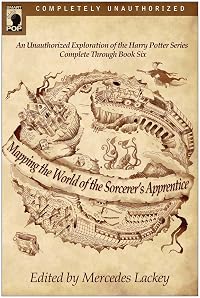
Mapping the World of Harry Potter: An Unauthorized Exploration of the Bestselling Fantasy Series of All Time
by Mercedes Lackey (Editor, Contributor)
On This Page
Description
From the Dursleys as social commentary to a look at Snape's role in less than child-friendly fanfiction . . . from the parallels between Azkaban and Abu Ghraib to the role of religion at Hogwarts . . . from why Dumbledore had to die to why killing Harry never should have been part of Voldemort's plan to begin with . . . Mapping the World of the Sorcerer’s Apprentice offers a comprehensive look at the Harry Potter series through the eyes of leading science fiction and fantasy writers and show more religion, psychology, and science experts. This book has not been authorized by J. K. Rowling, Warner Bros. or anyone associated with the Harry Potter books or films. show lessTags
Recommendations


Member Reviews
Fantasy writers talk about Harry Potter, with topics including social commentary, religion, sexism, the hero trope, and the boarding school novel. Entertaining reading with some interesting insights (and some ridiculously off-the-mark pieces which seem to specialize in Missing the Point), so basically par for the course for an anthology of this kind. The best essay in the collection is probably "Hermione Granger and the Charge of Sexism," with "Harry Potter and the Post-Traumatic Stress Disorder Counselor" and "The Proper Wizard's Guide to Good Manners" nicely filling the "Killjoy" and "WTF?" slots. Worth a flip-through if you like this sort of thing.
This was written before "Deathly Hallows" came out, so a great deal of the essays deal with now defunct speculation over "what will happen?" Even so, it's still fun to see what people were thinking and how many of their predictions were eerily accurate. For example, one suggests that Harry must fight Voldemort alone, that Harry will not die, that Harry will die, that Neville will take a larger role, that Hermione and Ron will get together, that Snape is not as evil as "Half-Blood Prince" made him out to be.
Besides the predictions, it's also great to read analysis of a literary series to see what was done right and wrong. I learned that the Dursleys have a purpose beyond comic relief, why Snape has so many creepy fan girls, the series's show more roots in "English boarding school" books, and not only why Dumbledore died, but that he had to die, because he's the mentor on the hero's journey. My favorite is the last essay that details a "what would happen" scenario if Voldemort does win. Basically, Hermione goes medieval. I wouldn't have minded seeing that ending either. show less
Besides the predictions, it's also great to read analysis of a literary series to see what was done right and wrong. I learned that the Dursleys have a purpose beyond comic relief, why Snape has so many creepy fan girls, the series's show more roots in "English boarding school" books, and not only why Dumbledore died, but that he had to die, because he's the mentor on the hero's journey. My favorite is the last essay that details a "what would happen" scenario if Voldemort does win. Basically, Hermione goes medieval. I wouldn't have minded seeing that ending either. show less
This collection of essays regarding the HP books (through book 6) is pretty hit or miss. All of the authors touched on interesting issues, but most of the essays seemed to barely scratch the surface. I think the fact that many of the pieces were in personal essay form (and not academic) made it seem like I was reading the essays or theory boards on a Harry Potter fan site, when I would have preferred a well-constructed and researched article. I found myself torn between wallowing in pure nerd-dom over the fact that this book even existed and a mild disappointment that the analysis seemed so introductory 101. I had also hoped for some critical analysis as well. Perhaps something about fat-phobia or the hidden gay agenda (just kidding show more about that last one).
But even with its serious shortcomings, I would recommend this collection to any diehard Harry Potter fan. The detailing of fascism in the Order of the Phoenix was well thought out and brought up many points that I had not previously considered, and the piece about Snape being the sexy anti-hero of fanfics was hilarious. Ich Bin Ein Hufflepuff!! show less
But even with its serious shortcomings, I would recommend this collection to any diehard Harry Potter fan. The detailing of fascism in the Order of the Phoenix was well thought out and brought up many points that I had not previously considered, and the piece about Snape being the sexy anti-hero of fanfics was hilarious. Ich Bin Ein Hufflepuff!! show less
My favorite story is the last one by Richard Garfinkle, "Why Killing Harry Is The Worst Outcome for Voldemort." This explains in relentless detail how Hermione might figure out a way to spring a trap and then start experimenting with What Happens when you expose old world immortality to modern hazards, such as hard vacuum or radiation exposure. Totally recommended that one to everyone who has ever enjoyed a nice revenge fantasy.
Only essay I was at all impressed with was the one on "fanon Snape" and fanfiction - aka how the fans (and Alan Rickman) have taken Snape in entirely new directions (though warning - the author is mostly talking about R (and higher) rated fanfiction - didn't bother me because its certainly not like actually reading something like that, and its the phenomena of fanfic in general that facinates me, but if even references to objectionable material bother you, don't read that essay)Otherwise I was very disappointed in the rest of the essays - not particularly academic - and not particularly enjoyable either. Only the Snape essay really contributed anything new or original to the academic study of Harry Potter.
Questa raccolta di saggi, opera di un gruppo di scrittori di fantasy e fantascienza, riunisce tredici diverse prospettive critiche su aspetti particolari dell'"universo Harry Potter". La fortunata serie di romanzi di J.K. Rowling viene inquadrata nell’ambito del genere fantasy, affrontando sia tematiche di ordine generale riguardo la ricezione dell’opera (Harry Potter e la religione – comprese le recenti esternazioni del papa e dei Teocon americani –, Harry Potter e la politica, Harry Potter come romanzo di formazione), sia questioni più specifiche relative a singoli personaggi: Harry e la sindrome post-traumatica da stress, la questione del sessismo nei personaggi femminili, la caratterizzazione psicologica dei comprimari. show more Alcuni esempi: "The Dursleys as Social Commentary": i perfidi zii di Harry sono i personaggi meno realistici e più caricaturali dell’intera saga: eppure, sono usati dall’autrice come fulcro della sua satira contro il pregiudizio e l’intolleranza, che è il tema centrale dei sei romanzi. "To Sir, With Love": il fenomeno della fan fiction, cioè i racconti originali scritti dai fan, con protagonisti i personaggi della Rowling. Testimonianza di amore per il lavoro di un altro autore, talvolta però la fan fiction stravolge la psicologia dei personaggi. Perché l’odioso professor Snape [Piton] nelle mani dei fan è diventato una specie di sex symbol? "Why Dumbledore Had to Die": i libri della Rowling devono molto alla tradizione mitologica nordica, la stessa da cui partono i libri di Tolkien. In questo saggio, Harry Potter è messo a confronto con altri miti della modernità, da Superman a Guerre stellari, alla luce delle celebri teorie di Joseph Campbell sulla natura universale del mito. "From Azkaban to Abu Ghraib": la più famosa prigione magica e il famigerato carcere babbano: Harry Potter è un’amara e sfaccettata parodia che riflette sul mondo reale e sulle grandi questioni del nostro tempo. Terrorismo, corruzione e razzismo sono all’ordine del giorno anche tra i maghi. Il libro è rivolto a chi ha già letto l’intera saga, ed è prevalentemente orientato a un pubblico di lettori adulti (diciamo dai sedici anni in su). Il livello di approfondimento è tale da qualificare questo libro come una raccolta di saggi di critica letteraria, e non solo una “guida agli incantesimi e ai personaggi”, filone ormai ampiamente sfruttato. I testi qui raccolti, piuttosto, offrono spunti di riflessione non solo ai più sfegatati tra i fan, ma anche al lettore curioso che desidera approfondire alcuni aspetti della saga. Essendo uscito nel 2005, il libro analizza solo i primi sei romanzi della serie. show less
Jan 22, 2009Italian
1
Ratings
Members
- Recently Added By
Author Information

Fantasy fiction author Mercedes Richie Lackey was born in Chicago on June 24, 1950, and she received a B.S. from Purdue University in 1972. She is also a professional lyricist and has rehabilitated raptors. Lackey started writing her own short stories when her favorite science fiction and fantasy authors weren't producing new books fast enough for show more her. She began writing professionally with the encouragement of author C. J. Cherryh, whom Lackey had met at a science fiction convention. Many of Lackey's books, including the Queen's Own trilogy, the Vows and Honor series, Valdemar: family Spies, and the Last Herald-Mage and Mage Winds trilogies, take place in the imaginary world of Valdemar. She has authored numerous series, including the Bardic Voices series and a series of occult mysteries featuring Diana Tregarde, a modern-day witch. Lackey enjoys collaborating and has co-written books with authors such as C.J. Cherryh, Anne McCaffrey, Piers Anthony, Marion Zimmer Bradley, Mark Shepherd, and Ru Emerson. Her title Redoubt made The New York Times Best Seller List for 2012. (Bowker Author Biography) show less
All Editions
Series
Belongs to Publisher Series
Work Relationships
Is a commentary on the text of
Common Knowledge
- Canonical title
- Mapping the World of Harry Potter: An Unauthorized Exploration of the Bestselling Fantasy Series of All Time
- Original publication date
- 2005
- People/Characters
- Hermione Jean Granger; Harry James Potter; Severus Snape; Albus Dumbledore
Classifications
Statistics
- Members
- 338
- Popularity
- 93,521
- Reviews
- 6
- Rating
- (3.77)
- Languages
- English, German, Hungarian
- Media
- Paper, Ebook
- ISBNs
- 3
- ASINs
- 4