

Richard Garfinkle
Author of Celestial Matters
About the Author
Works by Richard Garfinkle
Небесни материи 1 copy
Associated Works
Mapping the World of Harry Potter: An Unauthorized Exploration of the Bestselling Fantasy Series of All Time (2005) — Contributor — 338 copies, 6 reviews
Star Wars on Trial: Science Fiction and Fantasy Writers Debate the Most Popular Science Fiction Films of All Time (2006) — Contributor — 194 copies, 5 reviews
Totally Charmed: Demons, Whitelighters and the Power of Three (2005) — Contributor — 33 copies, 1 review
Tagged
Common Knowledge
- Legal name
- Garfinkle, Richard
- Birthdate
- 1961
- Gender
- male
- Occupations
- author
- Relationships
- Garfinkle, David (brother)
- Nationality
- USA
- Birthplace
- New York, New York, USA
- Places of residence
- Chicago, Illinois, USA
- Associated Place (for map)
- USA
Members
Reviews
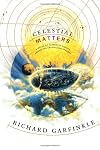
A fascinating, and very well-executed, novel of "alternate science." It's set in a world in which what Aristotle posited about the nature of the world — four elements, rotating geocentric celestial spheres, four humour-based medicine, etc. — are actually true. (Mostly. More on this.) Furthermore it's a novel of alternate history, for which the point of divergence appears to be that the Peloponnesian War never occurred. Rather, Athens and Sparta united in the Delian League and eclipsed show more Macedonia culturally and militarily. Alexander, as a League general instead of a deified emperor, lived until old age. His tutor Aristotle used his science to create new weapons of war that led to an even larger, and much more durable, Hellenic empire.
In the time of the novel's setting — the world is essentially divided in a forever war between the Greek Delian League and the Chinese Middle Kingdom, with the battle lines in Tibet and central North America. (The time period is never quite specified; it's said Alexander's empire has lasted a thousand years, which would put it about 700 AD, but the feel of the setting, with motorized ships and space travel, is more 20th Century.) The needs of the great war have led to accelerated science but atrophied culture, with philosophy and history both low-prestige disciplines.
I've talked mostly about the setting rather than the plot, but honestly, the setting is the reason to read the book. It's a clever conceit that's executed well, with a first-person narration that drops you into the deep end of an unfamiliar world but doles out details on its rules in a steady fashion as the book goes on. This includes not just science but culture, as the characters of the book hold to ancient Greek traditions: the Olympic pantheon, funeral games, inspiration from the muses, a Spartan sense of honor, and a huge classical influence on the ideals of heroism.
My biggest qualm with the book is the way its final act developed, which stepped into the realm of world-saving, world-shaking heroism. The too-neat conclusion was justified by a little divine intervention, though I suppose one could argue that is itself authentic to the material's inspiration. Regardless, it felt a little narratively implausible; I'd have felt it to be more earned if the novel's conclusion had been the end of a trilogy that started on a very grounded level and only gradually raised the stakes.
I was also left with questions about the world. Though by the end I understood the Aristotelian physics undergirding the universe rather well, in a confusing twist the Taoist model of the universe ALSO turns out to be true. The novel never really explains how two contradictory models of reality can be true at the same time — the narrator and protagonist figures it out but doesn't actually tell us what he's figured out. Given that the author thought out the implications of both physics models with great care that suggests he didn't quite square that circle either.
But altogether it was an enjoyable read, at least for someone like me who is vaguely familiar with Aristotle. (A lover of speculative fiction with no background might still enjoy the story; I can't say how that experience would be different — or the experience of someone who's actually an expert in Aristotelian or Taoist physics.) The writing style seemed accessible, though I'm not particularly picky on that matter; particularly well done seemed to be the narrator's habit of periodically expressing regret for not noticing something important, foreshadowing future developments without giving it away. show less
In the time of the novel's setting — the world is essentially divided in a forever war between the Greek Delian League and the Chinese Middle Kingdom, with the battle lines in Tibet and central North America. (The time period is never quite specified; it's said Alexander's empire has lasted a thousand years, which would put it about 700 AD, but the feel of the setting, with motorized ships and space travel, is more 20th Century.) The needs of the great war have led to accelerated science but atrophied culture, with philosophy and history both low-prestige disciplines.
I've talked mostly about the setting rather than the plot, but honestly, the setting is the reason to read the book. It's a clever conceit that's executed well, with a first-person narration that drops you into the deep end of an unfamiliar world but doles out details on its rules in a steady fashion as the book goes on. This includes not just science but culture, as the characters of the book hold to ancient Greek traditions: the Olympic pantheon, funeral games, inspiration from the muses, a Spartan sense of honor, and a huge classical influence on the ideals of heroism.
My biggest qualm with the book is the way its final act developed, which stepped into the realm of world-saving, world-shaking heroism. The too-neat conclusion was justified by a little divine intervention, though I suppose one could argue that is itself authentic to the material's inspiration. Regardless, it felt a little narratively implausible; I'd have felt it to be more earned if the novel's conclusion had been the end of a trilogy that started on a very grounded level and only gradually raised the stakes.
I was also left with questions about the world. Though by the end I understood the Aristotelian physics undergirding the universe rather well, in a confusing twist the Taoist model of the universe ALSO turns out to be true. The novel never really explains how two contradictory models of reality can be true at the same time — the narrator and protagonist figures it out but doesn't actually tell us what he's figured out. Given that the author thought out the implications of both physics models with great care that suggests he didn't quite square that circle either.
But altogether it was an enjoyable read, at least for someone like me who is vaguely familiar with Aristotle. (A lover of speculative fiction with no background might still enjoy the story; I can't say how that experience would be different — or the experience of someone who's actually an expert in Aristotelian or Taoist physics.) The writing style seemed accessible, though I'm not particularly picky on that matter; particularly well done seemed to be the narrator's habit of periodically expressing regret for not noticing something important, foreshadowing future developments without giving it away. show less
(Alistair) This book is made of awesome.
Yes, that's an unabashed recommendation. I have a great fondness even for conventional hard SF. Imagine, then, how much more I am delighted by a work of alternate-universe hard SF that incorporates some of my favorite classical themes.
Such as this book, which is a work of hard SF in which the sciences in question are Ptolemaic astronomy, Aristotelian physics and chemistry, Pliny's biology, and on the other hand, Daoist alchemy and xi-based sciences.
It show more is also, of course, an alternate history. In this universe, Alexander having survived his bout of illness, the Delian League has expanded through all of Europe and half of "Atlantea", and is now - and has been for centuries - at a stalemated war with the Middle Kingdom. And they think they're about to start losing the war.
And in this world, Celestial Matters is told by one Aias, the commander of the celestial ship Chandra's Tear, who is in charge of the Delian League's answer to the Manhattan Project: to steal celestial fire from the Sun itself as a weapon...
Superlatively recommended for excellent worldbuilding, great characterisation, and a thundering good plot. ( http://weblog.siliconcerebrate.com/cerebrate/2008/11/celestial_matters_richard_g... )
(Amy) I admit I was very dubious about this book. My husband recommended it to me, and for the first three-dozen pages I alternated between giving him skeptical looks over the top of the pages and muttering under my breath at the insanity of the people who thought our world worked this way. See, this science fiction book is one wherein the scientific principles are Aristotelian and Ptolemaic and, well, by the standards of our world, Just Plain Wrong. But herein, they are not. The celestial spheres are quite present, and the elements are every bit as elemental as one could wish.
As a modern scientist by almost-training, I find it hard to fully comprehend the philosophical community from the centuries before empiricism was considered particularly relevant, and my reading of the story from the world in which the above philosophies were empirically true was colored by my bafflement as to how anyone came up with them in this universe, where some of them were very obviously not.
But all that aside, I did manage to set aside these objections (amusingly enough, right around the 50-page point at which I would have given up on the book had it still proved difficult), and found myself quite caught up in the story of the trip to steal a piece of the sun to use in the war against the Middle Kingdom.
I didn't enjoy it as much as Alistair did - but then, I've never really been a classicist in my reading or study, so I didn't get as much out of it as he did. But for anyone who likes thinking in interesting directions, or who is both a classicist and an SF fan, this book is highly recommended.
(http://weblog.siliconcerebrate.com/zenos-library/2009/01/celestial_matters_richard_garf.html) show less
Yes, that's an unabashed recommendation. I have a great fondness even for conventional hard SF. Imagine, then, how much more I am delighted by a work of alternate-universe hard SF that incorporates some of my favorite classical themes.
Such as this book, which is a work of hard SF in which the sciences in question are Ptolemaic astronomy, Aristotelian physics and chemistry, Pliny's biology, and on the other hand, Daoist alchemy and xi-based sciences.
It show more is also, of course, an alternate history. In this universe, Alexander having survived his bout of illness, the Delian League has expanded through all of Europe and half of "Atlantea", and is now - and has been for centuries - at a stalemated war with the Middle Kingdom. And they think they're about to start losing the war.
And in this world, Celestial Matters is told by one Aias, the commander of the celestial ship Chandra's Tear, who is in charge of the Delian League's answer to the Manhattan Project: to steal celestial fire from the Sun itself as a weapon...
Superlatively recommended for excellent worldbuilding, great characterisation, and a thundering good plot. ( http://weblog.siliconcerebrate.com/cerebrate/2008/11/celestial_matters_richard_g... )
(Amy) I admit I was very dubious about this book. My husband recommended it to me, and for the first three-dozen pages I alternated between giving him skeptical looks over the top of the pages and muttering under my breath at the insanity of the people who thought our world worked this way. See, this science fiction book is one wherein the scientific principles are Aristotelian and Ptolemaic and, well, by the standards of our world, Just Plain Wrong. But herein, they are not. The celestial spheres are quite present, and the elements are every bit as elemental as one could wish.
As a modern scientist by almost-training, I find it hard to fully comprehend the philosophical community from the centuries before empiricism was considered particularly relevant, and my reading of the story from the world in which the above philosophies were empirically true was colored by my bafflement as to how anyone came up with them in this universe, where some of them were very obviously not.
But all that aside, I did manage to set aside these objections (amusingly enough, right around the 50-page point at which I would have given up on the book had it still proved difficult), and found myself quite caught up in the story of the trip to steal a piece of the sun to use in the war against the Middle Kingdom.
I didn't enjoy it as much as Alistair did - but then, I've never really been a classicist in my reading or study, so I didn't get as much out of it as he did. But for anyone who likes thinking in interesting directions, or who is both a classicist and an SF fan, this book is highly recommended.
(http://weblog.siliconcerebrate.com/zenos-library/2009/01/celestial_matters_richard_garf.html) show less
All of an Instant has as its premise one of the most original concepts I've ever come across in a book. In the past 10 years I have read two sci fi books that radically rearrange my understanding of a concept.. One was Darwin's Radio by Greg Bear, whose treatment of the means of evolution caused him to be nominated for the 2000 Hugo award and won him the 2000 Nebula award. The other was Richard Garfinkle's 'All of an Instant,' which was not popular and receives very mixed reviews. In show more comparing the two, 'Darwin's Radio' pushes the envelope in understanding biological facts. 'All of an Instant' pushes the envelope in understanding a concept related to multiple dimensions, specifically time as a dimension. Many of us read enough science to have a framework upon which to constuct a reasonably comfortable understanding of the concepts of Darwin's Radio. The concepts of multidimensionality are not as familiar, and thus, reading in the absence of the pre-constructed framework of fact, it takes some cogitation to come up with our own makeshift framework upon which to hang the events and interpretations of the novel. Yet, 'All of An Instant' is as satisfying a book as one can imagine, and its originality should probably have put it on a par with any book published in 1999.
'All of an Instant' postulates a universe where an almost infinite number of small groups gain access to time travel and all use the power to further their own interests - just as power is usually used in the world that proceeds methodically down a unidirectional timeline at a steady pace, our own. The time-travelers can hop into Earth's timeline at any time from the dawn of Man on into the unimaginably distant future, a hundred thousand and more years from now.
Most readers are familiar with the concept that changing the past will change the present, and probably also with the hypothesis that parallel or alternative paths of history can be created. In 'All of an Instant', there are not so much multiple possible paths as a single extant path for the real world which is the result of all events which occurred in that path to date. Time-travellers continually interfere in the world and change the path. There may be an infinite number of possible paths, but the last event to occur due to interaction of the real world with one of the time-travelling groups selects the new, currently "real" path of history for Earth. Cultures in the real world appear and disappear abruptly at almost every given moment in time as the past is changed and either some culture exists for a period of time in the world's new timeline or never existed - but the groups that war with each other are in another space, so even though a time-travelling group's originating culture may have sadly taken on the status of "never existed" because of some other group's actions, the time-travellers from that non-existent culture yet exist. It usually becomes that group's goal to make its own culture exist once again, and this is, of course, antithetical to the goal of nearly every other group of time-travellers, who are trying to recreate the timeline in which their own cultures existed. Most of these groups plot and scheme to win for themselves the great weapons that exist at some point in the timeline of the current reality in order to defeat the other groups. Their acts to win the weapons whip the timeline of history into yet a new path, winking a million cultures into extinction yet again. The wars between groups go on literally forever in an endlessly changing world.
The concept hardest to grasp from the book is that we all have tails. Not physical tails, but tails in time. Most of us are familiar with Marley's ghost's long chains in Dickens' A Christmas Carol. The more heartless actions one commits, the longer the chains grew. In 'All of an Instant', our tails do not grow with actions, but automatically grow longer the older we get. At the far end of our tail is us as a baby. Where it attaches is us in this moment in time. Our tail in entirity comprises all the events in our life. In 'All of an Instant', weapons of war from The Instant are used to lop enemies' tails off short. This has the effect of limiting a person's memories only as far back as his tail goes. In most cases, if the tail is cut too short, the person becomes totally ineffective in combat because he remembers too little - and, of course, no longer functions well in normal life, either. In one episode of the book, a character's life becomes fractured like glass, all the pieces of his life in shards about him, and he must find a way to escape the thing causing the shattering effect before the piece holding the present becomes fractured to the point that he can no longer think.
Beyond the amazing premise and difficult exposition, the book has at its heart the profound question of whether the elements of humanity that are common to every thinking being can be made to count for more than our selfish self-serving interests. In our world, it rarely happens. In "The Instant," it never happened. Or could it happen? If the entire Instant was threatened, could these warring groups overcome their desperate and hopeless desire to restore the one and only real world to their own vision of "rightness" and instead work together to create a world that all can accept? In the book's mind-bending setting, the author raises a question we should all ask ourselves, and manages to find through a trio of most personable and unusual heros an answer we can wish would serve in our world.
The book is one of the most rewarding I've ever read from several standpoints. Still, I wouldn't recommend 'All of an Instant' to everyone. Someone in the mood for a little light reading should not embark upon the journey - 'All of an Instant' requires thought to understand the concept the author uses as the foundation of his book, and that isn't quite consistent with the idea of a "light read." However, probably the person who enjoys fundamentally unique concepts, novels that comment on important aspects of our society, hopeful books, books that resolve themselves sensationally, and who, beyond all that, also takes some pleasure in knowing they have mastered understanding of an unusual concept, simply must read this book, or be the poorer for it. show less
'All of an Instant' postulates a universe where an almost infinite number of small groups gain access to time travel and all use the power to further their own interests - just as power is usually used in the world that proceeds methodically down a unidirectional timeline at a steady pace, our own. The time-travelers can hop into Earth's timeline at any time from the dawn of Man on into the unimaginably distant future, a hundred thousand and more years from now.
Most readers are familiar with the concept that changing the past will change the present, and probably also with the hypothesis that parallel or alternative paths of history can be created. In 'All of an Instant', there are not so much multiple possible paths as a single extant path for the real world which is the result of all events which occurred in that path to date. Time-travellers continually interfere in the world and change the path. There may be an infinite number of possible paths, but the last event to occur due to interaction of the real world with one of the time-travelling groups selects the new, currently "real" path of history for Earth. Cultures in the real world appear and disappear abruptly at almost every given moment in time as the past is changed and either some culture exists for a period of time in the world's new timeline or never existed - but the groups that war with each other are in another space, so even though a time-travelling group's originating culture may have sadly taken on the status of "never existed" because of some other group's actions, the time-travellers from that non-existent culture yet exist. It usually becomes that group's goal to make its own culture exist once again, and this is, of course, antithetical to the goal of nearly every other group of time-travellers, who are trying to recreate the timeline in which their own cultures existed. Most of these groups plot and scheme to win for themselves the great weapons that exist at some point in the timeline of the current reality in order to defeat the other groups. Their acts to win the weapons whip the timeline of history into yet a new path, winking a million cultures into extinction yet again. The wars between groups go on literally forever in an endlessly changing world.
The concept hardest to grasp from the book is that we all have tails. Not physical tails, but tails in time. Most of us are familiar with Marley's ghost's long chains in Dickens' A Christmas Carol. The more heartless actions one commits, the longer the chains grew. In 'All of an Instant', our tails do not grow with actions, but automatically grow longer the older we get. At the far end of our tail is us as a baby. Where it attaches is us in this moment in time. Our tail in entirity comprises all the events in our life. In 'All of an Instant', weapons of war from The Instant are used to lop enemies' tails off short. This has the effect of limiting a person's memories only as far back as his tail goes. In most cases, if the tail is cut too short, the person becomes totally ineffective in combat because he remembers too little - and, of course, no longer functions well in normal life, either. In one episode of the book, a character's life becomes fractured like glass, all the pieces of his life in shards about him, and he must find a way to escape the thing causing the shattering effect before the piece holding the present becomes fractured to the point that he can no longer think.
Beyond the amazing premise and difficult exposition, the book has at its heart the profound question of whether the elements of humanity that are common to every thinking being can be made to count for more than our selfish self-serving interests. In our world, it rarely happens. In "The Instant," it never happened. Or could it happen? If the entire Instant was threatened, could these warring groups overcome their desperate and hopeless desire to restore the one and only real world to their own vision of "rightness" and instead work together to create a world that all can accept? In the book's mind-bending setting, the author raises a question we should all ask ourselves, and manages to find through a trio of most personable and unusual heros an answer we can wish would serve in our world.
The book is one of the most rewarding I've ever read from several standpoints. Still, I wouldn't recommend 'All of an Instant' to everyone. Someone in the mood for a little light reading should not embark upon the journey - 'All of an Instant' requires thought to understand the concept the author uses as the foundation of his book, and that isn't quite consistent with the idea of a "light read." However, probably the person who enjoys fundamentally unique concepts, novels that comment on important aspects of our society, hopeful books, books that resolve themselves sensationally, and who, beyond all that, also takes some pleasure in knowing they have mastered understanding of an unusual concept, simply must read this book, or be the poorer for it. show less
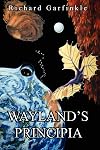
This was actually a very interesting book. Not perfect by any means, and a little long, but still very good.
What it’s about: a future where aliens have contacted earth. This contact has transformed society to be near-unrecognizable, where academics are marginalized and those who imitate the five alien races rule. A group of humans embark on a journey to visit the alien planets on a spaceship.
Themes: A very interesting exploration about aliens, consciousness, and how fundamentally different show more these creatures can be. One of the best attempts I’ve seen at exploring creatures that are truly alien, and filtering that in a way people can understand.
Style: Almost whimsical. It reminded me of old Cordwainer Smith stories. The author is a strong world-builder; The book has its own contained mythos, which is a little confusing at first, but is revealed through the text.
Cons: A little long. Also, in a story about aliens, it was a little strange that the humans themselves were so alien and at times difficult to understand. This may have been a decision by the author (if the people start out strange, then this serves to emphasize how different the aliens themselves are) but this made it a little difficult to get started.
Bottom line: I’d recommend it if you are into the themes. The author is talented, full of ideas, and this book is filled with (many different kind of) life. show less
What it’s about: a future where aliens have contacted earth. This contact has transformed society to be near-unrecognizable, where academics are marginalized and those who imitate the five alien races rule. A group of humans embark on a journey to visit the alien planets on a spaceship.
Themes: A very interesting exploration about aliens, consciousness, and how fundamentally different show more these creatures can be. One of the best attempts I’ve seen at exploring creatures that are truly alien, and filtering that in a way people can understand.
Style: Almost whimsical. It reminded me of old Cordwainer Smith stories. The author is a strong world-builder; The book has its own contained mythos, which is a little confusing at first, but is revealed through the text.
Cons: A little long. Also, in a story about aliens, it was a little strange that the humans themselves were so alien and at times difficult to understand. This may have been a decision by the author (if the people start out strange, then this serves to emphasize how different the aliens themselves are) but this made it a little difficult to get started.
Bottom line: I’d recommend it if you are into the themes. The author is talented, full of ideas, and this book is filled with (many different kind of) life. show less
Lists
Awards

You May Also Like


Associated Authors
Statistics
- Works
- 9
- Also by
- 4
- Members
- 380
- Popularity
- #63,550
- Rating
- 3.7
- Reviews
- 8
- ISBNs
- 12
- Languages
- 2