
Greg Keyes
Author of The Briar King
About the Author
Greg Keyes is the New York Times best-selling author of
the novels The Waterborn, The Blackgod, plus The Age of
Unreason tetralogy. He has also written the Star Wars:
New Jedi Order novels Edge of Victory I: Conquest, Edge
of Victory II: Rebirth, and The Final Prophecy, as well as
tie-ins to the show more popular Elder Scrolls video game franchise.
He lives in Savannah, Georgia. show less
Series
Works by Greg Keyes
Associated Works
Babylon 5 Crusade: The Official Monthly Magazine Vol.2 #24, August 2000 — Contributor — 1 copy
Tagged
Common Knowledge
- Legal name
- Keyes, John Gregory
- Other names
- Keyes, J. Gregory
- Birthdate
- 1963-04-11
- Gender
- male
- Education
- Mississippi State University (Anthropology)
University of Georgia (Anthropology) - Occupations
- science fiction writer
- Organizations
- Science Fiction and Fantasy Writers of America
- Relationships
- Ridout, Nancy Joyce (mother)
Keyes, John Howard (father) - Nationality
- USA
- Birthplace
- Meridian, Mississippi, USA
- Places of residence
- Meridian, Mississippi, USA
Savannah, Georgia, USA - Associated Place (for map)
- USA
Members
Reviews

This book gets off to another rough start, where the man who blew up the Death Star tries to convince you that taking action against aggressors could somehow lead to the Dark Side. But roll your eyes and get on to the next scene, because after that this book is brilliant. Seriously, Top 5 Star Wars books, easy. Greg Keyes completely inhabits and understands Star Wars in a way the previous New Jedi Order writers haven't. No, I'm not saying he knows his continuity (though he does and I'll get show more to that in a minute), I'm saying he knows what makes Star Wars work and he's able to replicate it without making a slavish copy of the original films. (We should note that this is a skill that even George Lucas lost sometime after 1983. Probably the only other writers to possess it are Matt Stover and John Jackson Miller.) This book gives us a young man, uncertain about his place in the universe, and plunges him into a desperate adventure with group of unlikely comrades. Okay, that seems obvious, you say, but if that's obvious then why do most Star Wars writers insist on giving us "political" "thrillers"?
Young Anakin Solo disobeys Master Luke Skywalker's order to go to the Jedi Academy on Yavin 4 because he insists it's under threat from the Yuuzahn Vong. A couple of awesome action sequences later, and he's crashed in the forest with a criminal, a crazy former TIE pilot, and two kids for company, trying to rescue someone important to him. Along the way he demonstrates his basic goodness, learns some valuable moral lessons, meets more awesome characters (some of whom die), listens to mystical prophecies, and saves the day with style. It does not get any better than this!
Extra points should be given for the fact that this is the first book where the Yuuzhan Vong feel like a real civilization. A lot of this is due to Vua Rapuung, the former warrior who befriends Anakin, and is poignant, hardcore, and hilariously deadpan all at once. But there's also the various Shamed Ones and our glimpses into the mind of Nen Yim, the young heretic shaper. This book transforms the war against an unstoppable aggressor into something more meaningful and difficult.
This is the first book in the series to make me care about Anakin Solo as a character. Keyes does this partly through just being better at writing than Salvatore, Stackpole, Luceno, and Tyers, but also he's obviously the only NJO writer to actually have read the Junior Jedi Knights books. Keyes threads Conquest with characters from this series, giving Anakin's life an emotional depth-- but just like the original Star Wars works if you haven't met Luke and his adoptive parents before, so too does Conquest (I only read the first JJK book). Is Master Ikrit the greatest Jedi Master of all time? Signs point to yes. Is Anakin/Tahiri one of the few ships I could ever admit to having? Um... I guess so. (I don't think the book quite succeeds in rationalizing why we haven't seen Tahiri and Ikrit since the NJO began, though-- Anakin has been back to Yavin 4 multiple times since the death of Chewbacca, yet he's never talked to Tahiri about it? We've never even seen him avoiding her? But that's more a critique of the other NJO novels than this one; it's amazing how this book reveals the extent to which Anakin was a blank cipher in the other books.)
I remember being this the point, seven books in, where The New Jedi Order finally clicked for me, the point where it started to work and cemented itself as something worth reading. Though I am enjoying my experiment in rereading the series with all the ancillary material included, it does exacerbate the early difficulties of the NJO-- this is the fourteenth installment! If Conquest hadn't been as good as I remembered, I might have given up here, but thankfully it was excellent, and for the first time in this reread, I am avidly anticipating going onwards.
Let's close by quoting this adorable but keenly insightful bit where Anakin is watching Tahiri as she falls asleep, reflecting on the fact that he's not seen his best friend in a year and something... something is different:
By the faint orange light of the gas giant outside, he could make out traces of her features, so familiar and yet somehow different. It was as if, below the girl's face he had always known, something else was pushing up, like mountains rising, driven by the deep internal heat of a planet.
Something you couldn't stop even if you wanted to. It made him want to hang on and run away at the same time, and in a mild epiphany he realized he had felt that way for some time.
As children they had been best friends. But neither of them was a child anymore, not exactly.
His arm had gone numb from her weight, but he couldn't bring himself to shift, for fear of waking her.
Awwww...
The New Jedi Order: « Previous in sequence | Next in sequence » show less
Young Anakin Solo disobeys Master Luke Skywalker's order to go to the Jedi Academy on Yavin 4 because he insists it's under threat from the Yuuzahn Vong. A couple of awesome action sequences later, and he's crashed in the forest with a criminal, a crazy former TIE pilot, and two kids for company, trying to rescue someone important to him. Along the way he demonstrates his basic goodness, learns some valuable moral lessons, meets more awesome characters (some of whom die), listens to mystical prophecies, and saves the day with style. It does not get any better than this!
Extra points should be given for the fact that this is the first book where the Yuuzhan Vong feel like a real civilization. A lot of this is due to Vua Rapuung, the former warrior who befriends Anakin, and is poignant, hardcore, and hilariously deadpan all at once. But there's also the various Shamed Ones and our glimpses into the mind of Nen Yim, the young heretic shaper. This book transforms the war against an unstoppable aggressor into something more meaningful and difficult.
This is the first book in the series to make me care about Anakin Solo as a character. Keyes does this partly through just being better at writing than Salvatore, Stackpole, Luceno, and Tyers, but also he's obviously the only NJO writer to actually have read the Junior Jedi Knights books. Keyes threads Conquest with characters from this series, giving Anakin's life an emotional depth-- but just like the original Star Wars works if you haven't met Luke and his adoptive parents before, so too does Conquest (I only read the first JJK book). Is Master Ikrit the greatest Jedi Master of all time? Signs point to yes. Is Anakin/Tahiri one of the few ships I could ever admit to having? Um... I guess so. (I don't think the book quite succeeds in rationalizing why we haven't seen Tahiri and Ikrit since the NJO began, though-- Anakin has been back to Yavin 4 multiple times since the death of Chewbacca, yet he's never talked to Tahiri about it? We've never even seen him avoiding her? But that's more a critique of the other NJO novels than this one; it's amazing how this book reveals the extent to which Anakin was a blank cipher in the other books.)
I remember being this the point, seven books in, where The New Jedi Order finally clicked for me, the point where it started to work and cemented itself as something worth reading. Though I am enjoying my experiment in rereading the series with all the ancillary material included, it does exacerbate the early difficulties of the NJO-- this is the fourteenth installment! If Conquest hadn't been as good as I remembered, I might have given up here, but thankfully it was excellent, and for the first time in this reread, I am avidly anticipating going onwards.
Let's close by quoting this adorable but keenly insightful bit where Anakin is watching Tahiri as she falls asleep, reflecting on the fact that he's not seen his best friend in a year and something... something is different:
By the faint orange light of the gas giant outside, he could make out traces of her features, so familiar and yet somehow different. It was as if, below the girl's face he had always known, something else was pushing up, like mountains rising, driven by the deep internal heat of a planet.
Something you couldn't stop even if you wanted to. It made him want to hang on and run away at the same time, and in a mild epiphany he realized he had felt that way for some time.
As children they had been best friends. But neither of them was a child anymore, not exactly.
His arm had gone numb from her weight, but he couldn't bring himself to shift, for fear of waking her.
Awwww...
The New Jedi Order: « Previous in sequence | Next in sequence » show less

This was not the most easy book to get into. It starts out with difficult names, an unknown world, about five different points of view and no clue how those five are related. The chapters are short and as a result, there is a lot of switching between viewpoints, and although I cannot identify what it is that makes it so, the language is such that it is slow to read.
After a while though (ok, it was a long while), I got used to the slower reading pace, and it became clear that all the show more viewpoints were at least in the same land, and a few of them got together. Finally understanding the world, I did get into it. And loved it. Like I said, it's not a fast read, and although I liked all the (good) characters and lots of things happen to them, it was not very exciting or tense. I've got the feeling this is because my affection got divided over all of them, so even though I didn't want any of them to die, I still could live with it, because there were enough of them left. I was very much engaged with the book, though. Somehow there was not a single story line that I disliked or even liked significantly less than any of the others. This is a rare thing in my experience; in most books with multiple story lines, there is at least one that is a necessary evil (necessary to get through to understand the story at least), one that disappoints you when you turn the page and see you've ended up in THAT story line again. The briar king didn't have that at all. All story lines were interesting and all (good) characters in them were engaging. I say good here because the one character I wish was different was the king's crazy brother. I just don't like that type of insane character.
As for the other characters, I really liked seeing how some of them evolved. I liked that the bookish young priest gains some skills in the physical department. Mostly I liked the two really young people, princess Anne and Cazio, gaining an understanding of life and of adventures, learning a bit more realism. That was quite well-done. And, although this is by no means an equal society, I still liked the portrayal of the women. I imagine the 'men fight from the outside, women from the inside' motto of the coven would not sit well with everyone, but the book does hold plenty of interesting and confident women, who, although they do not fight the way men do, still rescue the men as often as the other way around, and can hold positions of power.
So, all in all this book gets four stars, and I've already started the sequel... Which is really necessary by the way, because the book really doesn't end in a way that makes it even seem like you are at an ending. show less
After a while though (ok, it was a long while), I got used to the slower reading pace, and it became clear that all the show more viewpoints were at least in the same land, and a few of them got together. Finally understanding the world, I did get into it. And loved it. Like I said, it's not a fast read, and although I liked all the (good) characters and lots of things happen to them, it was not very exciting or tense. I've got the feeling this is because my affection got divided over all of them, so even though I didn't want any of them to die, I still could live with it, because there were enough of them left. I was very much engaged with the book, though. Somehow there was not a single story line that I disliked or even liked significantly less than any of the others. This is a rare thing in my experience; in most books with multiple story lines, there is at least one that is a necessary evil (necessary to get through to understand the story at least), one that disappoints you when you turn the page and see you've ended up in THAT story line again. The briar king didn't have that at all. All story lines were interesting and all (good) characters in them were engaging. I say good here because the one character I wish was different was the king's crazy brother. I just don't like that type of insane character.
As for the other characters, I really liked seeing how some of them evolved. I liked that the bookish young priest gains some skills in the physical department. Mostly I liked the two really young people, princess Anne and Cazio, gaining an understanding of life and of adventures, learning a bit more realism. That was quite well-done. And, although this is by no means an equal society, I still liked the portrayal of the women. I imagine the 'men fight from the outside, women from the inside' motto of the coven would not sit well with everyone, but the book does hold plenty of interesting and confident women, who, although they do not fight the way men do, still rescue the men as often as the other way around, and can hold positions of power.
So, all in all this book gets four stars, and I've already started the sequel... Which is really necessary by the way, because the book really doesn't end in a way that makes it even seem like you are at an ending. show less

Getting hold of this story is nearly a story in itself. It's a six-part, 40,000-word novella: the first three parts were serialized in Star Wars Gamer and reprinted on StarWars.com; the last three ran in Star Wars Insider. I managed to get the whole story through a combination of the Wayback Machine and DD/ILL requests and assembled it all into a Kindle eBook. I know I read this when it came out, but both reading on a screen (for episodes 1-3) and reading serially (for episodes 4-6) meant I show more retained very little of it.
Which is a shame, because this is good fun. Like with his work on Edge of Victory I: Conquest, Keyes shows that he gets Star Wars. Other than Uldir Lochett (who appeared in three kid's novels in the 1990s!) there are no familiar Star Wars characters here, but it instantly feels recognizably Star Wars, but switched up enough to be fresh. You have a somewhat straight-laced smuggler with his crew (except they're working for Luke Skywalker) coming into contact with a wildcard Jedi Knight, sending them on an adventure that risks both their lives and the whole galaxy. The relationship between Uldir and Klin-Fa feels like Han and Leia, if Han was a female Jedi!
Keyes really gets the serial format: each installment ups and changes the stakes, as our heroes go from avoiding pursuit on a Peace Brigade planet to fighting droid starfighters to uncovering the Emperor's secrets on Wayland to freeing refugees to trying to stop a bacta-poisoning plot! It's a great roller coaster with great twists, and it's a real shame it's been relegated to obscurity by never being collected anywhere or anything.
The subtitle, "Tales From the Great River," would seem to promise more adventures from this era (or at least other characters working for Luke to save Jedi from the Yuuzhan Vong), but that never happened. In one sense, I'm disappointed we've never gotten more adventures of the crew of No Luck Required (they're a great lot), but on the other, I like that we can get these one-off peeks into corners of the Star Wars universe and still recognize them as Star Wars.
(Continuity fans should note this story occurs in parallel with Edge of Victory II: Rebirth; during episode 6, the No Luck Required briefly intersects with events of Rebirth's climax. Indeed, considering that Rebirth consists of a number of parallel stories that only partially touch on each other, Emissary of the Void could easily be distributed among them as another part of the novel.)
The New Jedi Order: « Previous in sequence | Next in sequence » show less
Which is a shame, because this is good fun. Like with his work on Edge of Victory I: Conquest, Keyes shows that he gets Star Wars. Other than Uldir Lochett (who appeared in three kid's novels in the 1990s!) there are no familiar Star Wars characters here, but it instantly feels recognizably Star Wars, but switched up enough to be fresh. You have a somewhat straight-laced smuggler with his crew (except they're working for Luke Skywalker) coming into contact with a wildcard Jedi Knight, sending them on an adventure that risks both their lives and the whole galaxy. The relationship between Uldir and Klin-Fa feels like Han and Leia, if Han was a female Jedi!
Keyes really gets the serial format: each installment ups and changes the stakes, as our heroes go from avoiding pursuit on a Peace Brigade planet to fighting droid starfighters to uncovering the Emperor's secrets on Wayland to freeing refugees to trying to stop a bacta-poisoning plot! It's a great roller coaster with great twists, and it's a real shame it's been relegated to obscurity by never being collected anywhere or anything.
The subtitle, "Tales From the Great River," would seem to promise more adventures from this era (or at least other characters working for Luke to save Jedi from the Yuuzhan Vong), but that never happened. In one sense, I'm disappointed we've never gotten more adventures of the crew of No Luck Required (they're a great lot), but on the other, I like that we can get these one-off peeks into corners of the Star Wars universe and still recognize them as Star Wars.
(Continuity fans should note this story occurs in parallel with Edge of Victory II: Rebirth; during episode 6, the No Luck Required briefly intersects with events of Rebirth's climax. Indeed, considering that Rebirth consists of a number of parallel stories that only partially touch on each other, Emissary of the Void could easily be distributed among them as another part of the novel.)
The New Jedi Order: « Previous in sequence | Next in sequence » show less
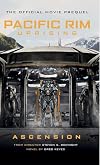
I'm genuinely stunned at how good Greg Keyes is. He took a simple movie tie-in and actually made supporting characters more compelling than they would be in the subsequent movie.
He also found clever ways of giving us Kaiju vs Jaegar porn without positing a new breach. Really smart decisions to make a story that's interesting in it's own right, especially in regards to Jinhai's parents.
The only flaws are really beyond Keyes' control. The fate of Raleigh and what happens when you chuck a Kaiju show more into a volcano actually contradict Uprising. Not horribly so, but enough that you get the sense the Keyes did not benefit from a tight story group that would approve and endorse his take on canon. show less
He also found clever ways of giving us Kaiju vs Jaegar porn without positing a new breach. Really smart decisions to make a story that's interesting in it's own right, especially in regards to Jinhai's parents.
The only flaws are really beyond Keyes' control. The fate of Raleigh and what happens when you chuck a Kaiju show more into a volcano actually contradict Uprising. Not horribly so, but enough that you get the sense the Keyes did not benefit from a tight story group that would approve and endorse his take on canon. show less
Lists
Awards


You May Also Like


Associated Authors
Statistics
- Works
- 60
- Also by
- 3
- Members
- 13,991
- Popularity
- #1,642
- Rating
- 3.7
- Reviews
- 201
- ISBNs
- 260
- Languages
- 9
- Favorited
- 17
