
Glen Cook
Author of The Black Company
About the Author
Image credit: Glen Cook aux Utopiales 2011, 12 November 2011
Series
Works by Glen Cook
The Best of Glen Cook: 18 Stories from the Author of The Black Company and The Dread Empire (2019) 38 copies, 2 reviews
Annals of the Black Company: The Black Company, Shadows Linger, The White Rose, Shadow Games, Dreams of Steel, The Silver Spike, Bleak Seasons, She Is ... Live (Chronicles of The… (1963) 17 copies, 1 review
And Dragons in the Sky 4 copies
Czerwone żelazne noce 2 copies
Severed Heads 2 copies
The Swap Academy 2 copies
Silverheels 2 copies
Ponce [short story] 2 copies
Call for the Dead 2 copies
Filed Teeth 2 copies
The Nights of Dreadful Silence 2 copies
Ghost Stalk 2 copies
Gryphon's Eyrie 1 copy
Dread Empire series 1 copy
The Black Company series 1 copy
Stare cynowe smutki 1 copy
Biała Róża 1 copy
Hell's Forge 1 copy
In the Wind [short story] 1 copy
Finding Svale's Daughter 1 copy
The Seventh Fool 1 copy
Bone Candy 1 copy
Shaggy Dog Bridge 1 copy
Castle of Tears 1 copy
Sunrise 1 copy
Appointment In Samarkand 1 copy
Enemy Territory 1 copy
The Devil's Tooth 1 copy
The Recruiter 1 copy
Song from a Forgotten Hill 1 copy
Quiet Sea 1 copy
Associated Works
Blackguards: Tales of Assassins, Mercenaries, and Rogues (2015) — Foreword, some editions — 88 copies, 4 reviews
The Magazine of Fantasy and Science Fiction May 1978, Vol. 54, No. 5 (1978) — Contributor — 16 copies
The Magazine of Fantasy and Science Fiction August 1982, Vol. 63, No. 2 (1982) — Contributor; Contributor — 15 copies
The Magazine of Fantasy and Science Fiction July 1980, Vol. 59, No. 1 (1980) — Contributor — 14 copies
Isaac Asimov's Science Fiction Magazine: Vol. 6, No. 13 [Mid-December 1982] (1982) — Contributor — 11 copies
Tagged
Common Knowledge
- Canonical name
- Cook, Glen
- Legal name
- Cook, Glen Charles
- Other names
- Stevens, Greg (pen name)
- Birthdate
- 1944-07-09
- Gender
- male
- Education
- University of Missouri
- Occupations
- Auto Assembly Plant worker
science fiction writer
fantasy writer - Organizations
- General Motors
United States Navy - Nationality
- USA
- Birthplace
- New York, New York, USA
- Places of residence
- St. Louis, Missouri, USA
- Map Location
- New York, USA
Members
Reviews

Be warned: The entire point of this novel is that it is collected by in-universe fragments and viewpoints that have both been meddled with and modified by characters whose agendas are not stated, and can only be guessed at with information found in the rest of the "Black Company" novels. This makes for an unusual reading experience, and if you're not prepared going in, it's likely to sour most on the book.
In spite of being set between books 1 and 2 of this series, therefore, it should be show more read much later -- it will be off-putting and impossible to follow if read in its place in a strict chronological order. I personally read it after "Dreams of Steel", and found this to be a good spot, as having read a book narrated by Lady before reading this helps me care and understand about the person who more than anyone else shapes the events in the world of The Black Company. On re-read of the series as a whole, though, it will likely benefit from being read exactly where it takes place.
As a novel, it's a bit weak. The story is erratic and episodic, and when it finally does start building towards a climax, the viewpoint character is so uninformed and out of the loop -- as well as having had his mind and memories magically muddled -- that it likely will feel anti-climactic to the reader.
But as an entry to the larger character arcs and mythology of the Black Company universe, this is quite a treat. I'd therefore recommend this as warmly to the die-hard fan as I would warn off a casual reader expecting more of the same as was on offer in the rest of the series. One might, a bit reductively, liken it to reading Tolkien's "Silmarillion" -- an erratic narrative unlikely to be an engrossing reading experience to someone who once read and enjoyed "The Hobbit" and "The Lord of the Rings" a decade or two ago, but a treasure trove hugely rewarding to those who immerse themselves in the books again and again, year after year.
In short, "Port of Shadows" follows two plotlines. The main one is set during the time gap between the original "Black Company" novel and its immediate sequel, "Shadows Linger", and has the same first person narrator as those books. The second one, containing much shorter chapters, is set centuries before, during the tyrannic era of the Dominator, and thus gives us intriguing glimpses into the world's background.
The former of these plotlines is made muddy both by Croaker's lack of information (he's purposefully kept in the dark about many pivotal facts) and by his mind being magically altered over the course of the book (affecting both his personality and his memory). The second is made muddy by being presented as 'found footage' that has been censored, rewritten and edited, possibly many times, by people with a vested interest in doing so. What we're reading is likely true in the broad strokes, but specific details like character relationships, identities and -- vitally -- names are obviously modified or outright fabricated.
The point, it seems to me, is precisely what doesn't jive in "Port of Shadows". Every plotpoint, detail or action that doesn't seem to immediately make sense is a clue -- why has this been changed? Who has had the power to change it, and what would their motivation have been? And, perhaps crucially, why is it changed at all, instead of outright deleted and censored? These questions aren't really as complicated as they might seem, if the other books in the series are taken into account. And I found it both touching, interesting and plain cool once I started gleaning the answers.
However, the story also provides plenty of mysteries to which we do not have answers, and loose ends that are not tied up. The plan, clearly, is for Cook to bring it all together in his planned final entry to the series, which this seems to act as "part 1" to. Whether that will pay out depends on if that novel is ever finished, and how good that novel is. If it's a worthy conclusion, it will likely retroactively make "Port of Shadows" a much more vital entry. As it stands, though, it's mainly for those with a particular vested interest in the franchise. But I am one of those, and I'm certainly very happy I read it. show less
In spite of being set between books 1 and 2 of this series, therefore, it should be show more read much later -- it will be off-putting and impossible to follow if read in its place in a strict chronological order. I personally read it after "Dreams of Steel", and found this to be a good spot, as having read a book narrated by Lady before reading this helps me care and understand about the person who more than anyone else shapes the events in the world of The Black Company. On re-read of the series as a whole, though, it will likely benefit from being read exactly where it takes place.
As a novel, it's a bit weak. The story is erratic and episodic, and when it finally does start building towards a climax, the viewpoint character is so uninformed and out of the loop -- as well as having had his mind and memories magically muddled -- that it likely will feel anti-climactic to the reader.
But as an entry to the larger character arcs and mythology of the Black Company universe, this is quite a treat. I'd therefore recommend this as warmly to the die-hard fan as I would warn off a casual reader expecting more of the same as was on offer in the rest of the series. One might, a bit reductively, liken it to reading Tolkien's "Silmarillion" -- an erratic narrative unlikely to be an engrossing reading experience to someone who once read and enjoyed "The Hobbit" and "The Lord of the Rings" a decade or two ago, but a treasure trove hugely rewarding to those who immerse themselves in the books again and again, year after year.
In short, "Port of Shadows" follows two plotlines. The main one is set during the time gap between the original "Black Company" novel and its immediate sequel, "Shadows Linger", and has the same first person narrator as those books. The second one, containing much shorter chapters, is set centuries before, during the tyrannic era of the Dominator, and thus gives us intriguing glimpses into the world's background.
The former of these plotlines is made muddy both by Croaker's lack of information (he's purposefully kept in the dark about many pivotal facts) and by his mind being magically altered over the course of the book (affecting both his personality and his memory). The second is made muddy by being presented as 'found footage' that has been censored, rewritten and edited, possibly many times, by people with a vested interest in doing so. What we're reading is likely true in the broad strokes, but specific details like character relationships, identities and -- vitally -- names are obviously modified or outright fabricated.
The point, it seems to me, is precisely what doesn't jive in "Port of Shadows". Every plotpoint, detail or action that doesn't seem to immediately make sense is a clue -- why has this been changed? Who has had the power to change it, and what would their motivation have been? And, perhaps crucially, why is it changed at all, instead of outright deleted and censored? These questions aren't really as complicated as they might seem, if the other books in the series are taken into account. And I found it both touching, interesting and plain cool once I started gleaning the answers.
However, the story also provides plenty of mysteries to which we do not have answers, and loose ends that are not tied up. The plan, clearly, is for Cook to bring it all together in his planned final entry to the series, which this seems to act as "part 1" to. Whether that will pay out depends on if that novel is ever finished, and how good that novel is. If it's a worthy conclusion, it will likely retroactively make "Port of Shadows" a much more vital entry. As it stands, though, it's mainly for those with a particular vested interest in the franchise. But I am one of those, and I'm certainly very happy I read it. show less
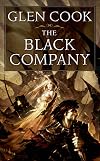
Long before your Abercrombies and Eriksons, Glen Cook gave us his take on gritty, dirty fantasy. The Black Company sits in a weird place between traditional fantasy and modern, "grimdark" fantasy, which is why sometimes it seems that a lot of modern readers don't quite appreciate it as much. For serious fantasy readers however (those who don't balk at the very idea of "genre fantasy"), the series isn't to be missed.
Inspired by his experiences in Vietnam, Cook's tale paints a bleak picture show more of battle though the eyes of a company of mercenaries. It's written in a sort of "war journal" fashion, often jumping around, and it is definitely rough around the edges, but Cook provides us with great characters, and is one of a few series where the books only get better with each installment (at least with the original trilogy, which concludes very satisfactorily). It's not as grim as some modern novels, and there's plenty of humor to be found as well.
Like Gene Wolfe's Wizard-Knight series, Cook manages to take a fairly standard fantasy setting and, without doing anything complicated, manages to tell a very compelling tale. show less
Inspired by his experiences in Vietnam, Cook's tale paints a bleak picture show more of battle though the eyes of a company of mercenaries. It's written in a sort of "war journal" fashion, often jumping around, and it is definitely rough around the edges, but Cook provides us with great characters, and is one of a few series where the books only get better with each installment (at least with the original trilogy, which concludes very satisfactorily). It's not as grim as some modern novels, and there's plenty of humor to be found as well.
Like Gene Wolfe's Wizard-Knight series, Cook manages to take a fairly standard fantasy setting and, without doing anything complicated, manages to tell a very compelling tale. show less

Beware, you are entering a dark and scary universe. (Well, of course you are, it’s a Glen Cook book ;) ) We’ve got: an empire of slave raiders, mercenary captain-kings, space warfare, planetary surface warfare, betrayals and more betrayals, lovely back-stabbing families, torture and more torture, cold-blooded murder, just plain “I hate you, you bastard” murder, cycles of vendetta that take years and years to complete. Did I get it all down? Phew.
I always like that Cook’s writing is show more so deceptively plain and simple. But it’s masterful, really – just a few strokes of a pen, and there is your character, and there is nothing simple about her or him; there is your battle, unfolding, and you can feel it all happening.
It’s been a while since I read anything by Glen Cook, so it was nice to revisit his work. I still like the Black Company books best of all, but I ended up enjoying this one a lot. I had trouble getting into the story at first and decided that it was going to be a three star read, at most – I was annoyed by Pollyanna. “Is this character misogyny personified, author, what are you doing?” As the novel progressed, it turned out that Cook was messing with the readers (of course he was). Pollyanna was frighteningly damaged, complex, and badass when it mattered. Well done, author, well done. There were a couple of instances of very weird gender stuff, and the book as a whole is very male-centric. But I am usually able to cut older sci-fi some slack.
Imagine my happiness when a lightbulb lit up in my head: OMG, Glen Cook is retelling Norse mythology as a space opera!!! Cool! Awesome! I love this kind of literary game, I was jumping for joy. It’s all there: Odin and his ravens, Thor, Loki and his many treacheries, Fenrir the wolf, Balder’s death, etc etc etc. Is there Ragnarök, too? Of course.
The ending was a bit rushed, but I am very curious about the rest of the series. I am not in a hurry, though – the story of Shadowline is complete.
I’ll end with one of the best quotes:
“How we love to play at being paladins,” he thought. “Hired killers pretending to knights of the Round Table. Dragons slain. Maidens rescued. Ogres dismantled. No, no, that’s not really innocent blood taking the shine off the old armor. Just a spot of rust.” show less
I always like that Cook’s writing is show more so deceptively plain and simple. But it’s masterful, really – just a few strokes of a pen, and there is your character, and there is nothing simple about her or him; there is your battle, unfolding, and you can feel it all happening.
It’s been a while since I read anything by Glen Cook, so it was nice to revisit his work. I still like the Black Company books best of all, but I ended up enjoying this one a lot. I had trouble getting into the story at first and decided that it was going to be a three star read, at most – I was annoyed by Pollyanna. “Is this character misogyny personified, author, what are you doing?” As the novel progressed, it turned out that Cook was messing with the readers (of course he was). Pollyanna was frighteningly damaged, complex, and badass when it mattered. Well done, author, well done. There were a couple of instances of very weird gender stuff, and the book as a whole is very male-centric. But I am usually able to cut older sci-fi some slack.
Imagine my happiness when a lightbulb lit up in my head: OMG, Glen Cook is retelling Norse mythology as a space opera!!! Cool! Awesome! I love this kind of literary game, I was jumping for joy. It’s all there: Odin and his ravens, Thor, Loki and his many treacheries, Fenrir the wolf, Balder’s death, etc etc etc. Is there Ragnarök, too? Of course.
The ending was a bit rushed, but I am very curious about the rest of the series. I am not in a hurry, though – the story of Shadowline is complete.
I’ll end with one of the best quotes:
“How we love to play at being paladins,” he thought. “Hired killers pretending to knights of the Round Table. Dragons slain. Maidens rescued. Ogres dismantled. No, no, that’s not really innocent blood taking the shine off the old armor. Just a spot of rust.” show less

The Black Company, an ancient mercenary army fallen on hard times, find themselves reluctantly contracting for an ancient and likely evil sorceress. Considering how famously influential the series (in which this is book 1) has been on the fantasy genre (especially the subsets focusing on military and/or gritty realism), I was half-expecting this novel to suffer the fate of so many innovators -- seeming trite and tame compared to its more modern copycats. To my joy, this is not so. The first show more person narrative that unpredictably will skip an entire siege only to then spend a lot of time on a minor operation adds an erratic but distinct pace to the events, and the personality of the narrator is sufficiently interesting, likable and conflicted to carry me along as the plot unfolds. The author's also very good at making the characters spring from the page immediately recognisable and memorable, feeling fully formed. There are moments of humour, moments of horror, and even some pathos to be had, and on the day I finished the book, I went straight out and ordered the entire rest of the series. Here's hoping they'll live up to the beginning. show less
Lists
Awards


You May Also Like


Associated Authors
Statistics
- Works
- 118
- Also by
- 25
- Members
- 36,196
- Popularity
- #512
- Rating
- 3.8
- Reviews
- 516
- ISBNs
- 418
- Languages
- 12
- Favorited
- 97

