
Ian C. Esslemont
Author of Night of Knives
About the Author
Series
Works by Ian C. Esslemont
Untitled (Path to Ascendancy, #6) 5 copies
Untitled (Path to Ascendancy, #5) 2 copies
Tagged
Common Knowledge
- Legal name
- Esslemont, Ian Cameron
- Birthdate
- 1962
- Gender
- male
- Relationships
- Brightwell, Gerri (wife)
- Nationality
- Canada
- Birthplace
- Winnipeg, Manitoba, Canada
- Places of residence
- Alaska, USA
- Associated Place (for map)
- Canada
Members
Reviews
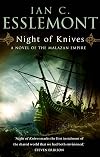
Night of Knives is a difficult book to start reading, mainly because it is jarring, after having read four Erickson books, to have such a different authorial voice speaking of Malazan. Esslemont's style drops the majority of the purple language endemic in Erickson's novels in favor of something much more direct.
And, ultimately, this is a good thing. I know of only two authors who can pull off the flowery language (Erickson being one), but even then it can be a chore to read (I'm looking at show more you, Kruppe), and Esslemont's style brings a welcome change of pace to the Malazan world.
Beyond comparisons to Erickson's work, Night of Knives works quite well on its own. Few authors can pull off something with a scope so ambitiously small--the entire novel takes place over the course of a single night--but Esslemont surpasses that challenge with ease, and none of the novel feels like contrived conflict or filler to pad out the page count (unlike the TV show 24).
I feel like this review is boiling down to all the things this book is not. It's not Steven Erickson's Malazan as written by Ian C. Esslemont. It's not 24 with magic. What it is, though, is the first return salvo of the Malazan "dialog" through which these two men created this world, and I look forward to the next. show less
And, ultimately, this is a good thing. I know of only two authors who can pull off the flowery language (Erickson being one), but even then it can be a chore to read (I'm looking at show more you, Kruppe), and Esslemont's style brings a welcome change of pace to the Malazan world.
Beyond comparisons to Erickson's work, Night of Knives works quite well on its own. Few authors can pull off something with a scope so ambitiously small--the entire novel takes place over the course of a single night--but Esslemont surpasses that challenge with ease, and none of the novel feels like contrived conflict or filler to pad out the page count (unlike the TV show 24).
I feel like this review is boiling down to all the things this book is not. It's not Steven Erickson's Malazan as written by Ian C. Esslemont. It's not 24 with magic. What it is, though, is the first return salvo of the Malazan "dialog" through which these two men created this world, and I look forward to the next. show less
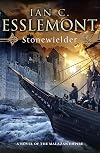
“I've come to understand that the truth isn't really what's important...what really matters is what people agree is the truth. -Greymane”
I'm starting to really become a fan of Esslemont. This book finally tells us more about the Stormriders and the Korelri with their wall. It also continues the story of a few of my favourite characters (Kiska, Kyle and Greymane, for example) and shines a new light on some characters I had hated previously (Not saying anything about that for fear of show more spoilers).
Some people say that the Malazan series has lost its focus. I disagree. In my opinion, the Series was never exclusively about the Bridgeburners, or the crippled god (Although he plays a role in this book, too), but rather the main attraction of the Series always was the world itself. The World of Malaz is the most believable (If you can call it that, considering it is fantasy) World I have read about so far, including the real world (Yes, sometimes the real world can make less sense than the world of Malaz).
Stonewielder also introduces a few new characters, as always, and they fit really well into the story.
Now, the old question that I have asked myself since the very first malazan book: Why no five stars? And, as always, I reply: I don't know. Five stars is something I give when a book really grips me, when I can't put it down. This was not the case here. As always, I can only say: Do yourself a favour and read the malazan books. If you have already finished the book of the fallen series, start the one by Esslemont and just keep going. They just keep getting better and better. I for one am looking forward to starting the next book. show less
I'm starting to really become a fan of Esslemont. This book finally tells us more about the Stormriders and the Korelri with their wall. It also continues the story of a few of my favourite characters (Kiska, Kyle and Greymane, for example) and shines a new light on some characters I had hated previously (Not saying anything about that for fear of show more spoilers).
Some people say that the Malazan series has lost its focus. I disagree. In my opinion, the Series was never exclusively about the Bridgeburners, or the crippled god (Although he plays a role in this book, too), but rather the main attraction of the Series always was the world itself. The World of Malaz is the most believable (If you can call it that, considering it is fantasy) World I have read about so far, including the real world (Yes, sometimes the real world can make less sense than the world of Malaz).
Stonewielder also introduces a few new characters, as always, and they fit really well into the story.
Now, the old question that I have asked myself since the very first malazan book: Why no five stars? And, as always, I reply: I don't know. Five stars is something I give when a book really grips me, when I can't put it down. This was not the case here. As always, I can only say: Do yourself a favour and read the malazan books. If you have already finished the book of the fallen series, start the one by Esslemont and just keep going. They just keep getting better and better. I for one am looking forward to starting the next book. show less

This review is written with a GPL 4.0 license and the rights contained therein shall supersede all TOS by any and all websites in regards to copying and sharing without proper authorization and permissions. Crossposted at WordPress, Blogspot, Librarything & Tumblr by Bookstooge’s Exalted Permission
Title: Dancer's Lament
Series: Malaz: Path to Ascendancy #1
Author: Ian Esslemont
Rating: 4.5 of 5 Stars
Genre: Fantasy
Pages: 418
Format: Hardcover
Synopsis:
Before there was Cotillion and Kellanved, show more there was Dorin Rav and Wu. Taking place in the city of Li Heng, this is the story of how they became partners.
The plot of the book, however, is how the city of Li Heng survived a besiegement by a jumped up king who thought he was somebody. The 4 mages of the city, under the direction of the Protectress (a tiste liosan) end up confining Ryllandaras, the man-jackal in a magical prison. The Itko Kan'ians, the besiegers, have the help of a Jaghut and it takes the Protectress unleasing the full might of her Warren of Light to drive back the besiegers.
Wu, and Dorin, have plans to take over the city during the turmoil but they simply aren't strong enough and end up being exiled from the city. But now they are partners and can begin working together.
My Thoughts:
Finally. A Malazan book that I can simply sit down and read straight through and enjoy fully without feeling like I'm juggling 3 different 5000 piece puzzles all mixed together. You have no idea how much that upped my enjoyment of this book.
I think Esslemont showed his true colors with this book. He is a good standard fantasy writing kind of guy. His Malazan Empire novels felt very much like he was trying to copy Steven Erikson's style and it just didn't work for me. But this? Besides Gardens of the Moon, this was the most enjoyable Malazan book that I've read. Now I am really looking forward to the rest of the trilogy.
In the Malazan books, Cotillion/Dancer and Kellanved were shadow'y characters doing things behind the scenes and never being fully fleshed out. Even when they were supposed to be main characters, they were actually hiding and felt like side characters. This time, they were simply people. It was refreshing.
There were lots of hints and little asides from other Malazan characters, so if you're one of the Book of the Fallen fanboys who who loves unlocking a ton of meaning from 2 sentence fragments, you'll still have something to chew on with this book. The rest of us can simply sit back and enjoy the story.
In Esslemont's The Return of the Crimson Guard the malazan army unleashed Ryllandaras and in this book we see how, and why, he was confined. It was nice to make a clear cut connection between one book and the other instead of having to guess and speculate and turn my brain into 77 pretzels to make my pet theory fit.
Another aspect of this that I enjoyed was the lack of Existential Despair philosophy. Everybody was NOT whining about how meaningless their lives were. In fact, they acted like real people and didn't even think about that. Dorin and Wu had to survive, plan how to take over a newly discovered Warren of Shadow and see if they could take over the city. Not much time to sit on their fat asses and complain about how hard they have it (unlike almost every Steven Erikson character. Man, that guy has his characters doing more talking than doing, in the middle of freaking battles for goodness sake!!!).
To end, I really enjoyed this book. A lot. In fact, I plan on buying it in hardcover, I enjoyed it so much. How don't know how much more of an endorsement I can give a book. * grin *
★★★★ ½ show less
Title: Dancer's Lament
Series: Malaz: Path to Ascendancy #1
Author: Ian Esslemont
Rating: 4.5 of 5 Stars
Genre: Fantasy
Pages: 418
Format: Hardcover
Synopsis:
Before there was Cotillion and Kellanved, show more there was Dorin Rav and Wu. Taking place in the city of Li Heng, this is the story of how they became partners.
The plot of the book, however, is how the city of Li Heng survived a besiegement by a jumped up king who thought he was somebody. The 4 mages of the city, under the direction of the Protectress (a tiste liosan) end up confining Ryllandaras, the man-jackal in a magical prison. The Itko Kan'ians, the besiegers, have the help of a Jaghut and it takes the Protectress unleasing the full might of her Warren of Light to drive back the besiegers.
Wu, and Dorin, have plans to take over the city during the turmoil but they simply aren't strong enough and end up being exiled from the city. But now they are partners and can begin working together.
My Thoughts:
Finally. A Malazan book that I can simply sit down and read straight through and enjoy fully without feeling like I'm juggling 3 different 5000 piece puzzles all mixed together. You have no idea how much that upped my enjoyment of this book.
I think Esslemont showed his true colors with this book. He is a good standard fantasy writing kind of guy. His Malazan Empire novels felt very much like he was trying to copy Steven Erikson's style and it just didn't work for me. But this? Besides Gardens of the Moon, this was the most enjoyable Malazan book that I've read. Now I am really looking forward to the rest of the trilogy.
In the Malazan books, Cotillion/Dancer and Kellanved were shadow'y characters doing things behind the scenes and never being fully fleshed out. Even when they were supposed to be main characters, they were actually hiding and felt like side characters. This time, they were simply people. It was refreshing.
There were lots of hints and little asides from other Malazan characters, so if you're one of the Book of the Fallen fanboys who who loves unlocking a ton of meaning from 2 sentence fragments, you'll still have something to chew on with this book. The rest of us can simply sit back and enjoy the story.
In Esslemont's The Return of the Crimson Guard the malazan army unleashed Ryllandaras and in this book we see how, and why, he was confined. It was nice to make a clear cut connection between one book and the other instead of having to guess and speculate and turn my brain into 77 pretzels to make my pet theory fit.
Another aspect of this that I enjoyed was the lack of Existential Despair philosophy. Everybody was NOT whining about how meaningless their lives were. In fact, they acted like real people and didn't even think about that. Dorin and Wu had to survive, plan how to take over a newly discovered Warren of Shadow and see if they could take over the city. Not much time to sit on their fat asses and complain about how hard they have it (unlike almost every Steven Erikson character. Man, that guy has his characters doing more talking than doing, in the middle of freaking battles for goodness sake!!!).
To end, I really enjoyed this book. A lot. In fact, I plan on buying it in hardcover, I enjoyed it so much. How don't know how much more of an endorsement I can give a book. * grin *
★★★★ ½ show less
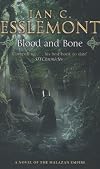
this is off a reread as i finally manage to read Esslemont's six Novels of the Malazan Empire series in order. this book, #5 in the series, is not as good as #3 and #4 (though much better than #1 and #2). it maintains the apocalyptic tone of these afterward-novels to Erikson's 10-volume Book of the Fallen, and the sense of decay, but it's not as subtle tonally and formally as the Fallen books always are. on the one hand Esslemont's own voice is very strong for the first time, and he uses his show more interest in 19th century "travel writing, colonial texts, and the myths of imperialism" to inform this journey of many small parties into the jungle of Himatan on Jakuruku, which heads into a variety of hearts of darkness, and he does an excellent job with that. on the other hand, the circuitous journeys of all the characters and expeditions are rather mirrored in the circuitous progress of the text, till the whole narrative seems to be travelling in ever smaller circles. so, between the manuscript's tale and the writer's intentions, it's kind of a draw, as far the pacing goes, a set of continuing standstills, and as a reader i kept falling asleep. still a four-star read, though, for its interesting setup, and in his defence the writer is setting out to tie up a lot of denouement endings to many characters' stories beyond the timeline of the Book of the Fallen. show less
You May Also Like


Associated Authors
Statistics
- Works
- 23
- Members
- 4,724
- Popularity
- #5,330
- Rating
- 3.8
- Reviews
- 122
- ISBNs
- 138
- Languages
- 6
- Favorited
- 4