
Robert Charles Wilson (1) (1953–)
Author of Spin
For other authors named Robert Charles Wilson, see the disambiguation page.
Series
Works by Robert Charles Wilson
Tesseracts Ten: A Celebration of New Canadian Speculative Fiction (2006) — Editor — 26 copies, 2 reviews
Owning the Unknown: A Science Fiction Writer Explores Atheism, Agnosticism, and the Idea of God (2023) 7 copies
Utriusque Cosmi 6 copies
The Great Goodbye 6 copies
The Cartesian Theater 3 copies
YFL-500 [Short story] 1 copy
The cure 1 copy
Ballads in 3/4 Time [short story] — Author — 1 copy
Short Fiction Complete 1 copy
Associated Works
The Year's Best Science Fiction: Sixteenth Annual Collection (1999) — Contributor — 518 copies, 1 review
The Year's Best Science Fiction: Eighteenth Annual Collection (2001) — Contributor — 504 copies, 2 reviews
The Year's Best Science Fiction: Twenty-Fourth Annual Collection (2007) — Contributor — 457 copies, 6 reviews
The Year's Best Science Fiction: Twenty-Seventh Annual Collection (2010) — Contributor — 321 copies, 6 reviews
The Year's Best Science Fiction: Thirtieth Annual Collection (2013) — Contributor — 254 copies, 3 reviews
The Best Science Fiction and Fantasy of the Year, Volume 1 (2007) — Contributor — 217 copies, 6 reviews
The Very Best of the Best: 35 Years of The Year's Best Science Fiction (2019) — Contributor — 183 copies, 1 review
The Best Science Fiction and Fantasy of the Year, Volume 4 (2010) — Contributor — 141 copies, 2 reviews
Analog Science Fiction/Science Fact: Vol. XCV, No. 2 (February 1975) (1975) — Contributor — 24 copies, 1 review
The War of the Worlds: Fresh Perspectives on the H. G. Wells Classic (2005) — Contributor — 19 copies
Isaac Asimov's Science Fiction Magazine: Vol. 9, No. 12 [December 1985] (1985) — Contributor — 13 copies
Monolith 003 : Almanah Znanstveno-fantasticne Knjizevnosti (Monolith, No. 003) (2000) — Contributor — 3 copies
The World Fantasy Convention 2011: Sailing the Seas of the Imagination — Contributor — 1 copy
Tagged
Common Knowledge
- Legal name
- Wilson, Robert Charles
- Birthdate
- 1953-12-15
- Gender
- male
- Occupations
- science fiction author
- Organizations
- Science Fiction and Fantasy Writers of America
- Awards and honors
- Grand Prix de l'Imaginaire
Seiun Award
Kurd Laßwitz Preis
CSFFA Hall of Fame (2018) - Agent
- Shawna McCarthy (The McCarthy Agency)
- Nationality
- USA (birth)
Canada ( [2007] ) - Birthplace
- Whittier, California, USA
- Places of residence
- Concord, Ontario, Canada
Vancouver, British Columbia, Canada
Nanaimo, British Columbia, Canada
Whittier, California, USA - Associated Place (for map)
- Canada
Members
Discussions
Found: Help find book 1900s SciFi era in Name that Book (August 2021)
Reviews
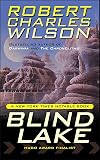
Blind Lake is Robert Charles Wilson’s dark, nuanced take on issues raised in Carl Sagan’s Contact (1985). Blind Lake was nominated for a Hugo, but it never achieved the fame of Sagan’s novel. Hollywood opportunity did not come knocking for Wilson as it did for Sagan, who died during the production of the 1997 film adaptation of Contact. Sagan envisioned religious opposition to alien contact. Wilson suggests a pop culture cult. One of his characters writes a bestseller titled “God & show more the Quantum Vacuum.” He thinks the ampersand in the title is responsible for its success. Sagan’s aliens adopt a familiar human avatar on a holographic tropical beach; Wilson’s aliens are large, reeking sea creatures who appear in a barren desert. Sagan’s aliens learn about us from SETI and early TV; Wilson’s team makes contact through an array of telescopes beyond the orbit of Jupiter, whose data is interpreted by the AI of a quantum computer based on a Bose-Einstein Concentrate. Officials wonder whether the AI itself can be trusted and whether the aliens may have corrupted the system. As it happens, the situation is more complicated than that. An alien AI may be talking to an autistic child and her unstable father. In the end, Wilson’s cosmic vision is closer to that of Ted Chiang’s “Story of Your Life” and its 2016 film adaptation, Arrival, than it is to Sagan’s technological optimism. show less
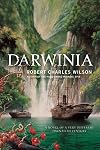
I posted on a SFF thread that, at the beginning, this novel feels exactly the way Peter Jackson's movie "King Kong" looked. The premise of the novel is that, in 1912, the entire European continent and some of its surround is, overnight, transformed into a steaming jungle which, of course, is populated by various types of giant, often lethal bugs. Yeah, that last detail should ring some bells (urgh -- the giant bugs in "King Kong" almost made me lose it). We are introduced to a young man who show more is fascinated with 'Darwinia', as the newly transformed continent is nicknamed, and when the novel moves forward to him joining an expedition into this untamed, transformed land, we, the readers, think we know what to expect.
We expect the novel to develop as a speculative history, where the familiar events of our known early-20th-century are somehow distorted or transformed along with the continent; in many ways, the novel fulfills this expectation. But we also expect an adventure novel -- when our hero crosses the sea and then the channel and then the river, the shades of Edgar Rice Burroughs (alluded to several times), Daniel Defoe, and even Joseph Conrad rise up to greet us. We anticipate, if not quite buckled swashes, then at least machetes ripping through jungle, the clash of man and nature and, perhaps, primitive culture, the manly imprint of boots upon virgin earth. This is the great colonial vision given us by writers of the past.
But we live in a postcolonial and postmodern society. Expectations are rarely fulfilled in the way we think they ought to be anymore. What we think is a good scifi adventure yarn at the beginning could turn into anything by the end. This is the joy and the frustration of literature in the current age.
So when Wilson's novel, about halfway in, takes a turn toward astronomical tech-theology and abandons man vs. nature for god vs. demon, we shouldn't really be surprised.
We are, but we shouldn't be.
We are, and so the shift -- which really isn't a shift, we realize, but more of a reveal, since the 'new' themes have been there all along, disguised and biding their time -- is a bit of an adjustment. The reader must reevaluate the novel's priorities.
The whole text ends up being significantly more epic than it first appears. It takes up a much grander scale -- an astronomical scale, as a matter of fact -- and deals with speculations about the nature of existence, the existence of gods, and the god within man. Wilson handles the move from "new world" to "worlds within worlds" deftly, but not subtly. His interludes -- the space between sections of the book wherein the larger significance is revealed -- are at first irritating, and then confusing, and then, toward the end of the book, finally revealing. The reader, in fact, feels much like the main character as this progression unfolds -- this deliberate (one assumes) connection between reader and character is a gorgeous act of creative craftsmanship.
The book feels a little lopsided, once one has a chance to appreciate the whole; the first sections of the book (the adventure-y part) are significantly longer than the bits where the 'celestial war' is laid out. Even so, even with all its unexpected choices, this novel is a strange and wonderful beast. It's not an "easy" read, but it is a worthwhile one. show less
We expect the novel to develop as a speculative history, where the familiar events of our known early-20th-century are somehow distorted or transformed along with the continent; in many ways, the novel fulfills this expectation. But we also expect an adventure novel -- when our hero crosses the sea and then the channel and then the river, the shades of Edgar Rice Burroughs (alluded to several times), Daniel Defoe, and even Joseph Conrad rise up to greet us. We anticipate, if not quite buckled swashes, then at least machetes ripping through jungle, the clash of man and nature and, perhaps, primitive culture, the manly imprint of boots upon virgin earth. This is the great colonial vision given us by writers of the past.
But we live in a postcolonial and postmodern society. Expectations are rarely fulfilled in the way we think they ought to be anymore. What we think is a good scifi adventure yarn at the beginning could turn into anything by the end. This is the joy and the frustration of literature in the current age.
So when Wilson's novel, about halfway in, takes a turn toward astronomical tech-theology and abandons man vs. nature for god vs. demon, we shouldn't really be surprised.
We are, but we shouldn't be.
We are, and so the shift -- which really isn't a shift, we realize, but more of a reveal, since the 'new' themes have been there all along, disguised and biding their time -- is a bit of an adjustment. The reader must reevaluate the novel's priorities.
The whole text ends up being significantly more epic than it first appears. It takes up a much grander scale -- an astronomical scale, as a matter of fact -- and deals with speculations about the nature of existence, the existence of gods, and the god within man. Wilson handles the move from "new world" to "worlds within worlds" deftly, but not subtly. His interludes -- the space between sections of the book wherein the larger significance is revealed -- are at first irritating, and then confusing, and then, toward the end of the book, finally revealing. The reader, in fact, feels much like the main character as this progression unfolds -- this deliberate (one assumes) connection between reader and character is a gorgeous act of creative craftsmanship.
The book feels a little lopsided, once one has a chance to appreciate the whole; the first sections of the book (the adventure-y part) are significantly longer than the bits where the 'celestial war' is laid out. Even so, even with all its unexpected choices, this novel is a strange and wonderful beast. It's not an "easy" read, but it is a worthwhile one. show less
4.5/5
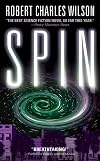
A better version of the writing style that I found with Alistair Reynolds in The Prefect and a much better version what I think Neal Stephenson was trying to do with Seveneves. As much of a love story as it is a story of mysterious first contact, Spin follows a pair of fraternal twins and their mutual childhood friend through the tumultuous times that follow a permeable membrane encapsulating the Earth, while outside in space, time accelerates to breakneck speeds. These aren't ordinary show more children though: the twins are the progeny of an industrious and domineering capitalist whose technology is benefited by the 'spin', and who coldly builds his son into the heir of his advantageous position. The story itself though is told as a pseudo-memoir of Tyler, the best friend to both Jason, the heir-apparent, and his sister Diane, who Tyler has been in love with since he can remember.
Spin has three main focal points. The first and perhaps least explored is the effects that the 'spin' has on society, culture, religion, and government. We see first hand the waves of emotions that humanity goes through as they come to accept the new normal. We see the science denial, the apathy, the anxious brooding thoughts of despair under the skin of a moldering social code. We see what happens when people are faced with their own impending mortality. We see how all of this effects the structure that we all live under. Now, is this examination the sole focus of the book, no. But it damn sure is more realistic than a book like Seveneves, and still allows for optimism and hope at the end of it all without turning a blind eye to the hard facts psychology in the face of an upending status quo. Wilson does a good job of manufacturing speculation on what might transpire here. The world behind the story does not fade into the background, it's right there on the surface.
Second is the exploration of the hard-ish science that revolves around humanities attempts to understand the spin, and potentially prevent what they see as a potential extension level event as the sun begins to grow through the billions of years of time outside the membrane. The execution of the main concept was brilliant to me. I loved the idea of seeding Mars with life and in just a short time seeing the results. I loved the bio engineered node system (a von neumann machine) and how that ties in with the ending and the 'hypotheticals'. I especially loved the idea of another phase of human life brought about by injecting DNA editing technology, how that could be a platform for more acute changes in psychology physical ability, and what that would do to our conception of what it means to be human. The ending takes these concepts to a broader, galaxy/universe level stage. I enjoy a book that drip feeds me details on that level, and finishes with a flourish of new ideas that leaves you dreaming about the future like Spin does.
Finally, where I think the meat of the book lies, is in the characters. I applaud Wilson's choice to stick with the same three characters throughout the story. Doing so allows him to slowly build them out through their actions and choices. It allows him the luxury of drawing on characterization that he wrote hundreds of pages to ago to show growth and progression through time. These characters are heartbreaking and resilient all unto themselves. The love between Diane and Tyler is palpable, but doesn't feel trite or distracting, it simply is. There are a few standout side characters, headlined by the twins' mother, Caroline, an alcoholic who is sporadically involved in her children lives but is every bit a textured person, who we see but a window into. I thought it was a cute bit of characterization that the Tyler is drawn as a sometimes detached and empty person to justify how the prose is written. It makes sense considering that he's brought up in the 'spin generation' which is brought up a lot, and because of his background as a medical doctor. Tyler, more than anyone else, is able to separate himself from the tumultuous world he lives in, which juxtaposes him with Diane, who seeks meaning an enlightenment, and Jason, who values knowledge above all else. As the twins lose themselves in the pursue fulfillment, Tyler remains the steadfast friend who watches from the sidelines and picks them up when they fall.
The prose itself isn't something to write home about I suppose. It's not creative, especially beautiful, or stylistic, but it serves its purpose well; an economic vehicle with which Wilson can express his plot and characters. It is, however, especially readable prose that can appeal to a lot of people, a similarity that I draw to Reynolds. What I find especially impressive about Spin is Wilson's ability to marry a lot of harder-science material with deeper characterization that I've found in most genre literature. He also doesn't get bogged down in technical jargon when he explains things, and spaces section of exposition and world-building with character focused drama.
It does dip in intensity and interest towards the middle. My interest in the plot sagged as it sagged without a clear direction forward. This was salved by an ending that was not only a rejuvenation and a satisfying completion to many narrative threads, but also done with a grace that I wasn't expecting. Apparently this is also the first in the a series of books, but it hardly needs it, which should be a ringing endorsement by itself. show less
A better version of the writing style that I found with Alistair Reynolds in The Prefect and a much better version what I think Neal Stephenson was trying to do with Seveneves. As much of a love story as it is a story of mysterious first contact, Spin follows a pair of fraternal twins and their mutual childhood friend through the tumultuous times that follow a permeable membrane encapsulating the Earth, while outside in space, time accelerates to breakneck speeds. These aren't ordinary show more children though: the twins are the progeny of an industrious and domineering capitalist whose technology is benefited by the 'spin', and who coldly builds his son into the heir of his advantageous position. The story itself though is told as a pseudo-memoir of Tyler, the best friend to both Jason, the heir-apparent, and his sister Diane, who Tyler has been in love with since he can remember.
Spin has three main focal points. The first and perhaps least explored is the effects that the 'spin' has on society, culture, religion, and government. We see first hand the waves of emotions that humanity goes through as they come to accept the new normal. We see the science denial, the apathy, the anxious brooding thoughts of despair under the skin of a moldering social code. We see what happens when people are faced with their own impending mortality. We see how all of this effects the structure that we all live under. Now, is this examination the sole focus of the book, no. But it damn sure is more realistic than a book like Seveneves, and still allows for optimism and hope at the end of it all without turning a blind eye to the hard facts psychology in the face of an upending status quo. Wilson does a good job of manufacturing speculation on what might transpire here. The world behind the story does not fade into the background, it's right there on the surface.
Second is the exploration of the hard-ish science that revolves around humanities attempts to understand the spin, and potentially prevent what they see as a potential extension level event as the sun begins to grow through the billions of years of time outside the membrane. The execution of the main concept was brilliant to me. I loved the idea of seeding Mars with life and in just a short time seeing the results. I loved the bio engineered node system (a von neumann machine) and how that ties in with the ending and the 'hypotheticals'. I especially loved the idea of another phase of human life brought about by injecting DNA editing technology, how that could be a platform for more acute changes in psychology physical ability, and what that would do to our conception of what it means to be human. The ending takes these concepts to a broader, galaxy/universe level stage. I enjoy a book that drip feeds me details on that level, and finishes with a flourish of new ideas that leaves you dreaming about the future like Spin does.
Finally, where I think the meat of the book lies, is in the characters. I applaud Wilson's choice to stick with the same three characters throughout the story. Doing so allows him to slowly build them out through their actions and choices. It allows him the luxury of drawing on characterization that he wrote hundreds of pages to ago to show growth and progression through time. These characters are heartbreaking and resilient all unto themselves. The love between Diane and Tyler is palpable, but doesn't feel trite or distracting, it simply is. There are a few standout side characters, headlined by the twins' mother, Caroline, an alcoholic who is sporadically involved in her children lives but is every bit a textured person, who we see but a window into. I thought it was a cute bit of characterization that the Tyler is drawn as a sometimes detached and empty person to justify how the prose is written. It makes sense considering that he's brought up in the 'spin generation' which is brought up a lot, and because of his background as a medical doctor. Tyler, more than anyone else, is able to separate himself from the tumultuous world he lives in, which juxtaposes him with Diane, who seeks meaning an enlightenment, and Jason, who values knowledge above all else. As the twins lose themselves in the pursue fulfillment, Tyler remains the steadfast friend who watches from the sidelines and picks them up when they fall.
The prose itself isn't something to write home about I suppose. It's not creative, especially beautiful, or stylistic, but it serves its purpose well; an economic vehicle with which Wilson can express his plot and characters. It is, however, especially readable prose that can appeal to a lot of people, a similarity that I draw to Reynolds. What I find especially impressive about Spin is Wilson's ability to marry a lot of harder-science material with deeper characterization that I've found in most genre literature. He also doesn't get bogged down in technical jargon when he explains things, and spaces section of exposition and world-building with character focused drama.
It does dip in intensity and interest towards the middle. My interest in the plot sagged as it sagged without a clear direction forward. This was salved by an ending that was not only a rejuvenation and a satisfying completion to many narrative threads, but also done with a grace that I wasn't expecting. Apparently this is also the first in the a series of books, but it hardly needs it, which should be a ringing endorsement by itself. show less
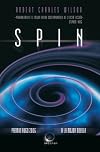
Al comienzo de ’Spin’, uno de los personajes está inyectando una droga a otro, y mediante una sucinta descripción, Wilson nos indica que no nos encontramos en la Tierra que conocemos normalmente. A partir de aquí, haciendo uso de flashbacks iremos sabiendo de las vicisitudes por las que han ido pasando tanto los protagonistas como su entorno. Wilson es fiel a sí mismo, y como en el resto de su obra, parte de un fenómeno extraño y extraordinario que trastoca la vida de las personas. show more Me resisto a comentar cuál es este hecho, aunque leyendo cualquier sinopsis de la novela, se sabe enseguida.
Los personajes más importantes de la historia son tres: los gemelos Jason y Diane, y el amigo de ambos, Tyler, verdadero protagonista de la novela, ya que toda la trama la conocemos a través de su punto de vista. Wilson sabe transmitirnos perfectamente el sentir de los personajes, sus sentimientos y pensamientos. De igual manera, Wilson no olvida la parte científica y tecnológica, y nos va desvelando las investigaciones y descubrimientos debidos al llamado Spin, reflexionando sobre sus implicaciones a todos los niveles, políticos, religiosos y personales.
’Spin’ es una muy buena novela de ciencia ficción hard ligera, que mezcla a la perfección la ciencia con las relaciones personales de los protagonistas, todo ello narrado de manera muy fácil por Wilson. El único pero que se le puede poner, es que le sobran algunas páginas. Decir también que ’Spin’ forma parte de una trilogía, pero que la novela se cierra satisfactoriamente. show less
Los personajes más importantes de la historia son tres: los gemelos Jason y Diane, y el amigo de ambos, Tyler, verdadero protagonista de la novela, ya que toda la trama la conocemos a través de su punto de vista. Wilson sabe transmitirnos perfectamente el sentir de los personajes, sus sentimientos y pensamientos. De igual manera, Wilson no olvida la parte científica y tecnológica, y nos va desvelando las investigaciones y descubrimientos debidos al llamado Spin, reflexionando sobre sus implicaciones a todos los niveles, políticos, religiosos y personales.
’Spin’ es una muy buena novela de ciencia ficción hard ligera, que mezcla a la perfección la ciencia con las relaciones personales de los protagonistas, todo ello narrado de manera muy fácil por Wilson. El único pero que se le puede poner, es que le sobran algunas páginas. Decir también que ’Spin’ forma parte de una trilogía, pero que la novela se cierra satisfactoriamente. show less
Lists
Awards


You May Also Like


Associated Authors
Statistics
- Works
- 47
- Also by
- 46
- Members
- 14,482
- Popularity
- #1,583
- Rating
- 3.7
- Reviews
- 508
- ISBNs
- 246
- Languages
- 14
- Favorited
- 12
