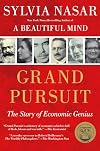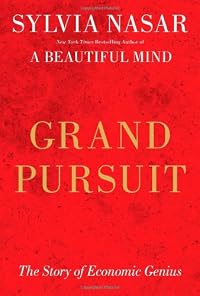
Grand Pursuit: The Story of Economic Genius
by Sylvia Nasar
On This Page
Description
The epic story of the making of modern economics, and of how economics rescued mankind from squalor and deprivation by placing its material fate in its own hands rather than in fate. Nasar's account begins with Charles Dickens and Henry Mayhew observing the condition of the poor majority in mid-nineteenth-century London, the richest place in the world. She describes the often heroic efforts of Marx and others to put those insights into action, with revolutionary consequences. From John show more Maynard Keynes to India's Nobel Prize winner Amartya Sen, she shows how the insights of these activist thinkers transformed the world--from one city, London, to the developed nations in Europe and America, and now the entire planet. In Nasar's dramatic narrative we witness men and women responding to personal crises, world wars, revolutions, economic upheavals, and each other's ideas to turn back Malthus and transform the "dismal science" into a triumph over mankind's hitherto age-old destiny of misery. show lessTags
Recommendations

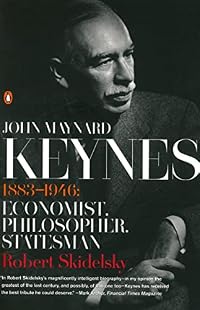
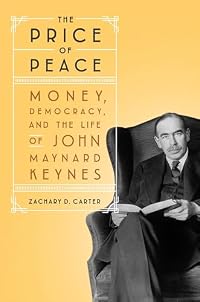





Member Reviews
This book is to economic theory as "Lives of the Great Composers" is to music, but it is still a very good read. The book is billed as an exploration of economic thought since the mid-nineteenth century. Rather than thought per se, however, the book focusses on the people who thought the thoughts, and the times in which they lived.
The book is a welcome reminder that economic thought isn't wholly irrelevant. Since 2008, the reputation of economics as a serious discipline has taken a beating. This reflects the failure of most economists to forecast the financial collapse and the enthusiastic collaboration of some as proponents of the policies and practices that led to that collapse. But Ms. Nadler's book reminds us that economics is show more indeed a serious enquiry into a key question -- assuming that people's material condition has some bearing on their welfare, how can life be made better for humanity as a whole? In examining that question,economics contributes much beyond short-term forecasting. Moreover, the book argues convincingly that economics as a discipline made some real contributions to bettering the human condition, for example by helping policy makers in 1945-47 avoid the mistakes of 1918.
Beyond adressing the broad issue of the worth of economics as a discipline, this is a great read. I probably find it more interesting than most, since I am a retired economist, and studied the theories of most of the people she discusses. But she turns the discussion from pure theory (which can bore even retired economists) to a fascinating story about the evolution of the discipline, and to many fascinating stories about some very interesting people. This book is a worthy successor to Robert Heilbroner's "The Worldly Philosophers".
The strongest impression I took away from this book wasn't about economic theory, but about economic fact. For 10,000 years, most people spent their lives in misery, caught in the Malthusian trap of limited resources and population pressure. Over the last 200 years, however, most of humanity has escaped the Malthusian trap. Ms. Nadler points out that the average Chinese now lives better than the average English person did in 1950, while her book demonstrates over and over again that the average English person lived many times better in 1950 than they did in 1840. This isn't new news, and it doesn't mean that this is the best of all possible worlds -- far from it. It is, however, a good reminder that our world is a long way from the worst. show less
The book is a welcome reminder that economic thought isn't wholly irrelevant. Since 2008, the reputation of economics as a serious discipline has taken a beating. This reflects the failure of most economists to forecast the financial collapse and the enthusiastic collaboration of some as proponents of the policies and practices that led to that collapse. But Ms. Nadler's book reminds us that economics is show more indeed a serious enquiry into a key question -- assuming that people's material condition has some bearing on their welfare, how can life be made better for humanity as a whole? In examining that question,economics contributes much beyond short-term forecasting. Moreover, the book argues convincingly that economics as a discipline made some real contributions to bettering the human condition, for example by helping policy makers in 1945-47 avoid the mistakes of 1918.
Beyond adressing the broad issue of the worth of economics as a discipline, this is a great read. I probably find it more interesting than most, since I am a retired economist, and studied the theories of most of the people she discusses. But she turns the discussion from pure theory (which can bore even retired economists) to a fascinating story about the evolution of the discipline, and to many fascinating stories about some very interesting people. This book is a worthy successor to Robert Heilbroner's "The Worldly Philosophers".
The strongest impression I took away from this book wasn't about economic theory, but about economic fact. For 10,000 years, most people spent their lives in misery, caught in the Malthusian trap of limited resources and population pressure. Over the last 200 years, however, most of humanity has escaped the Malthusian trap. Ms. Nadler points out that the average Chinese now lives better than the average English person did in 1950, while her book demonstrates over and over again that the average English person lived many times better in 1950 than they did in 1840. This isn't new news, and it doesn't mean that this is the best of all possible worlds -- far from it. It is, however, a good reminder that our world is a long way from the worst. show less
In her preface, Nasar describes Grand Pursuit as “the story of an idea that was born in the Golden Age before World War I,” the grand pursuit of “turning economics into an instrument of mastery” that could drive prosperity, rather than the “dismal science” that cautioned against government or even voluntary social intervention. Although she gives a glimmer of the ideas of such founders of classical economics as Adam Smith, Thomas Robert Malthus, David Ricardo, John Stuart Mill, the focus is on their successors from the Victorian Age to present: Marx-Engels, Alfred Marshall, John Maynard Keynes, Joseph Schumpeter, Friedrich Hayek. Milton Friedman gets little space, and the great critic of centralized planning seminal in the show more free-market movement, Ludwig Von Mises, has some scattered mentions.
The blurbs of praise inside the cover run the gamut from the far-left Mother Jones and more moderate left The Nation to center-right publications such as the Economist and the Wall Street Journal, promising a balanced view of modern economics. I’d say more “middle-of-the-road.” Nasar tips her hand to her own biases fairly early on, when for instance she claimed that Mother-of-the-Welfare-State Beatrice Webb “showed” that the welfare state could cure poverty and was “more likely to raise than be a drag to economic growth.” (Not claimed or argued but showed.) Nasar’s no fan of the free market, but no fan of Soviet-style central planning either. Her triumphalist narrative and blue skies epilogue can sometimes sound downright Candide-like, and certainly marks her as a champion of the status quo--from reviews seemingly the cause of annoyance to both socialists and libertarians alike who’d challenge her assumptions. I’ve also read complaints in the (few) negative reviews about this being a popular economics book, one not deep enough to merit the attention of an economics major.
Well, except how many of us can say that? I took one course in Macroeconomics in college, and have read some books, and some excerpts of the works, of some of the thinkers listed above. As a general reader interested in history, economics and politics, I found the book valuable and fascinating. Especially given Nasar wasn’t shy about giving us the sweep of history as a whole, including literary figures from Jane Austen to Virginia Woof when they tied into the story. Certainly I’d heard of Marx, Keynes and Hayek, and knew something of their lives and ideas, but I’d never known about Beatrice Webb, for instance, who Nasar credits as tremendously important in creating the modern Welfare State. Nobel-prize winner in Economics Robert Solow called Grand Pursuit a “colorful, even exciting series of vignettes involving important protagonists in the history of economic thought.” Well, economic thought between 1850 and 1950, primarily, but I do think the book enormously entertaining and well worth the read. show less
The blurbs of praise inside the cover run the gamut from the far-left Mother Jones and more moderate left The Nation to center-right publications such as the Economist and the Wall Street Journal, promising a balanced view of modern economics. I’d say more “middle-of-the-road.” Nasar tips her hand to her own biases fairly early on, when for instance she claimed that Mother-of-the-Welfare-State Beatrice Webb “showed” that the welfare state could cure poverty and was “more likely to raise than be a drag to economic growth.” (Not claimed or argued but showed.) Nasar’s no fan of the free market, but no fan of Soviet-style central planning either. Her triumphalist narrative and blue skies epilogue can sometimes sound downright Candide-like, and certainly marks her as a champion of the status quo--from reviews seemingly the cause of annoyance to both socialists and libertarians alike who’d challenge her assumptions. I’ve also read complaints in the (few) negative reviews about this being a popular economics book, one not deep enough to merit the attention of an economics major.
Well, except how many of us can say that? I took one course in Macroeconomics in college, and have read some books, and some excerpts of the works, of some of the thinkers listed above. As a general reader interested in history, economics and politics, I found the book valuable and fascinating. Especially given Nasar wasn’t shy about giving us the sweep of history as a whole, including literary figures from Jane Austen to Virginia Woof when they tied into the story. Certainly I’d heard of Marx, Keynes and Hayek, and knew something of their lives and ideas, but I’d never known about Beatrice Webb, for instance, who Nasar credits as tremendously important in creating the modern Welfare State. Nobel-prize winner in Economics Robert Solow called Grand Pursuit a “colorful, even exciting series of vignettes involving important protagonists in the history of economic thought.” Well, economic thought between 1850 and 1950, primarily, but I do think the book enormously entertaining and well worth the read. show less
Brilliant exposition of economic thought and thinkers. How personalities influenced policies; and how individuals changed their thinking, sometimes diametrically, over time. Very well written, as was A Beautiful Mind. Every Economics student should read this book at some time during their studies. I wish I had, and I wish I had studied History of Economic Thought! A fascinating, not a boring, subject. It starts with Marx and Marshall, when modern economics was in its infancy. It seemed a relatively insular world. Paths were crossed, friendships and enemies made. Often theories and ideas were developed under the most unpropitious circumstances, such as war, deprivation, ill-health, and bigotry. It is sometimes said that you don't need to show more read the biography of an author to appreciate a novel. The same could be said here; but it certainly makes understanding the background to theories easier, and the whole book totally engrossing. show less
I KNOW! Surprising title for me, eh? But this was a really interesting book! It tells the story of the creation of the field of economics from its inception but in a way that is easy to understand and a real delight to read. REALLY! I wouldn't lie to you. Now economics is not what I would call my strong suit by any stretch of the imagination but with the state of the economy lately I figured it might behoove me to relearn what I was taught oh so very long ago in college. If this book had been my textbook I might have paid more attention.....
Don't be put off by the size of the book, it really reads quickly and Ms. Nasar ties the economic times to famous people of the age. As I read the beginning chapters and her references to Charles show more Dickens it put a whole new spin on "A Christmas Carol." I had always considered the novella to be a social commentary but if you stop and think a bit it is truly an economic commentary. The two are hand in fist of course but the book does open your eyes to seeing situations in a new light.
Economic terms and philosophies are explained in an easy way without condescending to the reader which is a remarkable skill and shows Ms. Nasar's talent as a writer. She makes economics fun - really. show less
Don't be put off by the size of the book, it really reads quickly and Ms. Nasar ties the economic times to famous people of the age. As I read the beginning chapters and her references to Charles show more Dickens it put a whole new spin on "A Christmas Carol." I had always considered the novella to be a social commentary but if you stop and think a bit it is truly an economic commentary. The two are hand in fist of course but the book does open your eyes to seeing situations in a new light.
Economic terms and philosophies are explained in an easy way without condescending to the reader which is a remarkable skill and shows Ms. Nasar's talent as a writer. She makes economics fun - really. show less
A wonderful and gripping book. The author is not afraid to criticize Lord Keynes when he is wrong, and is justifiably upset by Joan Robinson's lunacy. Many facts in this book were unknown to me, and it is most important that the economic founders get their due.
Uma obra bastante interessante sobre os grandes nomes da economia mundial a partir de 1800 até 1970, com um "bônus track" sobre Amartya Sen. Os 100 anos entre 1850 e 1950 se mostram especialmente importantes para entender o desenvolvimento da ciência econômica e seus protagonistas. É um período da história marcado por crises e guerras que na maioria das vezes ganham mais relevo nas narrativas do período do que a evolução do pensamento econômico que se deu simultaneamente. Ao contrário de hoje em que grupos de pensadores se posicionam a partir de ideologias e tentam ajustar os fatos para justificar ou explicar as mesmas, no período coberto por Silvia Nasar havia mais cooperação, predisposição de ouvir outras ideias, e show more mais mudanças de opinião entre os intelectuais pensadores e formuladores das políticas econômicas. Ficamos conhecendo alguns bastidores das vidas de cada um, seus dramas pessoais, seus erros e acertos. A autora não esconde suas preferências e posições Keynesianas, mas não chega a transformar o livro num panfleto como tem acontecido com muitas obras atuais. Nasar consegue falar de duas guerras sem mencionar praticamente nada do ponto de vista militar ou político e foca realmente nas questões econômicas, essa escolha é muito oportuna e realça a visão social e humanista de diversos economistas. O livro as vezes se torna confuso na cronologia dos fatos pois há idas e vindas para cobrir as biografias por capítulo, criando repetições e por duas vezes reparei em datas erradas provavelmente por descuido do revisor. Como todo bom livro somos instigados por esse a ler mais sobre o assunto e tentar conhecer melhor alguns personagens apresentados. Não se trata de uma história do pensamento econômico pois não detalha o funcionamento e as ideias das diversas teorias e escolas, focando mais nos pontos principais e na vida dos seus protagonistas. Apesar de trazer alguns detalhes da história dos economistas do período não é um livro de fofocas da vida privada. Recomendo a leitura que é fácil e interessante e que abre portas para muitas outras leituras desse mesmo universo. show less
A decent spread of major characters in the development of modern economic thought, but the later chapters are rather weak and feel somewhat tacked on. Seems a shame that Friedman gets relatively sparse verbiage. Plus the occasional obvious error (even to the layman) sometimes detracted from this otherwise interesting overview.
Members
- Recently Added By
Lists

Books Read in 2017
4,249 works; 129 members
Author Information

8+ Works 6,087 Members
Sylvia Nasar was born in Rosenheim, Germany on August 17, 1947. She received a bachelor's degree in literature from Antioch College in 1970 and master's degree in economics from New York University in 1976. She is an economist and author. Her books include A Beautiful Mind, which inspired the academy award winning movie, and Grand Pursuit: The show more Story of Economic Genius. She was an economics correspondent for the New York Times and is the John S. and James L. Knight Professor of Business Journalism at Columbia University. Her work has appeared in several publications including the New Yorker, Vanity Fair, and Newsweek. (Bowker Author Biography) show less
Awards and Honors
Common Knowledge
- Original title
- Grand Pursuit
- Original publication date
- 2011-09-13
- People/Characters
- Jane Austen; Karl Marx; Friedrich Engels; Alfred Marshall; Mary Paley Marshall; Beatrice Potter Webb (show all 14); Irving Fisher; John Maynard Keynes; Joan Robinson; Charles Dickens; John Stuart Mill; Thomas Carlyle; Paul A. Samuelson; Amartya Sen
- Dedication
- For my parents
Classifications
- Genres
- Economics, Nonfiction, General Nonfiction, History, Biography & Memoir, Business
- DDC/MDS
- 330.15092 — Society, Government, and Culture Economics Jobs & Careers Theory Schools
- LCC
- HB75 .N347 — Social sciences Economic theory. Demography Economic theory. Demography History of economics. History of economic
- BISAC
Statistics
- Members
- 530
- Popularity
- 56,076
- Reviews
- 13
- Rating
- (3.83)
- Languages
- 9 — Dutch, English, French, German, Italian, Portuguese, Russian, Spanish, Turkish
- Media
- Paper, Audiobook, Ebook
- ISBNs
- 20
- UPCs
- 1
- ASINs
- 8