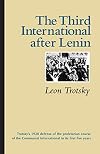
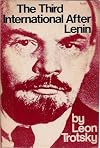
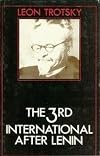
The Third International after Lenin
by Leon Trotsky
Museo Casa de León Trotsky & CEIP León Trotsky: Obras Escogidas de León Trotsky (Volumen 1)
On This Page
Description
Written in 1928, this is Trotsky’s alternative to Stalin’s course toward gutting the revolutionary program of the Communist International. “An international communist program is in no case the sum total of national programs or an amalgam of their common features,” Trotsky wrote. “In the present epoch, to a much larger extent than in the past, the national orientation of the proletariat must and can flow only from a world orientation and not vice versa.” Suppressed by Stalin in show more the Soviet Union, its publication elsewhere in the world helped gather the forces that continued the fight to build a revolutionary international movement of the working class.“Clearly exposes the dictatorial tendencies of Stalin and the perversion of Marxist ideology in Russia.… Trotsky’s defence of the proletarian cause has now special significance for those who are interested in the rise and fall of the Soviet Union.”—USI [United Service Institution of India] JournalNotes, index. show lessTags
Recommendations


















Member Reviews
How can a man, in spite of all the suffering received from a mass killer, still fight in a positive way for the improvement of the world and the ideas he died for? Well, Trotsky could. Wonderful masterwork where Trotsky, putting aside understandable hate, analyzes the status of the Communist International after Lenin's death.
Ratings
Members
- Recently Added By
Author Information

791+ Works 7,747 Members
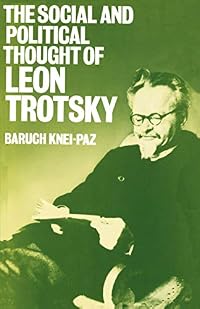
Leon Trotsky was born Lev Davidovich Bronshteyn on November 7, 1879 in Yanovka, Ukraine. As a teenager, he became involved in underground activities and was soon arrested, jailed and exiled to Siberia where he joined the Social Democratic Party. He escaped from exile in Siberia by using the name of a jailer called Trotsky on a false passport. show more During World War I, he lived in Switzerland, France, England, and New York City, where he edited the newspaper Novy Mir (New World). In 1917, after the overthrow of Tsar Nicholas II, he went back to Russia and joined Vladimir Lenin in the first, abortive, July Revolution of the Bolsheviks. A key organizer of the successful October Revolution, he was People's Commissar for Foreign Affairs in the Lenin regime. He was then made war commissar and in this capacity, built up the Red Army which prevailed against the White Russian forces in the civil war. Antagonism developed between him and Joseph Stalin during the Civil War of 1918-1920. When Lenin fell ill and died, Stalin became the new leader and Trotsky was thrown out of the party in 1927. Trotsky fled across Siberia to Norway, France, and finally settled in Mexico in 1936. He began working on the biography of Stalin. He was able to complete 7 of the 12 chapters before an assassin, acting on Stalin's orders, stabbed Trotsky with an ice pick. He died on August 21, 1940. The construction of the remaining five chapters was accomplished by the translator Charles Malamuth, from notes, worksheets, and fragments. (Bowker Author Biography) show less
Series

Classifications
- Genres
- Nonfiction, History, Politics and Government, General Nonfiction
- DDC/MDS
- 324.1 — Society, Government, and Culture Political science Politics & Elections International & Transnational Parties & Structures
- LCC
- HX11 .I5 .T74 — Social sciences Socialism. Communism. Anarchism Socialism. Communism. Anarchism
Statistics
- Members
- 81
- Popularity
- 391,180
- Reviews
- 1
- Rating
- (4.17)
- Languages
- 5 — English, French, Italian, Russian, Spanish
- Media
- Paper
- ISBNs
- 11
- ASINs
- 1