On This Page
Description
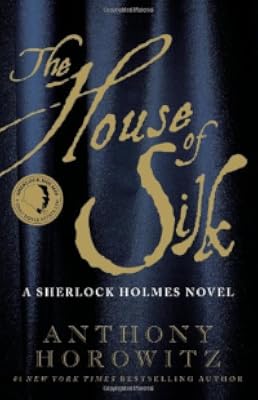
It is 1890. A year after Holmes's death, Watson--now in a retirement home--narrates a tale of Sherlockian detection that could tear apart the very fabric of society. The story opens with a train robbery in Boston, and moves to the innocuous setting of Wimbledon.Tags
Recommendations






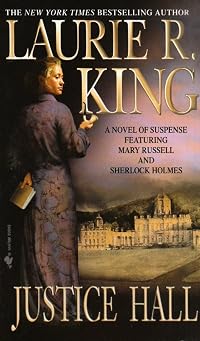
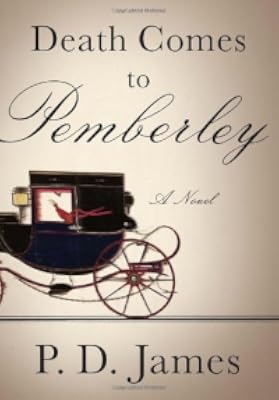
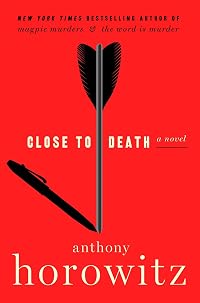
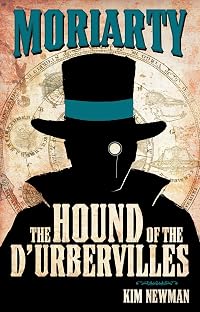
Member Recommendations

Member Reviews
IN A NUTSHELL
An excellent pastiche. Faithful to the characters and spirit of the original books, but with a clever twist of being written by an older Watson, able to reflect on all of Holmes' cases and how he, Watson, had chosen to write about them. The writing echoes Arthur Conan Doyle's style and avoids both anachronisms and faux-Victoriana. The book is longer and the plot is darker and more intricate than the original Holmes novels, and deals with themes that resonate more with modern sensibilities.
My wife and I listened to the audiobook version, narrated by Derek Jacobi, across a few evenings this week. It was an entertaining listen, both because of Horowitz's prose and Jacobi's performance.
I liked that the pace and style of the show more storytelling resembled Conan Doyle's, rather than being accelerated to match twenty-first-century expectations. I also liked that, as with Conan Doyle's stories, the strongest voice is that of Watson himself.
The plot ultimately took on a broad scope and offered intricate schemes of deception and malfeasance but the start is slow and quite pedestrian. I couldn't see Holmes' motivation for taking the case. He remarks early on that "This is becoming an increasingly interesting and complex case' but I had no idea why he thought that."
One of the things that made the book work so well was having Watson write this at the end of his career as a remembrance of earlier times. This allowed Watson to provide context as he reflects on events and personalities and relationships. He even critiques his own writing, rebuking himself for his focus on each case as a puzzle while ignoring the impact on the people involved.
To me, the tone of the storytelling felt authentic (or close to it). The language avoided anachronism and faux-Victorian expressions. Watson tells the story with the same economy and brio that I remember from 'A Study In Scarlet'.
The story itself was longer, more complicated and had a bigger scope than most of Holme's stories. The plot worked, but I felt the ending dragged a little as the two subplots were tied together. The story deals with themes of corruption, cover-ups, sexual exploitation and the abuse of power in ways that will resonate with modern audiences but which I don't think would ever have found their way into the pages of 'The Strand Magazine' in Conan Doyle's day. This was tacitly acknowledged in the book and used as the reason why Watson had not published a story covering these events, which took place in 1890, at the time that they occurred.
I enjoyed Derek Jacobi's narration. I'm looking forward to listening to him narrate. 'Moriarty', the second book in this series. Click on the Youtube link below to hear a sample of Jacobi's narration.
https://www.youtube.com/watch?v=kO4DWqTPmRs show less
An excellent pastiche. Faithful to the characters and spirit of the original books, but with a clever twist of being written by an older Watson, able to reflect on all of Holmes' cases and how he, Watson, had chosen to write about them. The writing echoes Arthur Conan Doyle's style and avoids both anachronisms and faux-Victoriana. The book is longer and the plot is darker and more intricate than the original Holmes novels, and deals with themes that resonate more with modern sensibilities.
My wife and I listened to the audiobook version, narrated by Derek Jacobi, across a few evenings this week. It was an entertaining listen, both because of Horowitz's prose and Jacobi's performance.
I liked that the pace and style of the show more storytelling resembled Conan Doyle's, rather than being accelerated to match twenty-first-century expectations. I also liked that, as with Conan Doyle's stories, the strongest voice is that of Watson himself.
The plot ultimately took on a broad scope and offered intricate schemes of deception and malfeasance but the start is slow and quite pedestrian. I couldn't see Holmes' motivation for taking the case. He remarks early on that "This is becoming an increasingly interesting and complex case' but I had no idea why he thought that."
One of the things that made the book work so well was having Watson write this at the end of his career as a remembrance of earlier times. This allowed Watson to provide context as he reflects on events and personalities and relationships. He even critiques his own writing, rebuking himself for his focus on each case as a puzzle while ignoring the impact on the people involved.
To me, the tone of the storytelling felt authentic (or close to it). The language avoided anachronism and faux-Victorian expressions. Watson tells the story with the same economy and brio that I remember from 'A Study In Scarlet'.
The story itself was longer, more complicated and had a bigger scope than most of Holme's stories. The plot worked, but I felt the ending dragged a little as the two subplots were tied together. The story deals with themes of corruption, cover-ups, sexual exploitation and the abuse of power in ways that will resonate with modern audiences but which I don't think would ever have found their way into the pages of 'The Strand Magazine' in Conan Doyle's day. This was tacitly acknowledged in the book and used as the reason why Watson had not published a story covering these events, which took place in 1890, at the time that they occurred.
I enjoyed Derek Jacobi's narration. I'm looking forward to listening to him narrate. 'Moriarty', the second book in this series. Click on the Youtube link below to hear a sample of Jacobi's narration.
https://www.youtube.com/watch?v=kO4DWqTPmRs show less
I am very impressed by this book. It fits right into the canon - it is obvious that Horowitz has done his research and is enjoying playing with the Holmes casebook as well as adding to it. BUT - by virtue of having Watson writing this in his retirement, recording reflecting back upon his experiences and his life and what it all means - Horowitz also gets to include some relatively modern commentary on the Victorian social condition. The Watson written by Conan Doyle never reflected too deeply or too long upon the conditions in which Wiggins and his comrades lived - but Watson in his elderly years has begun to reflect upon the conditions he was complicit in for all those years.
It's a very fascinating writer's trick and it's well done. show more
Plus the mystery is just very good. show less
It's a very fascinating writer's trick and it's well done. show more
Plus the mystery is just very good. show less
There have been a lot of Sherlock Holmes stories produced since Arthur Conan Doyle stopped writing them himself, and the ones I've read have ranged all over the place, from the excellent to the ridiculous. This one has the unusual distinction of being authorized by Doyle's estate, but that didn't strike me, in itself, as any guarantee of quality. I'm pleased to say, though, that it is, in fact, really good. Although it's surely not a story that Doyle himself would have written, it captures the feel of a Holmes story, both the style and the plot, extremely well, giving more of the sense of reading an authentic new Holmes story than probably any other attempt I've seen. But there is a hint of freshness to it, too, including a touch of show more social commentary not really seen in the original. That could have seemed heavy-handed or out of place, but I think it ultimately works pretty well. The exact same thing could be said of the inevitable little touches of Holmes-fan indulgence, including at least one brief character appearance that was not really necessary, but enjoyable anyway. And the mystery itself -- actually two intertwined mysteries -- is very engaging, with lots of crazy twists and revelations and Holmes, as usual, being two steps ahead of both Watson and the reader the entire time. I'm actually a little surprised by just how thoroughly I enjoyed it all. show less
Sherlock Holmes has entertained readers since his first appearance in 1887, with Arthur Conan Doyle's A Study in Scarlet. With the publication of The House of Silk, Anthony Horowitz becomes the first author to receive approval from the Conan Doyle Estate to publish a new Sherlock Holmes novel. The world's most famous consulting detective returns in a tale both immensely convoluted, and intriguing to the very last detail.
Synopsis for The House of Silk:
Horowitz uses essentially the same style as Arthur Conan Doyle to tell his tale, which provides additional authenticity to the Sherlock Holmes novel. Watson reveals that Holmes has recently died, and that this story was too shocking to reveal until such a time. The descriptions of the events and the language used are straight out of the late 1800's, and it's clear from the very outset that this is most certainly a true Sherlock Holmes novel.
He captures both of the main protagonists--Holmes and Watson--perfectly, and at times it's difficult to accept that this work of fiction was written some one hundred-plus years after the original Holmes stories first began appearing. Still, the story delves into dark matter, and Horowitz deals with the characters in a believable and appropriate manner, considering the situations they find themselves in. Indeed, Holmes and Watson show remarkable character growth in The House of Silk--perhaps more so than any other Holmes stories to date.
The dialogue is never contrived, and feels perfectly at ease for the setting. Holmes eccentricities and Watson's sometimes rambling prose are in full effect, and only lend further credence to the story being authentically Sherlock Holmes.
The plot in The House of Silk tends to go in two directions. The novel begins with a seemingly intriguing, but unrelated series of events, but quickly turns into a full-scale conspiracy that leads in strange and unrelated directions. Indeed, the only criticism of the novel could be that there seems to be two distinctly separate mysteries occurring, that are only revealed to be related at the very end. The situations that Holmes and Watson find themselves in, however, are uniquely different than previous novels, which provide an urgent and suspenseful read.
There are moments in this novel where it's clear that the stakes are higher than ever, both for Holmes, and for Watson as well. The latter half of the novel becomes an instant page-turner, as the reader must know what happens next, and how Holmes will find his way out of his predicament. The reveals are well-done, and typically Sherlock Holmes-styled, and the reader is left wondering how they could have missed what Holmes obviously did not. Perhaps the criticism could be made that there are far less tiny details that Sherlock picks up on in this novel than typical Conan Doyle-authored tales. The clues are primarily based on people's actions or motivations, rather than the leftover cigar ashes, or footprints, and other such trivialities that Holmes typically relies on; it's not a bad thing in this novel, however, and only serves to make the story more believable.
The House of Silk instantly becomes a new classic Sherlock Holmes novel, and one that any fan of Holmes must read. In many ways, it's the most profound Holmes story, and one in which the stakes are higher than ever before. show less
Synopsis for The House of Silk:
London, 1890. 221B Baker St. A fine art dealer named Edmund Carstairs visits Sherlock Holmes and Dr John Watson to beg for their help. He is being menaced by a strange man in a flat cap – a wanted criminal who seems to have followed him all the way from America. In the days that follow,show more
his home is robbed, his family is threatened. And then the first murder takes place.
Almost unwillingly, Holmes and Watson find themselves being drawn ever deeper into an international conspiracy connected to the teeming criminal underworld of Boston, the gaslit streets of London, opium dens and much, much more. And as they dig, they begin to hear the whispered phrase-the House of Silk-a mysterious entity that connects the highest levels of government to the deepest depths of criminality. Holmes begins to fear that he has uncovered a conspiracy that threatens to tear apart the very fabric of society.
Horowitz uses essentially the same style as Arthur Conan Doyle to tell his tale, which provides additional authenticity to the Sherlock Holmes novel. Watson reveals that Holmes has recently died, and that this story was too shocking to reveal until such a time. The descriptions of the events and the language used are straight out of the late 1800's, and it's clear from the very outset that this is most certainly a true Sherlock Holmes novel.
He captures both of the main protagonists--Holmes and Watson--perfectly, and at times it's difficult to accept that this work of fiction was written some one hundred-plus years after the original Holmes stories first began appearing. Still, the story delves into dark matter, and Horowitz deals with the characters in a believable and appropriate manner, considering the situations they find themselves in. Indeed, Holmes and Watson show remarkable character growth in The House of Silk--perhaps more so than any other Holmes stories to date.
The dialogue is never contrived, and feels perfectly at ease for the setting. Holmes eccentricities and Watson's sometimes rambling prose are in full effect, and only lend further credence to the story being authentically Sherlock Holmes.
The plot in The House of Silk tends to go in two directions. The novel begins with a seemingly intriguing, but unrelated series of events, but quickly turns into a full-scale conspiracy that leads in strange and unrelated directions. Indeed, the only criticism of the novel could be that there seems to be two distinctly separate mysteries occurring, that are only revealed to be related at the very end. The situations that Holmes and Watson find themselves in, however, are uniquely different than previous novels, which provide an urgent and suspenseful read.
There are moments in this novel where it's clear that the stakes are higher than ever, both for Holmes, and for Watson as well. The latter half of the novel becomes an instant page-turner, as the reader must know what happens next, and how Holmes will find his way out of his predicament. The reveals are well-done, and typically Sherlock Holmes-styled, and the reader is left wondering how they could have missed what Holmes obviously did not. Perhaps the criticism could be made that there are far less tiny details that Sherlock picks up on in this novel than typical Conan Doyle-authored tales. The clues are primarily based on people's actions or motivations, rather than the leftover cigar ashes, or footprints, and other such trivialities that Holmes typically relies on; it's not a bad thing in this novel, however, and only serves to make the story more believable.
The House of Silk instantly becomes a new classic Sherlock Holmes novel, and one that any fan of Holmes must read. In many ways, it's the most profound Holmes story, and one in which the stakes are higher than ever before. show less
Anthony Horowitz created a dark and gritty mystery featuring Sherlock Holmes and Watson. Much later in life, Watson recalls the events leading to Sherlock Holmes' investigation into the "House of Silk." It begins as an older woman suspects she is being poisoned. Her son and daughter-in-law insist she eats only what they eat. It also leads to a street urchin, part of a group Sherlock often uses to run errands, and to his sister, working at a pub called the "Bag of Nails." Holmes is called to an opium den. When a murder takes place outside and Holmes holds the weapon, he is arrested for murder. Watson finds himself trying to find a way to free Holmes when he knows a conspiracy is afoot. The audiobook narrated by Derek Jacobi maintained my show more interest. Horowitz obviously studied Holmes and Watson carefully before embarking on this work. show less
I was sure this Sherlock Holmes novel was going to be worthy when I read that the Arthur Conan Doyle Estate had authorized its publication. My hat is off to Anthony Horowitz for channelling Sir Arthur Conan Doyle so perfectly. Holmes and Watson stayed completely in character and the plot was one that Doyle himself would have admired, despite its having a rougher edge than the original author would have employed. I enjoyed every moment once the game was afoot (sorry, I couldn’t resist).
He could not have been more than thirteen years old and yet, like all of them, he was already quite grown up. Childhood, after all, is the first precious coin that poverty steals from a child.
The streets of Victorian London are full of poverty and show more children, and this tale takes on a Dickensian quality as we see the Baker Street irregulars figure into this story in a unique and clever way. Every twist is believable and every clue to there, but as is always the case, we are Watson and not Holmes, and we cannot put the puzzle into place alone.
When I was young, I devoured Holmes. I loved the process and hoped that eventually I would become clever enough to solve the entire mystery before the master did. Of course, part of the fun was that I never could. If you loved Doyle, you will love Horowitz. You will feel as if you have been given the gift of a new Holmes, cast in the exact mold of the old one, and sharp as ever. I wonder how it feels to be Horowitz, open your mind and your mouth, and have the voice of Doyle and Holmes come out. show less
He could not have been more than thirteen years old and yet, like all of them, he was already quite grown up. Childhood, after all, is the first precious coin that poverty steals from a child.
The streets of Victorian London are full of poverty and show more children, and this tale takes on a Dickensian quality as we see the Baker Street irregulars figure into this story in a unique and clever way. Every twist is believable and every clue to there, but as is always the case, we are Watson and not Holmes, and we cannot put the puzzle into place alone.
When I was young, I devoured Holmes. I loved the process and hoped that eventually I would become clever enough to solve the entire mystery before the master did. Of course, part of the fun was that I never could. If you loved Doyle, you will love Horowitz. You will feel as if you have been given the gift of a new Holmes, cast in the exact mold of the old one, and sharp as ever. I wonder how it feels to be Horowitz, open your mind and your mouth, and have the voice of Doyle and Holmes come out. show less
My Dad used to read Sherlock Holmes stories to me as a child. He would make a game of it and we would try to solve the mystery. It was great fun. House of Silk is Anthony Horowitz's attempt to create one more Holmes adventure. He succeeds admirably and reading it brought back the comforts of childhood.
Horowitz clearly loves the Holmes canon and he is adept at capturing Watson's voice. He clearly researched the period and the book transports the reader to the London of the 1890's. The plotting is intricate, filled with enough twists, turns clues and red herrings to make Arthur Conan Doyle proud. its a must read for Holmes fans and an excellent escape for anyone looking for a few hours of respite from the problems of the contemporary world.
Horowitz clearly loves the Holmes canon and he is adept at capturing Watson's voice. He clearly researched the period and the book transports the reader to the London of the 1890's. The plotting is intricate, filled with enough twists, turns clues and red herrings to make Arthur Conan Doyle proud. its a must read for Holmes fans and an excellent escape for anyone looking for a few hours of respite from the problems of the contemporary world.
Members
- Recently Added By
Published Reviews
ThingScore 75
So, all of the elements are there: the data, the data, the data. Nothing of consequence overlooked. And yet can Horowitz, like Holmes, make from these drops of water the possibilities of an Atlantic or a Niagara? Can he astonish us? Can he thrill us? Are there "the rapid deductions, as swift as intuitions, and yet always founded on a logical basis" that we yearn for?
Emphatically, yes. The show more characters are, as Conan Doyle himself would have them, as close to cliché as good writing allows. Horowitz's Watson cleverly excuses himself right at the start from any complaints about style or content by reminding us of Holmes's oft-stated judgment of the stories: "He accused me more than once of vulgar romanticism, and thought me no better than any Grub Street scribbler." We must take them on their own terms, then: Mr Carstairs, the troubled dealer in fine art, who is being watched by a mysterious stranger in a flat cap with a "livid scar on his right cheek". Carstairs's wife, the mysterious foreign adventuress. Cornelius Stillman, the bumptious American millionaire. The dastardly Boston Irish gang, led by the ruthless O'Donaghue twins. The madwoman in the attic. The creepy reverend who runs a home for boys. The big set-pieces: the train robbery; the escape from prison; the freak show; the high-speed horse-drawn carriage chase.
Dorothy L Sayers understood the rules of the Holmesian game when she remarked that "it must be played as solemnly as a county cricket match at Lord's: the slightest touch of extravagance or burlesque ruins the atmosphere". Horowitz plays a perfectly straight bat. This is a no-shit Sherlock. show less
Emphatically, yes. The show more characters are, as Conan Doyle himself would have them, as close to cliché as good writing allows. Horowitz's Watson cleverly excuses himself right at the start from any complaints about style or content by reminding us of Holmes's oft-stated judgment of the stories: "He accused me more than once of vulgar romanticism, and thought me no better than any Grub Street scribbler." We must take them on their own terms, then: Mr Carstairs, the troubled dealer in fine art, who is being watched by a mysterious stranger in a flat cap with a "livid scar on his right cheek". Carstairs's wife, the mysterious foreign adventuress. Cornelius Stillman, the bumptious American millionaire. The dastardly Boston Irish gang, led by the ruthless O'Donaghue twins. The madwoman in the attic. The creepy reverend who runs a home for boys. The big set-pieces: the train robbery; the escape from prison; the freak show; the high-speed horse-drawn carriage chase.
Dorothy L Sayers understood the rules of the Holmesian game when she remarked that "it must be played as solemnly as a county cricket match at Lord's: the slightest touch of extravagance or burlesque ruins the atmosphere". Horowitz plays a perfectly straight bat. This is a no-shit Sherlock. show less
added by souloftherose
Lists

Favorite Books Based on Sherlock Holmes Stories
20 works; 10 members

Best Historical Crime
44 works; 17 members

Historical Fiction
889 works; 91 members
MysteryCAT: Historical Crime
27 works; 7 members

Top Five Books of 2016
795 works; 229 members

Chronological 2017
30 works; 1 member

#JustTheFacts2021Silver
60 works; 1 member

Books Read in 2014
2,343 works; 89 members

Books Read in 2019
4,052 works; 110 members

Books Read in 2022
5,168 works; 114 members

Gaslamp Mysteries
78 works; 4 members

Which house?
423 works; 16 members

Books Read in 2021
5,361 works; 114 members

Books Read in 2018
4,360 works; 110 members
Talk Discussions
Past Discussions
The House of Silk in Baker Street and Beyond (January 2012)
Author Information

235+ Works 84,036 Members
Author and television scriptwriter Anthony Horowitz was born in Stanmore, England on April 5, 1956. At the age of eight, he was sent to a boarding school in London. He graduated from the University of York and published his first book, Enter Frederick K. Bower (1979), when he was 23. He writes mostly children's books, including the Alex Rider show more series, The Power of Five series, and the Diamond Brothers series. The Alex Rider series is about a 14-year-old boy becoming a spy and was made into a movie entitled Stormbreaker. He has won numerous awards including the 1989 Lancashire Children's Book of the Year Award for Groosham Grange and the 2003 Red House Children's Book Award for Skeleton Key. He also writes novels for adults including The Killing Joke and The Magpie Murders. He has created Foyle's War and Midsomer Murders for television as well as written episodes for Poirot and Murder Most Horrid. He made The New York Times Best Seller list with his titles The House of Silk Russian Roulette: The Story of an Assassin and Moriarity.Most recently he was commissioned by the Ian Fleming Estate to write the James Bond novel Trigger Mortis. Anthony was awarded an OBE for his services to literature in January 2014. (Bowker Author Biography) show less
Some Editions
Awards and Honors
Awards
Distinctions
Notable Lists
Series

Work Relationships
Common Knowledge
- Canonical title
- The House of Silk
- Original title
- The House of Silk
- Original publication date
- 2011-11-01
- People/Characters
- Sherlock Holmes; Dr. John Watson; John H. Watson; Inspector Lestrade; Inspector G. Lestrade; Edmund Carstairs (show all 21); Mycroft Holmes; Lord Ravenshaw; Ross Dixon; Sally Dixon; Charles Fitzsimmons; Catherine Carstairs; Inspector Harriman; Percy Trevelyan; Mary Watson; Mrs. Hudson; Tobias Finch; Cornelius Stillman; Keenan O'Donohue; Rourke O'Donohue; Thomas Ackland
- Important places
- London, England, UK; HM Prison Holloway, Holloway, London, England, UK
- Epigraph
- 12,13,14 ASH
- Dedication
- For my old friend, Jeffrey S. Joseph
- First words
- I have often reflected upon the strange series of circumstances that led me to my long association with one of the most singular and remarkable figures of my age. [Preface, p. 3]
I have often reflected upon the strange series of circumstances that led me to my long association with one of the most singular and remarkable figures of my age. If I were of a philosophical frame of mind I might wonder to w... (show all)hat extent any one of us is in control of our own destiny, or if indeed we can ever predict the far-reaching consequences of actions which, at the time, may seem entirely trivial. - Quotations
- I had never had literary ambitions. Indeed, if anyone had suggested that I might be a published writer, I would have laughed at the thought. But I think I can say, in all honesty and without flattering myself, that I have bec... (show all)ome quite renowned for the way I have chronicled the adventures of the great man.
In all the time that I knew him, I never saw Holmes read a single work of fiction — with the exception, that is, of the worst items of sensational literature — and although I cannot make any great claim for my powers of d... (show all)escription, I am prepared to say that they did the job and that he himself could have done no better.
"Everything has a relevance," remarked Holmes. "I have often found that the most immaterial aspect of a case can be at the same time its most significant."
Where I perhaps did Lestrade an injustice was in suggesting that he had no intelligence or investigative skill whatsoever. It's fair to say that Sherlock Holmes occasionally spoke ill of him, but then Holmes was so unique, so... (show all) intellectually gifted that there was nobody in London who could compete with him and he was equally disparaging about almost every police officer he encountered . . . . Put simply, next to Holmes, any detective would have found it nigh on impossible to make his mark and even I, who was at his side more often than anyone, sometimes had to remind myself that I was not a complete idiot.
It sometimes occurs to me now, having witnessed so many momentous changes across the years, that I should have described at greater length the sprawling chaos of the city in which I lived, perhaps in the manner of Gissing —... (show all) or Dickens fifty years before. I can only say in my own defence that I was a biographer, not a historian or a journalist, and that my adventures invariably led me to more rarefied walks of life — fine houses, hotels, private clubs, schools and offices of government. It is true that Holmes's clients came from all classes, but (and perhaps someone might one day have pause to consider the significance of this) the more interesting crimes, the ones I chose to relate, were nearly always committed by the well-to-do.
And then there was the greatest curse of our age, the carelessness that had put tens of thousands of children out on to the street; begging, pickpocketing, pilfering or, if they were not up to the mark, quietly dying unknown ... (show all)and unloved, their parents indifferent if indeed those parents were themselves alive. There were children who shared threepenny lodging houses, provided they could find their share of the night's rent, crammed together in conditions barely fit for animals. Children slept on rooftops, in pens at Smithfield Market, down in the sewers and even, I heard, in holes scooped out of the dust-heaps on Hackney Marshes. There were, as I shall soon describe, charities that set out to help them, to clothe and to educate them. But the charities were too few, the children too many and even as the century drew to a close, London had every reason to be ashamed.
Come, Watson, that's quite enough of this. Get back to the story. Holmes would never have stood for it had he been alive! - Last words
- (Click to show. Warning: May contain spoilers.)I hope with all my heart that he is playing for me ...
(Click to show. Warning: May contain spoilers.)The style is unmistakable. It is Sherlock Holmes who is playing. It must be. I hope with all my heart that he is playing for me... - Blurbers
- Ross, Michele; Corrigan, Maureen; Jensen, James
- Original language
- English
Classifications
Statistics
- Members
- 3,365
- Popularity
- 5,013
- Reviews
- 172
- Rating
- (3.88)
- Languages
- 18 — Arabic, Chinese, Czech, Danish, Dutch, English, Estonian, French, German, Italian, Japanese, Malayalam, Norwegian (Bokmål), Polish, Portuguese, Russian, Spanish, Turkish
- Media
- Paper, Audiobook, Ebook
- ISBNs
- 69
- UPCs
- 1
- ASINs
- 33