On This Page
Description
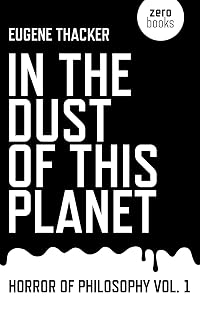
The world is increasingly unthinkable, a world of planetary disasters, emerging pandemics, and the looming threat of extinction. In this book, Eugene Thacker suggests that we look to the genre of horror as offering a way of thinking about the unthinkable world. To confront this idea is to confront the limit of our ability to understand the world in which we live - a central motif of the horror genre. In the Dust of This Planet explores these relationships between philosophy and horror. In show more Thacker's hands, philosophy is not academic logic chopping; instead, it is the thought of the limit of all thought, especially as it dovetails into occultism, demonology, and mysticism. Likewise, Thacker takes horror to mean something beyond the focus on gore and scare tactics, but as the under-appreciated genre of supernatural horror in fiction, film, comics, and music. show lessTags
Recommendations




Member Reviews
This book was another on the library’s new acquisition shelf to draw my eye. Actually, the publisher caught my eye, as I tend to enjoy Zer0 books but they rarely make their way into libraries. Then the blurb began, ‘The world is increasingly unthinkable - a world of planetary disasters, emerging pandemics, and the looming threat of extinction.’ How could I possibly resist? I was to find, however, that ‘In The Dust of This Planet’ (a glorious title) dwelt more in the past than the present. It contains a great deal about demonology and the occult, grounded in philosophy and theology centuries old. The range of cultural references is certainly broad, from Plato to an anonymous internet poet, early articulations of the Faust story show more to ‘Uzumaki’ (a creepy manga that friends have told me enough about that I don't want to read it). While I enjoyed the somewhat incongruous juxtapositions that this afforded, I struggled to get at the book’s overall thesis. To be fair, Thacker seemed like too subtle a writer for a clear and obvious single idea to emerge. I appreciated his tendency to qualify and counter-argue points. Perhaps the most memorable point was made early on concerning ‘the enigmatic concept of the world’:
This neat taxonomy, with obvious relevance to environmental destruction, returns near the end of the book in a commentary on Georges Bataille’s 'The Congested Planet':
This taxonomic discussion was to me the centre of the book, although it was woven in with a great deal about mysticism, theology, and ooze that I saw more as intellectual curiosities. When it comes to environmental philosophy, I find myself preferring the more focused approach of, for example, Timothy Morton’s [b:The Ecological Thought|7722063|The Ecological Thought|Timothy Morton|https://images.gr-assets.com/books/1348985833s/7722063.jpg|10474582].
I was a little disappointed by Thacker’s discussion of Dante’s [b:Inferno|15645|Inferno (The Divine Comedy #1)|Dante Alighieri|https://images.gr-assets.com/books/1520255019s/15645.jpg|2377563], in part because I didn’t agree with his interpretation of, “What I was once, alive, I still am, dead!” Still, it was nice to realise that I actually have opinions about the [b:Inferno|15645|Inferno (The Divine Comedy #1)|Dante Alighieri|https://images.gr-assets.com/books/1520255019s/15645.jpg|2377563], something of which I was not previously aware. One reference I was delighted to see pop up was Shiel’s [b:The Purple Cloud|209525|The Purple Cloud (Frontiers of Imagination)|M.P. Shiel|https://images.gr-assets.com/books/1328817985s/209525.jpg|923941], an extraordinary apocalyptic novel from 1901 that I read earlier this year. Now that Thacker does do justice to, comparing it with Hoyle’s [b:The Black Cloud|1246118|The Black Cloud|Fred Hoyle|https://images.gr-assets.com/books/1457534017s/1246118.jpg|1398552] (a book I regularly see in the library but do not borrow because it seems similar to so many others) and J. G Ballard’s first novel [b:The Wind from Nowhere|262359|The Wind from Nowhere|J.G. Ballard|https://images.gr-assets.com/books/1330051830s/262359.jpg|254310] (which I haven’t read either, but certainly sounds like J.G. Ballard’s first novel ought to). What links the three is apparently mist; I liked the comparison of Shiel’s slightly demented mysticism with Hoyle’s scientific rationalism and Ballard’s ambiguity.
Moreover, I smiled at the commentary on Roland Emmerich disaster movies. I’m not a great horror fan, but I’ve seen all of Emmerich’s stupid global catastrophe blockbusters multiple times. Something in me loves the morbid spectacle of civilisation collapsing dramatically. Thacker notes that the threat to civilisation evolves from alien invasion (Independence Day, 1996), to anthropogenic climate change (The Day After Tomorrow, 2004 - my personal favourite), to arbitrary heating up of Earth’s core (2012, 2009), so from external to internal to incomprehensible. I agree with Thacker that these films exhibit ‘implicitly or explicitly, eschatological themes’.
Perhaps my favourite comment in the whole book, though, is as follows:
Although I’m not sure how to interpret ‘provenance’ in that sentence, I need hardly explain why I enjoyed it. What social class would werewolves allegorise? The peasantry? There was certainly fun to be found in this book, but it was more interested in themes of horror in the past than the ‘unthinkable world’ of today. At the very end, Thacker admits that his conclusion, about the need to think through nihilism to the other side, to the ‘emptiness beyond the empty’, is not helpful. This is a rather frustrating note to conclude on, despite the interest and amusement to be found in the rest of the book. show less
We can even abbreviate these three concepts further: the world-for-us is simply the World, the world-in-itself is simply the Earth, and the world-without-us is simply the Planet.
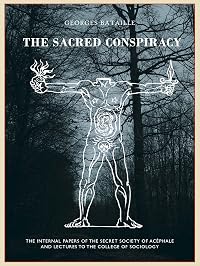
This neat taxonomy, with obvious relevance to environmental destruction, returns near the end of the book in a commentary on Georges Bataille’s 'The Congested Planet':
It is a dilemma expressed in contemporary discourse on climate change, between a debate over the world-for-us (e.g. how do we as human beings impact - negatively or positively - the geological state of the planet?), and a largely unspoken, whispered query over the world-in-itself (e.g. to what degree is the planet indifferent to us as human beings, and to what degree are we indifferent to the planet?).
This taxonomic discussion was to me the centre of the book, although it was woven in with a great deal about mysticism, theology, and ooze that I saw more as intellectual curiosities. When it comes to environmental philosophy, I find myself preferring the more focused approach of, for example, Timothy Morton’s [b:The Ecological Thought|7722063|The Ecological Thought|Timothy Morton|https://images.gr-assets.com/books/1348985833s/7722063.jpg|10474582].
I was a little disappointed by Thacker’s discussion of Dante’s [b:Inferno|15645|Inferno (The Divine Comedy #1)|Dante Alighieri|https://images.gr-assets.com/books/1520255019s/15645.jpg|2377563], in part because I didn’t agree with his interpretation of, “What I was once, alive, I still am, dead!” Still, it was nice to realise that I actually have opinions about the [b:Inferno|15645|Inferno (The Divine Comedy #1)|Dante Alighieri|https://images.gr-assets.com/books/1520255019s/15645.jpg|2377563], something of which I was not previously aware. One reference I was delighted to see pop up was Shiel’s [b:The Purple Cloud|209525|The Purple Cloud (Frontiers of Imagination)|M.P. Shiel|https://images.gr-assets.com/books/1328817985s/209525.jpg|923941], an extraordinary apocalyptic novel from 1901 that I read earlier this year. Now that Thacker does do justice to, comparing it with Hoyle’s [b:The Black Cloud|1246118|The Black Cloud|Fred Hoyle|https://images.gr-assets.com/books/1457534017s/1246118.jpg|1398552] (a book I regularly see in the library but do not borrow because it seems similar to so many others) and J. G Ballard’s first novel [b:The Wind from Nowhere|262359|The Wind from Nowhere|J.G. Ballard|https://images.gr-assets.com/books/1330051830s/262359.jpg|254310] (which I haven’t read either, but certainly sounds like J.G. Ballard’s first novel ought to). What links the three is apparently mist; I liked the comparison of Shiel’s slightly demented mysticism with Hoyle’s scientific rationalism and Ballard’s ambiguity.
Moreover, I smiled at the commentary on Roland Emmerich disaster movies. I’m not a great horror fan, but I’ve seen all of Emmerich’s stupid global catastrophe blockbusters multiple times. Something in me loves the morbid spectacle of civilisation collapsing dramatically. Thacker notes that the threat to civilisation evolves from alien invasion (Independence Day, 1996), to anthropogenic climate change (The Day After Tomorrow, 2004 - my personal favourite), to arbitrary heating up of Earth’s core (2012, 2009), so from external to internal to incomprehensible. I agree with Thacker that these films exhibit ‘implicitly or explicitly, eschatological themes’.
Perhaps my favourite comment in the whole book, though, is as follows:
Whereas the three previous figures dealt with allegorical modes associated that reflected class dynamics (zombie-working class, vampire-aristocratic, demon-bourgeois), the ghost deals with the that strange or unknown provenance after life.
Although I’m not sure how to interpret ‘provenance’ in that sentence, I need hardly explain why I enjoyed it. What social class would werewolves allegorise? The peasantry? There was certainly fun to be found in this book, but it was more interested in themes of horror in the past than the ‘unthinkable world’ of today. At the very end, Thacker admits that his conclusion, about the need to think through nihilism to the other side, to the ‘emptiness beyond the empty’, is not helpful. This is a rather frustrating note to conclude on, despite the interest and amusement to be found in the rest of the book. show less
This book came to my attention after it was featured on a strong pair of linked episodes of two excellent WNYC podcasts I listen to, Radiolab and On the Media. (It also inspired True Detective, a show I have never seen.) Eugene Thacker's monograph explores the way horror fiction confronts the unknowable as a source of terror, taking in texts that include black metal, James Blish's The Devil's Day, M. P. Shiel's The Purple Cloud, an episode of The Outer Limits, and an anonymous Internet poem.
Thacker writes in an accessible style for a philosopher, and the best part of the book is definitely the introduction, that lays out the difference between what Thacker calls the World (the world-for-us, that which we experience as human beings), the show more Earth (the world-in-itself, what we do not know but are constantly seeking, especially through science), and the Planet (the world-without-us, the impersonal and horrific part of the universe that we cannot access, that which is not defined by human experience). In The Dust of This Planet essentially traces various manifestations of the Planet/world-without-us across these various texts, arguing that they reveal "the horror of philosophy: the isolation of those moments in which philosophy reveals its own limitations and constraints, moments in which thinking enigmatically confronts the horizon of its own possibility - the thought of the unthinkable that philosophy cannot pronounce but via a non-philosophical language" (2).
The introduction, alas, is the best part of the book. The rest consists of twenty mini-essays on various topics and texts; with seven pages per essay (and many essays covering multiple texts), I found that Thacker could not probe very deeply into any one subject, and that it felt like he was mostly identifying engagements with the idea of the world-without-us in horror fiction again and again, without clearly articulating what each new example brought to the concept. I guess I expected more from this based on what I had read/heard about it beforehand, but little about the book surprised or excited me. Still, if I bump into the other two volumes of the trilogy, I'll probably pick them up and give them a read. show less
Thacker writes in an accessible style for a philosopher, and the best part of the book is definitely the introduction, that lays out the difference between what Thacker calls the World (the world-for-us, that which we experience as human beings), the show more Earth (the world-in-itself, what we do not know but are constantly seeking, especially through science), and the Planet (the world-without-us, the impersonal and horrific part of the universe that we cannot access, that which is not defined by human experience). In The Dust of This Planet essentially traces various manifestations of the Planet/world-without-us across these various texts, arguing that they reveal "the horror of philosophy: the isolation of those moments in which philosophy reveals its own limitations and constraints, moments in which thinking enigmatically confronts the horizon of its own possibility - the thought of the unthinkable that philosophy cannot pronounce but via a non-philosophical language" (2).
The introduction, alas, is the best part of the book. The rest consists of twenty mini-essays on various topics and texts; with seven pages per essay (and many essays covering multiple texts), I found that Thacker could not probe very deeply into any one subject, and that it felt like he was mostly identifying engagements with the idea of the world-without-us in horror fiction again and again, without clearly articulating what each new example brought to the concept. I guess I expected more from this based on what I had read/heard about it beforehand, but little about the book surprised or excited me. Still, if I bump into the other two volumes of the trilogy, I'll probably pick them up and give them a read. show less
To be honest, this is one dense, absolute mindfuck of a book where the author attempts to think of a way to view reality without any basis in human thought...and mostly just thinks of how that could look instead of actually doing it? I'm not sure. Either way, what I enjoyed about this book the most was his concept of viewing the universe in three respective layers: The World For Us - The World Within Us - And the World Without Us; also known as the WORLD, the EARTH, and the PLANET. I believe this to be a very power way of looking at the universe for reasons I'll keep as personal and for you to make personal on your own time. Also it was pretty cool that Mr. Thacker was plugged into non-western sources of cosmicisim such as Junji Ito and show more this one very peculiar dark ambient musician I cannot recall. show less
Near the end of the book, the philosophical melding of Lovecraft, Zen Buddhism and Schopenhauer and its meditation on a cosmic nihilism capable of erasing the relative nihilism that afflicts our contemporary lives made me begin to wonder if perhaps just as physicists have postulated that the universe moves inevitably towards a heat death, perhaps human consciousness moves inevitably towards a thought death, in which the piecing together of disassociated knowledge is the genesis of the new Dark Age. Which I guess isn't much of a review, and is something inspired by the book instead of taken from it. Still, if the above intrigues you, I suspect the book will as well.
Queste le coordinate: Sistema Solare, Terra, proprio all'inizio di un'era geologica che abbiamo ribattezzato "Antropocene", riconoscendo l'uomo e le sue attività come la causa principale dei profondi cambiamenti che stanno affliggendo il pianeta.
Mano a mano che la conosciamo meglio, la natura sembra piegarsi al dominio dell'uomo, perché conoscere è anche possedere. Eppure nonostante questa continua e trionfale conquista abbiamo l'impressione che qualcosa ancora ci sfugga- Più ci addentriamo nei segreti della natura, più il mondo reale ci appare alieno, inquietante e "impensabile".
EugeneTacker parte proprio da qui, da questa dimensione inaccessibile al pensiero umano, per illustrarci l'unica chiave filosofica in grado di show more interpretarla: l'orrore.
Per l'autore esistono tre gradi di esistenza del mondo in relazione all'uomo, il "mondo per noi", cioè il mondo che abbiamo già piegato al nostro dominio, il "mondo in se", quella parte del mondo che ancora non conosciamo ma che, grazie ai nostri strumenti cognitivi, potremo presto trasformare in "mondo per noi" e poi, per ultimo, il "mondo senza di noi", quella parte che sappiamo essere eternamente sfuggente all'intelletto umano, che sappiamo essere li per ricordarci che l'universo è un posto immenso, completamente indifferente alla nostra esistenza e per la gran parte impossibile da capire... solo l'orrore ci permette di realizzare l'apparente paradosso di capire qualcosa senza capirla. Il Black Metal, la demonologia, l'Orrore Cosmico lovercraftiano e l'occultismo diventano tutti strumenti di interpretazione per decodificare qualcosa a cui la razionalità, per quanto si sforzi, non potrà mai accedere.
Ho letto questo libro con grande interesse, ma mi rendo conto che per molti possa essere un'opera molto complessa da affrontare... probabilmente lo sarebbe stato anche per me se prima, per fortuna, non avessi letto alcuni libri che sono solo tangenti agli argomenti affrontati in "Tra le Ceneri di questo Pianeta" ma che hanno reso molto più chiari alcuni concetti espressi nel libro.
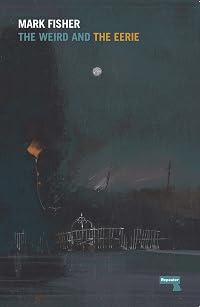
Il Primo è "[b:The Weird and the Eerie. Lo strano e l'inquietante nel mondo contemporaneo|41563228|The Weird and the Eerie. Lo strano e l'inquietante nel mondo contemporaneo|Mark Fisher|https://images.gr-assets.com/books/1535830247s/41563228.jpg|50205156]" di Mark Fisher, pubblicato da Minimun Fax in cui l'autore affronta i concetti di Strano e Inquietante a partire dalla cultura Pop come chiave interpretative del mondo moderno, e poi "[b:Iperoggetti|40237448|Iperoggetti|Timothy Morton|https://images.gr-assets.com/books/1527633020s/40237448.jpg|24903561]" di Timothy Morton edito sempre da nella collana Not, opera imponente in cui l'autore spiega il concetto di iperoggetti, ovvero oggetti così estesi nel tempo e nello spazio da essere difficilmente concepibili e pensabili da parte di un essere umano dalla vita e dalla capacità cognitiva limitata. show less
Mano a mano che la conosciamo meglio, la natura sembra piegarsi al dominio dell'uomo, perché conoscere è anche possedere. Eppure nonostante questa continua e trionfale conquista abbiamo l'impressione che qualcosa ancora ci sfugga- Più ci addentriamo nei segreti della natura, più il mondo reale ci appare alieno, inquietante e "impensabile".
EugeneTacker parte proprio da qui, da questa dimensione inaccessibile al pensiero umano, per illustrarci l'unica chiave filosofica in grado di show more interpretarla: l'orrore.
Per l'autore esistono tre gradi di esistenza del mondo in relazione all'uomo, il "mondo per noi", cioè il mondo che abbiamo già piegato al nostro dominio, il "mondo in se", quella parte del mondo che ancora non conosciamo ma che, grazie ai nostri strumenti cognitivi, potremo presto trasformare in "mondo per noi" e poi, per ultimo, il "mondo senza di noi", quella parte che sappiamo essere eternamente sfuggente all'intelletto umano, che sappiamo essere li per ricordarci che l'universo è un posto immenso, completamente indifferente alla nostra esistenza e per la gran parte impossibile da capire... solo l'orrore ci permette di realizzare l'apparente paradosso di capire qualcosa senza capirla. Il Black Metal, la demonologia, l'Orrore Cosmico lovercraftiano e l'occultismo diventano tutti strumenti di interpretazione per decodificare qualcosa a cui la razionalità, per quanto si sforzi, non potrà mai accedere.
Ho letto questo libro con grande interesse, ma mi rendo conto che per molti possa essere un'opera molto complessa da affrontare... probabilmente lo sarebbe stato anche per me se prima, per fortuna, non avessi letto alcuni libri che sono solo tangenti agli argomenti affrontati in "Tra le Ceneri di questo Pianeta" ma che hanno reso molto più chiari alcuni concetti espressi nel libro.
Il Primo è "[b:The Weird and the Eerie. Lo strano e l'inquietante nel mondo contemporaneo|41563228|The Weird and the Eerie. Lo strano e l'inquietante nel mondo contemporaneo|Mark Fisher|https://images.gr-assets.com/books/1535830247s/41563228.jpg|50205156]" di Mark Fisher, pubblicato da Minimun Fax in cui l'autore affronta i concetti di Strano e Inquietante a partire dalla cultura Pop come chiave interpretative del mondo moderno, e poi "[b:Iperoggetti|40237448|Iperoggetti|Timothy Morton|https://images.gr-assets.com/books/1527633020s/40237448.jpg|24903561]" di Timothy Morton edito sempre da nella collana Not, opera imponente in cui l'autore spiega il concetto di iperoggetti, ovvero oggetti così estesi nel tempo e nello spazio da essere difficilmente concepibili e pensabili da parte di un essere umano dalla vita e dalla capacità cognitiva limitata. show less
I wanted to love this, but only just liked it sometimes.
Fully owning that I don’t have much experience with many of the philosophers he cites so maybe my own ignorance affected my reading, but at times (really more often than not) it felt like Thacker was running in circles and even he didn’t quite know what point he was trying to make. The different frameworks in which he presents each section left the book poorly organized and created a disjointed feeling in the text.
This book reminded me of a paper you would write in college where you forgot your thesis halfway through and threw in as many convoluted sentences as possible with some made up words that describe your non-point in an effort to hide the fact that you don’t totally show more know what you’re trying to say.
That being said, there were some far out moments that were worthwhile, if you’re willing to work to get to them. show less
Fully owning that I don’t have much experience with many of the philosophers he cites so maybe my own ignorance affected my reading, but at times (really more often than not) it felt like Thacker was running in circles and even he didn’t quite know what point he was trying to make. The different frameworks in which he presents each section left the book poorly organized and created a disjointed feeling in the text.
This book reminded me of a paper you would write in college where you forgot your thesis halfway through and threw in as many convoluted sentences as possible with some made up words that describe your non-point in an effort to hide the fact that you don’t totally show more know what you’re trying to say.
That being said, there were some far out moments that were worthwhile, if you’re willing to work to get to them. show less
Starts out incredible with the history of philosophy about the darkness, the void, the mysterious. Gets a little tedious when he starts talking about monster movies, but he brings it back together. It's almost poetic in parts, and very overly-academical philosophy-dry in parts.
Members
- Recently Added By
Lists

Books for Birute
39 works; 1 member

For Commonweal
25 works; 1 member
Author Information

18+ Works 1,087 Members
Eugene Thacker is the author of several books, including In The Dust of This Planet. He teaches at The New School in New York City.
Series

Work Relationships
Is contained in
Common Knowledge
Classifications
- Genres
- Philosophy, Nonfiction, Literature Studies and Criticism, General Nonfiction
- DDC/MDS
- 110 — Philosophy & psychology Metaphysics (existence, purpose, and the nature of reality) Metaphysics
- LCC
- PN56 .H6 — Language and Literature Literature (General) Literature (General) Theory. Philosophy. Esthetics
- BISAC
Statistics
- Members
- 475
- Popularity
- 64,026
- Reviews
- 11
- Rating
- (3.70)
- Languages
- English, German, Italian, Spanish
- Media
- Paper, Audiobook, Ebook
- ISBNs
- 6
- ASINs
- 4