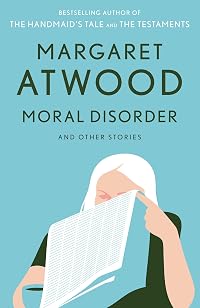
Moral Disorder and Other Stories
by Margaret Atwood
On This Page
Description
Fiction. Literature. Short Stories. HTML:Atwood triumphs with these dazzling, personal stories in her first collection since Wilderness Tips.In these ten interrelated stories Atwood traces the course of a life and also the lives intertwined with it, while evoking the drama and the humour that colour common experiences — the birth of a baby, divorce and remarriage, old age and death. With settings ranging from Toronto, northern Quebec, and rural Ontario, the stories begin in the present, show more as a couple no longer young situate themselves in a larger world no longer safe. Then the narrative goes back in time to the forties and moves chronologically forward toward the present.
In “The Art of Cooking and Serving,” the twelve-year-old narrator does her best to accommodate the arrival of a baby sister. After she boldly declares her independence, we follow the narrator into young adulthood and then through a complex relationship. In “The Entities,” the story of two women haunted by the past unfolds. The magnificent last two stories reveal the heartbreaking old age of parents but circle back again to childhood, to complete the cycle.
By turns funny, lyrical, incisive, tragic, earthy, shocking, and deeply personal, Moral Disorder displays Atwood’s celebrated storytelling gifts and unmistakable style to their best advantage. This is vintage Atwood, writing at the height of her powers. show less
Tags
Recommendations










Member Recommendations
by hbsweet
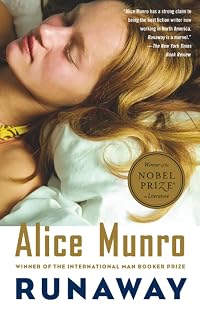
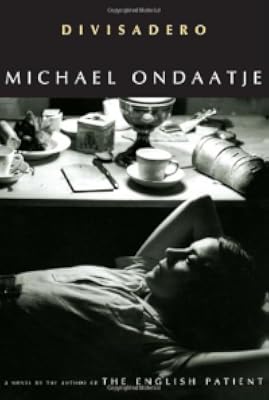
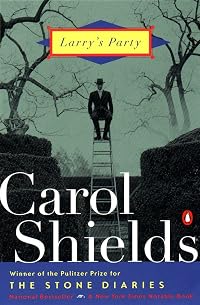
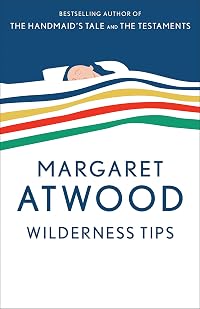
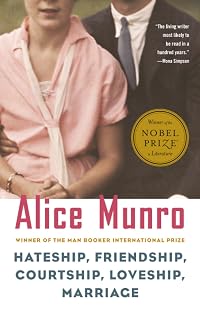
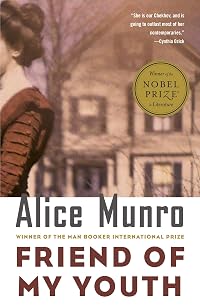
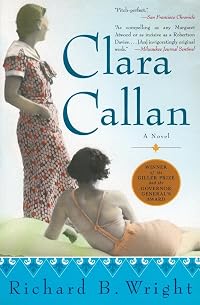
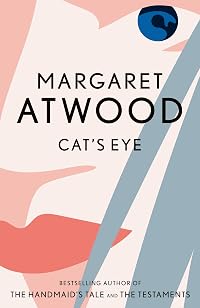
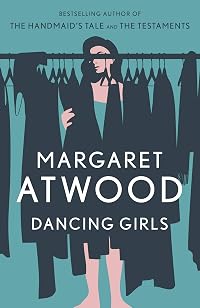
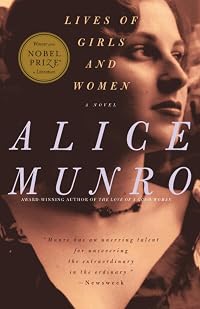
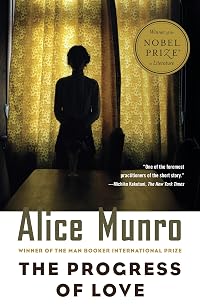
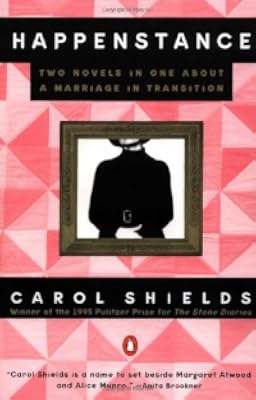
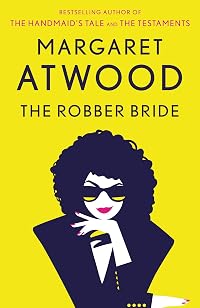
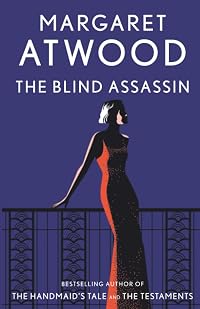
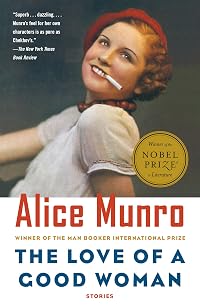
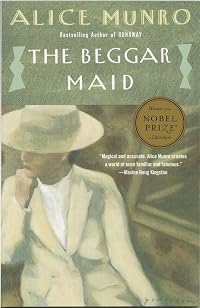
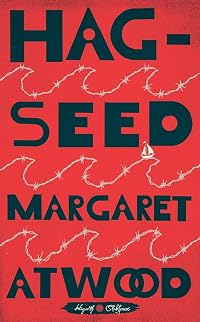
RidgewayGirl Both tell the life story of a woman in short story form, with compassion and an unflinching eye.
Member Reviews
Not the most compelling Atwood—maybe because these interrelated short stories seemed to offer the worst of both worlds: an expectation for the plot development of a novel that short stories can't deliver on, but some "carry-over" from one story to the next that seemed to detract from the impact of each story on its own. Nevertheless, even mediocre Atwood is better than most other authors at their best.
I don't think I would have appreciated this collection as much if I'd read it when I was younger. Life has had a fair amount of time to knock me around so the struggles (and hopes!) portrayed as the narrator aged throughout the short stories resonated. Adore her prose:
But I wasn't without social resources. I didn't take off my clothes and sing in public: I acted in acceptable ways. I smiled, nodded, made conversation, and so forth. I could do a good imitation of a competent young woman.
Maybe she would grow cunning, up here on the farm. Maybe she would absorb some of the darkness, which might not be darkness at all but only knowledge. She would turn into a woman others came to for advice. She would be called in emergencies. She would show more roll up her sleeves and dispense with sentimentality, and do whatever blood-soaked, bad-smelling thing had to be done. She would become adept with axes. show less
But I wasn't without social resources. I didn't take off my clothes and sing in public: I acted in acceptable ways. I smiled, nodded, made conversation, and so forth. I could do a good imitation of a competent young woman.
Maybe she would grow cunning, up here on the farm. Maybe she would absorb some of the darkness, which might not be darkness at all but only knowledge. She would turn into a woman others came to for advice. She would be called in emergencies. She would show more roll up her sleeves and dispense with sentimentality, and do whatever blood-soaked, bad-smelling thing had to be done. She would become adept with axes. show less
I read this book with a tight swelling of love in my chest. It's about generations of women and the way that they see the world around them. I found myself missing my own mother and reflecting on all the things that we leave unsaid to the ones we love.
I felt as if I were groping through brambles in a night so dark I couldn't see my own hands. At my wit's end had been, before this, merely an expression, but now it described a concrete reality: I could see my wits unrolling, like a ball of string, length after length of wits being played out, each length failing to hold fast, breaking off as if rotten, until finally the end of the string would be reached, and what then? How many days were left for me to fill -- for me to fill responsibly -- before the real parents would come back and take over, and I could escape to my life?
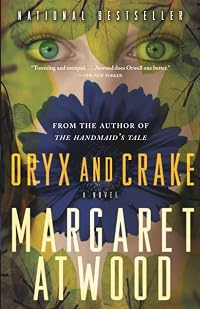
This is the story of a woman's life told in short story form. While the stories can stand alone, they work beautifully together to create a portrait of a life. Nell show more comes of age just before the sixties and seventies upended the social order, turning her from an independent spirit into someone just not adventurous enough. Her life is an ordinary one, but beautifully told. My favorite story is His Last Duchess, in which Nell thinks about the women she reads about in her literature class. While I love Atwood's more adventurous novels, like Oryx and Crake and The Blind Assassin, I think this quieter story allows her writing and nuanced characterizations to really shine. show less
This is the story of a woman's life told in short story form. While the stories can stand alone, they work beautifully together to create a portrait of a life. Nell show more comes of age just before the sixties and seventies upended the social order, turning her from an independent spirit into someone just not adventurous enough. Her life is an ordinary one, but beautifully told. My favorite story is His Last Duchess, in which Nell thinks about the women she reads about in her literature class. While I love Atwood's more adventurous novels, like Oryx and Crake and The Blind Assassin, I think this quieter story allows her writing and nuanced characterizations to really shine. show less
As always, you can rely on Margaret Atwood. She's a quick sketch artist with a special feeling for the undercurrents of girlhood, families, changing social attitudes. Some of these loosely interlinked stories remind me of Alice Munro; the girl and woman, sometimes called Nell, that runs through these stories comes age in the 1960's. So she's old enough to have chafed at the old rules but young enough to take full advantage of the new ones.
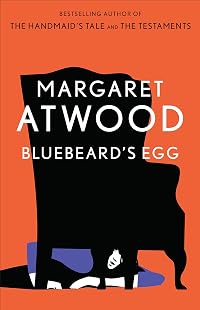
Otherwise, the territory reminds me a lot of some of Atwood's earlier works that borrow generously from her own life: The parents (well, the father )involved in some kind of outdoorsy, lab related academic work, lonely spells in the wilderness, the shift to Toronto. It's been a long time since I read show more them, but I think that material is familiar from Cat's Eye (a great novel) and Bluebeard's Egg (short stories). Nothing wrong with that, but you might be disappointed if you were expecting more of the experiments she did in Oryx and Crake. show less
Otherwise, the territory reminds me a lot of some of Atwood's earlier works that borrow generously from her own life: The parents (well, the father )involved in some kind of outdoorsy, lab related academic work, lonely spells in the wilderness, the shift to Toronto. It's been a long time since I read show more them, but I think that material is familiar from Cat's Eye (a great novel) and Bluebeard's Egg (short stories). Nothing wrong with that, but you might be disappointed if you were expecting more of the experiments she did in Oryx and Crake. show less
I guess I have to confess that I'm not a big fan of short stories (except if they are science fiction in which case I usually enjoy them). These short stories were more of a continuing dialogue than individual short stories so it was more like reading a novel than a book of short stories. As I read I suspected that most of these stories are autobiographical, a suspicion that is born out by a rather lengthy article from The Guardian. So, in a way, that made them more interesting to me. (She did have a much younger sister so are the tales about her true? And if so, how does her sister feel about that?)
I think my favourite story is probably the title story which details how the couple (Nell and Tig) populate their "farm" with animals of show more all kinds and the difficult choices you have to make about those animals. It reminded me a lot of the farm I grew up on. Every year we would have newborn lambs being bottle raised in the kitchen. And I can still recall being butted into the fence by the ram. Atwood captures all the nuances of life on a farm. show less
I think my favourite story is probably the title story which details how the couple (Nell and Tig) populate their "farm" with animals of show more all kinds and the difficult choices you have to make about those animals. It reminded me a lot of the farm I grew up on. Every year we would have newborn lambs being bottle raised in the kitchen. And I can still recall being butted into the fence by the ram. Atwood captures all the nuances of life on a farm. show less
This book has been sitting on my TBR file for awhile, and I decided it was time to read it. It's not my first Margaret Atwood book, but the first I've read that portrays her minimalist writing skills. The book is a series of "snapshots in time", or vignettes that trace a life. The book opens with the heroine, Nell and her husband Tig later on in their lives. Then it switches to Nell at eleven years old. Then proceeds with eight more vignettes of her life progressing from that age to about 45 years old.By that time Nell and Tig have lived a full life with all its stumbles, missteps and, in fact some positive happenings, but truthfully the vignettes depict the tough times much more than the happy ones. The book is not a happy and joyful show more read, but it says so much in so few well-chosen and well-crafted words and sentences. The last two vignettes are two separate depictions of end-of-life experiences. These stories are so well-illustrated that I had to stop for awhile between them to reflect and get back my equilibrium. At my age, death and dying are a fact of life, but I must admit that I don't dwell on those or on the inevitable consequences. Atwood made me examine these topics, make an assessment and then assimilate what she says so that it makes sense to me. She is a very talented writer, and her books are a journey more than just enjoyable fiction. Glad I took the time. I have one more of her books that has been sitting for ever on my shelf - The Robber Bride, and I want to dip into that pretty quickly. show less
Members
- Recently Added By
Lists

The Best of Canadian Literature
235 works; 33 members

Best 21st Century Books (So Far)
670 works; 86 members

Books Set in Canada
80 works; 16 members

Literature About Women and Girls
394 works; 39 members

Books Read in 2014
2,343 works; 89 members
Author Information

284+ Works 199,110 Members
Margaret Atwood was born on November 18, 1939 in Ottawa, Canada. She received a B.A. from Victoria College, University of Toronto in 1961 and an M.A. from Radcliff College in 1962. Her first book of verse, Double Persephone, was published in 1961 and was awarded the E. J. Pratt Medal. She has published numerous books of poetry, novels, story show more collections, critical work, juvenile work, and radio and teleplays. Her works include The Journals of Susanna Moodie, Power Politics, Cat's Eye, The Robber Bride, Morning in the Buried House, the MaddAdam trilogy, and The Heart Goes Last. She has won numerous awards including the Prince of Asturias Award for Literature, the Booker Prize in 2000 for The Blind Assassin, the Giller Prize and the Premio Mondello for Alias Grace, and the Governor General's Award in 1966 for The Circle Game and in 1986 for The Handmaid's Tale, which also won the very first Arthur C. Clarke Award in 1987. She won the PEN Pinter prize in 2016 for her political activism. She was awarded the 2016 PEN Pinter Prize for the outstanding literary merit of her body of work. (Bowker Author Biography) show less
Some Editions
Awards and Honors
Awards
Series
Belongs to Publisher Series
Otavan kirjasto (186)
Work Relationships
Contains
Common Knowledge
- Canonical title*
- Poikkeustila
- Original title
- Moral Disorder and Other Stories
- Original publication date
- 2006
- People/Characters
- Tig; Nell; Lizzie; Oona; Lillie
- Important places
- Canada
- Dedication
- For my family
- First words
- It's morning.
- Last words
- (Click to show. Warning: May contain spoilers.)Then they all climb the hill, up toward the Lab, and vanish among the trees.
- Original language
- English
*Some information comes from Common Knowledge in other languages. Click "Edit" for more information.
Classifications
Statistics
- Members
- 2,489
- Popularity
- 7,755
- Reviews
- 78
- Rating
- (3.62)
- Languages
- 11 — Chinese, Dutch, English, Finnish, German, Hebrew, Italian, Norwegian (Bokmål), Polish, Spanish, Swedish
- Media
- Paper, Audiobook, Ebook
- ISBNs
- 40
- ASINs
- 14