On This Page
Description
Shakespeare's finest verse play is also his first portrait of the psychology of power. The sensitive and poetic Richard II is undoubtedly the rightful king of England but he is unscrupulous and weak. When his cousin Henry Bolingbroke returns from banishment and mounts a challenge to his authority, Richard's right to the throne proves of little help to him. Richard is forced to abdicate, but as his power is stripped away, he gains dignity and self-awareness, and he meets his death heroically. show more Meanwhile Bolingbroke's seizure of the crown has caused resentment among the nobles of England. Rupert Graves is Richard II, and Julian Glover is Bolingbroke. John Wood plays John of Gaunt. show lessTags
Recommendations

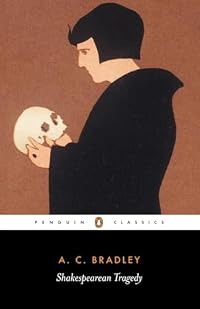
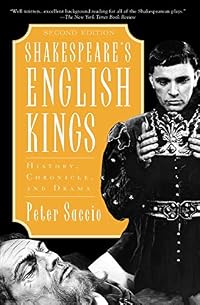
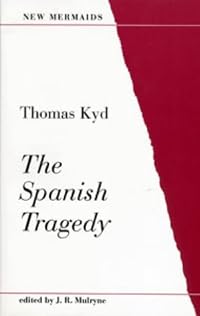
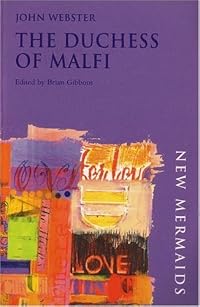

Member Reviews
I find it exciting to pick up a Shakespeare play that I have not read before and Richard II proved to be a straightforward read. Let me explain: my modus operandi with Shakespeare is to read through the play in one sitting if possible and then note down any thoughts. I will then read the introduction and any notes or commentaries before reading through the play again at a slower pace. I finish off by watching a video performance of the play (usually a BBC production). On my first reading I was surprised how easy it was to follow the story. It is a history play and Shakespeare although reorganising and adapting the historical facts still tells a recognisable story of the latter part of Richard's reign and Bolingbroke's seizing of the show more crown. Other first impressions were that the heightened language that Richard and others use reminded me of Christopher Marlowe's Edward II or even Tamburlaine. It is a political play, perhaps the most political play I have read so far and its major theme is the divine right of kings. There is only a little light relief from the tragedy of the unfolding story. There are no prose passages and plenty of poetry in the iambic pentameter. The play is usually dated at 1595 and would seem to be a thoroughly professional job, by a playwright who had learnt his craft.
On to the commentaries and notes of which there were plenty, being from the Arden Collection of plays. There is certainly enough here to explain and enhance the enjoyment. I also had in my library a copy of MAXnotes from the Research & Education Association's collection of study guides, I had previously not read any of these and found it concise and easy to read. It summarises the play scene by scene and provides a good analysis of the themes and story as it goes along. It stars with a very useful introduction on Shakespeares language and was a useful back-up to the Introduction and notes in the Arden publication. I usually spend some time researching on the internet for different aspects or views, but found much of this to be superfluous for this play. I felt I really did not need to know anymore to the information to hand.
The editors of the Arden Shakespeare of course talk up the play that they have been asked to edit, but I have to agree with Charles R Forker who says:
"Its unusual formality of structure and tone as well as the impressive eloquence of its style seems to have been crafted to express the mystique of kingship more emphatically than any of the earlier histories, without neglecting a subtle handling of its major action........................In the character of Richard, Shakespeare achieved a higher degree of psychological complexity than he had yet managed in tragedy"
Forker goes on to say that Richard II is now regarded as one of the greatest of Shakespeares histories, with over 3000 books/commentaries written about it, which means that you could spend any amount of time reading about other peoples research or views if you wished.
Shakespeare starts the play with the confrontation between Thomas Mowbray Duke of Norfolk and Henry Bolingbroke in front of King Richard II. They accuse each other of being traitors to the king. Richard cannot settle the dispute and so they agree to a trial by combat. At the very last moment before the lethal joust Richard stops the contest and exiles them both. Mowbray for life and Bolingbroke who has family connections to the king for six years. Richard lives a dissolute lifestyle spending much money on his friends and hangers on, he decides to lead an army to quell a revolt in Ireland, but the treasury is nearly empty. He raises money by enforced loans on the English nobility and by the sequestration of land and property from Bolingbroke who has inherited his fathers estates, the wealthy John of Gaunt. While Richard is in Ireland Henry Bolingbroke with a host of titled followers lands in the North of England and soon attracts more support including eventually the Duke of York who Richard has entrusted with guarding his kingdom whilst he is in Ireland. Richard arrives back in England after a successful campaign to find that his army has been let go and his court favourites have fled or been executed by Bolingbroke. He is powerless and Bolingbroke looks for a way to seize power by persuading Richard to abdicate in his favour. Richard is forced to agree and becomes Bolingbroke's (now Henry IV) prisoner. Richard is murdered in Pontefract castle.
In Plantagenet England kingly succession was more often than not a tricky business, because of disputes over birthrights, however in this instance Shakespeare's focus is on a direct usurpation which brings starkly into question the divine right of kings. Richard claimed amid popular contention that he was appointed by God to rule England, still a feudal state at this time (mid 14th century) and so Richard supported by the clergy has an indisputable right to govern as he sees fit and he makes this case throughout the play. For political reasons Bolingbroke is able to lead a successful revolt, but cannot rule in security until the old king is dead. Shakespeare's skill here is in leading his audience firstly to admire Richards kingly qualities in settling a difficult dispute and then to turn them against the king when they see his unjust behaviour, to the noble families and particularly Bolingbrook. Unjust, vindictive behaviour or a politician indulging in realpolitik it's difficult to decide. However sympathies are swayed back to Richard when he is devastated by the loss of his kingship. Watching the BBC production I thought that Richard got what was coming to him, despite his tragic circumstances, but in Elizabethan England where the idea of the divine right of kings was almost sacrosanct, Shakespeares arguments brilliantly portrayed by Richard would have swayed many people to feel the tragedy of his final months.
The play is notable for its poetry and word play. There are some impressive speeches, for example John of Gaunt's patriotic 'sceptered Isle' speech or Richards 'hollow crown' speech. There are many such as these, even the assistant gardener can get in on the act:
"Why should we in the compass of a pale
Keep law and form and due proportion,
Showing, as in a model, our firm estate,
When our sea walled garden, the whole land
Is full of weeds, her fairest flowers choked up,
Her fruit trees all unpruned, her hedges ruined
Her knots disordered and her wholesome herbs
Swarming with caterpillars."
He is talking about the state of England under Richard's kingship and the caterpillars are the kings flattering supporters. We know this about the caterpillars because one of Bolingbroke's followers has already referred to Richards' flatterers as caterpillars. This is an example of the unity of Shakespeares vision and poetry in this play, which has patterns and themes interweaved throughout, for example: the idea of blood which stands for family and murder, the tears and weeping which show emotion, images of blots stains and poison, the powerful image of the mirror where Richard examines his dual identity of man and divine monarch, the idea of people and things which can be sweet or sour according to the wheel of fortune.
A Shakespeare play then that can hardly be faulted and one that has a unity of vision making it a delight to follow to the end. The character development of both Ricard II and Bolingbroke adds real depth and so 5 stars. show less
On to the commentaries and notes of which there were plenty, being from the Arden Collection of plays. There is certainly enough here to explain and enhance the enjoyment. I also had in my library a copy of MAXnotes from the Research & Education Association's collection of study guides, I had previously not read any of these and found it concise and easy to read. It summarises the play scene by scene and provides a good analysis of the themes and story as it goes along. It stars with a very useful introduction on Shakespeares language and was a useful back-up to the Introduction and notes in the Arden publication. I usually spend some time researching on the internet for different aspects or views, but found much of this to be superfluous for this play. I felt I really did not need to know anymore to the information to hand.
The editors of the Arden Shakespeare of course talk up the play that they have been asked to edit, but I have to agree with Charles R Forker who says:
"Its unusual formality of structure and tone as well as the impressive eloquence of its style seems to have been crafted to express the mystique of kingship more emphatically than any of the earlier histories, without neglecting a subtle handling of its major action........................In the character of Richard, Shakespeare achieved a higher degree of psychological complexity than he had yet managed in tragedy"
Forker goes on to say that Richard II is now regarded as one of the greatest of Shakespeares histories, with over 3000 books/commentaries written about it, which means that you could spend any amount of time reading about other peoples research or views if you wished.
Shakespeare starts the play with the confrontation between Thomas Mowbray Duke of Norfolk and Henry Bolingbroke in front of King Richard II. They accuse each other of being traitors to the king. Richard cannot settle the dispute and so they agree to a trial by combat. At the very last moment before the lethal joust Richard stops the contest and exiles them both. Mowbray for life and Bolingbroke who has family connections to the king for six years. Richard lives a dissolute lifestyle spending much money on his friends and hangers on, he decides to lead an army to quell a revolt in Ireland, but the treasury is nearly empty. He raises money by enforced loans on the English nobility and by the sequestration of land and property from Bolingbroke who has inherited his fathers estates, the wealthy John of Gaunt. While Richard is in Ireland Henry Bolingbroke with a host of titled followers lands in the North of England and soon attracts more support including eventually the Duke of York who Richard has entrusted with guarding his kingdom whilst he is in Ireland. Richard arrives back in England after a successful campaign to find that his army has been let go and his court favourites have fled or been executed by Bolingbroke. He is powerless and Bolingbroke looks for a way to seize power by persuading Richard to abdicate in his favour. Richard is forced to agree and becomes Bolingbroke's (now Henry IV) prisoner. Richard is murdered in Pontefract castle.
In Plantagenet England kingly succession was more often than not a tricky business, because of disputes over birthrights, however in this instance Shakespeare's focus is on a direct usurpation which brings starkly into question the divine right of kings. Richard claimed amid popular contention that he was appointed by God to rule England, still a feudal state at this time (mid 14th century) and so Richard supported by the clergy has an indisputable right to govern as he sees fit and he makes this case throughout the play. For political reasons Bolingbroke is able to lead a successful revolt, but cannot rule in security until the old king is dead. Shakespeare's skill here is in leading his audience firstly to admire Richards kingly qualities in settling a difficult dispute and then to turn them against the king when they see his unjust behaviour, to the noble families and particularly Bolingbrook. Unjust, vindictive behaviour or a politician indulging in realpolitik it's difficult to decide. However sympathies are swayed back to Richard when he is devastated by the loss of his kingship. Watching the BBC production I thought that Richard got what was coming to him, despite his tragic circumstances, but in Elizabethan England where the idea of the divine right of kings was almost sacrosanct, Shakespeares arguments brilliantly portrayed by Richard would have swayed many people to feel the tragedy of his final months.
The play is notable for its poetry and word play. There are some impressive speeches, for example John of Gaunt's patriotic 'sceptered Isle' speech or Richards 'hollow crown' speech. There are many such as these, even the assistant gardener can get in on the act:
"Why should we in the compass of a pale
Keep law and form and due proportion,
Showing, as in a model, our firm estate,
When our sea walled garden, the whole land
Is full of weeds, her fairest flowers choked up,
Her fruit trees all unpruned, her hedges ruined
Her knots disordered and her wholesome herbs
Swarming with caterpillars."
He is talking about the state of England under Richard's kingship and the caterpillars are the kings flattering supporters. We know this about the caterpillars because one of Bolingbroke's followers has already referred to Richards' flatterers as caterpillars. This is an example of the unity of Shakespeares vision and poetry in this play, which has patterns and themes interweaved throughout, for example: the idea of blood which stands for family and murder, the tears and weeping which show emotion, images of blots stains and poison, the powerful image of the mirror where Richard examines his dual identity of man and divine monarch, the idea of people and things which can be sweet or sour according to the wheel of fortune.
A Shakespeare play then that can hardly be faulted and one that has a unity of vision making it a delight to follow to the end. The character development of both Ricard II and Bolingbroke adds real depth and so 5 stars. show less
Richard spends so much of this play depressed that you'd think he was in The Bell Jar. This play had three stars until "Go thou and fill another room in hell" made me change my pants.
I'm on a history kick, so what better way to supplement the immersion into The War Of The Roses than to dive into Shakespeare?
Richard II begins the weakness of kings, where if one could be deposed, yet more can follow. Divine right be damned... should we just rely on might?
It's kind of funny, reading this for the second time after so many years and other historical accounts, just how propagandist this play really is. I suppose that shouldn't be a surprise, since it had only been a little over a century prior from the time it was written, and Elizabeth is the product of so much Lancaster and York strife that stems right from these humble and piteous beginnings.
Frankly, I'm really surprised at the balance of this play, where Richard, boy show more king, makes monstrously poor decisions and banishes Henry Bolingbroke and later steals all his lands to fund a war in Ireland which goes disastrously. Henry Bolingbroke returns from his banishment on such tidings, his lands and monies gone, his father dead, and he sues to get redress from the wrongs done to him. He has good reason.
But. In deposing the king, it opens the weakness of all kings and puts the question to every mind in England... can we ever stop? If it is this easy to depose one, just how easily can we do it again, and again, and again? And indeed, this play is perfectly historical in that respect, even if the man Richard was actually pretty good with finances and stopped fighting for war in France because England couldn't support it. *sigh*
The thing about Shakespeare is this: DRAMA QUEEN. :)
The outcome of Richard's abdication is a long-drawn out drama-fest. Oh woe is me, oh woe is me. It makes for great spectacle, that's for sure, and we even get one of the longest soliloquies in Shakespeare right from Richard's mouth. Henry is only better in his sorrow that all such things came to pass in that he had less page-time. :) I hated the man in life, but love in him death, indeed.
As a side note, I loved the scenes with Henry's uncle and his wife trying to pardon their son's near-treachery. My god, the pathos... it's taken so far it could easily be comedic relief, and I'm certain that some productions of this play could turn it into just that.
Same goes for old Gaunt's ramblings, which are tragic because he knew that Richard would disenfranchise Henry, but that's the beauty of these plays. They're always entertaining and perhaps a bit over the top, but they're definitely not simple or simply interpreted.
Indeed, you can find plenty in this whole play to support the True King or Justice, or change your mind all over again and switch sides.
Oddly enough, since I had just read King Henry IV part one this month, which directly follows the events in Richard II, I was horrified and bemused by Henry's several references to having bloody hands and washing them after Richard's death, because some twenty years later, as the king, he suffers from boils and agues on his hands and face, almost as if it is divine retribution for deposing the rightful king, and he always keeps gloves on and rubs his hands incessantly. Perfect setup and execution. :) But in this case, I'm doing it backwards. :)
Fun stuff, and so amusing, even if it is propaganda! Shakespeare *was* always walking a tightrope. :) show less
Richard II begins the weakness of kings, where if one could be deposed, yet more can follow. Divine right be damned... should we just rely on might?
It's kind of funny, reading this for the second time after so many years and other historical accounts, just how propagandist this play really is. I suppose that shouldn't be a surprise, since it had only been a little over a century prior from the time it was written, and Elizabeth is the product of so much Lancaster and York strife that stems right from these humble and piteous beginnings.
Frankly, I'm really surprised at the balance of this play, where Richard, boy show more king, makes monstrously poor decisions and banishes Henry Bolingbroke and later steals all his lands to fund a war in Ireland which goes disastrously. Henry Bolingbroke returns from his banishment on such tidings, his lands and monies gone, his father dead, and he sues to get redress from the wrongs done to him. He has good reason.
But. In deposing the king, it opens the weakness of all kings and puts the question to every mind in England... can we ever stop? If it is this easy to depose one, just how easily can we do it again, and again, and again? And indeed, this play is perfectly historical in that respect, even if the man Richard was actually pretty good with finances and stopped fighting for war in France because England couldn't support it. *sigh*
The thing about Shakespeare is this: DRAMA QUEEN. :)
The outcome of Richard's abdication is a long-drawn out drama-fest. Oh woe is me, oh woe is me. It makes for great spectacle, that's for sure, and we even get one of the longest soliloquies in Shakespeare right from Richard's mouth. Henry is only better in his sorrow that all such things came to pass in that he had less page-time. :) I hated the man in life, but love in him death, indeed.
As a side note, I loved the scenes with Henry's uncle and his wife trying to pardon their son's near-treachery. My god, the pathos... it's taken so far it could easily be comedic relief, and I'm certain that some productions of this play could turn it into just that.
Same goes for old Gaunt's ramblings, which are tragic because he knew that Richard would disenfranchise Henry, but that's the beauty of these plays. They're always entertaining and perhaps a bit over the top, but they're definitely not simple or simply interpreted.
Indeed, you can find plenty in this whole play to support the True King or Justice, or change your mind all over again and switch sides.
Oddly enough, since I had just read King Henry IV part one this month, which directly follows the events in Richard II, I was horrified and bemused by Henry's several references to having bloody hands and washing them after Richard's death, because some twenty years later, as the king, he suffers from boils and agues on his hands and face, almost as if it is divine retribution for deposing the rightful king, and he always keeps gloves on and rubs his hands incessantly. Perfect setup and execution. :) But in this case, I'm doing it backwards. :)
Fun stuff, and so amusing, even if it is propaganda! Shakespeare *was* always walking a tightrope. :) show less
I read this in conjunction with the Arkangel audio book, which featured simply outstanding voice acting. I don't know if my five star rating is more of a reflection of this or of Shakespeare's writing. All I can say is I thoroughly enjoyed this tale and the complexity and ambiguity of its characters.
Not that Shakespeare intended it this way, but reading his plays in chronological order makes this a prequel. And really, the events of the Henry VI and Richard III plays make a lot more sense with this "origin story." Richard II is presented as a weak leader who vacillates and makes arbitrary decisions. This is clear in the opening scenes where the king oversees the conflict between Henry Bolingbroke and Thomas Mowbry, each of whom declares the other a traitor. Richard ultimately exiles both men, but Bolingbroke returns with an army and ultimately claims the throne himself as Henry IV.
Richard's fall and Henry's rise are depicted as parallel stories with all sorts of machinations and conspiracy. Shakespeare also introduces a lot of show more characters who will be more significant in the Henry IV and Henry V plays, making this as confusing as cameos in the MCU for people who haven't read the comics. The way kings kept getting deposed in England makes the fact that absolute monarchy never really caught on there make a lot of sense. While this isn't a particularly spectacular play for Shakespeare, I definitely sense growth in his writing style. show less
Richard's fall and Henry's rise are depicted as parallel stories with all sorts of machinations and conspiracy. Shakespeare also introduces a lot of show more characters who will be more significant in the Henry IV and Henry V plays, making this as confusing as cameos in the MCU for people who haven't read the comics. The way kings kept getting deposed in England makes the fact that absolute monarchy never really caught on there make a lot of sense. While this isn't a particularly spectacular play for Shakespeare, I definitely sense growth in his writing style. show less
Like all real literature this is about death. While Dick is not necessarily the greatest king around he is at least smart enough to realize that the collapse of his reign is a chain of events that can only inevitably lead to his murder, as the continued existence of a "rightful heir" is a loose end no usurper can afford to leave lying around. So the play is mostly about him alternating trying to grapple with this fact with constructing daydreams of some "possible escape" (there is no escape). A solid tragedy but does not reach the same heights Shakespeare managed with more sympathetic characters than this guy who is portrayed as moostly the cause of his own problems.
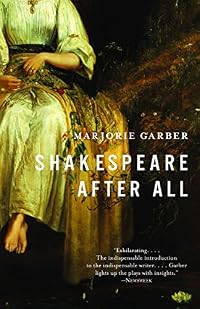
I love this one. Not sure if this is my second or third reading -- GR says I read it last in Nov. 2014, but I feel like I read it last more recently -- but, again, this is a five star play for me. This time I started with Marjorie Garber's chapter on Richard, from her marvelous Shakespeare After All. Her analysis didn't provide any startling insights, but it added to my appreciation of the way Shakespeare's artistry works in this play. Anyway, I just find Richard fascinating. Sure, he's a dreadful king and a lousy nephew, but he's a wonderful character. So invested in his own performance as flamboyant monarch that when the "script" of events seems to suggest that a tragic fall is imminent, he seizes the role of doomed lord (or, as he show more often suggests, "Lord") and plays it to the hilt. He reminds me of Hamlet, though not so complex -- self-dramatizing even to the point of his own destruction, self-pitying, and introspective, and he is such a great contrast with Henry. Poet vs. pragmatist. And their uncle, the Duke of York, switching his loyalties from Richard to Henry as it seems expedient, throwing his son over in a red hot minute, acting the "sage counselor" but always putting his own interests first, is marvelous fun! This is one of my favorite plays.
The Arden edition of this has excellent notes, and the performances of the actors in the Archangel audio recording are marvelous. I can't recommend Marjorie Garber's Shakespeare After All highly enough, and also, because, of course, plays are meant for watching, the "King Richard II" in the BBC's "The Hollow Crown" and The Royal Shakespeare Company's "King Richard II" with David Tennant, are well worth seeing. show less
The Arden edition of this has excellent notes, and the performances of the actors in the Archangel audio recording are marvelous. I can't recommend Marjorie Garber's Shakespeare After All highly enough, and also, because, of course, plays are meant for watching, the "King Richard II" in the BBC's "The Hollow Crown" and The Royal Shakespeare Company's "King Richard II" with David Tennant, are well worth seeing. show less
Members
- Recently Added By
Lists

Favorite Shakespeare plays?
37 works; 45 members

Greatest Books, allegedly
484 works; 9 members

Favourite Books
1,817 works; 316 members

Next Plays / 2025
352 works; 1 member

My Play Collection
769 works; 3 members

Recommended Reading : 600 Classics Reviewed, Editors of Salem Press, 2015
634 works; 6 members

'Books You Can't Live Without: The Top 100', The Guardian, 2007
156 works; 7 members

Books Read in 2023
5,547 works; 145 members
Essential/Recognized Stage Plays
115 works; 4 members

Mustich's 1000 Books to Read Before You Die: A Life Changing List
1,001 works; 18 members
1:28 p.m.'s 350 Stage Plays Challenge
94 works; 3 members

Vivat Rex
13 works; 1 member
Stage Plays/Screenplays/Dialogues/Anything Dialogue-Storytelling Related
81 works; 2 members
Five star books
1,755 works; 107 members

Western World's Greatest Books - Project Gutenberg
295 works; 15 members

100 Books to Read in a Lifetime (That Are Older Than 200 Years)
415 works; 175 members

Books Read in 2013
1,629 works; 51 members

Top Five Books of 2013
1,564 works; 716 members
Plays I Like
230 works; 31 members

Books You Read During High School (For School)
301 works; 52 members

Bibliography for Among Others
159 works; 15 members

el
1,139 works; 1 member
Author Information

5,933+ Works 439,777 Members
William Shakespeare, 1564 - 1616 Although there are many myths and mysteries surrounding William Shakespeare, a great deal is actually known about his life. He was born in Stratford-Upon-Avon, son of John Shakespeare, a prosperous merchant and local politician and Mary Arden, who had the wealth to send their oldest son to Stratford Grammar School. show more At 18, Shakespeare married Anne Hathaway, the 27-year-old daughter of a local farmer, and they had their first daughter six months later. He probably developed an interest in theatre by watching plays performed by traveling players in Stratford while still in his youth. Some time before 1592, he left his family to take up residence in London, where he began acting and writing plays and poetry. By 1594 Shakespeare had become a member and part owner of an acting company called The Lord Chamberlain's Men, where he soon became the company's principal playwright. His plays enjoyed great popularity and high critical acclaim in the newly built Globe Theatre. It was through his popularity that the troupe gained the attention of the new king, James I, who appointed them the King's Players in 1603. Before retiring to Stratford in 1613, after the Globe burned down, he wrote more than three dozen plays (that we are sure of) and more than 150 sonnets. He was celebrated by Ben Jonson, one of the leading playwrights of the day, as a writer who would be "not for an age, but for all time," a prediction that has proved to be true. Today, Shakespeare towers over all other English writers and has few rivals in any language. His genius and creativity continue to astound scholars, and his plays continue to delight audiences. Many have served as the basis for operas, ballets, musical compositions, and films. While Jonson and other writers labored over their plays, Shakespeare seems to have had the ability to turn out work of exceptionally high caliber at an amazing speed. At the height of his career, he wrote an average of two plays a year as well as dozens of poems, songs, and possibly even verses for tombstones and heraldic shields, all while he continued to act in the plays performed by the Lord Chamberlain's Men. This staggering output is even more impressive when one considers its variety. Except for the English history plays, he never wrote the same kind of play twice. He seems to have had a good deal of fun in trying his hand at every kind of play. Shakespeare wrote 154 sonnets, all published on 1609, most of which were dedicated to his patron Henry Wriothsley, The Earl of Southhampton. He also wrote 13 comedies, 13 histories, 6 tragedies, and 4 tragecomedies. He died at Stratford-upon-Avon April 23, 1616, and was buried two days later on the grounds of Holy Trinity Church in Stratford. His cause of death was unknown, but it is surmised that he knew he was dying. (Bowker Author Biography) show less
Some Editions
Awards and Honors
Series

Belongs to Publisher Series
RSC scripts (Shakespeare)
Penguin Shakespeare (B9)
Signet Classic Shakespeare (CD163)
The Yale Shakespeare (11)
William Shakespeare, Theatralische Werke in 21 Einzelbänden, übersetzt von Christoph Martin Wieland (12)
New Penguin Shakespeare (NS19)
University Paperbacks (UP292)
Signet Classics (CD163)
Work Relationships
Is contained in
Has the adaptation
Was inspired by
Inspired
Has as a reference guide/companion
Has as a study
Has as a supplement
Has as a commentary on the text
Has as a student's study guide
Common Knowledge
- Canonical title
- Richard II; King Richard II
- Original title
- The Tragedy of King Richard the Second
- Alternate titles
- King Richard II
- Original publication date
- 1597
- People/Characters
- Richard II, King of England; John of Gaunt, Duke of Lancaster; Edmund of Langley, duke of York; Henry IV, King of England; Edward, duke of Aumerle; Thomas Mowbray, duke of Norfolk (show all 24); Thomas Holland, duke of Surrey; John Montacute, earl of Salisbury; Lord Berkeley; Henry Percy, 1st earl of Northumberland; Sir Henry Percy / Hotspur; Lord Ross; Lord Willoughby; Lord Fitzwater; Sir Stephen Scroop; Sir Pierce; Isabella of Valois (the Queen); Isabelle of Castile, Duchess of York; Eleanor de Bohun, Duchess of Glouchester; Bushy; Bagot; Green; Thomas Merke, Bishop of Carlisle; Barbary the Roan Horse
- Important places
- Berkeley Castle, Gloucestershire, England, UK; Gloucestershire, England, UK; Bristol Castle, Bristol, England, UK; Bristol, England, UK; Coventry, England, UK; Ely House, London, England, UK (show all 19); Westminster Hall, London, England, UK; London, England, UK; Ravenspurgh, East Riding of Yorkshire, England, UK; East Riding of Yorkshire, England, UK; Windsor Castle, Windsor, Berkshire, England, UK; Windsor, Berkshire, England, UK; Berkshire, England, UK; England, UK; Flint Castle, Flint, Flintshire, Wales, UK; Flint, Flintshire, Wales, UK; Flintshire, Wales, UK; Wales, UK; Ireland
- Important events
- 14th century; Middle Ages; Abdication of Richard II of England (1399-09-29)
- First words
- Old John of Gaunt, time-honour'd Lancaster,
Hast thou, according to thy oath and band,
Brought hither Henry Hereford thy bold son,
Here to make good the boisterous late appeal,
Which then our leisure would not... (show all) let us hear,
Against the Duke of Norfolk, Thomas Mowbray? - Quotations
- This royal throne of kings, this sceptred isle,
This earth of majesty, this seat of Mars,
This other Eden, demi-paradise,
This fortress built by Nature for herself
Against infection and the hand of war,
This ha... (show all)ppy breed of men, this little world,
This precious stone set in the silver sea,
Which serves it in the office of a wall,
Or as a moat defensive to a house,
Against the envy of less happier lands,
This blessed plot, this earth, this realm, this England
For God's sake, let us sit upon the ground
And tell sad stories of the death of kings; - Last words
- (Click to show. Warning: May contain spoilers.)I'll make a voyage to the Holy Land,
To wash this blood off from my guilty hand:
March sadly after; grace my mournings here;
In weeping after this untimely bier. - Publisher's editor
- Wells, Stanley (New Penguin Shakespeare)
- Original language
- English
- Disambiguation notice
- This work is for the complete Richard II only. Do not combine this work with abridgements, adaptations or simplifications (such as "Shakespeare Made Easy"), Cliffs Notes or similar study guides, or anything else that d... (show all)oes not contain the full text. Do not include any video recordings. Additionally, do not combine this with other plays.
Classifications
Statistics
- Members
- 4,806
- Popularity
- 2,936
- Reviews
- 66
- Rating
- (3.80)
- Languages
- 19 — Catalan, Chinese, Czech, Dutch, English, Finnish, French, German, Greek, Hungarian, Italian, Japanese, Lithuanian, Norwegian (Bokmål), Portuguese, Russian, Spanish, Swedish, Turkish
- Media
- Paper, Audiobook, Ebook
- ISBNs
- 288
- UPCs
- 6
- ASINs
- 155