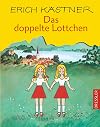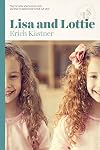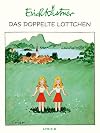
Lisa and Lottie
by Erich Kästner
On This Page
Description
In the book that spawned the beloved movie The Parent Trap, nine-year-old Lisa from Vienna--bold, with a head of curls--meets Munich's buttoned-up Lottie at summer camp. Soon, a newspaper clipping tells the tale: they're identical twins, Lisa living a colorful, big-city life with her father while Lottie keeps house with their gentle mother. Why have their parents separated? And how can they get to the bottom of the mystery? They decide to switch hairstyles, manners, and addresses--and that show more is where the adventure begins. show lessTags
Recommendations















Member Recommendations


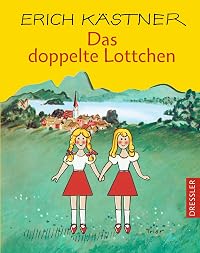
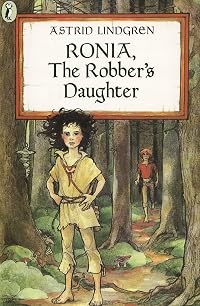
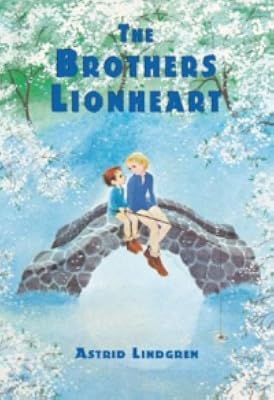
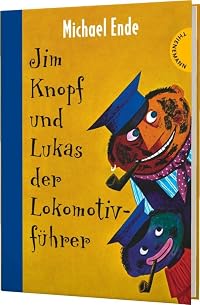
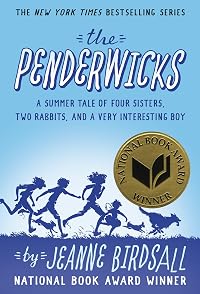
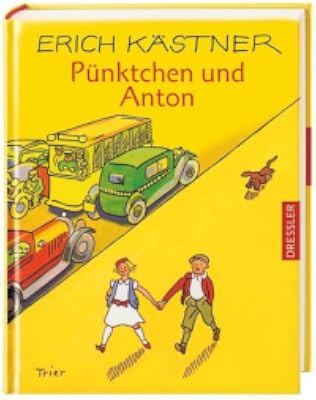
MarthaJeanne Two German language books for children where sisters discover each other. Neither would be very helpful for children in this situation, although Nöstlinger's (1991) is more realistic than Kästner's (1949).

Member Reviews
Erich Kästner’s Das Doppelte Lottchen was translated into English as Lisa and Lottie, but its plot is probably most familiar to American movie goers of both the 1960’s and 1990’s as The Parent Trap. The basic plot device has been used by many authors from Charles Dickens to Mark Twain and even to Shakespeare: separated twins who meet as strangers and conspire to switch identities. In this case, two identical girls serendipitously meet at summer camp and discover that they are in fact twins whose parents, upon divorcing, each took one twin to live with them. The twins switch places and return to the home of the other parent with the goal of reuniting them. Of course, havoc ensues since though they look alike, each twin has a show more distinct and opposing personality.
Kästner presents this story in a playful and almost silly manner. Some of this playfulness is writing style, some is the language (although the language in his other famous children’s novel Emil and the Detectives” is even sillier). I couldn’t help but think of the heavy-handed manner that divorce (or any other “issue”) might be portrayed in contemporary children’s literature.
Kästner also gives the young reader a lighthearted opportunity to explore one’s sense of self and identity, showing us “Odd Couple” extremes and demonstrating how, in the end these extremes are tempered by coming together. Finally, it wasn’t until I re-read this book now that I saw the theme of re-unification. Kästner wrote the book in 1949 in a post-war divided Germany. Maybe it’s a stretch, but could this book also have been an appeal for a reunified nation? show less
Kästner presents this story in a playful and almost silly manner. Some of this playfulness is writing style, some is the language (although the language in his other famous children’s novel Emil and the Detectives” is even sillier). I couldn’t help but think of the heavy-handed manner that divorce (or any other “issue”) might be portrayed in contemporary children’s literature.
Kästner also gives the young reader a lighthearted opportunity to explore one’s sense of self and identity, showing us “Odd Couple” extremes and demonstrating how, in the end these extremes are tempered by coming together. Finally, it wasn’t until I re-read this book now that I saw the theme of re-unification. Kästner wrote the book in 1949 in a post-war divided Germany. Maybe it’s a stretch, but could this book also have been an appeal for a reunified nation? show less
I don't remember ever reading this as a child, but I'm sure I would have enjoyed it if I had. Reading it as an adult, the book's underlying assumption that two nine-year-olds know better than their parents is a bit irritating, as it's meant to be. Kästner's views about adults are made clear by a lovely comment part way through the book: he tells his reader that, if a grown-up is reading this over your shoulder and complains that you are too young to be reading about divorce, you should remind them about Shirley Temple being old enough to act in films she wasn't old enough to go to see in the cinema.
Otherwise, it is as charming, funny and down to earth as Kästner always is, and there's a good deal more psychological depth to the show more characters than meets the eye. The exchanged-twins plot may be as old as the hills, but that doesn't matter here, as long as he does something interesting with it. And he does. There is a wealth of lovely detail about the practicalities of swapping lives; the ending may be a little predictable, but the genre doesn't really allow any other way for such a story to end, so we can forgive him for that. show less
Otherwise, it is as charming, funny and down to earth as Kästner always is, and there's a good deal more psychological depth to the show more characters than meets the eye. The exchanged-twins plot may be as old as the hills, but that doesn't matter here, as long as he does something interesting with it. And he does. There is a wealth of lovely detail about the practicalities of swapping lives; the ending may be a little predictable, but the genre doesn't really allow any other way for such a story to end, so we can forgive him for that. show less
I loved this book absolutely to pieces when I was a child and I have also watched and greatly enjoyed the German film version multiple times (the one from the 1950s that had the author, Erich Kästner, write the screen play). It is much more authentic than The Parent Trap (which took some rather huge and for me, unforgivable liberties with the plot). Kästner has definitely managed to realistically portray the many problems faced by children of divorced parents, as well as the irresponsible behaviours that are at times exhibited by parents (separating very young twin siblings, and then not even telling them that they have siblings is NEVER an acceptable option, children are not objects). The novel takes children, their hopes, dreams and show more desires seriously and is also a reminder to adults (to parents) that children must not be ignored, that they deserve to know the truth, and that irresponsible adult behaviours can have problematic, difficult, even potentially dangerous consequences. show less
Simple and sweet story about twins separated at birth who discover their parents' secret. Yes, it's the source of The Parent Trap, but is much more gentle and less raucous than the Disney movie.
There is such an airy gentleness to this book, a far cry from the crude happenings on display in both the Hayley Mills and the Lindsay Lohan versions of the story that were filmed in the U.S. I suppose the book is a little too German and a little too dated to ever attract a publisher for another English translation, and that's too bad. I enjoy all of Erich Kästner's writing and this book was no exception.
Would you believe that Disney took Lisa and Lottie and made The Parent Trap more textured and realistic? And also more fun. L&L is rather flat.
open library, but I was lucky enough to finally find a paper copy
Why it's so scarce, I have no idea. The inside is much better than the cover, and, I'm pretty sure, better than the movie (it's got nuances and complications that would be hard to put in a family movie). Inside pictures also lots of fun.
"No matter what trouble a mother may have, her first duty is to guard her child from being driven too soon out of the paradise of childhood."
Why it's so scarce, I have no idea. The inside is much better than the cover, and, I'm pretty sure, better than the movie (it's got nuances and complications that would be hard to put in a family movie). Inside pictures also lots of fun.
"No matter what trouble a mother may have, her first duty is to guard her child from being driven too soon out of the paradise of childhood."
Members
- Recently Added By
Lists

1001 Children's Books You Must Read Before You Grow Up
774 works; 100 members

A Child's Book Tour of Germany
76 works; 5 members

Best Books With Sisters
130 works; 30 members

Works That Inspired Disney Movies
119 works; 13 members

Children's Books Where Twins Swop Places
3 works; 1 member

Fiction with Women's Names in the Title
378 works; 15 members

Separated twins -- children's/young adult fiction
37 works; 3 members

Swap identities, trade places -- children's/young adult fiction
54 works; 6 members

Camps -- children's/young adult fiction
324 works; 9 members

German Literature
518 works; 50 members

Frequently sought stories - Name that Book group
149 works; 11 members
KayStJ's to-read list
1,616 works; 11 members

Books Read in 2019
4,052 works; 110 members

Books with Twins
175 works; 12 members

Books Read in 2022
5,166 works; 114 members
Reading Glasses Podcast
410 works; 3 members
Author Information

296+ Works 8,903 Members
Some Editions
Awards and Honors
Notable Lists
Hungarian Big Read (21)
Series
Belongs to Publisher Series
Work Relationships
Is contained in
Is retold in
Has the adaptation
Inspired
Has as a study
Common Knowledge
- Canonical title
- Lisa and Lottie
- Original title
- Das doppelte Lottchen
- Alternate titles
- The Parent Trap; Lisa and Lottie; Lottie and Lisa
- Original publication date
- 1949
- People/Characters
- Lisa Palfy; Lottie Horn
- Important places
- Lake Bohren; Vienna, Austria; Munich, Bavaria, Germany
- Related movies
- The Parent Trap (1961 | IMDb); The Parent Trap II (1986 | IMDb); Parent Trap III (1989 | IMDb); Parent Trap IV: Hawaiian Honeymoon (1989 | IMDb); It Takes Two (1995 | IMDb); The Parent Trap (1998 | IMDb) (show all 12); The Parent Trap: Caught in the Act (2002 | IMDb); The Parent Trap: How Hallie Became Annie (2005 | IMDb); The Parent Trap: Accent on Fun (2005 | IMDb); The Parent Trap: Updating a Classic (2005 | IMDb); Das doppelte Lottchen (1950 | IMDb); Das doppelte Lottchen (2007 | IMDb)
- First words
- Do you happen to know Bohrlaken?
- Last words
- (Click to show. Warning: May contain spoilers.)And Lisa cries, from the bottom of her heart, "And every last one of them twins!"
- Original language
- German
Classifications
Statistics
- Members
- 926
- Popularity
- 28,782
- Reviews
- 19
- Rating
- (4.05)
- Languages
- 24 — Chinese, Czech, Danish, Dutch, English, Estonian, Finnish, French, German, Hebrew, Hungarian, Italian, Japanese, Latvian, Lithuanian, Norwegian (Bokmål), Norwegian, Polish, Portuguese, Romanian, Russian, Croatian, Spanish, Swedish
- Media
- Paper, Audiobook, Ebook
- ISBNs
- 97
- ASINs
- 31