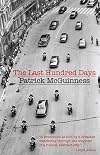
The Last Hundred Days
by Patrick McGuinness
On This Page
Description
Once the gleaming "Paris of the East," Bucharest in 1989 is a world of corruption and paranoia, in thrall to the repressive regime of Nicolae Ceau?escu. Old landmarks are falling to demolition crews, grocery shelves are empty, and informants are everywhere. Into this state of crisis, a young British man arrives to take a university post he never interviewed for. He is taken under the wing of Leo O'Heix, a colleague and master of the black market, and falls for the sleek Celia, daughter of a show more party apparatchik. Yet he soon learns that in this society, friendships are compromised, and loyalty is never absolute. And as the regime's authority falters, he finds himself uncomfortably, then dangerously, close to the eye of the storm.By turns thrilling and satirical, studded with poetry and understated revelation, The Last Hundred Days captures the commonplace terror of Cold War Eastern Europe. Patrick McGuinness's first novel is unforgettable.
. show less
Tags
Recommendations

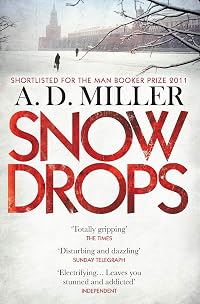






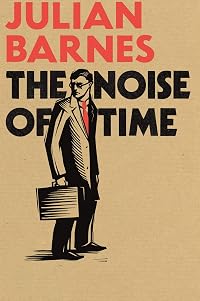
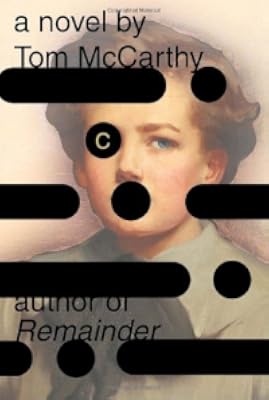
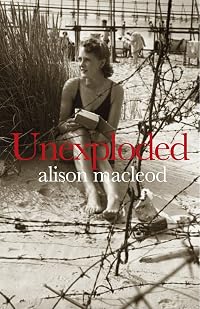
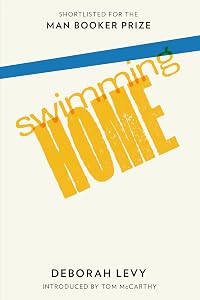








Member Recommendations
Member Reviews
The Last Hundred Days are those of Ceausescu’s Romania. The real historical events leading up to the Romanian Revolution are a scaffold for the fictional narrative. The story is told from the vantage of an expat Brit who was just looking to get a job and it happened to land him there during the last few months of the regime in 1989. The author, Patrick McGuinness, lived in Romania at the time and so would seem to have an insider’s authentic impressions. He is also a poet and writer, and professor of literature at Oxford, and it is his wonderful prose that elevates this novel.
“As a power-saving measure, museum visitors were organised into groups and the lights in each room were turned on as you entered and off as you left,…It show more was like a tide of darkness following you, engulfing room after room behind you as you went.”
“Trofim greeted everyone as if he had heard of them before, as if they came to him cresting the wave of a happy reputation.”
“This is what surveillance does: we stop being ourselves, and begin living alongside ourselves. Human nature cannot be changed, but it can be brought to a degree of self-consciousness that denatures it.”
The book was longlisted for the Man Booker prize in 2011, and I was struck by the similarities it shared with another Booker nominee that year, [b:Snowdrops|9579671|Snowdrops|A.D. Miller|https://d.gr-assets.com/books/1329600686s/9579671.jpg|14466568] by [a:A.D. Miller|1158347|A.D. Miller|https://d.gr-assets.com/authors/1379233436p2/1158347.jpg] (which unaccountably made the leap to the short list). Both books could be described by the same paragraph: An English expat ends up in (Romania, Russia), not entirely of his own volition but wants to make the best of it and make a good impression. He falls for an extraordinarily but mysterious beautiful woman, who may, or may not, be what she seems. Could she be a double agent? The characters in his life are pragmatic idealists, or are they?, and he learns quickly that life in (Romania, Russia) is definitely not what it appears to be on the surface. Corruption, hypocrisy and violence are the currency of (Romania, Russia). Despite the hardships and privations, extraordinary by British standards, he begins to feel part of his new home country. But even that might not be enough to withstand the extreme turmoil that is about to happen.
I think this is the kind of book to which [b:Snowdrops|9579671|Snowdrops|A.D. Miller|https://d.gr-assets.com/books/1329600686s/9579671.jpg|14466568] was, in vain, aspiring to be. I even idly wondered if the Booker judges actually meant this book to be the shortlisted one, but got tripped up by a series of clerical bunglings (Dame Stella imperiously waves to the underling clerk and says, “put this book about the Brit duck-out-of-water in a communist country on the short list; it will add a bit of variety.” )
There are a rich assortment of characters, reminiscent of the cast of Casablanca, and some of the descriptions are funny. “Their parties, an endless round of cocktails and booze-ups,…the circuit as a whole is…’a doppelgangbang: where largely identical people fuck each other interchangeably’” His beautiful girlfriend is dismissed by a cynical friend as “Ah, Cliea — a girl of many layers; layer upon layer of surface…”
This book gives us illuminating glimpses into the deep darknesses of humans, and we see ourselves.
“For all the grotesqueness and brutality, it was normality that defined our relations: the human capacity to accommodate ourselves to our conditions, not the duplicity and corruption that underpinned them. This was also our greatest drawback — the routinisation of want, sorrow, repression, until they became invisible, until they numbed you even to atrocity.” (Of course, we like to think of ourselves as the more noble and heroic characters in the book, not the venal corrupt ones that are more akin to our least favourite acquaintances.) “…The system was breaking down into its constituent parts, paranoia and apathy, and as the centre started to give way the two were left to engage in their great, blurred, inconclusive Manichean struggle. Apathy and paranoia: two drunks fighting slowly around a park bench.” show less
“As a power-saving measure, museum visitors were organised into groups and the lights in each room were turned on as you entered and off as you left,…It show more was like a tide of darkness following you, engulfing room after room behind you as you went.”
“Trofim greeted everyone as if he had heard of them before, as if they came to him cresting the wave of a happy reputation.”
“This is what surveillance does: we stop being ourselves, and begin living alongside ourselves. Human nature cannot be changed, but it can be brought to a degree of self-consciousness that denatures it.”
The book was longlisted for the Man Booker prize in 2011, and I was struck by the similarities it shared with another Booker nominee that year, [b:Snowdrops|9579671|Snowdrops|A.D. Miller|https://d.gr-assets.com/books/1329600686s/9579671.jpg|14466568] by [a:A.D. Miller|1158347|A.D. Miller|https://d.gr-assets.com/authors/1379233436p2/1158347.jpg] (which unaccountably made the leap to the short list). Both books could be described by the same paragraph: An English expat ends up in (Romania, Russia), not entirely of his own volition but wants to make the best of it and make a good impression. He falls for an extraordinarily but mysterious beautiful woman, who may, or may not, be what she seems. Could she be a double agent? The characters in his life are pragmatic idealists, or are they?, and he learns quickly that life in (Romania, Russia) is definitely not what it appears to be on the surface. Corruption, hypocrisy and violence are the currency of (Romania, Russia). Despite the hardships and privations, extraordinary by British standards, he begins to feel part of his new home country. But even that might not be enough to withstand the extreme turmoil that is about to happen.
I think this is the kind of book to which [b:Snowdrops|9579671|Snowdrops|A.D. Miller|https://d.gr-assets.com/books/1329600686s/9579671.jpg|14466568] was, in vain, aspiring to be. I even idly wondered if the Booker judges actually meant this book to be the shortlisted one, but got tripped up by a series of clerical bunglings (Dame Stella imperiously waves to the underling clerk and says, “put this book about the Brit duck-out-of-water in a communist country on the short list; it will add a bit of variety.” )
There are a rich assortment of characters, reminiscent of the cast of Casablanca, and some of the descriptions are funny. “Their parties, an endless round of cocktails and booze-ups,…the circuit as a whole is…’a doppelgangbang: where largely identical people fuck each other interchangeably’” His beautiful girlfriend is dismissed by a cynical friend as “Ah, Cliea — a girl of many layers; layer upon layer of surface…”
This book gives us illuminating glimpses into the deep darknesses of humans, and we see ourselves.
“For all the grotesqueness and brutality, it was normality that defined our relations: the human capacity to accommodate ourselves to our conditions, not the duplicity and corruption that underpinned them. This was also our greatest drawback — the routinisation of want, sorrow, repression, until they became invisible, until they numbed you even to atrocity.” (Of course, we like to think of ourselves as the more noble and heroic characters in the book, not the venal corrupt ones that are more akin to our least favourite acquaintances.) “…The system was breaking down into its constituent parts, paranoia and apathy, and as the centre started to give way the two were left to engage in their great, blurred, inconclusive Manichean struggle. Apathy and paranoia: two drunks fighting slowly around a park bench.” show less
Bucharest, 1989. A young British student flies to the Romanian capital to accept a university position that he was not interviewed for, and he does not understand what is expected of him. He is met at the airport by Leo O'Helix a foreign 'professor' who becomes his mentor and closest confidant, although Leo's teaching responsibilities are a cover for illegal activities that make him a wealthy and respected man. Romania is in a state of increasing crisis, as freedom movements are taking place throughout the communist world, while Nicolae Ceaușescu, one of the last Eastern European dictators, seeks to hold onto power by fear and violent suppression.
The narrator is introduced to several young underground activists by Leo, and he meets show more the beautiful Westernized daughter of a powerful minister, with whom he falls in love. He also befriends a retired government official, and helps him to write a secret memoir that is highly critical of the Ceaușescu regime.
As the year progresses, the Ceaușescus' hold on power weakens, which leads to increased crackdowns on dissidents and repression of ordinary Romanians. The narrator finds himself in increasing danger, despite his ties to the British embassy and his friends, as the Securitate is aware of his friends and activities that support the removal of Ceaușescu from poewr.
The Last Hundred Days was an unusual selection for this year's Booker Prize longlist, but it is a thriller that deserved to be there, and it should have been selected for the shortlist, as well. McGuinness, who lived in Romania during the end of the Ceaușescu regime, paints a compelling and convincing portrait of communist Romania, a country where ordinary citizens queue for hours in line without knowing what, if anything, awaits them, whose citizens routinely die of starvation, and where historic churches and other buildings are torn down and replaced with concrete, poorly built monstrosities. This was an impressive debut novel, and I look forward to reading more from its talented author. show less
The narrator is introduced to several young underground activists by Leo, and he meets show more the beautiful Westernized daughter of a powerful minister, with whom he falls in love. He also befriends a retired government official, and helps him to write a secret memoir that is highly critical of the Ceaușescu regime.
As the year progresses, the Ceaușescus' hold on power weakens, which leads to increased crackdowns on dissidents and repression of ordinary Romanians. The narrator finds himself in increasing danger, despite his ties to the British embassy and his friends, as the Securitate is aware of his friends and activities that support the removal of Ceaușescu from poewr.
The Last Hundred Days was an unusual selection for this year's Booker Prize longlist, but it is a thriller that deserved to be there, and it should have been selected for the shortlist, as well. McGuinness, who lived in Romania during the end of the Ceaușescu regime, paints a compelling and convincing portrait of communist Romania, a country where ordinary citizens queue for hours in line without knowing what, if anything, awaits them, whose citizens routinely die of starvation, and where historic churches and other buildings are torn down and replaced with concrete, poorly built monstrosities. This was an impressive debut novel, and I look forward to reading more from its talented author. show less
This is an interesting semi- autobiographical novel set during the last few months of Ceausescu's rule in Romania in 1989 (though it covers eight or nine months, not the three and a bit months the title implies). The author was present at that time and it shows in the very evocative descriptions by the unnamed narrator of the texture of life in Bucharest at this time, the stifling oppression, privations and utter absurdities of Ceausescu's highly personalised rule. It includes some interesting debates on the nature of freedom and the compromises that every Romanian had to make to survive on a day to day basis. Indeed, so much so, that one wonders why the author chose to write this as a novel, with real life characters under disguised show more names, rather than openly writing a memoir. It is a bit of a slow burn. The first third or so is quite slow moving but it picks up pace. A good read for anyone interested in modern European history or in the modes of thought and action of modern dictators. 4/5 show less
The Last Hundred Days are those of Ceausescu’s Romania. The real historical events leading up to the Romanian Revolution are a scaffold for the fictional narrative. The story is told from the vantage of an expat Brit who was just looking to get a job and it happened to land him there during the last few months of the regime in 1989. The author, Patrick McGuinness, lived in Romania at the time and so would seem to have an insider’s authentic impressions. He is also a poet and writer, and professor of literature at Oxford, and it is his wonderful prose that elevates this novel.
“As a power-saving measure, museum visitors were organised into groups and the lights in each room were turned on as you entered and off as you left,…It show more was like a tide of darkness following you, engulfing room after room behind you as you went.”
“Trofim greeted everyone as if he had heard of them before, as if they came to him cresting the wave of a happy reputation.”
“This is what surveillance does: we stop being ourselves, and begin living alongside ourselves. Human nature cannot be changed, but it can be brought to a degree of self-consciousness that denatures it.”
The book was longlisted for the Man Booker prize in 2011, and I was struck by the similarities it shared with another Booker nominee that year, [b:Snowdrops|9579671|Snowdrops|A.D. Miller|http://ecx.images-amazon.com/images/I/51ry5kYo41L._SL75_.jpg|14466568] by [a:A.D. Miller|1158347|A.D. Miller|http://www.goodreads.com/images/nophoto/nophoto-M-50x66.jpg] (which unaccountably made the leap to the short list). Both books could be described by the same paragraph: An English expat ends up in (Romania, Russia), not entirely of his own volition but wants to make the best of it and make a good impression. He falls for an extraordinarily but mysterious beautiful woman, who may, or may not, be what she seems. Could she be a double agent? The characters in his life are pragmatic idealists, or are they?, and he learns quickly that life in (Romania, Russia) is definitely not what it appears to be on the surface. Corruption, hypocrisy and violence are the currency of (Romania, Russia). Despite the hardships and privations, extraordinary by British standards, he begins to feel part of his new home country. But even that might not be enough to withstand the extreme turmoil that is about to happen.
I think this is the kind of book to which [b:Snowdrops|9579671|Snowdrops|A.D. Miller|http://ecx.images-amazon.com/images/I/51ry5kYo41L._SL75_.jpg|14466568] was, in vain, aspiring to be. I even idly wondered if the Booker judges actually meant this book to be the shortlisted one, but got tripped up by a series of clerical bunglings (Dame Sheila imperiously waves to the underling clerk and says, “put this book about the Brit duck-out-of-water in a communist country on the short list; it will add a bit of variety.” )
There are a rich assortment of characters, reminiscent of the cast of Casablanca, and some of the descriptions are funny. “Their parties, an endless round of cocktails and booze-ups,…the circuit as a whole is…’a doppelgangbang: where largely identical people fuck each other interchangeably’” His beautiful girlfriend is dismissed by a cynical friend as “Ah, Cliea — a girl of many layers; layer upon layer of surface…”
This book gives us illuminating glimpses into the deep darknesses of humans, and we see ourselves.
“For all the grotesqueness and brutality, it was normality that defined our relations: the human capacity to accommodate ourselves to our conditions, not the duplicity and corruption that underpinned them. This was also our greatest drawback — the routinisation of want, sorrow, repression, until they became invisible, until they numbed you even to atrocity.” (Of course, we like to think of ourselves as the more noble and heroic characters in the book, not the venal corrupt ones that are more akin to our least favourite acquaintances.) “…The system was breaking down into its constituent parts, paranoia and apathy, and as the centre started to give way the two were left to engage in their great, blurred, inconclusive Manichean struggle. Apathy and paranoia: two drunks fighting slowly around a park bench.” show less
“As a power-saving measure, museum visitors were organised into groups and the lights in each room were turned on as you entered and off as you left,…It show more was like a tide of darkness following you, engulfing room after room behind you as you went.”
“Trofim greeted everyone as if he had heard of them before, as if they came to him cresting the wave of a happy reputation.”
“This is what surveillance does: we stop being ourselves, and begin living alongside ourselves. Human nature cannot be changed, but it can be brought to a degree of self-consciousness that denatures it.”
The book was longlisted for the Man Booker prize in 2011, and I was struck by the similarities it shared with another Booker nominee that year, [b:Snowdrops|9579671|Snowdrops|A.D. Miller|http://ecx.images-amazon.com/images/I/51ry5kYo41L._SL75_.jpg|14466568] by [a:A.D. Miller|1158347|A.D. Miller|http://www.goodreads.com/images/nophoto/nophoto-M-50x66.jpg] (which unaccountably made the leap to the short list). Both books could be described by the same paragraph: An English expat ends up in (Romania, Russia), not entirely of his own volition but wants to make the best of it and make a good impression. He falls for an extraordinarily but mysterious beautiful woman, who may, or may not, be what she seems. Could she be a double agent? The characters in his life are pragmatic idealists, or are they?, and he learns quickly that life in (Romania, Russia) is definitely not what it appears to be on the surface. Corruption, hypocrisy and violence are the currency of (Romania, Russia). Despite the hardships and privations, extraordinary by British standards, he begins to feel part of his new home country. But even that might not be enough to withstand the extreme turmoil that is about to happen.
I think this is the kind of book to which [b:Snowdrops|9579671|Snowdrops|A.D. Miller|http://ecx.images-amazon.com/images/I/51ry5kYo41L._SL75_.jpg|14466568] was, in vain, aspiring to be. I even idly wondered if the Booker judges actually meant this book to be the shortlisted one, but got tripped up by a series of clerical bunglings (Dame Sheila imperiously waves to the underling clerk and says, “put this book about the Brit duck-out-of-water in a communist country on the short list; it will add a bit of variety.” )
There are a rich assortment of characters, reminiscent of the cast of Casablanca, and some of the descriptions are funny. “Their parties, an endless round of cocktails and booze-ups,…the circuit as a whole is…’a doppelgangbang: where largely identical people fuck each other interchangeably’” His beautiful girlfriend is dismissed by a cynical friend as “Ah, Cliea — a girl of many layers; layer upon layer of surface…”
This book gives us illuminating glimpses into the deep darknesses of humans, and we see ourselves.
“For all the grotesqueness and brutality, it was normality that defined our relations: the human capacity to accommodate ourselves to our conditions, not the duplicity and corruption that underpinned them. This was also our greatest drawback — the routinisation of want, sorrow, repression, until they became invisible, until they numbed you even to atrocity.” (Of course, we like to think of ourselves as the more noble and heroic characters in the book, not the venal corrupt ones that are more akin to our least favourite acquaintances.) “…The system was breaking down into its constituent parts, paranoia and apathy, and as the centre started to give way the two were left to engage in their great, blurred, inconclusive Manichean struggle. Apathy and paranoia: two drunks fighting slowly around a park bench.” show less
I found this to be quite a contradiction of a book, as slippery and inexplicable as the society it portrays. The narrative structure is a familiar one (reminding me, for example, of The Last King of Scotland): a disillusioned young man enters an unfamiliar, dangerous, yet strangely exotic arena, a land full of ambiguities, and finds himself drawn into events to the extent that he loses whatever innocence he ever had.
Told by the unnamed and somewhat emotionally detached protagonist, we encounter a world of repression, suspicion, deprivation, surreality and justified paranoia – some of which is very well described. The author succeeds on many levels in capturing the mood of the time and the place, and in infusing the story with a fine show more film of insidiousness and a sense of muffled outrage.
On the other hand, sadly, the plot plods along in a stilted manner, sometimes stalling, and the tone is often that of a lecture – McGuinness was actually present at the time of these events, and we are rarely allowed to forget it. For the most part the characters are little more than clichés, and it was hard to warm to any of them, except perhaps the wheeling and dealing Leo O’Heix. On a cognitive level I found the book interesting for its undoubted insights into a complex period of recent history. Emotionally, however, it left me feeling empty. show less
Told by the unnamed and somewhat emotionally detached protagonist, we encounter a world of repression, suspicion, deprivation, surreality and justified paranoia – some of which is very well described. The author succeeds on many levels in capturing the mood of the time and the place, and in infusing the story with a fine show more film of insidiousness and a sense of muffled outrage.
On the other hand, sadly, the plot plods along in a stilted manner, sometimes stalling, and the tone is often that of a lecture – McGuinness was actually present at the time of these events, and we are rarely allowed to forget it. For the most part the characters are little more than clichés, and it was hard to warm to any of them, except perhaps the wheeling and dealing Leo O’Heix. On a cognitive level I found the book interesting for its undoubted insights into a complex period of recent history. Emotionally, however, it left me feeling empty. show less
Patrick McGuiness’ novel, “The Last Hundred Days” (2011), is a bit of a misnomer, as it creates an expectation of the run up to the overthrow of the Ceausescu regime and the Romanian revolution of December 1989, whilst in fact it describes life in Bucharest through the eyes of young English student, who came to live there in Spring 1989, and stayed up to the day after the overtrow. The fact is, of course, that, say, for 95 of the last 100 days nothing pointed towards a revolution in Romania, and the few pages dedicated to the actual revolution are rather disappointing. The plot itself is rather thin, the happenings and the role of the main character rather unbelievable, and the story does take a while to get underway. Still, the show more description of life in Bucharest in the last days of the regime, the deceit and conspiracy, the double-crossings and the half-truths pervasive throughout Romanian society at the time, probably gives a very good picture of the contorted reality of those days; as only a well-connected and observant outsider can provide. Mr McGuiness has been there, so much is clear, and his everyday life experiences of the time match well with those described elsewhere, but are all the more realistic from the details he provides. Pity the story isn’t – or at least, so I think, but then, I wasn’t there, of course. show less
In this book, our un-named narrator is a working-class ex-student from London who finds himself teaching English in Bucharest at the end of the Ceausescu regime. He comes under the protection of Leo O’Heix, who combines the roles of academic, philanthropist and black-marketeer. He makes some really rather good observations about the experience of being in Bucharest. He has two Romanian girlfriends: a bad one (Cilea) and then a good one (Ottilia). He observes, but does not really, take part in, some very Graham Greene plotlines about escapes that aren’t and a new regime to replace Ceausescu that isn’t really new, more the people that would have been squabbling over the succession anyway.
I didn’t find the book satisfactory, for a show more number of reasons. The narrator is meant to be your working-class rebel and dropout, even jailbird, but he comes on very like a middle-aged professor of French. On the one hand, the tells us what it was like instead of showing us how he came to realise it was like that, and on the other we have learned comments concerning Flaubert, Cuvier, mise-en-abime. There is no sense of lived experience in the way that a young man going abroad for the first time would feel things, and indeed might even notice something about the face and body of his good girlfriend.
The good girlfriend Ottilia gave me the most problems. She starts off presumably as an obstetrician when O’Heix’s secretary Rodica miscarries, and also refuses a bribe, an act of psychotic aberration in the circumstances. We learn that she was at school with another character ten years ago, so she’s probably about 28. She transforms herself into a surgeon to perform a miraculous operation on Leo when required. At the end, she is able to pretend to be a Russian in both Russian and broken Romanian in attempting to get out of the country. Such heroines may well be perfectly common in Romania, but if she sees anything in our hero the 21-year-old chancer (we learn that he’s two years younger than her step-brother Petre), then we need to be told what it is.
Then there’s the really quite well done backstory of the narrator’s difficult childhood with a brutal printworker for a father and a brutalised mother. That’s a lot of print to prepare a throwaway remark about how he was one of the very few foreigners prepared for life in Ceausescu’s Romania…
I think a lot of the problem here is McGuinness’s attempt to both use and distance himself from his own experience. His actual father worked for the British Council in Bucharest, which meant he met lots of interesting people and attended official gatherings (and got given a job teaching English). What he clearly wanted to do was to write the typical poet’s book where a passive character wanders around witnessing and feeling, but then he also decided he needed to include his realistic experiences and a thriller plot and some lectures as well…
At one stage the bad girlfriend calls the narrator A gap-year deprivation tourist, which really only applies to the actual McGuinness, not his creation.
I was interested to see that he actually produced some poems to go with the novel (the way that Pasternak puts the ‘Poems of Yuri Zhivago’ at the end of Dr Zhivago) and then took them out.
(More useful version with formating and links at http://wp.me/pBfTB-Qm) show less
I didn’t find the book satisfactory, for a show more number of reasons. The narrator is meant to be your working-class rebel and dropout, even jailbird, but he comes on very like a middle-aged professor of French. On the one hand, the tells us what it was like instead of showing us how he came to realise it was like that, and on the other we have learned comments concerning Flaubert, Cuvier, mise-en-abime. There is no sense of lived experience in the way that a young man going abroad for the first time would feel things, and indeed might even notice something about the face and body of his good girlfriend.
The good girlfriend Ottilia gave me the most problems. She starts off presumably as an obstetrician when O’Heix’s secretary Rodica miscarries, and also refuses a bribe, an act of psychotic aberration in the circumstances. We learn that she was at school with another character ten years ago, so she’s probably about 28. She transforms herself into a surgeon to perform a miraculous operation on Leo when required. At the end, she is able to pretend to be a Russian in both Russian and broken Romanian in attempting to get out of the country. Such heroines may well be perfectly common in Romania, but if she sees anything in our hero the 21-year-old chancer (we learn that he’s two years younger than her step-brother Petre), then we need to be told what it is.
Then there’s the really quite well done backstory of the narrator’s difficult childhood with a brutal printworker for a father and a brutalised mother. That’s a lot of print to prepare a throwaway remark about how he was one of the very few foreigners prepared for life in Ceausescu’s Romania…
I think a lot of the problem here is McGuinness’s attempt to both use and distance himself from his own experience. His actual father worked for the British Council in Bucharest, which meant he met lots of interesting people and attended official gatherings (and got given a job teaching English). What he clearly wanted to do was to write the typical poet’s book where a passive character wanders around witnessing and feeling, but then he also decided he needed to include his realistic experiences and a thriller plot and some lectures as well…
At one stage the bad girlfriend calls the narrator A gap-year deprivation tourist, which really only applies to the actual McGuinness, not his creation.
I was interested to see that he actually produced some poems to go with the novel (the way that Pasternak puts the ‘Poems of Yuri Zhivago’ at the end of Dr Zhivago) and then took them out.
(More useful version with formating and links at http://wp.me/pBfTB-Qm) show less
Members
- Recently Added By
Lists

Booker Prize
491 works; 62 members

Man Booker Prize Longlist 2011
13 works; 2 members

A Novel Cure
742 works; 23 members

KayStJ's to-read list
1,616 works; 11 members
Talk Discussions
Past Discussions
The Last Hundred Days by Patrick McGuinness in Booker Prize (September 2011)
Author Information

22+ Works 605 Members
Patrick McGuinness is Professor of French and Comparative Literature, University of Oxford.
Awards and Honors
Common Knowledge
- Original title
- The Last Hundred Days
- Original publication date
- 2011
- People/Characters
- Leo O'Helix; Nicolae Ceausescu
- Important places
- Bucharest, Romania
- Dedication
- For Sarah, who was there
- First words
- In 1980s Romania, boredom was a state of extremity.
- Publisher's editor
- Thomas, Penny
- Blurbers
- Jones, Lloyd
Classifications
Statistics
- Members
- 263
- Popularity
- 123,144
- Reviews
- 10
- Rating
- (3.84)
- Languages
- English, French, German
- Media
- Paper, Audiobook, Ebook
- ISBNs
- 11
- ASINs
- 6