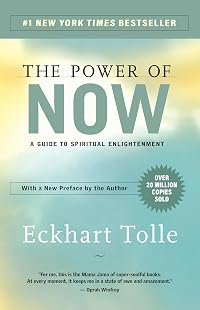
The Power of Now: A Guide to Spiritual Enlightenment
by Eckhart Tolle
On This Page
Description
Religion & Spirituality. Self-Improvement. Nonfiction. To make the journey into the Now we will need to leave our analytical mind and its false created self, the ego, behind. From the very first page of Eckhart Tolle's extraordinary book, we move rapidly into a significantly higher altitude where we breathe a lighter air. We become connected to the indestructible essence of our Being, "The eternal, ever present One Life beyond the myriad forms of life that are subject to birth and death." show more Although the journey is challenging, Eckhart Tolle uses simple language and an easy question and answer format to guide us. A word of mouth phenomenon since its first publication, The Power of Now is one of those rare books with the power to create an experience in readers, one that can radically change their lives for the better. show lessTags
Recommendations
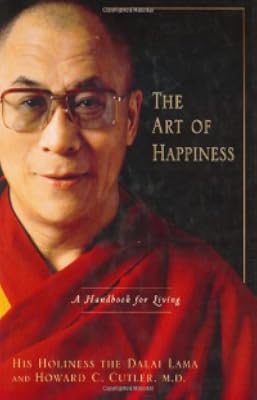
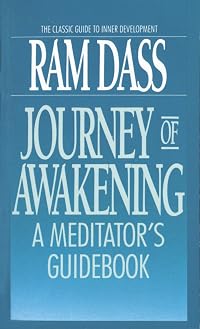
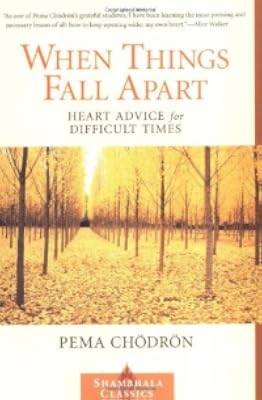
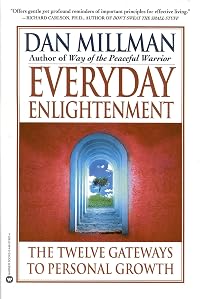
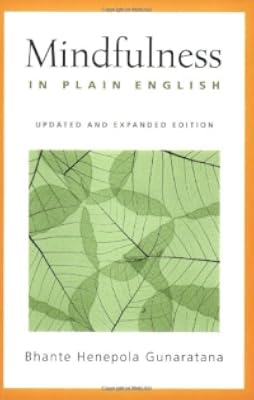
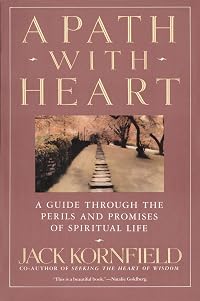
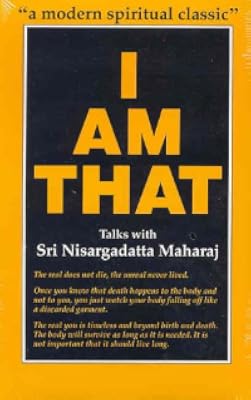
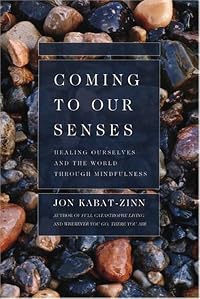
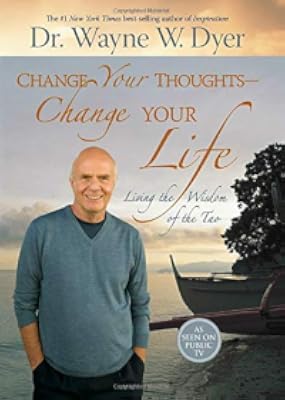
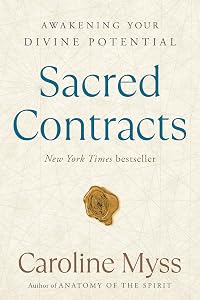
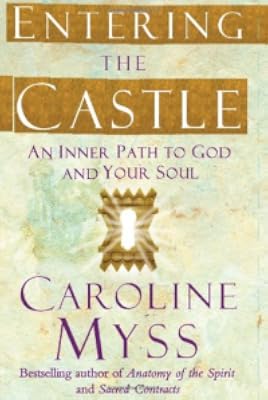
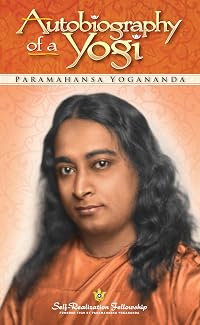

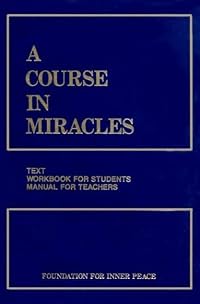
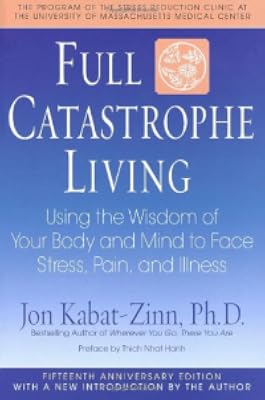
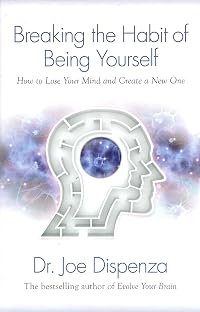

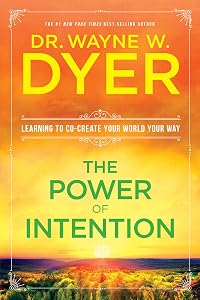
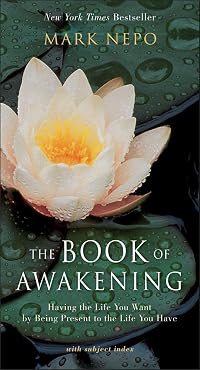
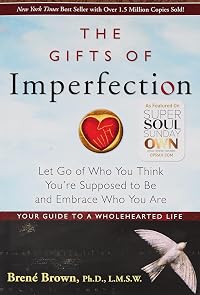
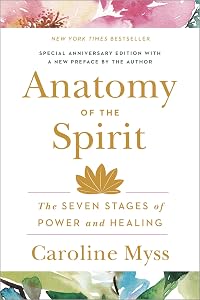
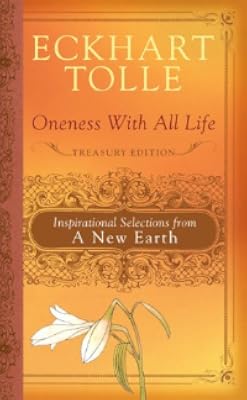
Member Recommendations
Member Reviews
Nope, I’m calling it; this is the most turgid, self-absorbed, sanctimonious, and poorly-written drivel I have read for years. Tolle manages to propose a rather beautiful and simple concept, and then drown it in cosmic psycho-babble about rocks having consciousness.
The realisation that you have control over neither your past nor your future is stark and powerful. That depression comes from a focus on the past, and anxiety from a focus on the future, is an acute observation. There are comments in the opening chapters upon which I will ruminate. But the power of them was significantly lessened when he started going on about conscious rocks, and the universe, and cosmic being.
Also, the literary conceit of writing with two voices was show more irritating. Especially when the “author’s voice” starts belittling the “reader’s voice”. Nobody likes to be patronised, especially the reader.
It might be a famous book, and Tolle might be a well-respected writer. But I thought it was a load of old cobblers. show less
The realisation that you have control over neither your past nor your future is stark and powerful. That depression comes from a focus on the past, and anxiety from a focus on the future, is an acute observation. There are comments in the opening chapters upon which I will ruminate. But the power of them was significantly lessened when he started going on about conscious rocks, and the universe, and cosmic being.
Also, the literary conceit of writing with two voices was show more irritating. Especially when the “author’s voice” starts belittling the “reader’s voice”. Nobody likes to be patronised, especially the reader.
It might be a famous book, and Tolle might be a well-respected writer. But I thought it was a load of old cobblers. show less
The mind and our ability to think is one of the greatest vanguards against tyranny and evil of all kinds, be it political, intellectual, or spiritual. Therefore, have an abundance of caution, or dare I say, fly with all your might from those who will tell you that the mind is out to enslave you, that the mind is the enemy, and that thought is dangerous. Yet that is the premise of the opening chapter of The Power of Now.
Tolle frames his arguments, for whatever they're worth, in terms of extreme either/or statements. "You are not your mind." Very few people would have said that we were. Most people recognize the common sense notion that we are both mind and body. Likewise, he states that because thoughts can be compulsive and harmful (no show more argument there), that indicates there is something wrong with thought and the mind itself. That is like saying that cancer proves the body is evil.
Just as groups like the gnostics and Manicheans of the past taught that matter and the body is evil, Tolle goes to the opposite extreme in claiming the mind itself is evil.
He references Descartes' statement, "I think therefore I am." and says this means that Descartes' thought that the only thing in the universe is the mind. This is a gross misinterpretation of Descartes. It is true that the rationalist philosophers placed great emphasis on the power of the mind and innate ideas (something almost universally rejected today), but Descartes was trying to prove that he existed, but he also used this same line of argumentation to prove that others things besides him existed. Descartes' concern was epistemology, not ontology.
All these criticisms are from the first chapter. I stopped listening when, early in the second chapter, he said something to the effect that true love would never want someone to suffer. If by this he means that love would not take pleasure in suffering, that is of course correct. Love is not sadistic. But that is not what he said. The truth is that love is often the cause of our suffering. Consider a stark contrast in Catholicism. The sufferings of Mary, the mother of Jesus, were very great, but they were great because of her love for her son. If she failed to love her son, she would not suffer. If it was Mary rather than Judas (God forbid!) who betrayed Jesus, she, like Judas, would weep only for herself, and not for her son.
The only redeeming factor that takes this book from 1/2 to 1 star is some of the practical meditation techniques, but those can be found in numerous other locations. show less
Tolle frames his arguments, for whatever they're worth, in terms of extreme either/or statements. "You are not your mind." Very few people would have said that we were. Most people recognize the common sense notion that we are both mind and body. Likewise, he states that because thoughts can be compulsive and harmful (no show more argument there), that indicates there is something wrong with thought and the mind itself. That is like saying that cancer proves the body is evil.
Just as groups like the gnostics and Manicheans of the past taught that matter and the body is evil, Tolle goes to the opposite extreme in claiming the mind itself is evil.
He references Descartes' statement, "I think therefore I am." and says this means that Descartes' thought that the only thing in the universe is the mind. This is a gross misinterpretation of Descartes. It is true that the rationalist philosophers placed great emphasis on the power of the mind and innate ideas (something almost universally rejected today), but Descartes was trying to prove that he existed, but he also used this same line of argumentation to prove that others things besides him existed. Descartes' concern was epistemology, not ontology.
All these criticisms are from the first chapter. I stopped listening when, early in the second chapter, he said something to the effect that true love would never want someone to suffer. If by this he means that love would not take pleasure in suffering, that is of course correct. Love is not sadistic. But that is not what he said. The truth is that love is often the cause of our suffering. Consider a stark contrast in Catholicism. The sufferings of Mary, the mother of Jesus, were very great, but they were great because of her love for her son. If she failed to love her son, she would not suffer. If it was Mary rather than Judas (God forbid!) who betrayed Jesus, she, like Judas, would weep only for herself, and not for her son.
The only redeeming factor that takes this book from 1/2 to 1 star is some of the practical meditation techniques, but those can be found in numerous other locations. show less
Reading The Power of Now by Eckhart Tolle was a surprisingly grounding experience. The book encourages you to focus on the present moment and step away from constant overthinking, which is easier said than done. As I read, I found myself pausing and really reflecting on my own thoughts and habits. Tolle’s writing has a calm, almost meditative quality, and at times it genuinely made me feel lighter and more aware of my surroundings.
That said, the book can be a bit challenging to get through. Some passages feel repetitive, and Tolle often uses abstract or philosophical language that can be hard to fully grasp on the first read. I found myself re-reading certain sections to really understand what he meant, which was sometimes a bit show more frustrating but also rewarding once the ideas clicked.
Overall, The Power of Now is both inspiring and thought-provoking. It’s not a book you read for entertainment, but for reflection and personal growth. While parts of it can feel dense or repetitive, the core message about living in the present and letting go of mental noise is powerful and lasting. It’s a book I think anyone struggling with stress, overthinking, or self criticism could benefit from, even if it requires patience to work through. show less
That said, the book can be a bit challenging to get through. Some passages feel repetitive, and Tolle often uses abstract or philosophical language that can be hard to fully grasp on the first read. I found myself re-reading certain sections to really understand what he meant, which was sometimes a bit show more frustrating but also rewarding once the ideas clicked.
Overall, The Power of Now is both inspiring and thought-provoking. It’s not a book you read for entertainment, but for reflection and personal growth. While parts of it can feel dense or repetitive, the core message about living in the present and letting go of mental noise is powerful and lasting. It’s a book I think anyone struggling with stress, overthinking, or self criticism could benefit from, even if it requires patience to work through. show less
This was hard to read. I can see how it's so popular in certain circles. However, the attraction seems to come from a range of novel ideas that, while sounding authoritative, are without foundations and appeal primarily to our most narcissistic traits. I did find merit in focus on the now, but I get a lot more understanding from other sources.
Eckhart Tolle is touted as one of today’s most enlightened teachers for penning two of the most groundbreaking spiritual bestselling books of recent times not to mention for his pioneering A New Earth online class which Tolle is currently teaching to the masses with Oprah. The latter is based on his latest bestselling book A New Earth: Awakening to Your Life’s Purpose which is making every Christian blogger aflutter with dismay and indignation.
In my case, I wanted to embrace Tolle’s The Power of Now mostly because it seemed that I could benefit from his teachings in order to live more in the present. During most of my adult years, I have found myself significantly melancholic about the past and always dreaming of the future. In show more other words, I scarcely live in the moment. At the outset, The Power of Now proved to be slightly uninviting and interwoven with too much techno-spiritual jargon. . . for the five times that I attempted to read it. Nevertheless, I picked it up once again on the week-end and found myself identifying with Tolle’s enthusiastic and succint prose which can be a bit off-putting to the uninitiated. Unlike most self-help gurus, Tolle has a humbling presence and his self-deprecating mannerisms speak well to me.
In particular, The Power of Now does not preach to the masses regardless of what the blogosphere seems to conjecture. In my humble opinion, Tolle provides the spiritual, psychological, and quasi-academic tools to enable everyone to see the truth that already lies within us. Indeed, my keen observation and analytical skills were interlaced with Tolle’s teachings. As a young girl, I was quite introspective and over the course of my reading, I was struck how in tune I was to the concepts Tolle was prothelizing because they were echoes of my own thoughts and observations which have lay dormant recently.
In The Power of Now, Tolle is resolute to wake us up from our collective stupor and emotional numbness with a particular focus on our intrinsic psyche and problems. Indeed, in this society where personal responsibility is a dead concept it is a lesson well-learned for all of us. In fact, Tolle’s teachings are reminiscent of the late Father de Mello’s spiritual blatherings in the posthumously published Awareness. Both teachers set out to remind us to be truly present and mindful in our lives which is the most beautiful lesson that we should heed in these tenuous times that we live in. show less
In my case, I wanted to embrace Tolle’s The Power of Now mostly because it seemed that I could benefit from his teachings in order to live more in the present. During most of my adult years, I have found myself significantly melancholic about the past and always dreaming of the future. In show more other words, I scarcely live in the moment. At the outset, The Power of Now proved to be slightly uninviting and interwoven with too much techno-spiritual jargon. . . for the five times that I attempted to read it. Nevertheless, I picked it up once again on the week-end and found myself identifying with Tolle’s enthusiastic and succint prose which can be a bit off-putting to the uninitiated. Unlike most self-help gurus, Tolle has a humbling presence and his self-deprecating mannerisms speak well to me.
In particular, The Power of Now does not preach to the masses regardless of what the blogosphere seems to conjecture. In my humble opinion, Tolle provides the spiritual, psychological, and quasi-academic tools to enable everyone to see the truth that already lies within us. Indeed, my keen observation and analytical skills were interlaced with Tolle’s teachings. As a young girl, I was quite introspective and over the course of my reading, I was struck how in tune I was to the concepts Tolle was prothelizing because they were echoes of my own thoughts and observations which have lay dormant recently.
In The Power of Now, Tolle is resolute to wake us up from our collective stupor and emotional numbness with a particular focus on our intrinsic psyche and problems. Indeed, in this society where personal responsibility is a dead concept it is a lesson well-learned for all of us. In fact, Tolle’s teachings are reminiscent of the late Father de Mello’s spiritual blatherings in the posthumously published Awareness. Both teachers set out to remind us to be truly present and mindful in our lives which is the most beautiful lesson that we should heed in these tenuous times that we live in. show less
Even when I don't like a book, I try to find some nugget that was informative, useful, or beneficial in some way.
I don't hate this book... I rather liked the first few chapters. But I became caught up in my "mind-body ignorance" or whatever in chapter 8 when the author became heterocentric, cisscentric, and told me to just pay attention to my menses to free my mind. I'm noping out of this book.
What I find beneficial is the thought of some kind of spirituality, in whatever form I choose to define. Maybe now that I've reached a certain age, I find that when I'm focused entirely on work and not on myself, that my quality of life suffers. Spending lots of time outdoors and being mindful helps present me with another point of view, something show more that kind of resets me and makes me feel "me". I liked the first few chapters in the book, because it felt like the author was describing (in some way, not identically) how I feel when I make a point of being present to my surroundings in nature. Listening to every sound I hear, making a point to seek out every color, finding ways to accept my surroundings even if it's too cold, too hot, too wet, too dry, whatever.
However, and many other reviewers have pointed this out, Eckhart Tolle does not hold the monopoly in teaching about mindfulness and presence. Many of the things I read in the first part of this book were things I'd learned about through therapy (DBT, ACT), some Zen practice, and lots of Yoga. In fact, I found the *way* that the author prescribes spirituality to be limiting. I don't feel spirituality as a mindless "energy vibration"... I feel it when I am outdoors, doing Yoga, flying an airplane...
Another of the parts of this book I don't like are the thought that we can just some how brain-zap ourselves out of depression or pain. I have suffered through pretty bad depression, and if I had read this book then, that I could just "snap out of it" and "be okay" through my own willful decision... would have been patronizing and cruel. And as somebody who has intermittent chronic back pain, while mindfulness does help me accept the fact that my body will not do what I always want it to, I cannot just will the pain away. It will be a part of my life forever.
I also firmly believe that my ego, my sense of myself through my work, my relationships, and even through my past and future... is an important part of me. I am learning that I can't focus on that person exclusively, I also need to spend time nurturing the mindful self... but I read this book and keep picturing "mindful zombies" who just sit around feeling the "energy vibrations" or whatever, meanwhile nobody has any life ambitions or goals. I think the importance is finding and accepting both halves of that dichotomy and embracing both in our lives.
Finally, I can live without the pseudoscience. Most "woo" books that I've read (which admittedly isn't many) completely lose me when they start going off about physics. Please stop doing this. show less
I don't hate this book... I rather liked the first few chapters. But I became caught up in my "mind-body ignorance" or whatever in chapter 8 when the author became heterocentric, cisscentric, and told me to just pay attention to my menses to free my mind. I'm noping out of this book.
What I find beneficial is the thought of some kind of spirituality, in whatever form I choose to define. Maybe now that I've reached a certain age, I find that when I'm focused entirely on work and not on myself, that my quality of life suffers. Spending lots of time outdoors and being mindful helps present me with another point of view, something show more that kind of resets me and makes me feel "me". I liked the first few chapters in the book, because it felt like the author was describing (in some way, not identically) how I feel when I make a point of being present to my surroundings in nature. Listening to every sound I hear, making a point to seek out every color, finding ways to accept my surroundings even if it's too cold, too hot, too wet, too dry, whatever.
However, and many other reviewers have pointed this out, Eckhart Tolle does not hold the monopoly in teaching about mindfulness and presence. Many of the things I read in the first part of this book were things I'd learned about through therapy (DBT, ACT), some Zen practice, and lots of Yoga. In fact, I found the *way* that the author prescribes spirituality to be limiting. I don't feel spirituality as a mindless "energy vibration"... I feel it when I am outdoors, doing Yoga, flying an airplane...
Another of the parts of this book I don't like are the thought that we can just some how brain-zap ourselves out of depression or pain. I have suffered through pretty bad depression, and if I had read this book then, that I could just "snap out of it" and "be okay" through my own willful decision... would have been patronizing and cruel. And as somebody who has intermittent chronic back pain, while mindfulness does help me accept the fact that my body will not do what I always want it to, I cannot just will the pain away. It will be a part of my life forever.
I also firmly believe that my ego, my sense of myself through my work, my relationships, and even through my past and future... is an important part of me. I am learning that I can't focus on that person exclusively, I also need to spend time nurturing the mindful self... but I read this book and keep picturing "mindful zombies" who just sit around feeling the "energy vibrations" or whatever, meanwhile nobody has any life ambitions or goals. I think the importance is finding and accepting both halves of that dichotomy and embracing both in our lives.
Finally, I can live without the pseudoscience. Most "woo" books that I've read (which admittedly isn't many) completely lose me when they start going off about physics. Please stop doing this. show less
I've been meditating for 15 years in four different traditions. This book has stayed with me through all that flip flopping, it speaks straight to the truth of being.
His terminology sometimes veers into pop psychology, which annoys me, but as long as I notice that then the power of Eckharts immediacy comes through loud and clear.
As I write this a shiver goes down my spine and my eyes are drawn away from the screen into the room around me as I ,once again, become this timeless now.
His terminology sometimes veers into pop psychology, which annoys me, but as long as I notice that then the power of Eckharts immediacy comes through loud and clear.
As I write this a shiver goes down my spine and my eyes are drawn away from the screen into the room around me as I ,once again, become this timeless now.
Members
- Recently Added By
Lists

Best Self Help Books
87 works; 18 members

Books on Spirituality
7 works; 1 member

Books on My Journey
18 works; 1 member

Seeking the Soul
46 works; 1 member

Mind Expanding Books by hackerkid
581 works; 8 members

Summer Reading 2023
14 works; 1 member

BitLife
212 works; 4 members

Globe and Mail | Canadian Non-Fiction: January 18, 2025
10 works; 1 member

Men's healing resources
751 works; 1 member

Healing resources for women
589 works; 1 member

spirituality and self growth
84 works; 1 member

el
1,139 works; 1 member

Globe and Mail | Canadian Non-Fiction: March 14, 2026
10 works; 1 member
Author Information

181+ Works 21,025 Members
Spiritual author and teacher Eckhart Tolle was born in Germany on February 16, 1948. He lived in Spain and England before settling in Vancouver, Canada in 1995. He received his education at the Universities of London and Cambridge. Following several sustained periods of depression, at the age of 29 he experienced an enlightenment that dramatically show more changed the course of his life. His subsequent spiritual teachings have focused on awareness of the present moment, freedom from negativity, and the attainment of inner peace. He does not align himself with any specific religion or tradition. He has written numerous books including The Power of Now; A New Earth; Stillness Speaks; and Practicing the Power of Now. He is a public speaker who teaches and travels throughout the world. In January 2008, A New Earth was selected for Oprah Winfrey's book club. (Bowker Author Biography) show less
Awards and Honors
Distinctions
Work Relationships
Common Knowledge
- Canonical title
- The Power of Now: A Guide to Spiritual Enlightenment
- Original title
- The Power of Now : A Guide to Spiritual Enlightenment
- Original publication date
- 1999-09
- Epigraph
- You are here to enable the divine purpose of the universe to unfold. That is how important you are! - Eckhart Tolle
- First words
- A beggar had been sitting by the side of a road for over thirty years.
- Quotations
- When you say Being, are you talkíng about God? If you are, then why don't you say it?
The word God has become empty of meaning through thousands of years of misuse. I use it sometimes, but I do so sparingly. By misuse ... (show all)I mean that people who have never even glimpsed the realm of the sacred, the infinite vastness behind that word, use it with great conviction, as if they knew what they are talking about. Or they argue against it, as íf they knew what it is that they are denying. This misuse gives rise to absurd beliefs, assertions, and egoic delusions, such as "My or our God is the only true God, and your God is false," or Nietzsche's famous statement "God is dead." The word God has become a closed concept. The moment the word is uttered, a mental image is created, no longer, perhaps, of an old man with a white beard, but still a rnental representation of someone or something outside you, and, yes, almost inevitably a male someone or something. Neither God, nor Being nor any other word can define or explain the ineffable reality behind the word, so the only important question is whether the word is a help or a hindrance in enabling you to experience That toward which it points. Does it point beyond itself to that transcendental reality, or does it lend itself too easily to becoming no more than an idea in your head that you believe in, a mental idol?The word Being explains nothing, but nor does God. Being,however, has the advantage that it is an open concept. It does not reduce the infinite invisible to a finite entity. It is impossible to form a mental image of it. Nobody can claim exclusive possession of Being. It is your very essence, and it is immediately accessible to you as the feeling of your own presence, the realization I am that is prior to I am this or I am that. So it is only a small step from the word Being to the experience of Being. - Last words
- (Click to show. Warning: May contain spoilers.)When you no longer need to ask the question.
- Publisher's editor
- Tolle, Eckhart
Classifications
- Genres
- Religion & Spirituality, Philosophy, General Nonfiction, Nonfiction
- DDC/MDS
- 204.4 — Religion Religion Religious experience, life, practice Religious life and practice
- LCC
- BL624 .T64 — Philosophy, Psychology and Religion Religions. Mythology. Rationalism Religions. Mythology. Rationalism Religious life
- BISAC
Statistics
- Members
- 9,386
- Popularity
- 1,126
- Reviews
- 147
- Rating
- (3.89)
- Languages
- 27 — Catalan, Chinese, Czech, Danish, Dutch, English, Estonian, Finnish, French, German, Greek, Hebrew, Hindi, Hungarian, Indonesian, Italian, Korean, Malayalam, Marathi, Malay, Norwegian (Bokmål), Norwegian, Polish, Russian, Spanish, Swedish, Portuguese (Portugal)
- Media
- Paper, Audiobook, Ebook
- ISBNs
- 135
- ASINs
- 43