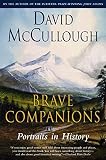
Brave Companions: Portraits In History
by David McCullough
On This Page
Description
From Alexander von Humboldt to Charles and Anne Lindbergh, these are stories of people of great vision and daring whose achievements continue to inspire us today, brilliantly told by master historian David McCullough.The bestselling author of Truman and John Adams, David McCullough has written profiles of exceptional men and women past and present who have not only shaped the course of history or changed how we see the world but whose stories express much that is timeless about the human show more condition.
Here are Alexander von Humboldt, whose epic explorations of South America surpassed the Lewis and Clark expedition; Harriet Beecher Stowe, "the little woman who made the big war"; Frederic Remington; the extraordinary Louis Agassiz of Harvard; Charles and Anne Lindbergh, and their fellow long-distance pilots Antoine de Saint-Exupéry and Beryl Markham; Harry Caudill, the Kentucky lawyer who awakened the nation to the tragedy of Appalachia; and David Plowden, a present-day photographer of vanishing America.
Different as they are from each other, McCullough's subjects have in common a rare vitality and sense of purpose. These are brave companions: to each other, to David McCullough, and to the reader, for with rare storytelling ability McCullough brings us into the times they knew and their very uncommon lives. show less
Tags
Recommendations
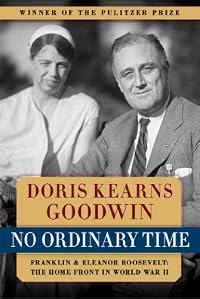
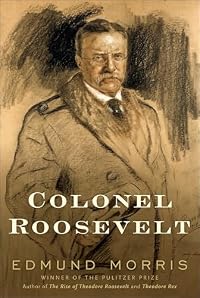
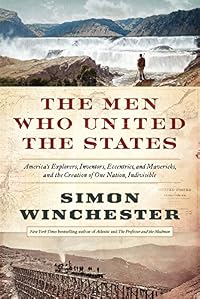
Member Recommendations
The Invention of Nature: The Adventures of Alexander von Humboldt, the Lost Hero of Science by Andrea Wulf
rakerman McCullough's portrait of Alexander von Humboldt is a nice short introduction to the story that Andrea Wulf tells in full in The Invention of Nature.
Member Reviews
A gift from my brother on my birthday and I was deeply moved that he would share this with me. The later chapters are difficult to read, praising the virtues of Congress for example, when all seems mired in corruption but perhaps if we valued these stories more, if our vision was inspired by integrity, we would meet a higher standard.
One of the earlier stories was of building the railroad through Panama - stunningly written. Subtly we are brought to the realization that all that suffering, grinding suffering, enriched a few. That was the point. Power fueled by greed. We see it now, too, but the stakes are even higher. The life of the planet is at stake. John Adams urges our action; his voice can be heard here.
One of the earlier stories was of building the railroad through Panama - stunningly written. Subtly we are brought to the realization that all that suffering, grinding suffering, enriched a few. That was the point. Power fueled by greed. We see it now, too, but the stakes are even higher. The life of the planet is at stake. John Adams urges our action; his voice can be heard here.
Summary: Short profiles of exceptional American men and women from biologist Louis Agassiz to writer Harriet Beecher Stowe.
Recently, I reviewed a posthumously published collection of essays by David McCullough. I’ve loved his work ever since devouring his mammoth biography of Harry Truman. But in browsing the list of his books, I discovered there was one I had missed–this one! Obviously I’ve now remedied it.
In this work, McCullough offers brief sketches of a number of extraordinary historical figures, mostly Americans. Collecting these essays for this book, McCullough observed:
“Reading these essays again, selecting and arranging them as a book, I am struck by how much they have in common. In my way, I see now, I have been show more writing about the same kinds of people all along. And I see, too, the extent to which they have revealed the world and times past for me, and things about myself, that I would not have known otherwise” (p. xi).
It was indeed the case that this collection revealed more than the people, but also glimpses of our world and history in five sections.
First, he addresses “Phenomena.” He begins with the extraordinary journey of Alexander von Humboldt in South America from 1799-1804, accompanied by Aime Bonpland. Essentially, the pair rediscovered rediscovered South America. He follows with a portrait of biologist Louis Agassiz, whose first instruction to students after giving them a preserved fish was “Oh, look at your fish!” He and Asa Gray were friends and phenomena at Harvard who came to loggerheads over Darwin’s theories, which Agassiz couldn’t accept. He concludes the section sketching the life of Harriet Beecher Stowe. McCullough portrays the extraordinary renown for a woman she achieved as well as her renunciation of her father’s Calvinism.
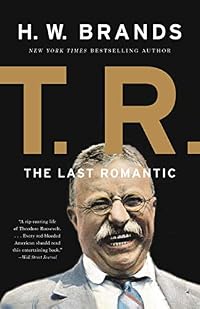
Part Two on “The Real West” portrays life in the cattle town of Medora, in North Dakota’s Badlands. He does so though the lens of two figures, both who lost a fortune there–Teddy Roosevelt and the Marquis de Mores. Roosevelt went there an asthmatic stripling. Work alongside cowboys exhilarated him and turned him into the adventurous, robust figure we know. The other vignette is of artist Frederic Remington, through whom many Americans saw the West portrayed.
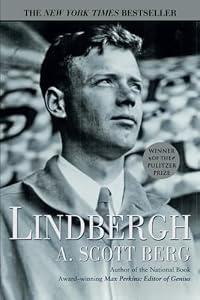
In Part Three, McCullough turns to “Pioneers.” He begins with the pioneer railroad engineers who built the first Panama Railway in the early 1850’s, overcoming both topography and disease. The next two essays concern the Brooklyn Bridge, on which McCullough wrote a full-length book. The first focuses on the Roeblings, father and son. Washington Roebling’s extraordinary engineering accomplishment, despite the effects of Caisson’s Disease, is underscored in the second, in which McCullough chronicles his discovery of the meticulous engineering plans for the bridge. Many bore Roebling’s initials and are works of art. McCullough describes his efforts to preserve this treasure. Finally he portrays a trio of early aviators who also wrote: Charles Lindbergh, Antoine de Saint-Exupery, and Beryl Markham.
Then in Part Four, McCullough turns to contemporaries in “Figures in a Landscape.” The first essay is a peril for anyone who already has too many books on the TBR pile. He profiles Conrad Richter, a novelist portraying life on America’s extending frontier. I learned he even wrote a trilogy on the early settlement of Ohio. Then he sketches the work of lawyer Henry Caudill and his fight against strip mining interests denuding the landscape of eastern Kentucky (which continues to this day). We meet zoologist Miriam Rothschild who has studied marine biology, entomology, and farming. Finally, he accompanies photographer David Plowden in his efforts to capture small town America.
The concluding Part Five, “On We Go” is different in not focusing on biography. First, McCullough remembers Washington, DC as he knew it–a very different place from today. The next is a from a magazine assignment, summarizing fifty years of history between 1936 and 1986. I lived through thirty-two of those years and the essay makes me think what I’d write about the next forty. Then McCullough advises Middlebury College graduates in a commencement speech to learn history by traveling. Finally, “Simon Willard’s Clock” is a reflection on the U.S. House of Representatives that I wish all present members of the House would read.
A few of these essays reprise material from McCullough’s longer books. Sometimes a snack rather than a full meal is just right and that is what these essays were. I was particularly fascinated to learn about Alexander von Humboldt, Conrad Richter, and Henry Caudill, a co-belligerent with Wendell Berry. But the particular strength of this book was the chance in brief to glimpse a number of seminal figures, and perhaps find one or two to probe more deeply. We all need our pantheon of brave companions. show less
Recently, I reviewed a posthumously published collection of essays by David McCullough. I’ve loved his work ever since devouring his mammoth biography of Harry Truman. But in browsing the list of his books, I discovered there was one I had missed–this one! Obviously I’ve now remedied it.
In this work, McCullough offers brief sketches of a number of extraordinary historical figures, mostly Americans. Collecting these essays for this book, McCullough observed:
“Reading these essays again, selecting and arranging them as a book, I am struck by how much they have in common. In my way, I see now, I have been show more writing about the same kinds of people all along. And I see, too, the extent to which they have revealed the world and times past for me, and things about myself, that I would not have known otherwise” (p. xi).
It was indeed the case that this collection revealed more than the people, but also glimpses of our world and history in five sections.
First, he addresses “Phenomena.” He begins with the extraordinary journey of Alexander von Humboldt in South America from 1799-1804, accompanied by Aime Bonpland. Essentially, the pair rediscovered rediscovered South America. He follows with a portrait of biologist Louis Agassiz, whose first instruction to students after giving them a preserved fish was “Oh, look at your fish!” He and Asa Gray were friends and phenomena at Harvard who came to loggerheads over Darwin’s theories, which Agassiz couldn’t accept. He concludes the section sketching the life of Harriet Beecher Stowe. McCullough portrays the extraordinary renown for a woman she achieved as well as her renunciation of her father’s Calvinism.
Part Two on “The Real West” portrays life in the cattle town of Medora, in North Dakota’s Badlands. He does so though the lens of two figures, both who lost a fortune there–Teddy Roosevelt and the Marquis de Mores. Roosevelt went there an asthmatic stripling. Work alongside cowboys exhilarated him and turned him into the adventurous, robust figure we know. The other vignette is of artist Frederic Remington, through whom many Americans saw the West portrayed.
In Part Three, McCullough turns to “Pioneers.” He begins with the pioneer railroad engineers who built the first Panama Railway in the early 1850’s, overcoming both topography and disease. The next two essays concern the Brooklyn Bridge, on which McCullough wrote a full-length book. The first focuses on the Roeblings, father and son. Washington Roebling’s extraordinary engineering accomplishment, despite the effects of Caisson’s Disease, is underscored in the second, in which McCullough chronicles his discovery of the meticulous engineering plans for the bridge. Many bore Roebling’s initials and are works of art. McCullough describes his efforts to preserve this treasure. Finally he portrays a trio of early aviators who also wrote: Charles Lindbergh, Antoine de Saint-Exupery, and Beryl Markham.
Then in Part Four, McCullough turns to contemporaries in “Figures in a Landscape.” The first essay is a peril for anyone who already has too many books on the TBR pile. He profiles Conrad Richter, a novelist portraying life on America’s extending frontier. I learned he even wrote a trilogy on the early settlement of Ohio. Then he sketches the work of lawyer Henry Caudill and his fight against strip mining interests denuding the landscape of eastern Kentucky (which continues to this day). We meet zoologist Miriam Rothschild who has studied marine biology, entomology, and farming. Finally, he accompanies photographer David Plowden in his efforts to capture small town America.
The concluding Part Five, “On We Go” is different in not focusing on biography. First, McCullough remembers Washington, DC as he knew it–a very different place from today. The next is a from a magazine assignment, summarizing fifty years of history between 1936 and 1986. I lived through thirty-two of those years and the essay makes me think what I’d write about the next forty. Then McCullough advises Middlebury College graduates in a commencement speech to learn history by traveling. Finally, “Simon Willard’s Clock” is a reflection on the U.S. House of Representatives that I wish all present members of the House would read.
A few of these essays reprise material from McCullough’s longer books. Sometimes a snack rather than a full meal is just right and that is what these essays were. I was particularly fascinated to learn about Alexander von Humboldt, Conrad Richter, and Henry Caudill, a co-belligerent with Wendell Berry. But the particular strength of this book was the chance in brief to glimpse a number of seminal figures, and perhaps find one or two to probe more deeply. We all need our pantheon of brave companions. show less
This book is a compilation of articles that David McCullough has written over the years, consisting of mini-biographies and historical scenes. McCullough has a wonderful way of bringing history to life. As I usually expect in a collection of essays, some are more compelling than others. I particularly enjoyed the articles on Alexander von Humboldt, Louis “look at your fish” Agassiz, artist Frederic Remington, the construction of the Panama Railroad in the 1850s, and highlights of his visits to Washington DC. There is also an article written for Life Magazine’s 50th anniversary that distills the history of the US since 1936. I found it interesting that we are still learning the lessons McCullough recounts at the end of the book, show more which was published in 1991. I listened to the audio book, competently read by the author in his gravelly baritone. show less
This book is a compilation of articles that David McCullough has written over the years, consisting of mini-biographies and historical scenes. McCullough has a wonderful way of bringing history to life. As I usually expect in a collection of essays, some are more compelling than others. I particularly enjoyed the articles on Alexander von Humboldt, Louis “look at your fish” Agassiz, artist Frederic Remington, the construction of the Panama Railroad in the 1850s, and highlights of his visits to Washington DC. There is also an article written for Life Magazine’s 50th anniversary that distills the history of the US since 1936. I found it interesting that we are still learning the lessons McCullough recounts at the end of the book, show more which was published in 1991. I listened to the audio book, competently read by the author in his gravelly baritone. show less
I am not always fond of McCullough's writing style, a little clunky at times but mostly very readable. He brings a rich enthusiasm to his topics and I learned quite a bit reading this. His first couple chapters on Alexander von Humboldt and Louis Agassiz are almost stunning with their infectious exhilaration. I liked this bit on Humboldt: "Emerson was to call him "one of those wonders of the world, like Aristotle ... who appear from time to time, as if to show us the possibilities of the human mind.""
The profiles are not just of people however. One of my favorites was on The first ocean to ocean railroad, 47 miles across Panama and the tremendous cost in lives to build.
Having just read Conrad Richter's "The Lady," I was surprised when I show more came to chapter ten. McCullough devotes a chapter to Richter, who he considered a friend. I found some of the topics much more interesting than others and I suspect this will vary among readers. I debated with myself how to rate this, as I think it is a little uneven, but I am very glad to have read it. It has made me want to read more about many of the subjects. 4 - 4 1/2 stars Recommended. show less
The profiles are not just of people however. One of my favorites was on The first ocean to ocean railroad, 47 miles across Panama and the tremendous cost in lives to build.
Having just read Conrad Richter's "The Lady," I was surprised when I show more came to chapter ten. McCullough devotes a chapter to Richter, who he considered a friend. I found some of the topics much more interesting than others and I suspect this will vary among readers. I debated with myself how to rate this, as I think it is a little uneven, but I am very glad to have read it. It has made me want to read more about many of the subjects. 4 - 4 1/2 stars Recommended. show less
The author has collected his favorite essays -- profiles of exceptional men and women past and present who have not only shaped the course of history or changed how we see the world, but whose stories express much that is timeless about the human condition.
This was an interesting collection of essays that gave me a glimpse of various people or places that I mostly didn’t know anything about. McCullough makes the point that we all should know more about history by reading or traveling to new places and learning the history there. His enthusiasm comes through in his writing and is enjoyable to read.
This was an interesting collection of essays that gave me a glimpse of various people or places that I mostly didn’t know anything about. McCullough makes the point that we all should know more about history by reading or traveling to new places and learning the history there. His enthusiasm comes through in his writing and is enjoyable to read.
You know, sometimes I just don’t want to plow through seven or eight hundred pages of biography. Besides Charles Lindbergh and Teddy Roosevelt, most of the information was new to me and for the most part entertaining. Personally, I enjoyed the Fred Remington, Washington Roebling, and David Plowden pieces the most. Sometimes a snack is much more satisfying than a five course meal and David McCoullagh delivers some tasty morsels.
Members
- Recently Added By
Lists

Top Five Books of 2013
1,564 works; 722 members

Non-Fiction Worth Reading
1,015 works; 260 members

Sonlight Books
1,487 works; 25 members
Author Information

58+ Works 63,897 Members
David McCullough was born in Pittsburgh, Pennsylvania on July 7, 1933. He received a bachelor's degree in English literature from Yale University in 1955. After graduation, he moved to New York City and worked as a trainee at Sports Illustrated. He later worked as a writer and editor for the United States Information Agency, in Washington, D.C., show more including a position at American Heritage. His first book, The Johnstown Flood, was published in 1968. His other books include 1776, Brave Companions, The Great Bridge, and The Greater Journey: Americans in Paris. He received the Pulitzer Prize twice for Truman and John Adams and the National Book Award twice for The Path Between the Seas: The Creation of the Panama Canal and Mornings on Horseback. He also won two Francis Parkman Prizes, the Los Angeles Times Book Award, and New York Public Library's Literary Lion Award. Two of his books, Truman and John Adams, have been adapted into a television movie and mini-series, respectively, by HBO. In December 2006, he received the Presidential Medal of Freedom. He also made the New York Times Best Seller List in 2015 with his book The Wright Brothers, and in 2017 with The American Spirit: Who We Are and What We Stand For. (Bowker Author Biography) David McCullough is a writer, historian, lecturer, & teacher. He has received the Pulitzer Prize for "Truman", as well as the Francis Parkman Prize, & the "Los Angeles Times" Book Award. He is also a two-time winner of the National Book Award, for history & for biography. He lives in Massachusetts. (Publisher Provided) show less
Work Relationships
Common Knowledge
- Original publication date
- 1992
- People/Characters
- Alexander von Humboldt; Harriet Beecher Stowe; Frederic Remington; Louis Agassiz; Charles A. Lindbergh; Anne Morrow Lindbergh (show all 13); Antoine de Saint-Exupéry; Beryl Markham; Harry Caudill; David Plowden; Conrad Richter; Antoine-Amédée-Marie-Vincent Manca Amat de Vallombrosa, Marquis de Morès; Ferdinand de Lesseps
- Dedication
- For Rosalee Barnes McCullough
- First words
- On a morning in May 1804, there arrived at the White House by Baltimore coach, and in the company of the painter Charles Willson Peale, a visitor from abroad: an aristocratic young German, age thirty-four, a bachelor, occupat... (show all)ion scientist and explorer.
- Last words
- (Click to show. Warning: May contain spoilers.)On we go.
Classifications
- Genres
- History, General Nonfiction, Biography & Memoir, Nonfiction
- DDC/MDS
- 920.073 — History & geography Biography & genealogy Biography, genealogy, insignia General and collective by localities Of North America United States
- LCC
- CT214 .M34 — Auxiliary Sciences of History Biography Biography National biography
- BISAC
Statistics
- Members
- 1,497
- Popularity
- 15,377
- Reviews
- 26
- Rating
- (4.02)
- Languages
- English
- Media
- Paper, Audiobook, Ebook
- ISBNs
- 9
- ASINs
- 11