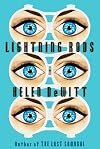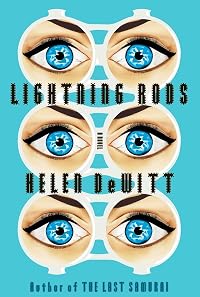
Lightning Rods
by Helen DeWitt
On This Page
Description
Joe fails to sell a single set of the Encyclopedia Britannica in six months. Then he fails to sell a single Electrolux. Holed up in his trailer, Joe finds an outlet his for frustrations in a series of ingenious sexual fantasies, and at last strikes gold. His brain storm, Lightning Rods, Inc., will take Joe to the very top - and to the very heart of corporate insanity - with an outrageous solution to the spectre of sexual harassment in the modern office.Tags
Recommendations
































Member Recommendations

zhejw Both skewer life in corporate America and the language and thought that rise out of it.

Member Reviews
What’s fascinating about this outrageous novel is DeWitt’s generous understanding of male biology / sexuality and her sympathetic presentation of the male dilemma regarding truth. In my favorite scene, a male character meets a librarian who states she is not the kind of woman who has sex on a first date; she’s not that kind of girl. The male character, however, is able to be patient and develop a relationship with this librarian over a long period of time only because he has access to the anonymous lightning rods at work and can release his constant sexual urges with them. Free from sexual tension in his relationship, he gradually falls in love with the librarian without ever contaminating their courtship by pressuring her for show more sex. Once they are both thoroughly in love and ready for marriage, the librarian suggests that a couple with their degree of deep inner connection should have no secrets; they should be completely honest. At that prompt, the male character takes a chance and confesses that he has been using the lightning rods at work so he could relax as their relationship slowly and beautifully blossomed. The librarian “freaks out” and terminates their relationship. They are done, over. Moral of the story: Men, never be honest with your intimate other. Only an idiot tells the truth.
The novel is unique in that it explores and reveal issues and truths more than simplistically attacking them and saying they should go away or be silenced. DeWitt seems to imply that men and women might actually be able to brace themselves, be honest, and face these truths with a sense of humor and then sit back and view a fresh scenario once the dust has settled.
I’m not sure I’d go so far as to suggest that this novel has the potential to effect positive social change on a global scale, and that this book should be mandatory reading at a special meeting called by the General Assembly of the United Nations, and that delegates from all of the 193 member states should be given a chance to vote on Joe’s sales pitch and suggest adjustments and amendments to fine-tune it for global application, but it definitely deserves an open-minded reading. show less
The novel is unique in that it explores and reveal issues and truths more than simplistically attacking them and saying they should go away or be silenced. DeWitt seems to imply that men and women might actually be able to brace themselves, be honest, and face these truths with a sense of humor and then sit back and view a fresh scenario once the dust has settled.
I’m not sure I’d go so far as to suggest that this novel has the potential to effect positive social change on a global scale, and that this book should be mandatory reading at a special meeting called by the General Assembly of the United Nations, and that delegates from all of the 193 member states should be given a chance to vote on Joe’s sales pitch and suggest adjustments and amendments to fine-tune it for global application, but it definitely deserves an open-minded reading. show less
A friend of mine, whom I very much respect, told me this wasn't very good. Here's my suspicion: if you've read 'The Last Samurai,' which I have not, and you come to this book expecting something moving and tender, you'll probably hate it. It's like taking a swig of cola, only it isn't cola, it's bourbon. Nasty. But if you're expecting bourbon... that can be very pleasant.
Like bourbon, this book is more about stripping paint than nourishing or softly soothing. It's funny and gross, but also very, very clever: DeWitt de-eroticizes fantasy and sex, and in doing so should make you very uncomfortable about the world you live in, which itself does a good job of de-eroticizing fantasy and sex. In place of a plot - you know, human interaction, show more individuals making decisions based on a range of considerations, and so on - this book has an unfolding, perfectly rational thought. What *would* happen if someone set up a sex-service for businesses' best salesmen? Probably something like this, which reveals a lot about the world we live in: the dominance of political correctness over morality, the priority of profit, the debased attitude we have towards other people, art and generally anything that makes life worth living. It's perfectly rational (according to one kind of rationality). But it's not pretty.
And DeWitt also nails Men in general. I think we probably deserve it. show less
Like bourbon, this book is more about stripping paint than nourishing or softly soothing. It's funny and gross, but also very, very clever: DeWitt de-eroticizes fantasy and sex, and in doing so should make you very uncomfortable about the world you live in, which itself does a good job of de-eroticizing fantasy and sex. In place of a plot - you know, human interaction, show more individuals making decisions based on a range of considerations, and so on - this book has an unfolding, perfectly rational thought. What *would* happen if someone set up a sex-service for businesses' best salesmen? Probably something like this, which reveals a lot about the world we live in: the dominance of political correctness over morality, the priority of profit, the debased attitude we have towards other people, art and generally anything that makes life worth living. It's perfectly rational (according to one kind of rationality). But it's not pretty.
And DeWitt also nails Men in general. I think we probably deserve it. show less
I bought and read this because it had appeared on a New York Times list of “22 of the Funniest Novels Since ‘Catch-22’” earlier this year, and while it held some promise early on, it rather quickly became too one-note and couldn’t sustain itself over 273(!) pages.
DeWitt’s writing is wickedly satirical and I liked the sprinkling of actual wisdom about the business world amidst its outrageous and absolutely filthy premise. The book peaks early in a chapter called Special K, with its observations about needing to accept things for what they are, human guilt and the urge to dominate, and how those things relate to sales, while dropping in humor like “You take a bunch of guys and maybe for some of them The Man was Elvis, and show more for some of them it was Jimi Hendrix, and for some of them it was Kurt Cobain, but the thing they all have in common is that they would never sing, ‘Everything is beautiful in its own way’ unless someone held a gun to their head (and maybe not even then).”
The trouble is that the variations on the premise were as uninteresting as they were unappealing, and there were so many retrograde ideas floating about in here that I suppose were meant to be funny, but which seemed rather close to being accepted as truisms. The performance of “alpha males” does improve, some of the women in these degrading positions go on to highly successful careers, politicians who use the service now follow through with their campaign promises, etc. The variations in pigmentation among Caucasians that would compromise anonymity is completely ignored, as if “white” is a single thing, but for African Americans it’s called out. The “Mexicans and Nicaraguans” are equated with the “very cheapest materials” in a competitor, whereas the inventor’s titular service only uses the “highest quality of staff.”
Now that’s probably all meant as part of the satire, but as those kinds of views are unfortunately still held and the satire doesn’t go even further in these directions as exaggeration or provide a challenge, it doesn’t always seem to be mocking them. Regardless, it wasn’t very enjoyable reading over its second half. This would have been much better as a short story or a novella.
Just this quote, on men:
“One of the things that can put on a strain on a relationship, after all, is that men tend to equate a relationship with sex on demand.” show less
DeWitt’s writing is wickedly satirical and I liked the sprinkling of actual wisdom about the business world amidst its outrageous and absolutely filthy premise. The book peaks early in a chapter called Special K, with its observations about needing to accept things for what they are, human guilt and the urge to dominate, and how those things relate to sales, while dropping in humor like “You take a bunch of guys and maybe for some of them The Man was Elvis, and show more for some of them it was Jimi Hendrix, and for some of them it was Kurt Cobain, but the thing they all have in common is that they would never sing, ‘Everything is beautiful in its own way’ unless someone held a gun to their head (and maybe not even then).”
The trouble is that the variations on the premise were as uninteresting as they were unappealing, and there were so many retrograde ideas floating about in here that I suppose were meant to be funny, but which seemed rather close to being accepted as truisms. The performance of “alpha males” does improve, some of the women in these degrading positions go on to highly successful careers, politicians who use the service now follow through with their campaign promises, etc. The variations in pigmentation among Caucasians that would compromise anonymity is completely ignored, as if “white” is a single thing, but for African Americans it’s called out. The “Mexicans and Nicaraguans” are equated with the “very cheapest materials” in a competitor, whereas the inventor’s titular service only uses the “highest quality of staff.”
Now that’s probably all meant as part of the satire, but as those kinds of views are unfortunately still held and the satire doesn’t go even further in these directions as exaggeration or provide a challenge, it doesn’t always seem to be mocking them. Regardless, it wasn’t very enjoyable reading over its second half. This would have been much better as a short story or a novella.
Just this quote, on men:
“One of the things that can put on a strain on a relationship, after all, is that men tend to equate a relationship with sex on demand.” show less
Lightning Rods tells the story of the introduction of women as sexual lightning rods into corporate American office environments in order to ward off sexual harassment lawsuits. Joe, the man behind the idea, bases it in one of his recurring sexual fantasies, and much of the novel concerns what happens when you translate fantasy into real life.
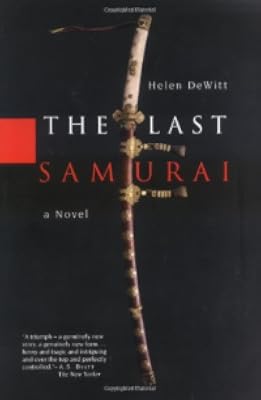
At first, I did not recognise this as a Helen DeWitt novel at all. You may ask with what temerity I presume to talk of "Helen De Witt novels" when there has only ever been one (however wonderful that one is*), but there it is: I have spent some 10 years or so reading and re-reading The Last Samurai, and had formed some very clear ideas of what characterised this novel, and extrapolated from there show more to a general tendency. This is a dangerous thing to do.
DeWitt has said that
It was very different from The Last Samurai, so different that 50% (at a guess) of readers who loved TLS hated the book.
And for a moment there I really thought I was going to be one of them. The opening of the book really threw me. It did not help, of course, that my rather prudish mind was rather taken aback by being confronted with a failed salesman's failed sexual fantasies. Again and again. In fact, if I were not cursed (?) with an inability to actually give up on a book, I might have given up. This despite the fact that I absolutely adore DeWitt's last book. But I picked up on the platitudes used in the focalisation through the main character, and I clung to them as signs that DeWitt was on a satirical jaunt.
My complete faith in the author helped. I am fairly sure that if a man whose writing I did not trust had written the same, the book would have fallen down the reading pile, making the neutrinos blink as it passed them.
But then, about half-way through, I finally spotted DeWitt's style. I had seen indications of her already after a couple of chapters, but I kept my hopes down in order to avoid disappointment. I think I realised I was on dry land when the smart women started showing up, with their cold rationality and ability to follow a thought to the extreme. That was at about the same time as the story itself took a turn for the absurd and I really started enjoying myself. Because each absurd turn was prefigured by an exercise in the appearance of perfect logic. The truths of what I take to be corporate America is made to serve as the basis on which it is all built. I think my favourite part is when Jo takes his innovation to the Bible belt. Or perhaps the bit with the dwarf.
The idea of using women's bodies as what amounts to simple masturbation aids is of course repulsive, but that is rather the point (I suspect). The very natural and convincing way in which the characters take you from one step to the next makes it necessary to think on your own. Good practice, that.
It is terribly unfair of me to compare this book to The Last Samurai. The former was a magnificent feast of characters and stories and languages, varied and glorious at every turn; this book is a slow and methodical working out of a thought experiment. It is much more linear, and strange, and unsettling in its superficial treatment of it all. And I would say it is a tougher read than the former, mainly because you are not really allowed to sympathise with the characters here. I much prefer the former; but this book is a much more concentrated read, and I know some of you will like that.
It is worth a read, anyway. If for no other reason, then because your mind needs the exercise.
*She did publish another book in pdf form online, called Your Name Here, with Ilya Gridneff; but I have been waiting for it to become a "real book", and it looks like my hopes and patience are finally being rewarded by Noemi Press. show less
At first, I did not recognise this as a Helen DeWitt novel at all. You may ask with what temerity I presume to talk of "Helen De Witt novels" when there has only ever been one (however wonderful that one is*), but there it is: I have spent some 10 years or so reading and re-reading The Last Samurai, and had formed some very clear ideas of what characterised this novel, and extrapolated from there show more to a general tendency. This is a dangerous thing to do.
DeWitt has said that
It was very different from The Last Samurai, so different that 50% (at a guess) of readers who loved TLS hated the book.
And for a moment there I really thought I was going to be one of them. The opening of the book really threw me. It did not help, of course, that my rather prudish mind was rather taken aback by being confronted with a failed salesman's failed sexual fantasies. Again and again. In fact, if I were not cursed (?) with an inability to actually give up on a book, I might have given up. This despite the fact that I absolutely adore DeWitt's last book. But I picked up on the platitudes used in the focalisation through the main character, and I clung to them as signs that DeWitt was on a satirical jaunt.
My complete faith in the author helped. I am fairly sure that if a man whose writing I did not trust had written the same, the book would have fallen down the reading pile, making the neutrinos blink as it passed them.
But then, about half-way through, I finally spotted DeWitt's style. I had seen indications of her already after a couple of chapters, but I kept my hopes down in order to avoid disappointment. I think I realised I was on dry land when the smart women started showing up, with their cold rationality and ability to follow a thought to the extreme. That was at about the same time as the story itself took a turn for the absurd and I really started enjoying myself. Because each absurd turn was prefigured by an exercise in the appearance of perfect logic. The truths of what I take to be corporate America is made to serve as the basis on which it is all built. I think my favourite part is when Jo takes his innovation to the Bible belt. Or perhaps the bit with the dwarf.
The idea of using women's bodies as what amounts to simple masturbation aids is of course repulsive, but that is rather the point (I suspect). The very natural and convincing way in which the characters take you from one step to the next makes it necessary to think on your own. Good practice, that.
It is terribly unfair of me to compare this book to The Last Samurai. The former was a magnificent feast of characters and stories and languages, varied and glorious at every turn; this book is a slow and methodical working out of a thought experiment. It is much more linear, and strange, and unsettling in its superficial treatment of it all. And I would say it is a tougher read than the former, mainly because you are not really allowed to sympathise with the characters here. I much prefer the former; but this book is a much more concentrated read, and I know some of you will like that.
It is worth a read, anyway. If for no other reason, then because your mind needs the exercise.
*She did publish another book in pdf form online, called Your Name Here, with Ilya Gridneff; but I have been waiting for it to become a "real book", and it looks like my hopes and patience are finally being rewarded by Noemi Press. show less
Patently offensive! Heteronormative! Sexist! Just like the society in which we live. Lightning Rods is humorous and certainly not for weak stomachs. Many have suggested the book is a critique of corporate culture and capital. Perhaps, but Lightning Rods goes beyond business-as-usual to the darkest chambers of our beings, namely: the restroom and sex. Not just sex, but masturbation. Not just masturbation, but common fantasies. Not just common fantasies, but the fantasies people couldn't possibly admit in public for fear of guilt. Not just guilt, but sexual harassment, but she gets there by the most controversial way: many if not most people love being sexually harassed by the people from which they wish to be sexually harassed--which show more makes it not sexual harassment but consensual. And tons of people feel guilty about these sorts of things. And why? And how do we reduce sexual harassment/guilt?
Lightning Rods examines these problems with humor (and from a masculine perspective), but if you feel too guilty, chances are, you will immediately put the book down and stomp off in the most hi-falootin' way.
This book should be read with 50 Shades of Grey. Or at least a 50 Shades' outline. Dewitt's first book The Last Samurai was considered a bit academic, and Lightning Rod's style isn't quite so daunting, and my guess is, it wasn't necessarily written for academics. However, the themes are similar(with different subjects): "we're scared humans who have the biggest problem dealing with other humans." With all the hullabaloo about 50 shades, Lightning Rods is probably more controversial, because it gets at the heart of the society producing 50 Shades of Grey, making it a perfect companion book.
The premise of the novel is clear in the first couple chapters. Hold on for the roller coaster as the book has a point. Yes, it's patently offensive, heteronormative, sexist, racist, and classist... so are the people you recognize in the novel as you and your heroes.
I'm trying to decide whether to give this 5 stars to offset the unfair low ratings or to give it four. I'd probably give it 4 and a half. show less
Lightning Rods examines these problems with humor (and from a masculine perspective), but if you feel too guilty, chances are, you will immediately put the book down and stomp off in the most hi-falootin' way.
This book should be read with 50 Shades of Grey. Or at least a 50 Shades' outline. Dewitt's first book The Last Samurai was considered a bit academic, and Lightning Rod's style isn't quite so daunting, and my guess is, it wasn't necessarily written for academics. However, the themes are similar(with different subjects): "we're scared humans who have the biggest problem dealing with other humans." With all the hullabaloo about 50 shades, Lightning Rods is probably more controversial, because it gets at the heart of the society producing 50 Shades of Grey, making it a perfect companion book.
The premise of the novel is clear in the first couple chapters. Hold on for the roller coaster as the book has a point. Yes, it's patently offensive, heteronormative, sexist, racist, and classist... so are the people you recognize in the novel as you and your heroes.
I'm trying to decide whether to give this 5 stars to offset the unfair low ratings or to give it four. I'd probably give it 4 and a half. show less
This is a book about the corporate condition in America. It is a great satire, with a brilliant central conceit that is both hilariously sad and tragically amusing. DeWitt teases out unexpected byways from the story that provide entertaining insight. I enjoyed the faux corporate 'self-help' style of the writing. The only issue I have with the book is the ending. It seems to just trail off ... like this ...
Now, for today's question: how much credit do you give a book for being written by an author who you really like? I feel that my reaction to Lightning Rods, Helen Dewitt's long-awaited follow-up of sorts to the classic (to me) The Last Samurai, comes from that. I didn't think that it was as good as that book, certainly, but I ultimately found it a fairly enjoyable, wry satire. That said... I probably wouldn't have given it that chance if I hadn't had so much trust in her from the last thing of hers I'd read.
So here's the story here. Joe was a vacuum cleaner salesman who regularly embarked on fairly involved masturbatory fantasies regarding a woman's lower body coming through a wall, while on the other side, they could be doing something show more unrelated, not really being perturbed – reading a magazine, appearing on a game show, getting work done, whatever. He's rather a weird guy, but he's nothing if not single-minded... and he works out a way to start getting these installed as business tools. You know, to defuse sexual tension in the office and avoid highly damaging sexual harassment lawsuits.
Here's what I liked about the book. It really feels like Dewitt thought through a fairly ridiculous premise, and worked out how it might actually function. How would recruitment work? Anonymization? Pitching to companies? Equal opportunities? She then pushed the idea straight on to its logical endpoint, in a fairly nice satirical fashion. The repeated business phrases (one of the first things you learn as a salesman is how to turn a good business phrase), the call forwards to the success of the project, the little dumb-but-clever ideas Joe has for fixing things, the flatness of the prose, all contribute to the humorous sense that this might actually be able to happen, if someone pushed the system in the right way at the right time.
That said... the book does rather feel behind the time, in this regard. Although the story itself is careful to avoid giving a specific time in which it's happening, I've heard that Dewitt basically wrote this in the mid-to-late '90s, and it does feel like it might have been more of the moment back then. I don't know that sexual harassment is the hot topic it was back then. And the prose is rather flat and repetitive; even when you know it's on purpose, it can be hard to take. There's also not much in the way of interesting characters or development, but then, that's often the case in satires, anyway.
I guess what it comes down to is that I did enjoy the book all right, but I think if it had been written by an author I didn't know, I wouldn't have been inclined to stick with it as long or to look at it quite as closely. I wonder if someone in a more business-y setting than my work would have found it more wryly amusing from the get-go, but still, the humor's there if you wait for it. I kinda hope for something different next time out, though. But I'll take the Dewitt I can get. show less
So here's the story here. Joe was a vacuum cleaner salesman who regularly embarked on fairly involved masturbatory fantasies regarding a woman's lower body coming through a wall, while on the other side, they could be doing something show more unrelated, not really being perturbed – reading a magazine, appearing on a game show, getting work done, whatever. He's rather a weird guy, but he's nothing if not single-minded... and he works out a way to start getting these installed as business tools. You know, to defuse sexual tension in the office and avoid highly damaging sexual harassment lawsuits.
Here's what I liked about the book. It really feels like Dewitt thought through a fairly ridiculous premise, and worked out how it might actually function. How would recruitment work? Anonymization? Pitching to companies? Equal opportunities? She then pushed the idea straight on to its logical endpoint, in a fairly nice satirical fashion. The repeated business phrases (one of the first things you learn as a salesman is how to turn a good business phrase), the call forwards to the success of the project, the little dumb-but-clever ideas Joe has for fixing things, the flatness of the prose, all contribute to the humorous sense that this might actually be able to happen, if someone pushed the system in the right way at the right time.
That said... the book does rather feel behind the time, in this regard. Although the story itself is careful to avoid giving a specific time in which it's happening, I've heard that Dewitt basically wrote this in the mid-to-late '90s, and it does feel like it might have been more of the moment back then. I don't know that sexual harassment is the hot topic it was back then. And the prose is rather flat and repetitive; even when you know it's on purpose, it can be hard to take. There's also not much in the way of interesting characters or development, but then, that's often the case in satires, anyway.
I guess what it comes down to is that I did enjoy the book all right, but I think if it had been written by an author I didn't know, I wouldn't have been inclined to stick with it as long or to look at it quite as closely. I wonder if someone in a more business-y setting than my work would have found it more wryly amusing from the get-go, but still, the humor's there if you wait for it. I kinda hope for something different next time out, though. But I'll take the Dewitt I can get. show less
Members
- Recently Added By
Published Reviews
ThingScore 83
Lightning Rods [is] a grim commentary on how America’s vast intellectual capital is largely misspent enabling and correcting corporate excesses, and suggests a warning to would-be corporate caricaturists: with the headlines growing ever more absurd in a post-Enron, post-TARP era, satirists need a very long blade to outdo corporate America’s ability to inflict indignity upon itself. DeWitt show more has given us a worthy satire of this logic and an interesting exploration of gender, but one feels that she did not go quite far enough. show less
added by zhejw
DeWitt, whose interest in languages was apparent in “The Last Samurai,” has adopted here the idiom of America’s pragmatic temper, and the story of Joe and his business plan shows how a fetish for common sense can make for silly, sleazy extremes. The basic premise for “Lightning Rods” is so audacious that it might be hard to get past its general conceit, but its true brilliance lies show more in DeWitt’s careful deployment of language so common that we no longer see it. As any million-dollar litigation lawyer or two-cent literary critic will tell you, the devil is in the details. show less
added by zhejw
Lightning Rods is no more “about” sexual tension in the workplace than A Tale of a Tub is about the tub. But if Joe’s “Lightning Rods” are the vehicle, what is the tenor? What, exactly, is being skewered? By the end of the book, the answer, wonderfully, seems to be “everything”: bureaucracy, sexual politics, the objectification of the female body, the sanctification of same, show more political correctness, political incorrectness, etiquette, boorishness, ambition, laziness, late capitalism, and even logic itself....
It is, by design, a minor work.... But it so emphatically aces the tasks it sets for itself, and delivers such a jolt of pleasure along the way, that it reminds me of just how major a minor work can be. I wish the other leading American novelists would produce more books in this vein. show less
It is, by design, a minor work.... But it so emphatically aces the tasks it sets for itself, and delivers such a jolt of pleasure along the way, that it reminds me of just how major a minor work can be. I wish the other leading American novelists would produce more books in this vein. show less
added by zhejw
Lists

50 Books by Women Authors
50 works; 10 members
Author Information

7+ Works 3,751 Members
Helen Dewitt was born in 1957 in Takoma Park, Maryland. She grew up mainly in South America. She started a degree at Smith College in 1975 and dropped out twice, the first time to read Eliot and Proust, the second time to go to Oxford to study classics and philosophy. She received a B. A. at Lady Margaret Hall and a doctorate at Brasenose, then show more spent a year as junior research fellow at Somerville before deciding to give up academic life in 1989. She now lives in England. (Bowker Author Biography) show less
Awards and Honors
Series
Belongs to Publisher Series
Common Knowledge
- Original publication date
- 2011
- People/Characters
- Joe; Ed Wilson; Mike Newsome
Classifications
Statistics
- Members
- 452
- Popularity
- 67,663
- Reviews
- 31
- Rating
- (3.30)
- Languages
- English, French
- Media
- Paper, Audiobook, Ebook
- ISBNs
- 12
- ASINs
- 8