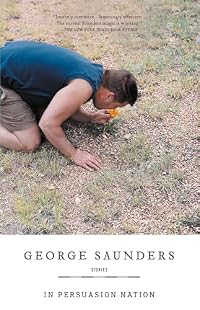
In Persuasion Nation
by George Saunders
On This Page
Description
From the #1 New York Times bestselling author of the Man Booker Prize-winning novel Lincoln in the Bardo and the story collection Tenth of December, a 2013 National Book Award Finalist for Fiction. Talking candy bars, baby geniuses, disappointed mothers, castrated dogs, interned teenagers, and moral fables--all in this hilarious and heartbreaking collection from an author hailed as the heir to Kurt Vonnegut and Thomas Pynchon. "The first thing you ought to know is that Saunders is show more the funniest writer in America... [But] Saunders's laughs are a cover, a diversion, beneath which reside some profoundly serious intentions regarding the morality of how we live and hte power of love and immanent death to transform us into vastly better creatures... I can't think of another writer who would try to do what Saunders is doing, or anything close to it. This is an important book."--The Nation "Saunders is a hilarious, wicked, and pitch-perfect satirist of our times, of course, but for a satirist he has a whole lot of heart."--Esquire show lessTags
Recommendations






Member Recommendations
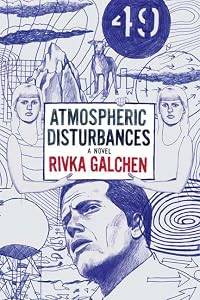
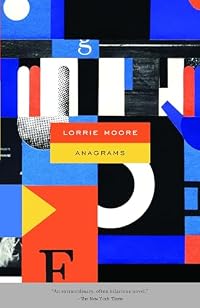
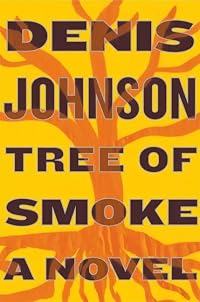
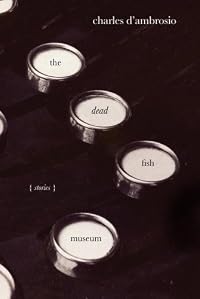
zhejw Both skewer life in corporate America and the language and thought that rise out of it.
Member Reviews
George Saunders is in good form again with this collection of short stories. There’s a mix in what he writes about and how he writes, but some common themes are a critique of consumerism, technology, entertainment, and man’s inhumanity to his fellow man. That sounds pretty heavy but it’s offset by Saunders’ humor, which often takes the form of wry irony, and there is a certain playfulness to the work even when it goes into rather dark areas.
I like how some of the stories seemed to organically lead into areas that weren’t apparent at the beginning, such as ‘My Flamboyant Grandson,’ which started off describing such a boy, but became an ominous warning of a Big Brother like state where personalized advertising is show more aggressively pushed onto people with the help of technology. That was one of my favorites of the bunch. Another was ‘In Persuasion Nation,’ a very creative story involving characters from crass American TV shows who live in their own reality of sorts while the rest of the world suffers. There are similar sardonic overtones to ‘Brad Carrigan, American,’ another great story, and ‘My Amendment’ is a nice little satire of homophobia, written in the form of a letter to an editor.
The quotes from a mythical work from Bernard “Ed” Alton that start each chapter serve as conservative defenses of capitalism, gun rights, “us vs. them” thinking, and truth being equated not to objective reality, but “preserving one’s preferred way of life.” The book was written during the Bush administration in 2006, but the quotes are a harbinger of how intensified these views would be ten years later during the rise of Trump, and in a way, the stories themselves satirize these views and provide counterpoints, albeit subtly. All in all, they make for an intelligent, good read. show less
I like how some of the stories seemed to organically lead into areas that weren’t apparent at the beginning, such as ‘My Flamboyant Grandson,’ which started off describing such a boy, but became an ominous warning of a Big Brother like state where personalized advertising is show more aggressively pushed onto people with the help of technology. That was one of my favorites of the bunch. Another was ‘In Persuasion Nation,’ a very creative story involving characters from crass American TV shows who live in their own reality of sorts while the rest of the world suffers. There are similar sardonic overtones to ‘Brad Carrigan, American,’ another great story, and ‘My Amendment’ is a nice little satire of homophobia, written in the form of a letter to an editor.
The quotes from a mythical work from Bernard “Ed” Alton that start each chapter serve as conservative defenses of capitalism, gun rights, “us vs. them” thinking, and truth being equated not to objective reality, but “preserving one’s preferred way of life.” The book was written during the Bush administration in 2006, but the quotes are a harbinger of how intensified these views would be ten years later during the rise of Trump, and in a way, the stories themselves satirize these views and provide counterpoints, albeit subtly. All in all, they make for an intelligent, good read. show less
George Saunders is one of the few writers that can combine outstanding, wickedly humorous and subversive fiction with social commentary. In this collection he addresses the opposition to same-sex marriage in “my amendment,” skewers the rampant proliferation of advertising in “jon,” “my flamboyant grandson,” and the title story, and examines any other number of social ills in the remaining stories, including mindless consumption in the deliciously twisted “brad carrigan, American” and the trampling of citizens’ rights in the name of freedom in “the red bow” and “adams.”
This combination of tragic-comic satire with a moral center is why it makes sense that Saunders was named one of Time’s 100 Most Influential show more People in the World for 2013. show less
This combination of tragic-comic satire with a moral center is why it makes sense that Saunders was named one of Time’s 100 Most Influential show more People in the World for 2013. show less
Satire has numerous guises but it tends to begin with exaggeration either of a personality trait or social condition, which may be gently mocking or cruelly sarcastic. Satire is rarely playful, or merely playful. Rather, it is directed toward some end—-stop this craven subservience to free-market capitalism, stop listening to the insane recommendations of special interests, stop exploiting animals in bizarre inhumane experiments, beware those who would play upon your sympathy and sentiment.
Usually the target of satire is obvious, since otherwise it wouldn’t be much use in motivating specific action. And that is the case with most of the stories in this collection. Saunders uses gentle, and sometimes harsh, satire towards specific show more ends that are clear. Since the stories are well worked out, i.e. the exaggerated trait or condition is followed through with additional corresponding changes in the individual or society, they are enjoyable as artifice as well as (usually) humorous. Sometimes though the satiric invention seems to become an end in itself, as in “brad carrigan, american”, or the title story “in persuasion nation”. Here, it is as though the end at which the satire aims is too small for the hammer being used to hit it. We are forced to either revel in the inventive genius in its own right (which many will) or continue searching for something with a bit more traction.
Perhaps the most startling use of satire comes in stories that are not obviously satirical at first glance. In “the red bow”, family and friends of the victim of an atrocity are motivated to positive action through the emotional use of a symbol relevantly similar to a bow the victim had been wearing. But a seemingly unstoppable escalation occurs—with each iteration the symbol becomes larger and more invested with meaning, just as the targets of the action begin to escalate. It has the feel of Flannery O’Connor. There seems no way to hold back the unwanted conclusion. I liked this story in particular because it is less clear what the specific target of the satire is, and equally unclear what one could do about it. It seems less confident and less shrill, bordering on despair rather than self-righteousness.
For me, this collection of stories would be well worth recommending for “the red bow” alone. But every story here is certainly worth reading and all are worthy of a good long think. show less
Usually the target of satire is obvious, since otherwise it wouldn’t be much use in motivating specific action. And that is the case with most of the stories in this collection. Saunders uses gentle, and sometimes harsh, satire towards specific show more ends that are clear. Since the stories are well worked out, i.e. the exaggerated trait or condition is followed through with additional corresponding changes in the individual or society, they are enjoyable as artifice as well as (usually) humorous. Sometimes though the satiric invention seems to become an end in itself, as in “brad carrigan, american”, or the title story “in persuasion nation”. Here, it is as though the end at which the satire aims is too small for the hammer being used to hit it. We are forced to either revel in the inventive genius in its own right (which many will) or continue searching for something with a bit more traction.
Perhaps the most startling use of satire comes in stories that are not obviously satirical at first glance. In “the red bow”, family and friends of the victim of an atrocity are motivated to positive action through the emotional use of a symbol relevantly similar to a bow the victim had been wearing. But a seemingly unstoppable escalation occurs—with each iteration the symbol becomes larger and more invested with meaning, just as the targets of the action begin to escalate. It has the feel of Flannery O’Connor. There seems no way to hold back the unwanted conclusion. I liked this story in particular because it is less clear what the specific target of the satire is, and equally unclear what one could do about it. It seems less confident and less shrill, bordering on despair rather than self-righteousness.
For me, this collection of stories would be well worth recommending for “the red bow” alone. But every story here is certainly worth reading and all are worthy of a good long think. show less
What is Saunders’ secret? He writes somewhere inbetween speculative fiction and sci fi but with a cadence as if it’s the latest nonsense advertised in an NYT supplement. Like Wyndham’s “middle class horror”, there’s something decidedly suburban and mundane about the situations that helps sell the absurdities. The story about a secondary mouth for your child might have been a springboard for a Philip K Dick story about losing our sense of self and integrating with machines speaking for us, some prescient tale of the then future, now present AI generated pablum. But it’s never that serious coming from Saunders, it’s played up for a joke in a way few scifi authors could manage.
Some experiments are less successful. 93990 show more uses the mundane dreariness of a scientific report about a fictional drug being tested on monkeys so close to actual record keeping there’s little to think about other than this being a reality in a lot of places right now. Maybe it could shock someone entirely naive to the idea, but the passive nature of the writing doesn’t mine much out of the concept.
In Brad Carrigan, American we get a stab at the Lynchian, except the absurd humor combined with gore inside a sitcom setting that, while technically fitting DFW’s definition of the grotesque alongside the banal, just doesn’t read that unsettling. Perhaps there’s a reason Lynch never explicitly let his characters say they were just characters in a movie. Or Saunders' foot on the comedy pedal never really lets off.
In all this was good, but not enough to compete with Pastoralia's laugh out loud funny. show less
Some experiments are less successful. 93990 show more uses the mundane dreariness of a scientific report about a fictional drug being tested on monkeys so close to actual record keeping there’s little to think about other than this being a reality in a lot of places right now. Maybe it could shock someone entirely naive to the idea, but the passive nature of the writing doesn’t mine much out of the concept.
In Brad Carrigan, American we get a stab at the Lynchian, except the absurd humor combined with gore inside a sitcom setting that, while technically fitting DFW’s definition of the grotesque alongside the banal, just doesn’t read that unsettling. Perhaps there’s a reason Lynch never explicitly let his characters say they were just characters in a movie. Or Saunders' foot on the comedy pedal never really lets off.
In all this was good, but not enough to compete with Pastoralia's laugh out loud funny. show less
George Saunders writes the most unique short stories. In this collection, the stories seem all set in futuristic locations where some of the uglier aspects of current culture have played themselves out to bizarre consequences. Consumerism, genetic manipulation, self-centered behavior, and more. It is difficult to do justice to the unique plots. They are quirky, surprising, discouraging, and disheartening, with a large dash of tongue-in-cheek humor. These stories are not for folks who want to escape to a hapoy place when they read!
George Saunders is quickly becoming one of my favorite writers. I loved Tenth of December and this book, written several years before, did not disappoint in the least. The stories of In Persuasion Nation expose the dangers to humanity of allowing divisive judgments on groups or individuals to be carried out to extreme ends, of silencing criticism and critical thinking, and accepting marketing, advertisement and other mass media manipulation as intrinsic to our way of life. In the title story, Saunders inverts the world of the commercial, anthropomorphizing the icons and constructs of the ads themselves, making them battle each other over freedom and humanity or the imprisonment of the advertisement vignette. I loved the biting satire in show more these excellent stories, and I often found myself chuckling over the bizarre characters and settings that describe a society following a severely compromised moral compass. show less
The master short story writer gifts us with a series of stories about the role of advertising, conformity, and groupthink in our lives. Several are brilliant, with only a few stinkers.
Read with sensitivity by the author.
Read with sensitivity by the author.
Members
- Recently Added By
Published Reviews
Since his stories first appeared, George Saunders has been one of our most enjoyable writers. But the arrival of his latest collection, In Persuasion Nation, signals a new anxiety in his work, a painful concern about the violent distractions of our post-9/11 entertainment state. These misgivings have driven him to eschew the satisfactions of his previous fiction, in favor of more challenging show more experiments. show less
added by paradoxosalpha
Lists

Top Five Books of 2020
982 works; 348 members
Author Information

50+ Works 25,490 Members
George Saunders is the author of CivilWarLand in Bad Decline and Pastoralia. (Publisher Provided) George Saunders was born in Amarillo, Texas on December 2, 1958. He received a bachelor's degree in geophysical engineering and a master's degree in creative writing from Syracuse University. He is a professor at Syracuse University and a writer of show more short stories, essays, novellas, and children's books. He won the National Magazine Award for fiction in 1994, 1996, 2000, and 2004 His books include CivilWarLand in Bad Decline, Pastoralia, The Very Persistent Gappers of Frip, The Brief and Frightening Reign of Phil, In Persuasion Nation, and Tenth of December: Stories, which won the inaugural Folio Prize in 2014. His debut novel, Lincoln in the Bardo, received the Man Booker Prize in 2017. (Bowker Author Biography) show less
Awards and Honors
Awards
Distinctions
Work Relationships
Common Knowledge
- Canonical title*
- Nel paese della persuasione
- Original title
- In Persuasion Nation
- Original publication date
- 2006
- Dedication
- For Paula, again, and always
- Last words
- (Click to show. Warning: May contain spoilers.)That is why I came back. I was wrong in life, limited, shrank everything down to my size, and yet, in the end, there was something light-craving within me, which sent me back, and saved me.
*Some information comes from Common Knowledge in other languages. Click "Edit" for more information.
Classifications
Statistics
- Members
- 1,231
- Popularity
- 19,921
- Reviews
- 36
- Rating
- (3.89)
- Languages
- English, German, Italian
- Media
- Paper, Audiobook, Ebook
- ISBNs
- 10
- ASINs
- 2