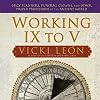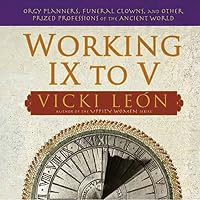
Working IX to V : orgy planners, funeral clowns, and other prized professions of the ancient world
by Vicki Leon
On This Page
Description
Pesents brief summaries of the jobs of ordinary people who lived in ancient Greece and Rome, covering work associated with farming, the slave trade, temples, law courts, household goods, education, medicine, and entertainment.Tags
Recommendations










Member Recommendations
Member Reviews
Hell, what are we all complaining about?! At least we're not Roman aquarii, fishing around down in sewers or funeral clowns (we call those preachers these days) or bath slaves ewww ewww...a lot of careers in the ancient world weren't things that DeVry or Virginia College would prepare you for.
Vicki Leon, in the course of researching the ancient world for serious books, would run across these weird or simply obscure references to jobs that no longer (thank GOODNESS) exist. She kept her notes. She patiently accumulated information. And now, in this book (called "Working IX to V" in the USA), delivers an amusing, browsable capsue description of ~150 weird and wonderful ancient jobs. I chuckled and giggled my way through this book, using it show more as what Jerry calls a "between" book, and thoroughly enjoyed it all.
Don't plan to sit down to a long winter's afternoon of reading, and this book will repay your purchase price. Go on, have fun, and not incidentally learn just how much our ancestors were like us...they hated their jobs too! show less
Vicki Leon, in the course of researching the ancient world for serious books, would run across these weird or simply obscure references to jobs that no longer (thank GOODNESS) exist. She kept her notes. She patiently accumulated information. And now, in this book (called "Working IX to V" in the USA), delivers an amusing, browsable capsue description of ~150 weird and wonderful ancient jobs. I chuckled and giggled my way through this book, using it show more as what Jerry calls a "between" book, and thoroughly enjoyed it all.
Don't plan to sit down to a long winter's afternoon of reading, and this book will repay your purchase price. Go on, have fun, and not incidentally learn just how much our ancestors were like us...they hated their jobs too! show less
Just slightly too cute to be good. Working IX to V is an account of various professions in the Classical world, that world being roughly Periclean Athens to Imperial Rome. Jobs covered include:
* ornatrix (hairdresser; we learn that Romans were fond of bleached blondes, which was done with a mixture of pigeon manure and urine);
* popa, the guy who wacked sacrificial animals in the head with a sledgehammer just before the cultrarius cut their throats;
* stercorarius, who had the unenviable job of emptying cesspools;
* vigil, combination fireman and cop;
* alipili, who was a professional armpit plucker;
* and liturgist, who was originally a public philanthropist.
Author Vicki León writes the Outrageous Women and Uppity Women series, so it’s show more not surprising that she emphasizes women’s roles. Interspersed with the job descriptions are little vignettes describing various people who are known to have worked in those professions. These include Sentia Secundus, a female glass blower; Lycoris, an actress and part-time courtesan (or perhaps vice versa); and the court poetess to Hadrian, Julia Balbilla, who cut a graffiti poem into the one of the statues of Amenhotep III at Thebes (usually known by their classical name, The Colossi of Memnon).
All well and good; however, León injects an excess of sophomoric humor. Her language is consciously modern;
(describing the sandaligerula a slave whose job was to carry her mistress’s sandals)
“After the partygoers went in to diner, the shoe-schleppers enjoyed a little downtime…”
(describing the pularius, whose job was to interpret the behavior of sacred chickens)
“The Roman army had spiritual specialists, but their holy men didn’t hold services or try to boost morale among the grunts.”
The book is illustrated with line drawings copied from classical or neoclassical originals, most of which have “cute” captions; for example, Canova’s The Three Graces is used in the article on prostitution, with the caption “You didn’t win Call Girl of the Year? Awww. Group Hug”.
This might not be a bad book for a grade school or middle school student interested in Classical history; that’s who the level of writing seems pitched to. However, León doesn’t hang back when it comes to describing some of the nastier aspects of classical life, such as boy prostitutes, hookers, courtesans, and gladiatrices. Although it wouldn’t surprise me if the average sixth-grader knows more about sex than I do, it still is a bit much to explain why the plays of Aristophanes are full of radish jokes. show less
* ornatrix (hairdresser; we learn that Romans were fond of bleached blondes, which was done with a mixture of pigeon manure and urine);
* popa, the guy who wacked sacrificial animals in the head with a sledgehammer just before the cultrarius cut their throats;
* stercorarius, who had the unenviable job of emptying cesspools;
* vigil, combination fireman and cop;
* alipili, who was a professional armpit plucker;
* and liturgist, who was originally a public philanthropist.
Author Vicki León writes the Outrageous Women and Uppity Women series, so it’s show more not surprising that she emphasizes women’s roles. Interspersed with the job descriptions are little vignettes describing various people who are known to have worked in those professions. These include Sentia Secundus, a female glass blower; Lycoris, an actress and part-time courtesan (or perhaps vice versa); and the court poetess to Hadrian, Julia Balbilla, who cut a graffiti poem into the one of the statues of Amenhotep III at Thebes (usually known by their classical name, The Colossi of Memnon).
All well and good; however, León injects an excess of sophomoric humor. Her language is consciously modern;
(describing the sandaligerula a slave whose job was to carry her mistress’s sandals)
“After the partygoers went in to diner, the shoe-schleppers enjoyed a little downtime…”
(describing the pularius, whose job was to interpret the behavior of sacred chickens)
“The Roman army had spiritual specialists, but their holy men didn’t hold services or try to boost morale among the grunts.”
The book is illustrated with line drawings copied from classical or neoclassical originals, most of which have “cute” captions; for example, Canova’s The Three Graces is used in the article on prostitution, with the caption “You didn’t win Call Girl of the Year? Awww. Group Hug”.
This might not be a bad book for a grade school or middle school student interested in Classical history; that’s who the level of writing seems pitched to. However, León doesn’t hang back when it comes to describing some of the nastier aspects of classical life, such as boy prostitutes, hookers, courtesans, and gladiatrices. Although it wouldn’t surprise me if the average sixth-grader knows more about sex than I do, it still is a bit much to explain why the plays of Aristophanes are full of radish jokes. show less
Full of amusing tidbits about ancient life divided up into two-page entries, this is a good coffee-table book for trivia buffs. One of the rare history books that knows how to lighten up and appeal to non-scholars. Good idea-sparker for historical novelists, too - lots of odd vocations and larger-than-life characters.
I can understand why historians might scowl at the quick summaries and breezy tone. But I think the world needs more history books that make the average person think about the past with a smile.
I can understand why historians might scowl at the quick summaries and breezy tone. But I think the world needs more history books that make the average person think about the past with a smile.
I am not going to rate this book because I would be rating based on expectations as opposed to the actual content. I was disappointed that Leon favored quantity over quality; I was hoping to find more detailed information. However, that's not the book that Leon wanted to write.
Jag hade inte speciellt höga förväntningar på Från IX till V: lättsam läsning om antika sysselsättningar, roande för stunden och förhoppningsvis en smula upplysande. Lättsamt var det, men alltför så: hela boken är ett enda träsk av pinsamma försök att vara skämtsam, dessutom filtrerad genom en halvtaskig översättning, och som lök på laxen är det oreda till och med bland enkla fakta.
Upplägget är inte så tokigt: undersök en hoper arbeten som sysselsatte folk under antiken, skriv ungefär ett uppslag om varje, varva med några exemplifierande kortbiografier, och ge ut. Mycket av detta är material som i sig självt skulle bära nästan vilken bok som helst: yrken som ännu finns som såg annorlunda ut då show more (fiskhandlerskor hade tydligen rykte om sig att vara ovanligt grova i mun, bokförläggare hade ingen upphovsrätt att bekymra sig om, biodlare var högt aktade då det stod för tidens enda sötningsmedel), eller som numera försvunnit: vestalisk jungfru, bärstolsbärare, gladiatortränare. Annat har knappast förändrats: snabbmatsförsäljare, svarta-börs-hajar och byggentreprenörer från förr och idag skulle nog kunna enats om mycket. Kanske inte läsning som får vem som helst att kasta lystna blickar, men nog så intressant.
Problemet är bara denna ständiga flåshurtighet: allt skall reduceras till ett lustighet, och det är tröttsamt redan från början; den första sysselsättning som presenteras – pirat – pratar om »Jollius Rogelius« och har näringslivjargong som »fientliga övertaganden«, vilket inte är ett smack roligt. Än värre är slafsigheten med detaljer: hur skall man ta någon på allvar som skriver om »turkarna i Konstantinopel under ottomanska tiden fram till 1203«? (det författaren tycks syfta på är fjärde korstågets intagande av den bysantinska huvudstaden, som skedde just 1203. De ottomanska turkarna skulle inte inta staden förrän ett kvarts millennium senare). Liknande missar finns även på andra håll.
Nej, även om det finns massor av intressanta detaljer i Från IX till V, så är den för dåligt skriven och för opålitlig för att jag skall kunna rekommendera den. Trist på en god idé. show less
Upplägget är inte så tokigt: undersök en hoper arbeten som sysselsatte folk under antiken, skriv ungefär ett uppslag om varje, varva med några exemplifierande kortbiografier, och ge ut. Mycket av detta är material som i sig självt skulle bära nästan vilken bok som helst: yrken som ännu finns som såg annorlunda ut då show more (fiskhandlerskor hade tydligen rykte om sig att vara ovanligt grova i mun, bokförläggare hade ingen upphovsrätt att bekymra sig om, biodlare var högt aktade då det stod för tidens enda sötningsmedel), eller som numera försvunnit: vestalisk jungfru, bärstolsbärare, gladiatortränare. Annat har knappast förändrats: snabbmatsförsäljare, svarta-börs-hajar och byggentreprenörer från förr och idag skulle nog kunna enats om mycket. Kanske inte läsning som får vem som helst att kasta lystna blickar, men nog så intressant.
Problemet är bara denna ständiga flåshurtighet: allt skall reduceras till ett lustighet, och det är tröttsamt redan från början; den första sysselsättning som presenteras – pirat – pratar om »Jollius Rogelius« och har näringslivjargong som »fientliga övertaganden«, vilket inte är ett smack roligt. Än värre är slafsigheten med detaljer: hur skall man ta någon på allvar som skriver om »turkarna i Konstantinopel under ottomanska tiden fram till 1203«? (det författaren tycks syfta på är fjärde korstågets intagande av den bysantinska huvudstaden, som skedde just 1203. De ottomanska turkarna skulle inte inta staden förrän ett kvarts millennium senare). Liknande missar finns även på andra håll.
Nej, även om det finns massor av intressanta detaljer i Från IX till V, så är den för dåligt skriven och för opålitlig för att jag skall kunna rekommendera den. Trist på en god idé. show less
Apr 21, 2011Swedish
Ratings
Members
- Recently Added By
Lists

To Read - Non Fiction
46 works; 4 members

Lindsey Davis's top 10 books about Ancient Rome
9 works; 2 members
Author Information

39+ Works 4,004 Members
Some Editions
Common Knowledge
- Canonical title
- Working IX to V : orgy planners, funeral clowns, and other prized professions of the ancient world
- Original title
- Working IX to V
- Alternate titles
- Orgy planner wanted : odd jobs and curious callings in the ancient world
- Original publication date
- 2007
- Important places
- Roman Empire
- First words
- Two thousand years ago, a world uncannily like ours moved at a hustle, its people working a jaw-dropping assortment of jobs to earn their daily bread. (Introduction)
Pirates wouldn't turn down a cask of pearls or a hold filled with wine, but frankly, they preferred flesh-and-blood merchandise. - Last words
- (Click to show. Warning: May contain spoilers.)Gives a whole different feel to the phrase "dead man walking," doesn't it?
- Publisher's editor
- Amundsen, Michele; Gibson, George; Gaskill, Phil; O'Connor, Michael
- Disambiguation notice
- Published as 'Orgy Planner Wanted' in the UK
Classifications
Statistics
- Members
- 307
- Popularity
- 103,675
- Reviews
- 5
- Rating
- (3.42)
- Languages
- English, Norwegian (Bokmål), Norwegian, Swedish
- Media
- Paper, Ebook
- ISBNs
- 6
- ASINs
- 2