On This Page
Description
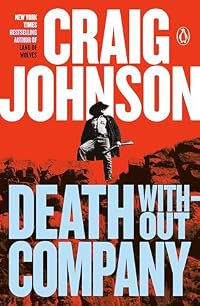
Fiction. Mystery. Suspense. Thriller. From Craig Johnson, author of the acclaimed novel The Cold Dish (W1071), comes this enthralling Sheriff Walt Longmire mystery that received a starred review from Kirkus Reviews. With a distinctive literary flair, Johnson leads us into the wide open space of Absaroka County, Wyoming. When an elderly local woman is found poisoned, Longmire begins an investigation that soon has him ensnared in a deadly spider's web.Tags
Recommendations







Member Reviews
Book 2 in series. Very good story.KIRKUS REVIEWWhat do you do when an old friend lies to you?Mari Baroja is found dead in Room 42 at the Durant Home for Assisted Living. Her demise isn?t too surprising, since the Basque woman was well over 70. Her neighbor in Room 32, however, insists she?s been murdered, and he ought to know. Lucian Connally retired as sheriff of Wyoming?s Absaroka County, and his irascible yammering at his prot?g? Sheriff Walt Longmire (The Cold Dish, 2005) sets in motion an investigation that will peel away years of lies, reveal spirited dreams translated from the Crow, Cheyenne and Basque tongues and focus on the former Four Brothers Ranch¥now mining methane gas for a million dollars a week. Soon Walt will link Mari show more to Charlie Nurburn, an abusive drunk thought to have died ages ago in Vista Verde, N.M. Why are the folks who duly mourned (or failed to mourn) him now targeted for death themselves? With some timely help from his foul-mouthed deputy Vic, Cheyenne barman Henry Standing Bear and new recruit Santiago Saizarbitoria, Walt finally unravels the tragic love story of Mari and Lucien and the violent ruckus her last will and testament has unleashed.Pile on thermal underwear, fire up the four-wheel drive and head for Durant. Walt and his idiosyncratic crew are terrific companyÂ¥droll, sassy and surprisingly tenderhearted. show less
So this is my second visit with Walt Longmire, long-term Sheriff of a very small town in Wyoming. Everything that I liked about the first book, “The Cold Dish” continues to be present but gets richer with familiarity.
The main attraction is still being inside Walt’s head. He’s a smart, compassionate man, trying to do the right thing, not always sure what that is but willing to put in the effort to work it out. His sense of humour is as deep as his compassion. He’s prone to introspection with undertones of depression and from time to time needs to be rescued from the inside of his own head by friends who’ll make him act rather than just think and remember.
Walt’s closest friend ins Henry Standing Bear, Vietnam Vet and owner show more of the Red Pony bar. Henry is not a sidekick in the traditional sense. He’s Walt’s peer. They have similar (slightly frightening) abilities to see through lies and to use violence to deliver their version of justice. Their values and motivations overlap but are not exactly the same. In other words, they are friends. Not the Facebook type of friend that clicks approval but the face to face kind of friend who’s there when you need him.
The relationship between Walt and Henry is the bedrock on which the series is built, so, not surprisingly, Chapter One spends some time re-immersing us in how it works. Here’s how it starts:
“It was just after Thanksgiving and we had consumed the better part of single malt Scotch. When I woke up the next morning, Henry had already pulled a couple of leatherette chairs in front of a double fifty-gallon drum stove. I pushed off the sleeping bag and swung my legs over the side of the pool table on which I had fallen asleep and tried to feel the muscles in my face. He had hauled his bag with him and sat hunched over the stove.
I watched as steam blew out with my breath and I scrambled to get the down-filled bag back around me.
‘Heat’s off’
He turned his head and the dark eyes looked through the silver strands in the black curtain of his hair.
‘Yes’
I joined him at the stove in my socks. The floor was cold and I regretted not slipping on boots.
‘Do you want some coffee?’
‘Yep.’
‘Then go and make some. I am the one who built the fire’.”
I think this is a good introduction to both men and to the style in which the novel is written. There is a friendship deep enough to afford silent companionship and humour that annotates their relationship and their shared understanding of the world.
The other person who casts light on Sheriff Longmire is his predecessor, Lucian, who hired Walt more than twenty years earlier. In the first book, Lucian came across to me as a relic of the old west: authoritarian, violent, intolerant and a law unto himself. In this book Walt learns more about who Lucian is and how he came to be that way and in the process, starts to see himself becoming the Lucian who hired him.
The title “Death Without Company” refer to the fate that befalls people who live without friends. In this case, the death is that of woman resident in the Durant Home for Assisted Living, where Lucian is also a resident.. Walt is called in to investigate the death after Lucian declares that the woman was murdered.
To figure out what is going on, Walt has to look into Lucian’s past and understand what happened to a young man who fell in love with a young Basque immigrant and the consequences it had for her and her family.
The tale is a dark and violent one that changed my perception of Lucian. He was who he needed to be at the time. Much as Walt is, except without the compassion.
The plot is a satisfying mix of past sins and current avarice delivering death to many of those involved. It gives a picture of how Wyoming used to be and makes Walt reflect on who he is.
There’s a lot of action in the book, including some great stand-alone scenes with Walt in peril. What I like about the action scenes is that they’re never the see-how-I-got-up-and-shrugged-off-being-hit-with-that-steel-bar kind of movie violence. These scenes are about struggle and threat and maybe not making it this time.
“Death Without Company” confirmed this as a must-read series for me. I’ll be listening to the audiobook version because George Guidall’s narration is a big part of my enjoyment. He gets squeezes every ounce of goodness out of the text and does it with no apparent effort. show less
The main attraction is still being inside Walt’s head. He’s a smart, compassionate man, trying to do the right thing, not always sure what that is but willing to put in the effort to work it out. His sense of humour is as deep as his compassion. He’s prone to introspection with undertones of depression and from time to time needs to be rescued from the inside of his own head by friends who’ll make him act rather than just think and remember.
Walt’s closest friend ins Henry Standing Bear, Vietnam Vet and owner show more of the Red Pony bar. Henry is not a sidekick in the traditional sense. He’s Walt’s peer. They have similar (slightly frightening) abilities to see through lies and to use violence to deliver their version of justice. Their values and motivations overlap but are not exactly the same. In other words, they are friends. Not the Facebook type of friend that clicks approval but the face to face kind of friend who’s there when you need him.
The relationship between Walt and Henry is the bedrock on which the series is built, so, not surprisingly, Chapter One spends some time re-immersing us in how it works. Here’s how it starts:
“It was just after Thanksgiving and we had consumed the better part of single malt Scotch. When I woke up the next morning, Henry had already pulled a couple of leatherette chairs in front of a double fifty-gallon drum stove. I pushed off the sleeping bag and swung my legs over the side of the pool table on which I had fallen asleep and tried to feel the muscles in my face. He had hauled his bag with him and sat hunched over the stove.
I watched as steam blew out with my breath and I scrambled to get the down-filled bag back around me.
‘Heat’s off’
He turned his head and the dark eyes looked through the silver strands in the black curtain of his hair.
‘Yes’
I joined him at the stove in my socks. The floor was cold and I regretted not slipping on boots.
‘Do you want some coffee?’
‘Yep.’
‘Then go and make some. I am the one who built the fire’.”
I think this is a good introduction to both men and to the style in which the novel is written. There is a friendship deep enough to afford silent companionship and humour that annotates their relationship and their shared understanding of the world.
The other person who casts light on Sheriff Longmire is his predecessor, Lucian, who hired Walt more than twenty years earlier. In the first book, Lucian came across to me as a relic of the old west: authoritarian, violent, intolerant and a law unto himself. In this book Walt learns more about who Lucian is and how he came to be that way and in the process, starts to see himself becoming the Lucian who hired him.
The title “Death Without Company” refer to the fate that befalls people who live without friends. In this case, the death is that of woman resident in the Durant Home for Assisted Living, where Lucian is also a resident.. Walt is called in to investigate the death after Lucian declares that the woman was murdered.
To figure out what is going on, Walt has to look into Lucian’s past and understand what happened to a young man who fell in love with a young Basque immigrant and the consequences it had for her and her family.
The tale is a dark and violent one that changed my perception of Lucian. He was who he needed to be at the time. Much as Walt is, except without the compassion.
The plot is a satisfying mix of past sins and current avarice delivering death to many of those involved. It gives a picture of how Wyoming used to be and makes Walt reflect on who he is.
There’s a lot of action in the book, including some great stand-alone scenes with Walt in peril. What I like about the action scenes is that they’re never the see-how-I-got-up-and-shrugged-off-being-hit-with-that-steel-bar kind of movie violence. These scenes are about struggle and threat and maybe not making it this time.
“Death Without Company” confirmed this as a must-read series for me. I’ll be listening to the audiobook version because George Guidall’s narration is a big part of my enjoyment. He gets squeezes every ounce of goodness out of the text and does it with no apparent effort. show less
Death Without Company is the second book in Craig Johnson's "Longmire" series and I liked it better than "The Cold Dish," the first entry in the series. Improvements: The snarky style humor is dialed down a notch and the character of the foul-mouthed deputy is broadened a bit. We still get a sense of humor. I think the "woo-woo" mysticism and dream sequences are also a little better here, though they still bother me a bit. Downside: I thought a budding romance in the first novel was well done, but in the second it seemed to be included almost as an afterthought - it started off intriguing and then really fell by the side. The other downside to me is having Longmire, not a young man, be a bit too much of a superman.
The mystery in here is show more intriguing, but what really is the charm of the books are the characters and setting. This novel really builds off the characters we met in the first novel, adds a couple new ones and broadens the depth a lot, especially with the former sheriff Lucian Connelly. The people here have some pretty interesting pasts. The rural nature of the Wyoming country is brought to life vividly.
I listened to nearly half the story as an audiobook, but the pace was a little too slow for me and without close focus on listening I felt like I was missing a few bits. I ended up re-reading most of what I had listened to with a paper copy and finished the novel up that way. The narration of the audiobook is well done, I'm just not a good audiobooker I think. I read here there and everywhere. show less
The mystery in here is show more intriguing, but what really is the charm of the books are the characters and setting. This novel really builds off the characters we met in the first novel, adds a couple new ones and broadens the depth a lot, especially with the former sheriff Lucian Connelly. The people here have some pretty interesting pasts. The rural nature of the Wyoming country is brought to life vividly.
I listened to nearly half the story as an audiobook, but the pace was a little too slow for me and without close focus on listening I felt like I was missing a few bits. I ended up re-reading most of what I had listened to with a paper copy and finished the novel up that way. The narration of the audiobook is well done, I'm just not a good audiobooker I think. I read here there and everywhere. show less
Walt Longmire is sheriff of the least populated county in one of the least populated states, or so he likes to remind us. The population is so small, in fact, he has Deputy Vic hunting up talis jurors (bystander) at the grocery store before a blizzard is due. He’s about to head home when he gets a call from Lucian, prior sheriff and now terror of the Durant Home for Assisted Living. A resident has died and Lucian wants the room sealed and an autopsy on the deceased. When Walt questions why, Lucian has a response:
“He looked old just then; small, old, and tired, as I had never seen him before. His eyes returned to the dead lights of the tree. ‘She was my wife.’“
Walt is shocked, but despite his doubts as to the likelihood of a show more murder, he does some investigating. The deceased woman, Mari Baroja, controlled lucrative mineral rights on a large piece of land, and the heirs are circling with lawyers in tow. Walt has his hands full; he’s still mourning the end of an almost-relationship, a blizzard looks to be settling in, the department needs a replacement deputy, and his daughter is on her way back to Wyoming from Philly. Dealing with Lucian and hiring new blood brings back memories of when Walt himself applied and first met Lucian.
Understated, subtle humor weaves through the book, particularly in Walt’s inner thoughts. Humor of the confrontational sort is gleefully provided by Deputy Vic. Walt’s humor, however, never overpowers to the mood or situation:
“I walked between the two people at the desk and loomed over Janine, whom I had a special fondness for whenever I remembered that she is Ruby’s granddaughter.“
“He finished his coffee and dropped the cup into the biohazard container with the gloves. I agreed with his diagnosis and tossed mine in too“
“…knowing that he and XX were in cahoots, cahoots being a legal term in Wyoming, see cahooting in the first degree, intent to cahoot, and so on.“
I enjoyed the plotting, which was complex enough that the ending had a surprising twist. A nice variety of people are introduced that give flavor to the small town. Many had very little to do with the case, appreciated in a mystery, when all too often each character has a concrete plot-related role. Santiago Saizarbitoria is a prospective deputy who seems almost too good to be true with his polite demeanor and a surprising facility with languages. I found myself enjoying witnessing Walt, Ruby and Vic adjust to the newcomer. Despite twenty-five years as a deputy, Walt discovers there is still more to learn about the people in his life:
“I looked up at the large map of the county that was illuminated by the flat, winter sun and wondered where the hell I was. The place on the wall wasn’t where I happened to be as of late; I was in a strange new place, a place where the people I had safely put on shelves were wandering around getting into messy things.“
What draws me to the series is the writing. Issues of race and ethnicity are woven into the story in a matter-of-fact way, an appreciated and realistic nod to diversity. Johnson is very good at being evocative, describing people and scenes without distracting, ostentatious prose. The tone is perfectly in keeping with the character of collegiate sheriff whose values are rooted in the simple life:
“Passion is a strange thing, a thing that warps and twists everything with which it comes in contact. It was like the combination of moisture and sunshine on wood; sometimes it turned out all right, most of the times it didn’t, but you couldn’t ignore its strength.“
If I have any complaint, it is the first person flashback that is used for Mari, a flashback that comes through Lucian’s storytelling, not through any other experience. Awkward and overly explicit for the situation, it also involves one of my least favorite justification crutches, likely the biggest reason for my half-star decrease.
Nonetheless, Death Without Company remains well worth reading; a library summons prevented me from the re-read I would have liked. I highly recommend it to fans of Nevada Barr and Colin Cotterill, as well as anyone who wants an enjoyable mystery. show less
“He looked old just then; small, old, and tired, as I had never seen him before. His eyes returned to the dead lights of the tree. ‘She was my wife.’“
Walt is shocked, but despite his doubts as to the likelihood of a show more murder, he does some investigating. The deceased woman, Mari Baroja, controlled lucrative mineral rights on a large piece of land, and the heirs are circling with lawyers in tow. Walt has his hands full; he’s still mourning the end of an almost-relationship, a blizzard looks to be settling in, the department needs a replacement deputy, and his daughter is on her way back to Wyoming from Philly. Dealing with Lucian and hiring new blood brings back memories of when Walt himself applied and first met Lucian.
Understated, subtle humor weaves through the book, particularly in Walt’s inner thoughts. Humor of the confrontational sort is gleefully provided by Deputy Vic. Walt’s humor, however, never overpowers to the mood or situation:
“I walked between the two people at the desk and loomed over Janine, whom I had a special fondness for whenever I remembered that she is Ruby’s granddaughter.“
“He finished his coffee and dropped the cup into the biohazard container with the gloves. I agreed with his diagnosis and tossed mine in too“
“…knowing that he and XX were in cahoots, cahoots being a legal term in Wyoming, see cahooting in the first degree, intent to cahoot, and so on.“
I enjoyed the plotting, which was complex enough that the ending had a surprising twist. A nice variety of people are introduced that give flavor to the small town. Many had very little to do with the case, appreciated in a mystery, when all too often each character has a concrete plot-related role. Santiago Saizarbitoria is a prospective deputy who seems almost too good to be true with his polite demeanor and a surprising facility with languages. I found myself enjoying witnessing Walt, Ruby and Vic adjust to the newcomer. Despite twenty-five years as a deputy, Walt discovers there is still more to learn about the people in his life:
“I looked up at the large map of the county that was illuminated by the flat, winter sun and wondered where the hell I was. The place on the wall wasn’t where I happened to be as of late; I was in a strange new place, a place where the people I had safely put on shelves were wandering around getting into messy things.“
What draws me to the series is the writing. Issues of race and ethnicity are woven into the story in a matter-of-fact way, an appreciated and realistic nod to diversity. Johnson is very good at being evocative, describing people and scenes without distracting, ostentatious prose. The tone is perfectly in keeping with the character of collegiate sheriff whose values are rooted in the simple life:
“Passion is a strange thing, a thing that warps and twists everything with which it comes in contact. It was like the combination of moisture and sunshine on wood; sometimes it turned out all right, most of the times it didn’t, but you couldn’t ignore its strength.“
If I have any complaint, it is the first person flashback that is used for Mari, a flashback that comes through Lucian’s storytelling, not through any other experience. Awkward and overly explicit for the situation, it also involves one of my least favorite justification crutches, likely the biggest reason for my half-star decrease.
Nonetheless, Death Without Company remains well worth reading; a library summons prevented me from the re-read I would have liked. I highly recommend it to fans of Nevada Barr and Colin Cotterill, as well as anyone who wants an enjoyable mystery. show less
Lovely prose that evokes the western landscape. Believable characters. The plot meandered a lot, and I'm still not sure I got it all. Also, Walt is something of a lady magnet for obscure reasons. Not as good as the first one.
The four stars I have given the second Walt Longmire mystery are devoted to the sarcastic sheriff himself; I love his droll humour, weak attempt at a gruff demeanour, and endearing community of friends and colleagues. The plot, however, was completely formulaic, and I'm only two books in. Stop with the death-defying action sequences and near-death, spiritual experiences! I was hard pressed to decide which character deserved the nickname 'Rasputin' most - Walt or the killer he was chasing. I know the sheriff is modern day cowboy, but even John Wayne would have stayed down after the beating he takes in this adventure (especially following on from the equally inventive trauma of the first novel). Great character, beautifully atmospheric show more descriptions of local scenery, well paced mystery - just please hold off on the violence in book three! show less
Great follow-up to THE COLD DISH. Whilst the mystery may be basic fare, although not without its complexities, it is the characters that demand our time. Craig Johnson has sketched out a group of likable and real heroes and their bantering dialogue is both witty and spontaneous. The action sequences are well written too and Johnson manages to build the tension as he unpeels the layers from his mystery.
Members
- Recently Added By
Lists

Books Read in 2013
1,630 works; 51 members

Books Read in 2015
3,299 works; 129 members

Top Five Books of 2018
802 works; 264 members

Books Read in 2014
2,343 works; 86 members

Books - Longmire by Craig Johnson
28 works; 1 member
Author Information

46+ Works 19,669 Members
Craig Allen Johnson was born in Huntington, West Virginia on January 16, 1961. He has a background in law enforcement and education. He is the author of the Walt Longmire Mystery series. Another Man's Moccasins won the Western Writer's of America Spur Award for best novel of 2008. The A&E TV series Longmire, which is based on his novels, started show more in 2012. Johnson' title, An Obvious Fact, the 13th book in the Walt Longmire series, became a New York Times bestseller in 2016. (Bowker Author Biography) show less
Some Editions
Awards and Honors
Series

Belongs to Publisher Series
Work Relationships
Common Knowledge
- Canonical title
- Death Without Company
- Original title
- Death without company
- Original publication date
- 2005 (1e édition orriginale américaine) (1e é | dition orriginale amé | ricaine); 2010-04-01 (1e traduction et édition française, Noire, Gallmeister) (1e traduction et é | dition franç | aise, Noire, Gallmeister)
- People/Characters
- Walt Longmire; Mari Baroja; Lucian Connally; Victoria "Vic" Moretti; Santiago Saizarbitoria; Lana (show all 13); Joe Laskey; Charlie Nurburn; Anna Walks Over Ice; Cady Longmire; Double Tough; Henry Standing Bear; Dog
- Important places
- Absaroka County, Wyoming, USA (fictional)
- Epigraph
- Adiskidegabeko bizita, auzogabeko heriotza.
(A life without friends means death without company.)
- Basque proverb - Dedication
- For Dorothy Caldwell Kisling (1930-2005)
for whom I still look when I laugh - First words
- "They used fire, back in the day."
- Last words
- (Click to show. Warning: May contain spoilers.)Dog and I sat there, munching ruggelach, and I stared at the humped up earth and thought about how, perhaps, the old sheriff and I weren't that different after all.
- Publisher's editor
- Mancini, Ali Bothwell
- Original language
- English
- Disambiguation notice
- ISBN 0143038583 is for The Omnivore's Dilemma: A Natural History of Four Meals by Michael Pollan
Classifications
Statistics
- Members
- 1,494
- Popularity
- 15,457
- Reviews
- 82
- Rating
- (4.02)
- Languages
- English, French, Spanish
- Media
- Paper, Audiobook, Ebook
- ISBNs
- 32
- UPCs
- 1
- ASINs
- 12