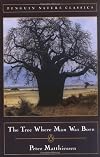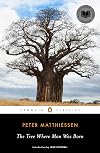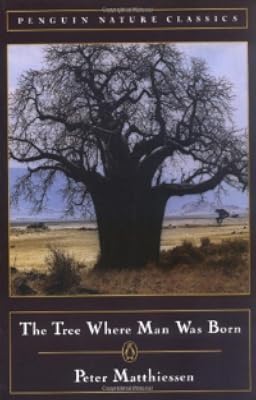
The Tree Where Man Was Born
by Peter Matthiessen
On This Page
Description
A timeless and majestic portrait of Africa by renowned writer Peter Matthiessen (1927-2014), author of the National Book Award-winning The Snow Leopard and the new novel In Paradise A finalist for the National Book Award when it was released in 1972, this vivid portrait of East Africa remains as fresh and revelatory now as on the day it was first published. Peter Matthiessen exquisitely combines nature and travel writing to portray the sights, scenes, and people he observed firsthand in show more several trips over the course of a dozen years. From the daily lives of wild herdsmen and the drama of predator kills to the field biologists investigating wild creatures and the anthropologists seeking humanity's origins in the rift valley, The Tree Where Man Was Born is a classic of journalistic observation. This Penguin Classics edition features an introduction by groundbreaking British primatologist Jane Goodall. For more than seventy years, Penguin has been the leading publisher of classic literature in the English-speaking world. With more than 1,700 titles, Penguin Classics represents a global bookshelf of the best works throughout history and across genres and disciplines. Readers trust the series to provide authoritative texts enhanced by introductions and notes by distinguished scholars and contemporary authors, as well as up-to-date translations by award-winning translators. show lessTags
Recommendations














Member Reviews
Matthiessen travels in Sudan and East Africa, writing about the people and the wildlife, and the occasional eccentric European naturalist/ranger/game hunter. But if this makes his book sound superficial, or worse, it isn't at all. He seems to have some history in this country which I can't put my finger on, but at every stage he connects with the country, the animals and the people and tells the story of each respectfully and with considerably candour. So you find yourself reading about the manner of death of newly born antelope at the agency of wild dogs, and understanding the story from the point of view of both the hunted and the hunter, except of course you are standing outside that story looking on - and Matthiessen doesn't pretend show more otherwise. These are stories observed, without too much reflection or editing, so that you are left with a great sense of authenticity - the direct experience rather than the sanitised one.
Matthiessen doesn't attempt to address any big questions, his theme (buried deep in the background) relates to the displaced African peoples, the ones who were 'less successful' and were driven into marginal country in East Africa where they have survived as hunter/gatherers until of course such an existence is becoming impossible anywhere due to the encroachment of 'civilisation'. But even here (and it seems he does feel strongly and is very well informed about the destruction of their society) he largely restricts himself to observation rather than sermonizing, and it left to the reader to connect the dots and work their own way to an appreciation of what is being lost.
I might have rated this higher, but I was left with a sense that this book was just a fragment of a larger story and that I would have to assemble that out of reading several more (at least) books on the same field. It wasn't so much that Matthiessen's book is incomplete, but that he has restricted himself to writing about what he knows and what he experienced himself. But he has made me want to read more, and perhaps that is a higher recommendation than if I had said this book was the 'last word' on the subject. show less
Matthiessen doesn't attempt to address any big questions, his theme (buried deep in the background) relates to the displaced African peoples, the ones who were 'less successful' and were driven into marginal country in East Africa where they have survived as hunter/gatherers until of course such an existence is becoming impossible anywhere due to the encroachment of 'civilisation'. But even here (and it seems he does feel strongly and is very well informed about the destruction of their society) he largely restricts himself to observation rather than sermonizing, and it left to the reader to connect the dots and work their own way to an appreciation of what is being lost.
I might have rated this higher, but I was left with a sense that this book was just a fragment of a larger story and that I would have to assemble that out of reading several more (at least) books on the same field. It wasn't so much that Matthiessen's book is incomplete, but that he has restricted himself to writing about what he knows and what he experienced himself. But he has made me want to read more, and perhaps that is a higher recommendation than if I had said this book was the 'last word' on the subject. show less
In September of 1972, this work was serialized in The New Yorker magazine over three issues. Only a few years before, I had discovered what some have described as the best magazine in America. The story of the peoples and the vast herds of animals in the Serengeti fascinated me and cemented forever my love of TNY. Many memories of the images from this sprawling narrative persist 35 years later.
This volume is quite a bit longer than the original article. The early chapters describe Matthiessen’s journey to the interior, along with the patchwork groups of peoples spread over millions of square miles around Lake Victoria, the Rift Valley (of Louis, Mary, and Richard Leakey fame). The author includes long sections stretching back to the show more origins of colonial East Africa and forward into some of the chaos and lawlessness of the end of the colonial period. His narrative captures the rhythm and flow of life on this exotic continent.
The braided histories of many tribes, clans, customs, beliefs, lifestyles, and feuds among neighbors, can be a bit confusing, but the prose is so lyrical and vivid, I never really minded the extra effort to stay with Matthiessen as he bounced over rugged, arid landscapes in his beat up Land Rover. I wanted to own a Land Rover after reading this absorbing story. Take this example from chapter two:
“Our camp was in the mountain forest, a true forest of great holy trees – the African olive, with its silver gray-green shimmering leaves and hoary twisted trunk – of wild flowers and shafts of light, cool shadows and deep humus smells, moss, ferns, glades, and the ring of unseen birds from the green clerestories. Lying back against one tree, staring up into another, I could watch the olive pigeon and the olive thrush share the black fruit for which neither bird is named; to a forest stream nearby came the paradise fly-catcher, perhaps the most striking of all birds in East Africa. Few forests are so beautiful, so silent, and here the silence is intensified by the apprehended presence of wild beasts – buffalo and elephant, rhino, lion, leopard. Because these creatures are so scarce and shy, the forest paths can be walked in peace; the only fierce animal I saw was a small squirrel pinned to a dead log by a shaft of sun, feet wide, defiant, twitching its tail in time to thin pure squeaking.” (79-80)
Wow. Prose like that rarely appears these days. Even at 400 pages, Matthiessen’s story flows quickly, but languidly through the forest. The best parts, however, involve his descriptions of the Maasai of East Africa, which most interested me then and now.
Admittedly, Matthiessen’s prose requires gaining a level of comfort. Many of the long, rambling sentences could benefit from a few more judiciously placed commas! But in the end, the journey is well worth the effort. 5 stars
--Jim, 4/7/09 show less
This volume is quite a bit longer than the original article. The early chapters describe Matthiessen’s journey to the interior, along with the patchwork groups of peoples spread over millions of square miles around Lake Victoria, the Rift Valley (of Louis, Mary, and Richard Leakey fame). The author includes long sections stretching back to the show more origins of colonial East Africa and forward into some of the chaos and lawlessness of the end of the colonial period. His narrative captures the rhythm and flow of life on this exotic continent.
The braided histories of many tribes, clans, customs, beliefs, lifestyles, and feuds among neighbors, can be a bit confusing, but the prose is so lyrical and vivid, I never really minded the extra effort to stay with Matthiessen as he bounced over rugged, arid landscapes in his beat up Land Rover. I wanted to own a Land Rover after reading this absorbing story. Take this example from chapter two:
“Our camp was in the mountain forest, a true forest of great holy trees – the African olive, with its silver gray-green shimmering leaves and hoary twisted trunk – of wild flowers and shafts of light, cool shadows and deep humus smells, moss, ferns, glades, and the ring of unseen birds from the green clerestories. Lying back against one tree, staring up into another, I could watch the olive pigeon and the olive thrush share the black fruit for which neither bird is named; to a forest stream nearby came the paradise fly-catcher, perhaps the most striking of all birds in East Africa. Few forests are so beautiful, so silent, and here the silence is intensified by the apprehended presence of wild beasts – buffalo and elephant, rhino, lion, leopard. Because these creatures are so scarce and shy, the forest paths can be walked in peace; the only fierce animal I saw was a small squirrel pinned to a dead log by a shaft of sun, feet wide, defiant, twitching its tail in time to thin pure squeaking.” (79-80)
Wow. Prose like that rarely appears these days. Even at 400 pages, Matthiessen’s story flows quickly, but languidly through the forest. The best parts, however, involve his descriptions of the Maasai of East Africa, which most interested me then and now.
Admittedly, Matthiessen’s prose requires gaining a level of comfort. Many of the long, rambling sentences could benefit from a few more judiciously placed commas! But in the end, the journey is well worth the effort. 5 stars
--Jim, 4/7/09 show less
I saw this title in my goodreads feed because a goodsreads-only acquaintance added it her to-read list without commentary. I immediately requested it from the library.
Most of the books I read before my trip were about climbing Kilimanjaro and wasted my time, and then I tried a book Rich was reading that, he claimed, was about Africa. I started it but I couldn't get past the author's justification for hunting.
This, in contrast, is gorgeous. The prose is lovely, the landscape and peoples he describes are lovely, and it's 40 years old so there were more elephants. He met a few people who knew Bror von Blixen and Dennis Finch-Hatton; he camped under the stars; he didn't kill a buffalo. More like this, please.
Most of the books I read before my trip were about climbing Kilimanjaro and wasted my time, and then I tried a book Rich was reading that, he claimed, was about Africa. I started it but I couldn't get past the author's justification for hunting.
This, in contrast, is gorgeous. The prose is lovely, the landscape and peoples he describes are lovely, and it's 40 years old so there were more elephants. He met a few people who knew Bror von Blixen and Dennis Finch-Hatton; he camped under the stars; he didn't kill a buffalo. More like this, please.
Lovely prose, absolutely gorgeous words. Why did I have to stumble over this? Why did no one ever say to me, "Hey, you read all that nature stuff, there's this guy you positively have to read!" I listened to the audio version and was mostly entranced. There were some truly gory passages, of course- but in this context one expects this.
Excellent account of the people and geology of Kenya
Read - got rid of
Ratings
Members
- Recently Added By
Lists

el
1,139 works; 1 member
Author Information

48+ Works 13,947 Members
Peter Matthiessen was born in Manhattan, New York on May 22, 1927. He served in the Navy at Pearl Harbor. He graduated with a degree in English from Yale University in 1950. It was around this time that he was recruited by the CIA and traveled to Paris, where he became acquainted with several young expatriate American writers. In the postwar years show more the CIA covertly financed magazines and cultural programs to counter the spread of Communism. While in Paris, he helped found The Paris Review in 1953. After returning to the United States, he worked as a commercial fisherman and the captain of a charter fishing boat. His first novel, Race Rock, was published in 1954. His other fiction works include Partisans, Raditzer, Far Tortuga, and In Paradise. His novel, Shadow Country, won a National Book Award. His novel, At Play in the Fields of the Lord, was made into a movie. He started writing nonfiction after divorcing his first wife. An assignment for Sports Illustrated to report on American endangered species led to the book Wildlife in America, which was published in 1959. His travels took him to Asia, Australia, South America, Africa, New Guinea, the Florida swamps, and beneath the ocean. These travels led to articles in The New Yorker as well as numerous nonfiction books including The Cloud Forest: A Chronicle of the South American Wilderness, Under the Mountain Wall: A Chronicle of Two Seasons of Stone Age New Guinea, Blue Meridian: The Search for the Great White Shark, The Tree Where Man Was Born, and Men's Lives. The Snow Leopard won the 1979 National Book Award for nonfiction. He died from leukemia on April 5, 2014 at the age of 86. (Bowker Author Biography) show less
Awards and Honors
Awards
Series
Belongs to Publisher Series
Harvill (171)
Work Relationships
Common Knowledge
- Canonical title
- The Tree Where Man Was Born
- Important places
- Africa
- Disambiguation notice
- This Work contains only one book, Peter Matthiessen's The Tree Where Man Was Born. Please distinguish between this Work any LT Work that also contains Eliot Porter's The African Experience. Thank you.
Classifications
Statistics
- Members
- 479
- Popularity
- 63,735
- Reviews
- 6
- Rating
- (3.73)
- Languages
- English, Spanish
- Media
- Paper, Audiobook, Ebook
- ISBNs
- 21
- ASINs
- 7