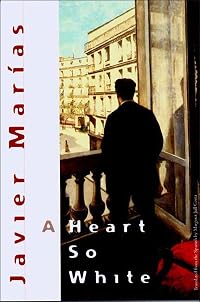
A Heart So White
by Javier Marías, Inés Blanca (Editor)
On This Page
Description
"A Heart So White" is a breathtaking novel about family secrets, winner of the 1997 Dublin IMPAC Prize for the best novel published worldwide in English, and arguably Javier Marias's masterpiece. Javier Marias's "A Heart So White" chronicles with unnerving insistence the relentless power of the past. Juan knows little of the interior life of his father Ranz; but when Juan marries, he begins to consider the past anew, and begins to ponder what he doesn't really want to know. Secrecyits show more possible convenience, its price, and even its civilityhovers throughout the novel. "A Heart So White" becomes a sort of anti-detective story of human nature. Intrigue; the sins of the father; the fraudulent and the genuine; marriage and strange repetitions of violence: Marias elegantly sends shafts of inquisitory light into shadows and on to the costs of ambivalence. ("My hands are of your colour; but I shame/To wear a heart so white"Shakespeare's "Macbeth.") show lessTags
Recommendations









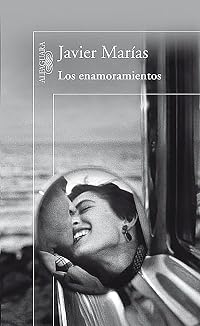


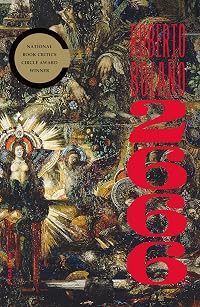

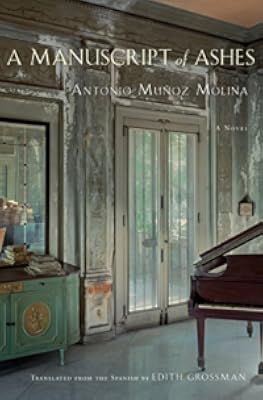
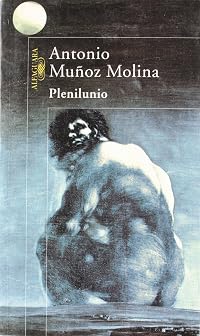




Member Recommendations


Member Reviews
This was my first taste of Marías, and I'm very impressed. The looping, reflective style, the repetitions and large-scale structures are all very similar to the techniques W.G. Sebald and Thomas Bernhard use, but they feel quite different in their effects when they're applied to something which is so much more obviously a constructed novel with a kind of plot. Very interesting. The sort of book that makes me feel I really should make the effort to improve my Spanish and read it in the original...
I cannot help it; time and again I am captivated by the work of Javier Marias (1951-2022). Here again, even though it is a fairly early work of his, from 1993. His typical style, with those endless languorous sentences, may not yet be perfectly polished, but it is certainly heading in the right direction. And the central theme: the secrets people keep from one another, the intrigue by that which is hidden and concealed—that is already present here too. Not yet in the form of a spy story, but indirectly it comes very close. And Shakespeare already pops up as well, this time with a recurring quote from Macbeth, which refers to the relativity of guilt and innocence.
Marias introduces a translator-interpreter Juan (no family name) as show more narrator. He is just married but already looks down on marriage in a strikingly disparaging, almost cynical way (suggesting it is a disease). After the rather brutal opening scene (a suicide), a number of seemingly unrelated scenes follow one another; only halfway through does the central element of tension (his father's dark past) emerge, but ultimately everything comes together in a terribly intense final scene. In the meantime, Marias entertains us with often hilarious action scenes, alternating with his classic endless musings that call into question all our certainties, such as this one: “Sometimes I feel that nothing that happens really happens, because nothing happens without interruption, nothing endures, persists, is constantly remembered, and even the most monotonous and routine existence cancels itself out and negates itself in its apparent repetition, to the point that nothing and no one has ever been the same before, and the weak wheel of the world is turned by memoryless ones who hear, see and know what is not said and does not take place, is unknowable and unverifiable.." Anyone who has read a Marias novel before will have the impression that they already read sentences lik this in his work, and that is correct; the first part of this quote is even repeated later in this novel.
So this is vintage Marias, then. In his later work, he sure perfected both his themes and his style, but here everything is already present. And it’s a delight. show less
Marias introduces a translator-interpreter Juan (no family name) as show more narrator. He is just married but already looks down on marriage in a strikingly disparaging, almost cynical way (suggesting it is a disease). After the rather brutal opening scene (a suicide), a number of seemingly unrelated scenes follow one another; only halfway through does the central element of tension (his father's dark past) emerge, but ultimately everything comes together in a terribly intense final scene. In the meantime, Marias entertains us with often hilarious action scenes, alternating with his classic endless musings that call into question all our certainties, such as this one: “Sometimes I feel that nothing that happens really happens, because nothing happens without interruption, nothing endures, persists, is constantly remembered, and even the most monotonous and routine existence cancels itself out and negates itself in its apparent repetition, to the point that nothing and no one has ever been the same before, and the weak wheel of the world is turned by memoryless ones who hear, see and know what is not said and does not take place, is unknowable and unverifiable.." Anyone who has read a Marias novel before will have the impression that they already read sentences lik this in his work, and that is correct; the first part of this quote is even repeated later in this novel.
So this is vintage Marias, then. In his later work, he sure perfected both his themes and his style, but here everything is already present. And it’s a delight. show less
There’s a recurring metaphor in Heart So White that offers an insight into how a secret operates under a veil of confusion. A character will stand outside a building, looking up or across a street to a window at their objective. Lies keep everyone at a distance. And distance allows for misunderstandings. The first time, the setting is Florida, and a Cuban woman is yelling abuse at our narrator from across the street. Or so he thinks. She behaves like a scorned, or angry lover. He must be in a room a couple of stories up from the street and at first is not clear what is going on. He is there on his honeymoon with his wife who is unwell with a cold or flu. He listens, not knowing what to do with this barrage of abuse and threats. But he show more is also fascinated by it all. We as readers are not sure if he is the object of the abuse. Our narrator responds somewhat embarrassed as though he IS the object and wants to keep this woman a secret from his new wife. Secrets seem to form a suggestive confusion. In this case, our narrator feels a strange guilt he cannot explain as the object of misidentification. He has never met the woman before. She has made a mistake with the fellow in the next hotel room.
Misunderstanding in language and perception is essential for secrets to maintain themselves at a healthy distance from the probing of others. But misunderstanding, misrepresentation are also necessary in propelling action in a novel or a play. Another metaphorical allusion is the play Macbeth from which the title is taken. The witches that meet Macbeth and Banquo on the heath in the opening of the play reveal a prophecy. Half-truths compel action. For the prophecy on the heath to come true, Macbeth goes into action and kills king Duncan and the killing keeps going until we have a Shakespearean tragic resolution with bodies all over the place. While white is the symbol of purity, it can also be a symbol of death.
So, it's inevitable that actions based on misunderstanding, half-truths, whispers, and trickery will also bring the couple in a Heart so White together. They are both translators, the simultaneous sort. They meet on the job; she is his supervisor on a job involving a Spanish and English government minister. The conversation is a little banal so our protagonist narrator starts to ‘sex it up’ a little. He obviously finds his supervisor attractive as she mysteriously sits just behind him during the discussions so that he feels her just beyond his neck and also senses her leg near him. Flirting only needs a hint, a suggestion, a murmur to begin its slow, barely conscious, barely verbal, mysterious dance when the narrator moves the discussion along to something more interesting than these two politicians can manage on their own. From his, unprofessional, intervention of a few choice words and sentences, the politicians have a pleasant conversation, a meaningful conversation that was impossible due to their language incompatibility and also political incompatibility. They connect through a sly and naughty bit of business. But they are not the intent, the intent is the woman, who if she becomes complicit, will also connect. Well the rest is history as they say.
Though I have revealed here some lovely story action, when it comes to really good writing, it matters little, because the reader will still be caught up in the brilliance of Javier Marias’ writing, the exhilaration of the rhythm and just it’s cleverness. They will likely interpret it differently too, so my revelation hardly matters.
Our narrator’s father has a mysterious past back when he worked in Cuba. We already know that he married two sisters, the first died, ie. the aunt of our narrator. But she met a violent suicidal end revealed at the very opening of the story. Like Lady Macbeth who facilitates Macbeth’s ascension to the throne, the narrator’s wife is essential to the process of revelation. The Shakespearean allusions are fun, cryptic, but not burdensome.
Like those tricky witches in the original play, I may have revealed too much; or, perhaps not enough. I will recede back into the mists until we next meet. Like in the play… I might have a beard then. But you have to read the play to get the joke. show less
Misunderstanding in language and perception is essential for secrets to maintain themselves at a healthy distance from the probing of others. But misunderstanding, misrepresentation are also necessary in propelling action in a novel or a play. Another metaphorical allusion is the play Macbeth from which the title is taken. The witches that meet Macbeth and Banquo on the heath in the opening of the play reveal a prophecy. Half-truths compel action. For the prophecy on the heath to come true, Macbeth goes into action and kills king Duncan and the killing keeps going until we have a Shakespearean tragic resolution with bodies all over the place. While white is the symbol of purity, it can also be a symbol of death.
So, it's inevitable that actions based on misunderstanding, half-truths, whispers, and trickery will also bring the couple in a Heart so White together. They are both translators, the simultaneous sort. They meet on the job; she is his supervisor on a job involving a Spanish and English government minister. The conversation is a little banal so our protagonist narrator starts to ‘sex it up’ a little. He obviously finds his supervisor attractive as she mysteriously sits just behind him during the discussions so that he feels her just beyond his neck and also senses her leg near him. Flirting only needs a hint, a suggestion, a murmur to begin its slow, barely conscious, barely verbal, mysterious dance when the narrator moves the discussion along to something more interesting than these two politicians can manage on their own. From his, unprofessional, intervention of a few choice words and sentences, the politicians have a pleasant conversation, a meaningful conversation that was impossible due to their language incompatibility and also political incompatibility. They connect through a sly and naughty bit of business. But they are not the intent, the intent is the woman, who if she becomes complicit, will also connect. Well the rest is history as they say.
Though I have revealed here some lovely story action, when it comes to really good writing, it matters little, because the reader will still be caught up in the brilliance of Javier Marias’ writing, the exhilaration of the rhythm and just it’s cleverness. They will likely interpret it differently too, so my revelation hardly matters.
Our narrator’s father has a mysterious past back when he worked in Cuba. We already know that he married two sisters, the first died, ie. the aunt of our narrator. But she met a violent suicidal end revealed at the very opening of the story. Like Lady Macbeth who facilitates Macbeth’s ascension to the throne, the narrator’s wife is essential to the process of revelation. The Shakespearean allusions are fun, cryptic, but not burdensome.
Like those tricky witches in the original play, I may have revealed too much; or, perhaps not enough. I will recede back into the mists until we next meet. Like in the play… I might have a beard then. But you have to read the play to get the joke. show less
http://msarki.tumblr.com/post/74848982435/a-heart-so-white-by-javier-marias
The number of pages of made-time that it takes for Javier Marías to get anywhere is simultaneously relaxing in its pace and frustrating in its ramble. But what better activities does one have to do with one's time than to sit still with a book written by a master-observer regarding the human condition? There are few topics the author fails to elaborate on within his process, the hours of contemplation required in finding and eventually knowing his subjects well. In simple big-time wrestling terms, sentences elaborately structured with such sophistication and care that even a lesser reader might employ its own standing head scissors before Marías takes his show more precise and finishing aim with an incoming pile driver. Ha! The entire novel kept me waiting for what was to come. I could not foretell the ending nor know the direction of the exit he might be headed for. For lack of better terms let us name this brilliant crafting suspense within a literary elaboration.
Often I find myself nodding in agreement with Marías regarding relationships, especially marriage. But his complicated nuances between father and son, mid-life renewals of childhood friendships, work environments and travel, affairs both present and past, all contribute to the measured extravagance almost exploding on every page. Memory often plays an integral part in the Marías oeuvre, at least it has in the few titles I have thus far read. Whether these recollections can be trusted, or the fictions made real, all stories told or heard are subject to a bit of untruth or embellishment at the least. It is refreshing to read Marías in the sense of his having already considered his ideas extensively before setting them down on the page. He seems to exhaust every possibility in arguing his case for whatever position might be adhered to by one of his characters. He is not only a brilliant writer but gifted in making what he writes extremely interesting, though long-winded. But for one who revels in the rhythm of time, and has nothing more useful to do than enjoy a fine and lofty musical performance, then Marías is the writer meant for you. And if questioning one's motives or wanting to trust in another human being is just your cup of tea, then Marías is also a good resource to reference to, as any doubt which might exist in one of our preconceived or well-thought notions this great author will raise doubts beyond any small measure. But still the angst augured is relaxing in its own way. And the consequences sometimes light in regard to the manner in which he gets us there. Somewhat like a lazy ride on calm water in a whisper-quiet motorboat.
These Marías characters never surprise me with their secrets and suspicions. All relationships have them. Marías is a master at identifying anything and everything that might become questionable or in need of further thoughtful consideration. If he writes of someone dying, and perhaps he already has and I am not aware of it just yet, then it would most certainly be the slowest of deaths. The suffering process would drag out, time would stand still as it often does in uncomfortable, dreadful situations. And the novel here does this as well. Secrets that demand to be told with all their budding questions answered. Unavoidable realizations and an understanding of an awful incident in the past, an almost hopeless situation if the dire consequences had actually been avoided, a forgiving comprehension necessary in order to process the information successfully without wanting to do your own self in. But then, as always, a complicit exercise where the innocent party carries a burden of guilt and shame just by knowing and agreeing to be tolerant, to continue to be still loving and abiding, no matter the questionable facts regarding the dated crime. Javier Marías is one of the most gifted novelists writing today. He is so clever and kind with his words that his vicious grip is administered unexpectedly.
When applied correctly against an opponent the mandible claw is a maneuver which is regarded by fellow wrestlers to cause intense, legitimate pain. The aggressor places his middle and ring fingers into the opponent's mouth, sliding them under the tongue and jabbing into the soft tissue found at the bottom of the mouth. The rest of the same hand is placed under the jaw, and pressure is applied downward by the middle and ring fingers while the thumb and/or palm forces the jaw upwards. show less
The number of pages of made-time that it takes for Javier Marías to get anywhere is simultaneously relaxing in its pace and frustrating in its ramble. But what better activities does one have to do with one's time than to sit still with a book written by a master-observer regarding the human condition? There are few topics the author fails to elaborate on within his process, the hours of contemplation required in finding and eventually knowing his subjects well. In simple big-time wrestling terms, sentences elaborately structured with such sophistication and care that even a lesser reader might employ its own standing head scissors before Marías takes his show more precise and finishing aim with an incoming pile driver. Ha! The entire novel kept me waiting for what was to come. I could not foretell the ending nor know the direction of the exit he might be headed for. For lack of better terms let us name this brilliant crafting suspense within a literary elaboration.
Often I find myself nodding in agreement with Marías regarding relationships, especially marriage. But his complicated nuances between father and son, mid-life renewals of childhood friendships, work environments and travel, affairs both present and past, all contribute to the measured extravagance almost exploding on every page. Memory often plays an integral part in the Marías oeuvre, at least it has in the few titles I have thus far read. Whether these recollections can be trusted, or the fictions made real, all stories told or heard are subject to a bit of untruth or embellishment at the least. It is refreshing to read Marías in the sense of his having already considered his ideas extensively before setting them down on the page. He seems to exhaust every possibility in arguing his case for whatever position might be adhered to by one of his characters. He is not only a brilliant writer but gifted in making what he writes extremely interesting, though long-winded. But for one who revels in the rhythm of time, and has nothing more useful to do than enjoy a fine and lofty musical performance, then Marías is the writer meant for you. And if questioning one's motives or wanting to trust in another human being is just your cup of tea, then Marías is also a good resource to reference to, as any doubt which might exist in one of our preconceived or well-thought notions this great author will raise doubts beyond any small measure. But still the angst augured is relaxing in its own way. And the consequences sometimes light in regard to the manner in which he gets us there. Somewhat like a lazy ride on calm water in a whisper-quiet motorboat.
These Marías characters never surprise me with their secrets and suspicions. All relationships have them. Marías is a master at identifying anything and everything that might become questionable or in need of further thoughtful consideration. If he writes of someone dying, and perhaps he already has and I am not aware of it just yet, then it would most certainly be the slowest of deaths. The suffering process would drag out, time would stand still as it often does in uncomfortable, dreadful situations. And the novel here does this as well. Secrets that demand to be told with all their budding questions answered. Unavoidable realizations and an understanding of an awful incident in the past, an almost hopeless situation if the dire consequences had actually been avoided, a forgiving comprehension necessary in order to process the information successfully without wanting to do your own self in. But then, as always, a complicit exercise where the innocent party carries a burden of guilt and shame just by knowing and agreeing to be tolerant, to continue to be still loving and abiding, no matter the questionable facts regarding the dated crime. Javier Marías is one of the most gifted novelists writing today. He is so clever and kind with his words that his vicious grip is administered unexpectedly.
When applied correctly against an opponent the mandible claw is a maneuver which is regarded by fellow wrestlers to cause intense, legitimate pain. The aggressor places his middle and ring fingers into the opponent's mouth, sliding them under the tongue and jabbing into the soft tissue found at the bottom of the mouth. The rest of the same hand is placed under the jaw, and pressure is applied downward by the middle and ring fingers while the thumb and/or palm forces the jaw upwards. show less
I started this knowing nothing about it other than it was written by a Spaniard and was on the Guardian's list of 1000 novels everyone should read. And now I am glad that is so as if someone had tried to describe this to me, I probably would have thought "That's not for me". How wrong would I have been!
Marias's writing was engaging and he slowly builds up a sense of tension and suspense throughout the book even though the main character & narrator of the story spends a lot of time musing on fairly philosophical subjects. For my own aide-de-memoire, here is a quote which is typical which I will put in spoilers for fear of turning off a potential reader as I myself would have been by a description:
“What happened between us both show more happened and didn't happen, it's the same with everything, why do or not do something, why say "yes" or "no," why worry yourself with a "perhaps" or a "maybe," why speak, why remain silent, why refuse, why know anything if nothing of what happens happens, because nothing happens without interruption, nothing lasts or endures or is ceaselessly remembered, what takes place is identical to what doesn't take place, what we dismiss or allow to slip by us is identical to what we accept and seize, what we experience identical to what we never try; we pour all our intelligence and out feelings and our enthusiasm into the task of discriminating between things that will all be made equal, if they haven't already been, and that's why we're so full of regrets and lost opportunities, of confirmations and reaffirmations and opportunities grasped, when the truth is that nothing is affirmed and everything is constantly in the process of being lost. Or perhaps there never was anything.” show less
Marias's writing was engaging and he slowly builds up a sense of tension and suspense throughout the book even though the main character & narrator of the story spends a lot of time musing on fairly philosophical subjects. For my own aide-de-memoire, here is a quote which is typical which I will put in spoilers for fear of turning off a potential reader as I myself would have been by a description:
Marias has a rhythm that he repeats throughout the book, in which an apparently natural inner monologue leads up to a surprising insight or an unexpected obstacle. It is clear that he thinks these changes of direction produce meaning, and that their accumulation can lead to deeper meanings. But for me, it's consistently disappointing to see him leading up to one of those moments, and imagining that the result will be expressive or even profound, and then turning, satisfied, to the next episode.
The book has a large-scale structure, and was clearly planned in advance, but on the level of the page, it is loose. Epiphanies were managed so much more tightly, and with so much more variety, by Joyce. Even though Marias is a very introspective show more person, there are clearly limits to his self-awareness when it comes to these structures. That lack of self-awareness extends to repeated phrases and images: he knows he is repeating them (he is not an unskilled or unpracticed author), but he believes they are justified by the ebb and flow of inner monologues. The result is loose and unbelievable, like a sloppily sketched painting.
I know this review is somewhat abstract, but it's on this level that he fails. If you can stop yourself from seeing how he thinks he is creating deeper meanings, then you can suspend disbelief in the naturalness of his prose. show less
The book has a large-scale structure, and was clearly planned in advance, but on the level of the page, it is loose. Epiphanies were managed so much more tightly, and with so much more variety, by Joyce. Even though Marias is a very introspective show more person, there are clearly limits to his self-awareness when it comes to these structures. That lack of self-awareness extends to repeated phrases and images: he knows he is repeating them (he is not an unskilled or unpracticed author), but he believes they are justified by the ebb and flow of inner monologues. The result is loose and unbelievable, like a sloppily sketched painting.
I know this review is somewhat abstract, but it's on this level that he fails. If you can stop yourself from seeing how he thinks he is creating deeper meanings, then you can suspend disbelief in the naturalness of his prose. show less
Prima di leggere un libro di marías occorre:
a) SAPERE che è un libro di marías (non è un consiglio così sciocco come sembra)
b) trovare il momento indicato per iniziare (astenersi frettolosi, distratti, mangiatori di unghie, mamme con bambini urlanti, pendolari di metrò)
c) non lasciarsi convincere dalla propria nevrosi a smettere dopo dieci pagine (e l'avrete questa tentazione, l'avrete)
d) non correre avanti per sapere come va a finire(tanto è inutile, non finisce).
E poi..via: "Non ho voluto sapere, ma ho saputo che una delle bambine, quando non era più bambina ed era appena tornata dal viaggio di nozze, andò in bagno, si mise davanti allo specchio, si sbottonò la camicetta, si sfilò il reggiseno e si cercò il cuore con la show more canna della pistola di suo padre, il quale si trovava in sala da pranzo..."
Lady Macbeth, per lui, l'ha fatto e voi, ne sareste capaci? show less
a) SAPERE che è un libro di marías (non è un consiglio così sciocco come sembra)
b) trovare il momento indicato per iniziare (astenersi frettolosi, distratti, mangiatori di unghie, mamme con bambini urlanti, pendolari di metrò)
c) non lasciarsi convincere dalla propria nevrosi a smettere dopo dieci pagine (e l'avrete questa tentazione, l'avrete)
d) non correre avanti per sapere come va a finire(tanto è inutile, non finisce).
E poi..via: "Non ho voluto sapere, ma ho saputo che una delle bambine, quando non era più bambina ed era appena tornata dal viaggio di nozze, andò in bagno, si mise davanti allo specchio, si sbottonò la camicetta, si sfilò il reggiseno e si cercò il cuore con la show more canna della pistola di suo padre, il quale si trovava in sala da pranzo..."
Lady Macbeth, per lui, l'ha fatto e voi, ne sareste capaci? show less
Members
- Recently Added By
Published Reviews
ThingScore 100
Like Henry James's or Marcel Proust's, his sinuous, flattering, seemingly endless sentences presume -- even insist -- that we are as subtle and intelligent as the author. And their subject matter is Proustian or Jamesian as well -- Marías is interested not so much in the violent death or the adulterous love affair itself as in how we think and feel about such events when we contemplate them show more beforehand or consider them afterward. show less
added by Shortride
Lists

The Guardian's 1000 Novels Everyone Must Read
1,005 works; 547 members

1001 Books You Must Read Before You Die
1,448 works; 1,132 members

Novels featuring language professionals
98 works; 12 members

Las 100 Mejores Novelas en Castellano del Siglo XX
105 works; 13 members

1990s
309 works; 17 members

International IMPAC Dublin Literary Award
179 works; 6 members

Books Read in 2023
5,547 works; 145 members

My list of 100 books to read next
100 works; 4 members

Books With Body Parts in the Title
153 works; 9 members

BBC World Book Club
265 works; 5 members

Shakespeare Quote Titles
112 works; 12 members

A Rainbow of Books: Colors in the Title
570 works; 24 members

Books with Colourful Titles
171 works; 8 members

Los 100 mejores libros en español de los últimos 25 años
26 works; 1 member

A Novel Cure
742 works; 23 members

BingoDOG - Language in Fiction
35 works; 12 members

Widely acclaimed, one book per year
105 works; 3 members
Author Information

154+ Works 13,283 Members
Javier Marias, a literary phenomenon worldwide, is still in the process of being discovered in America. Among his awards are the Premio Ciudad de Barcelona, The Spanish Critics' Award, the Prix L'Oeil et la Lettre, the Premio Mondello, the Premio Internacional de Novela Romulo Gallegos, the Prix Femina Etranger, the Nelly-Sachs Prize, and the show more Dublin International IMPAC Award. He is also King Xavier I of Redonda. show less
Some Editions
Awards and Honors
Distinctions
Notable Lists
Torchlight List (#166e)
Series
Belongs to Publisher Series
Common Knowledge
- Canonical title*
- Mein Herz so weiß
- Original title
- Corazón tan Blanco
- Original publication date
- 1992
- People/Characters
- Teresa; Juan; Ranz; Luisa
- Important places
- Spain
- Dedication*
- Für Julia Altares
Julia Altares zum Trotz
und für Lola Manera in Havanna
in memoriam - First words
- Non ho voluto sapere, ma ho saputo che una delle bambine, quando non era più bambina ed era appena tornata dal viaggio di nozze, andò in bagno, si mise davanti allo specchio, si sbottonò la camicetta, si sfilò il reggisen... (show all)o e si cercò il cuore con la canna della pistola di suo padre, il quale si trovava in sala da pranzo in compagnia di parte della famiglia e di tre ospiti.
- Last words
- (Click to show. Warning: May contain spoilers.)Quel canto comunque intonato e che non tace né si stempera dopo che è terminato, quando è seguito dal silenzio della vita adulta, o forse della vita maschila.
- Original language
- Spanish
*Some information comes from Common Knowledge in other languages. Click "Edit" for more information.
Classifications
Statistics
- Members
- 2,239
- Popularity
- 8,970
- Reviews
- 67
- Rating
- (4.05)
- Languages
- 15 — Chinese, Czech, Dutch, English, Estonian, Finnish, French, German, Greek, Hungarian, Italian, Lithuanian, Romanian, Spanish, Portuguese (Portugal)
- Media
- Paper, Audiobook, Ebook
- ISBNs
- 84
- ASINs
- 26
