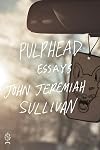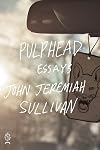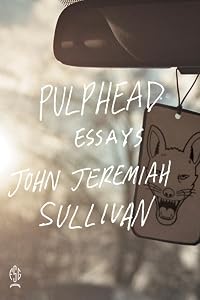
Pulphead: Essays
by John Jeremiah Sullivan
On This Page
Description
"A sharp-eyed, uniquely humane tour of America's cultural landscape--from high to low to lower than low--by the award-winning young star of the literary nonfiction world In Pulphead, John Jeremiah Sullivan takes us on an exhilarating tour of our popular, unpopular, and at times completely forgotten culture. Simultaneously channeling the gonzo energy of Hunter S. Thompson and the wit and insight of Joan Didion, Sullivan shows us--with a laidback, erudite Southern charm that's all his show more own--how we really (no, really) live now. In his native Kentucky, Sullivan introduces us to Constantine Rafinesque, a nineteenth-century polymath genius who concocted a dense, fantastical prehistory of the New World. Back in modern times, Sullivan takes us to the Ozarks for a Christian rock festival; to Florida to meet the alumni and straggling refugees of MTV's Real World, who've generated their own self-perpetuating economy of minor celebrity; and all across the South on the trail of the blues. He takes us to Indiana to investigate the formative years of Michael Jackson and Axl Rose and then to the Gulf Coast in the wake of Katrina--and back again as its residents confront the BP oil spill. Gradually, a unifying narrative emerges, a story about this country that we've never heard told this way. It's like a fun-house hall-of-mirrors tour: Sullivan shows us who we are in ways we've never imagined to be true. Of course we don't know whether to laugh or cry when faced with this reflection--it's our inevitable sob-guffaws that attest to the power of Sullivan's work"-- "A collection of nonfiction essays"-- show lessTags
Recommendations





Member Reviews
After seeing Flavorwire’s List of 10 Contemporary American Essayists You Should Be Reading Right Now, I added “Pulphead” to my ever growing list of things to read.
The opening essay, and my personal favourite, entitled “Upon This Rock,” chronicles Sullivan’s assignment to report on a Christian music festival. He ends up attending Creation Fest, the largest Christian music festival in the US, which is held in Pennsylvania. Sullivan is given a rental RV, a massive hulking vehicle which nearly tips over as he attempts to park in the assigned slot, and is instead rerouted to an open field, where he meets a couple of West Virginians named Ritter and Bub. Upon hearing a performance by Petra, Sullivan was reminded of his teenage show more years, when he was undergoing a white, middle class American bout with evangelicalism, what he calls “an experience commonly linked to the teens and moved beyond before one reaches twenty” (32), prompting a reflection on his youthful faith, of the “passionate engagement” of young Christians who “went at the Bible with grad-seminar intensity” (27). In the end, he writes of the men he met at Creation, “it may be the truest thing I will have written here: they were crazy, and they loved God — and I thought about the unimpeachable dignity of that, which I never was capable of” (40). As someone who grew up within an ethnic Christianity far removed from the political maneuverings of what passes for mainstream Christianity today, I found that both fair and poignant. I had the same feelings towards the other essay that most interested me — “Unnamed Caves,” which described Sullivan’s descent into a culture of another type — ancient American caverns which encase paintings from Native Americans of hundreds of years ago. He writes of his visits to the many caves in Tennessee and the South, of the looting and the trade of relics amongst those who live there now, of the lost treasures and and cultural histories, of paintings that depict stories and religions long lost and never to be known.
I haven’t read much in the way of essay collections although I do my fair share of collecting articles from the NY Times, The Atlantic, and whatever else is mentioned on ALdaily. I enjoyed this collection of essays, although the ones I discussed above were topically more interesting to me than others. Still, the writing is excellent, and the topics varied enough that many readers will find at least one essay that piques their interest. show less
The opening essay, and my personal favourite, entitled “Upon This Rock,” chronicles Sullivan’s assignment to report on a Christian music festival. He ends up attending Creation Fest, the largest Christian music festival in the US, which is held in Pennsylvania. Sullivan is given a rental RV, a massive hulking vehicle which nearly tips over as he attempts to park in the assigned slot, and is instead rerouted to an open field, where he meets a couple of West Virginians named Ritter and Bub. Upon hearing a performance by Petra, Sullivan was reminded of his teenage show more years, when he was undergoing a white, middle class American bout with evangelicalism, what he calls “an experience commonly linked to the teens and moved beyond before one reaches twenty” (32), prompting a reflection on his youthful faith, of the “passionate engagement” of young Christians who “went at the Bible with grad-seminar intensity” (27). In the end, he writes of the men he met at Creation, “it may be the truest thing I will have written here: they were crazy, and they loved God — and I thought about the unimpeachable dignity of that, which I never was capable of” (40). As someone who grew up within an ethnic Christianity far removed from the political maneuverings of what passes for mainstream Christianity today, I found that both fair and poignant. I had the same feelings towards the other essay that most interested me — “Unnamed Caves,” which described Sullivan’s descent into a culture of another type — ancient American caverns which encase paintings from Native Americans of hundreds of years ago. He writes of his visits to the many caves in Tennessee and the South, of the looting and the trade of relics amongst those who live there now, of the lost treasures and and cultural histories, of paintings that depict stories and religions long lost and never to be known.
I haven’t read much in the way of essay collections although I do my fair share of collecting articles from the NY Times, The Atlantic, and whatever else is mentioned on ALdaily. I enjoyed this collection of essays, although the ones I discussed above were topically more interesting to me than others. Still, the writing is excellent, and the topics varied enough that many readers will find at least one essay that piques their interest. show less
Oddly, I've already read two of the journalistic essays reprinted in this book, specifically one where the author attends a Christian rock festival and another where he tries his best to interview a very fickle Bunny Wailer.
Although I can't easily describe his writing style, Sullivan has a unique and highly intelligent voice. He mixes traditional reporting with personal reflection.
This book is critically acclaimed for good reason.
Although I can't easily describe his writing style, Sullivan has a unique and highly intelligent voice. He mixes traditional reporting with personal reflection.
This book is critically acclaimed for good reason.
John Jeremiah Sullivan’s Pulphead is an eclectic collection of essays that, once you start reading, you’ll find hard to put down. It doesn’t really matter what he is writing about—he has the ability to engage the reader even about subjects that would not otherwise seem interesting, such as Christian rock festivals, Indian cave paintings, or forgotten explorers. I did have a hard time really caring about the trials and tribulations of former stars of MTV’s Real World, however. Sullivan is a part of every essay he writes, sometimes in a very personal way as in his description of his time helping look after the aged Andrew Lytle or in the tale of Sullivan’s brother, who was electrocuted while rehearsing with his rock band—but show more miraculously recovered. Sullivan’s recounting of some of his brother’s obtuse remarks during the first month of his convalescence, before he regained his grasp of reality, is hysterical.
Sullivan also has a way of bringing to life the characters he meets, such as a group of guys from West Virginia who are attending the Christian rock festival in Pennsylvania. In other essays, at a distance, he gives us a compelling portrait of the very much alive Axl Rose and of the very dead Michael Jackson. His heartfelt homage to Jackson’s abilities is very effective and had me reassessing my own feelings.
Sullivan proves time and time again in this collection that a well-written essay can be as interesting and as compelling as any work of fiction. I look forward to reading more by this talented author. show less
Sullivan also has a way of bringing to life the characters he meets, such as a group of guys from West Virginia who are attending the Christian rock festival in Pennsylvania. In other essays, at a distance, he gives us a compelling portrait of the very much alive Axl Rose and of the very dead Michael Jackson. His heartfelt homage to Jackson’s abilities is very effective and had me reassessing my own feelings.
Sullivan proves time and time again in this collection that a well-written essay can be as interesting and as compelling as any work of fiction. I look forward to reading more by this talented author. show less
I'd never heard of Sullivan before, he's been compared to David Foster Wallace so I picked up his anthology of 14 magazine articles. It has a central-Appalachia border-state cultural flavor, in particular Indiana/Kentucky and by osmosis points east and west along that line, neither Yankee or Southern. He might be seen as a regional author, or an author with regional flavor. Sullivan is not the fierce intellectual like Wallace, more subdued, but in his writing has intense flashes with sentences here and there that cause one to stop and marvel at the creativity. He's also a likeable writer, which is a good thing since he's always in his stories. One reason we read is to meet interesting people, Sullivan is an author you don't mind show more spending time with and getting to know as he mixes his own background in with the story he's covering.
My favorite pieces are "Mister Lytle", about his apprenticeship with the 90 year old writer Andrew Nelson Lytle, who one morning was found nibbling Sullivan's ear, and more. "Upon This Rock", about a Christian Youth rock concert in PA and a group of feral West Virginia good ole boys he befriends; this is the funniest piece, sort of like DFW's essay on the state fair. "Michael" is a re-evaluation of the common belief that M. Jackson was a pedophile, I found it pretty convincing that Jackson may have been a pedo in thought, but not deed. "American Grotesque" is an investigation of the mysterious death of a Census worker found hanged in the woods with the words "Fed" inked on his chest. This was headline news for a few days in the red/blue culture wars, this essay investigates. "Unnamed Caves" is a fascinating piece on "pot diggers" in eastern Tennessee, people who dig up old Indian graves, I learned a lot on the subject. "Violence of the Lambs" is very creative, it reminded me of what Edgar Allen Poe used to do in the early 19th century ("The Balloon-Hoax"), it's something of a small masterpiece that may end up being among his most enduring essays, once the pop culture stuff fades. Not everyone liked it, the Washington Post said it had "gaseous prose" (perhaps an allusion to Poe's gas-light era?), and some readers were shocked/upset by the surprise ending, but I found it brilliant and brave. show less
My favorite pieces are "Mister Lytle", about his apprenticeship with the 90 year old writer Andrew Nelson Lytle, who one morning was found nibbling Sullivan's ear, and more. "Upon This Rock", about a Christian Youth rock concert in PA and a group of feral West Virginia good ole boys he befriends; this is the funniest piece, sort of like DFW's essay on the state fair. "Michael" is a re-evaluation of the common belief that M. Jackson was a pedophile, I found it pretty convincing that Jackson may have been a pedo in thought, but not deed. "American Grotesque" is an investigation of the mysterious death of a Census worker found hanged in the woods with the words "Fed" inked on his chest. This was headline news for a few days in the red/blue culture wars, this essay investigates. "Unnamed Caves" is a fascinating piece on "pot diggers" in eastern Tennessee, people who dig up old Indian graves, I learned a lot on the subject. "Violence of the Lambs" is very creative, it reminded me of what Edgar Allen Poe used to do in the early 19th century ("The Balloon-Hoax"), it's something of a small masterpiece that may end up being among his most enduring essays, once the pop culture stuff fades. Not everyone liked it, the Washington Post said it had "gaseous prose" (perhaps an allusion to Poe's gas-light era?), and some readers were shocked/upset by the surprise ending, but I found it brilliant and brave. show less
Uneven but often fascinating collection of essays and magazine pieces from prototypcial X-er Sullivan, on subjects ranging from Guns'n'Roses to 19th-century botany. Sullivan is a Southerner, by way of Indiana, and has that region's soulful, slightly eccentric melancholy; he's like an erudite, gothic version of Chuck Klosterman. At his best, he's utterly distinctive, even moving, but there's also something slightly off about him; his relation to his subject material can be opaque, and its hard to know how seriously to take him at times. Worth reading, if occasionally exasperating.
Short version: I didn't connect with any of these essays, I didn't get anything from them, and I didn't particularly enjoy them.
Long version: It's clear this is good writing. It's easy to read, there's a level of interest and thoughtfulness. I'm not saying it's bad, just that I wasn't into it. It seems like the author is using common experiences and background as a bridge to show the reader insights into new groups of people or experiences. The problem is I don't share any of that background and find it more alien than what we're looking at. Or no, now that I've said that, it feels false. Surely I've read a dozen books that fit this description, and loved them. Maybe it's just that I can't have this conversation about America without show more it being a dialogue.
Oddly, I enjoyed the essay on Axl Rose. Maybe because of the squatter I shared an attic with in Prague who had these great patchwork-leather skinny pants with the Guns 'n' Roses logo on the ass, and I remember whistling Patience together while we watched the sunrise.
But look, I never had a Jesus phase, I wasn't the naughty kid in a small town slumming on the wrong side of the tracks, I couldn't have a close relationship with a cousin running a tea-bagger parade, and I sure as shit couldn't daily ignore the racist ramblings of an old man because he was a 'great writer' who longed for the old South. It's probably good for me to see inside the head of someone so different from me, but this is just not the right window. show less
Long version: It's clear this is good writing. It's easy to read, there's a level of interest and thoughtfulness. I'm not saying it's bad, just that I wasn't into it. It seems like the author is using common experiences and background as a bridge to show the reader insights into new groups of people or experiences. The problem is I don't share any of that background and find it more alien than what we're looking at. Or no, now that I've said that, it feels false. Surely I've read a dozen books that fit this description, and loved them. Maybe it's just that I can't have this conversation about America without show more it being a dialogue.
Oddly, I enjoyed the essay on Axl Rose. Maybe because of the squatter I shared an attic with in Prague who had these great patchwork-leather skinny pants with the Guns 'n' Roses logo on the ass, and I remember whistling Patience together while we watched the sunrise.
But look, I never had a Jesus phase, I wasn't the naughty kid in a small town slumming on the wrong side of the tracks, I couldn't have a close relationship with a cousin running a tea-bagger parade, and I sure as shit couldn't daily ignore the racist ramblings of an old man because he was a 'great writer' who longed for the old South. It's probably good for me to see inside the head of someone so different from me, but this is just not the right window. show less
Splendid essays -- insightful, well-researched, poignant and often funny as hell. Sullivan, who writes for GQ has an unmistakable voice with hints of Hunter S. Thompson, were that writer sober and less judgmental. The essays on the Tea Party, Andrew Lytle, a Christian Rock Festival and Axel Rose are bloody brilliant. Due to Sullivan's skill, I found myself deeply interested in subjects that, on first glance, I thought might not intrigue me. That's the mark of a wonderful writer.
Members
- Recently Added By
Published Reviews
ThingScore 92
It’s hard not to feel, reading this collection, like someone reached into your brain, took out the half-baked stuff you talk about with your friends, researched it, lived it, and represented it to you smarter and better and more thoroughly than you ever could. So read it in awe if you must, but read it.
added by elenchus
It’s a neat trick—interrupt reportage with memoir to take the harsh spotlight of a straight profile and shine it on yourself for a moment. It’s also exceedingly difficult. It can go all kinds of wrong. And what better way to risk the rancor of your readers (and editors) than veering from “the biggest rock star on the planet..” to yourself at seventeen..? But for Sullivan and a show more precious few other writers—insert obligatory David Foster Wallace comparison here—the conceit unfolds beautifully. It clarifies and sharpens. show less
added by Stbalbach
Among the best young nonfiction writers in English, the journalists and essayists whose bylines you avidly seek out in newspapers, magazines and online, John Jeremiah Sullivan probably isn’t (yet) in my personal Top 10 or 15. But I suspect that none of those other writers could have gathered together a book that’s as good as “Pulphead,” Mr. Sullivan’s brainy new collection of essays. show more It’s a big and sustaining pile of — as I’ve heard it put about certain people’s fried chicken — crunchy goodness. show less
added by Shortride
Lists

Top Five Books of 2013
1,562 works; 721 members

NYT 100 best books of 21st C
100 works; 31 members

.
184 works; 1 member
Author Information

9+ Works 1,180 Members
Awards and Honors
Awards
Distinctions
Series
Belongs to Publisher Series
Common Knowledge
- Original title
- Pulphead. Essays
- Original publication date
- 2011
- People/Characters
- Michael Jackson; Axl Rose; Andrew Lytle; Bill Sparkman; Constantine Rafinesque; Bunny Wailer
- Important events
- Creation Festival; Real World
- Epigraph*
- »Good-by now, rum friends, and the best wishes.
You got a good mag (like the pulp-heads say)...«
Aus einem (später zurückgezogenen) Kündigungsschreiben Norman Mailers aus dem Jahr 1960 - Dedication*
- Für M. und J. und M. J.
Und für Pee Wee (1988-2007) - First words*
- Man soll ja nicht prahlen, aber mein ursprünglicher Plan war perfekt.
- Last words*
- (Click to show. Warning: May contain spoilers.)»Von welchem Standpunkt aus sollte dem noch widersprochen werden?«
- Blurbers
- Tower, Wells; Paterniti, Michael; Richard, Mark; Marcus, Greil
- Original language*
- Englisch
*Some information comes from Common Knowledge in other languages. Click "Edit" for more information.
Classifications
- Genres
- Nonfiction, General Nonfiction
- DDC/MDS
- 080 — Computer science, information & general works Anthologies and Quotations General collections
- LCC
- AC8 .S78135 — General Works Collections. Series. Collected works Collections. Series. Collected works Collections of monographs, essays, etc. American and English
- BISAC
Statistics
- Members
- 858
- Popularity
- 31,867
- Reviews
- 32
- Rating
- (3.91)
- Languages
- 6 — Dutch, English, French, German, Portuguese, Spanish
- Media
- Paper, Audiobook, Ebook
- ISBNs
- 14
- ASINs
- 4