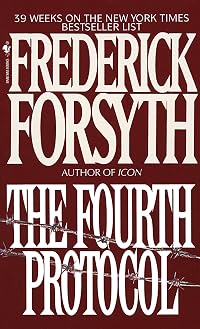
The Fourth Protocol
by Frederick Forsyth
On This Page
Description
The plot reveals a Soviet plan to control England and destroy NATO by swaying the popular vote in England's election. The plan is to detonate a small nuclear device near an American base in Britain by a Soviet undercover agent, thereby ensuring a anti-nuclear sentiment.Tags
Recommendations
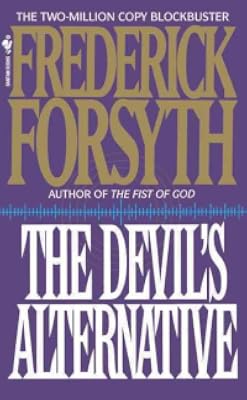
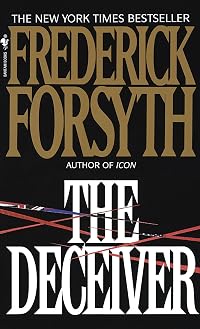
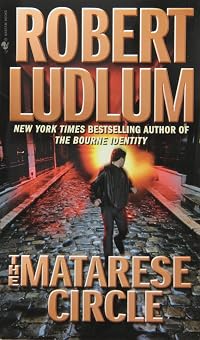


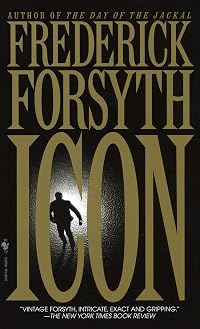


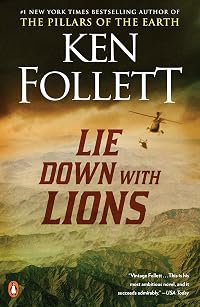
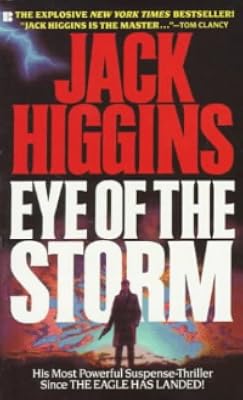
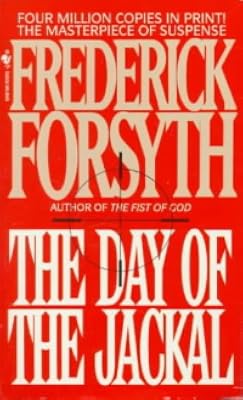
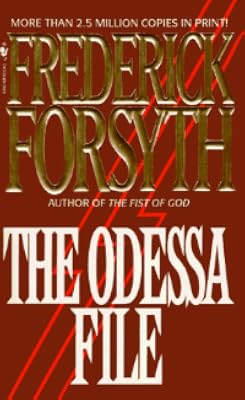
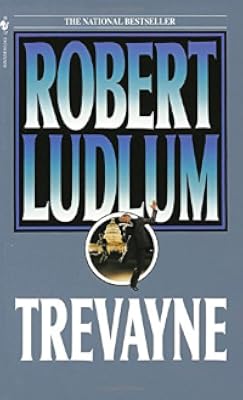



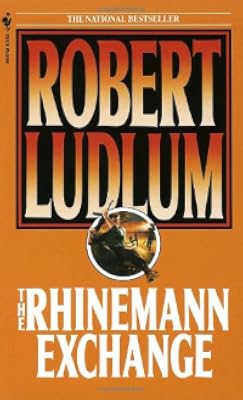
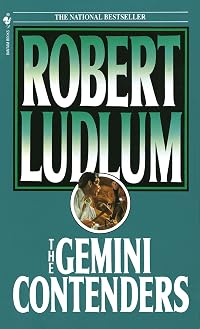


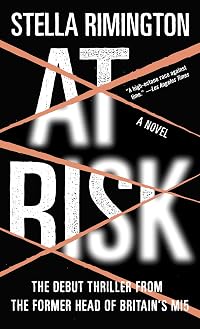
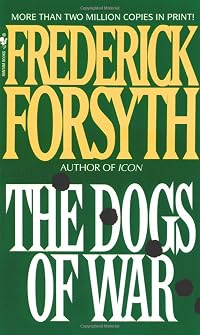
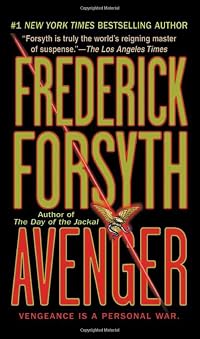
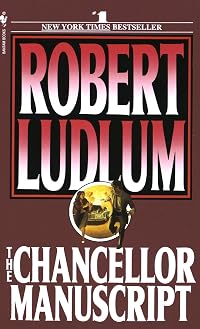
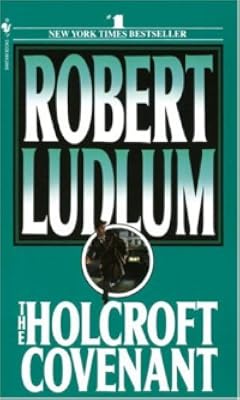
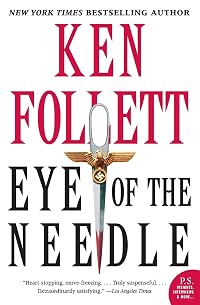
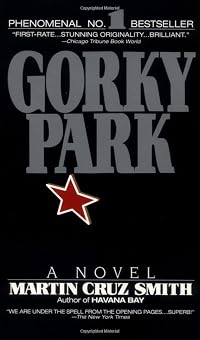

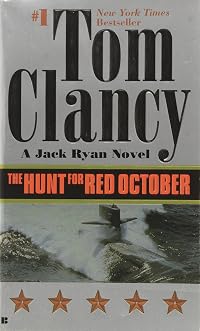
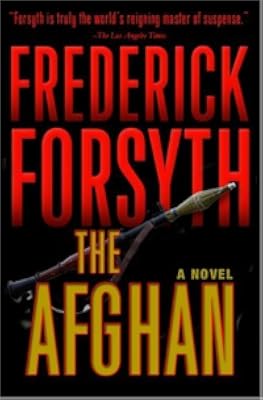


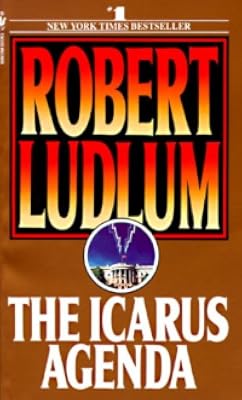

Member Recommendations

karatelpek Similar idea, but with France in the 1960s instead of the UK in the 1980s.
Member Reviews
John Preston is a civil servant working fro MI5. As a relative newcomer to the service having previously been in the military, he doesn't fit well with the old boy network and finds himself at odds with his boss. Having been shifted to a more obscure and less exciting department Preston suddenly finds himself at the sharp end of a Russian plot to destabilise the UK on the eve of the 1987 General Election. However, Preston does not know the nature of the plot, which is probably just as well, as the plan is to detonate a nuke on British soil.
I must confess that I have lived my life accompanied by a high amount of literary snobbishness meaning that a number of bestselling authors have not made it on to my reading list. Over the last few show more years I have learned my lesson with John Le Carre and Robert Harris, and now Frederick Forsyth. The Day of the Jackal was a good book, but The Fourth Protocol is in a different league. This is a fine piece of work with a complex, realistic and compelling plot and good character development. It had me hooked from the beginning and I would rate it up there with any other thriller that I've ever read. The outcome was in doubt right up until the end of the novel making it really exciting, but at the same time it was delivered in the same sort of British stiff upper lip manner that Le Carre uses.There is some heavy politics mixed in with spycraft, interdepartmental tensions, nods to history and good storytelling. Highly recommended if you've not read it.
The Lady show less
I must confess that I have lived my life accompanied by a high amount of literary snobbishness meaning that a number of bestselling authors have not made it on to my reading list. Over the last few show more years I have learned my lesson with John Le Carre and Robert Harris, and now Frederick Forsyth. The Day of the Jackal was a good book, but The Fourth Protocol is in a different league. This is a fine piece of work with a complex, realistic and compelling plot and good character development. It had me hooked from the beginning and I would rate it up there with any other thriller that I've ever read. The outcome was in doubt right up until the end of the novel making it really exciting, but at the same time it was delivered in the same sort of British stiff upper lip manner that Le Carre uses.There is some heavy politics mixed in with spycraft, interdepartmental tensions, nods to history and good storytelling. Highly recommended if you've not read it.
The Lady show less
The Fourth Protocol that was written by Frederick Forsyth is still one of my favorite books. It's the ultimate in spy stories. I must have read it a dozen times. This is one of the few thriller books I have also bought the Audible version, as it's perfect for that long drive. The Fourth Protocol does what a good spy book should do as it's filled with twists and turns through treachery and deceit and pace, you wont want to put it down. It also does what any great book should do, entertain by telling a good story that is based on a theoretical possibility of what could happen even today.
marcjohnstone.com
marcjohnstone.com
Stopped reading after about 110 pages. I felt there were too many threads and it was not immediately apparent which was to be the most important. The back cover makes a big deal about Kim Philby and his involvement in a super-top-secret plot against Britain, but the book spends much more of the beginning focused on a jewel heist, a leak within the British Secret Service, and a detailed explanation of how MI5 works, which is very repetitive if you've read a good non-fiction book on the subject, such as Christopher Andrew's The Defence of the Realm. Taken on their own, the various stories could be interesting, but mashed together it was just too much story for the book. More patient thriller readers may find this of greater interest than show more I did. show less
Forsyth never fails to live up to his high standard, a high-quality thriller once again. One flaw though is the role played by the Greek brothers in transmitting the final message - Petrofsky doesn't need to use them since he is a lone operator. This is something that could have been better managed.
Twists are great, but (as is usual with the genre) reading the narrative is more like reading a fleshed-out screen-play than a novel.
Also, the top two spooks are far more subtle and intelligent than is probably the norm in real-life.
But Forsyth satisfies the minutiae-freaks quiet well, and produces some good observations about The Game.
NOTES
p. 179: The vanity...always the vanity, the monumental self-esteem of inadequate men..the self-arrogated right to play God, the conviction that the traitor alone is right and all his colleagues fools, coupled with the druglike love of power derived from what he sees as the manipulation of policy, through the transfer of secrets, to the ends in which he believes and to the confusion of his supposed show more opponents in his own government, those who have passed him over for promotion or honors.
p.187: The team worked through the night and were later able to report that (the traitor) had been cooperation itself. What they thought of him privately did not form part of their report, since it was unprintable.
p. 207: (The Russian) respected (the Brit), as he despised (the traitors). Unlike the other two, the Brit was not an agent but a contact, a man high in his own country's establishment and a man who, like the Russian, was a pragmatist, a man wedded to the realities of his job, his country, and the surrounding world. The Russian never ceased to be amazed at journalistic references in the West to intelligence officers living inworld of fantasy; for the Russian, it was the politicians who lived in a dream world, seduced and bemused by their own propaganda.
p. 254: the full plot is revealed (so I can find those pages again; some details under Spoiler Alert).
p.256: (turning traitors mechanism) The scientist had had a son on whom he doted. The youth had been a soldier in the Israeli Army, stationed in Beirut in 1982. When the Phalangists had devastated the Palestinian refugee camps of Sabra and Shatila, the young Lieutenant Wisser had tried to intervene. He had been cut down by a bullet. Carefully constructed evidence had been presented to the grieving father, already a committed opponent of the Likud Party, that I had been an Israeli bullet that had killed his son. In his bitterness and rage, Dr. Wisser had swung a little further left and agreed to work for Russia.
p. 362-363: The SAS is unusual in this sense also: the officers are almost all on temporary assignment from their "parent" regiments and usually stay two to thee years...(Other Ranks stay long term)... and not all of them, just the best. … The accent in the SAS is on self-discipline rather than the externally applied kind. Any man who cannot produce the self-discipline needed to go through what the SAS men must will not be there for long, anyway. Those who can do not need rigid formality in personal relationships, such as are proper in a line regiment. (officers address men by first name, Other Ranks address officers as boss, CO as sir) Among themselves, SAS troopers refer to an officer as "a Rupert."
(Staff Sergeant Bilbow named interestingly)
p. 383-385: (why the pragmatic men do indirect messaging and trades to avoid blowing everything up -- and use pigeons with Philby)
Lots of interesting practical ways to smuggle in small parts of a miniature nuclear bomb, too many to write down. show less
Also, the top two spooks are far more subtle and intelligent than is probably the norm in real-life.
But Forsyth satisfies the minutiae-freaks quiet well, and produces some good observations about The Game.
NOTES
p. 179: The vanity...always the vanity, the monumental self-esteem of inadequate men..the self-arrogated right to play God, the conviction that the traitor alone is right and all his colleagues fools, coupled with the druglike love of power derived from what he sees as the manipulation of policy, through the transfer of secrets, to the ends in which he believes and to the confusion of his supposed show more opponents in his own government, those who have passed him over for promotion or honors.
p.187: The team worked through the night and were later able to report that (the traitor) had been cooperation itself. What they thought of him privately did not form part of their report, since it was unprintable.
p. 207: (The Russian) respected (the Brit), as he despised (the traitors). Unlike the other two, the Brit was not an agent but a contact, a man high in his own country's establishment and a man who, like the Russian, was a pragmatist, a man wedded to the realities of his job, his country, and the surrounding world. The Russian never ceased to be amazed at journalistic references in the West to intelligence officers living inworld of fantasy; for the Russian, it was the politicians who lived in a dream world, seduced and bemused by their own propaganda.
p. 254: the full plot is revealed (so I can find those pages again; some details under Spoiler Alert).
p.256: (turning traitors mechanism) The scientist had had a son on whom he doted. The youth had been a soldier in the Israeli Army, stationed in Beirut in 1982. When the Phalangists had devastated the Palestinian refugee camps of Sabra and Shatila, the young Lieutenant Wisser had tried to intervene. He had been cut down by a bullet. Carefully constructed evidence had been presented to the grieving father, already a committed opponent of the Likud Party, that I had been an Israeli bullet that had killed his son. In his bitterness and rage, Dr. Wisser had swung a little further left and agreed to work for Russia.
p. 362-363: The SAS is unusual in this sense also: the officers are almost all on temporary assignment from their "parent" regiments and usually stay two to thee years...(Other Ranks stay long term)... and not all of them, just the best. … The accent in the SAS is on self-discipline rather than the externally applied kind. Any man who cannot produce the self-discipline needed to go through what the SAS men must will not be there for long, anyway. Those who can do not need rigid formality in personal relationships, such as are proper in a line regiment. (officers address men by first name, Other Ranks address officers as boss, CO as sir) Among themselves, SAS troopers refer to an officer as "a Rupert."
(Staff Sergeant Bilbow named interestingly)
Lots of interesting practical ways to smuggle in small parts of a miniature nuclear bomb, too many to write down.
Liked this book a lot. An interesting plot, not really very far fetched, considering the time the book was set in.
The only minus for me was the fact that Preston has a very good intuition. He's almost psycic... Especially when you take into account that he's a man. 😃
The only minus for me was the fact that Preston has a very good intuition. He's almost psycic... Especially when you take into account that he's a man. 😃
Excellent spy novel about a Soviet plot to destablise the west by simulating a nuclear accident in England caused by the US. The descriptions of the security service's efforts to get on the trail of those involved are very well done. There is genuine suspense at the end. The book is better than the film, which had a simplified plot line and unnecessarily changed some details.
Members
- Recently Added By
Lists

Dishonourable Mentions of 2014
80 works; 23 members

Tagged Cold War
10 works; 2 members

Books With Numbers in the Title
308 works; 13 members
Author Information

114+ Works 34,864 Members
Frederick Forsyth was born in Ashford, England on August 25, 1938. At age seventeen, he decided he was ready to start experiencing life for himself, so he left school and traveled to Spain. While there he briefly attended the University of Granada before returning to England and joining the Royal Air Force. He served with the RAF from 1956 to show more 1958, earning his wings when he was just nineteen years old. He left the RAF to become a reporter for the Eastern Daily Press, Reuters News Agency, and the British Broadcasting Corporation (BBC). While with the BBC, he was sent to Nigeria to cover an uprising in the Biafra region. As he learned more about the conflict, he became sympathetic to the rebel cause. He was pulled from Nigeria and reassigned to London when he reported this viewpoint. Furious, he resigned and returned to Nigeria as a freelance reporter, eventually writing The Biafra Story and later, Emeka, a biography of the rebel leader Chukwuemeka Odumegwu-Ojukwu. Upon his return to England in 1970, Forsyth began writing fiction. His first novel, The Day of the Jackal, won an Edgar Allan Poe award from the Mystery Writers of America. His other works include The Odessa File, The Dogs of War, The Fourth Protocol, Devil's Alternative, The Negotiator, The Deceiver, The Fist of God, Icon, The Veteran, Avenger, The Afghan, The Cobra and The Fox. (Bowker Author Biography) show less
Some Editions
Awards and Honors
Distinctions
Series
Belongs to Publisher Series
Work Relationships
Is contained in
Has the adaptation
Is abridged in
Common Knowledge
- Canonical title*
- Het vierde protocol
- Original title
- The Fourth Protocol
- Original publication date
- 1984
- People/Characters
- Kim Philby; John Preston
- Important places
- London, England, UK; Moscow, Russia; Ipswich, England, UK
- Related movies
- The Fourth Protocol (1987 | IMDb)
- Epigraph
- [None]
- Dedication
- For Shane Richard, aged five, without whose loving attentions this book would have been written in half the time.
- First words
- The man in gray decided to take the Glen Suite of diamonds at midnight.
- Last words
- (Click to show. Warning: May contain spoilers.)It was the Master's last stroke.
- Disambiguation notice
- Do not combine with the movie.
*Some information comes from Common Knowledge in other languages. Click "Edit" for more information.
Classifications
Statistics
- Members
- 2,538
- Popularity
- 7,574
- Reviews
- 32
- Rating
- (3.73)
- Languages
- 17 — Czech, Danish, Dutch, English, Estonian, Finnish, French, German, Hungarian, Italian, Norwegian (Bokmål), Norwegian, Polish, Portuguese, Russian, Spanish, Swedish
- Media
- Paper, Audiobook, Ebook
- ISBNs
- 95
- ASINs
- 34