On This Page
Description
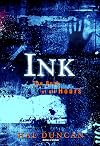
Hal Duncan shattered the boundaries between genres with his stunning debut novel, Vellum, which shocked with the boldness of its ideas, seduced with the sensual beauty of its prose, and astonished with its imaginative sweep. Now Duncan returns with another epic tour de force that surpasses all expectations. Once, in the depths of prehistory, they were human. But in a moment of brutal transfiguration, they became unkin, beings who possessed the power to alter reality by accessing the show more Vellum: a realm of eternity containing every possibility, every paradox, every heaven . . . and every hell. The Vellum became a battleground where forces of order and chaos fought across time and space. The ultimate weapon in that bloody war spanning through history and myth, dreams and memory, was The Book of All Hours, a legendary tome within which the blueprint for all reality is inscribed, a volume long lost amid the infinite folds of the Vellum. Until, in 2017, it was found by Reynard Carter, a young man with the blood of unkin in his veins. Until Phreedom Messenger and her brother, Thomas, were swept up in an archetypal dance of death and rebirth. Until a hermit named Seamus Finnan found the courage to re-forge his broken soul, and a self-proclaimed angel called Metatron unleashed a plague of AI bitmites. Now, in the aftermath of the apocalypse, several survivors search desperately for the remnants of themselves scattered across the Vellum like torn pages, determined to use the blood of the unkin to rewrite The Book of All Hours, and to forge a new destiny for themselves and all humanity. Reality will never be the same. show lessTags
Recommendations
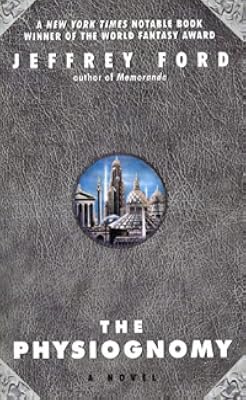
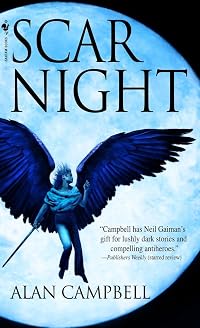
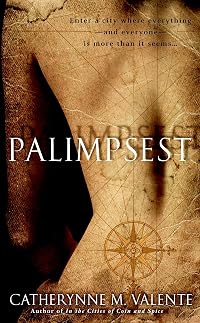
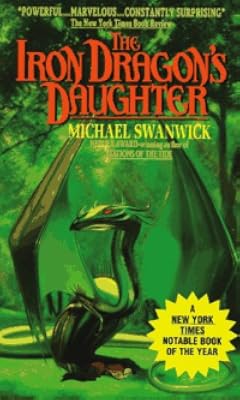
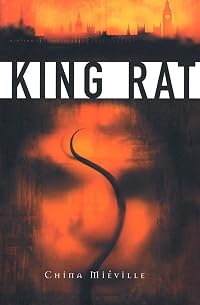
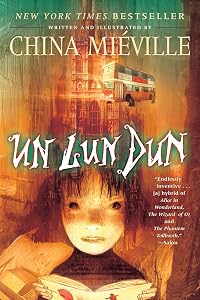
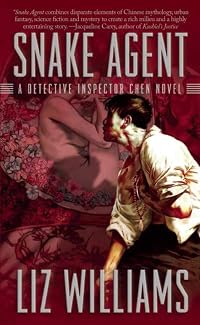
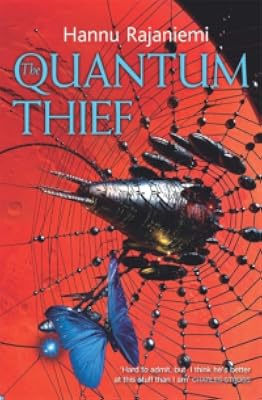

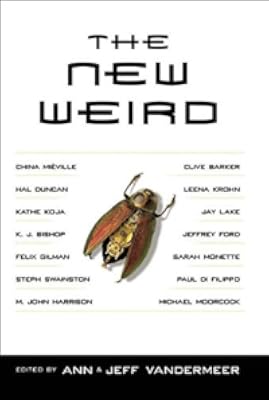

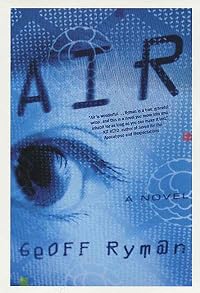
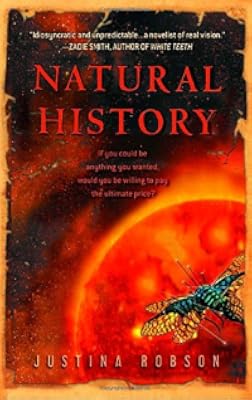
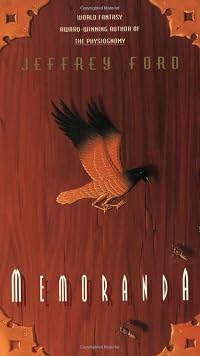


Member Recommendations
Member Reviews
Might as well talk about 'Ink' and 'Vellum' together, since they're really one work.
Conveniently, Duncan describes his work himself, within the text of the book:
"...the Book has as many histories as the world itself, and it contains them all in its Moebius loop of time and space, of contradicting stories somehow fused as one confused and rambling tale, a sort of truth but full of inconsistencies and digressions, spurious interpolations and interpretations, fiction told as fact, fact told as fiction..."
At least, that's the goal.
It starts off promisingly: a student seeks to steal a secret vellum manuscript - the Book of All Hours - a book which determines and reflects reality, which contains all possible realities... a book written in the show more language of angels, upon the skin of angels, which contains the entirety of the time-space continuum. This is connected to a War in Heaven, agents of the angels that walk upon the earth, and a lot of Sumerian mythology. It began by reminding me of Storm Constantine's Grigori books, and Catherynne Valente's Palimpsest. Neither of those is a bad thing.
However, there's a problem with writing a book about a book that is supposed to contain all things, when you intend the format of your book to reflect that of your fictional book. How do you edit it? What should go in, and what shouldn't? I would have had trouble editing this book, I have to admit. And, in the end, I don't think it worked.
It's obvious that Duncan wrote several reasonably coherent narratives, then chopped them up at mostly-random, and mixed them together. He also wrote a lot of random Other Stuff (thoughts in his head that day?) and stuck those in too. (It reminded me of doing college creative writing assignments, when I sometimes pieced disparate pieces of my writing together in order to make up a page count by a deadline.)
Yes, the reader can piece the narratives together as s/he goes along, but do the "inconsistencies and digressions, spurious interpolations and interpretations" serve a purpose? I kept hoping that they would. I have to admit that my interest was waning by the end of the first book, but I read the whole second book with the hope that it would all get pulled together. I don't feel that that happened.
Duncan is obviously a smart guy. He's very obviously well and widely educated. There are a lot of interesting ideas in these books, and many of the small vignettes are expertly and beautifully written. He has a nice command of the English language. However, I couldn't help feeling that he might be more suited to writing essays than novels. I bet he's good at academic papers, too.
About halfway through the second book, I was thinking about why I really wasn't enjoying it, and I realized that all of the characters, no matter which reality they're currently in, whether they speak in a broadly-written accent, are young or old, or even (in one case) female, seem like they're actually the same person: Hal Duncan(?)
I kid you not, after I realized that, on the very next page, I came across this quote: "there's a deeper connection between them - Jack, Puck, Anna, Joey, Don and himself...Finnan too, wherever he is. The seven of them, seven souls, but maybe really only one...identity."
Yep. They're all the same person. And they're too busy being archetypes, metaphors or mouthpieces most of the time, to be convincing characters.
Duncan says, "Let us consider reality itself as a palimpsest." OK, consider that considered. I even really like the idea. I like a LOT of the ideas in this book. But I feel that those idea would have come through better through the use of a more consistent format - not even necessarily a traditional format, but just a more consistent one. For example, part 3 (the first half of 'Ink') is largely taken up by the characters putting on a performance of a version of 'The Bacchae.' However, Greek drama plays little part in any of the other sections of the book. It feels out-of-place. As do many of the other "spurious interpolations" within the text.
I feel like Duncan said, "well, it's inconsistent because I want it to be inconsistent." But I still prefer consistency. And characters with individual identities.
I often really like things that others describe, negatively, as "pretentious." But this is one of those rare occasions where I am feeling moved to use "pretentious" in a negative sense. This book is pretentious. show less
Conveniently, Duncan describes his work himself, within the text of the book:
"...the Book has as many histories as the world itself, and it contains them all in its Moebius loop of time and space, of contradicting stories somehow fused as one confused and rambling tale, a sort of truth but full of inconsistencies and digressions, spurious interpolations and interpretations, fiction told as fact, fact told as fiction..."
At least, that's the goal.
It starts off promisingly: a student seeks to steal a secret vellum manuscript - the Book of All Hours - a book which determines and reflects reality, which contains all possible realities... a book written in the show more language of angels, upon the skin of angels, which contains the entirety of the time-space continuum. This is connected to a War in Heaven, agents of the angels that walk upon the earth, and a lot of Sumerian mythology. It began by reminding me of Storm Constantine's Grigori books, and Catherynne Valente's Palimpsest. Neither of those is a bad thing.
However, there's a problem with writing a book about a book that is supposed to contain all things, when you intend the format of your book to reflect that of your fictional book. How do you edit it? What should go in, and what shouldn't? I would have had trouble editing this book, I have to admit. And, in the end, I don't think it worked.
It's obvious that Duncan wrote several reasonably coherent narratives, then chopped them up at mostly-random, and mixed them together. He also wrote a lot of random Other Stuff (thoughts in his head that day?) and stuck those in too. (It reminded me of doing college creative writing assignments, when I sometimes pieced disparate pieces of my writing together in order to make up a page count by a deadline.)
Yes, the reader can piece the narratives together as s/he goes along, but do the "inconsistencies and digressions, spurious interpolations and interpretations" serve a purpose? I kept hoping that they would. I have to admit that my interest was waning by the end of the first book, but I read the whole second book with the hope that it would all get pulled together. I don't feel that that happened.
Duncan is obviously a smart guy. He's very obviously well and widely educated. There are a lot of interesting ideas in these books, and many of the small vignettes are expertly and beautifully written. He has a nice command of the English language. However, I couldn't help feeling that he might be more suited to writing essays than novels. I bet he's good at academic papers, too.
About halfway through the second book, I was thinking about why I really wasn't enjoying it, and I realized that all of the characters, no matter which reality they're currently in, whether they speak in a broadly-written accent, are young or old, or even (in one case) female, seem like they're actually the same person: Hal Duncan(?)
I kid you not, after I realized that, on the very next page, I came across this quote: "there's a deeper connection between them - Jack, Puck, Anna, Joey, Don and himself...Finnan too, wherever he is. The seven of them, seven souls, but maybe really only one...identity."
Yep. They're all the same person. And they're too busy being archetypes, metaphors or mouthpieces most of the time, to be convincing characters.
Duncan says, "Let us consider reality itself as a palimpsest." OK, consider that considered. I even really like the idea. I like a LOT of the ideas in this book. But I feel that those idea would have come through better through the use of a more consistent format - not even necessarily a traditional format, but just a more consistent one. For example, part 3 (the first half of 'Ink') is largely taken up by the characters putting on a performance of a version of 'The Bacchae.' However, Greek drama plays little part in any of the other sections of the book. It feels out-of-place. As do many of the other "spurious interpolations" within the text.
I feel like Duncan said, "well, it's inconsistent because I want it to be inconsistent." But I still prefer consistency. And characters with individual identities.
I often really like things that others describe, negatively, as "pretentious." But this is one of those rare occasions where I am feeling moved to use "pretentious" in a negative sense. This book is pretentious. show less
Ink is the second volume in Hal Duncan's 'Book of All Hours' duology, and just like Vellum, the first volume, it's a wonderfully entertaining mess of a novel: Joyce channeling Zelazny telling five or six stories at once. Indeed, it's sufficiently similar to that book to make it pretty easy to work out who to recommend it to: if you liked Vellum, you'll like this, and if you didn't, you won't.
While it's not (quite) a direct sequel, I'd certainly advise against attempting this if you've yet picked up the first book. There's a quick reminder of the events of Book 1 worked rather neatly into the plot near the beginning, but the big concepts: the multiple realities that make up the Vellum, the angels/demons/gods/unkin and the Cant they speak show more to reshape themselves and the world around them and, of course, the mysterious Book itself are all introduced without much explanation (that is, with even less explanation than in the first volume).
I'd rather not spoil things too much for people thinking about picking this up: suffice to say that I liked it a lot, and really only had a couple of (fairly minor) complaints.
Least likely to worry anyone but me: there's a silly little bit of pseudo-mathematical gibberish near the middle of the book, that, while having pretty much no impact on the rest of the book, simply left a faintly sour taste in my mouth; here, at least, the author is simply not being as clever as he thinks he is. But that's really getting too far into nit-picking, I suspect.
More seriously, I had slight issues with both the focus of the novel and, perhaps unsurprisingly, the ending. Or, rather, the endings - there are actually several, at least of couple of which seem outright contradictory. But while this might be a problem for readers who were hoping for more of a definite resolution after the events of Vellum (it's fairly safe to say that there are no such definitive answers to be found here, though there are plenty of half-explained mysteries that can probably be puzzled out in a lot more detail than I did this time through), I felt that this was a decision on Duncan's part that almost had to be made, given the very nature of this series. My problem was rather more basic: the actual book proper ends about twenty-five pages before the text stops, leaving us with a self-indulgent epilogue that may well delight readers familiar with the works of Virgil but, I'll confess, left me pretty cold.
As to the focus: while Phreedom/Anna/Anastasia and Seamus Finnan were the central characters of Vellum, here they take much more of a back seat to Jack and Joey. Certainly both these characters (or archetypes, even) are entertaining and intriguing to read about, but I was left feeling that, in particular, Phree's arc from the earlier book was left almost unfinished, and she was reduced to almost a bit player in this book. I felt the first volume did, on balance, a better job of balancing all the different members of the cast.
But criticisms aside, this is a book I'm very happy to have read. Critics might complain that Duncan is more interested in showing off than in telling a coherent story, yet while there certainly is a great deal of showing off here, I'm not sure why that's something to criticise when it's simply so much fun to read. While there may be no destination to speak of, the ride is an exhilarating one; there are some wonderful set pieces, some incredible prose, and more neat ideas and feats of imagination than many authors would fit into ten times as many books.
If you hated Vellum, this book won't change your mind. But if you haven't tried the duology yet, you really owe it to yourself to do so. show less
While it's not (quite) a direct sequel, I'd certainly advise against attempting this if you've yet picked up the first book. There's a quick reminder of the events of Book 1 worked rather neatly into the plot near the beginning, but the big concepts: the multiple realities that make up the Vellum, the angels/demons/gods/unkin and the Cant they speak show more to reshape themselves and the world around them and, of course, the mysterious Book itself are all introduced without much explanation (that is, with even less explanation than in the first volume).
I'd rather not spoil things too much for people thinking about picking this up: suffice to say that I liked it a lot, and really only had a couple of (fairly minor) complaints.
Least likely to worry anyone but me: there's a silly little bit of pseudo-mathematical gibberish near the middle of the book, that, while having pretty much no impact on the rest of the book, simply left a faintly sour taste in my mouth; here, at least, the author is simply not being as clever as he thinks he is. But that's really getting too far into nit-picking, I suspect.
More seriously, I had slight issues with both the focus of the novel and, perhaps unsurprisingly, the ending. Or, rather, the endings - there are actually several, at least of couple of which seem outright contradictory. But while this might be a problem for readers who were hoping for more of a definite resolution after the events of Vellum (it's fairly safe to say that there are no such definitive answers to be found here, though there are plenty of half-explained mysteries that can probably be puzzled out in a lot more detail than I did this time through), I felt that this was a decision on Duncan's part that almost had to be made, given the very nature of this series. My problem was rather more basic: the actual book proper ends about twenty-five pages before the text stops, leaving us with a self-indulgent epilogue that may well delight readers familiar with the works of Virgil but, I'll confess, left me pretty cold.
As to the focus: while Phreedom/Anna/Anastasia and Seamus Finnan were the central characters of Vellum, here they take much more of a back seat to Jack and Joey. Certainly both these characters (or archetypes, even) are entertaining and intriguing to read about, but I was left feeling that, in particular, Phree's arc from the earlier book was left almost unfinished, and she was reduced to almost a bit player in this book. I felt the first volume did, on balance, a better job of balancing all the different members of the cast.
But criticisms aside, this is a book I'm very happy to have read. Critics might complain that Duncan is more interested in showing off than in telling a coherent story, yet while there certainly is a great deal of showing off here, I'm not sure why that's something to criticise when it's simply so much fun to read. While there may be no destination to speak of, the ride is an exhilarating one; there are some wonderful set pieces, some incredible prose, and more neat ideas and feats of imagination than many authors would fit into ten times as many books.
If you hated Vellum, this book won't change your mind. But if you haven't tried the duology yet, you really owe it to yourself to do so. show less
this one's better than Vellum: more coherent and thought-through, less indulgent. Moorcock's Jerry Cornelius is an obvious influence. but it's still, although ambitious, not as engaging as it ought to be: maybe the weight of its conceits strip out the meaning it tries to insert? well, something like that. worth the read, though; it's a book that aims high and often hits its marks.
I really liked Vellum, but I am incredibly disappointed in Ink. All the mythological elements that I so enjoyed are gone; the story has devolved into hundreds of pages of alternate WWII histories. It seems as though much of the character development and plot of the first volume has been abandoned altogether. It's not so much a continuation of Vellum as it is a loosely related meandering set of parallel not-particularly-well-done Indiana Jones adventures.
After spending so much thought exploring the thread and twists of Vellum's plot (review here), Ink's more straight-forward narrative was a letdown. I was left at the end of Vellum wanting to know so much more about the surviving world and what the characters were going to do next, but Ink didn't pick up at all where Vellum left off. Instead of the myriad threads of narrative that made up Vellum's plot, Ink juggled only a couple -- but of that couple, half failed to capture my interest entirely.
A large part of my enjoyment of Vellum was its complicated plot, which I had thought elevated the story in a very dynamic and interesting way. In Ink, the plot takes a completely different pattern. This pattern probably isn't bad in its own right, show more but it's so counter to my enjoyment of Vellum that it made Ink hard for me to plunge into. Plus, half of Ink was made up of this elaborately entwined side story of the play-within-a-play, and I had found it much too didactic for me to enjoy. It also severely interrupted the rhythm of narrative for me.
I've decided to rank Vellum as four stars, but Ink as only two, giving this duology an average three-star rating. show less
A large part of my enjoyment of Vellum was its complicated plot, which I had thought elevated the story in a very dynamic and interesting way. In Ink, the plot takes a completely different pattern. This pattern probably isn't bad in its own right, show more but it's so counter to my enjoyment of Vellum that it made Ink hard for me to plunge into. Plus, half of Ink was made up of this elaborately entwined side story of the play-within-a-play, and I had found it much too didactic for me to enjoy. It also severely interrupted the rhythm of narrative for me.
I've decided to rank Vellum as four stars, but Ink as only two, giving this duology an average three-star rating. show less
Even worse than Vellum. Couldn't face slogging through it after 20 pages.
Members
- Recently Added By
Lists

New Weird Fiction
69 works; 11 members
Author Information

42+ Works 2,156 Members
Some Editions
Awards and Honors
Awards
Distinctions
Series

Belongs to Publisher Series
Gallimard, Folio SF (435)
Work Relationships
Is contained in
Common Knowledge
- Canonical title*
- Encre
- Original publication date
- 2007
- Original language
- English
*Some information comes from Common Knowledge in other languages. Click "Edit" for more information.
Classifications
Statistics
- Members
- 531
- Popularity
- 56,178
- Reviews
- 10
- Rating
- (3.65)
- Languages
- 7 — Czech, English, Finnish, French, German, Polish, Spanish
- Media
- Paper, Ebook
- ISBNs
- 16
- ASINs
- 3