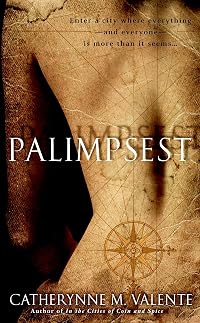
Palimpsest
by Catherynne Valente
On This Page
Description
"Between life and death, dreaming and waking, at the train stop beyond the end of the world is the city of Palimpsest. To get there is a miracle, a mystery, a gift, and a curse -- a voyage permitted only to those who've always believed there's another world than the one that meets the eye. Those fated to make the passage are marked forever by a map of that wondrous city tattooed on their flesh after a single orgasmic night." To this erotic and fantastic kingdom come Oleg, a New York show more locksmith; a beekeper, November; Ludovico, a binder of rare books; and a Japanese woman named Sei, each of whom has lost something important in their lives. -- Publisher info. show lessTags
Recommendations
















Member Recommendations

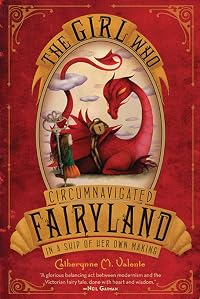
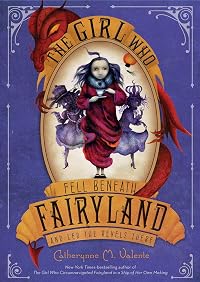
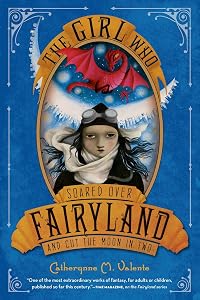
Jannes The Girl Who Circumnavigated Fairyland was first concieved in Palimpsest as one of the protaginists' favourite book. Then it sort got a life of it's own, so to speak. Palimpsest is probably not for children, though.
30


Member Reviews
a fever dream of a novel. Four strangers mysteriously find their way to a very strange city, in their dreams, apparently. The city is described in delirious prose that almost feels drug induced. The strangers can only get there by having sex with someone who's already been there and has a tattoo, a mark, on their skin with a map of part of the city - whereupon they receive a mark as well. The book has a strong internal logic and powerful eroticism, taps that emotion about wanting to be somewhere else and with someone else and being willing to do anything to get there. Fairy tale - like in that the story is mysterious and magical but the overall plot is murky and the moral of the story is hardly clear….but worth reading for the prose show more alone. show less
Description: Catherynne Valente weaves a lyrically erotic spell of a place where the grotesque and the beautiful reside and the passport to our most secret fantasies begins with a stranger’s kiss.…
Between life and death, dreaming and waking, at the train stop beyond the end of the world is the city of Palimpsest. To get there is a miracle, a mystery, a gift, and a curse—a voyage permitted only to those who’ve always believed there’s another world than the one that meets the eye. Those fated to make the passage are marked forever by a map of that wondrous city tattooed on their flesh after a single orgasmic night. To this kingdom of ghost trains, lion-priests, living kanji, and cream-filled canals come four travelers: Oleg, a show more New York locksmith; the beekeeper November; Ludovico, a binder of rare books; and a young Japanese woman named Sei. They’ve each lost something important—a wife, a lover, a sister, a direction in life—and what they will find in Palimpsest is more than they could ever imagine.
Thoughts: I am a huge fan of Valente's Girl Who books. The Girl Who Circumnavigated Fairyland in a Ship of her Own Making totally blew me away when I read it. I knew that that book had come out of another book Valente had written and I was curious to see what role the seeming children's book would play in a book that seemed to deal an awful lot with sex*... And if it would be as wonderful as I hoped.
On the Corner of 16th Street and Hieratica, a factory sings and sighs. Look: its thin spires flash green, and spot long loops of white flame into the night. Casimira owns this place, as did her father and her grandmother and probably her most distant progenitor. It is pleasant to imagine them, curling and uncurling their proboscis-fingers against machines of stick and bone. There has always been a Casimira, except when, occasionally, there is a Casimir...
And what do they make in this factory? Why, the vermin of Palimpsest. There is a machine for stamping cockroaches with glistening green carapaces, their maker's mark hidden cleverly under the left wing. There is a machine for shaping and pounding rates, soft gray fur still and shining when they are first released. There is another mold for squirrels, one for chipmunks and one for plain mice. There is a centrifuge for spiders, a lizard-pour, a delicate and ancient machines which turns out flies and mosquitoes by turn, so exquisite, so perfect that they seem to be made of nothing but copper wire, spun sugar, and light. There is a printing press for graffiti which spits out effervescent letters in scarlet, black, angry yellows, and the trademark green of Casimira. They fly from the high windows and flatten themselves against walls, trestles, train cars.
So begins Palimpsest, the most brilliantly fevered opium dream I have ever read. Valente manages to throw the reader directly into the midst- the dust and cobbles- of this amazing and disturbed place, a place that demands a high price if you want to prowl its streets. It's like reading the magnum opus of a psychopath who happens to be the reincarnation of Shakespeare, Lewis Carrol, and Ferdinand Magellan.
While the descriptions and the prose and the mythology Valente creates here are breathtaking and spellbinding, the actual plot is serpentine and possibly even a little bit uninteresting. While I liked the characters very much and found their various experiences intriguing, how they fit together was unclear for most of the book and then became somewhat tedious in its revelation towards the end. This shouldn't discourage you from reading Palimpsest, but you should be forwarned that you aren't picking up an engrossing, can't wait to see what happens next, plot driven novel. Come for the words and let the plot just be the vehicle that carries you on.
One word of warning: if the idea of casual sex offends you, this is probably not the book for you. There isn't a lot of time spent on the acts themselves and what is there is well written and feels authentic to the world, but sex plays an intrinsically important and revelatory part in the mythos of the world. This is NOT a romance novel with descriptions of quivering members and heaving bosoms. The sex is just another of the prices these travelers pay.
*For those of you who have read the Girl Who books and then pick up Palimpsest, be prepared for some scenes of the Green Wind being very... adult. It's done very, very beautifully, but I will be viewing the Green Wind a bit differently on my next foray into Fairyland.
Rating: 4.4
Liked: 4.5
Plot: 3.5
Characterization: 4.5
Writing: 5
http://www.librarything.com/topic/156659#4206437 show less
Between life and death, dreaming and waking, at the train stop beyond the end of the world is the city of Palimpsest. To get there is a miracle, a mystery, a gift, and a curse—a voyage permitted only to those who’ve always believed there’s another world than the one that meets the eye. Those fated to make the passage are marked forever by a map of that wondrous city tattooed on their flesh after a single orgasmic night. To this kingdom of ghost trains, lion-priests, living kanji, and cream-filled canals come four travelers: Oleg, a show more New York locksmith; the beekeeper November; Ludovico, a binder of rare books; and a young Japanese woman named Sei. They’ve each lost something important—a wife, a lover, a sister, a direction in life—and what they will find in Palimpsest is more than they could ever imagine.
Thoughts: I am a huge fan of Valente's Girl Who books. The Girl Who Circumnavigated Fairyland in a Ship of her Own Making totally blew me away when I read it. I knew that that book had come out of another book Valente had written and I was curious to see what role the seeming children's book would play in a book that seemed to deal an awful lot with sex*... And if it would be as wonderful as I hoped.
On the Corner of 16th Street and Hieratica, a factory sings and sighs. Look: its thin spires flash green, and spot long loops of white flame into the night. Casimira owns this place, as did her father and her grandmother and probably her most distant progenitor. It is pleasant to imagine them, curling and uncurling their proboscis-fingers against machines of stick and bone. There has always been a Casimira, except when, occasionally, there is a Casimir...
And what do they make in this factory? Why, the vermin of Palimpsest. There is a machine for stamping cockroaches with glistening green carapaces, their maker's mark hidden cleverly under the left wing. There is a machine for shaping and pounding rates, soft gray fur still and shining when they are first released. There is another mold for squirrels, one for chipmunks and one for plain mice. There is a centrifuge for spiders, a lizard-pour, a delicate and ancient machines which turns out flies and mosquitoes by turn, so exquisite, so perfect that they seem to be made of nothing but copper wire, spun sugar, and light. There is a printing press for graffiti which spits out effervescent letters in scarlet, black, angry yellows, and the trademark green of Casimira. They fly from the high windows and flatten themselves against walls, trestles, train cars.
So begins Palimpsest, the most brilliantly fevered opium dream I have ever read. Valente manages to throw the reader directly into the midst- the dust and cobbles- of this amazing and disturbed place, a place that demands a high price if you want to prowl its streets. It's like reading the magnum opus of a psychopath who happens to be the reincarnation of Shakespeare, Lewis Carrol, and Ferdinand Magellan.
While the descriptions and the prose and the mythology Valente creates here are breathtaking and spellbinding, the actual plot is serpentine and possibly even a little bit uninteresting. While I liked the characters very much and found their various experiences intriguing, how they fit together was unclear for most of the book and then became somewhat tedious in its revelation towards the end. This shouldn't discourage you from reading Palimpsest, but you should be forwarned that you aren't picking up an engrossing, can't wait to see what happens next, plot driven novel. Come for the words and let the plot just be the vehicle that carries you on.
One word of warning: if the idea of casual sex offends you, this is probably not the book for you. There isn't a lot of time spent on the acts themselves and what is there is well written and feels authentic to the world, but sex plays an intrinsically important and revelatory part in the mythos of the world. This is NOT a romance novel with descriptions of quivering members and heaving bosoms. The sex is just another of the prices these travelers pay.
*For those of you who have read the Girl Who books and then pick up Palimpsest, be prepared for some scenes of the Green Wind being very... adult. It's done very, very beautifully, but I will be viewing the Green Wind a bit differently on my next foray into Fairyland.
Rating: 4.4
Liked: 4.5
Plot: 3.5
Characterization: 4.5
Writing: 5
http://www.librarything.com/topic/156659#4206437 show less
It's not for everyone, this beautiful, chaotic, often too rich novel. A slow magical dance that draws you in until you are there amidst a whirling dervish. Patience is required, take in the sights, make yourself at home, get to know the characters... and you will be richly rewarded.
The story is narrated by a proud mysterious narrator and through "her" we meet four characters scattered all over our globe from San Francisco to Kyoto, all who have 'caught' Palimpsest, a patchwork city of the fantastical. The premise is startling as it is inventive, palimpsest as a sexual transmitted disease. One night of passion with someone who is 'infected' and you could wake up with a strange map like brand. This is the doorway. To enter again is an act show more of passion and to navigate the city you must find the right map. How far would you go to get what you want?
There are some stunning ideas here, wrapped in gorgeous imagery, from the river of old clothes to a bamboo forest of the dead. The story is rhythmic, set into a pattern with each chapter starting with a glimpse of city, a city guide told by our unseen narrator. Each character has their allotted turn and when all have been visited time moves on. It an interesting stylistic choice but one which works well, smoothing the pacing and adding excitement with potentials.. if character a is doing x what will character b do.
There are negatives (although not for me). The writing style may not be to everyone's tastes, the seemingly unrelated guides to the city, the not always likable characters. It maybe too fantastical for some but for me the whole thing works like clockwork. Reality grounds the baroque, the premise adds a stark darkness and the story flow beautifully because of the dreamy poetic style. show less
The story is narrated by a proud mysterious narrator and through "her" we meet four characters scattered all over our globe from San Francisco to Kyoto, all who have 'caught' Palimpsest, a patchwork city of the fantastical. The premise is startling as it is inventive, palimpsest as a sexual transmitted disease. One night of passion with someone who is 'infected' and you could wake up with a strange map like brand. This is the doorway. To enter again is an act show more of passion and to navigate the city you must find the right map. How far would you go to get what you want?
There are some stunning ideas here, wrapped in gorgeous imagery, from the river of old clothes to a bamboo forest of the dead. The story is rhythmic, set into a pattern with each chapter starting with a glimpse of city, a city guide told by our unseen narrator. Each character has their allotted turn and when all have been visited time moves on. It an interesting stylistic choice but one which works well, smoothing the pacing and adding excitement with potentials.. if character a is doing x what will character b do.
There are negatives (although not for me). The writing style may not be to everyone's tastes, the seemingly unrelated guides to the city, the not always likable characters. It maybe too fantastical for some but for me the whole thing works like clockwork. Reality grounds the baroque, the premise adds a stark darkness and the story flow beautifully because of the dreamy poetic style. show less
Re-Read 2/28/20:
Imagine, just for a moment, that I recaptured all of the same glory, the beautiful prose, and the lost, wonderous FEELING that I got from reading Palimpsest the second time.
Imagine that it just got better with a re-read.
Especially now that I've read all the Fairyland books, this wonderfully adult and sexual version, along with all its myriad mini-tragedies, only deepens my appreciation of this book.
Original Review:
It is a reverence, a sting of the holy, as rich and powerful and desired as honey, and the book rolls on the tongues of paupers and kings alike, like fire, like hard cocks, like the welcoming embrace of a whole city. Indeed, this book is a love poem written by and scratched out by the city, itself, of show more Palimpsest, the fae kingdom of adulthood, of loss, abandonment, of scars and mutilations, of loveless sex and all the dirty waters of the world, of the ripe and blossoming heat of four who will finally make one, of the discourse of the bull and the serpent, and last, but not least, of all the maps of the universe, be they the eight-thousand door train or the touch of the third rail, be it the entire catalog of all animals, imagined or real, plastered across the soul, be it madness and the touch of the wet lady, or be it the thousand bees in the belly, this is a novel of such grand depth and squirming desire, that I am literally tongue-tied in tracing the map upon the skin.
Or, put a bit more simply, I liked this novel.
It was sadness given form, with just a hint of hope to flavor the flood of despair, of obsession and longing. It, like all of Valente's writing that I've had the immense joy of reading, has been so utterly well-read and well-crafted and so very deeply loved, never fails to amaze and shock and make me want to get on my knees and say, "I am not worthy."
There are a few technical things I'd like to say.
I've never read an author with such a confident use of semi-colons. She writes whole novels as if they were poetry. Indeed, the plot is never so easy to parse, and the very act of reading it requires nearly as much imagination as the author, just to make love to the words we read and fill it (or be filled) with a sense of completeness.
Never imagine that this is anything other than brilliant.
But then again, never imagine it is easy. This book is a lover that will show you all her dark secrets and then leave you as soon as she makes you hold her hair so that she may vomit over the side of your bed. show less
Imagine, just for a moment, that I recaptured all of the same glory, the beautiful prose, and the lost, wonderous FEELING that I got from reading Palimpsest the second time.
Imagine that it just got better with a re-read.
Especially now that I've read all the Fairyland books, this wonderfully adult and sexual version, along with all its myriad mini-tragedies, only deepens my appreciation of this book.
Original Review:
It is a reverence, a sting of the holy, as rich and powerful and desired as honey, and the book rolls on the tongues of paupers and kings alike, like fire, like hard cocks, like the welcoming embrace of a whole city. Indeed, this book is a love poem written by and scratched out by the city, itself, of show more Palimpsest, the fae kingdom of adulthood, of loss, abandonment, of scars and mutilations, of loveless sex and all the dirty waters of the world, of the ripe and blossoming heat of four who will finally make one, of the discourse of the bull and the serpent, and last, but not least, of all the maps of the universe, be they the eight-thousand door train or the touch of the third rail, be it the entire catalog of all animals, imagined or real, plastered across the soul, be it madness and the touch of the wet lady, or be it the thousand bees in the belly, this is a novel of such grand depth and squirming desire, that I am literally tongue-tied in tracing the map upon the skin.
Or, put a bit more simply, I liked this novel.
It was sadness given form, with just a hint of hope to flavor the flood of despair, of obsession and longing. It, like all of Valente's writing that I've had the immense joy of reading, has been so utterly well-read and well-crafted and so very deeply loved, never fails to amaze and shock and make me want to get on my knees and say, "I am not worthy."
There are a few technical things I'd like to say.
I've never read an author with such a confident use of semi-colons. She writes whole novels as if they were poetry. Indeed, the plot is never so easy to parse, and the very act of reading it requires nearly as much imagination as the author, just to make love to the words we read and fill it (or be filled) with a sense of completeness.
Never imagine that this is anything other than brilliant.
But then again, never imagine it is easy. This book is a lover that will show you all her dark secrets and then leave you as soon as she makes you hold her hair so that she may vomit over the side of your bed. show less
Lovely work here, the kind of lyrical writing I seek to make for myself. Still, it took me a long time to read... and in fact, I believe it might have been this very style which slowed me down. So much of the book was inconsequential to the characters and plot (though not to the narrator, I guess!) Perhaps more focus on the mundane realities of the main characters could have helped situate the city clearer (given the "mundane" realities of the cast tend to be almost as strange as Palimpsest itself.)
Still, wonderful!
Still, wonderful!
Makes me think of strangers in an Edward Hopper painting pursuing sex like addicts needing drugs in order to transport them through a crack into another world that might be a cross between Hieronymus Bosch and Salvador Dali's paintings dancing with Renaissance art, mystical and surreal, beautiful and harsh. A strange and haunting world on both sides of the coin.
Parts were lyrical and beautiful. Parts were repulsive and disgusting. It's very floaty and plotless for large portions, though there is a plot there, peeking out and participating once in awhile.
And angst. Not teen angst. More like in-your-20s and in-your-30s angst. Too angsty. Tiring.
And perhaps an odd note (considering the wide menagerie of creatures of the human and non-human show more sorts...), too white. Imo.
Valente is talented with word-painting scenes, no doubt. And yet, I honestly don't know if I even liked this book. show less
Parts were lyrical and beautiful. Parts were repulsive and disgusting. It's very floaty and plotless for large portions, though there is a plot there, peeking out and participating once in awhile.
And angst. Not teen angst. More like in-your-20s and in-your-30s angst. Too angsty. Tiring.
And perhaps an odd note (considering the wide menagerie of creatures of the human and non-human show more sorts...), too white. Imo.
Valente is talented with word-painting scenes, no doubt. And yet, I honestly don't know if I even liked this book. show less
Palimpsest by Catherynne M. Valente is one of those strange novels that we just need a new genre for. It is somewhere between poetry and prose, between fantasy and dreams. Palimpsest is a city where you can go only if you make sex with someone that had been already there and the city marks its people by putting a tattoo on their bodies. And these tattoos are controlling what you can see from the city - you need to be in contact with someone that have a part of the city on their skin in order to be able to go to this place. And the city is real and unreal at the same time - people see their dreams coming true there but at the same time anything that happens there remains valid even after they leave the city and come back to the real show more world. And the internal logic of the city allows everyone that wants to move permanently in the city - as long as they find the rest of their group (the first time you go to the city, you get connected to 3 more people that had entered almost at the same time and you feel anything that happens to them in this dreamy town) and convince them to emigrate. The novel is the story of one such quarter and their struggle to understand what happens to them and how to remain in Palimpsest forever.
Sei is from Japan, obsessed with trains and the city manifests itself as a non-stop journey in a train which is not exactly train; in a world where trains are alive; November is a Californian girl that deals with bees... and it's not a surprise that the city will show her the other woman, in the other reality that deals with insects; Oleg is a locksmith from New York who had lost his sister before even being born and regardless of it, he still sees her ghost; Ludovico is an Italian master of books binding. Some of them meet unknown people, some of them just go to bed with their halves. But the result is the same - they receive Palimpsest's tattoos and enter the city. Every one of them had lost something - a parent, a sister or a wife and every one of them have their own lives and dreams. And in the world of Palimpsest some of those dreams come true.
Each part of the book contains 4 chapters - going through the life of each of the characters - in the real and in the dreamy world. Even when they get together, this structure is not changed. And every part becomes shorter and shorter and the suspense just builds on. And the city is cruel and alive.
The language in the novel is so poetic that the sex descriptions and the cruel things have their own ring to them - in the same way Dante's creations sound poetic and scary at the same time.
That was the first novel by Catherynne M. Valente that I had read and I liked it. I am not sure that the novel needed the descriptions of the sex that lead to going to Palimpsest, as poetic and matter-of-factly it was and the novel would not have lost anything by not having it. But that's the author choice... and I will probably read some more novels by her - I loved the language and the imagination. show less
Sei is from Japan, obsessed with trains and the city manifests itself as a non-stop journey in a train which is not exactly train; in a world where trains are alive; November is a Californian girl that deals with bees... and it's not a surprise that the city will show her the other woman, in the other reality that deals with insects; Oleg is a locksmith from New York who had lost his sister before even being born and regardless of it, he still sees her ghost; Ludovico is an Italian master of books binding. Some of them meet unknown people, some of them just go to bed with their halves. But the result is the same - they receive Palimpsest's tattoos and enter the city. Every one of them had lost something - a parent, a sister or a wife and every one of them have their own lives and dreams. And in the world of Palimpsest some of those dreams come true.
Each part of the book contains 4 chapters - going through the life of each of the characters - in the real and in the dreamy world. Even when they get together, this structure is not changed. And every part becomes shorter and shorter and the suspense just builds on. And the city is cruel and alive.
The language in the novel is so poetic that the sex descriptions and the cruel things have their own ring to them - in the same way Dante's creations sound poetic and scary at the same time.
That was the first novel by Catherynne M. Valente that I had read and I liked it. I am not sure that the novel needed the descriptions of the sex that lead to going to Palimpsest, as poetic and matter-of-factly it was and the novel would not have lost anything by not having it. But that's the author choice... and I will probably read some more novels by her - I loved the language and the imagination. show less
Members
- Recently Added By
Published Reviews
ThingScore 50
You need a passport to enter the improbable city Palimpsest and its magical mindscapes: a map of the city tattooed in black ink somewhere on your body. But to receive the mark, first you must have sex with someone who already bears one. ... Too obsessive and self-involved to hold universal appeal, with characters resembling visitors from somebody else's recurring dreamscape.
added by melonbrawl
Lists

Best Fantasy Novels
821 works; 361 members

Magic Realism
371 works; 52 members

Favourite Fantasy Books of the 21st Century
51 works; 6 members

Weird and Weirder Fiction
270 works; 35 members

Stories About Other Worlds
145 works; 13 members

2000s (the decade, not the century)
184 works; 11 members

Urban Fiction
74 works; 7 members

Overdue Podcast
806 works; 9 members
Speculative Fiction to Read
706 works; 32 members

Recommended Speculative Fiction by Women and People of Color
298 works; 45 members

Strange Cities
30 works; 7 members

io9 Book Club
70 works; 4 members
New Weird Fiction
69 works; 11 members

Books Read in 2019
4,052 works; 108 members

Books Read in 2011
684 works; 19 members

Books discovered on LibraryThing
256 works; 36 members
Talk Discussions
Past Discussions
Subterranean railway fantasy in Name that Book (June 2012)
Author Information

173+ Works 22,543 Members
Some Editions
Awards and Honors
Awards
Distinctions
Work Relationships
Common Knowledge
- Original publication date
- 2009-02-24
- People/Characters
- November Aguilar; Oleg Sadakov; Ludovico Conti; Amaya Sei
- Important places
- Palimpsest
- Epigraph
- Look how the floor of heaven
Is thick inlaid with patines of bright gold:
There's not the smallest orb which thou behold'st
But in his motion like an angel sings
Still quiring to the young-eye... (show all)d cherubins;
Such harmony is in immortal souls;
But, whilst this muddy vesture of decay
Doth grossly close it in, we cannot hear it.
--William Shakespeare, The Merchant of Venice - Dedication
- For Dmitri, the map by which I found this place
- First words
- On the corner of 16th Street and Hieratica a factory sings and sighs.
- Last words
- (Click to show. Warning: May contain spoilers.)Gooseflesh rises over miles and miles of barren skin.
- Publisher's editor
- Ulman, Juliet
- Blurbers
- Ellis, Warren; Sedia, Ekaterina; Bear, Elizabeth; Abraham, Daniel
- Canonical DDC/MDS
- 813.6
- Canonical LCC
- PS3622.A4258
Classifications
Statistics
- Members
- 1,414
- Popularity
- 16,688
- Reviews
- 73
- Rating
- (3.82)
- Languages
- English, Polish
- Media
- Paper, Audiobook, Ebook
- ISBNs
- 9
- ASINs
- 3