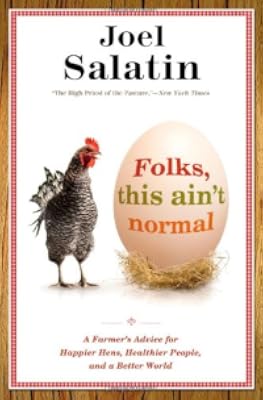
Folks, This Ain't Normal: A Farmer's Advice for Happier Hens, Healthier People, and a Better World
by Joel Salatin
On This Page
Description
From farmer Joel Salatin's point of view, life in the 21st century just ain't normal. In FOLKS, THIS AIN'T NORMAL, he discusses how far removed we are from the simple, sustainable joy that comes from living close to the land and the people we love. Salatin has many thoughts on what normal is and shares practical and philosophical ideas for changing our lives in small ways that have big impact. Salatin understands what food should be: Wholesome, seasonal, raised naturally, procured locally, show more prepared lovingly, and eaten with a profound reverence for the circle of life. And his message doesn't stop there. From child-rearing, to creating quality family time, to respecting the environment, Salatin writes with a wicked sense of humor and true storyteller's knack for the revealing anecdote. Salatin's crucial message and distinctive voice--practical, provocative, scientific, and down-home philosophical in equal measure--make FOLKS, THIS AIN'T NORMAL a must-read book. show lessTags
Recommendations

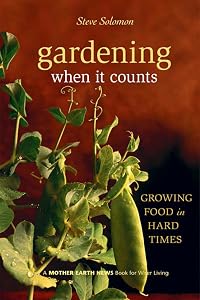
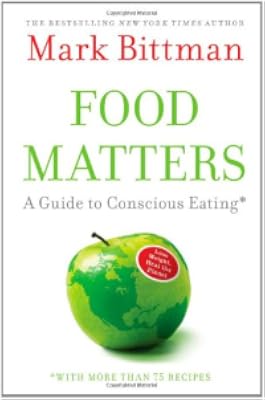
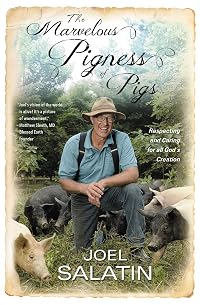
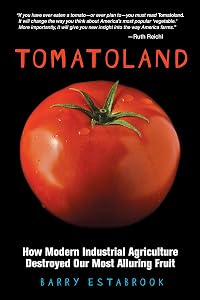

Member Recommendations
Thogek Similar concepts from a different background point-of-view.
Member Reviews
Oh, Joel Salatin, you fascinating curmudgeon. If the mild and joyful farmer’s memoirs leave you wanting more, jump into the thick of the agribusiness food debate with Joel. He’s challenging, interesting, and highly opinionated. I can almost guarantee that something in this book will tick you off, but some other part will almost certainly prove totally compelling. You may not agree with him, but he’ll certainly give you plenty to think about.
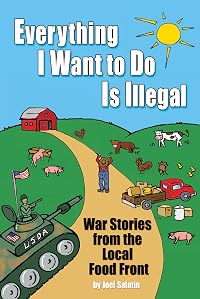
I love Joel Salatin. He is a crazy libertarian organic farmer in Virginia. I have his EVERYTHING I WANT TO DO IS ILLEGAL; and I've read his YOU CAN FARM. The latter is his attempt to inspire and instruct young people considering embarking on a life of farming. I loved it, even though there is no way I am ever going to become a farmer.
Here, Salatin rants about how far we have gotten away from "normal" (hence the title) with our industrial food system. He ends each chapter with positive suggestions, some more realistic than others, for taking individual action to end the insanity and start doing something normal again - growing a tomato plant, keeping chickens as pets, etc.
This totally resonated with me. The crazy thing I've always show more thought about books along the lines of "My Year of Growing All My Own Food" and such, is that they treat what used to be normal as a miracle - indeed, case in point, the title of Barbara Kingsolver's ANIMAL, VEGETABLE, MIRACLE. What we think is fodder for an entire book used to just be LIFE. Of course your grew your own food. People of 200 years ago would be might puzzled that anyone would want to read or write a book about it.
It's NORMAL. Salatin uses the word "birthright" in this book; it was actually in reference to hunting, but I like to think of it in relation to the whole shebang of agriculture and enjoying nature. It's our BIRTHRIGHT.
The book is repetitive and ranty, not exactly a masterpiece of literature, but it has been so inspiring to me, I go with 5 stars. I'm inspired to actually double down on my local food intake. I'm researching local grain and upgrading my dairy; I'm using more butter in place of vegetable oils (big sacrifice there, not); just putting a lot more thought into it. And I wasn't exactly unconscious to begin with.
Salatin even ends the book by confiding in us an experience where he actually broke down in tears as he was about to leave his homestead for a month or two, a very long stretch of traveling for him. He had to stop the car and cry before he had even left the lane leading to his house. I'm touched, I really am.
And although I no longer identify as libertarian - and was not interested in the rants against the government which at times lurked just below surface, and at other times reared their ugly heads - I have to say simply that there's something refreshing in reading arguments for organic, back-to-the-land living coming from a place other than basic hippie liberal. It's just different and enlightening and proves that these things don't have to be "polarized." Everyone benefits from better food. It's ridiculous that this should be a politically one-sided issue - like climate change. show less
Here, Salatin rants about how far we have gotten away from "normal" (hence the title) with our industrial food system. He ends each chapter with positive suggestions, some more realistic than others, for taking individual action to end the insanity and start doing something normal again - growing a tomato plant, keeping chickens as pets, etc.
This totally resonated with me. The crazy thing I've always show more thought about books along the lines of "My Year of Growing All My Own Food" and such, is that they treat what used to be normal as a miracle - indeed, case in point, the title of Barbara Kingsolver's ANIMAL, VEGETABLE, MIRACLE. What we think is fodder for an entire book used to just be LIFE. Of course your grew your own food. People of 200 years ago would be might puzzled that anyone would want to read or write a book about it.
It's NORMAL. Salatin uses the word "birthright" in this book; it was actually in reference to hunting, but I like to think of it in relation to the whole shebang of agriculture and enjoying nature. It's our BIRTHRIGHT.
The book is repetitive and ranty, not exactly a masterpiece of literature, but it has been so inspiring to me, I go with 5 stars. I'm inspired to actually double down on my local food intake. I'm researching local grain and upgrading my dairy; I'm using more butter in place of vegetable oils (big sacrifice there, not); just putting a lot more thought into it. And I wasn't exactly unconscious to begin with.
Salatin even ends the book by confiding in us an experience where he actually broke down in tears as he was about to leave his homestead for a month or two, a very long stretch of traveling for him. He had to stop the car and cry before he had even left the lane leading to his house. I'm touched, I really am.
And although I no longer identify as libertarian - and was not interested in the rants against the government which at times lurked just below surface, and at other times reared their ugly heads - I have to say simply that there's something refreshing in reading arguments for organic, back-to-the-land living coming from a place other than basic hippie liberal. It's just different and enlightening and proves that these things don't have to be "polarized." Everyone benefits from better food. It's ridiculous that this should be a politically one-sided issue - like climate change. show less
Caution: this book is a thought-provoker. If you are not intellectually qualified to discern fact from philosophy and integrate that information into your brain without barfing it out because it challenges conceptions made from incomplete knowledge or pre-existing philosophical leanings, you will likely flounder in this book.
The short of it: this is the story of a small-time, 100% locally based farmer. He gives examples and philosophies from those examples on the hows and whys of modern agriculture--an unhealthy industrial paradigm--and the hows and whys of traditional agriculture--a better capacity for a healthy industrial paradigm. This is not a stereotypical food book of a hippie broadcasting his or her ideals. Joel Salatin does make show more philosophical statements as he does not take an academic approach to this book (though he does include some statistics), but he grounds the book by his experiences trying to compete in an industry essentially reserved for big companies and his, frankly, ingenious yet pragmatic alternatives.
The long of it: This book has had some negative reviews. There is a reason for this, and you'll see it in personal interactions if you're the sort to ask questions and speculate: most people don't like it when you step on their toes. Most people like things simple. They like to not have to think about non-leisurely things. They don't like to be told to take a step back and ask questions. They don't like to consider something that they took for granted.
Joel Salatin likes to step on toes. He doesn't write with a "my way or the highway" attitude, but he does expect those who pick up the book to contemplate the things we prefer to let others--even strangers--think about and act upon. It's okay. It's a book. It can't kill you. We can only learn if we challenge our existing ideas. There is no requirement to agree with him, but there is a requirement to see things from a different perspective.
Joel Salatin is an old-fashioned farmer: he has poultry, swine, and bovine commercial livestock and grows his own self-sustaining crop garden. Save for the egg mobiles the chickens live in at night, these animals are free ranging. Three-quarters of his property is forest. He and another farmer run a local abattoir (meat-processing facility).
He expresses non-agriculture-related philosophies built from the life he has lived at times that will irk the average reader. (We all have perspective limitations, and his include assuming that all video games are bad and science destroys spirituality, yet simultaneously and he respects what science is capable of as long as it's not tainted by economic influence.)
At such times I wanted to rate this book a two or a three. However, rest assured this man has the inside story on the hows and whys of the small-time farmer failing in our modern culture and how we can be far more ecologically and economically more responsible. His insights are no-nonsense and his "alternative" ideas are so common sense you want to cry for the human stupidity (or laziness) that led our society to live in a non-responsible manner. This information is so valuable I wish everyone, consumers and workers in the industry, would read and openly consider. If anything, the advice in this book is built on experience, not the hippie idealism that most books in this genre follow without considering the pros and cons of their philosophy and others. show less
The short of it: this is the story of a small-time, 100% locally based farmer. He gives examples and philosophies from those examples on the hows and whys of modern agriculture--an unhealthy industrial paradigm--and the hows and whys of traditional agriculture--a better capacity for a healthy industrial paradigm. This is not a stereotypical food book of a hippie broadcasting his or her ideals. Joel Salatin does make show more philosophical statements as he does not take an academic approach to this book (though he does include some statistics), but he grounds the book by his experiences trying to compete in an industry essentially reserved for big companies and his, frankly, ingenious yet pragmatic alternatives.
The long of it: This book has had some negative reviews. There is a reason for this, and you'll see it in personal interactions if you're the sort to ask questions and speculate: most people don't like it when you step on their toes. Most people like things simple. They like to not have to think about non-leisurely things. They don't like to be told to take a step back and ask questions. They don't like to consider something that they took for granted.
Joel Salatin likes to step on toes. He doesn't write with a "my way or the highway" attitude, but he does expect those who pick up the book to contemplate the things we prefer to let others--even strangers--think about and act upon. It's okay. It's a book. It can't kill you. We can only learn if we challenge our existing ideas. There is no requirement to agree with him, but there is a requirement to see things from a different perspective.
Joel Salatin is an old-fashioned farmer: he has poultry, swine, and bovine commercial livestock and grows his own self-sustaining crop garden. Save for the egg mobiles the chickens live in at night, these animals are free ranging. Three-quarters of his property is forest. He and another farmer run a local abattoir (meat-processing facility).
He expresses non-agriculture-related philosophies built from the life he has lived at times that will irk the average reader. (We all have perspective limitations, and his include assuming that all video games are bad and science destroys spirituality, yet simultaneously and he respects what science is capable of as long as it's not tainted by economic influence.)
At such times I wanted to rate this book a two or a three. However, rest assured this man has the inside story on the hows and whys of the small-time farmer failing in our modern culture and how we can be far more ecologically and economically more responsible. His insights are no-nonsense and his "alternative" ideas are so common sense you want to cry for the human stupidity (or laziness) that led our society to live in a non-responsible manner. This information is so valuable I wish everyone, consumers and workers in the industry, would read and openly consider. If anything, the advice in this book is built on experience, not the hippie idealism that most books in this genre follow without considering the pros and cons of their philosophy and others. show less
Why can't I buy raw milk? Why isn't the local university allowed to serve local, pastured beef for lunch? Why is the whole food system in the US so hostile to anything not made by a big corporation? Because, this ain't normal.
Salatin does good work arguing for how un-normal we've become when it comes to food in America. Not only is it not normal, many us don't even realize how not normal it is. I'll tell you, my eyes were opened quite a bit by this book. I really enjoyed the challenge this book provided in forcing me to realize how abnormal main stream food is in America. It hasn't been this way for very long either.
Is it normal to ship fertilizer from Canada instead of using much more natural and sustainable (and local!) manure and show more compost? Drugging animals so they can survive the bacteria infested "farms" where they are "raisded"? Forcing a small community farm to install chlorine dunking tanks for their eggs in order to "cleanse" them? What about subjecting these small farms to testing of every animal product they sell to the tune of $10k for each test and pay for USDA inspectors, to do, what?
It is crazy, and on some level I already knew these things but chose to ignore them. Home of the free and land of the brave, well, not when it comes to food and the USDA (or FDA, or... or...). Government intervention here is not better or safer, food recalls, sickness and death still happen. Its about time the government got out of the way when it comes to what I choose to eat and how I chose to acquire it.
Many things in modern life are a blessing, food efficiencies could be included, but we've strayed far from what is normal when it comes to food and I hope the current resurgence in America, an appreciate for good food, continues.
Update 5/20/14: This book continues to sink into my brain and I continue to get more out of it. One thing I didn't mention was pointing out one of the main thrusts of the book - personal responsibility. We are in this state of confusion when it comes to our food because people have abdicated their responsibility. They have allowed government to tell us what is OK and we are all suffering the consequences. show less
Salatin does good work arguing for how un-normal we've become when it comes to food in America. Not only is it not normal, many us don't even realize how not normal it is. I'll tell you, my eyes were opened quite a bit by this book. I really enjoyed the challenge this book provided in forcing me to realize how abnormal main stream food is in America. It hasn't been this way for very long either.
Is it normal to ship fertilizer from Canada instead of using much more natural and sustainable (and local!) manure and show more compost? Drugging animals so they can survive the bacteria infested "farms" where they are "raisded"? Forcing a small community farm to install chlorine dunking tanks for their eggs in order to "cleanse" them? What about subjecting these small farms to testing of every animal product they sell to the tune of $10k for each test and pay for USDA inspectors, to do, what?
It is crazy, and on some level I already knew these things but chose to ignore them. Home of the free and land of the brave, well, not when it comes to food and the USDA (or FDA, or... or...). Government intervention here is not better or safer, food recalls, sickness and death still happen. Its about time the government got out of the way when it comes to what I choose to eat and how I chose to acquire it.
Many things in modern life are a blessing, food efficiencies could be included, but we've strayed far from what is normal when it comes to food and I hope the current resurgence in America, an appreciate for good food, continues.
Update 5/20/14: This book continues to sink into my brain and I continue to get more out of it. One thing I didn't mention was pointing out one of the main thrusts of the book - personal responsibility. We are in this state of confusion when it comes to our food because people have abdicated their responsibility. They have allowed government to tell us what is OK and we are all suffering the consequences. show less
I was fortunate enough to see Mr. Salatin speak during his book tour, and he was engaging, funny, and passionate. I came away from that presentation convinced that he has crucial insights into where we've gone wrong in favoring the industrial over the local, especially with regard to food. The book definitely adds weight to the arguments he put forth during his speaking engagement.
This book did surprise me in some ways. It's more overtly political than I expected, and the tone is a bit curmudgeonly. It's funny, and satirical, but at times it reminded me of that grumpy old guy with the house on the corner who's always yelling at the kids to stay off of his lawn. ;-)
The points about the benefits of traditional (a.k.a., "normal") local show more food systems vs. the modern ("abnormal") industrial food systems certainly convinced me. What I honestly did not realize was how profoundly government agencies / oversight ("the food police") - and the lobbying of well-intentioned but naive environmentalists (myself included, I'm afraid) - have crippled the efforts of local producers like Salatin and like-minded independent farmers. Salatin rails against the USDA, the FDA, the FSIS, the IRS, and other federal bureaucracies that have made his life (and livelihood) a living hell over the years.
Salatin points out that the federal regulatory regimes supposedly intended to ensure food safety (and generally supported by "greenies") are in actuality tools of the very industrial producers they're ostensibly designed to check. In his experience, the mega-sized agribusinesses and their lobbyists cozy up to legislators to make certain that the new regs favor their "mass-production" model while shutting out innovation from smaller local producers. The costs of compliance are manageable for a huge operation but are utterly prohibitive for small-scale operations like Polyface Farms. Often, well-meaning environmentalists who believe "the agribusinesses can't be trusted" become unwitting co-conspirators by supporting these heavyweight regulations to the detriment of the small farmers they ultimately want to help.
Salatin's libertarian streak is evident throughout the book as he rants against the IRS, the nanny state, and federal oversight in general, bemoaning the loss of personal responsibility. He also ridicules the "connected world," the willingness of most of America to suckle on celebrity gossip and reality TV, and the plague of kids playing XBox instead of doing home & garden chores. I see a lot of truth in what he has to say, but (as an info technology pro for my day job) I struggled with the extreme positions he sometimes takes. No TV in the house? If the Salatins have made that work for decades, that's awesome, but I don't think it's a terribly practical admonition for most of America.
Overall, this was an entertaining and educational read. Similarly to Bill McKibben's advice in "Eaarth," Salatin believes decentralizing and reducing regulation (and federal government intervention in general) are our best shots at restoring some semblance of normality to our lives. He makes a strong case on many fronts. When I look at the complete ineptitude in the U.S. Congress these days, a major downsizing (and corresponding reduction in federal taxes) makes a lot of sense. Hey, Washington, D.C., let us eat what we want - we don't need your approval to know it's healthy! And it doesn't have to be bathed in chlorine or irradiated to make it safe to eat if it's grown in a clean environment to begin with!!! show less
This book did surprise me in some ways. It's more overtly political than I expected, and the tone is a bit curmudgeonly. It's funny, and satirical, but at times it reminded me of that grumpy old guy with the house on the corner who's always yelling at the kids to stay off of his lawn. ;-)
The points about the benefits of traditional (a.k.a., "normal") local show more food systems vs. the modern ("abnormal") industrial food systems certainly convinced me. What I honestly did not realize was how profoundly government agencies / oversight ("the food police") - and the lobbying of well-intentioned but naive environmentalists (myself included, I'm afraid) - have crippled the efforts of local producers like Salatin and like-minded independent farmers. Salatin rails against the USDA, the FDA, the FSIS, the IRS, and other federal bureaucracies that have made his life (and livelihood) a living hell over the years.
Salatin points out that the federal regulatory regimes supposedly intended to ensure food safety (and generally supported by "greenies") are in actuality tools of the very industrial producers they're ostensibly designed to check. In his experience, the mega-sized agribusinesses and their lobbyists cozy up to legislators to make certain that the new regs favor their "mass-production" model while shutting out innovation from smaller local producers. The costs of compliance are manageable for a huge operation but are utterly prohibitive for small-scale operations like Polyface Farms. Often, well-meaning environmentalists who believe "the agribusinesses can't be trusted" become unwitting co-conspirators by supporting these heavyweight regulations to the detriment of the small farmers they ultimately want to help.
Salatin's libertarian streak is evident throughout the book as he rants against the IRS, the nanny state, and federal oversight in general, bemoaning the loss of personal responsibility. He also ridicules the "connected world," the willingness of most of America to suckle on celebrity gossip and reality TV, and the plague of kids playing XBox instead of doing home & garden chores. I see a lot of truth in what he has to say, but (as an info technology pro for my day job) I struggled with the extreme positions he sometimes takes. No TV in the house? If the Salatins have made that work for decades, that's awesome, but I don't think it's a terribly practical admonition for most of America.
Overall, this was an entertaining and educational read. Similarly to Bill McKibben's advice in "Eaarth," Salatin believes decentralizing and reducing regulation (and federal government intervention in general) are our best shots at restoring some semblance of normality to our lives. He makes a strong case on many fronts. When I look at the complete ineptitude in the U.S. Congress these days, a major downsizing (and corresponding reduction in federal taxes) makes a lot of sense. Hey, Washington, D.C., let us eat what we want - we don't need your approval to know it's healthy! And it doesn't have to be bathed in chlorine or irradiated to make it safe to eat if it's grown in a clean environment to begin with!!! show less
Joel Salatin is a farmer, public speaker, and author of several popular books on subjects of agriculture, food, and the food industry. Like his earlier book, Everything I Want To Do Is Illegal, his writing is informal and entertaining, but also informative.
He is critical of many of today's trends without being overly preachy or ascetic:
“The abnormality is not so much that people want a quick to eat. The abnormality is the percentage of quick meals, the narrow variety of content, and the consistency demanded by today's fast food chains and how these protocols deny local supply.”
and,
“Reducing spoilage through fermentation, vacuum sealing, drying, or freezing is both normal and ancient. What is new is food marketed as edible that show more will not rot at all in its consumable state. … If in doubt about your food, set it out for a few days and see if it will grow mold.”
The book has 18 unnumbered chapters with titles such as: “A Cat Is a Cow Is a Chicken Is My Aunt”. Most chapters actually address a serious subject, for instance: recycling/waste reduction (chapter 4), composting and organic recycling (chapter 10), energy (chapter 11), housing (chapter 12) and water (chapter 13). Each chapter ends with 3 to 5 suggestions of things the reader might try in order to be personally engaged in the issue. These suggestions also reinforce the main message of the chapter.
I can't always agree with his opinions; for instance chapter 17 is a “rant” against the inheritance tax. He would like to see it abolished. His arguments against the tax as it is applied to farms make sense. But that shouldn't require eliminating the tax altogether. Salatin has frequently pointed out that government regulations, intended to ensure the safety of large-scale industrial agricultural, are unnecessary and harmful to small family farms. The same thinking ought to apply to inheritance tax: it probably serves a purpose in other situations – just not when a family farm is being transmitted generation-to-generation. Also, I question his reasons for extensively quoting Benjamin Franklin (chapter 17, “You Get What You Pay For”). It is interesting, however, Franklin wrote before the great rural-to-urban population shift, and might have said something different if living today. (I still enjoyed reading Franklin's opinions, and would like to know the specific source of the quotes.)
I recommend this book, because Salatin always makes me think, even if I don't always agree with him. show less
He is critical of many of today's trends without being overly preachy or ascetic:
“The abnormality is not so much that people want a quick to eat. The abnormality is the percentage of quick meals, the narrow variety of content, and the consistency demanded by today's fast food chains and how these protocols deny local supply.”
and,
“Reducing spoilage through fermentation, vacuum sealing, drying, or freezing is both normal and ancient. What is new is food marketed as edible that show more will not rot at all in its consumable state. … If in doubt about your food, set it out for a few days and see if it will grow mold.”
The book has 18 unnumbered chapters with titles such as: “A Cat Is a Cow Is a Chicken Is My Aunt”. Most chapters actually address a serious subject, for instance: recycling/waste reduction (chapter 4), composting and organic recycling (chapter 10), energy (chapter 11), housing (chapter 12) and water (chapter 13). Each chapter ends with 3 to 5 suggestions of things the reader might try in order to be personally engaged in the issue. These suggestions also reinforce the main message of the chapter.
I can't always agree with his opinions; for instance chapter 17 is a “rant” against the inheritance tax. He would like to see it abolished. His arguments against the tax as it is applied to farms make sense. But that shouldn't require eliminating the tax altogether. Salatin has frequently pointed out that government regulations, intended to ensure the safety of large-scale industrial agricultural, are unnecessary and harmful to small family farms. The same thinking ought to apply to inheritance tax: it probably serves a purpose in other situations – just not when a family farm is being transmitted generation-to-generation. Also, I question his reasons for extensively quoting Benjamin Franklin (chapter 17, “You Get What You Pay For”). It is interesting, however, Franklin wrote before the great rural-to-urban population shift, and might have said something different if living today. (I still enjoyed reading Franklin's opinions, and would like to know the specific source of the quotes.)
I recommend this book, because Salatin always makes me think, even if I don't always agree with him. show less
I found this an interesting and engaging read. Salatin's frustration with the industrialisation of food production comes through loud and clear, turning the book into more of a harangue than anything else some of the time. The anecdotes about children's ignorance of food and cooking were heartbreaking, as was the chapter on Concentrated Animal Feeding Operations.
I admire Salatin's determination to make a family-run, sustainable farm a viable business and am amazed by the persistence and tenacity he displays in achieving that goal and the erudition he displays in promoting it. I don't agree with everything he says, but I am sure that the sustainable farming world needs as many people like him as it can get.
I admire Salatin's determination to make a family-run, sustainable farm a viable business and am amazed by the persistence and tenacity he displays in achieving that goal and the erudition he displays in promoting it. I don't agree with everything he says, but I am sure that the sustainable farming world needs as many people like him as it can get.
Members
- Recently Added By
Lists

Books Read in 2014
2,343 works; 89 members
Author Information

28+ Works 2,208 Members
Common Knowledge
- Original publication date
- 2011-10
- People/Characters
- Joel Salatin
- First words
- My family amd our farm, Polyface Farm, in many ways seem like an anachronism.
- Last words
- (Click to show. Warning: May contain spoilers.)Now go be a normal person.
- Blurbers
- Nestle, Marion; McKibben, Bill; Barber, Dan; Louv, Richard
Classifications
Statistics
- Members
- 451
- Popularity
- 67,955
- Reviews
- 14
- Rating
- (3.83)
- Languages
- English
- Media
- Paper, Audiobook, Ebook
- ISBNs
- 6
- ASINs
- 3