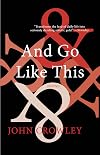
And Go Like This: Stories
by John Crowley
On This Page
Description
Reading John Crowley's stories is to see almost-familiar lives running parallel to our own, secret histories that never quite happened, memories that might be real or might be invented. In the thirteen stories collected here, Crowley sets his imagination free to roam from a 20th century Shakespeare festival to spring break at a future Yale in his Edgar Award winning story "Spring Break". And in the previously unpublished "Anosognosia" the world brought about by one John C.'s high-school show more accident may or may not exist. show lessTags
Recommendations












Member Reviews
In picking up And Go Like This, I hoped to find in these stories that tone and angle of insight so characteristic of Little, Big. Overall Crowley delivered, though not by repeating himself, with no story here particularly reminiscent of the novel. That's all to the good: the settings and concerns range into territory outside that of the novel, including the treatment of supernatural elements.
One story best fit my aims: "This is Our Town". The tale is carefully observed, the narrator provides a magical glimpse of life yet the story itself remains ambivalent about the supernatural, and in this way Crowley builds a world out of mundane occurrences rather than high drama (though a major happening does serve as backdrop). Re-reading it, I show more had a sudden insight in the very first paragraphs, an insight affecting everything that comes after (and which I'd missed the first time), and yet ... the suggestion is so subtle perhaps I've imagined it. I suspect Cabellian Romanticism at work, but this also could be entirely my own reading. In the end, I decided it doesn't matter which it is: I like the ambiguity, and I like the interpretation suggested by my re-read, intended or not on the part of Crowley.
None among the dozen stories felt like a rehash, rather their varied views and plots read like tentative excursions into worlds Crowley might be trying out himself, and I wonder if any will be worked into a novel. As a fan of Little, Big, the stories collected here were satisfying, time well spent before picking up another of Crowley's novels. show less
One story best fit my aims: "This is Our Town". The tale is carefully observed, the narrator provides a magical glimpse of life yet the story itself remains ambivalent about the supernatural, and in this way Crowley builds a world out of mundane occurrences rather than high drama (though a major happening does serve as backdrop). Re-reading it, I show more had a sudden insight in the very first paragraphs, an insight affecting everything that comes after (and which I'd missed the first time), and yet ... the suggestion is so subtle perhaps I've imagined it. I suspect Cabellian Romanticism at work, but this also could be entirely my own reading. In the end, I decided it doesn't matter which it is: I like the ambiguity, and I like the interpretation suggested by my re-read, intended or not on the part of Crowley.
None among the dozen stories felt like a rehash, rather their varied views and plots read like tentative excursions into worlds Crowley might be trying out himself, and I wonder if any will be worked into a novel. As a fan of Little, Big, the stories collected here were satisfying, time well spent before picking up another of Crowley's novels. show less
 This review was written for LibraryThing Early Reviewers.
Of all the Early Reviewers books I've received through LibraryThing, my copy of John Crowley's And Go Like This was most like a bound proof, rather than a finished book. The author's foreword is only an excerpt, and the acknowledgements page says only "TK" (i.e., to come). However, with one exception, all of the dozen stories here are previously published, and so there's no reason to think that the body of the book is incomplete--though it still shows some widows and orphans in its page layouts.
I had previously read the stories "In the Tom Mix Museum," "And Go Like This," and "This Is Our Town" in the earlier and shorter collection Totalitopia. Each of these is a sound tale with Crowley's reliably beautiful prose, but none of them would show more necessarily be motive to pursue this volume. "And Go Like This" has more than a whiff of shaggy dog about it, while "This Is Our Town" is highly nostalgic all the way to its closing evocation of Julian of Norwich. "In the Tom Mix Museum" is similarly a child's-perspective confection but only a one-page vignette.
Several of the longer stories in the volume, "The Girlhood of Shakespeare's Heroines" along with the triptych of stories that make up "Mt. Auburn Street," center their attention on aging, reminiscence, and disability. Crowley has certainly had some practice with these themes, and his handling of them here is engaging and deeply humane.
The three stories that I found most gratifying were suitably placed at the end of the book. "Flint and Mirrors" is framed as a fantasy of the Renaissance by Fellowes Kraft, the author of the nested fictions within Crowley's Aegypt novels. It features Doctor Dee briefly, but it centers on the Irish chieftain Hugh O'Neill. It evokes the paradoxes of empire as well as a persistence of magic that reminded me even more of Susanna Clarke's Strange & Norrell than it did of the Dee material in Aegypt.
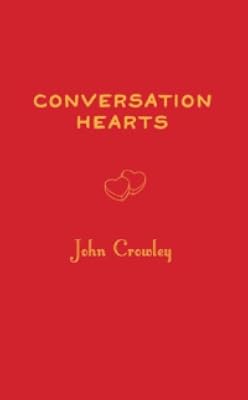
"Conversation Hearts" seems to have some strong autobiographical inflections, with a principal character who shares his given name with the author John. It is somewhat metafictional, nesting a juvenile fantasy in the adult literary short story, but connecting them through theme and moral. Even more autobiographical is the final story "Anosognosia," the only one to appear for the first time in this book. It is dedicated to Paul Park, whose "Roumanian" fantasy Crowley had praised in an essay for the Boston Review (reprinted in Totalitopia). Crowley noted the autobiographical features of Park's portal fantasy and admired the way that it gave higher ontological status to the magic-imbued alternate history than it did to the one that resembled our quotidian world. In "Anosognosia" Crowley turns the same trick, giving the protagonist John C. an awareness of his two parallel lives and a choice between them. This story also connected for me with the alternative history of Kim Stanley Robinson's "Lucky Strike" and the author-as-character twists of Sarah Pinsker's "And Then There Were (N-One)." With significant parts of it in the form of psychological counselor's notes and session transcripts, it also recalled to me the shifting realities of Doris Lessing's Briefing for a Descent into Hell.
On the whole I enjoyed this book, though not as much as any of Crowley's novels. show less
I had previously read the stories "In the Tom Mix Museum," "And Go Like This," and "This Is Our Town" in the earlier and shorter collection Totalitopia. Each of these is a sound tale with Crowley's reliably beautiful prose, but none of them would show more necessarily be motive to pursue this volume. "And Go Like This" has more than a whiff of shaggy dog about it, while "This Is Our Town" is highly nostalgic all the way to its closing evocation of Julian of Norwich. "In the Tom Mix Museum" is similarly a child's-perspective confection but only a one-page vignette.
Several of the longer stories in the volume, "The Girlhood of Shakespeare's Heroines" along with the triptych of stories that make up "Mt. Auburn Street," center their attention on aging, reminiscence, and disability. Crowley has certainly had some practice with these themes, and his handling of them here is engaging and deeply humane.
The three stories that I found most gratifying were suitably placed at the end of the book. "Flint and Mirrors" is framed as a fantasy of the Renaissance by Fellowes Kraft, the author of the nested fictions within Crowley's Aegypt novels. It features Doctor Dee briefly, but it centers on the Irish chieftain Hugh O'Neill. It evokes the paradoxes of empire as well as a persistence of magic that reminded me even more of Susanna Clarke's Strange & Norrell than it did of the Dee material in Aegypt.
"Conversation Hearts" seems to have some strong autobiographical inflections, with a principal character who shares his given name with the author John. It is somewhat metafictional, nesting a juvenile fantasy in the adult literary short story, but connecting them through theme and moral. Even more autobiographical is the final story "Anosognosia," the only one to appear for the first time in this book. It is dedicated to Paul Park, whose "Roumanian" fantasy Crowley had praised in an essay for the Boston Review (reprinted in Totalitopia). Crowley noted the autobiographical features of Park's portal fantasy and admired the way that it gave higher ontological status to the magic-imbued alternate history than it did to the one that resembled our quotidian world. In "Anosognosia" Crowley turns the same trick, giving the protagonist John C. an awareness of his two parallel lives and a choice between them. This story also connected for me with the alternative history of Kim Stanley Robinson's "Lucky Strike" and the author-as-character twists of Sarah Pinsker's "And Then There Were (N-One)." With significant parts of it in the form of psychological counselor's notes and session transcripts, it also recalled to me the shifting realities of Doris Lessing's Briefing for a Descent into Hell.
On the whole I enjoyed this book, though not as much as any of Crowley's novels. show less
This review was written for LibraryThing Early Reviewers.I’ve concluded that I have a love and meh relationship with John Crowley’s writing. I love his style, absolutely adore his facility with language, his uncanny ability in a few words to evoke fear or wonder or suspense. I approach his books as an English major might - with an analytical mind, awake to nuances, cognizant of how the writer’s style is (or is not) attuned to the subject matter and characters, aware of how the writing fits into others of the same genre and time, etc. But then, after completing about two-thirds of the book, I set it aside, never to return. The writing is beautiful, the stories ... meh. They just don’t capture my interest enough, they don’t finalize the sale.
I’ve got two of Crowley’s books sitting show more on different tables in my living room right now, each two-thirds completed. One, Little, Big, has been sitting there for over five years. It’s a fabulous book, one that really captures the essence of the world of fantasy, of Faerie. But it couldn’t keep my interest. The other is And Go Like This: Stories, which has been on my must-review-for-Early-Reviewers list for over a year. I got an ARC of this book because I wanted to see if Crowley’s short stories could hold my interest better than his lengthy novels.
“And go like this” is actually a part of the lyrics to Chubby Checker’s song “The Twist.” That’s relevant by virtue of a quote by Buckminster Fuller leading off one of the stories to the affect that there is enough indoor room in New York City that the entire world’s population could dance The Twist in there at the same time. (Fuller was an architect, systems theorist and futurist, so he could get away with thinking about things like this.) Well, the story and much of the book takes the image of world’s population dancing so close together as a metaphor for how little separation there is between humans, not only physically but also socially and spiritually, not only in feet but also in age and in inspiration and in fear and other features of humanity. To put it over-simply, we are all connected, as the stories bear out.
Actually, calling this a book of short stories is a bit of a misnomer. The title story is nine pages long; the story that precedes it, “In the Tom Mix Museum” is less than one page in length; and “Mount Auburn Street” (near my house!) is 96 pages long. This is a book focusing on its characters, some fully rendered, some merely quick anecdotes, sketches. Of course, these sketches take place within situations - for example, meeting a girl at a Shakespeare Festival, segueing into a study of the capriciousness of both fate and a free-spirited girl. For another example, a short anecdote about visiting a museum (the aforementioned Tom Mix one) as a child, but rife with word play. Crowley was having fun with that one!
Some of the stories twist time around and play what if? e.g the story about being taken prisoner in an old library (“Spring Break”) or a contemplation, written in a formal, late 19th century style, of a computer that could generate all the books that ever will be written, kind of the obverse of the idea of a million avidly typing monkeys recreating the works of Shakespeare (“The Million Monkeys of M. Borel”).
Aging is a central focus of other stories, including a depiction of a child’s relation to God and Church and his views as he ages. (“This is Our Town”) In that one, the feelings and the thoughts of the protagonist seem so real that they must have been in sync with Crowley’s own. “Mount Auburn Street” is an extended reflection on aging, the mind and memory, sex, and loss and death.
Unfortunately, with three stories to go, I gave up on the book at that point. As I found in Little, Big, Crowley’s prose in And Go Like This is beautiful, even more than in the lengthy novel because it was condensed, denser. The character studies were well done. But the stories didn’t hold my interest any better than the novel did. Maybe my interests have shifted as I grow older. Maybe I should read the next three stories and see if Crowley addresses the deterioration of attention span as one ages! show less
I’ve got two of Crowley’s books sitting show more on different tables in my living room right now, each two-thirds completed. One, Little, Big, has been sitting there for over five years. It’s a fabulous book, one that really captures the essence of the world of fantasy, of Faerie. But it couldn’t keep my interest. The other is And Go Like This: Stories, which has been on my must-review-for-Early-Reviewers list for over a year. I got an ARC of this book because I wanted to see if Crowley’s short stories could hold my interest better than his lengthy novels.
“And go like this” is actually a part of the lyrics to Chubby Checker’s song “The Twist.” That’s relevant by virtue of a quote by Buckminster Fuller leading off one of the stories to the affect that there is enough indoor room in New York City that the entire world’s population could dance The Twist in there at the same time. (Fuller was an architect, systems theorist and futurist, so he could get away with thinking about things like this.) Well, the story and much of the book takes the image of world’s population dancing so close together as a metaphor for how little separation there is between humans, not only physically but also socially and spiritually, not only in feet but also in age and in inspiration and in fear and other features of humanity. To put it over-simply, we are all connected, as the stories bear out.
Actually, calling this a book of short stories is a bit of a misnomer. The title story is nine pages long; the story that precedes it, “In the Tom Mix Museum” is less than one page in length; and “Mount Auburn Street” (near my house!) is 96 pages long. This is a book focusing on its characters, some fully rendered, some merely quick anecdotes, sketches. Of course, these sketches take place within situations - for example, meeting a girl at a Shakespeare Festival, segueing into a study of the capriciousness of both fate and a free-spirited girl. For another example, a short anecdote about visiting a museum (the aforementioned Tom Mix one) as a child, but rife with word play. Crowley was having fun with that one!
Some of the stories twist time around and play what if? e.g the story about being taken prisoner in an old library (“Spring Break”) or a contemplation, written in a formal, late 19th century style, of a computer that could generate all the books that ever will be written, kind of the obverse of the idea of a million avidly typing monkeys recreating the works of Shakespeare (“The Million Monkeys of M. Borel”).
Aging is a central focus of other stories, including a depiction of a child’s relation to God and Church and his views as he ages. (“This is Our Town”) In that one, the feelings and the thoughts of the protagonist seem so real that they must have been in sync with Crowley’s own. “Mount Auburn Street” is an extended reflection on aging, the mind and memory, sex, and loss and death.
Unfortunately, with three stories to go, I gave up on the book at that point. As I found in Little, Big, Crowley’s prose in And Go Like This is beautiful, even more than in the lengthy novel because it was condensed, denser. The character studies were well done. But the stories didn’t hold my interest any better than the novel did. Maybe my interests have shifted as I grow older. Maybe I should read the next three stories and see if Crowley addresses the deterioration of attention span as one ages! show less
This review was written for LibraryThing Early Reviewers.Crowley occupies a position on the edge of genre – but also highly regarded outside genre, yet highly regarded by some within genre. And yes, most of his output has been identifiably genre. As a prose stylist, he’s one of the best and his Ægypt Sequence is a major literary achievement. Earlier explicitly genre works are also among the top genre works produced during their time. In recent years, Crowley’s career seems to have flat-lined somewhat. Despite the acclaim of the first three books, the final book of the Aegypt Sequence was published by a small press. His last three books from William Morrow, a non-genre publisher, were… variable. I thought Lord Byron’s Novel: The Evening Land was excellent, but was not so impressed show more with either The Translator or Four Freedoms (although I note the first is out of print but the latter two are not, which is fucked up). I have yet to read Ka: Dar Okaley in the Ruins of Ymr, which I believe is straight-up fantasy. And Go Like This is a collection of Crowley’s most recent short fiction, including two novellas published by Subterranean Press, and which I bought at the time. This is good short fiction, and certainly a better collection than his last, Totalitopia, although some pieces here are more successful than others. There’s something measured, but also slightly bucolic in a peculiarly American way, and which achieves cleverness without seemingly trying for it, about Crowley’s prose, such that reading it is always a pleasant experience. Crowley doesn’t write prose to just carry a story forward, he writes prose to treasure. That’s why I buy his books when they are published. show less
Disclaimer: I received an ARC of this book from the publisher via a Librarything giveaway. I did a happy dance when I found out I won.
Many of my favorite authors I have discovered due to Ellen Datlow and Terri Windling. John Crowley is one of those writers. I first read Little, Big. Eventually, I read his Aegypt sequence. He is one those fantasy writers that people who don’t read much fantasy put in literature because for some reason they think literature isn’t fantasy. (Yeah, I don’t know why they think that either).
This collection of short fiction includes stories that have, for the most part, been already published, and if it has a theme, it is about the power reading and the story. In some ways, it reminds me of Dinesen’s show more Anecdotes of Destiny, another collection of stories about stories.
The collection opens with “The Girlhood of Shakespeare’s Heroines” which starts as a story about a theatre intern and morphs into something far more powerful. But honesty, you are most likely going to want to read it for the scene where Beatrice (of Much Ado) confronts pirates. The story makes use not only of a book about the heroines, but also about the authorship debate.
It is followed by a very short story, “In the Tom Mix Museum”. While the shortest one in the collection, it is also a master class in how a story does not have to be long to be powerful and to say much.
The title story, “And Go Like This”, takes the rather interesting idea of NYC’s rooms and overpopulation. The ending sequence is just beautifully rendered. It is followed by “Spring Break” which quite frankly is disturbing on so many levels – but not in a bad read type of way. It has to do with how learning and reading have changed since the rise of the internet – in particular websites like Twitter or Facebook. It isn’t so much fake news that is being looked at but the lack of reading critically and in depth – and important aspect of storytelling.
It is followed by “The Million Monkeys of M Boral” which is a wonderful story about how we read and why the device or format we use is important. It too is one of those stories with a particularly beautiful ending. If you are a reader, this is the type of story that will speak to your story. A somewhat similar point pops in the interlinked stories that make up “Mount Auburn Street”.
“Conversation Hearts” is perhaps the story that most directly confronts storytelling. Not only because the story is about a family where the woman is an author but because Crowley makes use of tropes that populate movies but twists them.
Strangely, I found the last two stories the least interesting. They are not bad. “Flint and Mirror” has Dee in it and “Anosognosia” is a neat story about creation and reality. This is also true of “This is Our Town”.
But the overwhelming theme of the stories is that of love for stories. It makes this collection a thumping good read (to borrow a phrase) for any reader. show less
Many of my favorite authors I have discovered due to Ellen Datlow and Terri Windling. John Crowley is one of those writers. I first read Little, Big. Eventually, I read his Aegypt sequence. He is one those fantasy writers that people who don’t read much fantasy put in literature because for some reason they think literature isn’t fantasy. (Yeah, I don’t know why they think that either).
This collection of short fiction includes stories that have, for the most part, been already published, and if it has a theme, it is about the power reading and the story. In some ways, it reminds me of Dinesen’s show more Anecdotes of Destiny, another collection of stories about stories.
The collection opens with “The Girlhood of Shakespeare’s Heroines” which starts as a story about a theatre intern and morphs into something far more powerful. But honesty, you are most likely going to want to read it for the scene where Beatrice (of Much Ado) confronts pirates. The story makes use not only of a book about the heroines, but also about the authorship debate.
It is followed by a very short story, “In the Tom Mix Museum”. While the shortest one in the collection, it is also a master class in how a story does not have to be long to be powerful and to say much.
The title story, “And Go Like This”, takes the rather interesting idea of NYC’s rooms and overpopulation. The ending sequence is just beautifully rendered. It is followed by “Spring Break” which quite frankly is disturbing on so many levels – but not in a bad read type of way. It has to do with how learning and reading have changed since the rise of the internet – in particular websites like Twitter or Facebook. It isn’t so much fake news that is being looked at but the lack of reading critically and in depth – and important aspect of storytelling.
It is followed by “The Million Monkeys of M Boral” which is a wonderful story about how we read and why the device or format we use is important. It too is one of those stories with a particularly beautiful ending. If you are a reader, this is the type of story that will speak to your story. A somewhat similar point pops in the interlinked stories that make up “Mount Auburn Street”.
“Conversation Hearts” is perhaps the story that most directly confronts storytelling. Not only because the story is about a family where the woman is an author but because Crowley makes use of tropes that populate movies but twists them.
Strangely, I found the last two stories the least interesting. They are not bad. “Flint and Mirror” has Dee in it and “Anosognosia” is a neat story about creation and reality. This is also true of “This is Our Town”.
But the overwhelming theme of the stories is that of love for stories. It makes this collection a thumping good read (to borrow a phrase) for any reader. show less
This review was written for LibraryThing Early Reviewers.I enjoyed most of these short stories, though I found that I had the same problem with them as I do with the other John Crowley works I've read: they're hard to get into. For each story there was a period of effort before the narrative began to pay off for me. The language doesn't flow for me very well, so I end up guarding against skimming.
It's worth the effort, though - I liked these stories just fine, on the whole. I am happy I read them, though I am not missing them now that they're done.
Full disclosure: I received this book through the Early Reviewers program.
It's worth the effort, though - I liked these stories just fine, on the whole. I am happy I read them, though I am not missing them now that they're done.
Full disclosure: I received this book through the Early Reviewers program.
This review was written for LibraryThing Early Reviewers.And Go Like This by John Crowley, Small Beer Press, 2019
A collection of shorter works is always an unknown. Will the stories remind you of the favorite novels of the author? Will the stories evoke the emotions and memories of what has gone before? Or, will the collection be unexpected: new stories that differ from expectations?
And Go Like This falls into the latter type. It is a mixture of styles and story types that differ greatly from Crowley’s novels I have previously read. Some, like “The Girlhood of Shakespeare’s Heroines” seem wandering and allegorical, taking time to move toward a conclusion. Others, such as “Conversation Hearts” use an artificial structure that at first seemed to break up the story, but turned out to show more be satisfying by story end.
The best was the new work, “Anosognosia”. It evoked the fantastical side of Crowley’s talent – that slight step to the side of reality that his best stories take. The pacing and story developed gradually, slowly taking the reader outside this world. It reminded me of Little, Big - showing how our world could be much more than we realize.
The collection, while short, should contain something that every Crowley fan will relish. show less
A collection of shorter works is always an unknown. Will the stories remind you of the favorite novels of the author? Will the stories evoke the emotions and memories of what has gone before? Or, will the collection be unexpected: new stories that differ from expectations?
And Go Like This falls into the latter type. It is a mixture of styles and story types that differ greatly from Crowley’s novels I have previously read. Some, like “The Girlhood of Shakespeare’s Heroines” seem wandering and allegorical, taking time to move toward a conclusion. Others, such as “Conversation Hearts” use an artificial structure that at first seemed to break up the story, but turned out to show more be satisfying by story end.
The best was the new work, “Anosognosia”. It evoked the fantastical side of Crowley’s talent – that slight step to the side of reality that his best stories take. The pacing and story developed gradually, slowly taking the reader outside this world. It reminded me of Little, Big - showing how our world could be much more than we realize.
The collection, while short, should contain something that every Crowley fan will relish. show less
This review was written for LibraryThing Early Reviewers.Members
- Recently Added By
Author Information

46+ Works 12,780 Members
John Crowley was a recipient of the American Academy & Institute of Arts & Letters Award for Literature. He lives in the hills above the Connecticut River in northern Massachusetts with his wife & twin daughters. (Bowker Author Biography)
Work Relationships
Is contained in
Common Knowledge
- Canonical title
- And Go Like This: Stories
- Original publication date
- 2019-11-05
Classifications
Statistics
- Members
- 84
- Popularity
- 379,407
- Reviews
- 12
- Rating
- (3.74)
- Languages
- English
- Media
- Paper, Audiobook, Ebook
- ISBNs
- 4
- ASINs
- 2