On This Page
Description
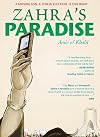
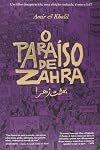
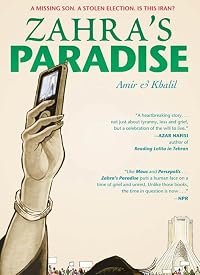
"Set in the aftermath of Iran's fraudulent elections of 2009, Zahra's Paradise is the fictional story of the search for Mehdi, a young protestor who has vanished into an extrajudicial twilight zone. What's keeping his memory from being obliterated is not the law. It is the grit and guts of his mother, who refuses to surrender her son to fate, and the tenacity of his brother, a blogger, who fuses tradition and technology to explore and explode the void in which Mehdi has show more vanished"--Publisher's web site. show lessTags
Recommendations




Member Recommendations

Member Reviews
“Zahra’s Paradise” is a comic drawn by Khalil, an anonymous Arab artist, and written by Amir, an anonymous Persian writer. The story is set just after the 2009-2010 Green Revolution in Iran. It was published on the internet starting in 2010 as a web comic translated in many languages, including Arabic and Farsi. In 2011, it was published in a hardcover format in English.
“Zahra’s Paradise” is an optic delight. There are long-running artistic themes from panel to panel as well as spreads that add to the artistry of the script. The imagery is always amazing. Individual panels often have powerful artistic effects and always have beautiful pictures. This artistic vision holds its own against the best comics. It is easy to dote on show more the art, which is rich, expressive, and organic.
The writing and story also stand out. “Zahra’s Paradise” takes place in the days after the 2009-2010 Green Revolution, a protest movement that was violently squashed. Mehdi is a fictional protestor who goes missing. His college-age brother and mother try to find out what happened to Mehdi. As the story progresses, the reader meets a hodgepodge of realistic characters, including the mother’s chain-smoking best friend, a copy shop owner who pirates anything the regime doesn’t like, and bureaucrats who are forced to tow the line despite their better judgment. The comic evokes political figures like Ayatollahs, mullahs, and Neda. It could have easily been written as a hard-boiled detective story but the author went out of his way to write a story with tangible characters who act logically.
“Zahra’s Paradise” is a comic reader’s dream. It requires attention to both the story and the art as it describes the Green Revolution. It is rich in artistry and prose, making it a wonderful piece of literature. show less
“Zahra’s Paradise” is an optic delight. There are long-running artistic themes from panel to panel as well as spreads that add to the artistry of the script. The imagery is always amazing. Individual panels often have powerful artistic effects and always have beautiful pictures. This artistic vision holds its own against the best comics. It is easy to dote on show more the art, which is rich, expressive, and organic.
The writing and story also stand out. “Zahra’s Paradise” takes place in the days after the 2009-2010 Green Revolution, a protest movement that was violently squashed. Mehdi is a fictional protestor who goes missing. His college-age brother and mother try to find out what happened to Mehdi. As the story progresses, the reader meets a hodgepodge of realistic characters, including the mother’s chain-smoking best friend, a copy shop owner who pirates anything the regime doesn’t like, and bureaucrats who are forced to tow the line despite their better judgment. The comic evokes political figures like Ayatollahs, mullahs, and Neda. It could have easily been written as a hard-boiled detective story but the author went out of his way to write a story with tangible characters who act logically.
“Zahra’s Paradise” is a comic reader’s dream. It requires attention to both the story and the art as it describes the Green Revolution. It is rich in artistry and prose, making it a wonderful piece of literature. show less
Great Art, Great Story
This is as good as it gets. The words and pictures combine very well to keep a complicated story moving.
Artistically, there are long-running artistic themes from panel to panel as well as spreads that add to the artistry of the script. The imagery is always amazing. Individual panels often have powerful artistic effects and always have beautiful pictures. This artistic vision holds its own against the best comics. It is easy to dote on the art, which is rich, expressive, and organic.
The writing and story also stand out. “Zahra’s Paradise” takes place in the days after the 2009-2010 Green Revolution, a protest movement that was violently squashed. Mehdi is a fictional protestor who goes missing. His show more college-age brother and mother try to find out what happened to Mehdi. As the story progresses, the reader meets a hodgepodge of realistic characters, including the mother’s chain-smoking best friend, a copy shop owner who pirates anything the regime doesn’t like, and bureaucrats who are forced to tow the line despite their better judgment. The comic evokes political figures like Ayatollahs, mullahs, and Neda. It could have easily been written as a hard-boiled detective story but the author went out of his way to write a story with tangible characters who act logically. show less
This is as good as it gets. The words and pictures combine very well to keep a complicated story moving.
Artistically, there are long-running artistic themes from panel to panel as well as spreads that add to the artistry of the script. The imagery is always amazing. Individual panels often have powerful artistic effects and always have beautiful pictures. This artistic vision holds its own against the best comics. It is easy to dote on the art, which is rich, expressive, and organic.
The writing and story also stand out. “Zahra’s Paradise” takes place in the days after the 2009-2010 Green Revolution, a protest movement that was violently squashed. Mehdi is a fictional protestor who goes missing. His show more college-age brother and mother try to find out what happened to Mehdi. As the story progresses, the reader meets a hodgepodge of realistic characters, including the mother’s chain-smoking best friend, a copy shop owner who pirates anything the regime doesn’t like, and bureaucrats who are forced to tow the line despite their better judgment. The comic evokes political figures like Ayatollahs, mullahs, and Neda. It could have easily been written as a hard-boiled detective story but the author went out of his way to write a story with tangible characters who act logically. show less
It's a tremendously important story to tell, and the book does an okay job of it. If the reader did not closely follow the protests and resulting repression in Iran in 2009 then a lot will be learned here. Comparing it to Persepolis, since I read this one closely following on from the other, Zahra's Paradise is the more impersonal, which for me knocks it down a couple notches. It is not a memoir but rather the story of a "typical" student who took part in the protests and was unluckily one of those to be picked up and swallowed by Iran's meat grinder of a judicial system. The herculean efforts of family and friends to discover his fate in the face of oppressive stonewalling makes up the plot. This gives Zahra's Paradise a narrower, more show more specific focus than that of Persepolis. The characters are flatter, fairly one-dimensional, their personalities being much less important than what is happening to them. The artwork is more energetic and busy, which will be a matter of personal preference. show less
Our story beings in the aftermath of Iran's fraudulent 2009 election with the search for Mehdi, a young protester who was arrested and vanished into the system. The search is not being done by the officials, who are the cause of the disappearance, but by his brother Hassan and his mother, who refuses to believe that her son won't come home. They traverse through hospitals, through morgues, through corrupt and self serving politicians and leaders, all in the hope of finding him. Although they encounter the darker side of their country and the people running it, they still manage to find hope amongst those that help them along their journey.
This is a powerful and heartbreaking tale, one that you can't help but feel moved by. The writer show more captures those feelings and the turmoil of the time period--that sense of loss, the fear, and the hopelessness. And at the same time capturing the hope and the courage of those trying to stand up for what they believe is right. Even though many people were affected, the creators of this tale focus on one family, upon one son, which makes it easier to connect to the tragedy and to the family. And at the same time connect to the large number of people involved on both sides. The writer also clearly intends for this to be a beginning. He wants the reader to go deeper into the story, to read more about what happened and connect with it. He includes a glossary, an explanation of what led to these events, and further readings to go to.
The artwork is poignant and captures the characters absolutely perfectly. In just the barest of strokes he captures the pain that the mother feels while searching for her lost son...and what she's willing to do to find him. You can see the determination in her eyes and can't help but feel like you want to move mountains for her to help her succeed in her quest. One of the things that I find most interesting about the character depiction is that the he never draws Mehdi's face, even if he's in a photo with other people. It means that you as the reader can put someone that you know in that depiction. Your brother, you cousin, a friend, your next door neighbor...it could be someone that you know. Some of my favorite scenes come in chapter 20, the burial of Mehdi, where his mother is weeping and wailing at the grave of her son, with tears streaming down her eyes, yet with the strength to continue to fight.
This book is the start of a journey, not the end. It's an introduction into this time, this place, and the people affected by it. I highly recommend this book and it deserves multiple readings and multiple conversations. Even after you finish reading it, it won't leave you. show less
This is a powerful and heartbreaking tale, one that you can't help but feel moved by. The writer show more captures those feelings and the turmoil of the time period--that sense of loss, the fear, and the hopelessness. And at the same time capturing the hope and the courage of those trying to stand up for what they believe is right. Even though many people were affected, the creators of this tale focus on one family, upon one son, which makes it easier to connect to the tragedy and to the family. And at the same time connect to the large number of people involved on both sides. The writer also clearly intends for this to be a beginning. He wants the reader to go deeper into the story, to read more about what happened and connect with it. He includes a glossary, an explanation of what led to these events, and further readings to go to.
The artwork is poignant and captures the characters absolutely perfectly. In just the barest of strokes he captures the pain that the mother feels while searching for her lost son...and what she's willing to do to find him. You can see the determination in her eyes and can't help but feel like you want to move mountains for her to help her succeed in her quest. One of the things that I find most interesting about the character depiction is that the he never draws Mehdi's face, even if he's in a photo with other people. It means that you as the reader can put someone that you know in that depiction. Your brother, you cousin, a friend, your next door neighbor...it could be someone that you know. Some of my favorite scenes come in chapter 20, the burial of Mehdi, where his mother is weeping and wailing at the grave of her son, with tears streaming down her eyes, yet with the strength to continue to fight.
This book is the start of a journey, not the end. It's an introduction into this time, this place, and the people affected by it. I highly recommend this book and it deserves multiple readings and multiple conversations. Even after you finish reading it, it won't leave you. show less
Zahra's Paradise takes place in Tehran in 2009. The author and illustrator have chosen to remain anonymous for political reasons and are known only as Amir and Khalil. This is a graphic novel.
The story is about a mother, Zahra, searching for her son, Mehdi, after one of the biggest street protests that took place in Tehran after an election. Mehdi has disappeared. His mother and his brother Hassan, a blogger and the book's narrator, search for him at all of the city's hospitals, prisons and at the morgue. They plead with corrupt politicians for information on an almost daily occasion, showing them all a copy of Mehdi's photograph. Hassan even hacks into one of the regime's most notorious prison's computer system with the hope that he show more will find him there.
This story primarily shows that a mother's love has no boundaries. However, it also shows how Iranians engaged with each other at that time period, which was not so long ago, just 9 years ago. (from 2018). We westerners have been taught by the media that Iran is solely Muslim yet Zahra's best friend since the 3rd grade is Miriam, a chain smoking, drinking Armenian Christian. The title of this book is also the English translation of the name of the largest cemetery in Iran, located in Tehran. Those interred there include people who both supported and opposed the Iranian Revolution as well as the current regime. Also, the regime buried Jews there that they caught and murdered. This story is showing a more diverse Iran that I am accustomed to hearing about with Jews and Christians living alongside Muslims.
The artwork is composed of black and white drawings with varying degrees of grey shading which I assume reflects the desperation felt by Mehdi's family. The comic is formatted in the traditional comic book page spread.
This story is an important one to tell. It shows what life is like in Iran at this time period. While this is a book of fiction, real life events took place in it is pages. The election of Mahmood Ahmadinejad in 2009 as President of Iran resulted in days of protests. The arrest, torture and murder of Canadian journalist Zahra Kazemi is part of the story. Also, the hanging of 2 gay men was mentioned. What surprised me was what the Iranians in the book thought about the execution of these 2 men. They wondered why their leaders could not wait for God's judgment on them and why they felt that they had to be the judge and executioner.
I highly recommend this graphic novel. show less
The story is about a mother, Zahra, searching for her son, Mehdi, after one of the biggest street protests that took place in Tehran after an election. Mehdi has disappeared. His mother and his brother Hassan, a blogger and the book's narrator, search for him at all of the city's hospitals, prisons and at the morgue. They plead with corrupt politicians for information on an almost daily occasion, showing them all a copy of Mehdi's photograph. Hassan even hacks into one of the regime's most notorious prison's computer system with the hope that he show more will find him there.
This story primarily shows that a mother's love has no boundaries. However, it also shows how Iranians engaged with each other at that time period, which was not so long ago, just 9 years ago. (from 2018). We westerners have been taught by the media that Iran is solely Muslim yet Zahra's best friend since the 3rd grade is Miriam, a chain smoking, drinking Armenian Christian. The title of this book is also the English translation of the name of the largest cemetery in Iran, located in Tehran. Those interred there include people who both supported and opposed the Iranian Revolution as well as the current regime. Also, the regime buried Jews there that they caught and murdered. This story is showing a more diverse Iran that I am accustomed to hearing about with Jews and Christians living alongside Muslims.
The artwork is composed of black and white drawings with varying degrees of grey shading which I assume reflects the desperation felt by Mehdi's family. The comic is formatted in the traditional comic book page spread.
This story is an important one to tell. It shows what life is like in Iran at this time period. While this is a book of fiction, real life events took place in it is pages. The election of Mahmood Ahmadinejad in 2009 as President of Iran resulted in days of protests. The arrest, torture and murder of Canadian journalist Zahra Kazemi is part of the story. Also, the hanging of 2 gay men was mentioned. What surprised me was what the Iranians in the book thought about the execution of these 2 men. They wondered why their leaders could not wait for God's judgment on them and why they felt that they had to be the judge and executioner.
I highly recommend this graphic novel. show less
Originally available only online, Zahra's Paradise is now available in print. It documents the aftermath of the protests that followed the 2009 Iranian presidential election, and though the characters of this graphic novel are fictional, they echo the very real plight of Iranians who live under the Islamic Republic's regime. Mehdi disappears during the protests in June 2009, leaving his mother and brother--a tech-savvy blogger--with no information as to his whereabouts...only the sickening suspicion that he may have become another victim of the government's strict and violent grip on the public. Together they search high and low throughout Tehran, visiting political headquarters to morgues to hacked computers, questioning everyone from show more the most influential (and corrupt) to shop keepers and cab drivers. Their journey is one of doubt, outrage, and loss, but also a testament to the deepest love and strength against a seemingly insurmountable obstacle. This story reveals present day history-in-the-making thanks to the phenomenon of using technology to expose a crooked system.
If you read and enjoyed Persepolis, you will probably get a lot out of this as it highlights the struggles in Iran. The black and white illustrations are beautiful and expressive, introducing, as so often is the case, the humanity of the majority locked behind the inhumane and imposing few who control the country. Be forewarned though that it is more explicit in its disclosure of violence and delves even deeper into the politics. The storyline jumps around a lot, and at times I found it difficult to place just exactly what was happening, but I eventually got a hang of the pace and felt my heart aching nearly as much as the family's in their search for closure. The authors, Amir and Khalil, have chosen to remain anonymous, but include at the end of the book a detailed glossary, outlines of events and important figures, resources for further exploration, and reflections on the story they have just presented. This is a tremendous tribute to a rich and complex land and people, steeped in history and posing important questions for its future. show less
If you read and enjoyed Persepolis, you will probably get a lot out of this as it highlights the struggles in Iran. The black and white illustrations are beautiful and expressive, introducing, as so often is the case, the humanity of the majority locked behind the inhumane and imposing few who control the country. Be forewarned though that it is more explicit in its disclosure of violence and delves even deeper into the politics. The storyline jumps around a lot, and at times I found it difficult to place just exactly what was happening, but I eventually got a hang of the pace and felt my heart aching nearly as much as the family's in their search for closure. The authors, Amir and Khalil, have chosen to remain anonymous, but include at the end of the book a detailed glossary, outlines of events and important figures, resources for further exploration, and reflections on the story they have just presented. This is a tremendous tribute to a rich and complex land and people, steeped in history and posing important questions for its future. show less
This graphic novel is an amazing look inside a country and a culture that is normally hidden from the Western world. It is powerful and heartbreaking. While the characters in this book are fictional, the setting and events are based on the reality of life after the protests surrounding the 2009 elections in Iran. This is a well-written and drawn book about an important subject. When we don’t understand others, it becomes easy to depersonalize them. We generally don’t understand the people of Iran and often see no further than a regime with which our country is in conflict. My husband loved this book and would recommend it to anyone with an interest in Iran and the Middle East. I’d go further and say that this is a book most people show more should read in order to better understand the news and the world around us. show less
Members
- Recently Added By
Lists

Club Read's Graphic Stories Recommendations
127 works; 2 members
Author Information
Awards and Honors
Awards
Common Knowledge
- Canonical title
- Zahraʼs Paradise
- Original title
- Zahraʼs Paradise
- Original publication date
- 2011
- Blurbers
- Nafisi, Azar
Classifications
- Genres
- Graphic Novels & Comics, Teen
- DDC/MDS
- 741.5 — Arts & recreation Drawing & decorative arts Drawing Comic books, graphic novels, fotonovelas, cartoons, caricatures, comic strips
- LCC
- PN6790 .I64 .Z34 — Language and Literature Literature (General) Literature (General) Collections of general literature Comic books, strips, etc.
- BISAC
Statistics
- Members
- 306
- Popularity
- 104,687
- Reviews
- 20
- Rating
- (4.05)
- Languages
- 9 — Dutch, English, Finnish, French, German, Italian, Portuguese (Brazil), Portuguese (Portugal), Spanish
- Media
- Paper
- ISBNs
- 9
- ASINs
- 1