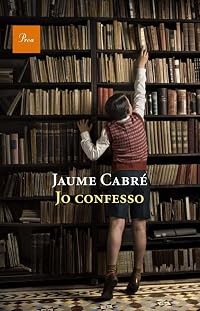
Confessions
by Jaume Cabré
On This Page
Description
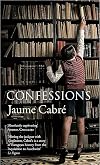
Drawing comparisons with Shadow of the Wind, The Name of the Rose and The Reader, and an instant bestseller in more than 20 languages, Confessions is an astonishing story of one man s life, interwoven with a narrative that stretches across centuries to create an addictive and unforgettable literary symphony. I confess. At 60 and with a diagnosis of early Alzheimer s, Adrià Ardèvol re-examines his life before his memory is systematically deleted. He recalls a loveless childhood where the show more family antique business and his father s study become the centre of his world; where a treasured Storioni violin retains the shadows of a crime committed many years earlier. His mother, a cold, distant and pragmatic woman leaves him to his solitary games, full of unwanted questions. An accident ends the life of his enigmatic father, filling Adrià s world with guilt, secrets and deeply troubling mysteries that take him years to uncover and driving him deep into the past where atrocities are methodically exposed and examined. Gliding effortlessly between centuries, and at the same time providing a powerful narrative that is at once shocking, compelling, mysterious, tragic, humorous and gloriously readable, Confessions reaches a crescendo that is not only unexpected but provides one of the most startling denouements in contemporary literature. Confessions is a consummate masterpiece in any language, with an ending that will not just leave you thinking, but quite possibly change the way you think forever. show lessTags
Recommendations

















Member Recommendations
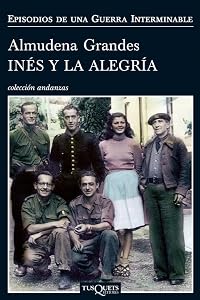
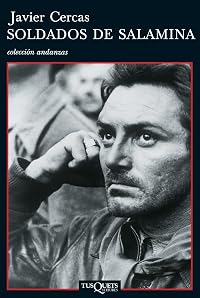
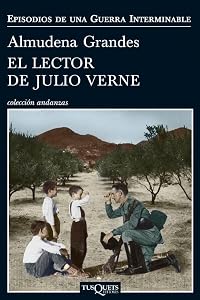
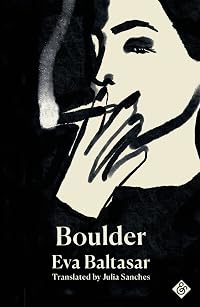
aileverte Both books explore destinies damaged by war, possess multilayer narratives, and the riveting story-telling weaves in some musical leitmotifs.
Member Reviews
Spanning 6 centuries, but not in chronological order, with at least 50 major characters (I did not notice the helpful Dramatis Personae until I had finished the book) and multiple changes of voice, sometimes within the same paragraph, this is a book that demands commitment and attention. But if you can persevere, if you can reject the little voice telling you to put the book aside as you struggle to remember who a particular character, who has just reappeared, briefly, after 100 pages, might be, then it is very rewarding. Because there is a reason why Adrià Ardèvol's memoirs are so rambling and confused, and once you realise what that is, the key to the puzzle is unlocked
There is no need to rehash the plot, as other reviewers have show more done that. But it seems to me there are a few key themes. 1) the slipperiness of memory 2) the passion, but the ultimate pointlessness of the collection of precious objects 3) the difficulties of legacy and perhaps most importantly, the terror of emotional connection.
Adria's life would for most of us, seem unsatisfyingly cramped and narrow, successful academic though he might be. Most of us would have more sympathy for his friend Bernal, a perfectly competent violinist who would prefer to be a bad writer. Adria's father, Felix would terrify us all. We would also share the justifiable contempt most of the female characters have for the useless men.
So do read it, but you need to have the mental space to engage with it properly. And compliments to the translator... it can't have been easy to make such a seamless translation show less
There is no need to rehash the plot, as other reviewers have show more done that. But it seems to me there are a few key themes. 1) the slipperiness of memory 2) the passion, but the ultimate pointlessness of the collection of precious objects 3) the difficulties of legacy and perhaps most importantly, the terror of emotional connection.
Adria's life would for most of us, seem unsatisfyingly cramped and narrow, successful academic though he might be. Most of us would have more sympathy for his friend Bernal, a perfectly competent violinist who would prefer to be a bad writer. Adria's father, Felix would terrify us all. We would also share the justifiable contempt most of the female characters have for the useless men.
So do read it, but you need to have the mental space to engage with it properly. And compliments to the translator... it can't have been easy to make such a seamless translation show less
Jaume Cabré's book has been an unexpected discovery for me, a work of story-telling into which I have found myself irresistibly drawn. "Jo Confesso" is written as a long letter, composed against loss of memory, against the loss of a beloved... "Composed" seems a much more appropriate verb than "written" because, although ostensibly told from the point of view of a single narrator, it is a polyphony of voices, beautifully orchestrated, their stories weaving through the main narrative and adding layers to our understanding of the characters in the present. Alongside these voices, there are objects that connect the different stories - and like people become transformed (a seed in a pocket becomes a tree becomes a violin ... a cloth table show more napkin becomes two handkerchiefs become a "magic" rag becomes a vestige, a ruin). The plot is complex and riveting, as multivoiced as it is multilingual (it was a pleasure to see all those foreign-language phrases used unabashedly, against the grain of globalization's push towards monolingualism, phrases which, at least in the Polish translation, were happily un-annotated, relying on the reader's ability to learn along the way). The English translation is due to come out in the Fall, and I hope it manages to provide as good as an experience as I've had in Polish :-) show less
Confessions by Jaume Cabré
Translated from the Catalan by Mara Faye Lethem
ArcadiaBooks (London)
978-1-909807-57-0
$38, 751 pgs
The sole meaning of life is to serve humanity. - Leo Tolstoy
There isn’t a single organization that can protect itself from a grain of sand. – Michel Tournier
Confiteor. I cannot do it justice. Mea culpa. This work requires superlatives which don’t exist. Confessions by Jaume Cabré is the best argument I’ve ever encountered for the continuing necessity of a liberal arts education and also the best argument I’ve ever encountered for honoring the 10th commandment. It is a huge-hearted achievement: I laughed and cried; I was disgusted and delighted; I frequently spoke out loud to the characters, sometimes show more muttering and sometimes shouting. It is a good thing I live in the middle of nowhere – I might’ve alarmed an entire apartment block. ANYWAY, Confessions is the story of one man’s life and simultaneously a history of Europe, a history of ideas, an exposition on the nature of evil, an object lesson on the corrosive effects of envy, and an exploration of the character of beauty, as well as the consequences of obtaining it.
"Someday I’ll bring the Storioni to class."
"Poor you. If you do, you’ll find out what a good hard cuff is."
"So what do we have it for?"
Father left the violin on the table and looked at me with his hands on his hips.
"What do we have it for, what do we have it for…" he mimicked me.
"Yes." Now I was peeved. "What do we have it for if it’s always in its case inside the safe and we can’t even look at it?"
"I have it to have it. Do you understand?"
"No."
Confessions is written in the form of an epic letter from Adrià Ardevol to Sara Voltes-Epstein, the love of his life. From the Spanish Inquisition to the present day, Adrià attempts to explain his family’s history so that Sara may understand the decisions he has made, the decisions he was too cowardly to make, and that sometimes the sins of the odious father are visited, unfairly or no, upon the son. It is possible to view Adrià's final circumstances as poetic justice. Or not. And yes, I realize how cryptic that is, but if I say much more I’ll give it away: I’m striving for no spoilers. As Adrià notes early on, “It’s strange: there are so many things I want to explain to you and yet I keep getting distracted and wasting time with reflections that would make Freud drool. Perhaps it’s because my relationship with my father is to blame for everything. Perhaps because it was my fault he died.” There’s a teaser for you.
I was intrigued from the opening sentence, “It wasn’t until last night, walking along the wet streets of Vallcarca, that I finally comprehended that being born into my family had been an unforgivable mistake.” And then I was enchanted:
“Have you noticed that life is an inscrutable accident? Out of Father’s millions of spermatozoa, only one fertilizes the egg it reaches. That you were born; that I was born, those are vast random accidents. We could have been born millions of different beings who wouldn’t have been either you or me. That we both like Brahms is also a coincidence. That your family has had so many deaths and so few survivors. All random. If the itinerary of our genes and then our lives had shifted along another of the millions of possible forks in the road, none of this would have been written and who knows who would read it. It’s mind blowing.”
Confessions is intermittently horrifying. It is the bloody history of Europe, after all: the Inquisition, the Third Reich and Franco, to name a very few. I felt physically ill when the origins of the number Adrià’s father used for the combination lock on his office safe were casually revealed. But Confessions is often funny, too, with a sly, droll humor. There is a running joke throughout the work regarding the degree of flatness or roundness of the world, depending on the place and era. For instance, discussing a fire that was deliberately set and burned down a hardwood forest used for making instruments, “…in the Year of Our Lord 1690, when the world was round for almost everyone…” progressing to “The Year of Our Lord 1705…when the earth was increasingly round…” to approximately 1960 “…in those days when Franco ruled and the earth again became flat for us…”
Also running throughout the book are Black Eagle, the Valiant Arapaho Warrior Chief, and Sheriff Carson. Childhood toys consulted by an anxious Adrià during childhood, they pop up regularly during his adulthood to offer sage advice and timely warnings that are frequently hilarious in their understated manner. For instance, Adrià has just announced to his mother that he will no longer take violin lessons:
"That is my decision. You are going to have to put up with it,” I dared to say.
That was a declaration of war. But there was no other way I could do it. I left Father’s study without looking back.
"How." [Black Eagle]
"Yes?"
"You can start painting my face with war paint. Black and white from the mouth to the ears and two yellow stripes from top to bottom."
"Stop joking, I’m trembling."
Please don’t let that number – 751 pages – discourage you. Granted, Confessions develops slowly for the first 80 or so pages and it slows down again for the last 30 pages. But in between it sweeps you along and I was amazed at how quickly a hundred pages passed. It can be confusing in the beginning. The author shifts between first, second and third person narrative – pay attention to pronouns. The child Adrià will disassociate via third person when he becomes particularly anxious. In addition, the speaker of any given sentence will, without warning, not be the same speaker who finishes the sentence. Frequently the era in which a paragraph begins will shift several hundred years backward or forward in time before you finish reading that paragraph. For example, a sentence may begin with Adrià in Barcelona in 1968 and by the end of the sentence you’re listening to Lorenzo Storioni of Cremona and the year is 1764 or maybe you’re listening to Julià de Sau, a monk at Sant Pere del Burgal, and the year is 1380.
Adrià has taken advantage of creative license and invented scenes and dialogue from the distant past. He freely admits this: “Don’t look at me like that. I know I make things up: but I’m still telling the truth.” Once you understand that a scene being described from the past will abruptly become the present, you will become accustomed to these segues and slip into the rhythm. If you get confused then you can always consult the Dramatis Personae at the back of the book. Oh, yeah – that reminds me: be prepared for Latin. And German. And French and Russian and Hebrew. You get the idea. Confessions is a novel for linguists and other lovers of language. Major kudos and possibly sainthood should go to translator Mara Faye Lethem.
Jaume Cabré is a playwright, essayist, and author of several novels that have sold more than a million copies throughout Europe. He has won several awards, among them the 42è Premi d'Honor de les Lletres Catalanes and the Creu de Sant Jordi. Confessions has won so many awards that I don’t have room to list them all so you may follow this link to read about them. Mara Faye Lethem is a literary translator of Catalan and Spanish. Her translations have appeared in The Best American Non-Required Reading 2010, The Paris Review and McSweeney’s.
Confessions is a sumptuous, gorgeous, ambitious, exasperating, disorienting, maddening, brilliant challenge and you must persevere. It is so worth the effort. I realize that I am just gushing here and critics aren't supposed to gush, I know, but this book is as close to perfect as it is possible for a book to be. Confessions has taken a spot in my Top 5.
Confiteor. Mea culpa. show less
Translated from the Catalan by Mara Faye Lethem
ArcadiaBooks (London)
978-1-909807-57-0
$38, 751 pgs
The sole meaning of life is to serve humanity. - Leo Tolstoy
There isn’t a single organization that can protect itself from a grain of sand. – Michel Tournier
Confiteor. I cannot do it justice. Mea culpa. This work requires superlatives which don’t exist. Confessions by Jaume Cabré is the best argument I’ve ever encountered for the continuing necessity of a liberal arts education and also the best argument I’ve ever encountered for honoring the 10th commandment. It is a huge-hearted achievement: I laughed and cried; I was disgusted and delighted; I frequently spoke out loud to the characters, sometimes show more muttering and sometimes shouting. It is a good thing I live in the middle of nowhere – I might’ve alarmed an entire apartment block. ANYWAY, Confessions is the story of one man’s life and simultaneously a history of Europe, a history of ideas, an exposition on the nature of evil, an object lesson on the corrosive effects of envy, and an exploration of the character of beauty, as well as the consequences of obtaining it.
"Someday I’ll bring the Storioni to class."
"Poor you. If you do, you’ll find out what a good hard cuff is."
"So what do we have it for?"
Father left the violin on the table and looked at me with his hands on his hips.
"What do we have it for, what do we have it for…" he mimicked me.
"Yes." Now I was peeved. "What do we have it for if it’s always in its case inside the safe and we can’t even look at it?"
"I have it to have it. Do you understand?"
"No."
Confessions is written in the form of an epic letter from Adrià Ardevol to Sara Voltes-Epstein, the love of his life. From the Spanish Inquisition to the present day, Adrià attempts to explain his family’s history so that Sara may understand the decisions he has made, the decisions he was too cowardly to make, and that sometimes the sins of the odious father are visited, unfairly or no, upon the son. It is possible to view Adrià's final circumstances as poetic justice. Or not. And yes, I realize how cryptic that is, but if I say much more I’ll give it away: I’m striving for no spoilers. As Adrià notes early on, “It’s strange: there are so many things I want to explain to you and yet I keep getting distracted and wasting time with reflections that would make Freud drool. Perhaps it’s because my relationship with my father is to blame for everything. Perhaps because it was my fault he died.” There’s a teaser for you.
I was intrigued from the opening sentence, “It wasn’t until last night, walking along the wet streets of Vallcarca, that I finally comprehended that being born into my family had been an unforgivable mistake.” And then I was enchanted:
“Have you noticed that life is an inscrutable accident? Out of Father’s millions of spermatozoa, only one fertilizes the egg it reaches. That you were born; that I was born, those are vast random accidents. We could have been born millions of different beings who wouldn’t have been either you or me. That we both like Brahms is also a coincidence. That your family has had so many deaths and so few survivors. All random. If the itinerary of our genes and then our lives had shifted along another of the millions of possible forks in the road, none of this would have been written and who knows who would read it. It’s mind blowing.”
Confessions is intermittently horrifying. It is the bloody history of Europe, after all: the Inquisition, the Third Reich and Franco, to name a very few. I felt physically ill when the origins of the number Adrià’s father used for the combination lock on his office safe were casually revealed. But Confessions is often funny, too, with a sly, droll humor. There is a running joke throughout the work regarding the degree of flatness or roundness of the world, depending on the place and era. For instance, discussing a fire that was deliberately set and burned down a hardwood forest used for making instruments, “…in the Year of Our Lord 1690, when the world was round for almost everyone…” progressing to “The Year of Our Lord 1705…when the earth was increasingly round…” to approximately 1960 “…in those days when Franco ruled and the earth again became flat for us…”
Also running throughout the book are Black Eagle, the Valiant Arapaho Warrior Chief, and Sheriff Carson. Childhood toys consulted by an anxious Adrià during childhood, they pop up regularly during his adulthood to offer sage advice and timely warnings that are frequently hilarious in their understated manner. For instance, Adrià has just announced to his mother that he will no longer take violin lessons:
"That is my decision. You are going to have to put up with it,” I dared to say.
That was a declaration of war. But there was no other way I could do it. I left Father’s study without looking back.
"How." [Black Eagle]
"Yes?"
"You can start painting my face with war paint. Black and white from the mouth to the ears and two yellow stripes from top to bottom."
"Stop joking, I’m trembling."
Please don’t let that number – 751 pages – discourage you. Granted, Confessions develops slowly for the first 80 or so pages and it slows down again for the last 30 pages. But in between it sweeps you along and I was amazed at how quickly a hundred pages passed. It can be confusing in the beginning. The author shifts between first, second and third person narrative – pay attention to pronouns. The child Adrià will disassociate via third person when he becomes particularly anxious. In addition, the speaker of any given sentence will, without warning, not be the same speaker who finishes the sentence. Frequently the era in which a paragraph begins will shift several hundred years backward or forward in time before you finish reading that paragraph. For example, a sentence may begin with Adrià in Barcelona in 1968 and by the end of the sentence you’re listening to Lorenzo Storioni of Cremona and the year is 1764 or maybe you’re listening to Julià de Sau, a monk at Sant Pere del Burgal, and the year is 1380.
Adrià has taken advantage of creative license and invented scenes and dialogue from the distant past. He freely admits this: “Don’t look at me like that. I know I make things up: but I’m still telling the truth.” Once you understand that a scene being described from the past will abruptly become the present, you will become accustomed to these segues and slip into the rhythm. If you get confused then you can always consult the Dramatis Personae at the back of the book. Oh, yeah – that reminds me: be prepared for Latin. And German. And French and Russian and Hebrew. You get the idea. Confessions is a novel for linguists and other lovers of language. Major kudos and possibly sainthood should go to translator Mara Faye Lethem.
Jaume Cabré is a playwright, essayist, and author of several novels that have sold more than a million copies throughout Europe. He has won several awards, among them the 42è Premi d'Honor de les Lletres Catalanes and the Creu de Sant Jordi. Confessions has won so many awards that I don’t have room to list them all so you may follow this link to read about them. Mara Faye Lethem is a literary translator of Catalan and Spanish. Her translations have appeared in The Best American Non-Required Reading 2010, The Paris Review and McSweeney’s.
Confessions is a sumptuous, gorgeous, ambitious, exasperating, disorienting, maddening, brilliant challenge and you must persevere. It is so worth the effort. I realize that I am just gushing here and critics aren't supposed to gush, I know, but this book is as close to perfect as it is possible for a book to be. Confessions has taken a spot in my Top 5.
Confiteor. Mea culpa. show less
As you know if you saw the Sensational Snippet I posted from Jaume Cabré’s Confessions, I found this 750+ page chunkster so absorbing that I spent a fair bit of my New Caledonia holiday indoors, reading it. And I don’t regret that for a second. It is one of the most moving novels I have ever read…
Ostensibly Confessions is about a 60-year-old Catalan academic called Adrià Ardèvol who is writing his confessions to his wife Sara because he has what appears to be early-onset dementia and wants to set the record straight before he loses his memory entirely. His best and dearest friend Bernat has been entrusted with making sense of his handwriting and transcribing it to computer, but as the novel progresses it becomes clear to Bernat show more and to the reader that he will need to do more than that. Adrià’s mind wanders from the here and now to the past and elsewhere and sometimes he loses the thread mid-sentence or uses the wrong word: this is done so brilliantly by the author that the reader, pausing to make sense of some small thing that seems disordered or confused or not quite right is reminded, just often enough, about the irreparable gaps forming in Adrià’s memory. And here and there the font changes to Italics where we see that the cruel present is confusing him entirely. It is heartbreaking, especially if you know someone experiencing the same disease. But, like John Bayley’s beautiful memoir of Iris Murdoch, it shows you that there are people who keep on loving the person that was, even if they no longer know it.
Chapter one introduces the family: Adrià is the only child of an antique dealer and collector called Felix Ardèvol, and his wife Carme. Neither of them love him. His father is harsh, demanding and physically abusive: this father insists that the child learn multiple languages and that he must spend his childhood in study so that he can achieve his father’s ambitions. The boy is precociously clever, and he loves to learn, but that is never enough for his father. His mother, emotionally unavailable and unforgiveably distant insists that he learn the violin to performance standard, and she never intervenes to protect Adrià from his father’s excesses.
To read the rest of my review please visit https://anzlitlovers.com/2017/09/10/confessions-by-jaume-cabre-translated-by-mar... show less
Ostensibly Confessions is about a 60-year-old Catalan academic called Adrià Ardèvol who is writing his confessions to his wife Sara because he has what appears to be early-onset dementia and wants to set the record straight before he loses his memory entirely. His best and dearest friend Bernat has been entrusted with making sense of his handwriting and transcribing it to computer, but as the novel progresses it becomes clear to Bernat show more and to the reader that he will need to do more than that. Adrià’s mind wanders from the here and now to the past and elsewhere and sometimes he loses the thread mid-sentence or uses the wrong word: this is done so brilliantly by the author that the reader, pausing to make sense of some small thing that seems disordered or confused or not quite right is reminded, just often enough, about the irreparable gaps forming in Adrià’s memory. And here and there the font changes to Italics where we see that the cruel present is confusing him entirely. It is heartbreaking, especially if you know someone experiencing the same disease. But, like John Bayley’s beautiful memoir of Iris Murdoch, it shows you that there are people who keep on loving the person that was, even if they no longer know it.
Chapter one introduces the family: Adrià is the only child of an antique dealer and collector called Felix Ardèvol, and his wife Carme. Neither of them love him. His father is harsh, demanding and physically abusive: this father insists that the child learn multiple languages and that he must spend his childhood in study so that he can achieve his father’s ambitions. The boy is precociously clever, and he loves to learn, but that is never enough for his father. His mother, emotionally unavailable and unforgiveably distant insists that he learn the violin to performance standard, and she never intervenes to protect Adrià from his father’s excesses.
To read the rest of my review please visit https://anzlitlovers.com/2017/09/10/confessions-by-jaume-cabre-translated-by-mar... show less
This is a very long book, but it's well worth a read. There are several story lines, but they are all neatly woven together at the end. The parts I liked best are those that switch between narrators - the section where Hoess's point of view alternates with that of a 13th century inquisitor is particularly chilling.
I've read and been defeated by a few Alzheimer-based novels and this is an exception to the defeat. For me, this book was amazingly absorbing and unceasingly engaging from adjustment to the writing style to the end.
Una història d'amor que té en compte la història de tot el que l'envolta, i en alguns casos, la condiciona. Em sembla que l'autor ens vol recordar que tot està interconnectat. També és una reflexió sobre el mal i el dolor; i la dificultat de l'oblit. El llibre és potser fins i tot massa documentat.
Members
- Recently Added By
Published Reviews
ThingScore 100
Dat hinkelspel is een machtig stijlmiddel van Cabré. Een ingenieuze constructie waarmee hij morele aspecten van de Europese geschiedenis voortdurend naast en tegenover elkaar kan plaatsen, los van omgeving, tijd of omstandigheden.
Maar het is evident welke Europese periode de grootste morele hangijzers voor Cabré vertegenwoordigt. En hij heeft het verwerkt in dit grootse verhaal, dat per show more direct een belangrijke plaats verdient in de wereldliteratuur. show less
Maar het is evident welke Europese periode de grootste morele hangijzers voor Cabré vertegenwoordigt. En hij heeft het verwerkt in dit grootse verhaal, dat per show more direct een belangrijke plaats verdient in de wereldliteratuur. show less
added by sneuper
Monumentaal epos van de Catalaanse schrijver is een roman over de vele diabolische en engelachtige gezichten van Europa in de 20e eeuw.
Deze queeste wordt een queeste door de Europese geschiedenis, waarvoor Cabré literaire paardensprongen maakt in de tijd.
Dat hinkelspel is een machtig stijlmiddel van Cabré.
Maar het is evident welke Europese periode de grootste morele hangijzers voor Cabré show more vertegenwoordigt. En hij heeft het verwerkt in dit grootse verhaal, dat per direct een belangrijke plaats verdient in de wereldliteratuur. show less
Deze queeste wordt een queeste door de Europese geschiedenis, waarvoor Cabré literaire paardensprongen maakt in de tijd.
Dat hinkelspel is een machtig stijlmiddel van Cabré.
Maar het is evident welke Europese periode de grootste morele hangijzers voor Cabré show more vertegenwoordigt. En hij heeft het verwerkt in dit grootse verhaal, dat per direct een belangrijke plaats verdient in de wereldliteratuur. show less
added by sneuperwishlist
Com en jmmarce, dec ser dels 0,01% als que no ens ha agradat. Jo el vaig llegir sencer. Un rotllo de collons.
Amb la majoria de 'best-sellers' em passa. Intento no comprar-ne gaires, però de vegades caic.
Amb la majoria de 'best-sellers' em passa. Intento no comprar-ne gaires, però de vegades caic.
added by Biblioaprenent
Lists

1001 Books You Must Read Before You Die
1,448 works; 1,133 members

Dublin Literary Award Longlist 2016
148 works; 4 members

Llibres que he llegit el 2012
28 works; 1 member

Books Read in 2018
4,360 works; 110 members

Books Read in 2021
5,361 works; 114 members
Author Information

46+ Works 2,309 Members
Some Editions
Awards and Honors
Awards
Notable Lists
Series
Belongs to Publisher Series
A tot vent (559)
Common Knowledge
- Canonical title
- Confessions
- Original title
- Jo confesso
- Original publication date
- 2011
- People/Characters*
- Adrià Ardèvol; Bernat Plensa; Sara Voltes-Epstein
- Important places
- Eixample (Barcelona, Catalunya); Santa Maria de Gerri (Gerri de la Sal, Catalunya); Sant Pere del Burgal (Escaló, Catalunya); Tübingen (Germany)
- Epigraph*
- (1e partie : A Capite...)
- Dedication*
- A la Margarida
- First words
- Fins ahir a la nit, caminant pels carrers molls de Vallcarca, no vaig comprendre que néixer en aquella família havia estat un error imperdonable.
Pas gisteravond, toen ik door de druipnatte straten van Vallcarca liep, begreep ik dat het een onvergeeflijke fout was geweest bij mijn ouders te worden geboren. - Last words*
- (Click to show. Warning: May contain spoilers.)Hij kon niet zeggen: waar ben ik? - hij was al nergens meer.
- Original language*
- Català
*Some information comes from Common Knowledge in other languages. Click "Edit" for more information.
Classifications
Statistics
- Members
- 780
- Popularity
- 35,844
- Reviews
- 32
- Rating
- (4.25)
- Languages
- 16 — Catalan, Dutch, English, French, German, Greek, Hungarian, Italian, Korean, Norwegian (Bokmål), Norwegian, Polish, Portuguese, Russian, Spanish, Swedish
- Media
- Paper, Audiobook, Ebook
- ISBNs
- 43
- ASINs
- 11