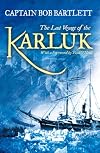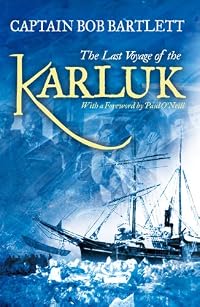
The Last Voyage of the Karluk
by Captain Robert A. Bartlett
On This Page
Description
On January 4, 1914, the Karluk was stuck in ice when the ominous sound of the ship's stern being ripped open by pack ice was heard by all on board. It sounded like the firing of a cannon. Bartlett immediately ordered supplies be unloaded on the ice. The Karluk began to break up on January 10, and all on board were ordered to abandon ship. When everyone was safely on the ice, the captain himself went back to his cabin and, all alone, put Chopin's Funeral March on his Victrola. As the water show more rose in the cabin, he whispered "Goodbye," left the sinking vessel to the mournful sound of Chopin's music and hurried out on the ice. It was to be the beginning of one of the greatest feats of valour in world history. From the foreword by Paul O'Neill show lessTags
Recommendations







































Member Recommendations



Member Reviews
It's a well-worn story. An explorer sets out to reach the North Pole by way of the Bering Straight, gets caught in the ice for an extended time, sinks and the crew struggles to make it over the ice to Siberia only to realize the hard part had just begun..
After Captain Bartlett returned to civilization from the disastrous journey to the Arctic in 1913-1914, he came under official scrutiny by his superior officers. The court of public opinion lauded him a hero and he went on to a successful career. This memoir of that journey, published in 1916, played a part in raising his public reputation and it's easy to see why. Co-written with a professional writer, Bartlett is level-headed, self-assured but not cocky, hard-working but delegating show more authority, competent but willing to recognize mistakes. In short, he is the perfect captain and hero. But there was more to the story the book leaves out: accusations of treachery, murder most likely, and more besides. For those darker currents one can find no better summary than the Wikipedia article (* featured). However the passage of discovery is best taken chronologically with Barlett's story first: it is a solid and enjoyable book, and was the first major account from which later revisions make more sense. show less
After Captain Bartlett returned to civilization from the disastrous journey to the Arctic in 1913-1914, he came under official scrutiny by his superior officers. The court of public opinion lauded him a hero and he went on to a successful career. This memoir of that journey, published in 1916, played a part in raising his public reputation and it's easy to see why. Co-written with a professional writer, Bartlett is level-headed, self-assured but not cocky, hard-working but delegating show more authority, competent but willing to recognize mistakes. In short, he is the perfect captain and hero. But there was more to the story the book leaves out: accusations of treachery, murder most likely, and more besides. For those darker currents one can find no better summary than the Wikipedia article (* featured). However the passage of discovery is best taken chronologically with Barlett's story first: it is a solid and enjoyable book, and was the first major account from which later revisions make more sense. show less
In 1913 Newfoundlander Bob Bartlett took command of the Karluk and set out from Vancouver Island for the western Arctic with 31 on board including sailors, explorers and scientists, as well as an Inuit family with two children. They were intended to rendezvous with two other ships at Herschel Island. He was an experienced sailor in Arctic conditions having accompanied Robert Peary in attempts to reach the North Pole. Soon after leaving Nome the ship was caught in ice and swept west towards Siberia. Stefansson, the expedition leader, took a number of hunters and set out on a hunting trip while the ship continued to drift. The group found their way back to Alaska. This was later thought to have been Stefansson's decision to abandon ship. show more Eventually the ship was crushed by the ice and sank north of Wrangel Island in Siberia. Bartlett and one of the guides set off across the ice on foot for Wrangel Island and from there on to the mainland. It was 1914 before he was able to return to Wrangel Island to rescue the those remaining.
The story is Bartlett's account, published in 1916 and has a remarkably composed voice considering the extreme conditions and the quarrelling that must have inevitably occurred. Eleven lives were lost. It's a great story for those interested in Arctic survival, and would especially appeal to the younger generation. show less
The story is Bartlett's account, published in 1916 and has a remarkably composed voice considering the extreme conditions and the quarrelling that must have inevitably occurred. Eleven lives were lost. It's a great story for those interested in Arctic survival, and would especially appeal to the younger generation. show less
As always, Bob Bartlett tells a good story about life and survival in the Arctic. The Kurlac wasn't really built for work in the ice, and many other ships were also put to work in similar unsuitable environments. Many of the crew survived through the efforts of Bob Bartlett.
Ratings
Members
- Recently Added By
Author Information

6 Works 94 Members
Common Knowledge
- Canonical title
- The Last Voyage of the Karluk
- Original title
- The Last Voyage of the Karluk: Flagship of Vilhjalmar Stefansson's Canadian Arctic Expedition of 1913-16
- Alternate titles
- The Karluk's Last Voyage: An Epic of Death and Survival in the Arctic, 1913-1916
- Original publication date
- 1916
- People/Characters
- Captain Robert Bartlett; Robert Abram Bartlett; Mugpi; Robert Bartlett (Captain)
- Important places
- Arctic; Arctic Regions; Wrangel Island, Russia; Canadian Arctic; Siberia, Russia
- Important events
- Karluk Voyage (1913); Canadian Arctic Expedition (1913-1918)
- First words
- We did not all come back.
- Last words
- (Click to show. Warning: May contain spoilers.)The next day, under the instructions of the Canadian Government, I paid off the men; soon they had started for their homes, while I left for Ottawa to make my final report of the last voyage of the Karluk.
Classifications
- Genres
- Nonfiction, Travel, Biography & Memoir, History, General Nonfiction
- DDC/MDS
- 919.804 — History & geography Geography & travel Geography of and travel in Australasia, Pacific Ocean islands, Atlantic Ocean islands, Arctic islands, Antarctica and on extraterrestrial worlds Polar regions
- LCC
- G670 — Geography, Anthropology and Recreation Geography (General) Arctic and Antarctic regions
- BISAC
Statistics
- Members
- 42
- Popularity
- 698,614
- Reviews
- 3
- Rating
- (4.38)
- Languages
- English
- Media
- Paper, Audiobook, Ebook
- ISBNs
- 8
- UPCs
- 1
- ASINs
- 2