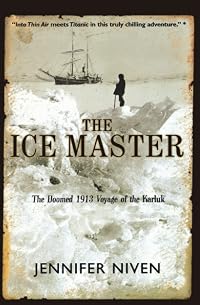
The Ice Master: The Doomed 1913 Voyage of the Karluk
by Jennifer Niven 
On This Page
Description
It was to be the greatest and most elaborate Arctic expedition in history, with the largest scientific staff ever taken on such a journey. It's leader, Vilhjalmur Stefansson, was celebrated for his studies of Eskimo life and, with this mission, hoped to find evidence that proved his staunchly held belief that there was a last unexplored continent, hidden beneath the vast polar ice cap. In June 1913, the H.M.C.S. Karluk set sail from the Esquimalt Naval Yard in Victoria, British Columbia. Six show more weeks later, the arctic winter had begun, the ship was imprisoned in ice, and those on board had been abandoned by their leader. For five months, the Karluk remained frozen in a massive block of ice, drifting farther and farther off course. In January 1914, with a thunderous impact, the ice tore a hole in the vessel's hull, and the redoubtable captain, Robert Bartlett, gave orders to abandon ship. With nothing but half the ship's store of supplies and the polar ice beneath their feet, Captain Bartlett, twenty-one men, an Inuit woman and her two small daughters, twenty-nine dogs, and one pet cat were now hopelessly shipwrecked in the middle of the Arctic Ocean, hundreds of miles from land. These castaways had no choice but to try to find solid ground where they could wait while they struggled against starvation, snow blindness, a gruesome and mysterious disease, exposure to the brutal winter -- and each other. Bartlett and one member of the party soon set across the ice to seek help. Nine months later, twelve survivors were rescued by a small whaling schooner and brought back to civilization. The Ice Master is an epic tale of true adventure that rivals the most dramatic fiction. Drawing on thediaries of those who were rescued and those who perished, and even an interview with one living survivor, Jennifer Niven re-creates with astonishing accuracy and immediacy the Karluk's ill-fated journey and her crew's desperate attempts to find a way home from the icy wastes of the Arctic. show lessTags
Recommendations










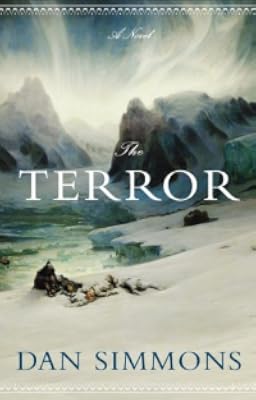
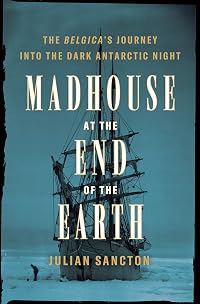
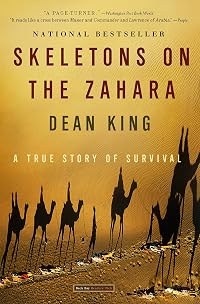


Member Recommendations

Member Reviews
nonfiction/history - portrait of humanity in the bleakest of circumstances in the unforgiving Arctic landscape.
You know it won't end well for everyone when you pick up this book, but it's still fascinating to see just how bleak it looks just 50 or 60 pages in. It's good they were able to at least avoid the scurvy that befell Shackleton's crew, but unfortunately the pemmican-only diet led to nephritisc kidney disorder (inflammation from too much protein--apparently you need some hardtack carbs to balance out the pemmican, so those who are attempting a keto diet really should be advised by a physician/nutritionist). There is even a suspected murder in the very desperate days toward the end--a riveting true adventure for fans of the genre.
You know it won't end well for everyone when you pick up this book, but it's still fascinating to see just how bleak it looks just 50 or 60 pages in. It's good they were able to at least avoid the scurvy that befell Shackleton's crew, but unfortunately the pemmican-only diet led to nephritisc kidney disorder (inflammation from too much protein--apparently you need some hardtack carbs to balance out the pemmican, so those who are attempting a keto diet really should be advised by a physician/nutritionist). There is even a suspected murder in the very desperate days toward the end--a riveting true adventure for fans of the genre.
To be honest, I thought this would read something like a history textbook. Quite the contrary. It reads like a regular story, a piece of fiction, and in some ways, it's hard to believe that it isn't fictional.
The book itself is fairly well-written -- I find the style very engaging and suspenseful when necessary (given the author's history in film, I'm not surprised). I also liked the format, where each chapter covers the events of one month. Technicalities aside, the story itself is so amazing, it's almost unbelievable. That any of the crew survived this ordeal is in itself a miracle. That a handful made it through without resorting to dishonorable behavior is even more amazing.
To say that I enjoyed reading this doesn't seem show more appropriate. I did enjoy it, but not as one would enjoy reading a work of fiction. The Ice Master is a gripping, heart-wrenching, and sometimes horrifying tale of adventure and survival in one the world's most unforgiving climates. It was a little slow to start, as we meet our "characters" and learn of the origins of the expedition, but the story picks up once the ship sets sail and it doesn't stop until the end.
And even then, there's a feeling that the story isn't over, that it will never be over. The book mentions several times that William McKinlay, the only surviving member of the scientific team, would spend the rest of his life searching for an answer, a conclusion of some sort, to what happened. He even said once that a part of him, indeed all of them, would always remain on Wrangel Island, where they lived for nine months and endured the worst of their hardships.
As a reader, I came away with the satisfaction of knowing that some of them survived and went home to their families and the lives they thought they'd never live again. Not quite a "happy ending" but it feels like a conclusion. For the survivors themselves, however, they would find no such satisfaction. It would haunt them until their dying day. I can't help but wonder, who would these men have become had they never been through this ordeal?
One good thing I took with me from reading this is to complain less. No matter how bad things get, it's not as bad as it could be. I could be stranded in the Arctic, during one of the worst Arctic winters in history, with no food, cheap used winter clothing, second-hand gear, people I can't stand who keep stealing from me, suffering from maladies I can't get rid of and occasionally forced to sleep for a week because I've been made blind by glare on the snow.
No. It might be bad, but it could always be worse.
As mentioned before, I like the author's style. Some people didn't and I guess I can see why, but I thought it was well-written. Niven's voice is natural and engaging, her descriptions vivid. I appreciated the many pages of pictures, but I almost didn't need them to see the world in which the events took place. Everything, from the individual to the frozen white landscape, is infused with life and personality. At times, the ice itself almost seemed to become a villain of sorts, unpredictable, deadly, thwarting the progress of the heroes at every opportunity. I won't argue with those who don't like her writing style or her voice, but I think she succeeded where many would have failed: taking a subject that could have been very boring and dry and turning it into something so enthralling, it's impossible to put down.
While probably not the best of it's kind, The Ice Master is a book worth reading. I learned a lot about Arctic exploration and I'm excited now to learn even more. Survivors William McKinlay and Captain Robert Bartlett both wrote accounts of these events and I have already added their books to my reading list.
This is the first non-fiction I have read in a long time and I liked it as I would a favorite piece of fiction. It wasn't life-altering by any means, but it did impress upon me the importance of appreciating the good things in our lives and keeping everything in perspective -- my daily hassles, when compared to a year in the Arctic, suddenly seem less troubling.
I would recommend this book to anyone. show less
The book itself is fairly well-written -- I find the style very engaging and suspenseful when necessary (given the author's history in film, I'm not surprised). I also liked the format, where each chapter covers the events of one month. Technicalities aside, the story itself is so amazing, it's almost unbelievable. That any of the crew survived this ordeal is in itself a miracle. That a handful made it through without resorting to dishonorable behavior is even more amazing.
To say that I enjoyed reading this doesn't seem show more appropriate. I did enjoy it, but not as one would enjoy reading a work of fiction. The Ice Master is a gripping, heart-wrenching, and sometimes horrifying tale of adventure and survival in one the world's most unforgiving climates. It was a little slow to start, as we meet our "characters" and learn of the origins of the expedition, but the story picks up once the ship sets sail and it doesn't stop until the end.
And even then, there's a feeling that the story isn't over, that it will never be over. The book mentions several times that William McKinlay, the only surviving member of the scientific team, would spend the rest of his life searching for an answer, a conclusion of some sort, to what happened. He even said once that a part of him, indeed all of them, would always remain on Wrangel Island, where they lived for nine months and endured the worst of their hardships.
As a reader, I came away with the satisfaction of knowing that some of them survived and went home to their families and the lives they thought they'd never live again. Not quite a "happy ending" but it feels like a conclusion. For the survivors themselves, however, they would find no such satisfaction. It would haunt them until their dying day. I can't help but wonder, who would these men have become had they never been through this ordeal?
One good thing I took with me from reading this is to complain less. No matter how bad things get, it's not as bad as it could be. I could be stranded in the Arctic, during one of the worst Arctic winters in history, with no food, cheap used winter clothing, second-hand gear, people I can't stand who keep stealing from me, suffering from maladies I can't get rid of and occasionally forced to sleep for a week because I've been made blind by glare on the snow.
No. It might be bad, but it could always be worse.
As mentioned before, I like the author's style. Some people didn't and I guess I can see why, but I thought it was well-written. Niven's voice is natural and engaging, her descriptions vivid. I appreciated the many pages of pictures, but I almost didn't need them to see the world in which the events took place. Everything, from the individual to the frozen white landscape, is infused with life and personality. At times, the ice itself almost seemed to become a villain of sorts, unpredictable, deadly, thwarting the progress of the heroes at every opportunity. I won't argue with those who don't like her writing style or her voice, but I think she succeeded where many would have failed: taking a subject that could have been very boring and dry and turning it into something so enthralling, it's impossible to put down.
While probably not the best of it's kind, The Ice Master is a book worth reading. I learned a lot about Arctic exploration and I'm excited now to learn even more. Survivors William McKinlay and Captain Robert Bartlett both wrote accounts of these events and I have already added their books to my reading list.
This is the first non-fiction I have read in a long time and I liked it as I would a favorite piece of fiction. It wasn't life-altering by any means, but it did impress upon me the importance of appreciating the good things in our lives and keeping everything in perspective -- my daily hassles, when compared to a year in the Arctic, suddenly seem less troubling.
I would recommend this book to anyone. show less
"I'm starving faster than you are."
That could almost be the refrain of the many failed expeditions to the arctic in the mid-nineteenth century and after. The Karluk voyage was fairly typical. Captain Bob Bartlett was hired to take a crew of scientists to the ice north of Alaska. The ship was not really up to the task. Many of the scientists abandoned the expedition and went home on their own. After they left, the Karluk was frozen in, then destroyed by the ice. The men survived to reach Wrangel Island in the Siberia arctic. Captain Bartlett sledged out to find help. The men he left behind, trapped in the cold and the dark, got sick and starved; many died before they could be rescued.
So far, frankly, so typical. But this does not answer show more why. The Karluk should never have been employed in this service, but there was time to bring off supplies. Several of the men on the ship, in effect, mutinied. Their time on Wrangel Island was consumed in arguing and, indeed, fighting.
They spent a long time on the island, and Niven's account makes it seem longer, because, somehow, everyone seems to be on the point of death, but survive to be on the point of death again a few days later, and repeat endlessly. Why? We can't tell. It's a significant issue, because a lot of tales of arctic disasters have this same tone.
And what of Bob Bartlett? Niven is full of praise for him. And, to be fair, the crew was all alive when he left, and he did bring rescue. But he also wrecked the ship, and let the men go out of control. It was not a pretty picture.
As a chronicle, this book is good. But as an insight into the horrid problem of "arctic madness," something is missing. Most readers, I think, will want more than a chronology. They will want an explanation. show less
That could almost be the refrain of the many failed expeditions to the arctic in the mid-nineteenth century and after. The Karluk voyage was fairly typical. Captain Bob Bartlett was hired to take a crew of scientists to the ice north of Alaska. The ship was not really up to the task. Many of the scientists abandoned the expedition and went home on their own. After they left, the Karluk was frozen in, then destroyed by the ice. The men survived to reach Wrangel Island in the Siberia arctic. Captain Bartlett sledged out to find help. The men he left behind, trapped in the cold and the dark, got sick and starved; many died before they could be rescued.
So far, frankly, so typical. But this does not answer show more why. The Karluk should never have been employed in this service, but there was time to bring off supplies. Several of the men on the ship, in effect, mutinied. Their time on Wrangel Island was consumed in arguing and, indeed, fighting.
They spent a long time on the island, and Niven's account makes it seem longer, because, somehow, everyone seems to be on the point of death, but survive to be on the point of death again a few days later, and repeat endlessly. Why? We can't tell. It's a significant issue, because a lot of tales of arctic disasters have this same tone.
And what of Bob Bartlett? Niven is full of praise for him. And, to be fair, the crew was all alive when he left, and he did bring rescue. But he also wrecked the ship, and let the men go out of control. It was not a pretty picture.
As a chronicle, this book is good. But as an insight into the horrid problem of "arctic madness," something is missing. Most readers, I think, will want more than a chronology. They will want an explanation. show less
This is a sad book telling of how human behaviour is affected when fear, hunger and danger combine with extreme cold and poor leadership. It's a well told story diligently researched from the individual journals and diaries kept by the scientists and crew but it lacks an index and a decent map showing the places referred to in the text.
A haunting history of the survival of the people aboard the Karluk after the desertion of their leader, Stephanson, who was primarily only interested in himself. The rescue of the people on board the Karluk after it sank and he had lead them to Wrangel Island was a result of Captain Bob Bartlett. This is more than a fascinating story, it is history.
Absolutely fascinating and so wonderful that the author included an epilogue to describe the lives of the survivors. I love the true stories about Arctic adventures because they are always so incredible and I am continually overwhelmed that there are people who are willing and eager to get out there and explore that frozen place.
I am a huge fan of polar exploration stories and Jennifer Niven's book "The Ice Master: The Doomed 1913 Voyage of the Karluk" fits right in among the great books I've read on the subject.
The Karluk expedition occurred after the North Pole was already discovered and appeared to have little purpose, except to get the organizer out onto the ice, as he left 20 other men to fend for themselves. More than half of the crew died after the ill-fated Karluk got trapped in the pack ice.
Niven mostly tells the story well. There were parts that dragged a bit, mainly because she appears to have had so much source material. I had trouble keeping so many crew members straight-- it didn't help that so many members of the crew had last names beginning show more with an M.
That said, the story is told so well it reads more like a work of fiction. I would absolutely read another book of Niven's based on this one. show less
The Karluk expedition occurred after the North Pole was already discovered and appeared to have little purpose, except to get the organizer out onto the ice, as he left 20 other men to fend for themselves. More than half of the crew died after the ill-fated Karluk got trapped in the pack ice.
Niven mostly tells the story well. There were parts that dragged a bit, mainly because she appears to have had so much source material. I had trouble keeping so many crew members straight-- it didn't help that so many members of the crew had last names beginning show more with an M.
That said, the story is told so well it reads more like a work of fiction. I would absolutely read another book of Niven's based on this one. show less
Members
- Recently Added By
Lists

Disaster Books
74 works; 19 members

Accidents, Disasters, and Tragedies
175 works; 7 members

Non-Fiction Worth Reading
1,025 works; 264 members

Polar exploration
54 works; 4 members

Adult Books for YA Readers
194 works; 6 members
Author Information

16+ Works 10,958 Members
Jennifer Niven writes both fiction and nonfiction books. Her novels for adults include American Blonde, Becoming Clementine, Velva Jean Learns to Fly, and Velva Jean Learns to Drive. Her first book for young adult readers, All the Bright Places, was published in 2015. Holding Up the Universe is her second young adult book. Her nonfiction books show more include The Ice Master, Ada Blackjack, and The Aqua-Net Diaries. (Bowker Author Biography) show less
Jennifer Niven is a LibraryThing Author, an author who lists their personal library on LibraryThing.
Awards and Honors
Notable Lists
Work Relationships
Common Knowledge
- Canonical title*
- Pris dans les glaces
- Original title
- The Ice Master
- Original publication date
- 2000
- People/Characters
- Vilhjalmur Stefansson; Robert Bartlett (Captain); William Laird McKinlay; Dr. Alistair Forbes Mackay; Henri Beuchat; Mugpi (show all 23); Alexander "Sandy" Anderson; John Munro; Robert Williamson; Golightly; "Clam" Williams; George Breddy; Fred Maurer; Robert Templeman; "Charlie" Chafe; George Stewart Malloch; Bjarne Mamen; James Murray (Sir, biologist); Kataktovik; Kuraluk; Kiruk "Auntie"; Helen; John Hadley
- Important places
- Wrangel Island; Canadian Arctic; Siberia, Russia; Alaska, USA; Arctic; Herald Island, Arctic Ocean
- Important events
- Karluk Voyage (1913); Canadian Arctic Expedition of 1913; World War I
- Epigraph
- It is good for the world to hear such stories sometimes. It makes the lives of Mallochs and Mamens live on after them. ~~ Mrs. Rudolph Martin Anderson, wife of Stefansson's second in command, in a letter to William McKinlay, ... (show all)October 30, 1914
- Dedication
- For Penelope Niven and Jack Fain McJunkin, Jr., my mother and father.
And to the memory of the twenty-two men, one woman, and two children who stayed aboard the Karluk -- and those who came back and those who did not.
*Some information comes from Common Knowledge in other languages. Click "Edit" for more information.
Classifications
- Genres
- Nonfiction, General Nonfiction, Travel, History
- DDC/MDS
- 919.804 — History & geography Geography & travel Geography of and travel in Australasia, Pacific Ocean islands, Atlantic Ocean islands, Arctic islands, Antarctica and on extraterrestrial worlds Polar regions
- LCC
- G670 — Geography, Anthropology and Recreation Geography (General) Arctic and Antarctic regions
- BISAC
Statistics
- Members
- 741
- Popularity
- 38,241
- Reviews
- 14
- Rating
- (4.07)
- Languages
- 5 — Danish, English, French, German, Portuguese (Portugal)
- Media
- Paper, Audiobook, Ebook
- ISBNs
- 21
- ASINs
- 8