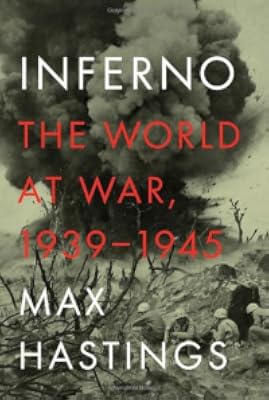
All Hell Let Loose: The World at War 1939-1945
by Max Hastings
On This Page
Description
A monumental work that shows us at once the truly global reach of World War II, and its deeply personal consequences. Hastings simultaneously traces the major developments and puts them into real human context. He also explores some of the darker and less explored regions of the war's penumbra, including the conflict between the Soviet Union and Finland; and the Bengal famine in 1943 and 1944.Tags
Recommendations

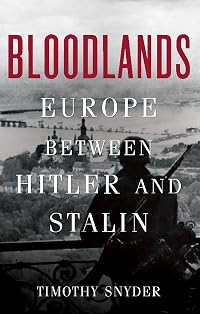
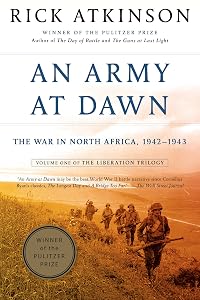
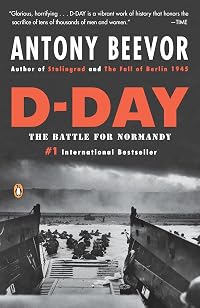
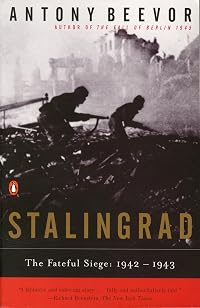




Member Recommendations

stellarexplorer A global perspective, big picture as opposed to in-the-trenches, if you'll pardon the anachronistic metaphor. Masterful.
Member Reviews
To me, artillery was the invention of hell.
This was exhaustive in terms of the sheer amount of information stored in this book. When Max Hastings chose World At War in his title, he truly meant it. It's really amazing how he was able to include basically all sides of World War II into this, from countries who were barely impacted to civilians that saw no change in their daily life around the world. No stone left unturned, as they say.
This is one of those books that I think everyone should take some time to sift through, and should probably be utilized in schools everywhere. The amount of information provided is amazing, and the detail is very humbling. In a day and age where people make jokes about us 'needing another world war', show more reading this has made it even more obvious to me how absolutely disgusting and out of touch that is to say and joke about.
This war was a detriment to not only millions of people (perhaps billions if you include everything from death to rape to grief) but country to country relations, and the environment itself. Zero good came from this war, except for the people who were freed from torture and imprisonment.
On the other hand, it almost felt as if more people were freed from the consequences of their inhumane actions than the victims of the event getting their own sort of vindication. It was really awful hearing about not only how many Nazis escaped retribution by fleeing Germany (Hastings even touches on Germany absorbing some and protecting them which is so heinous), but how many war crimes were committed by allies, Russian, British, and American soldiers, and simply ignored. One less gruesome story of evading consequences stuck out to me of an officer who called his men to machine gun enemy soldiers who were stranded in the ocean after their ship went down. This man was given a medal for his service during the war and kept climbing the ranks of the military, as if he had not called for the slaughter of unarmed men. This is far from the only time a terrible action was committed and the perpetrator was basically rewarded.
I found it interesting just how much floundering was happening in the first years of the war by ally leaders and other countries. How much terror could have been stopped and prevented if they had gotten off their asses and taken action against the Nazi threat, rather than brushing it off as an ego that would peter out before it gained much traction. It wasn't until Britain was literally under threat by Germany that they finally reacted. Mistakes were made in strides by everyone, including Germany, and I liked learning about those cases. No one is infallible, and so, it proves they really aren't gods. Leaders are human like you and I, and truly don't have a superiority over the rest of us, despite most leadership pretending so. Plenty of leaders are just plain stupid, which is laid out clearly by Hastings many times, but especially when he spends time exploring Mussolini's choices.
My favorite thing about Hastings' work was his focus on specific groups and time periods that a lot of narratives gloss over or leave out entirely. He spends time on women in the war, around the world, from their own service, their presence increasing in the work force in various countries, to the assaults they suffered. Hastings does not shy away from grief or rape or murder, and I think it's important he doesn't. Basically all armies committed sex crimes against women, allies and axis, and there were plenty of reports of children and elderly being assaulted as well. Rape is conveniently left out most of the time when WWII books and documentaries are made, unless of course they are attempting to vilify Nazis or Japanese soldiers specifically, or even Russians depending on the agenda of the writer. In a way, WWII is an act of rape itself- rape of people, of land, of rights. It's sickening, and should never be forgot. None of it should be forgot.
Hastings spends time talking about aspects of segregation and colonization. How Amerikkka used Black soldiers but gave them no glory, nor rights, for their sacrifices, how countries colonized by Europe were forced into combat they had no part of. A raping of rights.
Probably my most favorite aspects of this book was Hastings use of real letters and diaries being quoted (with sources) within the text. Hearing from actual soldiers, grieving mothers, victimized girls was really hard hitting and avoided this feeling like a textbook and kept it emotional. It's impossible to separate yourself from what happened when you can so easily see yourself in the words of real people. He doesn't play favorites either- time is spent on Nazi and German accounts, both in favor of conquering the world for Hitler and those more critical of the terrors conducted. This is important to me, to give a full narrative of events and instead of playing the Evil German vs Good Ally cards that I feel many enforce. No one is complete evil, and no one is complete good, and it's very very dangerous to fall into that mindset, especially in the context of WWII. Don't forget, we are all susceptible to propaganda.
In all, this was hard hitting, transparent, and emotionally difficult. As it should be. It's critical that these events never happens again and that we never forget. Misinformation and attempts to falsify the reality of WWII is crucial as we move forward in this digital era. We cannot repeat history, and to do that, we must all be educated on the dirty details of what happened. Learning that Japanese adolescents don't even know the extent of the role their country played in this horrendous event is awful, and it opens my eyes to the lack of education in the United States as well. We cannot forget. show less
This was exhaustive in terms of the sheer amount of information stored in this book. When Max Hastings chose World At War in his title, he truly meant it. It's really amazing how he was able to include basically all sides of World War II into this, from countries who were barely impacted to civilians that saw no change in their daily life around the world. No stone left unturned, as they say.
This is one of those books that I think everyone should take some time to sift through, and should probably be utilized in schools everywhere. The amount of information provided is amazing, and the detail is very humbling. In a day and age where people make jokes about us 'needing another world war', show more reading this has made it even more obvious to me how absolutely disgusting and out of touch that is to say and joke about.
This war was a detriment to not only millions of people (perhaps billions if you include everything from death to rape to grief) but country to country relations, and the environment itself. Zero good came from this war, except for the people who were freed from torture and imprisonment.
On the other hand, it almost felt as if more people were freed from the consequences of their inhumane actions than the victims of the event getting their own sort of vindication. It was really awful hearing about not only how many Nazis escaped retribution by fleeing Germany (Hastings even touches on Germany absorbing some and protecting them which is so heinous), but how many war crimes were committed by allies, Russian, British, and American soldiers, and simply ignored. One less gruesome story of evading consequences stuck out to me of an officer who called his men to machine gun enemy soldiers who were stranded in the ocean after their ship went down. This man was given a medal for his service during the war and kept climbing the ranks of the military, as if he had not called for the slaughter of unarmed men. This is far from the only time a terrible action was committed and the perpetrator was basically rewarded.
I found it interesting just how much floundering was happening in the first years of the war by ally leaders and other countries. How much terror could have been stopped and prevented if they had gotten off their asses and taken action against the Nazi threat, rather than brushing it off as an ego that would peter out before it gained much traction. It wasn't until Britain was literally under threat by Germany that they finally reacted. Mistakes were made in strides by everyone, including Germany, and I liked learning about those cases. No one is infallible, and so, it proves they really aren't gods. Leaders are human like you and I, and truly don't have a superiority over the rest of us, despite most leadership pretending so. Plenty of leaders are just plain stupid, which is laid out clearly by Hastings many times, but especially when he spends time exploring Mussolini's choices.
My favorite thing about Hastings' work was his focus on specific groups and time periods that a lot of narratives gloss over or leave out entirely. He spends time on women in the war, around the world, from their own service, their presence increasing in the work force in various countries, to the assaults they suffered. Hastings does not shy away from grief or rape or murder, and I think it's important he doesn't. Basically all armies committed sex crimes against women, allies and axis, and there were plenty of reports of children and elderly being assaulted as well. Rape is conveniently left out most of the time when WWII books and documentaries are made, unless of course they are attempting to vilify Nazis or Japanese soldiers specifically, or even Russians depending on the agenda of the writer. In a way, WWII is an act of rape itself- rape of people, of land, of rights. It's sickening, and should never be forgot. None of it should be forgot.
Hastings spends time talking about aspects of segregation and colonization. How Amerikkka used Black soldiers but gave them no glory, nor rights, for their sacrifices, how countries colonized by Europe were forced into combat they had no part of. A raping of rights.
Probably my most favorite aspects of this book was Hastings use of real letters and diaries being quoted (with sources) within the text. Hearing from actual soldiers, grieving mothers, victimized girls was really hard hitting and avoided this feeling like a textbook and kept it emotional. It's impossible to separate yourself from what happened when you can so easily see yourself in the words of real people. He doesn't play favorites either- time is spent on Nazi and German accounts, both in favor of conquering the world for Hitler and those more critical of the terrors conducted. This is important to me, to give a full narrative of events and instead of playing the Evil German vs Good Ally cards that I feel many enforce. No one is complete evil, and no one is complete good, and it's very very dangerous to fall into that mindset, especially in the context of WWII. Don't forget, we are all susceptible to propaganda.
In all, this was hard hitting, transparent, and emotionally difficult. As it should be. It's critical that these events never happens again and that we never forget. Misinformation and attempts to falsify the reality of WWII is crucial as we move forward in this digital era. We cannot repeat history, and to do that, we must all be educated on the dirty details of what happened. Learning that Japanese adolescents don't even know the extent of the role their country played in this horrendous event is awful, and it opens my eyes to the lack of education in the United States as well. We cannot forget. show less
Hastings's goal with this book was to depict the Second World War through the eyes of ordinary people caught up in the maelstrom, to show the horror of industrialized total war. There have been shelves of books written about Hitler, Churchill, Roosevelt, and Stalin, or great battles like D-Day and Midway. But these were exceptional people, and exceptional moments. What of the rest of us?
Hastings demolishes any legend of a 'good war'. Nazi Germany and Imperial Japan fought to ensure genocidal dominance over their hemispheres. The Soviet Union was a brutal totalitarian state that opportunistically hoped that the capitalists would weaken each other before Stalin's own war in 1943 or so, before Nazi invasion preempted that strategy. show more Churchill fought to secure a fading British Empire, with its own brutality, racism, and incompetence. France surrendered, and a solid majority of French citizens collaborated with the Nazi regime. American didn't want to fight the war till Pearl Harbor. And the war certainly wasn't about stopping the Holocaust.
As a broad and synthetic work, Inferno doesn't delve deeply into any particular moment. The chapters are organized chronologically and thematically. Hasting pushes a few broad points. Russians did most of the fighting and dying. The US and British forces had material supremacy, which compensated for a weakness in close quarters combat. And most people were scared, bored, hungry, and confused. The war was not glorious, and the world suffered immensely.
There are some elements that I disagree with. Hastings believes Nazi soldiers were categorically superior to Allied ones, and his argument that sailors could not be brave in the same way as soldiers is not one I'd care to repeat near a Navy veteran. For all that, this is a stark and stunning work of military history. show less
Hastings demolishes any legend of a 'good war'. Nazi Germany and Imperial Japan fought to ensure genocidal dominance over their hemispheres. The Soviet Union was a brutal totalitarian state that opportunistically hoped that the capitalists would weaken each other before Stalin's own war in 1943 or so, before Nazi invasion preempted that strategy. show more Churchill fought to secure a fading British Empire, with its own brutality, racism, and incompetence. France surrendered, and a solid majority of French citizens collaborated with the Nazi regime. American didn't want to fight the war till Pearl Harbor. And the war certainly wasn't about stopping the Holocaust.
As a broad and synthetic work, Inferno doesn't delve deeply into any particular moment. The chapters are organized chronologically and thematically. Hasting pushes a few broad points. Russians did most of the fighting and dying. The US and British forces had material supremacy, which compensated for a weakness in close quarters combat. And most people were scared, bored, hungry, and confused. The war was not glorious, and the world suffered immensely.
There are some elements that I disagree with. Hastings believes Nazi soldiers were categorically superior to Allied ones, and his argument that sailors could not be brave in the same way as soldiers is not one I'd care to repeat near a Navy veteran. For all that, this is a stark and stunning work of military history. show less
I was thoroughly impressed with Inferno. I haven’t read a history book in a long, long time. I picked this up because I wanted to fill in all the blanks I had about World War 2. How did the war start in Europe, before the US was involved? What series of events led Japan to attack Pearl Harbor? What in the world were we doing fighting Rommel in North Africa? Hastings does a thorough job of explaining background and context. He also spends a great deal of time recounting the stories of common people in the war—whether in uniform or civilian. The book was a good reminder to me about just how brutal people can be to one another, and how easily one group can dehumanize another and do unspeakable things without a second thought. If you show more thought of the Jewish Holocaust when I mentioned brutality, that’s only natural. But even aside from the Holocaust, life for people in contested areas was cheap, and often expended without a second thought. The Russian, and the eastern Europeans situated between Germany and the Soviet Union bore the brunt of Nazi aggression from 1939 until 1945, and the armies for both of those nations pretty much destroyed anything standing or breathing as ground was gained and lost. Rape was epidemic in World War 2, in just about every war theater in Europe and Asia. The war created millions and millions of refugees, and all the attendant health and disease problems that go with refugee status.
I also learned that, contrary to my simple and linear way of thinking, the US didn’t go fight a war every day for four years. There was action somewhere every day, but there were also long periods of quiet, in this place or in that. This almost always corresponded with refitting, bolstering troop strength, waiting on equipment, and all the things required to get ready to fight a battle. Hastings did a nice job of getting me to understand the rhythms of the war, how it lived and breathed, and what its character was in various places, at various fronts, and at different times.
Finally, I wanted to mention what appears to be a slightly pro-American tilt to the narrative. Max Hastings is a British citizen. I did see that the book was released in the UK first, with a different title. After finishing the book, I found myself wondering if the editorial slant had been changed for an American audience. Here are a couple of examples. Whenever the Allies did something less than perfect (and yes, war crimes were committed on all sides), Hastings would more often than not give examples of British, Australian, Canadian, or New Zealander wrongdoing, while not focusing directly on the US. Hastings is also quick to let you know of the British generals and political leadership that he considered useless, but he was more hesitant to do so with American generals or political leadership. One notable exception was Douglass MacArthur. Hastings seems to have a special hatred for him, and after reading about him getting thousands of people needlessly slaughtered in the Philippines, I can understand his point of view.
I’d highly recommend this book to anyone. I do believe we can all learn something from the event, and even though I like to think of myself as being very culturally aware, I needed to read this book, or something similar, in order to really understand, insofar as possible, what this war was like. That’s worth something to my life, and I think most curious and inquisitive people would stand to benefit from the wealth of information contained in Inferno. show less
I also learned that, contrary to my simple and linear way of thinking, the US didn’t go fight a war every day for four years. There was action somewhere every day, but there were also long periods of quiet, in this place or in that. This almost always corresponded with refitting, bolstering troop strength, waiting on equipment, and all the things required to get ready to fight a battle. Hastings did a nice job of getting me to understand the rhythms of the war, how it lived and breathed, and what its character was in various places, at various fronts, and at different times.
Finally, I wanted to mention what appears to be a slightly pro-American tilt to the narrative. Max Hastings is a British citizen. I did see that the book was released in the UK first, with a different title. After finishing the book, I found myself wondering if the editorial slant had been changed for an American audience. Here are a couple of examples. Whenever the Allies did something less than perfect (and yes, war crimes were committed on all sides), Hastings would more often than not give examples of British, Australian, Canadian, or New Zealander wrongdoing, while not focusing directly on the US. Hastings is also quick to let you know of the British generals and political leadership that he considered useless, but he was more hesitant to do so with American generals or political leadership. One notable exception was Douglass MacArthur. Hastings seems to have a special hatred for him, and after reading about him getting thousands of people needlessly slaughtered in the Philippines, I can understand his point of view.
I’d highly recommend this book to anyone. I do believe we can all learn something from the event, and even though I like to think of myself as being very culturally aware, I needed to read this book, or something similar, in order to really understand, insofar as possible, what this war was like. That’s worth something to my life, and I think most curious and inquisitive people would stand to benefit from the wealth of information contained in Inferno. show less
This is truly an outstanding book. Quite unlike any other history of the Second World War for, as the dust jacket claims, it "describes the course of events during the war, but focuses chiefly upon human experience". Gosh, what an experience, too, with vignettes on the RAF's raid on the Ruhr dams, the horror of Arctic Convoys, desert tank combat and jungle clashes. It is the testimony of those who were there, whether fighting or not, on the Home Front or overseas. Max Hastings suggests that the Royal Navy and the US Navy were their countries' outstanding fighting services and, from such an outstanding writer on the Second World War, this is high praise and well considered. For me, the last few chapters are the most important - Victims, show more Europe becomes a Battlefield, Japan: Defying Fate, Germany Besieged, The Fall of the Third Reich, Japan Prostrate, Victors and Vanquished. show less
I am not a reader of military history; not interested at all in deadly battle statistics. And do we really need another WWII book? Don’t we already have hundreds, maybe thousands of them? But early reviews of Max Hastings’ magisterial WWII epic piqued my interest because it was described as a book about the people, told in their voices through letters, diaries and other correspondence. So when it landed on the New York Times 100 Best Books of 2011 I knew it was going to be read…by moi. And when I got into the book, it became clear very quickly, that this was an exceptionally well written narrative that I would have a hard time putting down as I made my way through its 700+ painful pages. It was last summer that I read a book based show more on another war and realized for the first time (consciously, anyway) that it’s children who actually fight all the wars, sent there, most often, by old men. And a feeling of isolation is a common thread through all wars.
”Combat opened a chasm between those who experienced its horrors and those at home who did not. In December 1943, the Canadian Farley Mowat wrote to his family from the Sangro front in Italy: ‘The damnable truth is we are in really different worlds, on totally different planes, and I don’t really know you any more. I only know the you that was. I wish I could explain the desperate sense of isolation, of not belonging to my own past, of being adrift in some kind of alien space. It is one of the toughest things we have to bear---that and the primal, gut-rotting worm of fear.’” (Page 406)
That isolation is a main theme in the book and is even expressed by John Steinbeck:
”Isolation was a towering sensation, even for men serving amid legions of their compatriots. ‘I see all these thousands of lonely soldiers here,’ John Steinbeck wrote from the British capital in 1943 about the GIs on its streets. ‘There’s a kind of walk they have in London, an apathetic shuffle. They’re looking for something. They’ll say it’s a girl---any girl, but it isn’t that at all.’ Although soldiers often talk about women, under the stress and unyielding discomfort of a battlefield most crave simple pleasures, among which sex rarely features.”
If that was the case, it’s hard to explain the occurrences of violent rape that occurred with almost frightening regularity by servicemen on both sides of the struggle. That was one of the many things I learned about the war. I knew about the rape of thousands of German women in Berlin when the Russians finally occupied the city, (mostly from A Woman in Berlin by Anonymous) but I didn’t realize that the Allies were also guilty of the crime.
I ended up with pages and pages of notes, many delineating topics of which I was woefully ignorant. It would take pages and pages to discuss all these topics but here are the main items I took from the book: most of the other countries involved in the war suffered much more devastating human losses than the U.S. and Great Britain none greater than Russia and (very surprisingly) China. In unoccupied Western nations, some people prospered, especially U.S. farmers who saw their incomes rise by 156%. The Red Army was the main engine of the German defeat (as a matter of fact, they could probably have defeated the Nazi’s without the aid of the Americans and the British). The U.S. industrial might contributed more to victory than did its armies. Himmler diverted resources that could have been used for winning in Russia for the extermination of the Jews. There was a slow or no response by the Allies to the Jewish extermination. Soviet victories were purchased at a human cost no democracy would have accepted. The blunders of the German and Japanese leaders led to defeat. Truman’s greatest mistake, in protecting his own reputation, was his failure to deliver an explicit ultimatum before dropping the bomb on Hiroshima and Nagasaki. And finally, WWII was the greatest and most terrible event in human history, involving citizens from every inhabited continent in the world except South America.
This was a truly awe-inspiring narrative, surprisingly comprehensive and written elegantly. Told through the voices of those who fought in or stood by those who did this book is very highly recommended especially for those who are not readers of military histories. show less
”Combat opened a chasm between those who experienced its horrors and those at home who did not. In December 1943, the Canadian Farley Mowat wrote to his family from the Sangro front in Italy: ‘The damnable truth is we are in really different worlds, on totally different planes, and I don’t really know you any more. I only know the you that was. I wish I could explain the desperate sense of isolation, of not belonging to my own past, of being adrift in some kind of alien space. It is one of the toughest things we have to bear---that and the primal, gut-rotting worm of fear.’” (Page 406)
That isolation is a main theme in the book and is even expressed by John Steinbeck:
”Isolation was a towering sensation, even for men serving amid legions of their compatriots. ‘I see all these thousands of lonely soldiers here,’ John Steinbeck wrote from the British capital in 1943 about the GIs on its streets. ‘There’s a kind of walk they have in London, an apathetic shuffle. They’re looking for something. They’ll say it’s a girl---any girl, but it isn’t that at all.’ Although soldiers often talk about women, under the stress and unyielding discomfort of a battlefield most crave simple pleasures, among which sex rarely features.”
If that was the case, it’s hard to explain the occurrences of violent rape that occurred with almost frightening regularity by servicemen on both sides of the struggle. That was one of the many things I learned about the war. I knew about the rape of thousands of German women in Berlin when the Russians finally occupied the city, (mostly from A Woman in Berlin by Anonymous) but I didn’t realize that the Allies were also guilty of the crime.
I ended up with pages and pages of notes, many delineating topics of which I was woefully ignorant. It would take pages and pages to discuss all these topics but here are the main items I took from the book: most of the other countries involved in the war suffered much more devastating human losses than the U.S. and Great Britain none greater than Russia and (very surprisingly) China. In unoccupied Western nations, some people prospered, especially U.S. farmers who saw their incomes rise by 156%. The Red Army was the main engine of the German defeat (as a matter of fact, they could probably have defeated the Nazi’s without the aid of the Americans and the British). The U.S. industrial might contributed more to victory than did its armies. Himmler diverted resources that could have been used for winning in Russia for the extermination of the Jews. There was a slow or no response by the Allies to the Jewish extermination. Soviet victories were purchased at a human cost no democracy would have accepted. The blunders of the German and Japanese leaders led to defeat. Truman’s greatest mistake, in protecting his own reputation, was his failure to deliver an explicit ultimatum before dropping the bomb on Hiroshima and Nagasaki. And finally, WWII was the greatest and most terrible event in human history, involving citizens from every inhabited continent in the world except South America.
This was a truly awe-inspiring narrative, surprisingly comprehensive and written elegantly. Told through the voices of those who fought in or stood by those who did this book is very highly recommended especially for those who are not readers of military histories. show less
Heillaðist af þessari bók.
Hastings byggir hana að mestu á bréfum og dagbókum almennra borgara og hermanna. Í gegnum þessi skrif kynnumst við sigurhreifum nasistum í upphafi stríðsins, örvæntingarfullum sovéskum hermönnum, hungri Indverja sem sultu undir yfirráðum bresku nýlenduherranna, deildra meininga á meðal Frakka um hvort taka ætti afstöðu með Þjóðverjum eða bandamönnum og svo ekki sé minnst á hörmuleg grimmdarverk allra stríðsaðila sem Hastings skoðar frá báðum hliðum, bæði fórnarlamba og níðinga.
Í ritinu fylgir höfundurinn stríðinu eftir í tímaröð og hann hefur ótrúlega gott yfirlit yfir gang stríðsins og þekking hans gerir honum kleift að gagnrýna grimmilega ýmsar show more ákvarðanir og fyrirmenn allra stríðsaðila. show less
Hastings byggir hana að mestu á bréfum og dagbókum almennra borgara og hermanna. Í gegnum þessi skrif kynnumst við sigurhreifum nasistum í upphafi stríðsins, örvæntingarfullum sovéskum hermönnum, hungri Indverja sem sultu undir yfirráðum bresku nýlenduherranna, deildra meininga á meðal Frakka um hvort taka ætti afstöðu með Þjóðverjum eða bandamönnum og svo ekki sé minnst á hörmuleg grimmdarverk allra stríðsaðila sem Hastings skoðar frá báðum hliðum, bæði fórnarlamba og níðinga.
Í ritinu fylgir höfundurinn stríðinu eftir í tímaröð og hann hefur ótrúlega gott yfirlit yfir gang stríðsins og þekking hans gerir honum kleift að gagnrýna grimmilega ýmsar show more ákvarðanir og fyrirmenn allra stríðsaðila. show less
A huge and hugely impressive and moving book, 'All Hell Let Loose' is a concise and precise, but detailed and passion-filled history of the war years of the Second World War. The book is a rivetingly fresh look at a period I thought I knew something about. It challenged me and it has - certainly - rewarded me with increased understanding both of the situation and for those who had to try and survive it. On both sides.
Max Hastings never loses sight of his objective; to put into words an experience that which most ordinary people found indescribable. Explaining how the title came about, he writes; "Many resorted to a cliché: 'All hell broke loose.' Because the phrase is commonplace in eyewitness descriptions of battles, air raids, show more massacres and ship sinkings, later generations are tempted to shrug at it's banality. Yet in an important sense the words capture the essence of what the struggle meant to hundreds of millions of people, plucked from peaceful, ordered existences to face ordeals that in many cases lasted for years, and for at least sixty millions were terminated by death."
As hinted at above, you will get a thorough and nuanced idea of what the Second World War was actually like to live through for people like you and me. The leaders do get a look in here, and grand stratagems are discussed and illustrated, but it is the even-handed perspective with which he discusses how the war irreversably affected the lives of the ordinary person that shines through. Everyone who was forced to endure it, suffered. Some more than others, some like to say, but thankfully Max Hastings has the rationality to see through the modern cynical smokescreen: "It would have been insulting to invite a hungry Frenchman, or even an English housewife weary of the monotony of rations, to consider that in besieged Leningrad starving people were eating each other, while in West Bengal they were selling their daughters. Few people who endured the Luftwaffe's 1940-41 blitz on London would be comforted by knowledge that the German and Japanese peoples would later face losses from Allied bombing many times greater, together with unparalleled devastation."
We mostly all know the rough outline of the conflict. Our background and up-bringing makes us think we know who the good guys were, who the bad guys were. This book doesn't attempt to change that overall 'big picture', but by giving us provocative examples of how it was to be a participant or an 'active participant', willingly or un-willingly, we are challenged to come away with a much more thought-provoking image of what really went on.
But my over-riding impression from the first two-thirds and one of the main impressions I came away from the book with; is how un-prepared, amateurish and even cynical we 'victors' were before and during the first phases, wherever in the world 'we' were at the outbreak of conflict. Then even going towards the eventual victory over Nazi Germany and Japan, we often did our best to attempt the snatching of defeat from the jaws of victory. Rather than entering the conflict determined, sure and with a grand strategy that would lead us inexorably on the path to justice and victory, I got the impression we could be said to have often relied on the other side making worse lash-ups of it than we did.
History and histories will always be written by the victors, but this book is a lot more objective than that might lead you to expect. Arrogance, broken promises, cynicism, fumbling, bumbling, incompetence, unreliability, naivity, it's all here and revealed in detail - on both sides. And who had to deal with all the shit? People like your parents and mine. As he points out: "Combatants fared better than civilians: around three-quarters of all those who perished were unarmed victims rather than active participants in the struggle."
The final chapter is brilliantly perfect. One of the best pieces of concise writing I can ever remember reading. It gathers together most of the big themes explored throughout the book and discusses them in a riviting and incredibly moving way: "It is impossible to dignify the struggle as an unalloyed contest between good and evil, nor rationally to celebrate an experience, and even an outcome, which imposed such misery on so many."
I never thought I would be so moved by a history of something I thought I knew so much about. I cannot recommend it highly enough. It's a brilliant book, I'm sorry I came to the end of it, I'm glad I didn't have to live through it. show less
Max Hastings never loses sight of his objective; to put into words an experience that which most ordinary people found indescribable. Explaining how the title came about, he writes; "Many resorted to a cliché: 'All hell broke loose.' Because the phrase is commonplace in eyewitness descriptions of battles, air raids, show more massacres and ship sinkings, later generations are tempted to shrug at it's banality. Yet in an important sense the words capture the essence of what the struggle meant to hundreds of millions of people, plucked from peaceful, ordered existences to face ordeals that in many cases lasted for years, and for at least sixty millions were terminated by death."
As hinted at above, you will get a thorough and nuanced idea of what the Second World War was actually like to live through for people like you and me. The leaders do get a look in here, and grand stratagems are discussed and illustrated, but it is the even-handed perspective with which he discusses how the war irreversably affected the lives of the ordinary person that shines through. Everyone who was forced to endure it, suffered. Some more than others, some like to say, but thankfully Max Hastings has the rationality to see through the modern cynical smokescreen: "It would have been insulting to invite a hungry Frenchman, or even an English housewife weary of the monotony of rations, to consider that in besieged Leningrad starving people were eating each other, while in West Bengal they were selling their daughters. Few people who endured the Luftwaffe's 1940-41 blitz on London would be comforted by knowledge that the German and Japanese peoples would later face losses from Allied bombing many times greater, together with unparalleled devastation."
We mostly all know the rough outline of the conflict. Our background and up-bringing makes us think we know who the good guys were, who the bad guys were. This book doesn't attempt to change that overall 'big picture', but by giving us provocative examples of how it was to be a participant or an 'active participant', willingly or un-willingly, we are challenged to come away with a much more thought-provoking image of what really went on.
But my over-riding impression from the first two-thirds and one of the main impressions I came away from the book with; is how un-prepared, amateurish and even cynical we 'victors' were before and during the first phases, wherever in the world 'we' were at the outbreak of conflict. Then even going towards the eventual victory over Nazi Germany and Japan, we often did our best to attempt the snatching of defeat from the jaws of victory. Rather than entering the conflict determined, sure and with a grand strategy that would lead us inexorably on the path to justice and victory, I got the impression we could be said to have often relied on the other side making worse lash-ups of it than we did.
History and histories will always be written by the victors, but this book is a lot more objective than that might lead you to expect. Arrogance, broken promises, cynicism, fumbling, bumbling, incompetence, unreliability, naivity, it's all here and revealed in detail - on both sides. And who had to deal with all the shit? People like your parents and mine. As he points out: "Combatants fared better than civilians: around three-quarters of all those who perished were unarmed victims rather than active participants in the struggle."
The final chapter is brilliantly perfect. One of the best pieces of concise writing I can ever remember reading. It gathers together most of the big themes explored throughout the book and discusses them in a riviting and incredibly moving way: "It is impossible to dignify the struggle as an unalloyed contest between good and evil, nor rationally to celebrate an experience, and even an outcome, which imposed such misery on so many."
I never thought I would be so moved by a history of something I thought I knew so much about. I cannot recommend it highly enough. It's a brilliant book, I'm sorry I came to the end of it, I'm glad I didn't have to live through it. show less
Members
- Recently Added By
Published Reviews
ThingScore 100
..something compellingly different—"Inferno," a panoramic social history that not only recounts the military action with admirable thoroughness, crispness and energy but also tells the story of the people who suffered in the war, combatants and civilians alike. A vivid and opinionated book, distinguished by poignant and illuminating letters, diary entries and personal experiences of show more combatants and civilians on both sides. show less
added by Stbalbach
Lists

r/AskHistorians' Recommended Books
1,068 works; 19 members

THE WAR ROOM
813 works; 24 members
Author Information

78+ Works 14,451 Members
British journalist, editor, and historian Max Hastings was born on December 28, 1945. He was a foreign correspondent for BBC television and London's Evening Standard, for which he later served as editor from 1996 to 2001. Hastings also worked as editor and editor-in-chief of The Daily Telegraph. In addition to presenting BBC historical show more documentaries and writing numerous books of military history, Hastings has contributed to publications including the Daily Mail, The Guardian, and the New York Review of Books. He received the nonfiction Somerset Maugham Award for Bomber Command, as well as the Yorkshire Post Book of the Year Prize for both Overlord and The Battle for the Falklands. His title Catastrophe 1914: Europe Goes to War made The New York Times Best Seller List in 2013. The Secret War: Spies, Ciphers, and Guerrillas, 1939-1945 was published in 2016 and is also on the New York Times Bestsellers List. Hastings was knighted in 2002, is a Fellow of the Royal Society of Literature, and from 2002-2007 was President of the Campaign to Protect Rural England. (Bowker Author Biography) show less
Some Editions
Awards and Honors
Awards
Distinctions
Notable Lists
Series
Belongs to Publisher Series
Common Knowledge
- Canonical title
- All Hell Let Loose: The World at War 1939-1945
- Original title
- All Hell Let Loose: The World at War 1939-1945
- Alternate titles
- Inferno: The World at War, 1939-1945 (US edition) (US edition)
- Original publication date
- 2011
- Important events
- World War II (1939 | 1945)
- Original language
- English
Classifications
Statistics
- Members
- 1,864
- Popularity
- 11,578
- Reviews
- 36
- Rating
- (4.35)
- Languages
- 9 — Danish, Dutch, English, Finnish, Italian, Norwegian (Bokmål), Norwegian, Portuguese, Spanish
- Media
- Paper, Audiobook, Ebook
- ISBNs
- 36
- UPCs
- 1
- ASINs
- 17