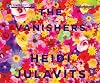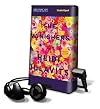
The Vanishers
by Heidi Julavits
On This Page
Description
A power struggle between a leading student at an elite institute for psychics and her jealous legendary mentor culminates in the student being forced to relive her mother's suicide during a brutal psychic attack.Tags
Recommendations













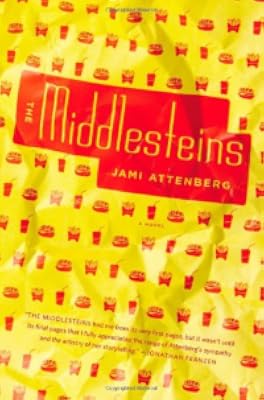
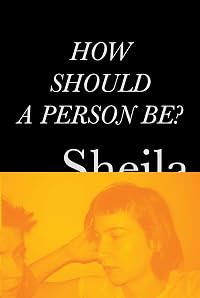
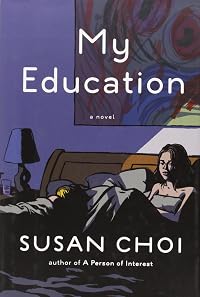
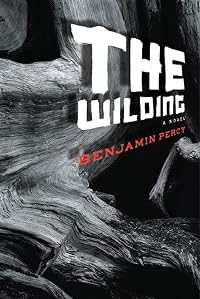
Member Recommendations

Member Reviews
The Vanishers is a fantastic novel, using absurdist humor to explore grief and illness. Julavits has some interesting things to say about illness, our perception of illness, and our perception of our own emotional lives. The tempo of the thriller / mystery novel allows you to get pretty deep into the protagonist's mind, laughing at her hapless adventures (As this unusual customer beelined for my desk, however, she caught her toe on the corner of the jute rug and departed the floor, kraft tray outstretched and then released so that it collided with my chest as I'd been uttering in Arabic to no one, "I'll transfer you to the sales department." p. 50) and then suddenly you realize that you're having a great many insights into the nature of show more emotion. I particularly liked the description of anger as women often conceive of it — something ugly, feral, something that must be defended against, something that originates from the hate and jealously of other people.
There was some material about performance art and mid-century modern furniture; if I happened to share those particular interests, this probably would have been one of my favorite novels of all time. Sadly, I know nothing about either. So we'll call it 4/5 stars for fantastic writing, unerring humor, an intelligent message about the human condition, and if you know what a Barcelona chair is, boy are you in for a treat. show less
There was some material about performance art and mid-century modern furniture; if I happened to share those particular interests, this probably would have been one of my favorite novels of all time. Sadly, I know nothing about either. So we'll call it 4/5 stars for fantastic writing, unerring humor, an intelligent message about the human condition, and if you know what a Barcelona chair is, boy are you in for a treat. show less
Imagine a world where psychic behavior is not only believed but admired and encouraged. There is formal training for those who show the aptitude, and those with the most talent are considered the rock stars of the industry. This is the world in which the curtains first open on to Julia Severn's life in Heidi Julavits' The Vanishers. Readers must quickly adapt to a story where everything is not as it appears on the surface. It can be confusing, difficult, horrifying, and at the same time intriguing.
Julia struggles to find her place in this world of psychics. She is a student of immense talent but afraid to let her talents outshine those of her mentor, Madame Ackermann. Once Madame Ackermann discovers the truth, the psychic attacks begin, show more and they are not pretty. Ms. Julavits spares no description of the physical ailments from which Julia suffers. It can be a bit much for the more squeamish readers.
The physical afflictions are an interesting counterpart to the mental investigations Julia eventually undertakes. Much of the novel occurs in Julia's mind, as she attempts to uncover the truth about her mother and what lead to her suicide as well as the mystery behind Dominique Varga. It is just as convoluted as one would imagine. Ghosts, astral clues, and other mystical mind games become a bit too much at times, as a reader searches for answers among the abstract. The truth, when it is finally uncovered, requires a reader's patience and a better part of one's imagination to understand and accept.
The Vanishers is a book that most readers will not enjoy, and through which even the most advanced readers will struggle to fully comprehend. It is not the cheeriest of novels and definitely redefines the traditional mother/daughter relationship. At the same time, there is something about it that keeps a reader's interest in spite of the need to suspend belief. Ms. Julavits must be commended for taking a chance on her subject matter, even if it will not be appreciated by popular culture. show less
Julia struggles to find her place in this world of psychics. She is a student of immense talent but afraid to let her talents outshine those of her mentor, Madame Ackermann. Once Madame Ackermann discovers the truth, the psychic attacks begin, show more and they are not pretty. Ms. Julavits spares no description of the physical ailments from which Julia suffers. It can be a bit much for the more squeamish readers.
The physical afflictions are an interesting counterpart to the mental investigations Julia eventually undertakes. Much of the novel occurs in Julia's mind, as she attempts to uncover the truth about her mother and what lead to her suicide as well as the mystery behind Dominique Varga. It is just as convoluted as one would imagine. Ghosts, astral clues, and other mystical mind games become a bit too much at times, as a reader searches for answers among the abstract. The truth, when it is finally uncovered, requires a reader's patience and a better part of one's imagination to understand and accept.
The Vanishers is a book that most readers will not enjoy, and through which even the most advanced readers will struggle to fully comprehend. It is not the cheeriest of novels and definitely redefines the traditional mother/daughter relationship. At the same time, there is something about it that keeps a reader's interest in spite of the need to suspend belief. Ms. Julavits must be commended for taking a chance on her subject matter, even if it will not be appreciated by popular culture. show less
"I imagined the dread and hopelessness suffered by the person who'd vanished so many times there was no place else to go. She was known to everyone."--from The Vanishers
I finished The Vanishers last night and it is still all I can think about today. A wild, weird, amazing read with a main character so messed up by life you might find her annoying in less skilled hands than Heidi Julavits', this novel will haunt you long after you have finished the last page.
Don't let the psychic background turn you off if you prefer your novels spiked with lots of reality. The universal themes that run throughout The Vanishers definitely keep the supernatural threads from undermining any credibility on the writer's part or ability to suspend disbelief show more on the reader's end. Instead you (if you have any heart at all) will find yourself feeling for Julia Severn as she battles a psychic onslaught from her mentor and deals with her lifelong sense of missing a mother she never knew and for whom she has no idea how to grieve.
Part mystery, part David Lynchian head trip, all heart, The Vanishers examines how women can wreak havoc on each other emotionally and physically.
I found myself so fascinated (magnetized, really) by this book that I continually jotted down my favorite quotes. Heidi Julavits is a marvelous writer who makes you think...and hate to see the book end. show less
I finished The Vanishers last night and it is still all I can think about today. A wild, weird, amazing read with a main character so messed up by life you might find her annoying in less skilled hands than Heidi Julavits', this novel will haunt you long after you have finished the last page.
Don't let the psychic background turn you off if you prefer your novels spiked with lots of reality. The universal themes that run throughout The Vanishers definitely keep the supernatural threads from undermining any credibility on the writer's part or ability to suspend disbelief show more on the reader's end. Instead you (if you have any heart at all) will find yourself feeling for Julia Severn as she battles a psychic onslaught from her mentor and deals with her lifelong sense of missing a mother she never knew and for whom she has no idea how to grieve.
Part mystery, part David Lynchian head trip, all heart, The Vanishers examines how women can wreak havoc on each other emotionally and physically.
I found myself so fascinated (magnetized, really) by this book that I continually jotted down my favorite quotes. Heidi Julavits is a marvelous writer who makes you think...and hate to see the book end. show less
Psychic powers are normal, so normal you can take college classes on them. You can formally leave your old life behind and start a new one. But be careful there may be people who get plastic surgery to look like you...
Some A24 type cerebral weirdness. That being said, I liked it. It's about family and loss and what exactly the self is, and what can be called art.
I went it fairly blind and there were so many twists and turns I lost track. You've really got to pay attention or you'll have to re-read some sections to keep up. It feels like that's on purpose, it's easy to commiserate with the protagonist when you're just as bewildered as they are.
Some A24 type cerebral weirdness. That being said, I liked it. It's about family and loss and what exactly the self is, and what can be called art.
I went it fairly blind and there were so many twists and turns I lost track. You've really got to pay attention or you'll have to re-read some sections to keep up. It feels like that's on purpose, it's easy to commiserate with the protagonist when you're just as bewildered as they are.
A convoluted supernatural plot can’t compete with out of this world prose
I’m one of those reviewers who tends to start with a plot summary. So, I could tell you that this is the story of twenty-something Julia Severn, an “Initiate of Promise” at the Institute of Integrated Parapsychology. The novel begins by detailing Julia’s complex and troubled relationship with her mentor, Madame Ackerman. Their problems may stem from the mentor’s fear of being supplanted by the protégé, or perhaps they’re due to Ackerman’s resemblance to Julia’s mother who committed suicide when Julia was an infant. For these reasons (and others), things sour, but their separation plagues Julia physically. She leaves school and spends the next show more year seeking a medical explanation for her physical decline. None is forthcoming until an odd girl literally trips into her life and explains that she’s under “psychic attack.” Offers of both help and employment are proffered.
And that—as they say—is just the beginning. The plot of this novel felt like a game of Three Card Monty, with constantly shifting character identities and allegiances. I didn’t read this novel because the description of the plot interested me. Ghosts, psychics, astral projections? Definitely not my cup of tea. However, a book about mother-daughter relationships and other female rivalries? Now you’re talking! And that’s very much what Heidi Julavits delivered. The whole psychic thing was merely the backdrop against which every type of mother-daughter drama imaginable was displayed.
And all this talk of “drama” sounds dramatic, and some of it was. But a lot of it was very, very funny. And even more of it was weird. And some of it was just plain confusing. I stand by my Three Card Monty analogy. But through it all was Heidi Julavits’ sparkling language. So much of language is merely functional. And, sure basic communication is a good goal. But the sentences of this novel were full of surprises and unexpected turns. They communicated, but they also delighted in a way that is truly rare. This is the sort of novel that leaves me wondering, “Why haven’t I read this author before?” I know there’s another book somewhere on the shelf. I will be digging it up, because Ms. Julavits has charmed me utterly with her inventive use of language. Plot, in this case, was almost immaterial. show less
I’m one of those reviewers who tends to start with a plot summary. So, I could tell you that this is the story of twenty-something Julia Severn, an “Initiate of Promise” at the Institute of Integrated Parapsychology. The novel begins by detailing Julia’s complex and troubled relationship with her mentor, Madame Ackerman. Their problems may stem from the mentor’s fear of being supplanted by the protégé, or perhaps they’re due to Ackerman’s resemblance to Julia’s mother who committed suicide when Julia was an infant. For these reasons (and others), things sour, but their separation plagues Julia physically. She leaves school and spends the next show more year seeking a medical explanation for her physical decline. None is forthcoming until an odd girl literally trips into her life and explains that she’s under “psychic attack.” Offers of both help and employment are proffered.
And that—as they say—is just the beginning. The plot of this novel felt like a game of Three Card Monty, with constantly shifting character identities and allegiances. I didn’t read this novel because the description of the plot interested me. Ghosts, psychics, astral projections? Definitely not my cup of tea. However, a book about mother-daughter relationships and other female rivalries? Now you’re talking! And that’s very much what Heidi Julavits delivered. The whole psychic thing was merely the backdrop against which every type of mother-daughter drama imaginable was displayed.
And all this talk of “drama” sounds dramatic, and some of it was. But a lot of it was very, very funny. And even more of it was weird. And some of it was just plain confusing. I stand by my Three Card Monty analogy. But through it all was Heidi Julavits’ sparkling language. So much of language is merely functional. And, sure basic communication is a good goal. But the sentences of this novel were full of surprises and unexpected turns. They communicated, but they also delighted in a way that is truly rare. This is the sort of novel that leaves me wondering, “Why haven’t I read this author before?” I know there’s another book somewhere on the shelf. I will be digging it up, because Ms. Julavits has charmed me utterly with her inventive use of language. Plot, in this case, was almost immaterial. show less
Imagine an emotional story in which a promise never to forgive is a demonstration of love, where a young woman keeps meeting and encountering mysterious older women (who may or may not have her interests at heart), here on Earth and on the astral plane. Imagine an irreverent, acerbic young woman, by turns evasive and brutally honest, with high psychic ability, and her search for her dead mother. You might come close to Heidi Julavits’s The Vanishers.
Young Julia Severn matriculates at The Workshop, a college-level institution for training psychics. She proves to have a little too much ability for the star instructor, who punishes her with a psychic “attack” and sends her away from the school. Julia travels to Paris and Vienna, show more where she is incarcerated, sort of, in a spa for her health. She encounters a series of characters who each want to use Julia and her abilities for their own ends. Her main occupation during this time is to try to ferret out the existence and/or location of an avant-garde feminist film director, who may or may not be alive.
The overarching story does not have a convoluted plot; the energy in the narrative stems from the roller coaster ride that is Julia’s internal life. She sees scenes and encounters people both on the astral plane and in “real life,” and these are described in the same tone and with the same attention to detail, so that it becomes a challenge telling them apart. The principal characters, all women, have ongoing pitched battles, trying to manipulate Julia into doing their bidding – sometimes Julia fights back and sometimes she becomes a dupe. She’s definitely having a struggle learning things at the outset of her career.
I mentioned irreverence and acerbity – this book has both in spades. It’s a delicious, fun read, but a little confusing sometimes. Additionally, characters do little to attract our interest or sympathy. There’s a lot of competition for the main character’s attention and services, and the motivation of some of the backbiting and simple personal toxicity was never clear to me. This is a highly entertaining and inventive read; I do have to say however, that I question whether the conclusion was worth the tortuous path.
http://bassoprofundo1.blogspot.com/2014/05/the-vanishers-by-heidi-julavits.html show less
Young Julia Severn matriculates at The Workshop, a college-level institution for training psychics. She proves to have a little too much ability for the star instructor, who punishes her with a psychic “attack” and sends her away from the school. Julia travels to Paris and Vienna, show more where she is incarcerated, sort of, in a spa for her health. She encounters a series of characters who each want to use Julia and her abilities for their own ends. Her main occupation during this time is to try to ferret out the existence and/or location of an avant-garde feminist film director, who may or may not be alive.
The overarching story does not have a convoluted plot; the energy in the narrative stems from the roller coaster ride that is Julia’s internal life. She sees scenes and encounters people both on the astral plane and in “real life,” and these are described in the same tone and with the same attention to detail, so that it becomes a challenge telling them apart. The principal characters, all women, have ongoing pitched battles, trying to manipulate Julia into doing their bidding – sometimes Julia fights back and sometimes she becomes a dupe. She’s definitely having a struggle learning things at the outset of her career.
I mentioned irreverence and acerbity – this book has both in spades. It’s a delicious, fun read, but a little confusing sometimes. Additionally, characters do little to attract our interest or sympathy. There’s a lot of competition for the main character’s attention and services, and the motivation of some of the backbiting and simple personal toxicity was never clear to me. This is a highly entertaining and inventive read; I do have to say however, that I question whether the conclusion was worth the tortuous path.
http://bassoprofundo1.blogspot.com/2014/05/the-vanishers-by-heidi-julavits.html show less
The Vanishers starts off promisingly, with an intriguing plot, a wryly self-aware narrative voice, and evocative descriptions of travels in the ether of astral projection. Unfortunately, it ultimately vanishes down its own metaphysical rabbit hole, as coincidences pile up and characters overlap to such a degree that we can no longer recognize or connect to them. The fact that this may be the point is either a brilliant meditation on the nature of grief and longing or a cop-out that illuminates the shimmery superficial pleasures of the novel while spotlighting its gaping holes in logic. The pace also feels oddly amiss, as an endless series of encounters lead to epiphanies that only lead to further encounters and epiphanies. I always show more cringe when authors thank their editors in the acknowledgments if the editing has played an important role in perpetuating missteps, as is the case here. A more zealous editor could perhaps have wrested a more streamlined narrative from the repetition and evened out the pacing. Yet Julavits undoubtedly offers stunning insights and apt metaphors, and her passion for her heroine's journey almost atones for the novel's problematic trajectory. "...this is what being alive means, this is what being a person means, to be sickened by an illness known as you." show less
Members
- Recently Added By
Lists

IMPAC Dublin Literary Award 2014 longlist
150 works; 3 members
Author Information

109+ Works 2,908 Members
Heidi Julavits is a founding editor of The Believer magazine. Her books include The Uses of Enchantment, The Effect of Living Backwards, The Mineral Palace, and The Folded Clock: A Diary. She received the PEN New England Award for Literary Excellence in Fiction. (Bowker Author Biography)
Some Editions
Awards and Honors
Awards
Distinctions
Common Knowledge
- Original publication date
- 2012-03-13
- People/Characters
- Julia Severn; Madame Ackermann
- Important places
- Manhattan, New York, New York, USA; New York, New York, USA
- Original language
- English
Classifications
Statistics
- Members
- 393
- Popularity
- 79,563
- Reviews
- 27
- Rating
- (3.30)
- Languages
- English, Italian
- Media
- Paper, Audiobook, Ebook
- ISBNs
- 9
- ASINs
- 3