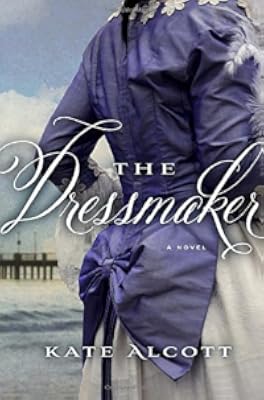
The Dressmaker
by Kate Alcott
On This Page
Description
Tess, an aspiring seamstress, thinks she’s had an incredibly lucky break when she is hired by famous designer Lady Lucile Duff Gordon to be her personal maid on theTitanic. Once on board, Tess catches the eye of two men—a kind sailor and an enigmatic Chicago businessman—who offer differing views of what lies ahead for her in America. But on the fourth night, disaster strikes, and amidst the chaos, Tess is one of the last people allowed on a lifeboat.The survivors are rescued show more and taken to New York, but when rumors begin to circulate about the choices they made, Tess is forced to confront a serious question. Did Lady Duff Gordon save herself at the expense of others? Torn between loyalty to Lucile and her growing suspicion that the media’s charges might be true, Tess must decide whether to stay quiet and keep her fiery mentor’s good will or face what might be true and forever change her future...
. show less
Tags
Recommendations













Member Recommendations

Member Reviews
The Dressmaker is about the hearings in New York and Washington D.C. after the sinking of the Titanic. Lady Lucile and Lord Cosmo Duff Gordon (along with many of the other rich survivors of the disaster) are under fire for rumors of bribery and cowardice while they were floating in their lifeboat as the Titanic sank. Kate Alcott uses real transcripts from the hearings to give us a picture of just how stupid, unprepared, and totally out of touch with the world around them the sailors, passengers, and the White Star Line company were at the time. Of course, there were a few brave people willing to tell the public about what really happened in the lifeboats and on the ship as it was sinking (such as the sailor Jim Bonney and, of course, show more the Unsinkable Molly Brown), but for the most part, the wealthy and important people wanted nothing to do with the disaster after it happened.
None more so than Lucile, whose only concern was her latest spring fashion show. It is infuriating to read about her total lack of concern for others, her stubbornness, and selfishness, but as the above quote demonstrates, she was a product of her time, station, and the disaster. Which, of course, doesn't excuse her abhorrent behavior. But I did find myself feeling sorry for her at times.
I suppose I should mention Tess, who "fortunately" was able to get passage on the Titanic last-minute as Lucile's maid. It is Tess's deepest ambition to design and make clothes, so this opportunity was a boon for her. Once docked in New York, Tess feels a certain loyalty to stick by Lucile's side, even though she has conflicting feelings for the sailor who publicly denounced what happened in Lady Lucile's boat. There is another love interest for Tess, but I had no interest in this "love triangle" situation so I won't go into that.
Most of us know the story of the Titanic, whether through television specials, books, or, of course, the 1997 film. But not everyone knows what happened after the disaster, when the survivors stepped back onto dry land and tried to make sense of the situation, or forget about it and attempted to move on with their lives. Kate Alcott paints an interesting picture of the hearings, and made me anxious to seek out other books on the subject. Lady Lucile, Cosmo, Molly Brown, and all of the other real-life people who were a part of this are fascinating in their own way, and Alcott's background as a reporter really shows through (the female reporter Pinky Wade, who is delightful, seems to be a reflection of Alcott).
It makes me think about what I would have done had I been on the ship. Would I have been brave? Selfish? Cowardly? It's hard to say. I would like to think that I would have been brave and calm, but surrounded by panicked people, crying children, and men chivalrously stepping aside to die while their wives and children were being lowered into lifeboats, I don't think I would know what to do.
The only gripe I had about this book was, as I mentioned above, the romance aspect, and Tess's character in general, which is why I lowered by rating from 4.5 to 3.5 stars. show less
None more so than Lucile, whose only concern was her latest spring fashion show. It is infuriating to read about her total lack of concern for others, her stubbornness, and selfishness, but as the above quote demonstrates, she was a product of her time, station, and the disaster. Which, of course, doesn't excuse her abhorrent behavior. But I did find myself feeling sorry for her at times.
I suppose I should mention Tess, who "fortunately" was able to get passage on the Titanic last-minute as Lucile's maid. It is Tess's deepest ambition to design and make clothes, so this opportunity was a boon for her. Once docked in New York, Tess feels a certain loyalty to stick by Lucile's side, even though she has conflicting feelings for the sailor who publicly denounced what happened in Lady Lucile's boat. There is another love interest for Tess, but I had no interest in this "love triangle" situation so I won't go into that.
Most of us know the story of the Titanic, whether through television specials, books, or, of course, the 1997 film. But not everyone knows what happened after the disaster, when the survivors stepped back onto dry land and tried to make sense of the situation, or forget about it and attempted to move on with their lives. Kate Alcott paints an interesting picture of the hearings, and made me anxious to seek out other books on the subject. Lady Lucile, Cosmo, Molly Brown, and all of the other real-life people who were a part of this are fascinating in their own way, and Alcott's background as a reporter really shows through (the female reporter Pinky Wade, who is delightful, seems to be a reflection of Alcott).
It makes me think about what I would have done had I been on the ship. Would I have been brave? Selfish? Cowardly? It's hard to say. I would like to think that I would have been brave and calm, but surrounded by panicked people, crying children, and men chivalrously stepping aside to die while their wives and children were being lowered into lifeboats, I don't think I would know what to do.
The only gripe I had about this book was, as I mentioned above, the romance aspect, and Tess's character in general, which is why I lowered by rating from 4.5 to 3.5 stars. show less
Despite knowing a bit about the Titanic (beyond what they showed in the movie), I never gave much, if any, thought to what occurred after the ship sank and the survivors were rescued by the Carpathia. And this is the first time I'd ever been exposed to anything that even talked about it. Of course, I should have realized that there would be hearings. Of course there would be survivors guilt, and second-guessing and triple-guessing of what had happened that night. The sinking takes place very early on the book, and the main character, Tess, is fortunate enough to get a seat on a lifeboat - the same one as Margaret Brown (who is compelling enough that she seems to feature prominently in almost every story about the Titanic). Her show more employers, the famous Lord and Lady Duff Gordons also survive, having found seats in the infamous Lifeboat One, the center of scandal and rumor for 1) being the most empty lifeboat, and 2) Lord Duff Gordon offering the sailors in the boat money.
The Titanic sinking took place during a time when society was changing, which Alcott shows well. The Duff Gordons represent the old ways, where wealth and privilege commanded almost serf-life fealty. But Tess lands in America, where there is no nobility, and she has options available to her she didn't have in England. She befriends a woman reporter, witnesses the suffragette movement, and realizes that she has choices. The underlying theme that threads throughout the book was one of equality, in which stripped of the outer marking of rank, everyone was the same and that there are good, bad, and everything in between in every class, every rank, and gender.
The least compelling part of the story is the love triangle among Tess, Jim the sailor, and Jack the American millionaire. But at the same time, it helped illustrate the different world Tess finds herself in after the Titanic. Ultimately, it is not about wealth and power, but about forging ahead and making a life for herself in which she is her own person.
Review copy courtesy of the publisher via Goodread's First Reads program. show less
The Titanic sinking took place during a time when society was changing, which Alcott shows well. The Duff Gordons represent the old ways, where wealth and privilege commanded almost serf-life fealty. But Tess lands in America, where there is no nobility, and she has options available to her she didn't have in England. She befriends a woman reporter, witnesses the suffragette movement, and realizes that she has choices. The underlying theme that threads throughout the book was one of equality, in which stripped of the outer marking of rank, everyone was the same and that there are good, bad, and everything in between in every class, every rank, and gender.
The least compelling part of the story is the love triangle among Tess, Jim the sailor, and Jack the American millionaire. But at the same time, it helped illustrate the different world Tess finds herself in after the Titanic. Ultimately, it is not about wealth and power, but about forging ahead and making a life for herself in which she is her own person.
Review copy courtesy of the publisher via Goodread's First Reads program. show less
I'll be honest, I'm not the biggest historical fiction fan. I often get caught up in wondering what is true and what has been dramatized for the book, especially with novels about big important events like the Titanic. I do think this book does a good job of examining the "why" only one boat went back to look for survivors, and it captures the complex feelings surrounding such a tragedy incredibly well.
Tess, chafing in the servitude into which she was sent at a tender age, aspired to improve her station by going to the United States. Talented with thread and needle, surely she could find employment there. Upon learning that a ship was soon to sail for New York, she quit her job and, characteristically displaying more nerve than sense, went down to the dock expecting to obtain passage by securing work on the Titanic. The shipping company, however, had the foresight, if not to provide sufficient lifeboats, at least to engage its workers somewhat in advance of setting sail, and Tess's hopes were dashed. Coincidentally, a wealthy passenger, renowned fashion designer Lady Lucile Duff Gordon, found herself abruptly without a maid and show more reluctantly hired the frantic Tess.
On board the ship, spunky Tess soon discovered the comforts of the privileged class and the beginnings of romance. She was among those who survived when the Titanic sank, and her story linked those of other survivors, both the fact-based and the fictional, as she moved among the Senate hearings on the catastrophe, the mercurial Lady Duff Gordon's workrooms, two suitors, and a burgeoning friendship with Pinky Wade, one of the reporters covering the disaster and an active suffragist.
The Dressmaker vividly portrays the Titanic sinking and subsequent hearings, effectively entwining the several threads of the narrative. As a leading character, however, Tess seems overshadowed by the unsympathetic but more fully developed Lady Duff Gordon and, to a lesser extent, the crusading Pinky Wade. There is excessive reliance on coincidence and characters turning up unexpectedly. These quibbles notwithstanding, The Dressmaker engages the reader's interest immediately as the ship goes down and holds that interest as it imagines how the tragedy affected the lives of those who experienced it.
Obviously, The Dressmaker is based on extensive research. An "Author's Note" at the end offers information as to which of the survivors were derived from actual persons, but this reader would have welcomed more extensive information (for example, that Lady Duff Gordon really was the sister of racy novelist Elinor Glyn).
Recommended. show less
On board the ship, spunky Tess soon discovered the comforts of the privileged class and the beginnings of romance. She was among those who survived when the Titanic sank, and her story linked those of other survivors, both the fact-based and the fictional, as she moved among the Senate hearings on the catastrophe, the mercurial Lady Duff Gordon's workrooms, two suitors, and a burgeoning friendship with Pinky Wade, one of the reporters covering the disaster and an active suffragist.
The Dressmaker vividly portrays the Titanic sinking and subsequent hearings, effectively entwining the several threads of the narrative. As a leading character, however, Tess seems overshadowed by the unsympathetic but more fully developed Lady Duff Gordon and, to a lesser extent, the crusading Pinky Wade. There is excessive reliance on coincidence and characters turning up unexpectedly. These quibbles notwithstanding, The Dressmaker engages the reader's interest immediately as the ship goes down and holds that interest as it imagines how the tragedy affected the lives of those who experienced it.
Obviously, The Dressmaker is based on extensive research. An "Author's Note" at the end offers information as to which of the survivors were derived from actual persons, but this reader would have welcomed more extensive information (for example, that Lady Duff Gordon really was the sister of racy novelist Elinor Glyn).
Recommended. show less
 This review was written for LibraryThing Early Reviewers.
I really wanted to like this book because the concept was so interesting, but the writing just wasn't there to support it. The story centers on Tess Collins, a young service woman from England desperate to start a new life as a dressmaker in America. Her ticket comes in the form of Lucile Duff Gordon, the famous clothing designer who hires her on as a maid and books her passage with her on the Titanic. Although they both survive the sinking, the real challenges begin when they land in America.
Tess, along with her two love interests and best friend, are rather flat, with unclear motivations that make it hard to care about their choices. Tess keeps talking about how hard she'll work to make her dreams come true, but seems unwilling to put show more in even a day's work without complaining about how much she hates being ordered around. Sometimes she comes off as a milksop, others as priggish. This could have been a much better book if the characters had clear and consistent goals and motivations. As it is, everything is a bit muddled and stretched to fit the historical framework, which while interesting, isn't quite enough. show less
Tess, along with her two love interests and best friend, are rather flat, with unclear motivations that make it hard to care about their choices. Tess keeps talking about how hard she'll work to make her dreams come true, but seems unwilling to put show more in even a day's work without complaining about how much she hates being ordered around. Sometimes she comes off as a milksop, others as priggish. This could have been a much better book if the characters had clear and consistent goals and motivations. As it is, everything is a bit muddled and stretched to fit the historical framework, which while interesting, isn't quite enough. show less
The Dressmaker is the story of the aftermath of the Titanic's sinking in 1912, told from the perspectives of several different characters: Tess, the designer's apprentice; Pinky, the female newspaper reporter covering the story; Jim, the noble sailor; and (to a lesser extent) the Duff-Gordons, Cosmo, Lucile, and her sister Elinor. We meet many famous personages from that tragedy (the unsinkable Molly Brown makes an appearance, as well as the Darlings and the Astors, among others). It's a story about the choices we make, and how we have to live with those choices.
There are some mild *spoilers* in this review, but nothing you won't figure out within the first few chapters anyway.
As strange as this may seem, considering the novel is the show more story of one of the biggest tragedies of the 20th century, this is a tale of happy coincidences. Tess, an aspiring dressmaker determined to escape a life of servile drudgery, just happens to meet one of the world's top designers while looking for work on the Titanic (a last minute decision on her part). Lucile takes her on with the promise of making her an apprentice - what good luck! Jim happens to be a good woodcarver - well, hey Jim, why don't I set you up with a great job in New York - you'll be rich! says Molly Brown. Part of the novel is about the American Dream and the fantasy of instant upward mobility in America, but instead of debunking that myth, the author perpetuates it. Good things easily fall into the laps of her lower class characters. America seems like a magical land where anything can happen if you just walk out your door in the morning. The author does not acknowledge the large role nepotism and privilege play in that drama.
But the lack of pragmatic historicism could be overlooked if the book were actually original and entertaining. Alcott talks a big game of suffrage and women's rights through the Pinky character, but her main character Tess is no revolutionary. Despite her desire to be free of the trap of marriage, to have her own life and her own space, as soon as she gets shipboard Tess falls for two men, the choice between whom she will agonize over for the remainder of the novel. And despite Tess' being a rather bland woman, these fellows fall hard and fast immediately. I personally didn't see the attraction. Jim is equally bland, but since this is a novel about women, for women, I can let that slide.
The author is more successful in her portrayal of Lucile Duff Gordon and Pinky Wade. Both initially seem invulnerable and hard, out to succeed by any means necessary, sacrificing people along the way, but quickly they are revealed to have more nuanced characters. Pinky is working for sub-par wages despite being the best reporter on staff at the New York Times (women couldn't get raises in the newspaper industry in those days). She has a sick father and no friends. She wants to earn her way, travel the world, and be renowned for her work, but circumstances keep getting in her way). Lucile pulled herself up from nothing, eventually marrying into the British aristocracy and using her husband's name and money to become an international fashion success. She's cold, she plays games, she's catty and cares little for others. Her selfishness and self-preservation result in the sacrifice of many Titanic passengers when she takes a lifeboat seating 60 with only 12 people in it, refusing to go back for others. She shoots her mouth off and she is the stubborn author of her own downfall. But she seems human...which is more than can be said for the half-sketched Tess.
Nevertheless, I was prepared to like this novel. Sure, there's no dramatic impetus, no narrative drive, but these things can be overlooked if the story is pleasant enough. But about halfway through the novel I realized that I was reading The Devil Wears Prada: Titanic Edition. Lucile is the mercurial, manipulative, game playing, office dominatrix bosslady, Tess is her bewildered and beleaguered assistant (but she'll be made over and groomed to succeed the dragon lady!), and Lucile even has a male assistant doing her bidding and showing Tess the ropes. The fashion show is ruined? Tess will fix it, showing her couture character and pulling a miracle out of a hat (or wedding dress)! The post-show interaction between Tess and Lucile has been lifted directly from the Paris limo scene in the film version of Prada (the novel version was quite different). The dragon lady has feelings! Tess is like a surrogate daughter! Stick with me, girl, and I'll make you famous in my world, etc. But like Prada's heroine, Tess has an infantile concept of the blacks and whites of right and wrong, and so she cannot wade into moral ambiguity with Lucile. Instead, she'll give up a sure future of wealth in her dream job to hook up with a fella.
But at least we have Pinky. If you put her and Tess together you might have a whole, modern woman. But that's not really what the author is going for: ladies, you can ride the white horse in the suffrage parade, but you can't really have it all. show less
There are some mild *spoilers* in this review, but nothing you won't figure out within the first few chapters anyway.
As strange as this may seem, considering the novel is the show more story of one of the biggest tragedies of the 20th century, this is a tale of happy coincidences. Tess, an aspiring dressmaker determined to escape a life of servile drudgery, just happens to meet one of the world's top designers while looking for work on the Titanic (a last minute decision on her part). Lucile takes her on with the promise of making her an apprentice - what good luck! Jim happens to be a good woodcarver - well, hey Jim, why don't I set you up with a great job in New York - you'll be rich! says Molly Brown. Part of the novel is about the American Dream and the fantasy of instant upward mobility in America, but instead of debunking that myth, the author perpetuates it. Good things easily fall into the laps of her lower class characters. America seems like a magical land where anything can happen if you just walk out your door in the morning. The author does not acknowledge the large role nepotism and privilege play in that drama.
But the lack of pragmatic historicism could be overlooked if the book were actually original and entertaining. Alcott talks a big game of suffrage and women's rights through the Pinky character, but her main character Tess is no revolutionary. Despite her desire to be free of the trap of marriage, to have her own life and her own space, as soon as she gets shipboard Tess falls for two men, the choice between whom she will agonize over for the remainder of the novel. And despite Tess' being a rather bland woman, these fellows fall hard and fast immediately. I personally didn't see the attraction. Jim is equally bland, but since this is a novel about women, for women, I can let that slide.
The author is more successful in her portrayal of Lucile Duff Gordon and Pinky Wade. Both initially seem invulnerable and hard, out to succeed by any means necessary, sacrificing people along the way, but quickly they are revealed to have more nuanced characters. Pinky is working for sub-par wages despite being the best reporter on staff at the New York Times (women couldn't get raises in the newspaper industry in those days). She has a sick father and no friends. She wants to earn her way, travel the world, and be renowned for her work, but circumstances keep getting in her way). Lucile pulled herself up from nothing, eventually marrying into the British aristocracy and using her husband's name and money to become an international fashion success. She's cold, she plays games, she's catty and cares little for others. Her selfishness and self-preservation result in the sacrifice of many Titanic passengers when she takes a lifeboat seating 60 with only 12 people in it, refusing to go back for others. She shoots her mouth off and she is the stubborn author of her own downfall. But she seems human...which is more than can be said for the half-sketched Tess.
Nevertheless, I was prepared to like this novel. Sure, there's no dramatic impetus, no narrative drive, but these things can be overlooked if the story is pleasant enough. But about halfway through the novel I realized that I was reading The Devil Wears Prada: Titanic Edition. Lucile is the mercurial, manipulative, game playing, office dominatrix bosslady, Tess is her bewildered and beleaguered assistant (but she'll be made over and groomed to succeed the dragon lady!), and Lucile even has a male assistant doing her bidding and showing Tess the ropes. The fashion show is ruined? Tess will fix it, showing her couture character and pulling a miracle out of a hat (or wedding dress)! The post-show interaction between Tess and Lucile has been lifted directly from the Paris limo scene in the film version of Prada (the novel version was quite different). The dragon lady has feelings! Tess is like a surrogate daughter! Stick with me, girl, and I'll make you famous in my world, etc. But like Prada's heroine, Tess has an infantile concept of the blacks and whites of right and wrong, and so she cannot wade into moral ambiguity with Lucile. Instead, she'll give up a sure future of wealth in her dream job to hook up with a fella.
But at least we have Pinky. If you put her and Tess together you might have a whole, modern woman. But that's not really what the author is going for: ladies, you can ride the white horse in the suffrage parade, but you can't really have it all. show less
I can't help it. I just keep thinking "Where are Jack & Rose?" Tess ends up in Molly Brown's lifeboat...of course. Am I the only one that feels like her lifeboat should be voted "most referenced Titanic lifeboat" in historical Titanic fiction? Tess even pulls 2 lifeless bodies from the sea into the infamous "never full" lifeboat. I have a feeling I would be enjoying this story a lot more if she had managed to rescue Jack & Rose from the frigid cold sea in Molly Brown's lifeboat. I would finally get my happy Titanic ending. I'm just not really enjoying this one. It's a selection for one of my book clubs, so I'll probably give it another 50 pages or so before I give up on it. Maybe I loved the movie "Titanic" so much that I'm doomed to show more never really enjoy another Titanic based story. Eh, my heart will go on. ;) show less
Members
- Recently Added By
Lists

Best Historical Fiction
620 works; 261 members

water on the brain: maritime fiction
74 works; 18 members

Books Read in 2017
4,249 works; 129 members

Books Read in 2020
4,379 works; 124 members
Talk Discussions
Past Discussions
The Dressmaker by, Kate Alcott~Nov.2011 batch in Reviews of Early Reviewers Books (July 2012)
Author Information

10 Works 2,638 Members
Common Knowledge
- Canonical title
- The Dressmaker
- Original publication date
- 2012-02-21
- People/Characters
- Lucy Christiana, Lady Duff-Gordon (Lucile); Tess Collins; Margaret "Molly" Brown; Jim Bonney; Sir Cosmo Duff Gordon; Sarah "Pinky" Wade (show all 12); Jack Bremerton; William Alden Smith; Mr. Tom Sullivan; Mrs. Dotson; Carr Van Anda; Jean Darling
- Important places
- RMS Titanic; France; New York, USA; Washington, D.C., USA; England, UK; California, USA (show all 8); Atlantic Ocean; RMS Carpathia
- Important events
- Sinking of the Titanic (1912)
- Dedication
- To Frank, always.
- First words
- Tess pulled at the corners of the sheets she had taken straight from the line and tried to tuck them tight under the mattress, stepping back to check her work.
- Quotations
- …mostly poor people died, and mostly rich people were saved; that was the fact of it.
...that accepting the reality of my decision is what is important. I can’t forgive my actions, or the actions of another. The rashness of a moment changed my life ... - Last words
- (Click to show. Warning: May contain spoilers.)“Yes,” she said.
- Blurbers
- de Rosnay, Tatiana; Wolff, Isabel; Jio, Sarah; Blum, Jenna
- Original language
- English
Classifications
Statistics
- Members
- 1,278
- Popularity
- 19,144
- Reviews
- 95
- Rating
- (3.40)
- Languages
- 6 — English, French, German, Italian, Portuguese, Spanish
- Media
- Paper, Audiobook, Ebook
- ISBNs
- 27
- ASINs
- 9
