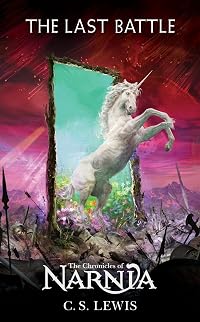
The Last Battle
by C. S. Lewis
The Chronicles of Narnia-Chronological (7), The Chronicles of Narnia: Publication order (7)
On This Page
Description
When evil comes to Narnia, Jill and Eustace help fight the great last battle and Aslan leads his people to a glorious new paradise.Tags
Recommendations
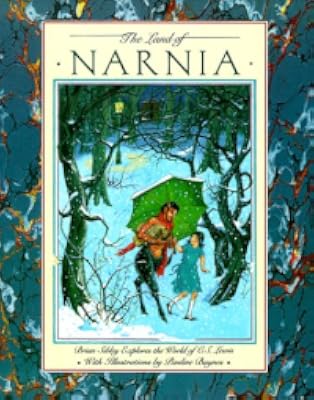
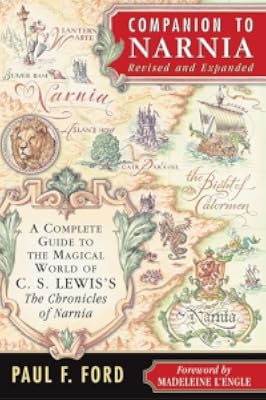
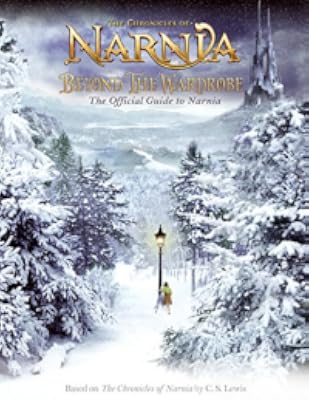
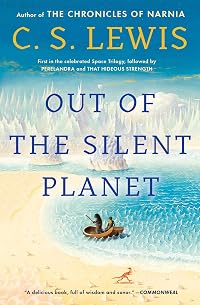
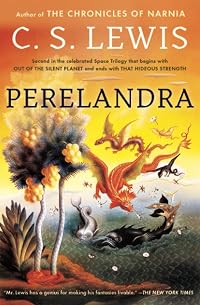
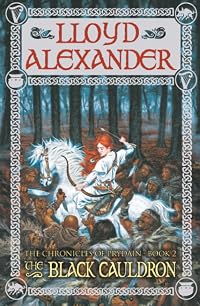
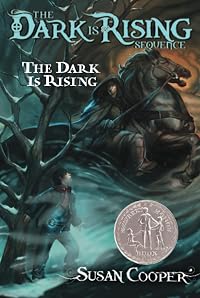
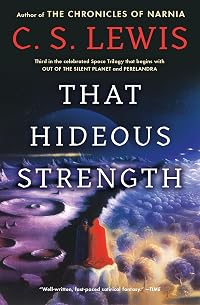
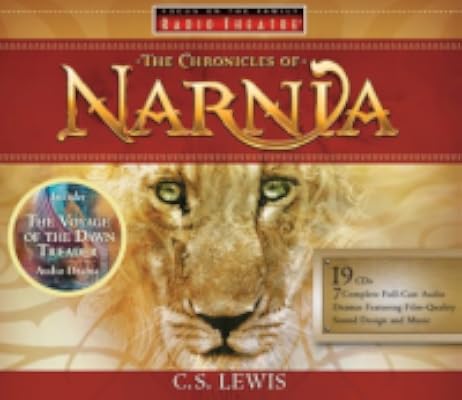
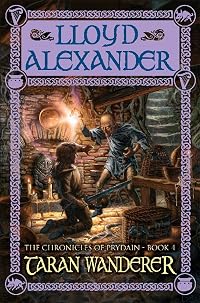
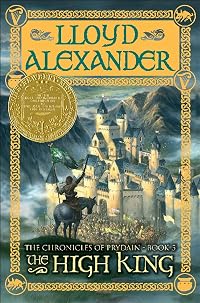
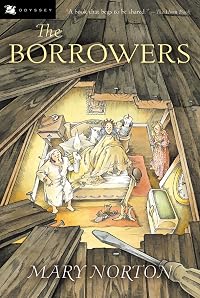
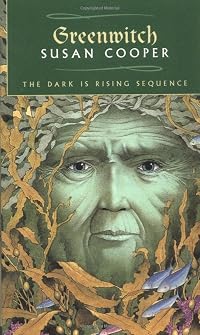
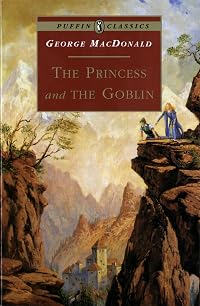



Member Recommendations
Member Reviews
I remembered nothing about this book from my previous reading.
This book is sad. You know what's going to happen because Lewis tells you in the first pages that it's the end of Narnia, but it's still sad. I know they technically live happily ever after, but it's heartbreaking watching Tirian and the others fight so hard and know they will lose. Also, poor Susan. She loses her family in one fell swoop and will never get to see them again, even after death, since she isn't a friend of Narnia.
For the Chronicles of Narnia as a whole, it's quite an enjoyable series. However, there are some major sexist and racist themes, some of which came from the time period in which it was written, but still are not things to be proud of. It irked me show more that the women were frequently kept from battles and were archers if they were included. I hated that the Calormenes were portrayed as evil, hedonistic black/brown people, with only 2 notable exceptions.
Final series favorites: Voyage of the Dawn Treader; The Magician's Nephew; The Lion, The Witch, and the Wardrobe; The Horse and His Boy; Prince Caspian; The Last Battle; The Silver Chair. show less
This book is sad. You know what's going to happen because Lewis tells you in the first pages that it's the end of Narnia, but it's still sad. I know they technically live happily ever after, but it's heartbreaking watching Tirian and the others fight so hard and know they will lose. Also, poor Susan. She loses her family in one fell swoop and will never get to see them again, even after death, since she isn't a friend of Narnia.
For the Chronicles of Narnia as a whole, it's quite an enjoyable series. However, there are some major sexist and racist themes, some of which came from the time period in which it was written, but still are not things to be proud of. It irked me show more that the women were frequently kept from battles and were archers if they were included. I hated that the Calormenes were portrayed as evil, hedonistic black/brown people, with only 2 notable exceptions.
Final series favorites: Voyage of the Dawn Treader; The Magician's Nephew; The Lion, The Witch, and the Wardrobe; The Horse and His Boy; Prince Caspian; The Last Battle; The Silver Chair. show less
A crafty Ape named Shift finds a lion skin and, using it to cover a donkey named Puzzle, tricks him into masquerading as Aslan and the Talking Beasts of Narnia into following his whims, even going up against King Tirian.
I'll be honest here... this book is probably one of the ones that had the most impact on my decision to be an English major. When I was 8-9 years old, I most often named it my favorite book. Okay so the plot is razor thin and choppy, and reading it as an adult I was a little disappointed at times that things didn't quite match my recollection. But as a kid...oh, as a kid I was so proud to have figured out some of the parallels between this book and prophecy in the Bible. Reading "between the lines" was new to me, and the show more ability to match one thing with another and see Lewis's interpretations of end times and heaven and the rest just fascinated me. I still love the last few chapters and the very last line especially gets me every time. show less
I'll be honest here... this book is probably one of the ones that had the most impact on my decision to be an English major. When I was 8-9 years old, I most often named it my favorite book. Okay so the plot is razor thin and choppy, and reading it as an adult I was a little disappointed at times that things didn't quite match my recollection. But as a kid...oh, as a kid I was so proud to have figured out some of the parallels between this book and prophecy in the Bible. Reading "between the lines" was new to me, and the show more ability to match one thing with another and see Lewis's interpretations of end times and heaven and the rest just fascinated me. I still love the last few chapters and the very last line especially gets me every time. show less
This book makes me uneasy, quite frankly.
Look, I'll give Lewis props for a rather unexpected ending to the series. It's bold, mature and the exact opposite (in some ways) of the "everyone lives" philosophy of Russell T Davies or JK Rowling. Completely destabilising Narnia is something that feels visceral to anyone who fell in love with the books as a child. And I did enjoy, somewhat, the comic allegory of the faux Aslan.
But... pardon the pun, Jesus Christ this is skeevy. For the most part, the series as Christian allegory could be wilfully ignored if you wanted to just enjoy the texture of the books and their creation of a world. Not so much here, quite frankly. Even aside from Lewis' infamous "screw you" to Susan for, you know, being show more interested in sex and make-up, the book is rather blatant in what it wants to push on to children.
As I mentioned in my "Silver Chair" review, I'm not inherently against this. After all, it worked for such luminaries as Dante and Evelyn Waugh. But there's a clear difference here, I feel, and - while I can still appreciate the allegory even from my anti-religious bias - this simply doesn't feel like a fitting end to the Narnia series. Instead, it feels like an overly aggressive Sunday School teacher who's tired of just sitting around and telling kind stories. I completely understand Lewis' passion, from his point of view, to try and show the true terror of losing his world to a more secular one. It's just a pity that rather than simply writing essays about the perceived problem, he had to incorporate it so thoroughly into the final book of a much beloved children's series.
In spite of my beliefs, and the fact that Philip Pullman and his ilk have eradicated our generation's need for Narnia, I still treasure these books from my childhood, and always will. It's just a pity, that's all it is. show less
Look, I'll give Lewis props for a rather unexpected ending to the series. It's bold, mature and the exact opposite (in some ways) of the "everyone lives" philosophy of Russell T Davies or JK Rowling. Completely destabilising Narnia is something that feels visceral to anyone who fell in love with the books as a child. And I did enjoy, somewhat, the comic allegory of the faux Aslan.
But... pardon the pun, Jesus Christ this is skeevy. For the most part, the series as Christian allegory could be wilfully ignored if you wanted to just enjoy the texture of the books and their creation of a world. Not so much here, quite frankly. Even aside from Lewis' infamous "screw you" to Susan for, you know, being show more interested in sex and make-up, the book is rather blatant in what it wants to push on to children.
As I mentioned in my "Silver Chair" review, I'm not inherently against this. After all, it worked for such luminaries as Dante and Evelyn Waugh. But there's a clear difference here, I feel, and - while I can still appreciate the allegory even from my anti-religious bias - this simply doesn't feel like a fitting end to the Narnia series. Instead, it feels like an overly aggressive Sunday School teacher who's tired of just sitting around and telling kind stories. I completely understand Lewis' passion, from his point of view, to try and show the true terror of losing his world to a more secular one. It's just a pity that rather than simply writing essays about the perceived problem, he had to incorporate it so thoroughly into the final book of a much beloved children's series.
In spite of my beliefs, and the fact that Philip Pullman and his ilk have eradicated our generation's need for Narnia, I still treasure these books from my childhood, and always will. It's just a pity, that's all it is. show less
This isn't quite as fun as the others, but it's still a cool way to close out the series. I read the series in publication order this time, and it was neat to see the beginning and end of Narnia back to back. As always I loved the Christian allegory, but parts of the book really have not aged well. And I hate that stupid ape.
And then there's the Susan thing. I like to think that she makes it to Super Narnia eventually, but it sucks that she lost her entire family in one day. Yes, I know, she no longer believes in Narnia and her family all thinks she's shallow, but her punishment is still ridiculously harsh. It just bugs me that the series ends with the idea that there's no hope for Susan—and no one seems to care, or even remember that show more she exists. Grrr. I still believe in you, Susan. show less
And then there's the Susan thing. I like to think that she makes it to Super Narnia eventually, but it sucks that she lost her entire family in one day. Yes, I know, she no longer believes in Narnia and her family all thinks she's shallow, but her punishment is still ridiculously harsh. It just bugs me that the series ends with the idea that there's no hope for Susan—and no one seems to care, or even remember that show more she exists. Grrr. I still believe in you, Susan. show less
I really enjoyed "The Last Battle." Then again, I'm also one for allegory. This final book in the Chronicles of Narnia is the most clearly allegorical of the lot—even including "The Lion, the Witch, and the Wardrobe." This is the primary reason why I liked it so much.Like the Talking Beasts of Narnia, so many people are deceived and convinced that our God is an unkind, impatient, and vindictive God.To think so of our "Aslan" causes many horrible things (of which, I'll give three):1) People learn to feel genuinely frightened by Him. And when that happens, they can be easily manipulated. Fear is by far the easiest path for coercion to take. In "The Last Battle" the ape, Shift, is able to convince people that he speaks for Aslan, and show more with this power, he is able to redefine the way they conceive of him. At this point, he manipulates their new fears and is able to make them do his will under the guise of Aslan's will. Fear gives undeserved power to those who have the ability to induce it and it destroys the opportunity for relationship. It stratifies equal people into unnatural hierarchal structures.2) When someone comes along and convinces people that their God is not the cold, mean God they thought him to be (as Tirian did for the Dwarfs), some people _do_ rejoice when it dawns on them that He really _is_ as kind and loving as they hoped he was. But, some people jump to the conclusion that there is no God at all. They hear the proof against the idea that "Aslan" is bad, and rather than decide Aslan _must_ therefore be good (which is the only natural conclusion, they exceed the evidence, deciding instead that Aslan must not exist at all—which is almost as horrible. So, in the end, the lie can destroy not just one's concept of who God is, but one's acceptance of his existence as fact.3) When people are frightened by something, the usual response is to put as much distance between them and it as is possible. They run, they hide, or they guard themselves. They seek a shield or a wall to keep it from touching them. They seek a buffer to lessen the power of its terror on them. They seek a mediator to deal with it so they won't have to. It is simply too horrible a thought for them to interact directly with it.Read it in the allegory in chapter 10:t just as you please. Who'd like to go in first? Don't blame me if he swallows you whole or blasts you into a cinder with the mere terror of his eyes. That's your affair. Now then! Who's first?"...br/ But the Beasts all stood looking at one another and began backing away from the Stable. Very few tails were wagging now. The Ape waddled to and fro jeering at them. "Ho-ho-ho!" he chuckled. "I thought you were all so eager...?"br/ ...br/ "Mercy! Mercy!" wailed the Beasts. "Spare us, Lord Shift, stand between us and Aslan, you must always go in and speak to him for us. We daren't, we daren't." >> show less
I have to say, I'm really glad I completely forgot these stories since my childhood. As I reread them now I am pulling so much more from them as an adult semi-first time reader. As the final chapter of the Narnia series, no other book in the series grabbed me and kept me turning pages like this one. You've spent all this time falling in love with Narnia and it's inhabitants. The situation starts off bad, get's worse, get's even worse, and continues getting worse until the inevitable conclusion that will leave you completely satisfied and maybe even a little touched.
From a Christian theology perspective, this is the story of the antichrist, false prophets, religious pluralism, refusal to see the signs put in front of you, and how people show more can be led astray by not keeping to what they have known to be true all their lives.
Even if you're not reading it for it's Christian allegories, and you've made it this far in the series, you will DEFINITELY not be disappointed with this tale. show less
From a Christian theology perspective, this is the story of the antichrist, false prophets, religious pluralism, refusal to see the signs put in front of you, and how people show more can be led astray by not keeping to what they have known to be true all their lives.
Even if you're not reading it for it's Christian allegories, and you've made it this far in the series, you will DEFINITELY not be disappointed with this tale. show less
Pretty awful. This is not its own book, it's a weird follow-up to/treatise on the rest of the series, where Narnia is depleted and depressing, racist and Islamophobic stereotypes abound, and we are happy about the death of children because they get to go to heaven. C.S. Lewis still obviously has some powers of vivid description, but I just can't get over the blatant allegory, or the awfulness of death and defeat in this book (the train, the cat who can no longer speak, the massacre of the horses, Eustace borne off into the door, Jill dragged by the hair, the bear killed in his confusion), and how it all supposed to be smoothed over into religious ecstasy of further up and further in. No. It's too unsettling. And Susan is left all alone, show more without even her parents.
But I see why so many people set out to rewrite or send up Narnia--The Magicians, Piranesi, His Dark Materials. It's an interesting, polarizing series, and there is a lot of it left unwritten. And if you can lean into the disturbing qualities, it can become even more evocative. The most interesting part of this book, in my opinion, is when Jill and Eustace talk about their lives in the real world-- that they know they're the only Friends of Narnia who can come back, so they've been training in archery and swordfighting, and their brief story about Peter and Edmund going back to Diggory and Polly's old row of houses to dig up the rings for them. Also the scene where Tirian appears to the Friends of Narnia like a ghost and Peter is the only one who does not move. Come on Lev Grossman, there's your material for a gritty Narnia-inspired book! show less
But I see why so many people set out to rewrite or send up Narnia--The Magicians, Piranesi, His Dark Materials. It's an interesting, polarizing series, and there is a lot of it left unwritten. And if you can lean into the disturbing qualities, it can become even more evocative. The most interesting part of this book, in my opinion, is when Jill and Eustace talk about their lives in the real world-- that they know they're the only Friends of Narnia who can come back, so they've been training in archery and swordfighting, and their brief story about Peter and Edmund going back to Diggory and Polly's old row of houses to dig up the rings for them. Also the scene where Tirian appears to the Friends of Narnia like a ghost and Peter is the only one who does not move. Come on Lev Grossman, there's your material for a gritty Narnia-inspired book! show less
Members
- Recently Added By
Lists

Favorite Childhood Books
1,646 works; 518 members

Books I've Read More Than Once
602 works; 49 members

Favourite High Fantasy Books
113 works; 23 members
NPRs Ultimate Backseat Bookshelf: 100 Must-Reads for kids 9-14
222 works; 30 members
Best Fantasy Novels
821 works; 361 members

Favorite Animal Fiction
359 works; 156 members
Mensa for Kids Excellence in Reading Award Program (Grades 4-6)
64 works; 9 members

1950s
340 works; 22 members

Carnegie Medal books I've read (shortlist and winners)
86 works; 17 members

20th Century Literature
1,161 works; 55 members

Christianity Books You've Read
179 works; 19 members

Childhood Favorites
427 works; 24 members

Elevenses
316 works; 88 members

Books Read in 2023
5,547 works; 145 members

Books tagged favorites
390 works; 30 members
Travel from real to fantasy world -- children's/young adult fiction
125 works; 11 members
Generation Joshua
115 works; 3 members
Speculative Fiction to Read
706 works; 32 members

Books Read in 2014
2,343 works; 89 members
Honey For a Child's Heart
1,152 works; 25 members

Books Read in 2024
4,623 works; 126 members

Recommended Reading : 600 Classics Reviewed, Editors of Salem Press, 2015
634 works; 6 members
'Books You Can't Live Without: The Top 100', The Guardian, 2007
156 works; 7 members

Books That Made Us Cry
278 works; 145 members

Read in 1999
62 works; 1 member

Books Read in 2010
631 works; 11 members

Stories Featuring Passages, Gateways and Doors
39 works; 11 members
Science Fiction and Fantasy
63 works; 4 members

Books Read in 2022
5,168 works; 114 members

Carnegie Medal Winners In Order
85 works; 1 member

Unread books
1,063 works; 87 members

Biggest Disappointments
606 works; 163 members

Nifty Fifties
129 works; 14 members
Witches and Wizards Oh My
135 works; 12 members

Allie's Favourite 150 Books
145 works; 3 members
LOPC Children's Library Wishlist
62 works; 2 members

Blue Pyramid 1,276 Best Books of All Time
1,248 works; 32 members
Ambleside Books
459 works; 18 members

CCE 1000 Good Books List
1,033 works; 12 members

Books We Loved As Children
603 works; 252 members
Mind Expanding Books by hackerkid
581 works; 8 members

Favourite Books
1,819 works; 316 members
Female Protagonist
1,056 works; 57 members

Best Young Adult
399 works; 101 members
Author Information

537+ Works 523,983 Members
C. S. (Clive Staples) Lewis, "Jack" to his intimates, was born on November 29, 1898 in Belfast, Ireland. His mother died when he was 10 years old and his lawyer father allowed Lewis and his brother Warren extensive freedom. The pair were extremely close and they took full advantage of this freedom, learning on their own and frequently enjoying show more games of make-believe. These early activities led to Lewis's lifelong attraction to fantasy and mythology, often reflected in his writing. He enjoyed writing about, and reading, literature of the past, publishing such works as the award-winning The Allegory of Love (1936), about the period of history known as the Middle Ages. Although at one time Lewis considered himself an atheist, he soon became fascinated with religion. He is probably best known for his books for young adults, such as his Chronicles of Narnia series. This fantasy series, as well as such works as The Screwtape Letters (a collection of letters written by the devil), is typical of the author's interest in mixing religion and mythology, evident in both his fictional works and nonfiction articles. Lewis served with the Somerset Light Infantry in World War I; for nearly 30 years he served as Fellow and tutor of Magdalen College at Oxford University. Later, he became Professor of Medieval and Renaissance English at Cambridge University. C.S. Lewis married late in life, in 1957, and his wife, writer Joy Davidman, died of cancer in 1960. He remained at Cambridge until his death on November 22, 1963. (Bowker Author Biography) show less
Some Editions
Awards and Honors
Series


Work Relationships
Is contained in
The Complete Works: Fantasy & Sci-Fi Novels, Religious Studies, Poetry & Autobiography: Enriched edition. The Chronicles of Narnia, The Space Trilogy, The Screwtape Letters by C. S. Lewis (indirect)
Has the adaptation
Is abridged in
Is replied to in
Has as a commentary on the text
Common Knowledge
- Canonical title
- The Last Battle
- Original title
- The last battle
- Alternate titles*
- 最後一戰; 納尼亞傳奇 7 :最後一戰; 那里亞王國 7 : 最後之戰; 最後的戰役
- Original publication date
- 1956
- People/Characters
- Jill Pole; Eustace Scrubb; Aslan; Puzzle (donkey); Shift (ape); Emeth (show all 21); Tirian; Jewel (unicorn); Reepicheep; Rilian (mentioned); Caspian X (mentioned); Roonwit; Tash (Narnia); Digory Kirke; Polly Plummer; Peter Pevensie; Edmund Pevensie; Lucy Pevensie; Poggin; Rishda Tarkaan; Father Time
- Important places
- Narnia; Aslan's Country; Lantern Waste; Archenland
- First words
- In the last days of Narnia, far up to the west beyond Lantern Waste and close beside the great waterfall, there lived an Ape.
- Last words
- (Click to show. Warning: May contain spoilers.)All their life in this world and all their adventures in Narnia had only been the cover and the title page: now at last they were beginning Chapter One of the Great Story which no one on earth has read: which goes on forever: in which every chapter is better than the one before.
- Original language
- English
- Canonical DDC/MDS
- 823.087661
- Disambiguation notice
- Unabridged. Please do NOT combine with any abridged editions.
Please do NOT combine "The Last Battle" with "The Chronicles of Narnia"
*Some information comes from Common Knowledge in other languages. Click "Edit" for more information.
Classifications
- Genres
- Fiction and Literature, Christian Fiction, Fantasy, Kids
- DDC/MDS
- 823.087661 — Literature & rhetoric English & Old English literatures English fiction By type Genre fiction Adventure fiction Speculative fiction Fantasy fiction High fantasy
- LCC
- PZ7 .L58474 .L — Language and Literature Fiction and juvenile belles lettres Fiction and juvenile belles lettres Juvenile belles lettres
- BISAC
Statistics
- Members
- 27,448
- Popularity
- 148
- Reviews
- 223
- Rating
- (3.88)
- Languages
- 32 — Arabic, Armenian, Bulgarian, Catalan, Chinese, Czech, Danish, Dutch, English, Estonian, Finnish, French, German, Greek, Hebrew, Hungarian, Indonesian, Italian, Japanese, Korean, Latvian, Norwegian (Bokmål), Norwegian, Farsi/Persian, Polish, Romanian, Serbian, Spanish, Swedish, Turkish, Welsh, Portuguese (Brazil)
- Media
- Paper, Audiobook, Ebook
- ISBNs
- 245
- UPCs
- 12
- ASINs
- 149