
Pauline Baynes (1922–2008)
Author of Lucy's Adventure: The Quest for Aslan, the Great Lion
About the Author
Image credit: Pauline Baynes
Works by Pauline Baynes
Chronicles of Narnia: The Lion, the Witch and the Wardrobe Chapter Book Box Set (Narnia) (2006) — Author — 14 copies
Osric the extraordinary owl — Illustrator — 4 copies
Associated Works
The Lion, the Witch and the Wardrobe (1950) — Illustrator, some editions — 54,048 copies, 854 reviews
The Magician's Nephew (1955) — Illustrator, some editions; Cover artist, some editions — 34,583 copies, 411 reviews
Prince Caspian (1951) — Illustrator, some editions; Cover artist, some editions; Illustrator — 31,333 copies, 281 reviews
The Horse and His Boy (1954) — Illustrator, some editions; Cover artist, some editions — 30,513 copies, 272 reviews
The Voyage of the Dawn Treader (1952) — Illustrator, some editions; Cover artist, some editions — 30,002 copies, 299 reviews
Alice's Adventures in Wonderland / Through the Looking-Glass (1865) — Illustrator, some editions — 29,422 copies, 315 reviews
The Silver Chair (1953) — Illustrator, some editions; Cover artist, some editions — 28,482 copies, 225 reviews
The Last Battle (1956) — Illustrator, some editions; Cover artist, some editions; Cover artist, some editions — 27,502 copies, 223 reviews
Sir Gawain and the Green Knight / Pearl / Sir Orfeo (1330) — Cover artist, some editions — 4,172 copies, 24 reviews
The Tolkien Reader (1966) — Illustrator, some editions; Cover artist, some editions — 4,157 copies, 22 reviews
Smith of Wootton Major / Farmer Giles of Ham (1949) — Illustrator, some editions — 2,802 copies, 17 reviews
The Adventures of Tom Bombadil and other Verses from The Red Book (1962) — Illustrator, some editions — 1,890 copies, 22 reviews
Tree and Leaf. Smith of Wootton Major. The Homecoming of Beorhtnoth, Beorhthelm's Son (1945) — Illustrator, some editions — 628 copies, 6 reviews
Farmer Giles of Ham / The Adventures of Tom Bombadil (1949) — Illustrator, some editions — 392 copies, 1 review
The Land of Narnia: Brian Sibley Explores the World of C. S. Lewis (1989) — Illustrator — 371 copies, 1 review
A Book of Narnians: The Lion, the Witch and the Others (Chronicles of Narnia) (1994) — Illustrator — 309 copies, 2 reviews
Narnia Chronology: From the Archives of the Last King (Chronicles of Narnia) (2008) — Illustrator — 239 copies
Lost Transmissions: The Secret History of Science Fiction and Fantasy (2019) — Art/illustration — 154 copies, 5 reviews
The Narnia Cookbook: Foods from C.S. Lewis's Chronicles of Narnia (1998) — Illustrator — 59 copies, 1 review
A Treasury of Narnia : The Story of C. S. Lewis and his Chronicles of Narnia (1999) — Illustrator, some editions — 30 copies
Tolkien cards. The lord of the rings — Illustrator — 3 copies
Cricket Magazine, Vol. 4, No. 6, February 1977 — Illustrator — 3 copies
Tolkien Cards. The Hobbit Series two — Illustrator — 2 copies
Cricket Magazine, Vol. 5, No. 11, July 1978 — Illustrator — 1 copy
Stories from Hans Andersen (Classics for today) — Illustrator, some editions — 1 copy
Cricket Magazine, Vol. 4, No. 10, June 1977 — Illustrator — 1 copy
Tagged
Common Knowledge
- Legal name
- Baynes, Pauline Diana
- Other names
- Gasch, Pauline Diana
- Birthdate
- 1922-09-09
- Date of death
- 2008-08-02
- Gender
- female
- Education
- Farnham School of Art (design)
Slade School of Fine Art, Oxford (did not graduate) - Occupations
- illustrator
cartographer
assistant model maker - Organizations
- Women's Voluntary Service
Royal Engineers' Camouflage Development and Training Centre
Admiralty Hydrographic Department - Awards and honors
- Tolkien Society Honorary Membership
Tolkien Society Gold Badge (1989)
Kate Greenaway Medal (1968)
Kate Greenaway Medal, runner up (1972) - Relationships
- Shepard, E. H. (friend)
Tolkien, J. R. R. (friend) - Cause of death
- ischaemic heart disease
- Nationality
- UK
- Birthplace
- Hove, Sussex, England, UK
- Places of residence
- Agra, India
Beaufront Girls' Boarding School, Camberley, Surrey, England, UK
Oxford, Oxfordshire, England, UK
Farnham, Surrey, England, UK
Bath, Somerset, England, UK
Dockenfield, Surrey, England, UK - Place of death
- Dockenfield, Surrey, England, UK
- Burial location
- Park Crematorium, Aldershot, Surrey, England, UK
- Map Location
- England, UK
Members
Reviews

Celebrated British artist and illustrator Pauline Baynes turns to the subject of Bohemian king and saint, Wenceslas, the subject of the beloved nineteenth-century Christmas carol penned by J.M. Neale, in this picture-book biography. The elder of two brothers born to the royal family of Bohemia in the early tenth century, Wenceslas was raised a Christian by his grandmother, Queen Ludmilla. Despite the assassination of his grandmother at the behest of his non-Christian mother, Wenceslas kept show more to his new faith. He was credited with many good deals - the gift of food and fuel to a poor peasant, which makes up the subject of the famous carol, amongst them - and many brave ones as well. At fourteen he led an army against the Duke of Bavaria, and at eighteen he seized the throne from his mother. He is said to have once fought the leader of an opposing army in single combat, to spare his troops from bloodshed. This desire to avoid slaughter led him to agree to terms of tribute to Saxony - five hundred pieces of silver and one hundred and twenty oxen per year - rather than go to war again, an unpopular decision that led to his own assassination by his younger brother, the pagan Boleslav...
King for only four years, Wenceslas would probably have slipped into obscurity, had he not been made the patron saint of Bohemia. Even then, he might not have become so well-known in the English-speaking world, were it not for J.M. Neale's carol. Be that as it may, he is certainly an interesting personage, from a historical perspective, and I enjoyed learning more about him in this slim picture-book. I would be interested to know what historical sources Baynes used - no bibliography is included - and how accurate her narrative is. Given the frequent description of various incidents as "legends," and the use of words like "probably," it is clear that many of the details of Wenceslas' story simply might not have definitive historical evidence to back them up. The question of Wenceslas' page, for instance, who is here called Poidevin (rather than Stephen, which I have often seen elsewhere), and who is said to have been hanged after his master's death, for defending him against his attackers, and managing to kill one of the assassins, I found myself wondering whether there was evidence of such a figure, or whether he too was legendary. Leaving such issues aside, this was an enjoyable and informative book. Although the carol is reproduced at the front of the book, with both musical notation and complete verses, it is not simply a picture-book presentation of that carol, but an exploration of its subject. The artwork is lovely - the cover hardly does it justice - with a medieval feeling entirely appropriate to the story. I was reminded, while reading, of how much I have enjoyed Baynes' artwork in other books, such as C.S. Lewis' Chronicles of Narnia, Tolkien's Farmer Giles of Ham, and Rumer Godden's The Dragon of Og. Highly recommended, to Pauline Baynes fans, and to anyone looking for children's books exploring the history of St. Wenceslas. show less
King for only four years, Wenceslas would probably have slipped into obscurity, had he not been made the patron saint of Bohemia. Even then, he might not have become so well-known in the English-speaking world, were it not for J.M. Neale's carol. Be that as it may, he is certainly an interesting personage, from a historical perspective, and I enjoyed learning more about him in this slim picture-book. I would be interested to know what historical sources Baynes used - no bibliography is included - and how accurate her narrative is. Given the frequent description of various incidents as "legends," and the use of words like "probably," it is clear that many of the details of Wenceslas' story simply might not have definitive historical evidence to back them up. The question of Wenceslas' page, for instance, who is here called Poidevin (rather than Stephen, which I have often seen elsewhere), and who is said to have been hanged after his master's death, for defending him against his attackers, and managing to kill one of the assassins, I found myself wondering whether there was evidence of such a figure, or whether he too was legendary. Leaving such issues aside, this was an enjoyable and informative book. Although the carol is reproduced at the front of the book, with both musical notation and complete verses, it is not simply a picture-book presentation of that carol, but an exploration of its subject. The artwork is lovely - the cover hardly does it justice - with a medieval feeling entirely appropriate to the story. I was reminded, while reading, of how much I have enjoyed Baynes' artwork in other books, such as C.S. Lewis' Chronicles of Narnia, Tolkien's Farmer Giles of Ham, and Rumer Godden's The Dragon of Og. Highly recommended, to Pauline Baynes fans, and to anyone looking for children's books exploring the history of St. Wenceslas. show less

A collection of odd and unusual "facts" about a hotch-potch of beasts, both real and mythical, culled from various medieval bestiaries and plonked on the page with about as much panache as a dinner lady serving mashed potato at an infant school.
Ah, but the illustrations are little jewel-like confections, lovingly crafted by a Michelin-starred pâtissière. I love you, Pauline Baynes!
Ah, but the illustrations are little jewel-like confections, lovingly crafted by a Michelin-starred pâtissière. I love you, Pauline Baynes!
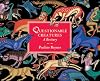
Pauline Baynes gives us a great collection of some of the real and not-so-real creatures that were encoporated into bestiaries during the middle ages. My favorite beastie is the Bonnacon. The illustrations are beautiful, historically accurate, and imaginative. This book will definitely get readers excited about a time when people saw the world much differently than they do now.

Based on part of an apocryphal addition to the book of Daniel in the Bible, this song of thanksgiving and praise is offered by Ananias, Azarias, and Misael also known by their Babylonian names: Shadrach, Meshach, and Abednego, as they emerge unscathed from the fiery furnace where they had been tossed by their earthly master, King Nebuchadnezzar, for refusing to worship his idol. Not only are the three young Jewish men thankful they want everyone and everything in the heavens above and the show more earth below to join them in their praise. And they start calling out everything and everybody and go on and on for twenty stanzas until they’ve cataloged all of God’s creation.
It's long but beautiful, and beautifully illustrated by Baynes whose colorful illuminations are reminiscent of the work done by medieval monks. show less
It's long but beautiful, and beautifully illustrated by Baynes whose colorful illuminations are reminiscent of the work done by medieval monks. show less
Awards

You May Also Like


Associated Authors
Statistics
- Works
- 30
- Also by
- 66
- Members
- 760
- Popularity
- #33,469
- Rating
- 4.1
- Reviews
- 12
- ISBNs
- 38
- Languages
- 3
- Favorited
- 1
