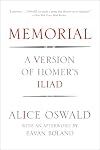
Memorial
by Alice Oswald
On This Page
Description
In this daring new work, the poet Alice Oswald strips away the narrative of the Iliad the anger of Achilles, the story of Helen in favor of attending to its atmospheres: the extended similes that bring so much of the natural order into the poem and the corresponding litany of the war-dead, most of whom are little more than names but each of whom lives and dies unforgettably and unforgotten in the copious retrospect of Homer s glance. The resulting poem is a war memorial and a profoundly show more responsive work that gives new voice to Homer s level-voiced version of the world. Through a mix of narrative and musical repetition, the sequence becomes a meditation on the loss of human life. show lessTags
Recommendations











Member Recommendations


octothorp Oswald’s ‘Memorial’ is quoted appreciatively in Steiner’s ‘Homer in English.’
Member Reviews
Like a stone
Stands by a grave and says nothing
Review of the W.W. Norton Company paperback edition (2013) of the original Faber & Faber hardcover (2011)
This is an extraordinarily beautiful meditation and elegy on death, loss and the fleeting nature of life. Although ostensibly a "version" of Homer's Iliad, it is Alice Oswald's poetic similes that follow each listing of a death or deaths from the Greek epic which are the affecting and haunting chorus to each passing.
Oswald starts off by listing all 200 names of the dead from The Iliad, from Protesilaus through to Hector. She then begins to intone each again, with some excerpts relating to their deaths in the epic and then following them with her similes, each of those latter repeated show more twice. In my ignorance I thought the repeats were a typo at first, and then realized the beauty of repeating them and letting their imagery sink in.
Reading this during the current pandemic and the extent of the worldwide loss of life due to that disease made me think of the mythological Trojan War as a metaphor for any sort of long term unjust forms of death and I became more focused on Oswald's choruses than the Iliad sections.
The poem is followed by an excellent Afterword by Eaven Boland in this 2013 Norton paperback edition.
I've been a long term fan of Christopher Logue's Homer in War Music (2015), but I have to confess that Alice Oswald has become my new fave Iliad adaptation.
My thanks to Liisa & family for this kind gift. show less
Stands by a grave and says nothing
Review of the W.W. Norton Company paperback edition (2013) of the original Faber & Faber hardcover (2011)
This is an extraordinarily beautiful meditation and elegy on death, loss and the fleeting nature of life. Although ostensibly a "version" of Homer's Iliad, it is Alice Oswald's poetic similes that follow each listing of a death or deaths from the Greek epic which are the affecting and haunting chorus to each passing.
Oswald starts off by listing all 200 names of the dead from The Iliad, from Protesilaus through to Hector. She then begins to intone each again, with some excerpts relating to their deaths in the epic and then following them with her similes, each of those latter repeated show more twice. In my ignorance I thought the repeats were a typo at first, and then realized the beauty of repeating them and letting their imagery sink in.
Like leaves
Sometimes they light their green flames
And are fed by the earth
And sometimes it snuffs them out
Like leaves
Sometimes they light their green flames
And are fed by the earth
And sometimes it snuffs them out
Like moonlight
Or the light of a bonfire
Burning on the cliffs
When sailors get blown along
Homesick over the sea
They notice that far-off fire
And think of their wives
Like moonlight
Or the light of a bonfire
Burning on the cliffs
When sailors get blown along
Homesick over the sea
They notice that far-off fire
And think of their wives
Like when god throws a star
And everyone looks up
To see that ship of sparks
And then it's gone
Like when god throws a star
And everyone looks up
To see that ship of sparks
And then it's gone
Reading this during the current pandemic and the extent of the worldwide loss of life due to that disease made me think of the mythological Trojan War as a metaphor for any sort of long term unjust forms of death and I became more focused on Oswald's choruses than the Iliad sections.
The poem is followed by an excellent Afterword by Eaven Boland in this 2013 Norton paperback edition.
I've been a long term fan of Christopher Logue's Homer in War Music (2015), but I have to confess that Alice Oswald has become my new fave Iliad adaptation.
My thanks to Liisa & family for this kind gift. show less
10/10
I've been robbed of my first words on this review by Eavan Boland, who begins an afterword by describing this work as luminous. Let me add transcendent. And sublime. And then, I should stop, for it is Oswald who owns the power of words, and not I.
But when has that ever stopped me?
Neither a re-interpretation, nor a translation of The Iliad, it's easy to suggest that Oswald channels the spirit of Homer through her incandescent verse. This is the Iliad as it was meant to be heard, through the voices of the dead, though not one of them speaks. Through their actions, through their failings, through the very act of falling down dead in the dust and blood, they sing a song of war that is horrific and appalling; they leave grave markers show more in the dirt, beside their bodies, that say quietly, eerily, be warned, for this is war.
The very rhythm of war echoes down the lines of the poems, beating a tattoo of loss and waste and shame. Oswald has chosen the most beautiful way possible to describe the ugliest possible actions and repercussions of war, and in this counterpoint, the monstrosity of loss is all the greater.
The cadence of her words has its own echo: a Greek chorus picks up the dirge, to rebound and reverberate long after the dead have been buried, in a disturbing hum in your soul.
Calling the ghost of DOLON
They remember an ugly man but quick
In a crack of light in the sweet smelling glimmer before dawn
He was caught creeping to the ships
He wore a weasel cap he was soft
Dishonest scared stooped they remember
How under a spear's eye he offered everything
All his father's money all his own
Every Trojan weakness every hope of their allies
Even the exact position of the Thracians
And the colour and size and price of the horses of Rhesus
They keep asking him why why
He gave away groaning every secret in his body
And was still pleading for his head
When his head rolled onto the mud
Like the fly the daredevil fly
Being brushed away
But busying back
The lunatic fly who loves licking
And will follow a man all day
For a nip of his blood
Like the fly the daredevil fly
Being brushed away
But busying back
The lunatic fly who loves licking
And will follow a man all day
For a nip of his blood
Every strength, every honour, every noble deed is here revealed; every indignity, every weakness, ever dishonour, every abasement is here exposed.
Like a man running in a dream
Can never approach a man escaping
Who can never escape a man approaching
This is the Iliad as not even Homer imagined it could be; or imagined it, but was waiting for Oswald to pick up the echo.
Thanks to Trish for her excellent review which first made me aware of this work. show less
I've been robbed of my first words on this review by Eavan Boland, who begins an afterword by describing this work as luminous. Let me add transcendent. And sublime. And then, I should stop, for it is Oswald who owns the power of words, and not I.
But when has that ever stopped me?
Neither a re-interpretation, nor a translation of The Iliad, it's easy to suggest that Oswald channels the spirit of Homer through her incandescent verse. This is the Iliad as it was meant to be heard, through the voices of the dead, though not one of them speaks. Through their actions, through their failings, through the very act of falling down dead in the dust and blood, they sing a song of war that is horrific and appalling; they leave grave markers show more in the dirt, beside their bodies, that say quietly, eerily, be warned, for this is war.
The very rhythm of war echoes down the lines of the poems, beating a tattoo of loss and waste and shame. Oswald has chosen the most beautiful way possible to describe the ugliest possible actions and repercussions of war, and in this counterpoint, the monstrosity of loss is all the greater.
The cadence of her words has its own echo: a Greek chorus picks up the dirge, to rebound and reverberate long after the dead have been buried, in a disturbing hum in your soul.
Calling the ghost of DOLON
They remember an ugly man but quick
In a crack of light in the sweet smelling glimmer before dawn
He was caught creeping to the ships
He wore a weasel cap he was soft
Dishonest scared stooped they remember
How under a spear's eye he offered everything
All his father's money all his own
Every Trojan weakness every hope of their allies
Even the exact position of the Thracians
And the colour and size and price of the horses of Rhesus
They keep asking him why why
He gave away groaning every secret in his body
And was still pleading for his head
When his head rolled onto the mud
Like the fly the daredevil fly
Being brushed away
But busying back
The lunatic fly who loves licking
And will follow a man all day
For a nip of his blood
Like the fly the daredevil fly
Being brushed away
But busying back
The lunatic fly who loves licking
And will follow a man all day
For a nip of his blood
Every strength, every honour, every noble deed is here revealed; every indignity, every weakness, ever dishonour, every abasement is here exposed.
Like a man running in a dream
Can never approach a man escaping
Who can never escape a man approaching
This is the Iliad as not even Homer imagined it could be; or imagined it, but was waiting for Oswald to pick up the echo.
Thanks to Trish for her excellent review which first made me aware of this work. show less
This incredible poem takes from the Iliad its death-laments and its short lyric similes, cutting away the narrative of war to focus on each soldier's death. In a short introduction, the poet describes it as "a translation of the Iliad's atmosphere, not its story ... ancient critics praised its enargeia, which means something like 'bright unbearable reality'". Her translation approach is "irreverent. I work closely with the Greek, but instead of carrying the words over into English, I use them as openings through which to see what Homer was looking at. I write through the Greek, not from it."
The death-laments explain how people died, and usually say something about their past lives or the people they have left behind. They are interwoven show more with the similes, which are very often about forces of nature - storms, torrents, gales - or about predators and prey. The outcome is a poem which is poignant and moving, a timeless account of the futility of war, the sorrow of loss and the inevitability of death.
Diomedes a madman a terrible numbness
Turned inside-out and taking over everything
Killed ASTYNOOS killed HYPEIRON
Killed ABAS and POLYIDOS
Their father could foretell the future
But he never prophesied that
Killed XANTHUS and THOON
Both tall men but their father
Was a little wisp of worries
Waiting at home what could he do
Now all his savings will go to other people's children
Now he will have to live off nothing
But his sons' names meanwhile Diomedes
With his eyes peeled down to their see-through stones
Seeing through everything to its inner emptiness
Killed ECHEMMON killed CHROMIUS
Tin-opened them out of their armour
And took for himself their high-stepping horses
Like the high unescapable eye
Of the eagle
Under whose beam
The shadow-swift hare can't hide
Pressed flat to the floor
Of a leafy wood
That loitering eye looks once
And kills show less
The death-laments explain how people died, and usually say something about their past lives or the people they have left behind. They are interwoven show more with the similes, which are very often about forces of nature - storms, torrents, gales - or about predators and prey. The outcome is a poem which is poignant and moving, a timeless account of the futility of war, the sorrow of loss and the inevitability of death.
Diomedes a madman a terrible numbness
Turned inside-out and taking over everything
Killed ASTYNOOS killed HYPEIRON
Killed ABAS and POLYIDOS
Their father could foretell the future
But he never prophesied that
Killed XANTHUS and THOON
Both tall men but their father
Was a little wisp of worries
Waiting at home what could he do
Now all his savings will go to other people's children
Now he will have to live off nothing
But his sons' names meanwhile Diomedes
With his eyes peeled down to their see-through stones
Seeing through everything to its inner emptiness
Killed ECHEMMON killed CHROMIUS
Tin-opened them out of their armour
And took for himself their high-stepping horses
Like the high unescapable eye
Of the eagle
Under whose beam
The shadow-swift hare can't hide
Pressed flat to the floor
Of a leafy wood
That loitering eye looks once
And kills show less
Like leaves who could write a history of leaves
The wind blows their ghosts to the ground
And the spring breathes new leaf into the woods
Thousands of names thousands of leaves
When you remember them remember this
Dead bodies are their lineage
Which matter no more than the leaves
The wind blows their ghosts to the ground
And the spring breathes new leaf into the woods
Thousands of names thousands of leaves
When you remember them remember this
Dead bodies are their lineage
Which matter no more than the leaves
I'm sorry, this short work will certainly resonate with others, but not with me. This isn't a translation, at least not literally, but a retelling and adaptation combined, with its own accents. British poet Alice Oswald (born 1966) aims here to evoke the "enargeia" of the Iliad, a noble goal, for that is indeed what is striking about Homer's work: its very distinctive, dynamic character, its vehement pace, the intense interaction between friends and enemies.
But, in my opinion, Oswald has made the wrong choice: in her Memorial, she retains only the obituaries, the commemoration of the many warriors who fell before the walls of Troy. In doing so, she has created a new poem, without the slightest direct speech, while—once again, in my show more opinion—that is precisely the dynamic of the Iliad: the verbal interaction between the Greeks and the Trojans, and between them both. That sometimes fiery, and then again very intimate rhetoric, the directness, and in some cases even the perverse use of words and language—that is precisely the strength, the enargeia in Homer's hexameters. And I miss that here in Oswald. It's a shame; for me, this is a missed opportunity. show less
But, in my opinion, Oswald has made the wrong choice: in her Memorial, she retains only the obituaries, the commemoration of the many warriors who fell before the walls of Troy. In doing so, she has created a new poem, without the slightest direct speech, while—once again, in my show more opinion—that is precisely the dynamic of the Iliad: the verbal interaction between the Greeks and the Trojans, and between them both. That sometimes fiery, and then again very intimate rhetoric, the directness, and in some cases even the perverse use of words and language—that is precisely the strength, the enargeia in Homer's hexameters. And I miss that here in Oswald. It's a shame; for me, this is a missed opportunity. show less
Remarkable innovation here. This kind of visceral adaptation of Homer brings the ancients to life more than a faithful translation. Succinctly highlights the constellation of loss at the heart of the Trojan war (and indeed all war).
I was enriched reading Alice Oswald’s free translations from ‘The Iliad,’ but less so by her and her afterworder Eavan Boland when they unimaginatively disparage both translation and written language itself.: “…she places herself in the active role of oral inheritor, rather than the more passive one of translator. ‘…I think [my] method…is compatible with the spirit of oral poetry…as if its language, unlike written language, was still alive and kicking.’” (p. 85)
Members
- Recently Added By
Published Reviews
ThingScore 100
Ms Oswald has audaciously set out to translate the book’s atmosphere, rather than its story. A poet known for her landscape verse, Ms Oswald read classics at Oxford. The result is a work by someone who not only understands Homer’s Greek, but who also has an ear for modern verse. It is a delight to read.
added by Shortride
Lists

The Trojan War
109 works; 12 members

Books That Changed Me
156 works; 47 members
Author Information

Alice Oswald has won the Eric Gregory Award, the Arts Foundation Award for Poetry, the Forward Prize, the Ted Hughes Award, and the T. S. Eliot Prize. She lives in Devon, England.
All Editions
Awards and Honors
Awards
Distinctions
Notable Lists
Work Relationships
Common Knowledge
- Original publication date
- 2011
- Important places
- Troy
- Quotations
- …unforgettable and unforgotten in the copious retrospect of Homer’s glance. (from the dust jacket)
Classifications
Statistics
- Members
- 383
- Popularity
- 81,276
- Reviews
- 11
- Rating
- (4.26)
- Languages
- English
- Media
- Paper, Audiobook, Ebook
- ISBNs
- 9
- ASINs
- 4